(7% discount is applied at checkout)
Cart is empty
Your go-to destination for cutting-edge server products
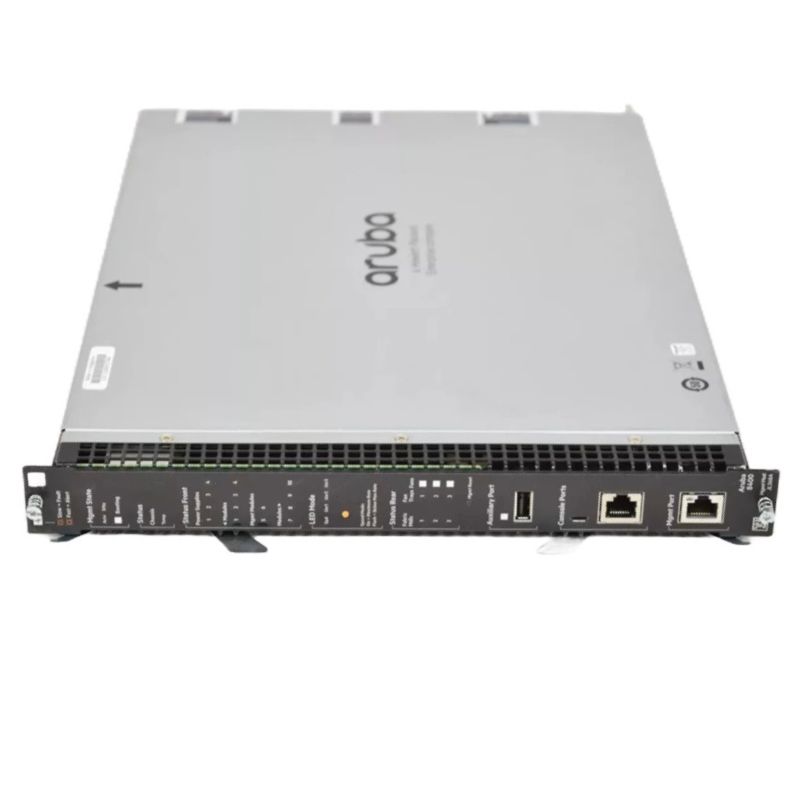


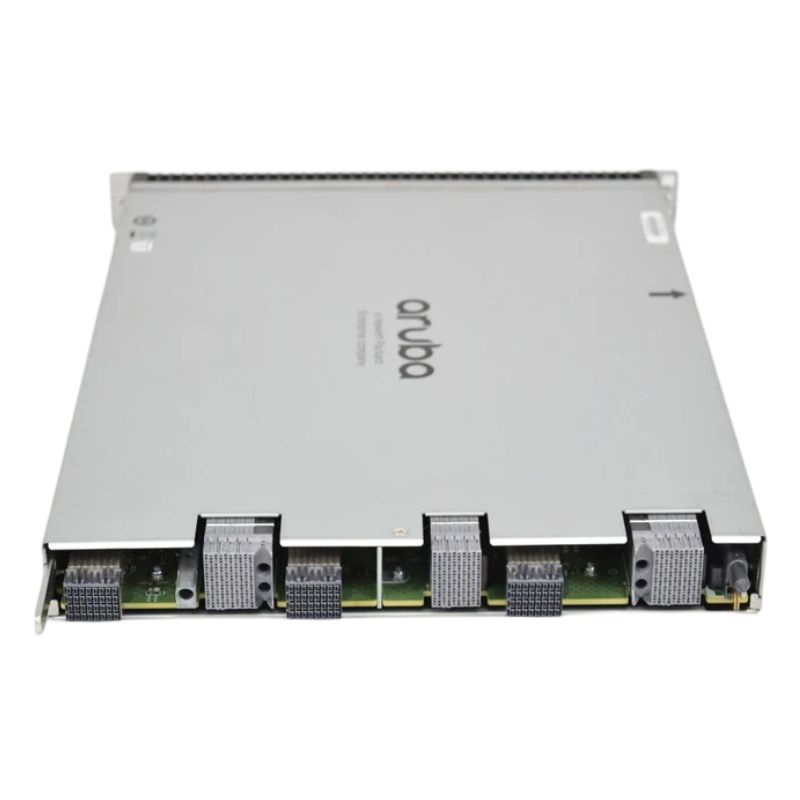
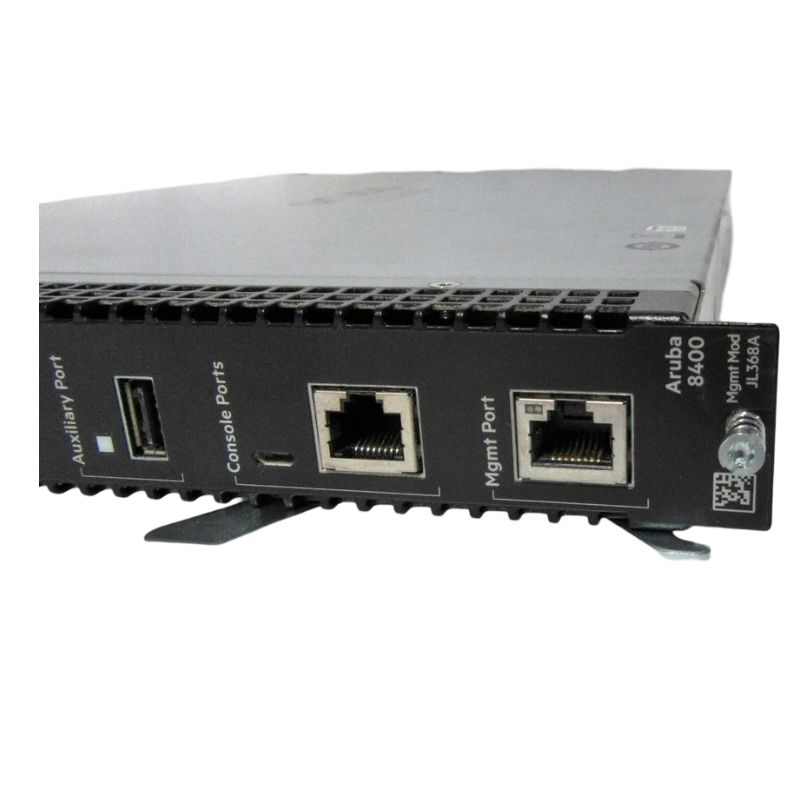
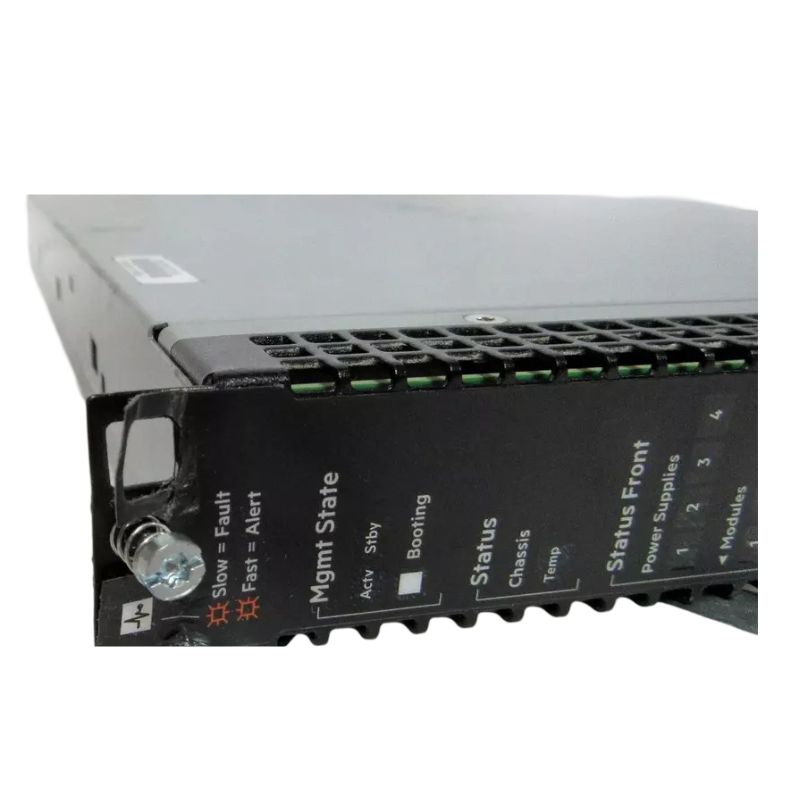
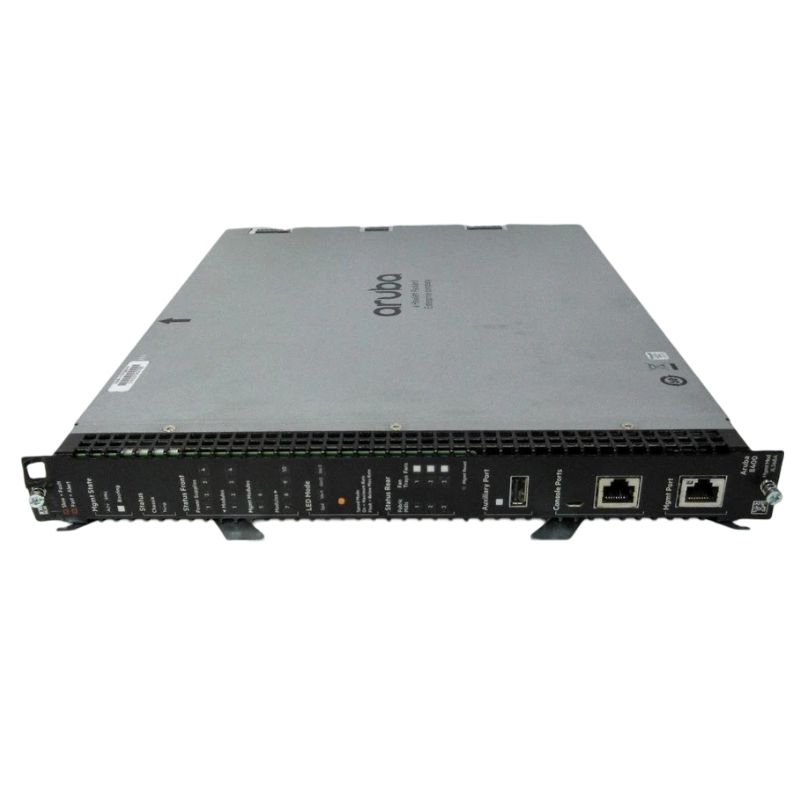
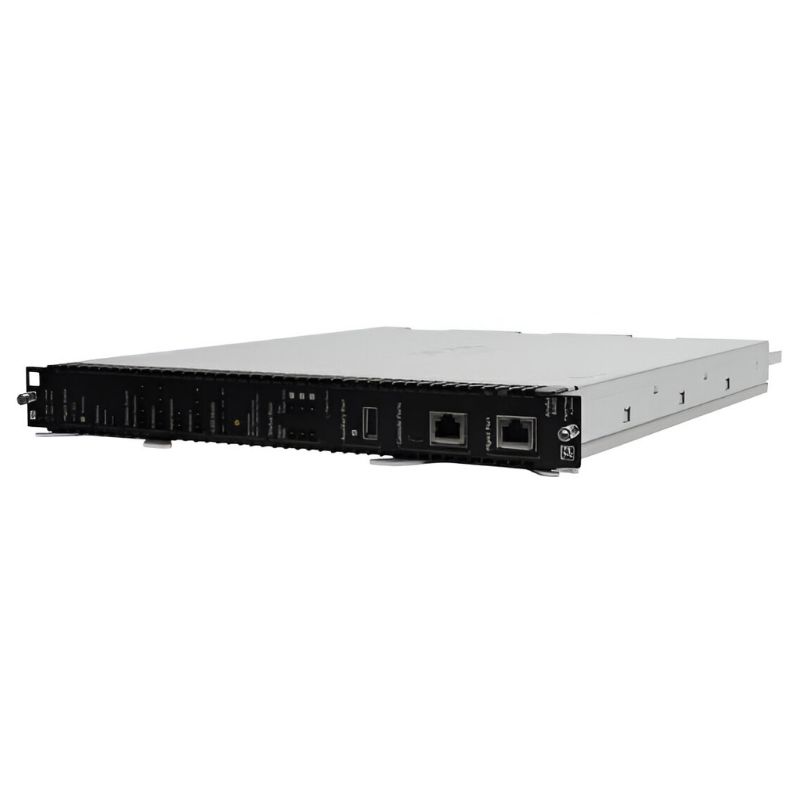
HPE JL368-61101 Aruba 8400 Management Plug-in Module for Network Management Device. Excellent Refurbished with 1 year replacement warranty
The HPE JL368-61101 Aruba 8400 Management Plug‑in Module serves as the central intelligence layer for the Aruba 8400 switching ecosystem. Engineered to deliver dependable supervisory control, it ensures smooth orchestration of system processes, real‑time diagnostics, and streamlined configuration workflows. By integrating directly into the chassis, this module reinforces operational stability, simplifies administrative tasks, and supports high‑performance network environments where uptime and precision are essential.
The HPE JL368-61101 Aruba 8400 Management Plug-in Module is engineered as a high availability control and orchestration component designed for advanced network infrastructure environments. Built for integration within the Aruba 8400 series modular switching platform, this management module enhances centralized control, system visibility, and operational efficiency across large-scale enterprise networks and data center deployments. It functions as a dedicated management plane element that separates control operations from data forwarding, ensuring stability, performance continuity, and predictable administrative behavior under heavy workloads.
Developed under the engineering standards of
Within the Aruba 8400 chassis ecosystem, the management plug-in module serves as the brain of system coordination, responsible for executing administrative functions, maintaining configuration databases, and facilitating communication between control components. Its architectural placement allows it to isolate management traffic from high-speed data forwarding paths, significantly reducing congestion and enhancing deterministic behavior in mission-critical environments.
This separation of concerns is fundamental in modern networking design, particularly in high-density core switching environments where thousands of flows and services may operate simultaneously. The module ensures that system health monitoring, configuration updates, authentication processes, and orchestration tasks are processed without interfering with packet forwarding performance.
The module enhances control plane stability by distributing processing workloads efficiently across redundant systems where applicable. It supports consistent routing table management, protocol adjacency tracking, and synchronization with other system components, ensuring uninterrupted network intelligence flow even under peak utilization.
A key advantage of the HPE JL368-61101 module is its strict separation of management traffic from user data traffic. This architecture reduces risk exposure during traffic spikes and ensures that administrative access remains responsive even in high throughput scenarios. This isolation is particularly important in environments requiring strict service level adherence.
The Aruba 8400 management plug-in module is designed for deployment in enterprise core networks, campus aggregation layers, and high-performance data center switching fabrics. Its capabilities make it suitable for environments where centralized orchestration, rapid provisioning, and real-time visibility are essential.
In campus networks, the module supports distributed access architectures where multiple access switches rely on centralized policy enforcement. In data center environments, it plays a critical role in maintaining synchronization between virtualized workloads, storage networks, and application delivery systems.
In hybrid and private cloud infrastructures, the module contributes to unified network control, enabling seamless integration between on-premises systems and cloud-managed services. It ensures consistent configuration enforcement and policy alignment across distributed nodes.
For high availability architectures, the module contributes to redundancy planning by supporting failover readiness and system state preservation. It allows network operators to maintain continuous service availability during maintenance events or unexpected hardware disruptions.
The HPE JL368-61101 Aruba 8400 Management Plug-in Module is engineered to support large-scale environments where network expansion is continuous and dynamic. Its design accommodates increasing numbers of managed devices, interfaces, and services without degradation in control responsiveness.
Scalability is achieved through optimized processing logic and distributed system coordination, allowing the module to handle complex configurations and large routing databases. This ensures consistent performance even as network topology evolves over time.
Resource allocation within the module is designed to prioritize critical management tasks while maintaining system efficiency. Memory handling, process scheduling, and communication pathways are optimized to reduce latency and improve operational throughput.
The module is capable of supporting expansive network topologies involving thousands of endpoints, multiple routing domains, and segmented service layers. This makes it suitable for enterprise-grade deployments requiring centralized visibility and control.
Security is a core element of the HPE JL368-61101 Aruba 8400 Management Plug-in Module design. It supports secure administrative access mechanisms, encrypted communication channels, and authentication controls that ensure only authorized personnel can modify system configurations.
The module contributes to secure network operations by enforcing role-based access control and maintaining audit trails for administrative actions. This ensures compliance with organizational governance policies and regulatory requirements in sensitive environments.
Multiple authentication layers are supported to validate user identity before granting access to management functions. These layers may include centralized authentication systems and secure credential verification mechanisms.
Communication between the module and other network components is protected through encrypted channels that preserve data integrity and prevent unauthorized interception or modification.
Reliability is a critical attribute of the Aruba 8400 management architecture. The plug-in module is designed to operate in environments that demand continuous uptime and minimal service interruption. Redundancy mechanisms ensure that system operations continue even if one component experiences failure.
High availability configurations allow the module to synchronize state information with backup systems, ensuring seamless transition during failover events. This design supports enterprise environments where downtime can have significant operational and financial impact.
Failover mechanisms are structured to preserve system state and maintain active sessions whenever possible. This reduces disruption during maintenance or unexpected system events.
Continuous synchronization of configuration and operational state ensures that backup components are always ready to assume control without requiring manual intervention or system reinitialization.
The Aruba 8400 management plug-in module plays an important role in optimizing overall network performance by ensuring that control operations do not interfere with data forwarding processes. This leads to improved latency characteristics and more predictable network behavior.
Its ability to efficiently manage configuration updates and routing changes contributes to faster convergence times and more stable network operation during dynamic changes in topology.
The HPE JL368-61101 Aruba 8400 Management Plug-in Module supports enterprise transformation initiatives by enabling flexible, scalable, and automated network architectures. It aligns with modern digital infrastructure requirements where agility, visibility, and control are essential.
Its integration within the Aruba 8400 ecosystem allows organizations to build resilient network foundations capable of supporting evolving application demands and distributed computing models.
Advanced coordination features enable synchronized operation across multiple network layers. This ensures that changes in configuration or policy are consistently applied throughout the network infrastructure without inconsistencies or delays.
Such coordination is essential in environments with distributed services, virtualized workloads, and multi-tenant architectures where consistency is critical.
Policy enforcement mechanisms ensure that security and operational rules are uniformly applied across all network segments, maintaining consistency and compliance.
The module ensures that configuration changes are accurately propagated throughout the system, reducing the risk of configuration drift and operational inconsistencies.
As enterprise networks expand, the Aruba 8400 management plug-in module provides a stable foundation for continued growth. Its architecture is designed to accommodate increasing network complexity without compromising performance or reliability.
This scalability makes it suitable for organizations undergoing digital transformation, cloud migration, or large-scale infrastructure modernization.
The Aruba 8400 management plug-in module is fully integrated within the Aruba OS ecosystem, ensuring seamless interoperability with other hardware and software components. It supports integration with network management platforms, automation tools, and monitoring systems that are commonly used in enterprise infrastructures.
Compatibility extends across various Aruba 8400 chassis configurations, enabling flexible deployment strategies depending on organizational requirements. Its modular design allows it to function alongside redundant components for enhanced resilience and system continuity.
The module integrates with centralized network management systems that provide visibility into topology maps, traffic flows, and device health metrics. This integration enables administrators to maintain comprehensive oversight of network operations.
Modern enterprise networks rely heavily on automation frameworks to reduce manual intervention and improve operational consistency. This module supports automated provisioning workflows, policy deployment mechanisms, and configuration synchronization processes.


 Contact Us
 Information
 Catalog
 Solid State Drives (SSD)
 Network Switches
 Hard Disk Drives
 HBA & Controllers
 PC & Servers
 PC & Server Memory
 CPU & Processors
 Network Routers
 Power Supplies
 Tape Drives & Libraries
 Network Devices
 Computer & Network Cables