Your go-to destination for cutting-edge server products

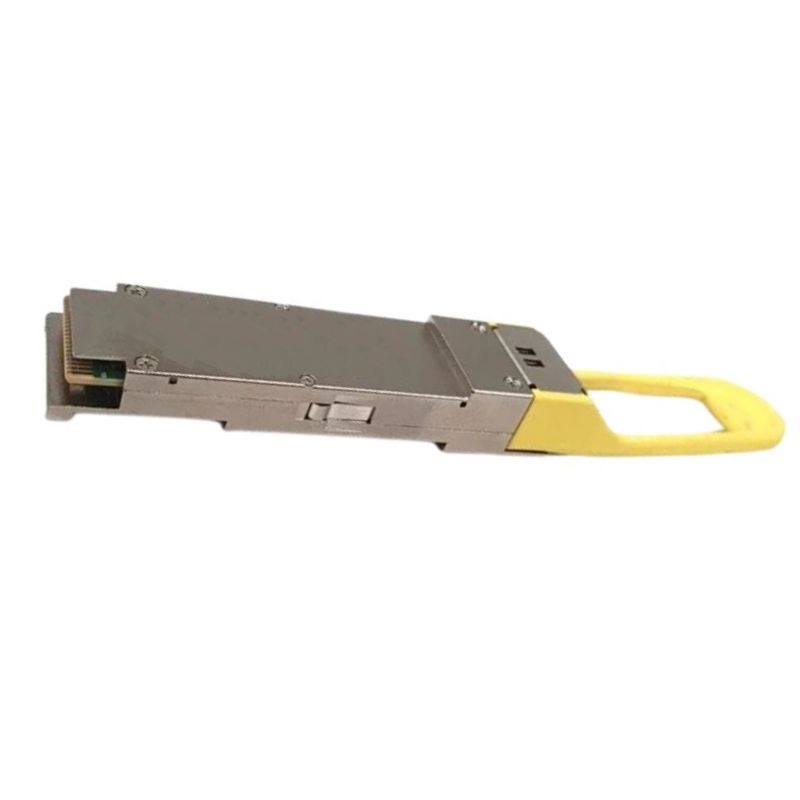
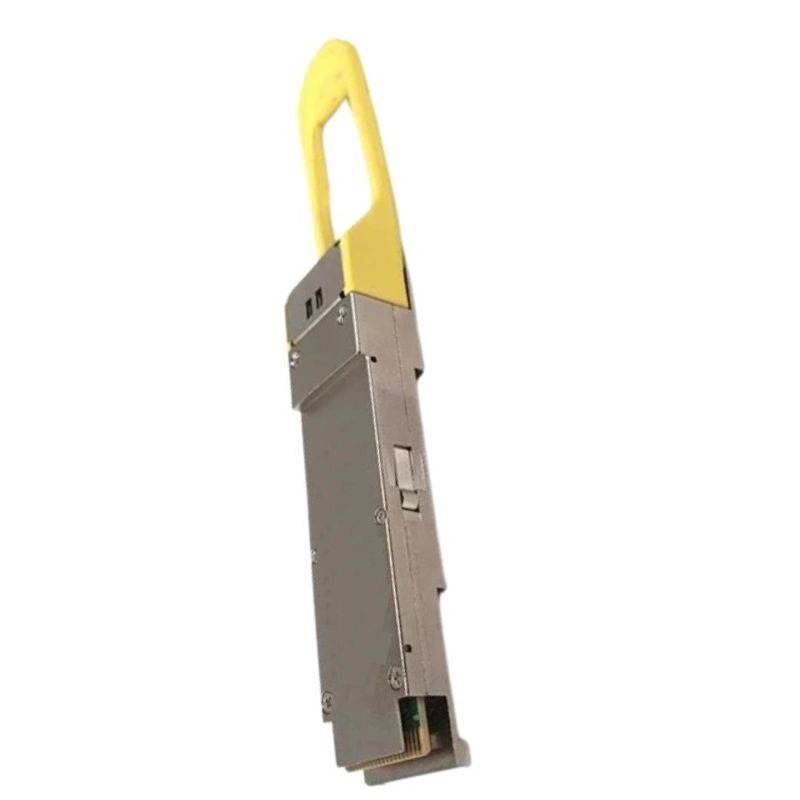
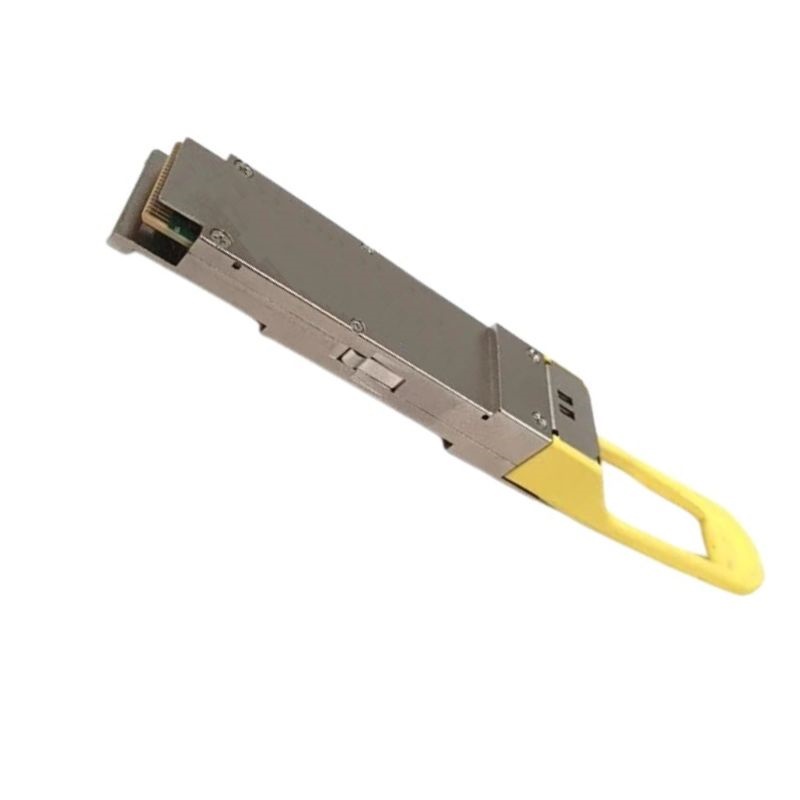
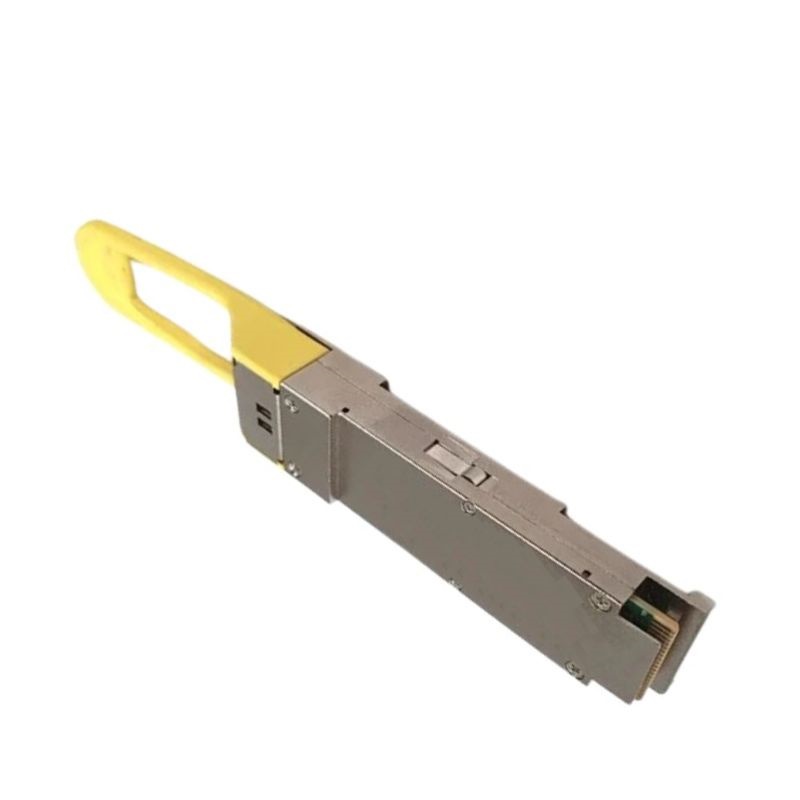
NVIDIA 980-9I30G-F4NM00 800GBPS Twin Port OSFP 2XMPO 1310nm UP to 500m Optical Transceiver

980-9I30G-F4NM00
* Product may have slight variations vs. image
Hover on image to enlarge

Brief Overview of 980-9I30G-F4NM00

NVIDIA 980-9I30G-F4NM00 800GBPS Twin Port OSFP SMF Optical Transceiver. Factory-Sealed New in Original Box (FSB) with 3 Years Warranty

$3,269.70
$2,422.00
You save: $847.70 (26%)
Ask a question
Price in points: 2422 points
+
Quote
Additional 7% discount at checkout
SKU/MPN980-9I30G-F4NM00Availability✅ In StockProcessing TimeUsually ships same day ManufacturerNvidia Manufacturer Warranty3 Years Warranty from Original Brand Product/Item ConditionFactory-Sealed New in Original Box (FSB) ServerOrbit Replacement Warranty1 Year Warranty
Google Top Quality Store Customer Reviews
Our Advantages
Payment Options
  • — Visa, MasterCard, Discover, and Amex
  • — JCB, Diners Club, UnionPay
  • — PayPal, ACH/Bank Transfer (11% Off)
  • — Apple Pay, Amazon Pay, Google Pay
  • — Buy Now, Pay Later - Affirm, Afterpay
  • — GOV/EDU/Institutions PO's Accepted 
  • — Invoices
Delivery
  • — Deliver Anywhere
  • — Express Delivery in the USA and Worldwide
  • — Ship to -APO -FPO
  • For USA - Free Ground Shipping
  • — Worldwide - from $30
Description

Nvidia980-9I30G-F4NM00 Twin Port OSFP Optical Transceiver

The NVIDIA 980-9I30G-F4NM00 800Gbps Twin Port OSFP Optical Transceiver is a next-generation networking solution engineered for modern data centers, high-performance computing, and enterprise connectivity. This high-capacity module delivers outstanding efficiency with its 2x400GbE dual-port design, leveraging advanced optical technology to achieve fast, reliable, and scalable communication across distances of up to 500 meters using single-mode fiber.

Exceptional Data Throughput and Advanced Modulation

Supporting 2xDR4 channels, this optical transceiver provides unparalleled performance with an aggregate bandwidth of 800Gbps. It uses 100G-PAM4 electrical and optical modulation to guarantee maximum signal efficiency and speed. The dual-port architecture enables seamless scaling and simplifies integration in dense networking environments.

Key Information

  • Brand: Nvidia
  • Part Number: 980-9I30G-F4NM00
  • Product Type: Optical Transceiver

Key Advantages

  • Unmatched data transfer capacity at 800Gbps.
  • Utilizes 100G-PAM4 modulation for enhanced efficiency.
  • Dual MPO-12/APC connectors for streamlined deployment.
  • Enables up to 500 meters reach over single-mode fibers.
  • Optimized for Spectrum-4 switches with finned-top OSFP design.

Engineered for Spectrum-4 Switches

The twin-port OSFP transceiver features a finned-top shell that provides superior cooling, ensuring reliable operation in demanding data center environments. It enables 128 ports of 400Gb/s capacity within 64 Spectrum-4 cages, making it the preferred choice for large-scale, high-density networking infrastructure.

Cooling and Power Efficiency

Designed with power optimization in mind, this transceiver operates with a single 3.3V power supply and consumes a maximum of 17W. Its efficient cooling mechanism ensures consistent performance while reducing the risk of thermal throttling in high-traffic environments.

Reliable Connectivity Across Long Distances

With support for single-mode fiber at 1310nm wavelength, the NVIDIA 980-9I30G-F4NM00 is capable of transmitting data across links up to 500 meters. This makes it ideal for inter-switch connections within hyperscale data centers, cloud networks, and enterprise backbones where extended reach is critical.

Fiber Compatibility

  • Supports straight-through 400Gb/s fiber cables.
  • Compatible with 1:2 splitter fiber configurations for 200Gb/s connectivity.
  • Utilizes 8 single-mode fibers for maximum efficiency.
  • Ensures seamless deployment in large-scale network topologies.

Comprehensive Compliance and Safety Standards

The transceiver is manufactured to meet industry-leading standards, ensuring compatibility and safety. It complies with CMIS 4.0, OSFPMSA.org guidelines, and is fully RoHS compliant. Additionally, it is Class 1 laser safe, guaranteeing safe operation during installation and long-term use.

Certifications & Standards

  • Hot-pluggable for convenient deployment.
  • RoHS-compliant for environmental safety.
  • Class 1 laser certification for secure handling.
  • OSFP MSA and CMIS 4.0 compliance for interoperability.
  • Case temperature operating range: 0°C to +70°C.

Ideal Applications

Designed for versatility and scalability, the NVIDIA 980-9I30G-F4NM00 Twin Port Optical Transceiver is the backbone of high-performance data transmission in multiple use cases:

Use Cases
  • Connecting high-density Spectrum-4 switches in data centers.
  • Supporting cloud service providers with reliable backbone links.
  • Ensuring low-latency connectivity for AI workloads and machine learning.
  • Expanding enterprise-scale networks with long-distance reach.
  • Optimized interconnection for HPC environments requiring large bandwidth.

Highlights of NVIDIA 980-9I30G-F4NM00

This optical module represents a breakthrough in transceiver technology, offering unmatched speed, flexibility, and reliability for mission-critical environments.

Quick Specifications

  • Device Type: 800Gbps Twin-Port OSFP Optical Transceiver
  • Form Factor: OSFP with finned-top cooling
  • Optical Reach: Up to 500 meters (single-mode)
  • Laser Wavelength: 1310nm
  • Modulation: 100G-PAM4
  • Connector Type: 2x MPO-12/APC
  • Maximum Power Consumption: 17W
  • Voltage Supply: 3.3V
  • Operating Temperature: 0°C to +70°C

This NVIDIA Optical Transceiver

The NVIDIA 980-9I30G-F4NM00 Twin Port Transceiver delivers best-in-class performance with the flexibility, efficiency, and scalability required for modern networking. Its robust design, long-distance reach, and industry compliance make it a perfect choice for IT architects and system integrators looking to maximize bandwidth while minimizing operational complexity.

Nvidia 980-9I30G-F4NM00 800GBPS Twin Port OSFP Optical Transceiver Overview

The NVIDIA 980-9I30G-F4NM00 optical transceiver belongs to a high-performance class of 800 Gbps twin-port OSFP modules engineered for hyperscale data centers, AI fabrics, high-throughput enterprise cores, and cloud service provider backbones. Built around advanced 1310 nm PAM4 optics and dual MPO connectivity, this hot-pluggable device consolidates two independent 400 GbE channels within a single OSFP form factor, enabling exceptional port density and simplified cabling for large leaf-spine and AI/ML cluster designs. Its rated reach of up to 500 meters over OS2 single-mode fiber makes it ideal for campus-scale and data-center-scale interconnects where latency, power, and space efficiency are critical.

By combining twin-port architecture, mature 1310 nm lasers, and robust digital diagnostics, this module addresses the most demanding east-west traffic patterns generated by GPU servers, NVMe storage fabrics, and high-fan-out topologies. Network architects can scale bandwidth quickly, reduce the number of physical transceivers required per chassis, and maintain a consistent operations model across 400 GbE and 800 GbE transitions.

Key Capabilities at a Glance

  • Aggregate line rate of 800 Gbps via two independent 400 GbE ports in a single OSFP module.
  • 1310 nm wavelength design optimized for low-latency short-reach single-mode spans up to 500 m with OS2 fiber.
  • Dual MPO connectivity (2×MPO-12/APC) for streamlined cabling and straightforward polarity management.
  • PAM4 modulation with forward error correction (FEC) support as implemented on compatible switch/adapter silicon.
  • Hot-pluggable OSFP form factor designed for dense 1U/2U leaf/spine switches and AI fabric directors.
  • Comprehensive digital diagnostics (DDM/DOM) for live monitoring of temperature, voltage, TX/RX power, and bias current.
  • Hardware-level safety features such as soft-start, short-circuit protection, and over-temperature safeguards for reliable 24×7 operation.

Form Factor and Physical Characteristics

As an OSFP (Octal Small Form-factor Pluggable) module, the NVIDIA 980-9I30G-F4NM00 integrates eight high-speed electrical lanes per 400G channel within a thermally efficient shell optimized for front-of-rack deployment. Compared with legacy form factors, OSFP supports higher thermal envelopes and enables native 800 Gbps configurations or dual 400 Gbps breakouts without resorting to multiple modules.

Dimensions and Housing

  • Compact, high-density OSFP shell for easy insertion and removal in compatible switch and adapter cages.
  • Integrated heat spreader designed to interface with top-cover airflow channels and chassis-level cooling solutions.
  • Robust pull-tab mechanism for maintenance in tight racks, even with dense cable fields.

Connectorization

  • Front-facing optics with two MPO-12/APC connectors, one per 400 G channel, minimizing bend stress and easing cable dressing.
  • Angled-polish (APC) ferrules supporting low back reflection in 1310 nm single-mode systems.
  • Clearly labeled port identifiers (Port A / Port B) to prevent cross-patching and simplify troubleshooting.

Optical Performance and Transmission Technology

This module leverages 1310 nm lasers and PAM4 modulation to deliver reliable short-reach transmission. The 500 m distance class aligns with typical leaf-to-spine and spine-to-super-spine spans found in large data center halls and adjacent buildings. By pairing coherent lane management with FEC implemented on the host switch or NIC, the link maintains low BER under high utilization.

Wavelength and Media

  • Nominal center wavelength: 1310 nm single-mode operation.
  • Recommended cable type: OS2 single-mode fiber with MPO-12/APC trunk assemblies for each 400 G channel.
  • Reach: up to 500 m under typical link budgets, patching losses, and cleanliness assumptions.

Modulation and Lane Mapping

  • PAM4 modulation delivering 53/100 G per electrical lane depending on host implementation, aggregated to 400 GbE per optical group.
  • Twin-port architecture: 2×400 GbE logical interfaces exposed to the host, allowing flexible provisioning.
  • Compatible with switch/NIC FEC requirements traditionally associated with 400 G DR-class optics for error resilience.

Optical Link Budget Considerations

Effective reach depends on optical power budgets and connector cleanliness. MPO systems are sensitive to contamination; daily operations should include inspection, cleaning, and verification procedures. A typical short-reach single-mode link with one or two interconnects stays within the specified attenuation limits when using quality OS2 trunks and factory-terminated cassettes or panels.

  • Insertion loss per MPO-12/APC connector is typically low, but cumulative loss across trunks, panels, and patch cords should be tallied to remain within headroom.
  • Return loss performance is enhanced by APC polish; maintaining proper end-face geometry mitigates reflections that can elevate noise.
  • Budget for additional margin in high-vibration or variable-temperature environments and when deploying multiple MTP/MPO breakpoints.

Electrical Interface and Host Integration

The module uses OSFP electrical lanes to interface with compatible switch ASICs and server adapters. It enumerates as two independent 400 GbE ports, providing operational flexibility and enabling incremental migrations from 400 GbE to aggregate 800 GbE bandwidth without swapping hardware.

Host Signaling

  • High-speed PAM4 electrical lanes with host-side FEC support for robust error performance.
  • MDIO/I2C management for reading digital diagnostics and module identity fields.
  • Interrupt and alarm pins mapped to host system for proactive alerting on temperature and power thresholds.

Compatibility and Interoperability

  • Designed for NVIDIA networking platforms and OSFP cages from major switch vendors that adhere to OSFP MSA guidelines.
  • Interoperable with peer 400 G DR-class ports across the specified 1310 nm wavelength range and reach, when FEC and link parameters are correctly configured.
  • Supports breakout topologies to 4×100 GbE on the electrical side through host platform features, while optical side remains 2×MPO per module (per 400 G group).

Thermal Design and Power Efficiency

High-density fabrics concentrate thermals at the faceplate. The OSFP enclosure and heat spreader of the 980-9I30G-F4NM00 have been engineered to work with mainstream front-to-back or back-to-front airflow designs. Adhering to chassis airflow guidelines maintains optimal case temperatures and prolongs component longevity.

Best Practices for Cooling

  • Maintain unobstructed airflow across module fins and avoid severe cable bend angles that block vents.
  • Use cable managers to route MPO trunks horizontally before vertical drops, preserving laminar flow.
  • Monitor DOM temperature and set alerts in the NMS to catch early signs of impaired cooling or fan degradation.

Power Modes and Safeguards

  • Soft-start circuitry moderates inrush current during hot-plug events.
  • Thermal shutdown and rate limiting protect optics during abnormal conditions.
  • Power class compatible with OSFP cage designs on modern 400/800 G switches, leaving headroom for adjacent ports.

Use Cases in Modern Data Centers

Whether scaling an AI superpod, consolidating leaf-spine bandwidth, or segmenting multi-tenant fabrics, this twin-port OSFP module simplifies design. It is particularly attractive in environments where two 400 GbE connections are consistently provisioned in parallel between the same nodes or tiers.

AI/ML and HPC Fabric Interconnect

  • Connect GPU servers to leaf switches using paired 400 GbE links per node for higher aggregate throughput and redundancy.
  • Build fat-tree or dragonfly topologies with predictable latency and deterministic performance under heavy all-to-all traffic.
  • Leverage twin-port optics to reduce module count and improve faceplate density in AI fabric directors.

Cloud and Hyperscale Leaf-Spine

  • Double the bandwidth per OSFP cage with 2×400 GbE while containing thermal load per RU.
  • Standardize on 1310 nm single-mode across buildings and data halls for consistent reach profiles.
  • Use modular MPO trunks for rapid turn-ups, tenant expansions, and non-disruptive re-patching.

Enterprise Core and Campus Aggregation

  • Deploy 500 m links between core and distribution layers, connecting IDFs to MDFs in large campuses.
  • Consolidate redundant uplinks into a single physical module per slot to simplify sparing and maintenance.
  • Evolve from 100/200G to 400/800G without re-cabling the building backbone when OS2 plant already exists.

Cabling Guidance for 2×MPO Deployments

The dual-MPO configuration reduces cable clutter, but it requires consistent polarity and breakout planning. Always match the MPO connector type (APC), fiber type (OS2), and polarity method outlined by your cabling vendor.

Recommended Components

  • MPO-12/APC trunk cables with low-loss ferrules for each 400 GbE port.
  • High-density MPO patch panels or cassettes with clearly labeled ports to separate Port A and Port B paths.
  • Cleaning kits and inspection scopes designed for MPO/APC ferrules to maintain end-face quality.

Polarity and Labeling

  • Adopt a consistent polarity convention (e.g., Method B) across the facility to avoid crossed pairs.
  • Color-code or uniquely label each MPO corresponding to the module’s Port A and Port B.
  • Document rack elevation maps and patch-field assignments to accelerate MAC (move/add/change) cycles.

Bend Radius and Pathways

  • Respect minimum bend radius for OS2 fiber to prevent micro-bending and insertion loss increases.
  • Use horizontal managers directly in front of the OSFP row, routing trunks laterally before vertical descent.
  • Avoid over-tight bundling; maintain airflow and service loops for field access.

Reliability, Testing, and Quality Assurance

High-availability environments depend on meticulous optic qualification. This module aligns with rigorous vendor test regimes and is designed for continuous duty cycles.

Environmental Tolerance

  • Operating temperature range suitable for controlled data-center aisles with monitored HVAC.
  • Shock and vibration resistance for typical rack movements and maintenance activities.
  • Electrostatic discharge (ESD) protections when handled per standard procedures and with ESD-safe tools.

Burn-In and Certification

  • Factory testing covers optical power, wavelength accuracy, and eye-mask compliance for PAM4 modulation.
  • Electrical lane integrity verified under nominal and elevated temperatures to simulate real-world loads.
  • Each unit serialized for traceability through asset management systems and RMA workflows.

Deployment Architectures and Design Patterns

Network planners can exploit the twin-port design to streamline topologies. Below are common patterns that maximize performance and availability while simplifying operations.

Paired Uplinks per Host

  • Each GPU or compute node consumes two 400 GbE links—one per MPO—mapped to separate leaf switches.
  • Link aggregation or MLAG/VPC provides fast convergence while preserving node-level redundancy.
  • Optics count is halved versus using two separate single-port transceivers per node.

High-Fan-Out Leaf-to-Spine

  • Spine ports populated with twin-port modules connect to multiple leafs via structured MPO trunks.
  • Predictable cabling patterns aid rapid scale-out, reducing design variance across pods.
  • Capacity upgrades are as simple as lighting the second 400 G channel when needed.

Inter-Pod and Metro-Campus Short-Reach

  • 500 m reach supports inter-building links on the same campus with existing OS2 pathways.
  • Latency stays low across the optical domain, suitable for distributed GPU job schedulers and storage replication.
  • Maintains single-mode standardization for long-term compatibility and asset reuse.

Performance Tuning and Operational Tips

Achieving consistent 800 Gbps aggregate performance requires attention to optics hygiene, lane mapping, and FEC alignment across platforms.

FEC Alignment

  • Ensure host FEC mode matches the optics and peer—mismatches often present as intermittent CRC bursts.
  • Validate line-side and host-side settings during turn-up with standardized templates.
  • Record baseline BER and latency metrics for comparison after changes or maintenance windows.

DOM-Driven Maintenance

  • Set warning levels close to observed norms to detect drift (e.g., gradual TX power reduction indicating contamination).
  • Trend module temperature versus port utilization to identify cooling anomalies before impact.
  • Use automated cleanup workflows when RX power dips are correlated across a panel—often a shared trunk needs service.

Cleaning and Handling

  • Always clean MPO/APC connectors before mating; inspect under proper magnification with APC-compatible tips.
  • Cap all connectors during storage or while routing trunks to prevent airborne dust accumulation.
  • Avoid touching ferrule end-faces; oils and residue can spike insertion loss unpredictably.

Security and Compliance Considerations

Optical layers contribute to overall infrastructure security by ensuring reliable, deterministic links that uphold segmentation and encryption policies anchored at higher layers.

Physical Security

  • Use locked patch panels and port blockers in shared colocation spaces to prevent accidental disconnects.
  • Label fibers end-to-end; accurate documentation reduces human error during changes.
  • Track module serials in CMDB systems to detect unauthorized swaps or inventory discrepancies.

Operational Compliance

  • Align change control windows with link redundancy strategies to avoid impact during optics replacement.
  • Log DOM thresholds as part of compliance audits demonstrating proactive maintenance.
  • Maintain ESD protocols and anti-contamination procedures to meet internal quality standards.

Technical Specifications Summary

The following summary highlights common specification points for twin-port 800 Gbps OSFP modules in the 1310 nm, 500 m class. Actual values may vary by platform integration and environmental conditions.


Migration from 400 GbE to 800 Gbps Aggregates

Many organizations operate mixed generations of hardware. The 980-9I30G-F4NM00’s twin-port design eases transitions by preserving tooling, cabling standards, and operational know-how while doubling bandwidth per slot.

Staged Activation

  • Deploy the module day-one and light up a single 400 GbE channel; commission the second channel later as demand grows.
  • Avoid intermediate optics swaps that risk downtime and inventory churn.
  • Maintain consistent 1310 nm SMF cabling throughout the migration, simplifying documentation.

Coexistence with Legacy Tiers

  • Bridge to lower-speed domains through switch-level breakouts or aggregation layers without altering the optical plant.
  • Use policy-based routing and ECMP to distribute flows across the two 400 G links logically.
  • Retain standard monitoring and alarming—DOM remains consistent as capacity scales.

Compliance with Structured Cabling Standards

Although twin-port OSFP is designed for high-density equipment, a standards-aligned structured cabling approach enhances scalability and maintainability.

Best-Practice Alignment

  • Use factory-terminated MPO-12/APC trunks and modules with documented insertion loss.
  • Adopt standardized labeling conventions (Rack-RU-Port + Path ID) across all optical paths.
  • Maintain separation of optical and power pathways to reduce interference and simplify audits.

Documentation Essentials

  • Fiber database with end-to-end path records, serials for optics, and DOM baselines at turn-up.
  • Change logs correlating re-patch events with performance metrics.
  • Maintenance checklists for periodic cleaning and tension relief verification.

Design Calculations and Practical Margins

While the module supports up to 500 m reach, engineers should model worst-case attenuation and connector loss to sustain a healthy margin under real conditions.

Rule-of-Thumb Planning

  • Assume standard insertion loss per MPO interface and include patch panel and cassette pass-throughs.
  • Derate for potential dust accumulation between cleanings; maintain at least 2–3 dB headroom where feasible.
  • Consider temperature-induced variations, especially in mixed-use facilities with fluctuating HVAC loads.

Verification Tests

  • OTDR and light-source/power-meter tests to confirm attenuation meets plan.
  • BER and frame-loss testing at line rate after deployment and after major changes.
  • Cross-check DOM readings with external meters for calibration assurance.

Sustainability and Environmental Impact

Twin-port modules can reduce the number of optics required for a given capacity target, decreasing material usage and packaging across the lifecycle. Consolidated cooling and fewer faceplate interruptions also help lower the overall energy footprint at scale.

Resource Optimization

  • Fewer transceivers for equivalent throughput reduce spare inventory and e-waste over time.
  • Standardized OS2/MPO infrastructure promotes reuse during upgrades and reconfigurations.
  • Telemetry-driven maintenance extends module life by preventing operation outside optimal ranges.

Comparisons with Alternative Connectivity Options

Versus QSFP-DD 800G

  • OSFP supports higher thermal envelopes, often beneficial in ultra-dense front panels.
  • Twin-port (2×400G) inside a single module suits designs that prefer dual logical links per cage.
  • QSFP-DD ecosystems may offer different breakout options; selection depends on platform strategy and thermal design.

Versus AOC/DAC Cabling

  • Active optical and direct-attach copper solutions are excellent for very short distances, but single-mode optics deliver superior reach up to 500 m with lower latency variability.
  • Structured fiber with MPO improves pathway management and long-term flexibility compared with fixed-length AOCs.

Versus Discrete Single-Port Optics

  • Twin-port modules halve the number of transceiver shells, saving space and simplifying thermal planning.
  • Shared management and identical DOM behavior for both 400 G channels reduce operational complexity.

Procurement and Spares Strategy

For critical fabrics, carry spares aligned to the number of unique link types rather than raw port counts. Twin-port optics make it practical to keep fewer spare units on hand without increasing risk.

Spares Pooling

  • One spare can cover failures for two parallel 400 G links in the same path group.
  • Track serials and firmware/EEPROM revisions to align compatibility across pods.
  • Store spares in ESD-safe cases with sealed dust caps and desiccant packs.

Acceptance Testing on Arrival

  • Verify part number and labeling on receipt; cross-check CMDB entries.
  • Bench test optics in a lab switch to validate DOM and port negotiation before field deployment.
  • Document baseline readings—use them later to confirm changes post-install.

Glossary of Relevant Terms

OSFP

Octal Small Form-factor Pluggable; a high-density pluggable transceiver standard supporting very high thermal and power envelopes, suitable for 400G/800G and beyond.

MPO-12/APC

Multi-Fiber Push-On connector with 12 fibers and an angled-polish ferrule to reduce back reflection; widely used in high-density single-mode systems.

PAM4

Pulse Amplitude Modulation with four levels, doubling the bits per symbol compared with NRZ, enabling higher data rates over the same bandwidth.

DOM/DDM

Digital Optical/Diagnostic Monitoring; telemetry exposed by optics to monitor health and performance in real time.

OS2 Fiber

A standard for single-mode fiber optimized for long-distance transmission at 1310/1550 nm with low attenuation.

Checklist for Cleanroom-Style Handling

  • Wear lint-free gloves and use compressed, filtered air as needed (avoid overpressure).
  • Use APC-specific cleaning tools and inspection tips; flat UPC tips are incompatible.
  • Store dust caps in sealed containers; never place them face-down on racks.
  • Log each cleaning event in maintenance records for high-availability links.

Example Port Labeling Scheme for Twin-Port Deployments

A consistent, human-readable scheme reduces human error during troubleshooting and audits. The following illustrates a simple strategy:

  • OSFP-X/Y-A: First 400 G channel (Port A) from slot X, port Y.
  • OSFP-X/Y-B: Second 400 G channel (Port B) from slot X, port Y.
  • PATH-ID: Append a unique path code (e.g., P01/P02) tied to physical trunk routes.

Capacity Planning Notes

When modeling application throughput for AI and analytics workloads, consider the interplay of link bandwidth, oversubscription at aggregation, and storage backplane throughput. Twin-port modules help maintain balanced fabrics without excessive port proliferation.

Oversubscription Targets

  • Leaf-to-spine ratios commonly range from 1:1 to 3:1 depending on east-west intensity.
  • For AI training pods, aim for near-non-blocking links between GPU nodes and leafs to mitigate gradient-exchange bottlenecks.
  • Use the second 400 G channel as an on-demand capacity lever before adding more spines.

Safety and Handling Warnings

  • Do not look into fiber connectors; invisible 1310 nm light can damage eyes.
  • De-energize ports before cleaning when possible; follow vendor safety guidelines.
  • Handle with ESD precautions; avoid placing modules on conductive or contaminated surfaces.

Operational Metrics to Track

  • RX/TX Optical Power: Detects connector degradation or fiber stress.
  • Module Temperature: Ensures airflow sufficiency and prevents throttling.
  • FEC Correctable Errors: Early warning of marginal link health before CRCs appear.
  • BER Under Load: Validates resilience during peak-hour traffic.
Features
Manufacturer Warranty:
3 Years Warranty from Original Brand
Product/Item Condition:
Factory-Sealed New in Original Box (FSB)
ServerOrbit Replacement Warranty:
1 Year Warranty