Your go-to destination for cutting-edge server products
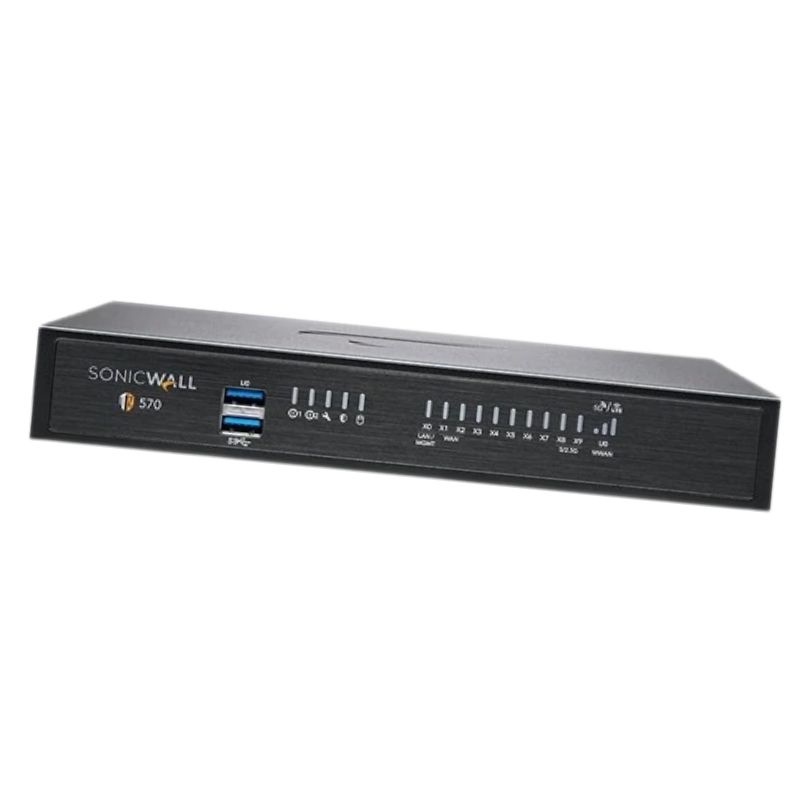
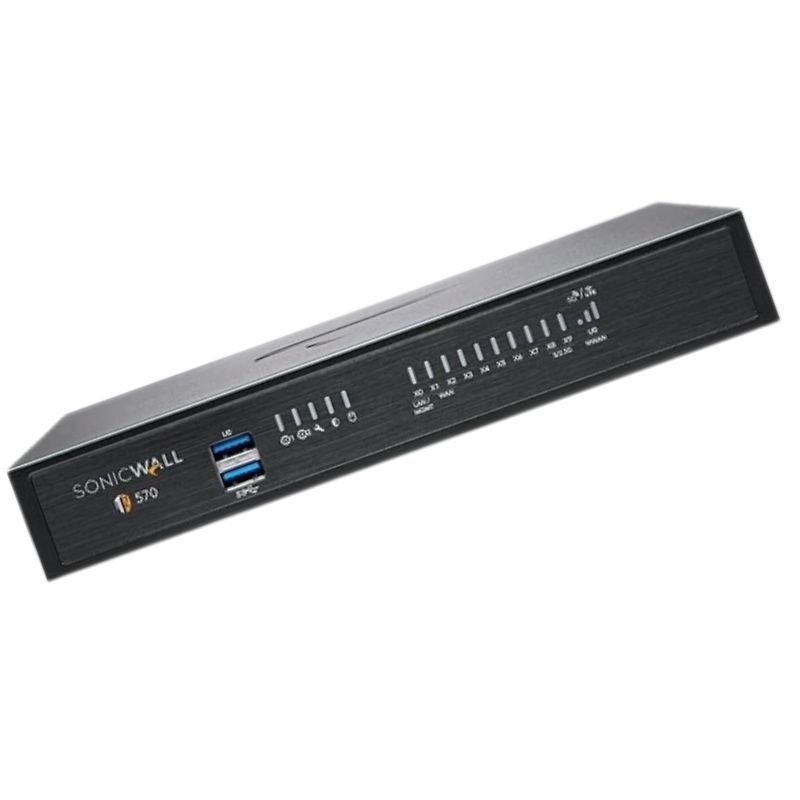
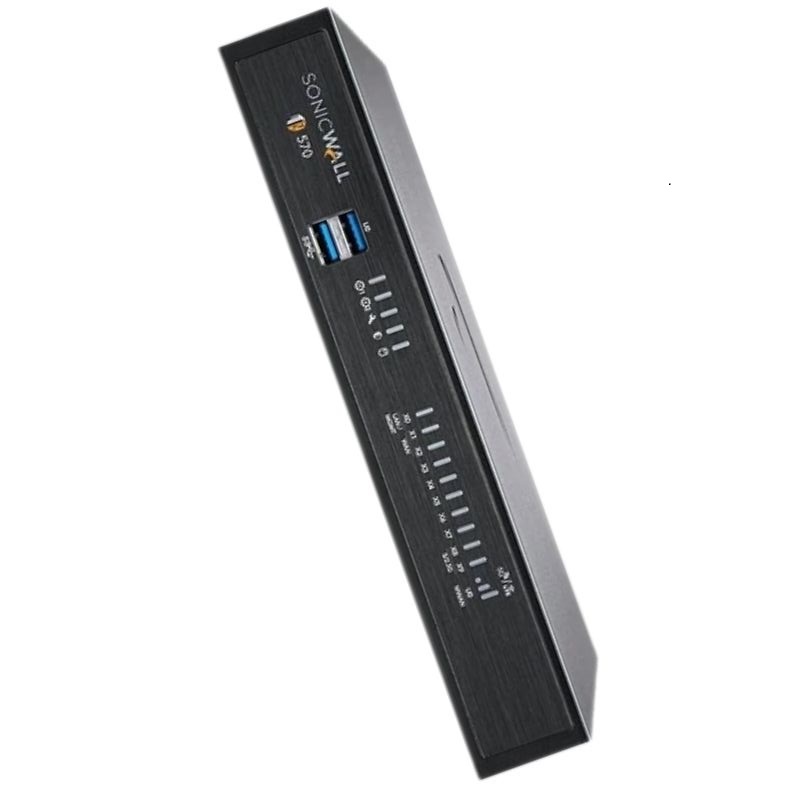
Dell AB292091 TZ570 5 GBPS Gigabit Ethernet High Availability Firewall

AB292091
* Product may have slight variations vs. image
Hover on image to enlarge

Brief Overview of AB292091

Dell AB292091 TZ570 5 GBPS High Availability Firewall. New Sealed in Box (NIB)

$1,347.30
$998.00
You save: $349.30 (26%)
Ask a question
Price in points: 998 points
+
Quote

Additional 7% discount at checkout

SKU/MPNAB292091Availability✅ In StockProcessing TimeUsually ships same day ManufacturerDell Manufacturer WarrantyNone Product/Item ConditionNew Sealed in Box (NIB) ServerOrbit Replacement Warranty1 Year Warranty
Google Top Quality Store Customer Reviews
Our Advantages
Payment Options
  • — Visa, MasterCard, Discover, and Amex
  • — JCB, Diners Club, UnionPay
  • — PayPal, ACH/Bank Transfer (11% Off)
  • — Apple Pay, Amazon Pay, Google Pay
  • — Buy Now, Pay Later - Affirm, Afterpay
  • — GOV/EDU/Institutions PO's Accepted 
  • — Invoices
Delivery
  • — Deliver Anywhere
  • — Express Delivery in the USA and Worldwide
  • — Ship to -APO -FPO
  • For USA - Free Ground Shipping
  • — Worldwide - from $30
Description

Overview of Dell AB292091 High Availability Firewall 

The Dell AB292091 TZ570 HA firewall unit provides a reliable, high-speed, and secure connection for organizations seeking maximum uptime. Built for consistent performance, this secondary high availability device ensures network continuity, scalability, and enterprise-grade protection. Designed with advanced Ethernet technology and multi-gigabit throughput, it supports a wide range of business applications and security requirements.

Core Specifications of Dell AB292091 TZ570 HA Unit

  • Brand: Dell
  • Part Number: AB292091
  • Device Type: Next-Generation Firewall (High Availability Secondary)
  • Form Factor: Desktop, space-efficient design
  • Networking Protocol: Gigabit Ethernet, SNMP, SSH, DHCP
  • Data Transfer Speed: Up to 5 Gbps
  • Operating System: SonicOS 7

High-Speed Data & Secure Connectivity

The Dell TZ570 HA firewall supports 5 Gbps data transfer rates, making it ideal for modern enterprises that require low-latency and uninterrupted connectivity. Its wired Ethernet interface delivers stability, while the firewall ensures secure tunneling, intrusion prevention, and advanced threat protection across networks.

Performance Highlights
  • VPN IPsec Throughput: 1.8 Gbps for secure remote connectivity
  • IPS Throughput: 2.5 Gbps for intrusion prevention and threat detection
  • HA Secondary Role: Ensures seamless failover with minimal downtime
  • Remote Management: Supports SNMP, SSH, and DHCP for flexible administration

Interface & Connectivity Options

This firewall is equipped with a variety of high-speed ports and interfaces designed for diverse networking requirements. Its modular design supports advanced deployments for businesses with evolving IT infrastructures.

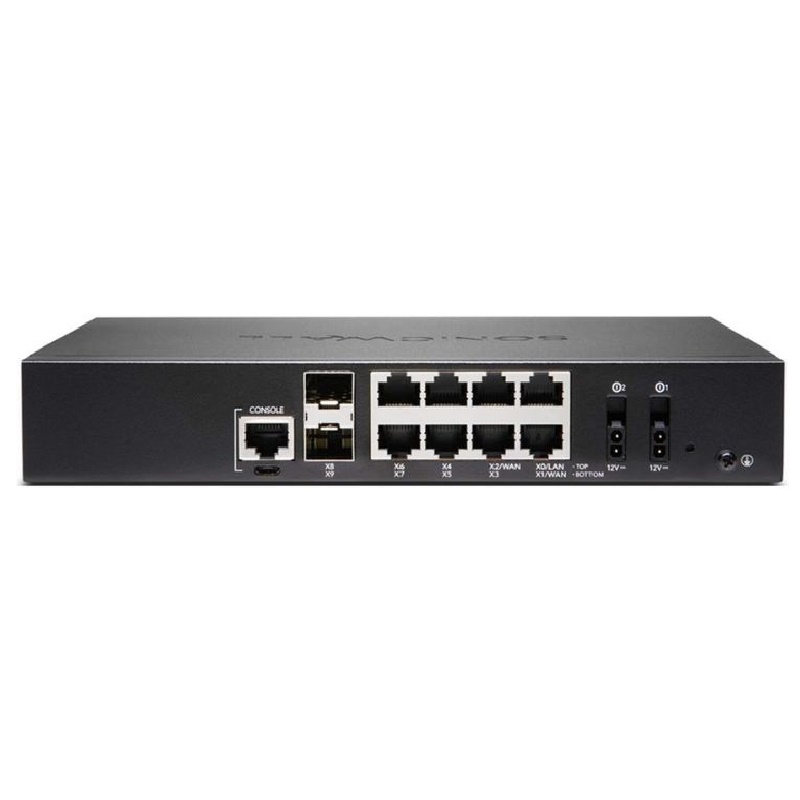
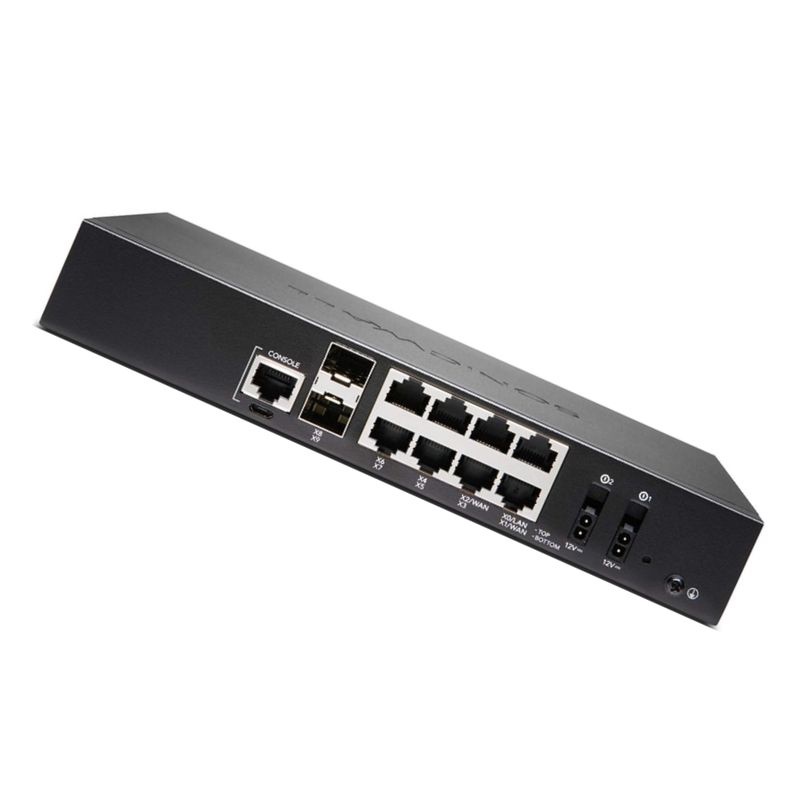
  • 8 × 1GbE interfaces for high-volume traffic handling
  • 2 × 5G SFP+ ports for multi-gigabit fiber connectivity
  • 2 × USB 3.0 ports for device expansion and upgrades
  • 1 × Console port for configuration access
  • 1 × Micro-USB console option

Energy-Efficient Power Features

Designed for efficient power usage, the Dell AB292091 TZ570 HA firewall offers cost-effective energy consumption without compromising performance. Its global voltage compatibility ensures flexibility for deployment across multiple regions.

  • Power Type: Integrated power supply
  • Maximum Power Consumption: 13.4W
  • Voltage Required: 100–240V AC, 50–60Hz

Dell TZ570 HA Secondary Firewall

This firewall is engineered as a secondary HA unit, making it essential for businesses that require maximum uptime, reduced risk of downtime, and uninterrupted productivity. Its robust design supports enterprise environments, SMBs, data centers, and remote office setups.

Advantages of Deploying Dell AB292091 TZ570

  • Guarantees uninterrupted operations with high availability failover
  • Supports advanced networking protocols for complex IT infrastructures
  • Provides scalable throughput for growing business demands
  • Ensures simplified network management via SNMP and SSH
  • Energy-efficient design lowers operational costs
Ideal Use Cases
  • Enterprises requiring redundant firewall solutions
  • Organizations with mission-critical network security needs
  • SMBs demanding reliable yet cost-effective network protection
  • IT managers seeking centralized, remote, and automated control

Technical Excellence with SonicOS 7

Running on SonicOS 7, this firewall brings enhanced security capabilities, streamlined management, and intuitive administrative tools. Its modern user interface, robust VPN features, and policy management make it a preferred solution for businesses focusing on both performance and security.

Category Outline: Dell AB292091 Gigabit Ethernet High Availability Firewall 

The Dell AB292091 TZ570 5 GBPS Gigabit Ethernet High Availability Firewall represents a category of next-generation firewall appliances built for organizations that need enterprise-grade security in a compact, efficient form factor. This category focuses on devices engineered to deliver multi-gigabit inspection, deep packet analysis, and resilient high availability (HA) clustering while simplifying deployment across headquarters, branch offices, retail locations, schools, healthcare clinics, and distributed SMB/SME networks. Solutions in this class blend threat prevention, SD-WAN optimization, VPN, application visibility, and zero-touch provisioning into a single, manageable platform that scales with your environment. The emphasis is on predictable performance, policy consistency, and business continuity—ensuring security does not become a bottleneck to your growth.

This Category Exists

Modern networks are more diverse and demanding than ever. Encrypted traffic dominates, cloud apps proliferate, and hybrid workforces require consistent security from anywhere. The result is a need for security gateways that go beyond basic stateful inspection and static rules. The Dell AB292091 TZ570 5 GBPS category addresses this challenge by combining high-speed Gigabit Ethernet interfaces with advanced security services and HA capabilities. Whether you operate a single location with heavy cloud use or a dispersed footprint with dozens of branches, this type of firewall is designed to maintain low latency, strong protection, and near-zero downtime.

Benefits From This Category

  • Small to Mid-Sized Businesses (SMB/SME): Gain enterprise security without enterprise complexity, with the option to scale policies and throughput as traffic grows.
  • Retail and Hospitality: Consistent protection for POS devices and guest networks, segmenting traffic while maintaining uptime.
  • Education and Non-Profit: Enforce content and application policies, protect sensitive data, and support remote learning access.
  • Healthcare Clinics: Protect ePHI, support secure telehealth, and meet compliance objectives with encrypted VPNs and granular controls.
  • Distributed Enterprises: Use SD-WAN and site-to-site VPN to connect branches reliably, with centralized policy management and HA for continuity.

Core Capabilities of the Gigabit Ethernet High Availability Firewall Category

Devices in this category, including the Dell AB292091 TZ570 5 GBPS Gigabit Ethernet High Availability Firewall, share key platform attributes that define their value. These attributes are not limited to a single model; rather, they describe the broader capabilities customers expect from this tier.

Deep Packet Inspection With Threat Prevention

At the heart of this category is deep packet inspection (DPI) that goes beyond ports and protocols to analyze traffic content in real time. The goal is to detect malware, command-and-control communications, ransomware indicators, and infiltration attempts—even when adversaries try to blend in with legitimate application flows. Advanced security subscriptions typically enhance the base engine with cloud-assisted intelligence, rapidly updating signatures, behavioral heuristics, and machine-learning-assisted detection. This layered approach reduces dwell time and cuts off threats before they move laterally.

Encrypted Traffic Inspection (TLS/SSL)

Because a large share of traffic is encrypted, this category emphasizes TLS/SSL inspection with policies that are granular and privacy-aware. Administrators can selectively decrypt per application, destination category, or user group, minimizing disruption while closing blind spots. Certificate management, hardware acceleration (where available), and smart bypass rules help keep latency low, even when decrypting at scale.

Application and User Visibility

Application identification allows policies to reference actual business apps rather than ports. Coupled with user identity integration, the firewall enforces policies aligned to roles and departments. This provides meaningful segmentation—HR tools for HR staff, developer tools for engineering, and controlled internet access for guests—without heavy VLAN sprawl.

High Availability for Business Continuity

High availability is a cornerstone of this category. The Dell AB292091 TZ570 5 GBPS Gigabit Ethernet High Availability Firewall class supports active/standby or active/active clustering options (model and license dependent), with synchronized configuration states and session failover to keep users connected during a hardware or link failure. Heartbeat monitoring, link monitoring, and failover triggers allow administrators to choose how the pair behaves under different failure conditions. The result is predictable, quick failover that preserves the user experience and minimizes help desk tickets.

HA Design Patterns

  • Active/Standby: One unit takes live traffic; the other mirrors configuration and state, ready to take over in milliseconds.
  • Active/Active (where supported): Load distribution across units for resource efficiency, with full redundancy.
  • Link and Path Monitoring: Detect upstream or downstream link issues and trigger failover to the healthy path or peer.
  • Session Synchronization: Maintain session continuity through failover so users rarely notice an event.

Gigabit Ethernet Performance and 5 Gbps-Class Throughput

The defining characteristic of this category is line-rate Gigabit Ethernet with multi-gigabit firewall performance. Appliances are designed to handle simultaneous security services—including IPS, gateway AV, application control, and SSL decryption—without crippling throughput for typical branch and campus traffic mixes. While exact throughput figures depend on test conditions, enabled features, and packet sizes, the category targets consistent multi-gigabit performance suitable for cloud-first workflows, SaaS adoption, and backup or replication tasks that require sustained bandwidth.

Performance Planning Considerations

  • Real-World vs. Lab Numbers: Expect lower throughput when multiple security services and decryption are enabled. Right-size headroom for growth.
  • Packet Size and Traffic Mix: Small packets, heavy TLS, and east-west inspection can create higher CPU demand than bulk transfers.
  • HA Overhead: Session synchronization and heartbeat traffic are lightweight, but should be included in capacity planning.
  • Uplink Diversity: Multi-WAN and SD-WAN steering help maximize throughput by choosing the best path per application.

Network Edge, SD-WAN, and Multicloud Readiness

As organizations shift resources to public cloud and SaaS, the firewall category represented by the Dell AB292091 TZ570 5 GBPS model serves as the control point for routing, segmentation, and secure access. SD-WAN features allow dynamic path selection and forward error correction for critical apps, while policy-based routing ensures that VoIP, video conferencing, and CRM traffic get the low-latency paths they need.

SD-WAN Features to Expect

  • Application-Aware Path Selection: Choose links based on jitter, loss, and latency thresholds.
  • Link Aggregation and Load Distribution: Use multiple ISPs for resilience and performance, with automatic failover.
  • Forward Error Correction (FEC): Improve quality on lossy links for real-time traffic.
  • Zero-Touch Provisioning: Deploy branch firewalls with minimal onsite effort, pulling policies from a central controller or cloud manager.

Multicloud Connectivity

Site-to-site VPNs, policy-based tunnels, and integration with cloud gateways extend consistent security to AWS, Azure, and other cloud providers. By maintaining unified policies across on-prem and cloud segments, administrators can reduce configuration drift and audit more effectively.

Security Services and Subscriptions

Beyond the base firewall, this category often includes modular security services to tailor protection levels. While specific bundles vary, the following are common across the class:

Intrusion Prevention System (IPS)

Signature- and behavior-based detection blocks known exploits and suspicious patterns. Regular updates keep detection current against emerging threats. Tuning profiles help reduce false positives without compromising coverage.

Gateway Anti-Malware and Sandboxing

Integrated gateway AV scans for known malware, while sandbox detonation inspects suspicious files in a controlled environment to detect zero-day threats. Cloud intelligence accelerates analysis, returning verdicts quickly to keep user experience smooth.

Content Filtering and Application Control

URL filtering enforces acceptable use policies and reduces risk by blocking access to dangerous sites. Application control provides fine-grained rules—for instance, allowing collaboration tools while disallowing file sharing inside those tools for specific groups.

DNS Security

DNS filtering blocks connections to malicious domains and command-and-control infrastructure, catching threats that bypass traditional signatures. It is a lightweight layer that adds defense-in-depth without major performance cost.

Data Loss Prevention (DLP) and Compliance Aids

Some bundles include DLP dictionaries or simple pattern matching to prevent accidental exfiltration of sensitive data such as payment card numbers or personally identifiable information. While DLP in gateway devices is not a full substitute for endpoint DLP, it provides a useful safety net for outbound traffic.

High Availability Architecture in Detail

High availability ensures continuity of operations during component failures, software patches, or upstream outages. Within this category, HA is more than a checkbox—it is an operational design principle.

Redundancy Components

  • Hardware Redundancy: Paired appliances, redundant power (where applicable), and hot-swappable components (model dependent).
  • Link Redundancy: Multiple WAN circuits, preferably from diverse carriers and physical paths.
  • Path and Health Checks: ICMP, TCP, or HTTP checks to upstream targets to distinguish local vs. remote failures.
  • Configuration Synchronization: Automatic sync of rules, objects, and certificates between peers.

Failover Events and Timers

HA systems monitor heartbeats and link state. When thresholds are exceeded—such as link down, path failure, or unit health loss—the standby becomes active. Administrators can tune failover aggressiveness to balance sensitivity with stability and avoid flapping.

Testing HA Without Disrupting Users

Best practice includes scheduled maintenance windows to test failover and document behavior. Packet captures, synthetic transactions, and real-time dashboards verify session persistence and voice/video continuity. Keeping a runbook ensures that staff can execute and roll back confidently.

Deployment Scenarios for the Dell AB292091 TZ570 5 GBPS Category

This category adapts to diverse environments. The following scenarios illustrate common patterns that maximize the value of a 5 Gbps-class, Gigabit Ethernet firewall with HA.

Branch Office With Cloud-First Workloads

Deploy a pair of firewalls in HA at the branch edge. Use SD-WAN policy to steer Microsoft 365, Salesforce, and VoIP to the primary low-latency ISP while bulk backups traverse a cost-effective secondary link. Enforce decrypted inspection for sensitive apps to catch phishing and credential theft. Segment IoT devices (printers, cameras) into their own zones with limited egress policies.

Retail Multi-Site With Guest Wi-Fi

Use VLANs or zones to separate POS networks from guest Wi-Fi. Apply strong content filtering for guest traffic, while enforcing strict egress rules and DNS security on POS segments. Site-to-site VPNs carry POS data back to the data center or payment processor over encrypted tunnels. HA prevents downtime at the point of sale, which directly impacts revenue and customer experience.

Education Campus With Hybrid Learning

Identity-based policies map to student and staff roles. Content filtering maintains compliance with educational standards. SSL decryption is applied selectively to block malware in encrypted channels. HA keeps online testing and virtual classrooms available even during hardware or link failures.

Healthcare Clinic With Telehealth

Segment medical devices and administrative workstations. Apply intrusion prevention and strict outbound policies to protect ePHI. Enforce IPSec VPN between clinics and the hospital network. Redundant WAN links ensure telehealth sessions remain stable, and HA keeps EHR access available during maintenance.

Management and Automation

Usability is central to this category’s appeal. Administrators want intuitive interfaces, consistent policy objects, and robust logging that supports troubleshooting and audits.

Centralized Management

Cloud-based or on-premise management consoles allow administrators to push templates, monitor health, and roll out updates across fleets. Role-based access control (RBAC) delegates site-level tasks without compromising global standards. Version-controlled configurations and change logs improve governance.

Zero-Touch Provisioning (ZTP)

Devices can be shipped directly to a site where non-technical staff power them on and connect them to the network. The firewall securely checks in to the management service, pulls its assigned template, and applies policies automatically. ZTP accelerates timelines, reduces travel costs, and minimizes human error.

REST APIs and Infrastructure as Code

Modern firewalls in this category often expose APIs for automation. Teams can integrate configuration management with CI/CD pipelines, ensuring that rule changes are peer-reviewed and tested. Scripts can handle bulk updates, object creation, and report extraction—freeing staff to focus on design and analysis.

Logging, Reporting, and Forensics

Granular logs capture allowed and blocked traffic, security events, and system status. Dashboards highlight top talkers, risky applications, and anomalous behavior. For incident response, searchable logs with drill-down capabilities make it easier to reconstruct a timeline and confirm whether a detection escalated to compromise. Export to SIEM platforms supports correlation with endpoint and identity telemetry.

Policy Design and Best Practices

Strong security stems from clear policies. This category supports layered defenses that are effective and maintainable.

Principle of Least Privilege

Start with deny-by-default and explicitly allow the applications and destinations needed for business function. Use identity-based rules to align permissions with job roles. Periodically review rules to retire exceptions that are no longer required.

Segmentation and Micro-Segmentation

Use zones to separate user networks, servers, IoT/OT, and guest traffic. Where feasible, add micro-segmentation with application rules to prevent lateral movement. Monitoring inter-zone flows helps reveal shadow IT and unnecessary trust relationships.

SSL Inspection with Care

Decrypt only what’s necessary. Exclude privacy-sensitive categories (such as healthcare or banking sites) from decryption where required by policy or regulation. Maintain an updated certificate authority on managed endpoints for a smooth user experience.

Change Control and Staging

Stage new rules in a test environment or apply them in monitor-only mode to observe impact before enforcing. Use time-based policies for temporary exceptions, ensuring they do not become permanent risks.

Licensing and Lifecycle Considerations

Firewall platforms typically offer multiple security bundles and support tiers. Choosing the right set balances cost with risk tolerance and compliance obligations.

Common Licensing Elements

  • Base Platform License: Covers core firewalling, routing, and basic VPN services.
  • Advanced Security Suite: Adds IPS, gateway AV, application control, DNS filtering, and sandboxing where available.
  • Support and Firmware Updates: Access to technical support, RMA, and ongoing software improvements for stability and security.
  • Cloud Management: Optional or bundled access to centralized management features.

Lifecycle and Refresh Planning

As bandwidth needs grow and encrypted traffic increases, plan for periodic capacity reviews. Track CPU utilization, concurrent sessions, and SSL inspection rates to anticipate upgrades before performance becomes a constraint. Keep firmware current to benefit from security fixes and performance optimizations.

Performance Tuning and Optimization

Even a high-performance device in this category benefits from thoughtful tuning to align with your specific traffic profile and business priorities.

Hardware and Interface Configuration

  • Use Link Aggregation (LAG) Where Supported: Combine multiple Gigabit Ethernet links to increase throughput and redundancy.
  • Set MTU Appropriately: Align with ISP and upstream equipment to avoid fragmentation that can degrade performance.
  • VLAN Design: Keep broadcast domains reasonable in size; map VLANs to security zones for clear policy boundaries.

Security Services Tuning

  • IPS Profiles: Choose balanced or performance-optimized profiles for latency-sensitive segments.
  • Application Control: Allow essential sub-functions and block risky ones to reduce noise.
  • Exclude Trusted Destinations from Inspection: For known, low-risk SaaS endpoints, consider bypass to conserve resources—subject to your risk posture.

SD-WAN and QoS

Define SLA thresholds for critical applications and use QoS to ensure real-time traffic like voice and teleconferencing receives priority. With dual ISPs, steer best-effort traffic to the cheaper link while preserving premium bandwidth for business-critical apps.

Compliance and Governance

Organizations across verticals must comply with frameworks such as PCI DSS, HIPAA, SOX, or ISO/IEC 27001. While compliance is broader than a single device, this firewall category contributes key controls.

Controls Supported by This Category

  • Network Segmentation: Reduce scope by isolating cardholder data environments or protected health information networks.
  • Access Control Enforcement: Identity-aware rules ensure only authorized users reach sensitive systems.
  • Logging and Audit Trails: Detailed event logs support forensic analysis and audit evidence.
  • Encryption in Transit: IPSec VPN and TLS help protect data as it traverses untrusted networks.

Policy Documentation and Evidence

Pair device configurations with documented policies, change logs, and periodic reviews. Automated reports showing rule hits, blocked threats, and administrative access help demonstrate control effectiveness to auditors.

Migration and Upgrade Strategy

Moving to a new firewall platform or upgrading within the same family requires preparation to minimize downtime and preserve security posture.

Assessment and Discovery

Start by exporting policies and running traffic analysis to identify top applications, bandwidth trends, and risky flows. Map existing VLANs and routes. Identify duplicate or unused rules that can be retired during the migration to simplify the rule base.

Pilot and Phased Rollout

Pilot the new device at a low-risk site or under a span/monitor interface. Validate application recognition, decryption policies, and VPN interoperability. Once validated, schedule a phased cutover with a clear rollback plan and maintenance window aligned to business cycles.

Data and Certificate Handling

Ensure that certificates for SSL inspection and VPN are exported/imported securely. Coordinate with endpoint management tools to distribute trusted root certificates where required, avoiding browser warnings and application failures after go-live.

Physical and Environmental Considerations

Appliances in this category are typically compact, with fan designs suitable for branch environments. Nevertheless, placement and cabling still matter for longevity and performance.

Best Practices for Installation

  • Ventilation: Allow adequate airflow; avoid stacking heat-producing devices close together.
  • Power Protection: Use UPS and surge protection to guard against power fluctuations and to support graceful shutdowns.
  • Cable Management: Label WAN and LAN connections; keep HA heartbeat links physically distinct from production cables.
  • Out-of-Band Access: Where possible, provide an OOB management path for secure remote troubleshooting during outages.

Interoperability and Ecosystem

These firewalls interoperate with directory services, identity providers, SIEM/SOAR platforms, and endpoint security tools. This ecosystem approach supports coordinated detection and response.

Identity and Access Integration

Connect to Active Directory or modern identity platforms for user and group resolution. Use SSO and SAML/OIDC where supported to align network access with identity-centric security models. Map traffic to identities to gain visibility and enforce policies precisely.

SIEM and SOAR

Forward logs to SIEMs for correlation with endpoint telemetry, email security, and cloud workload alerts. Automate playbooks via SOAR—such as quarantining an IP, blocking a domain, or revoking access—when the firewall detects a high-confidence threat.

Endpoint and EDR Synergy

Combine network detections with endpoint signals to identify stealthy attackers who evade one control plane. For example, if EDR flags a host for suspicious behavior, the firewall can automatically move that device into a restricted quarantine segment until it is remediated.

Use-Case Deep Dives

To highlight how the Dell AB292091 TZ570 5 GBPS Gigabit Ethernet High Availability Firewall category delivers value, consider three deep-dive use cases:

Use Case 1: SaaS Acceleration With Security

A professional services firm relies on cloud project tools, video meetings, and shared document repositories. By enabling SD-WAN with application-aware steering, the firewall ensures real-time traffic uses the lowest-latency link, while bulk file sync uses a more cost-effective path. With selective SSL inspection and IPS enabled, the organization blocks malware hidden in encrypted downloads while maintaining collaboration performance. HA ensures that a device failure does not interrupt client calls.

Use Case 2: Secure Remote Access for a Hybrid Workforce

An engineering company uses SSL VPN for contractors and IPSec tunnels for full-time staff. The firewall enforces device posture checks and splits traffic so internal resources are available while public SaaS goes direct to the internet for speed. Identity-based policies restrict lab networks to approved users only. With centralized management, the team rolls out new VPN profiles to multiple sites consistently, and HA avoids downtime during firmware updates.

Use Case 3: Protecting IoT and OT Devices

A manufacturer segments shop-floor sensors and controllers from the corporate network. Application control blocks risky services, and DNS filtering prevents beaconing to known malicious domains. The firewall monitors unusual lateral movement and triggers alerts to the SOC. Multi-WAN links isolate production from office internet outages, and HA maintains uptime for time-sensitive processes.

Capacity and Right-Sizing Guidance

Right-sizing is critical for a satisfying long-term outcome. While the 5 Gbps-class headline promises ample horsepower for many branches and campuses, consider concurrency, SSL inspection ratio, and growth trajectories.

Key Sizing Questions

  • What percentage of traffic requires decryption and content scanning?
  • How many concurrent VPN users and site-to-site tunnels are needed during peak times?
  • Which applications are highest priority for QoS, and what SLA metrics must be maintained?
  • How much bandwidth growth is projected over the next three years?

Plan for Headroom

Provision 20–40% performance headroom to absorb bursts, seasonal peaks, and new security services you may enable later. This approach reduces emergency upgrades and provides stability when traffic patterns change unexpectedly.

Operational Security and Hardening

Beyond traffic inspection, harden the appliance itself to limit the attack surface.

Hardening Checklist

  • Disable unused management protocols; prefer encrypted management channels.
  • Implement RBAC with least privilege for administrators; rotate credentials regularly.
  • Restrict management access by source IP and, where supported, require MFA.
  • Keep firmware updated and subscribe to vendor advisories.
  • Backup configurations, including HA peers, and test restores.

Config Drift and Continuous Compliance

Use templates and configuration baselines. Regularly compare running configs to the baseline to detect drift. Automated compliance checks against your internal standards—naming conventions, logging settings, SSL ciphers—help sustain a healthy posture at scale.

Sustainability and Edge Efficiency

Branch equipment plays a role in sustainability. Consolidated devices that deliver multiple services in one appliance can reduce energy consumption and e-waste. Centralized management lowers truck rolls and the carbon cost of onsite maintenance. Choosing devices that meet your performance needs without dramatic overprovisioning also helps manage long-term energy usage.

Future-Proofing The Network Edge

The network edge will continue to evolve with 5G/FTTP access, more encrypted traffic, and increasingly sophisticated threats. The Dell AB292091 TZ570 5 GBPS Gigabit Ethernet High Availability Firewall category is designed to keep pace through firmware enhancements, updated security engines, and scalable licensing. As secure access service edge (SASE) and zero trust initiatives mature, these appliances act as foundational enforcement points that integrate with cloud security services and identity-centric policy controls.

Zero Trust-Aligned Capabilities

  • Identity-Driven Policy: Enforce least privilege based on user, device posture, and application sensitivity.
  • Micro-Segmentation: Limit east-west movement with granular controls between internal segments.
  • Continuous Verification: Use logs, device health, and behavioral analytics to adapt policy decisions.

Practical Buying Considerations

When evaluating appliances in this category, use a structured checklist so you match capabilities to your environment.

Checklist

  • Does the device support the required number of Gigabit Ethernet interfaces and optional expansion?
  • Can it sustain your estimated SSL inspection ratio while running IPS, application control, and DNS security?
  • Is HA licensing straightforward, and are failover modes compatible with your switching and routing design?
  • Are SD-WAN features robust enough for your SLA targets and ISP diversity?
  • Does centralized management fit your existing workflows and access control requirements?
  • Are logging and reporting flexible, with easy export to your SIEM?
  • What is the total cost of ownership over three to five years, including subscriptions and support?

Actionable Next Steps

Prepare Your Environment

  • Inventory applications, users, and peak bandwidth to inform sizing.
  • Define segmentation goals and compliance requirements.
  • Plan WAN diversity, including primary and backup circuits with distinct paths.

Design the Policies

  • Map application needs and user roles to allow rules; start with deny-by-default.
  • Decide which traffic requires SSL inspection and where exceptions are necessary.
  • Establish QoS markings and SD-WAN SLAs for real-time traffic.

Implement and Validate

  • Deploy in HA for continuity; validate failover and session persistence.
  • Use centralized templates to ensure consistency across sites.
  • Test VPN interoperability and throughput under realistic loads.

Operate and Improve

  • Automate backups, reporting, and alerting.
  • Review rule hits and threats monthly; refine as your environment evolves.
  • Stay current with firmware and security intelligence updates.

Glossary of Key Terms

  • HA (High Availability): A configuration of two or more devices that provide redundancy and fast failover.
  • DPI (Deep Packet Inspection): Inspection of packet payloads to identify applications and threats.
  • SD-WAN: Software-defined WAN technology that selects the best path for traffic based on performance metrics.
  • IPS (Intrusion Prevention System): Technology that detects and blocks exploits and suspicious activity.
  • SSL/TLS Inspection: Decryption and inspection of encrypted traffic to detect hidden threats.
  • QoS (Quality of Service): Traffic prioritization mechanisms to maintain application performance.
  • SIEM: Security Information and Event Management platform for centralized analysis and correlation of logs.
  • ZTP (Zero-Touch Provisioning): Automated device onboarding with minimal onsite configuration.
Features
Manufacturer Warranty:
None
Product/Item Condition:
New Sealed in Box (NIB)
ServerOrbit Replacement Warranty:
1 Year Warranty