(7% discount is applied at checkout)
Cart is empty
Your go-to destination for cutting-edge server products
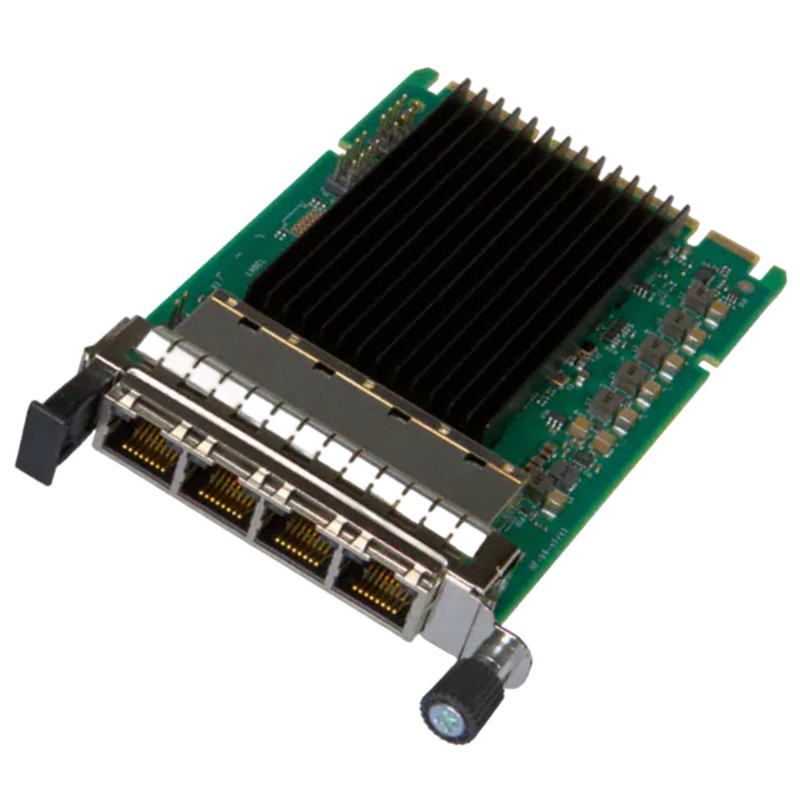


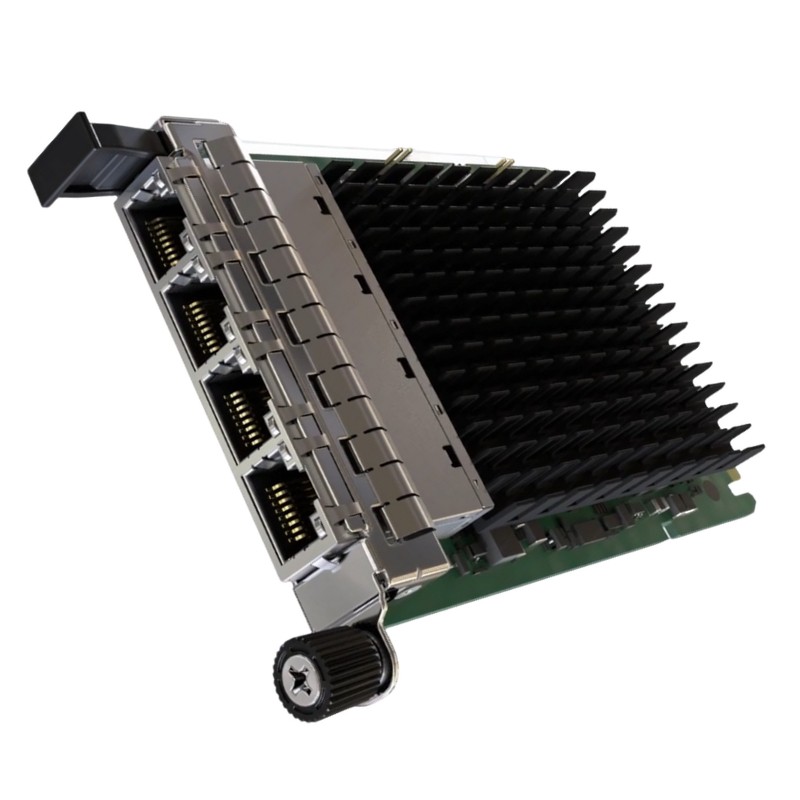
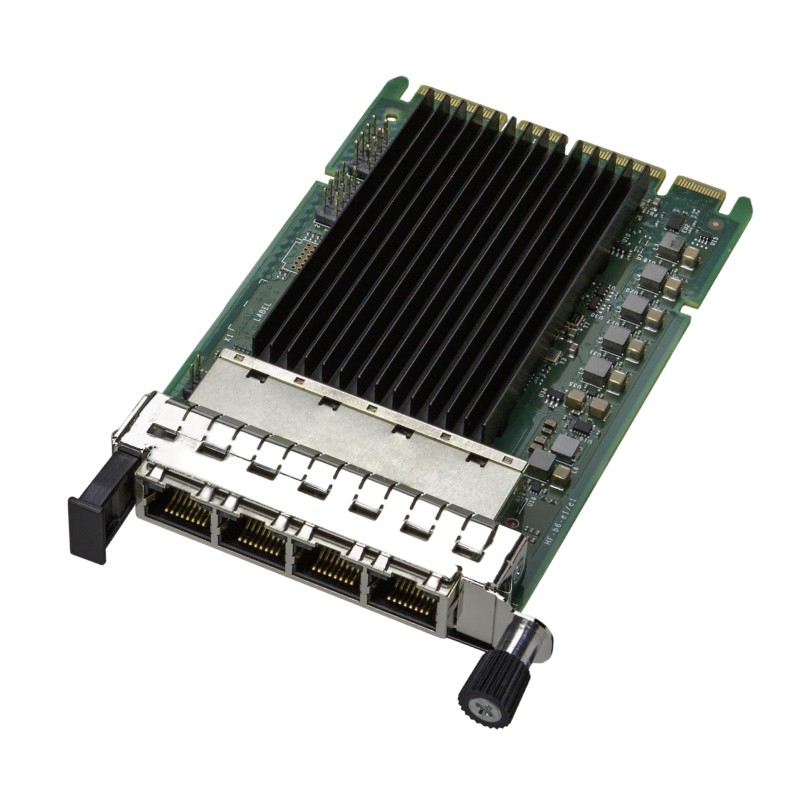
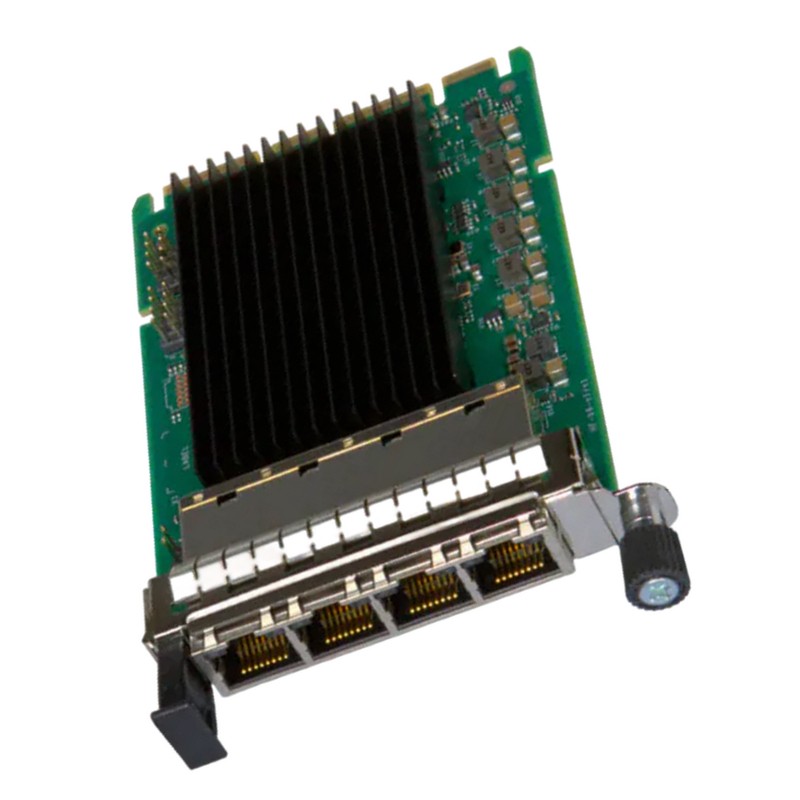
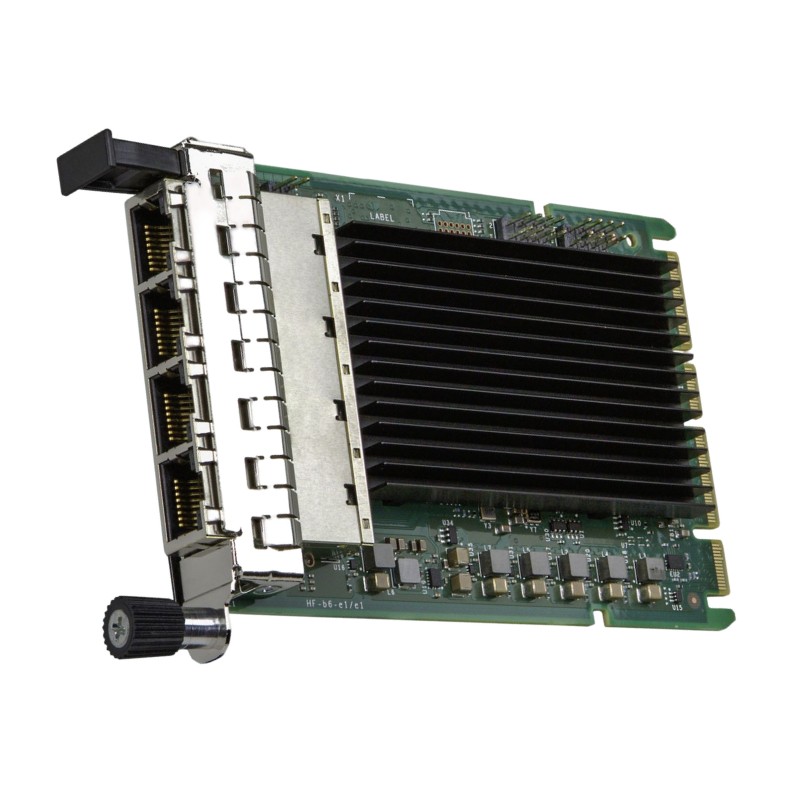
E610-IT4 Intel 4 Ports 2.5GB PCI-Express 4.0 x8 Ethernet Network Adapter. Factory-Sealed New in Original Box (FSB) with 3 Years Warranty
Experience a significant leap in data transfer rates and network responsiveness with this advanced 2.5 Gigabit Ethernet solution. Engineered for modern workloads, it effortlessly handles high-bandwidth applications, eliminating bottlenecks and ensuring smooth, uninterrupted data flow for demanding professional environments.
Designed for modern networking demands, the E610-IT4 Intel 4 Ports 2.5GB PCI-Express 4.0 x8 Ethernet Network Adapter brings a balance of multi-gig performance, low-latency packet handling, and enterprise-grade reliability. This category focuses on 2.5 Gigabit Ethernet solutions built on the PCIe 4.0 x8 interface, providing significantly more throughput and headroom than legacy 1GbE adapters while remaining cost-effective and compatible with a wide range of servers, workstations, and network appliances. The E610-IT4 line targets IT professionals, datacenter operators, network architects, and prosumers who require multi-port density combined with modern offloads and software integration.
The architectural foundation of the E610-IT4 centers on multi-gig Ethernet PHYs paired with a PCI-Express 4.0 x8 host interface. This configuration offers sustained throughput across four independent 2.5GbE ports without saturating system bus resources, making it well suited for consolidation of multiple virtual machines, containerized workloads, and multi-tenant environments. Hardware acceleration for checksum offload, large receive offload (LRO), and large send offload (LSO) reduces CPU utilization while maintaining line-rate performance. The adapter's support for advanced interrupt moderation and adaptive interrupt coalescing further tunes CPU interrupts for throughput-sensitive or latency-sensitive workloads, depending on administrator preferences.
The E610-IT4’s multi-port configuration enables aggregated throughput potential that scales well for mid-sized servers and edge appliances. Because each port runs at up to 2.5 Gbps, combined link utilization can deliver multi-gigabit bandwidth for east-west traffic inside racks and between top-of-rack switches. Latency characteristics are optimized with minimal serialization delay and efficient DMA paths into host memory. When paired with modern CPUs and PCIe 4.0 lanes, the adapter minimizes bottlenecks for bursty traffic patterns and for microsecond-sensitive applications such as storage over IP, real-time communications, and high-frequency data ingestion.
A defining strength of this category is the breadth of hardware offloads that move common packet processing tasks away from the server CPU. Offloads typically include TCP/UDP checksum calculation, segmentation offload, VLAN tag insertion and removal, receive-side scaling (RSS) for multi-core packet distribution, and time-stamping capabilities for precise monitoring and telemetry. Offloads allow hosts to scale more virtual instances or higher I/O workloads without linear increases in CPU usage, improving overall server consolidation ratios and lowering operational cost per gigabit delivered.
The E610-IT4 class of adapters adheres to standard PCI-Express add-in card form factors and is commonly available in single-slot, low-profile, or full-height configurations to support a wide range of chassis designs. Physical connectivity uses RJ45 ports supporting Cat5e or higher cabling for 2.5GbE; leveraging existing copper infrastructure avoids costly upgrades to fiber in many deployments. The support for 2.5GBASE-T simplifies migration paths from legacy 1GbE while offering improved headroom for future growth. Cable length and quality considerations remain important: adhere to category cable specifications and best practices to maintain link integrity and minimize bit error rates at higher multi-gig speeds.
Multi-port adapters that provide hardware acceleration and multi-gig performance produce thermal and power profiles that should be understood during deployment planning. The E610-IT4 family typically includes integrated heatsinks, optimized PCB layouts, and power management features to keep temperatures within operational limits. Administrators should confirm chassis airflow and slot placement to ensure adequate cooling, particularly in dense server environments or blade enclosures. Power management support including PCIe power states and energy-efficient Ethernet (EEE) features contributes to lower idle power consumption when network traffic is light.
Because these adapters use the PCIe 4.0 x8 interface, they are forward-looking and compatible with modern server platforms that expose sufficient PCIe lane capacity. On platforms limited to PCIe 3.0, the adapter will often function at reduced link rates; while still delivering 2.5GbE operation on a per-port basis, overall aggregated performance may be constrained compared with PCIe 4.0 hosts. IT teams should evaluate motherboard slot allocation and CPU-to-slot NUMA proximity to avoid unexpected performance bottlenecks in multi-socket systems. Proper BIOS settings, slot riser selection, and vendor compatibility guides help ensure optimal performance and stability..
Virtualization-aware features broaden the adapter’s applicability in cloud-native and virtualized datacenters. Support for SR-IOV (Single Root I/O Virtualization) enables the presentation of virtual functions directly to guest VMs, reducing hypervisor CPU overhead and increasing I/O determinism. Integration with hypervisors for paravirtualized drivers, or with container networking plugins for high-performance network paths, increases efficiency for multi-tenant workloads. Administrators should plan driver and firmware versions in tandem with hypervisor updates to maintain compatibility and to leverage improvements in resource partitioning and telemetry.
Beyond raw bandwidth, enterprise deployments demand features that support segmentation, workload isolation, and secure management. These adapters often support VLAN tagging and prioritization for traffic separation and QoS enforcement, enabling administrators to separate storage traffic, management plane, and application data flows without additional hardware. Some models include trusted platform support, secure firmware updates, and cryptographic signing of firmware images to mitigate supply-chain and firmware attack vectors. Secure management via out-of-band utilities and rolebased configuration controls complements network-level security mechanisms.
Traffic prioritization and QoS controls on the adapter allow administrators to reserve bandwidth for critical applications and to differentiate latency-sensitive traffic such as VoIP or realtime streaming from bulk transfer workloads. Hardware-based prioritization reduces the burden on switches and hosts to classify traffic, enabling simpler and more resilient QoS designs. When combined with DSCP markings in the network core, these capabilities support end-to-end performance guarantees for businesscritical services.
Firmware lifecycle is a significant operational consideration. Vendors that provide transparent firmware release notes, secure update mechanisms, and rollback capabilities reduce the risk associated with maintenance windows. The category emphasizes the importance of an update plan that includes staging, testing in representative environments, and validating interoperability with network switch firmware and host operating systems. Automating firmware distribution and tracking version inventories helps maintain security posture and reduces unplanned disruptions.
The E610-IT4 family addresses a wide array of deployment scenarios ranging from edge servers and hyperconverged nodes to virtualization hosts and highdensity desktop workstations. In edge and branch offices, a four-port 2.5GbE adapter consolidates uplinks to local aggregation switches to support increased video surveillance throughput, VLANsegmented guest networks, and local storage replication. In enterprise compute clusters, the adapter provides the additional bandwidth needed for eastwest traffic between storage nodes and application servers without the immediate need to move to 10GbE. For creative professionals and workstations, multi-gig connectivity accelerates large file transfers and collaborative editing workflows over local file servers.
When used for IPbased storage solutions, such as iSCSI or NFS, a multi-port 2.5GbE card provides improved throughput over gigabit links and supports higher IOPS workloads when coupled with appropriate storage backends. The adapter's offload features reduce CPU cycles consumed by storage protocols, and support for jumbo frames can enhance efficiency for large block transfers. For converged infrastructure nodes, the adapter simplifies cabling and allows multiple logical networks (management, storage, VM traffic) to operate over fewer physical interfaces with robust partitioning and QoS.
Data ingestion points—log collectors, telemetry aggregators, and analytics appliances—benefit from the E610-IT4’s multi-port parallelism. By distributing flows across ports and leveraging receive-side scaling, system architects can feed high volumes of small messages or large bulk transfers into analytics pipelines without excessive CPU overhead. The adapter’s deterministic performance under varying packet sizes makes it suitable for appliances that require consistent latency with large fan-in from edge devices or sensors.
Interoperability with switches, routers, and NIC teaming solutions matters for real-world deployments. The E610-IT4 category interoperates with multi-vendor switch platforms and supports common link aggregation standards and bonding modes. Administrators should validate switch firmware capabilities such as LACP timers, multi-gig port negotiation, and auto-negotiation behaviour to ensure expected link behavior. Compatibility with industry-standard management protocols, SNMP counters, and sFlow/NetFlow exports enables unified visibility and simplifies operational workflows.
One of the practical advantages of 2.5GbE copper adapters is the ability to reuse existing cabling while providing a meaningful performance uplift over 1GbE. Organizations can adopt E610-IT4 cards as an incremental upgrade, colocating them with existing 1GbE and 10GbE links in hybrid architectures. Migration strategies can prioritize uplinks and storage nodes first, then move to wider adoption as switch infrastructure and cost considerations permit. Planning for firmware and driver lifecycles as part of migration minimizes interoperability surprises.
Proper validation includes baseline performance testing using representative traffic patterns, measuring CPU utilization under expected loads, and validating failover and bonding behaviour. Synthetic benchmarks must be complemented with application-level tests—such as storage read/write tests, real file transfer scenarios, and VM migration operations—to reveal practical bottlenecks. Validate latency and jitter for time-sensitive services and perform negative tests including cable disconnects, firmware downgraded states, and heavy broadcast storms to understand recovery characteristics.
Performance tuning often includes enabling RSS with an appropriate number of queues, adjusting affinity to place interrupt handling on cores paired with the NIC’s NUMA node, and enabling large MTU sizes where switch infrastructure supports jumbo frames. Administrators may disable or adjust EEE on links subject to intermittent traffic patterns, as energy-saving modes can introduce latency during link wake transitions. Monitoring and adjusting offload features per application profile ensures the right balance between CPU usage and latency for specific workloads.
Lifecycle planning for NICs should align with the broader server refresh cadence. Understand the vendor’s end-of-life (EOL) policy for hardware and software components, including notification windows and extended support options. When a particular adapter model nears EOL, plan for driver compatibility testing on newer host OS versions or potential migration to newer adapters with enhanced offloads and improved power profiles. Lifecycle-aware procurement reduces risk and avoids last-minute compatibility crises when infrastructure evolves.
Comparing 2.5GbE adapters to 1GbE and 10GbE alternatives clarifies where E610-IT4-style cards fit in procurement and architecture plans. Versus 1GbE, the multi-gig offering provides a substantial bandwidth uplift while preserving copper connectivity and moderate cost. Versus 10GbE, the 2.5GbE category offers a middle ground: improved bandwidth at a lower cost point but with less raw capacity than 10GbE. For many workloads—particularly those with many concurrent small flows or where cabling upgrades are undesirable—2.5GbE provides excellent price-to-performance.
High-density storage fabrics, high-performance databases, and environments with heavy east-west traffic between nodes may still justify 10GbE or higher. If aggregated throughput consistently exceeds what multiple 2.5GbE links can sustain or if low-latency under sustained multi-gigabit loads is a core requirement, investing in 10GbE switch fabrics and NICs is appropriate. However, for phased upgrades and heterogeneous networks, 2.5GbE adapters can extend existing infrastructure while delivering immediate performance gains.
Multi-port designs like the E610-IT4 provide port density that reduces the need for additional PCIe slots and simplifies cabling. Consolidation of multiple logical networks on a single adapter with robust offloads is more efficient for many virtualization and converged designs than deploying several singleport cards. Operationally, fewer adapters can mean simplified management and lower aggregate power draw when optimized correctly.


 Contact Us
 Information
 Catalog
 Solid State Drives (SSD)
 Network Switches
 Hard Disk Drives
 HBA & Controllers
 PC & Servers
 PC & Server Memory
 CPU & Processors
 Network Routers
 Power Supplies
 Tape Drives & Libraries
 Network Devices
 Computer & Network Cables