(7% discount is applied at checkout)
Cart is empty
Your go-to destination for cutting-edge server products
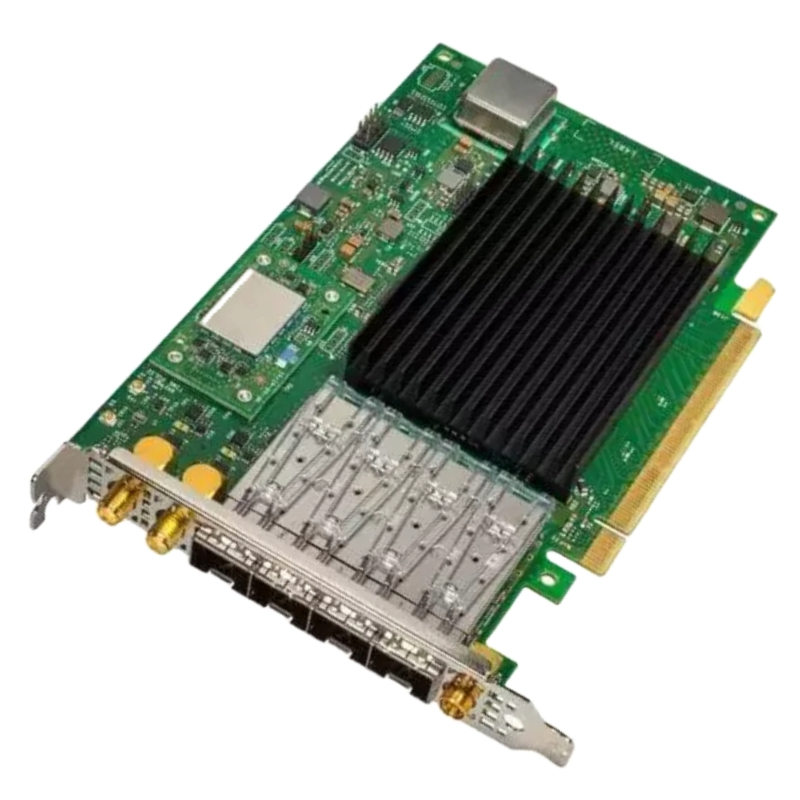


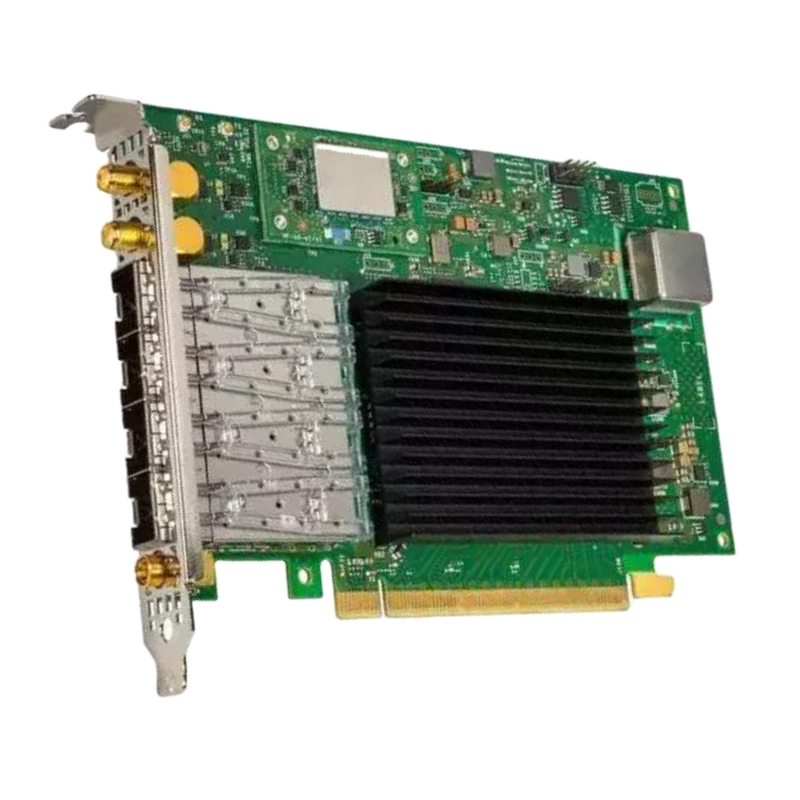
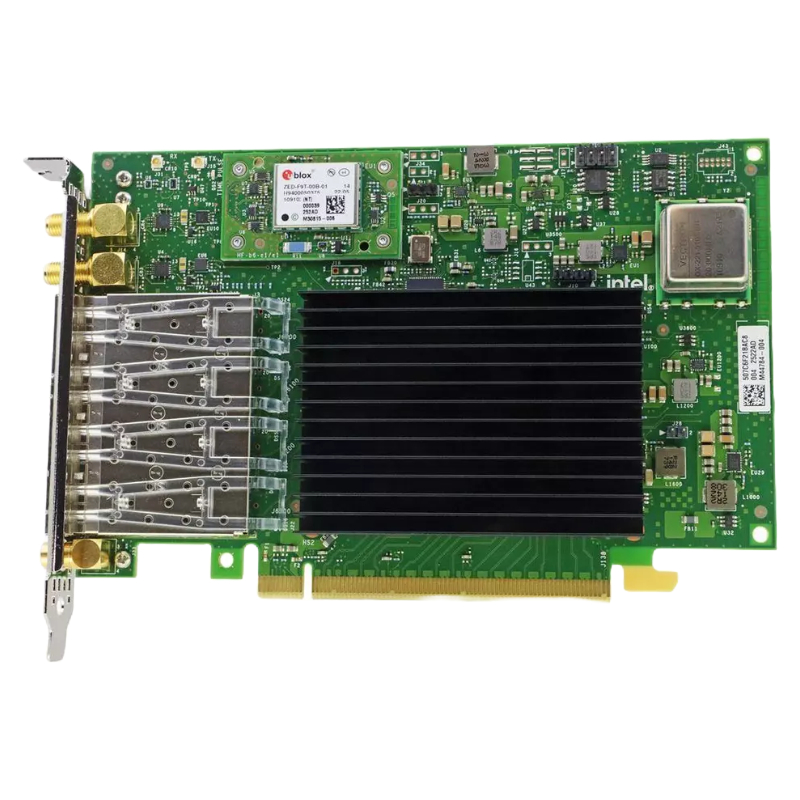
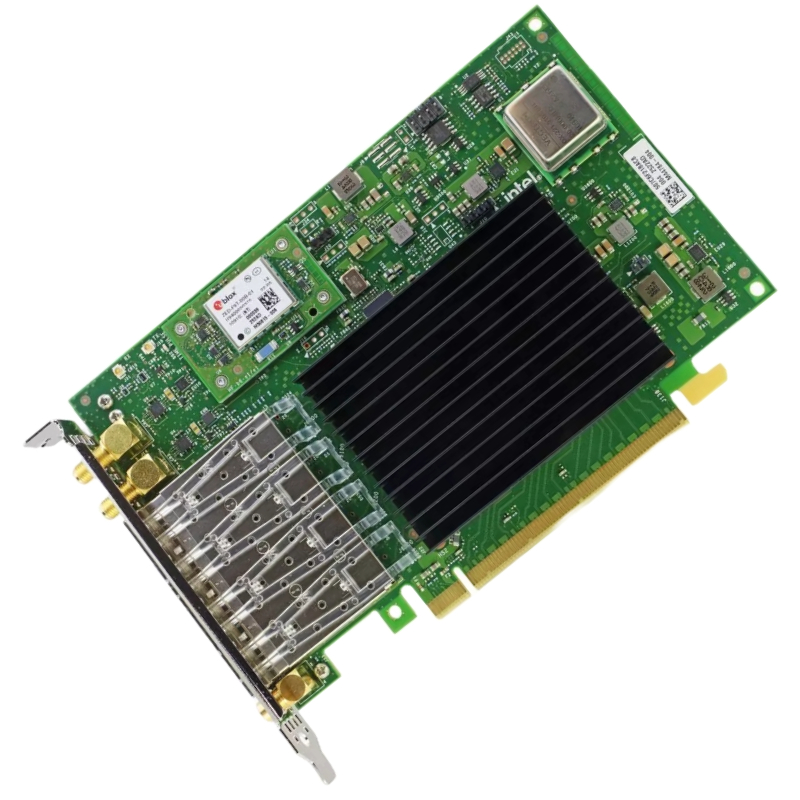
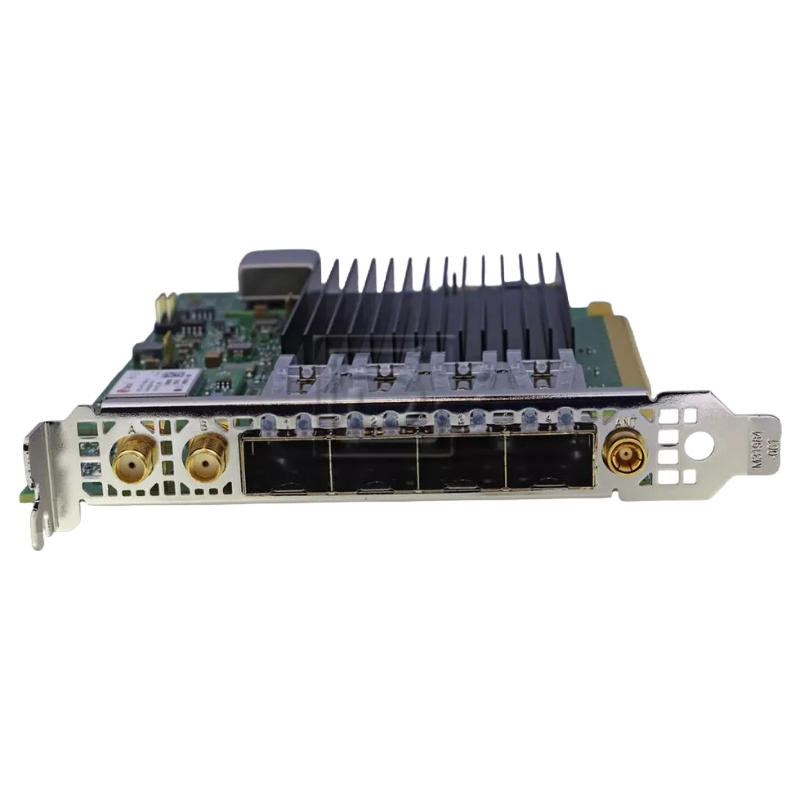
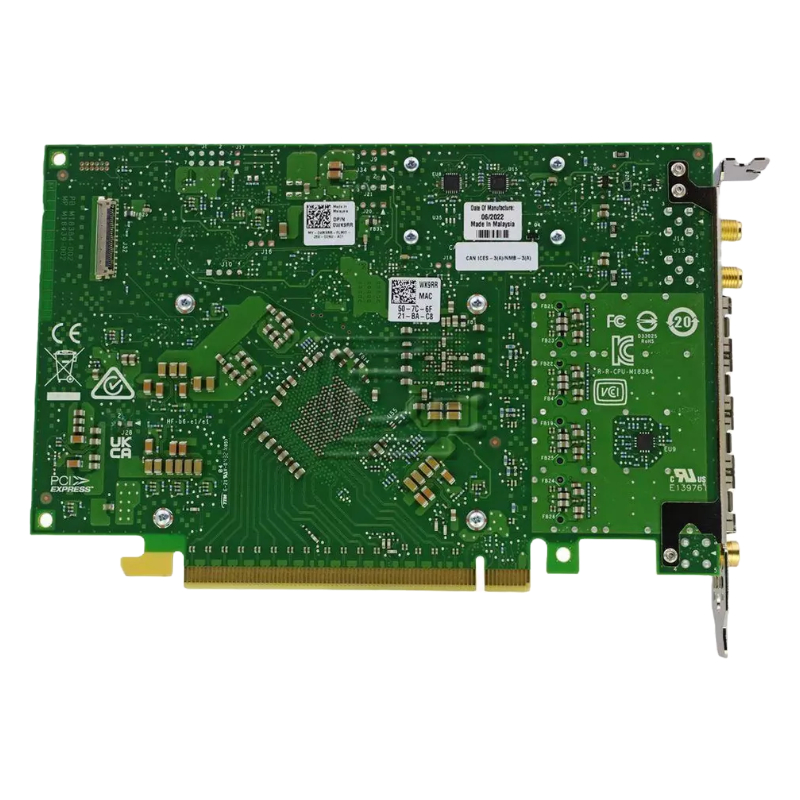
Intel E810-XXVDA4TGG1 Quad Port Ethernet Adapter 25/10GBPS SFP28 PCI-Express. Excellent Refurbished with 1 Year Replacement Warranty
| SKU/MPN | Warranty | Price | Condition | You save |
|---|---|---|---|---|
| E810-XXVDA4TGG1 | 1 Year Warranty | $560.00 | Excellent Refurbished | You save: $196.00 (26%) |
| E810-XXVDA4TGG1 | 1 Year Warranty | $1,225.00 | Factory-Sealed New in Original Box (FSB) | You save: $428.75 (26%) |
The Intel E810-XXVDA4TGG1 Quad-Port Ethernet Network Adapter is a high-performance connectivity solution designed for modern data centers and enterprise environments. Supporting 25GbE and 10GbE speeds through SFP28 interfaces, this PCIe-based network card delivers exceptional bandwidth, low latency, and scalable networking efficiency for demanding workloads such as virtualization, cloud computing, and storage acceleration.
The Intel E810-XXVDA4TGG1 Quad Port Ethernet Adapter represents a high-performance networking solution engineered for demanding enterprise environments where sustained throughput, deterministic latency, and advanced packet processing are critical. Designed around a quad-port configuration, this adapter enables simultaneous multi-channel data transmission and reception, significantly enhancing network efficiency in server infrastructures that require scalable connectivity. The adapter supports both 25 Gigabit and 10 Gigabit Ethernet speeds through SFP28 interfaces, providing flexibility for mixed-speed network environments and enabling seamless integration into evolving data center architectures.
At its core, this network interface card is optimized to handle modern workloads such as virtualization, cloud orchestration, real-time analytics, and storage-intensive applications. The hardware architecture integrates deep packet inspection capabilities and intelligent offloading engines, reducing the burden on host CPUs and allowing compute resources to focus on application-level processing rather than network management overhead.
The adapter leverages the PCI Express interface to ensure high-bandwidth communication between the network card and the host system. This direct high-speed channel minimizes bottlenecks and ensures that data packets move efficiently between system memory and network interfaces. The PCI Express architecture also supports parallel data handling, enabling multiple lanes of traffic to be processed concurrently, which is essential in environments where multiple high-throughput network streams operate simultaneously.
In advanced server configurations, PCI Express lanes are often allocated dynamically to balance system resources across compute, storage, and networking subsystems. This flexibility allows the Ethernet adapter to scale effectively in systems ranging from dual-socket servers to dense blade architectures.
The SFP28 interface technology embedded within this adapter supports both optical fiber transceivers and direct attach copper solutions. This dual compatibility allows system architects to deploy the same hardware across different physical network topologies without redesigning infrastructure components. SFP28 modules are specifically designed for 25 Gigabit Ethernet transmission, offering improved signal integrity, reduced latency, and better energy efficiency compared to older SFP+ standards.
The adaptability of SFP28 interfaces also enhances scalability in modular data center designs. Network administrators can adjust link speeds and media types depending on workload distribution, physical distance between nodes, and redundancy requirements.
The quad-port design of the adapter allows simultaneous handling of four independent network streams. Each port can operate at 25 Gigabit or 10 Gigabit speeds, enabling aggregated throughput that supports extremely data-intensive environments. This capability is especially useful in clustered server environments where distributed computing tasks require constant data synchronization.
By distributing traffic across multiple ports, the adapter reduces congestion and enhances load balancing. This ensures that no single channel becomes a performance bottleneck, thereby improving overall network efficiency and system responsiveness.
Low latency is a critical factor in high-frequency trading platforms, real-time analytics systems, and distributed storage networks. The adapter incorporates hardware-based acceleration features that minimize packet processing delays. These features allow network frames to bypass unnecessary software stack traversal, reducing round-trip communication time between endpoints.
Efficient interrupt handling mechanisms further contribute to reduced latency by optimizing how the system CPU responds to network events. This ensures smoother data flow even under heavy traffic loads.
In enterprise data centers, the adapter plays a key role in supporting large-scale virtualization platforms and containerized workloads. Its ability to handle multiple high-speed connections simultaneously makes it ideal for hyperconverged infrastructure where compute, storage, and networking are tightly integrated.
The adapter’s reliability and bandwidth capabilities ensure uninterrupted service delivery for mission-critical applications, including customer relationship management systems, financial databases, and large-scale web services.
Cloud service providers rely on high-density networking solutions to manage massive volumes of user traffic. The quad-port Ethernet adapter facilitates horizontal scaling by enabling efficient distribution of virtual machine traffic across multiple physical network paths.
This architecture supports multi-tenant environments where isolation, bandwidth fairness, and predictable performance are essential. The adapter’s hardware-level offloading features also reduce operational costs by minimizing CPU utilization across cloud nodes.
High performance computing environments demand extremely fast inter-node communication for tasks such as scientific simulation, machine learning model training, and computational physics. The adapter’s low latency and high throughput capabilities make it suitable for interconnect fabrics in HPC clusters.
Its ability to support synchronized data exchange across multiple compute nodes enhances parallel processing efficiency, reducing computation time for complex workloads.
One of the key strengths of this Ethernet adapter lies in its hardware offloading capabilities. These features shift processing tasks such as checksum calculation, segmentation, and reassembly away from the CPU and onto the network hardware itself. This reduces system overhead and improves overall application performance.
Offloading also improves energy efficiency, as fewer CPU cycles are consumed in routine network processing tasks. This is particularly beneficial in large-scale server deployments where energy consumption directly impacts operational costs.
Reliability is a core requirement in enterprise networking hardware. The quad-port architecture provides inherent redundancy, allowing traffic to reroute through alternate ports in the event of a link failure. This ensures continuous network availability even under hardware or connection disruptions.
Advanced error detection mechanisms further enhance reliability by identifying packet corruption and triggering retransmission processes when necessary.
When deploying high-speed Ethernet adapters in production environments, system architects must consider factors such as chassis airflow, PCI Express lane allocation, and network topology design. Proper planning ensures that the adapter operates within optimal performance parameters.
Compatibility with existing infrastructure is also essential. The SFP28 interface ensures that the adapter can integrate into both legacy and modern network systems with minimal configuration changes.
As data demands continue to grow, networking hardware must evolve to support higher bandwidth, lower latency, and greater scalability. Quad-port Ethernet adapters represent a step toward more distributed and parallelized networking architectures.
Future advancements are expected to focus on increased port density, improved energy efficiency, and deeper integration of artificial intelligence-driven traffic management systems. These developments will further enhance the role of high-performance Ethernet adapters in global data infrastructure.


 Contact Us
 Information
 Catalog
 Solid State Drives (SSD)
 Network Switches
 Hard Disk Drives
 HBA & Controllers
 PC & Servers
 PC & Server Memory
 CPU & Processors
 Network Routers
 Power Supplies
 Tape Drives & Libraries
 Network Devices
 Computer & Network Cables