(7% discount is applied at checkout)
Cart is empty
Your go-to destination for cutting-edge server products
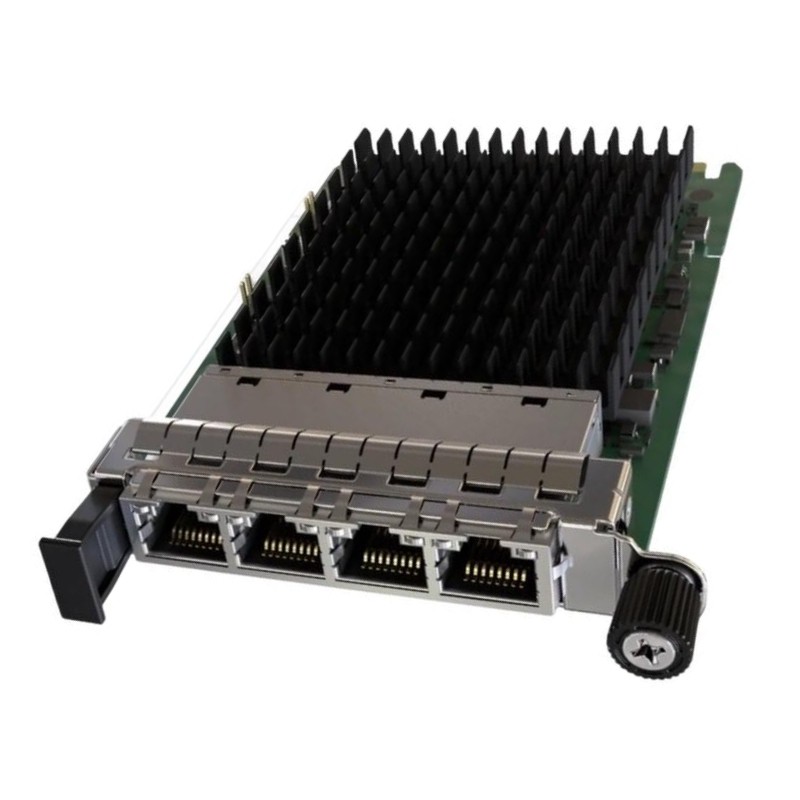


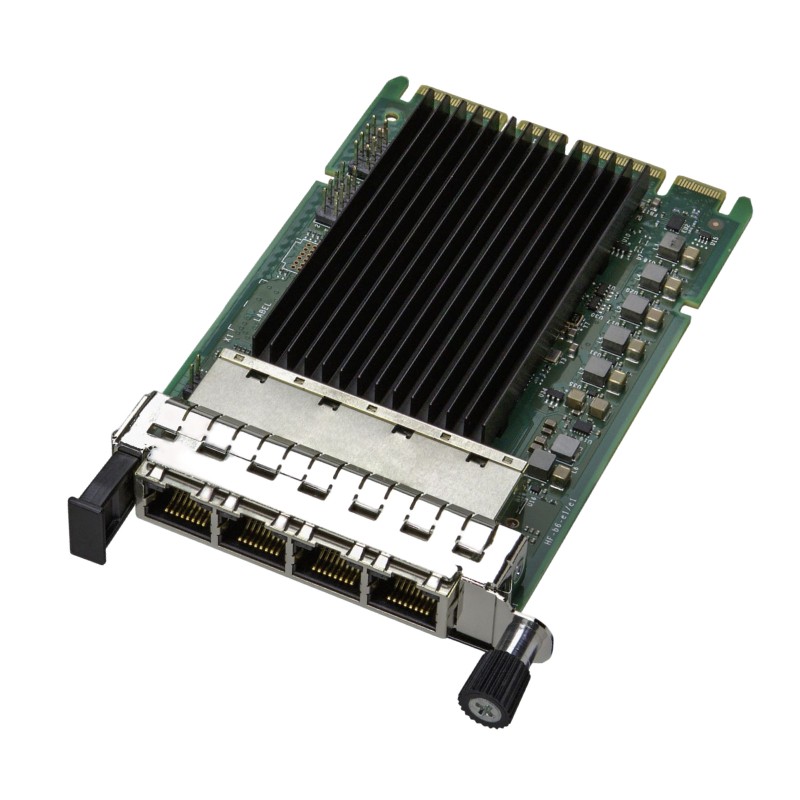
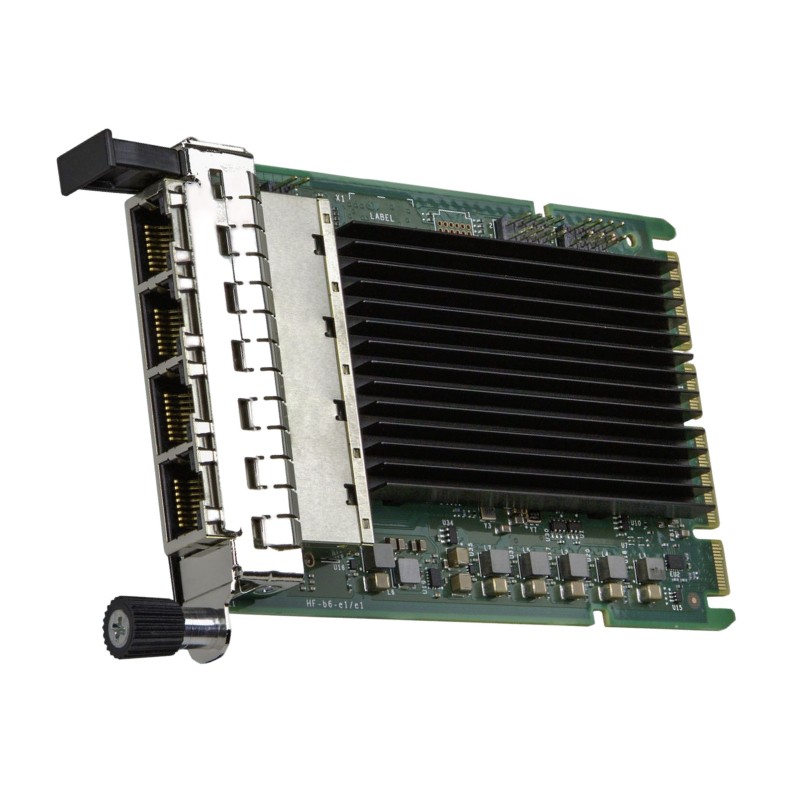
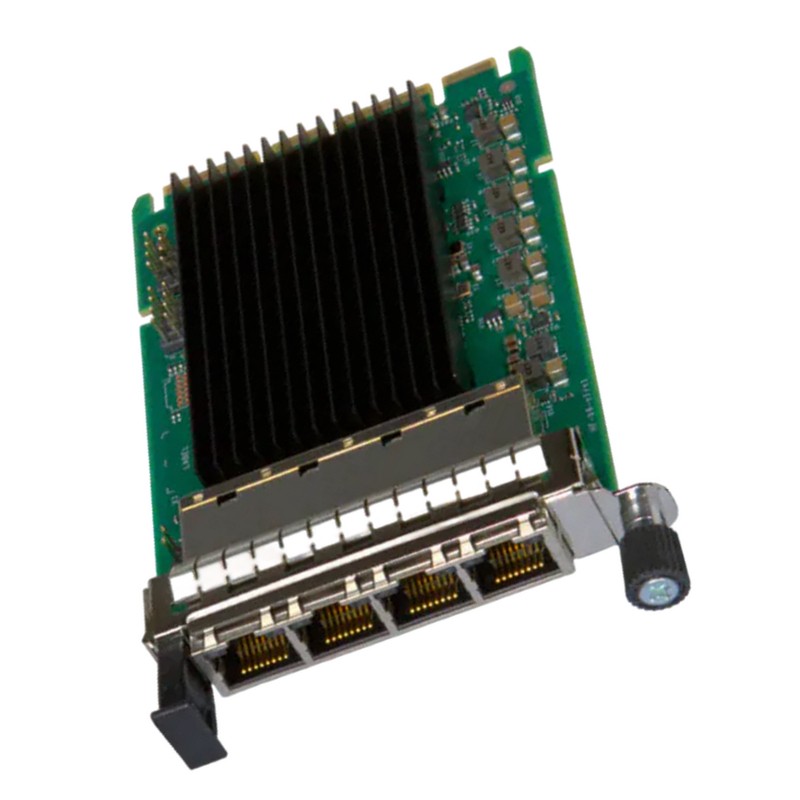
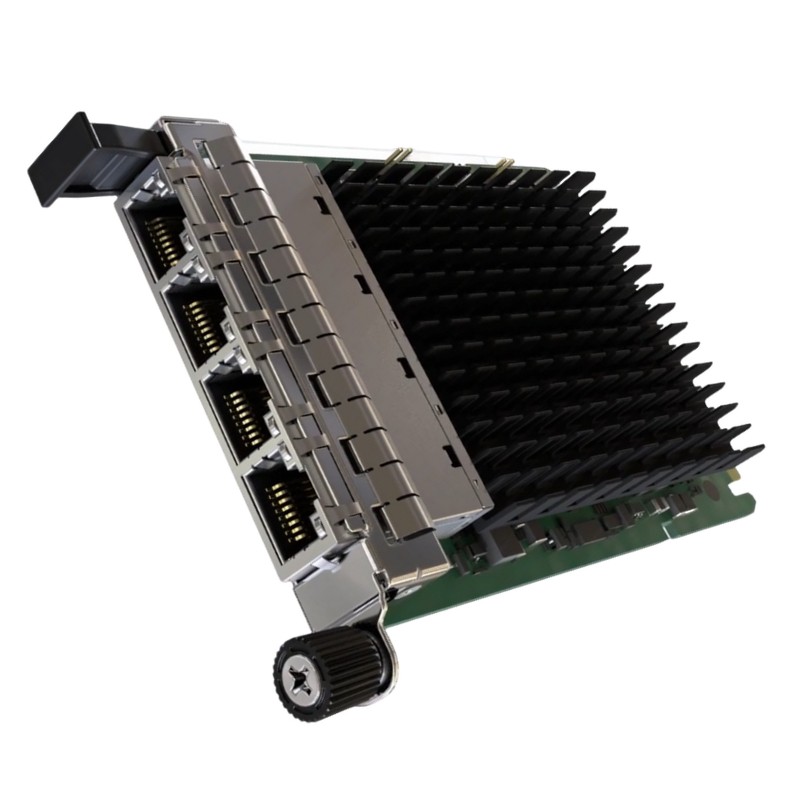
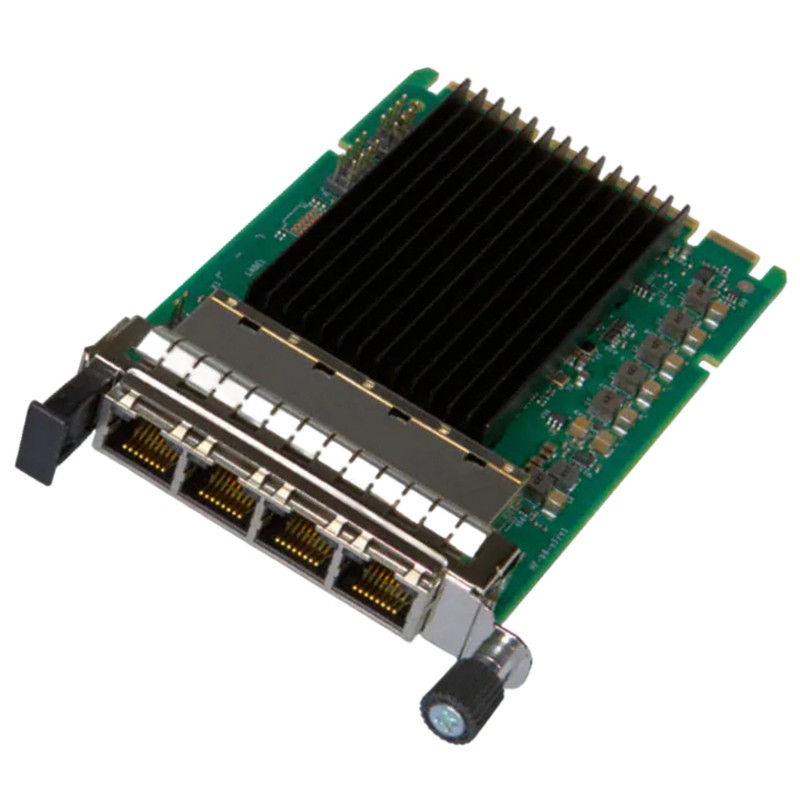
Intel E610-XT4 PCI-E 4.0 X8 4 Ports 10GbE 5GbE 2.5GbE 1GbE Ethernet Network Adapter. New Sealed in Box (NIB) with 3 Years Warranty
The Intel E610-XT4 is a quad-port Ethernet network adapter built for modern server and data center environments that require flexible multi-gigabit connectivity. Designed as a PCIe 4.0 x8 plug-in card, this Intel network adapter delivers four RJ45 copper ports with support for 10GbE, 5GbE, 2.5GbE, and 1GbE speeds per port, making it an excellent option for virtualization, storage networking, cloud infrastructure, and enterprise workloads. Powered by the Intel Ethernet Controller E610-XAT2, the adapter combines broad speed compatibility, intelligent offloads, advanced virtualization capabilities, and efficient traffic handling to help businesses deploy reliable, scalable, and high-performance wired networking across demanding server platforms.
The Intel E610-XT4 PCI-E 4.0 X8 4 Ports 10GbE 5GbE 2.5GbE 1GbE Ethernet Network Adapter belongs to a modern class of high-performance server networking solutions built for organizations that need flexible copper Ethernet connectivity, strong throughput, broad speed negotiation, and dependable multi-port scalability in a single adapter. Positioned within the Intel Ethernet Network Adapter E610 family, this quad-port adapter is engineered for data-intensive server environments, virtualization clusters, edge deployments, branch infrastructure, storage traffic, and enterprise workloads that demand more than traditional single-speed network cards can provide. Intel positions the E610 series as a 10GbE Ethernet adapter platform for server and edge environments, and the E610-XT4 specifically brings together four RJ45 copper ports, multi-gigabit speed support per port, PCIe 4.0 connectivity, and a feature set designed to serve modern workloads that range from management plane traffic to virtualized application delivery and general enterprise networking.
One of the most important reasons this adapter category is valuable in today’s infrastructure market is the way it bridges existing copper cabling environments with newer performance expectations. Many organizations are not ready to rebuild their server rooms, branch offices, or edge installations around fiber-based networking for every deployment scenario. The Intel E610-XT4 gives those environments a practical path to multi-gigabit and 10GbE networking by using RJ45 copper interfaces while still supporting a broad range of Ethernet speeds including 10GbE, 5GbE, 2.5GbE, and 1GbE on each port. That flexibility makes it attractive in mixed environments where switch uplinks, cable quality, and endpoint requirements vary across racks, departments, and sites. Instead of locking an organization into a single-speed design, the adapter supports speed negotiation that allows the network to align with the capabilities of the connected infrastructure, which can simplify upgrades and protect existing investments in copper cabling. Intel lists the E610-XT4 as a quad-port RJ45 adapter in the 10GbE Intel Ethernet Network Adapter E610 product family, with support for 10GbE, 5GbE, 2.5GbE, and 1GbE data rates per port.
The category of quad-port Ethernet network adapters addresses a common challenge in enterprise and server environments: the need to deliver more network paths, more segmentation options, and more aggregate bandwidth without consuming excessive PCIe slots. The Intel E610-XT4 is designed with four copper Ethernet ports, allowing administrators to connect multiple networks, multiple VLAN strategies, separate production and management traffic, or multiple services from a single adapter. In a compact server or appliance platform where slot availability is limited, a four-port design can be more valuable than deploying multiple dual-port cards. It reduces slot pressure, simplifies cable planning, and creates a cleaner path for network segmentation. For example, one server can use separate ports for hypervisor management, storage traffic, virtual machine uplinks, backup traffic, or dedicated service networks without requiring additional adapter cards.
Quad-port network adapters are especially valuable in environments where servers must play multiple roles at once. A virtualization host may need separate physical paths for cluster management, storage replication, tenant traffic, and migration traffic. A security appliance may need independent interfaces for WAN, LAN, DMZ, and management networks. A software-defined storage node may need multiple Ethernet paths for east-west data movement, front-end client access, and replication traffic. The Intel E610-XT4 fits naturally into these use cases because its four ports create deployment flexibility while maintaining the familiarity of RJ45 copper Ethernet. Intel identifies the E610-XT4 as a quad-port adapter using the Intel Ethernet Controller E610-XAT2 and an RJ45 system interface.
A defining strength of the Intel E610-XT4 category is support for several common Ethernet speeds on every port. Rather than forcing an all-or-nothing move to 10GbE, this adapter allows infrastructure teams to deploy the same hardware in networks that operate at 1GbE today but are gradually moving to 2.5GbE, 5GbE, or 10GbE. This matters because real-world infrastructure upgrades are often staged. Core switches may be refreshed before access switches. Some racks may have newer Category 6A runs while other rooms still rely on Category 5e. Some applications may need the full 10GbE experience, while others are perfectly served by 2.5GbE or 5GbE links. The E610-XT4 fits into these transitional realities by supporting 10GbE, 5GbE, 2.5GbE, 1GbE, and product brief references also indicate 100Mbps support in the adapter feature set.
This multi-gigabit capability is especially relevant for organizations modernizing edge infrastructure, media systems, backup servers, surveillance platforms, or branch systems where switch upgrades happen incrementally. A single server equipped with the E610-XT4 can connect to different switch environments at different speeds depending on cable quality and switch capability. That reduces procurement complexity because one adapter family can satisfy multiple deployment tiers. It also helps organizations standardize on a platform that can remain useful as their networks improve over time. Instead of replacing a 1GbE-only adapter when moving to 2.5GbE or 5GbE, a server equipped with an E610-XT4 may already have the necessary hardware capability in place.
The Intel E610-XT4 is part of a category of network adapters that leverage modern PCI Express connectivity to deliver sufficient host bandwidth for multi-port traffic. Intel lists the E610-XT4 as a PCIe 4.0 x8 adapter, with product brief documentation describing the quad-port configuration as PCIe 4.0 x8 using a bifurcated lane arrangement. This is important because high-density networking is only valuable if the host interface can support the traffic efficiently. A quad-port multi-gigabit adapter must move substantial traffic between the network and the server, and PCIe 4.0 provides a strong foundation for that role.
In practical deployment terms, PCIe 4.0 compatibility helps the E610-XT4 align with current-generation servers and network appliances that are built around newer Intel and AMD server platforms. For system builders and infrastructure architects, this means the adapter fits naturally into modern server refresh cycles. It also helps ensure the card is appropriate for higher-throughput workloads where older PCIe generations might become a bottleneck under certain traffic conditions. Organizations standardizing on PCIe 4.0-capable servers can deploy the E610-XT4 as part of a forward-looking networking strategy that matches the bandwidth and responsiveness expectations of present-day applications, storage systems, and virtualized environments.
When a network adapter offers four ports with speeds up to 10GbE per port, the host-side bus design becomes a key part of overall performance planning. PCIe lane width affects how efficiently traffic can move from the network adapter into the server platform. A category page for the Intel E610-XT4 should therefore emphasize that this is not merely a four-port card; it is a modern server adapter designed to align with higher-performance server expansion standards. The PCIe 4.0 x8 design gives the adapter a suitable foundation for consolidated networking roles where multiple services share the same card. For users deploying the adapter in hyperconverged systems, virtualization clusters, network appliances, or traffic-heavy application servers, PCIe 4.0 helps ensure the adapter is paired with a host interface capable of supporting enterprise workloads.
The Intel E610-XT4 sits within Intel’s E610 Ethernet family, which Intel introduced as part of a broader Ethernet strategy for enterprise, telecommunications, cloud, edge, and infrastructure workloads. Intel’s public materials describe the E610 line as designed for optimized network management and control plane operations, with emphasis on manageability, energy efficiency, security features, and scalable 10GBASE-T connectivity. That context matters because the E610-XT4 is not just a standalone NIC; it is part of a newer Intel Ethernet platform aimed at modern operational requirements.
For category page content, this family positioning helps explain why buyers may choose the Intel E610-XT4 over older copper NICs. It belongs to a generation intended to serve today’s multi-gigabit server networks, virtualization platforms, and edge appliances rather than yesterday’s single-speed environments. It reflects a market shift toward adapters that need to be more versatile, more power-aware, more virtualization-friendly, and more manageable across a wider range of deployment scenarios. That is especially important for channel partners, data center integrators, and enterprise buyers who are not simply purchasing a port count, but rather investing in a networking platform that can support growth and mixed-speed operation over time.
One of the most commercially important aspects of the Intel E610-XT4 category is its use of RJ45 copper connectivity. While SFP+ and higher-speed optical platforms dominate certain data center segments, a very large portion of enterprise infrastructure still relies on twisted-pair copper cabling. Copper Ethernet remains highly relevant in server rooms, branch offices, manufacturing sites, healthcare facilities, education campuses, security platforms, and edge appliances where the simplicity of RJ45 cabling is a major operational advantage. Intel lists the E610-XT4 with RJ45 copper connections and support for Category 6, Category 6A, and Category 5e cabling up to 100 meters depending on the speed and cabling conditions documented for the product family.
For buyers, RJ45-based adapters reduce complexity in environments already built around copper patch panels, copper switch ports, and standard Ethernet runs. There is no need to source separate optical modules for every port, no need to manage fiber cleaning practices in basic server rooms, and no need to redesign cable management conventions just to add multi-gigabit capability. In practical terms, the Intel E610-XT4 gives IT teams a way to add four multi-speed copper Ethernet interfaces to a server using a familiar connector type and a familiar cabling model.
Copper cabling compatibility is not a minor detail in the enterprise adapter market; it is often one of the main factors in whether a deployment remains cost-effective. Product brief material for the E610 family indicates 100-meter support over CAT5e, CAT6, or CAT6A for certain speeds, while 10GBASE-T distances depend on cable grade, with CAT6A enabling full 100-meter 10GbE runs and CAT6 supporting shorter 10GbE distances in typical guidance. This is useful for organizations with mixed cabling plants. It means the E610-XT4 can be deployed in environments where some links run at 1GbE or 2.5GbE over legacy cabling while newer segments can use 5GbE or 10GbE over improved cable infrastructure.
From a category perspective, that translates into broad deployment flexibility. A network architect can standardize on the same adapter model for several types of servers even if the underlying cabling differs by rack, building, or branch. That is a major operational benefit because it reduces spare part diversity, simplifies quoting, and makes future upgrades easier to manage.
The Intel E610-XT4 category is particularly compelling for edge and appliance use cases because these systems often need several copper ports, moderate-to-high throughput, and broad compatibility with standard Ethernet environments. Firewalls, secure gateways, SD-WAN appliances, branch servers, industrial edge nodes, and monitoring systems frequently rely on RJ45 copper connectivity because it is easy to deploy and matches the access layer networks already in place at remote sites. A quad-port adapter like the E610-XT4 can provide the port density required for these platforms while also allowing speed negotiation to match the local switching environment.
Consider a branch security appliance that needs one uplink to the WAN edge, one link to the local LAN, one isolated management interface, and one port dedicated to a monitoring or failover role. A four-port adapter is a natural fit. Likewise, an edge server performing local analytics, video processing, backup, or virtualization may need separate network paths for application traffic, storage replication, local user access, and centralized management. The Intel E610-XT4 supports these architectures without requiring multiple add-in cards or a move to less familiar cabling types.
Modern network adapters are increasingly judged not only by speed but by manageability and lifecycle efficiency. Intel’s public messaging around the E610 family highlights comprehensive manageability features, and the published specifications show support for features that matter in enterprise operations such as virtualization-aware connectivity, traffic management, and intelligent offloads. Intel also references modern security and firmware integrity principles in its broader E610 family launch messaging, framing the E610 line as a platform built for current enterprise and edge requirements.
For category page purposes, manageability should be understood as the ability of the adapter to fit smoothly into standardized server builds, driver ecosystems, monitoring workflows, and operational support processes. Buyers in enterprise and channel settings often prefer Intel networking products because of their established ecosystem presence, documentation depth, and broad server compatibility patterns. The E610-XT4 inherits that market relevance while updating the hardware platform for newer performance and multi-gigabit requirements.
Another major advantage of the Intel E610-XT4 category is compatibility with the reality of enterprise copper networking. Not every organization wants to move to SFP+ optics for 10GbE access at the server edge. Many businesses have already invested in RJ45 switch infrastructure, structured copper cabling, patch panels, and maintenance workflows centered on twisted-pair Ethernet. The E610-XT4 respects that installed base while adding higher-speed options that can stretch the value of those investments. A data center, office campus, lab environment, or branch deployment can adopt the adapter without radically changing how technicians cable, label, patch, and troubleshoot Ethernet links.
This practical compatibility is particularly important in distributed environments. A central IT team may support dozens of locations with different switch generations and different levels of cable quality. Standardizing on a multi-speed RJ45 adapter like the Intel E610-XT4 helps them deploy one server networking platform across many of those sites. Some ports may run at 1GbE in older branches, while newly refreshed sites may use 2.5GbE, 5GbE, or 10GbE. The same adapter can accommodate both, reducing fragmentation in the hardware estate.
The Intel E610-XT4 is not limited to specialized networking roles. It also fits general enterprise compute environments where application servers, middleware nodes, database systems, and business platforms need more flexible and resilient connectivity. A database server may require separate network paths for client queries, replication, backup, and administration. An application server cluster may dedicate ports to front-end load-balanced traffic, backend service communication, management, and storage. A monitoring platform may need separate interfaces for packet capture, agent traffic, and administrative control. The E610-XT4’s four-port design allows these functions to be physically separated when needed, while its multi-gigabit capability helps those systems scale beyond older gigabit bottlenecks.
Because the adapter belongs to a server-focused Intel Ethernet family, it is well aligned with environments where uptime, compatibility, and predictable behavior matter more than consumer-oriented feature sets. This is a business infrastructure component built for servers and appliances that must run continuously, handle multiple traffic classes, and integrate into managed operating system and virtualization environments.


 Contact Us
 Information
 Catalog
 Solid State Drives (SSD)
 Network Switches
 Hard Disk Drives
 HBA & Controllers
 PC & Servers
 PC & Server Memory
 CPU & Processors
 Network Routers
 Power Supplies
 Tape Drives & Libraries
 Network Devices
 Computer & Network Cables