(7% discount is applied at checkout)
Cart is empty
Your go-to destination for cutting-edge server products
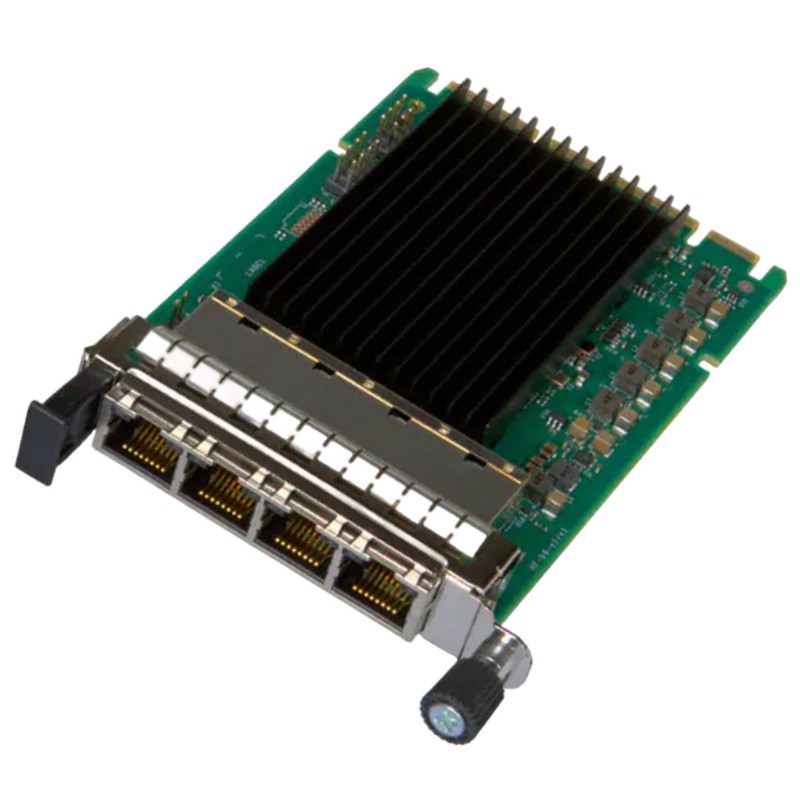


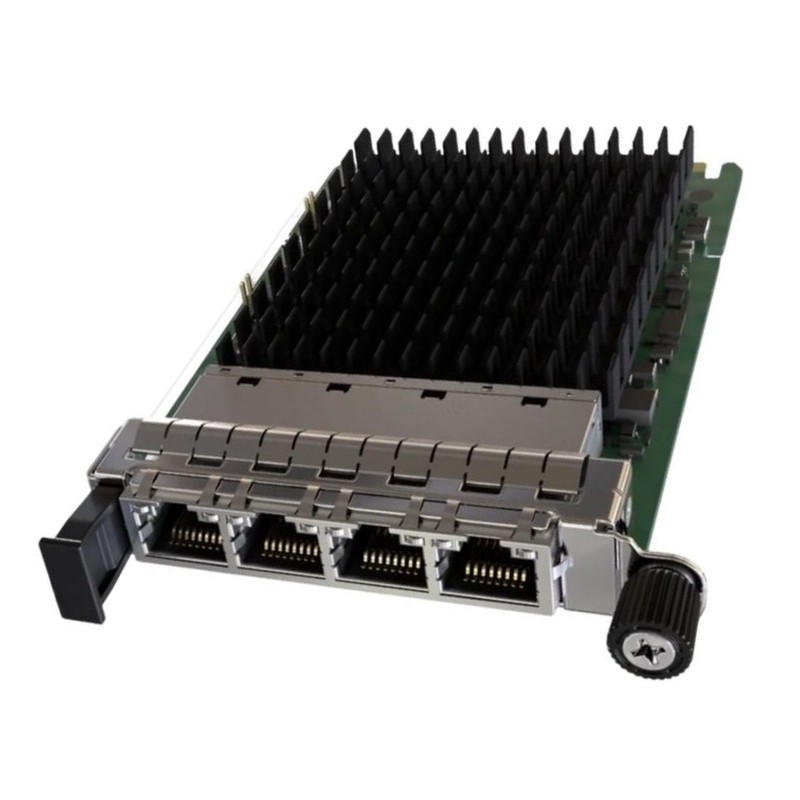
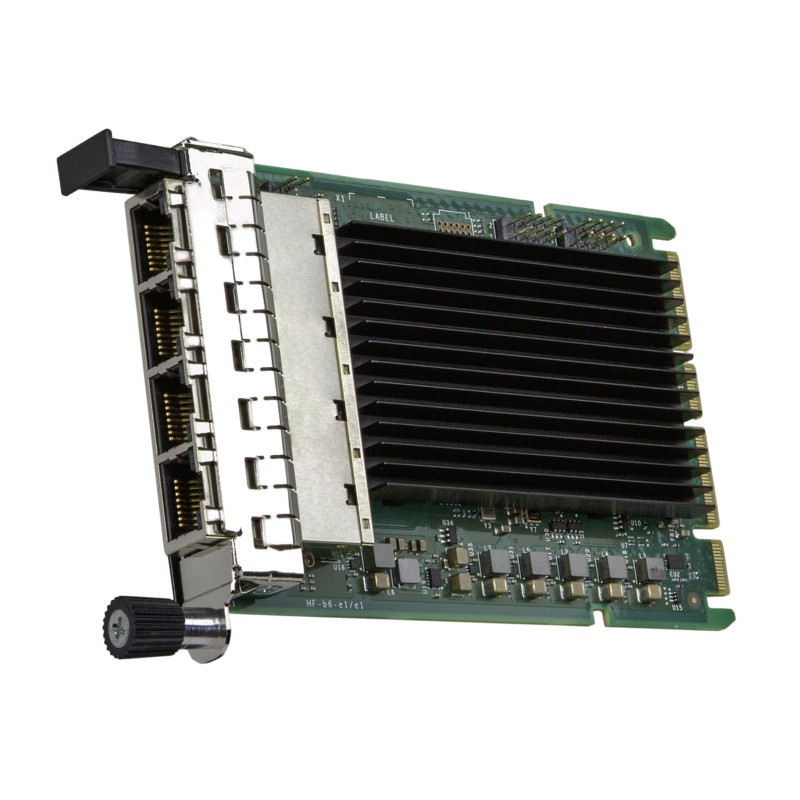
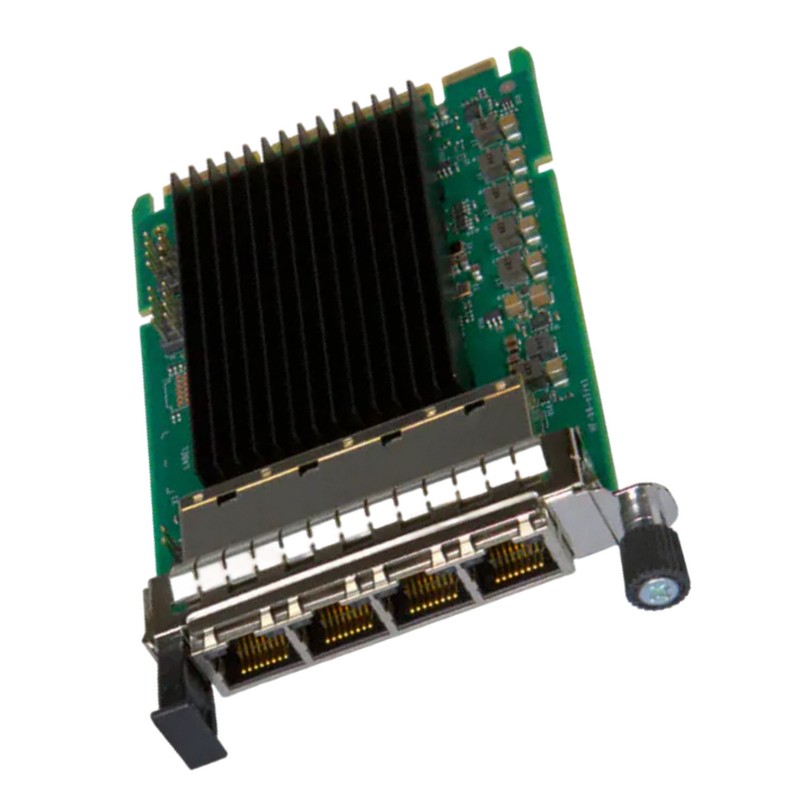
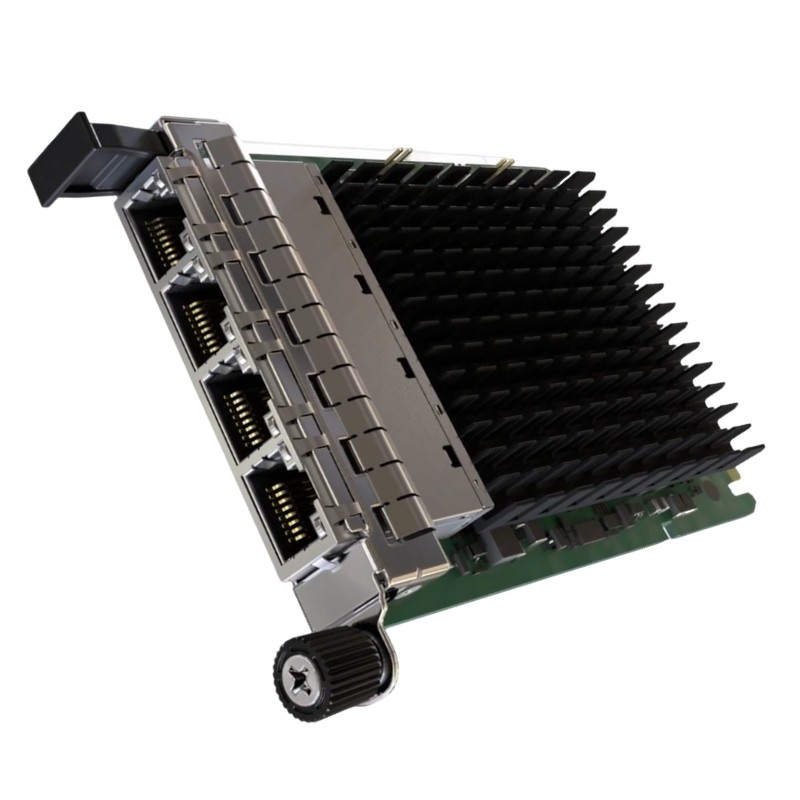
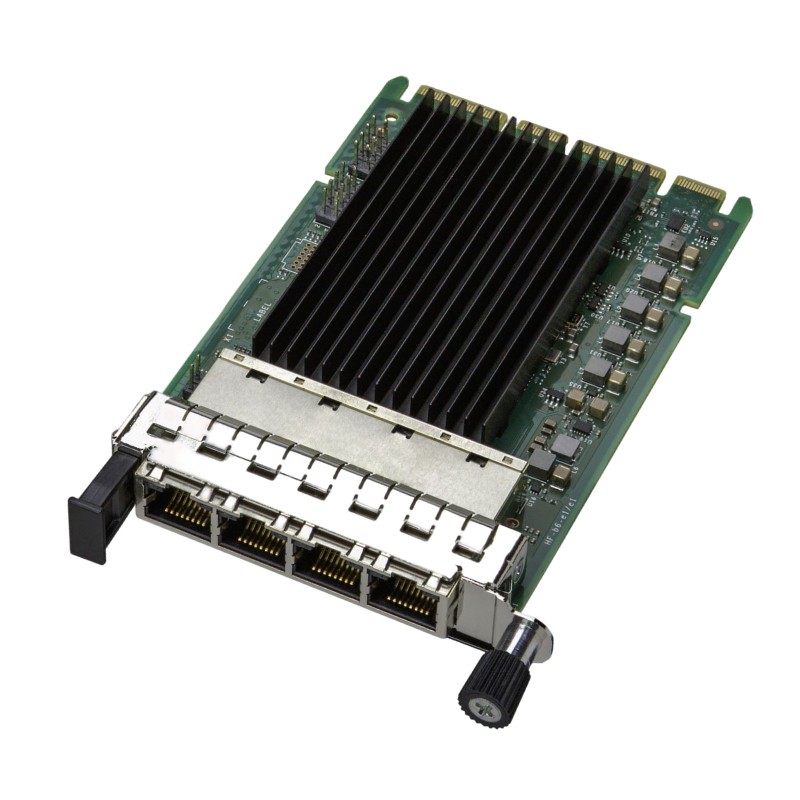
Intel E610XT4M5 PCI-E 4.0 X8 4 Ports 10GbE 5GbE 2.5GbE 1GbE Ethernet Network Adapter. New Sealed in Box (NIB) with 3 Years Warranty
Engineered for seamless technological evolution, the Intel E610XT4M5 network interface card provides exceptional versatility through its auto-negotiation capabilities across four distinct port velocities. This sophisticated design facilitates a marked reduction in energy usage compared to prior generations, making it a power-efficient solution for a diverse array of server and network appliance implementations.
This adapter is equipped with Intel Virtualization Technology for Connectivity (VT-c), enhancing performance in virtualized deployments. Key functionalities include:
The card integrates several intelligent features designed to optimize data handling and reduce CPU overhead.
Intel E610XT4M5 is a high-performance PCI-Express 4.0 x8 network adapter engineered for modern data center and enterprise environments that demand multi-speed connectivity, low latency, and advanced offload capabilities. Designed to deliver four independent ports with native support for 10GbE, 5GbE, 2.5GbE and 1GbE links, this adapter enables flexible network topologies and granular bandwidth allocation for mixed workloads. Built on Intel networking silicon and robust firmware, the E610XT4M5 blends raw throughput with power efficiency and rich feature sets that are optimized for virtualization, cloud, and edge computing infrastructures.
Performance for the E610XT4M5 centers on balanced throughput across all ports, line-rate packet processing, and minimal CPU overhead when handling intensive network tasks. The PCI-E 4.0 interface provides the bus bandwidth necessary to sustain multiple simultaneous 10GbE flows while maintaining headroom for bursts. Hardware accelerations — including TCP/UDP checksumming, Large Send Offload (LSO), Large Receive Offload (LRO), and Receive Side Scaling (RSS) — accelerate packet handling and conserve host CPU cycles. For latency-sensitive applications such as high-performance computing (HPC), financial trading, or real-time media, the adapter’s deterministic processing and intelligent interrupt moderation help keep jitter low and delivery predictable.
What sets the E610XT4M5 apart is its native support for a range of link speeds. Administrators can mix and match 10GbE for storage and uplink aggregation, 5GbE for bandwidth-hungry workstations or hyperconverged nodes, 2.5GbE for modern desktop and server access, and 1GbE for legacy connections. This multi-speed design reduces the need for multiple specialized NIC SKUs and simplifies spares inventory. Typical use cases include virtualized server hosts requiring multiple network segments, edge and branch servers that must interface with varied client hardware, storage networks that benefit from higher link speeds without the cost of full 25GbE, and aggregation switches that consolidate varied access links.
Virtualized environments profit from the E610XT4M5 through SR-IOV support, VM-CIDR optimizations and virtual machine queueing. By enabling single root I/O virtualization, this adapter allows physical functions to present multiple virtual functions directly to guest VMs, reducing I/O overhead and improving isolation. Containers and orchestrated workloads likewise benefit from efficient packet steering and NUMA-aware queueing that minimize cross-socket memory traffic. For hypervisors such as VMware ESXi, KVM, and Microsoft Hyper-V, the adapter integrates with driver stacks to support high VM densities and predictable network performance.
In converged infrastructures, the E610XT4M5 provides a compelling balance between cost and throughput for storage traffic. It is well suited to iSCSI, NFS, and SMB workloads at 10GbE and 5GbE link speeds. Offload features for TCP and RDMA (where supported) reduce latency for storage I/O and increase IOPS efficiency. When used in tiered storage topologies, the adapter helps ensure consistent access to NAS and SAN resources while keeping CPU overhead low, freeing compute cycles for application processing.
The adapter implements a suite of offload capabilities to accelerate host networking stacks and improve application performance. These include TCP/UDP checksum offload, Large Send/Receive Offload, IPv4/IPv6 segmentation offloads, and protocol filtering. Advanced features such as Flow Director or programmable packet steering allow for application-aware packet distribution across multiple queues, improving cache locality and reducing cross-core contention. For workloads that use encapsulation protocols like VXLAN or NVGRE, tunneling offloads help mitigate encryption and encapsulation costs by shifting work to the NIC.
Built-in QoS mechanisms let administrators prioritize traffic classes and allocate bandwidth per port or per VLAN. Traffic shaping features permit smoothing of bursty flows to prevent packet loss in congested environments, while priority flow control and PFC support enable lossless behavior for storage traffic when used with compatible switches. Combined with VLAN and DSCP tagging support, these functions provide fine-grained control over how traffic is scheduled and served across the data center fabric.
Security features integrated into the E610XT4M5 include support for MACsec (when enabled in firmware and platform), secure boot of NIC firmware, and hardware-assisted packet filtering. By offloading and enforcing security policies at the NIC level, the adapter reduces load on the host kernel and enhances perimeter controls for multi-tenant environments. Isolation through VLAN tagging, virtual functions, and per-VF rate limiting helps enforce tenant boundaries in shared infrastructures.
Compatibility across operating systems and hypervisors is essential for enterprise deployments. Intel’s driver ecosystem typically includes production drivers for mainstream Linux distributions (Debian, Ubuntu, Red Hat Enterprise Linux, SUSE), Windows Server versions, and vendor-certified driver bundles for VMware and other hypervisors. The E610XT4M5 is designed to integrate with common management frameworks and orchestration tools, enabling scripted deployments, firmware updates, and driver rollouts. Administrators should verify platform compatibility matrices and vendor guidance to ensure full feature parity.
Power efficiency is a major consideration for densified server deployments. The PCI-E 4.0 bus and Intel silicon have been optimized to reduce active and idle power consumption while keeping performance high under load. Adaptive power states and low-power modes help servers remain energy efficient during periods of low network activity. Thermal considerations include proper airflow planning and slot spacing in multi-adapter configurations; administrators should consult server vendor guidance to maintain safe operating temperatures and prevent thermal throttling.
The adapter’s physical design is tailored for rack and tower systems with a standard half-height, full-length or low-profile card option depending on platform requirements. The four RJ-45 ports may be SFP+ or multi-rate copper PHY implementations depending on the SKU, and the card bracket design typically supports secure mounting and cable strain relief. Cable management and port labeling are important in dense racks to avoid human error during maintenance and reconfiguration.
When deploying E610XT4M5 adapters at scale, a set of best practices ensures predictable outcomes. First, coordinate firmware and driver versions across fleets to prevent behavioral inconsistencies. Second, validate offload and virtualization settings in a staging environment with representative traffic patterns. Third, configure RSS, number of queues, and interrupt moderation in accordance with the host CPU core count and NUMA topology to avoid cross-node packet steering. Fourth, enable flow control and QoS policies end-to-end with switch and server settings aligned to prevent microbursts or packet drops. Finally, create observability pipelines to capture NIC telemetry and correlate it with application performance metrics.
Selecting E610XT4M5 for a given deployment depends on workload patterns, future scalability, and cost constraints. Organizations prioritizing cost-effective multi-speed connectivity and backward compatibility will find this adapter attractive. When higher-throughput or ultra-low latency is required, alternatives such as 25GbE or 40GbE NICs may be considered, but these come with higher port and switch costs. Capacity planning should account for projected growth in east-west traffic, storage offload needs, and virtualization density. Total cost of ownership calculations should include power, cooling, licensing, and potential switch upgrades.
Security posture improves when NIC-level features are leveraged correctly. Enabling secure firmware verification, using port and VLAN isolation, and applying per-VF policies help minimize attack surfaces. For environments subject to compliance such as PCI-DSS or HIPAA, documenting network segmentation and access controls that involve the adapter is essential. When using MACsec or other link encryption methods, ensure switches and peer devices support compatible standards. Regular vulnerability assessments and firmware updates should be part of a security lifecycle plan.
Organizations deploying the E610XT4M5 commonly use it in mixed speed aggregation scenarios: consolidating 2.5GbE desktop uplinks for modern workstations, providing redundant 10GbE uplinks for hyperconverged hosts, and offering 5GbE for specialized appliances requiring more than gigabit connectivity without migrating to 25GbE infrastructure. In campus and branch offices, the adapter can extend high-speed connectivity to local servers and network appliances while remaining interoperable with existing copper Ethernet cabling and access switches.
Comprehensive documentation, knowledge base articles, and community forums are valuable resources for architects and administrators. Product release notes typically detail supported link speeds, known issues, firmware fixes, and recommended driver versions. Vendor communities and third-party blogs often publish tuning guides, performance benchmarks, and configuration templates for the most common hypervisors and operating systems. Leverage these resources to build runbooks and to accelerate deployment confidence.
As infrastructure evolves toward software-defined networking and disaggregated compute, adapters like the E610XT4M5 remain relevant by providing flexible port speeds and programmable features that work with emerging overlays and orchestration layers. Support for standards-based offloads and telemetry ensures the adapter can integrate into observability pipelines and SDN controllers. Looking forward, adapters that support multi-rate Ethernet and advanced offloads will smooth transitions between generations of switch fabrics without forcing immediate forklift upgrades.


 Contact Us
 Information
 Catalog
 Solid State Drives (SSD)
 Network Switches
 Hard Disk Drives
 HBA & Controllers
 PC & Servers
 PC & Server Memory
 CPU & Processors
 Network Routers
 Power Supplies
 Tape Drives & Libraries
 Network Devices
 Computer & Network Cables