(7% discount is applied at checkout)
Cart is empty
Your go-to destination for cutting-edge server products
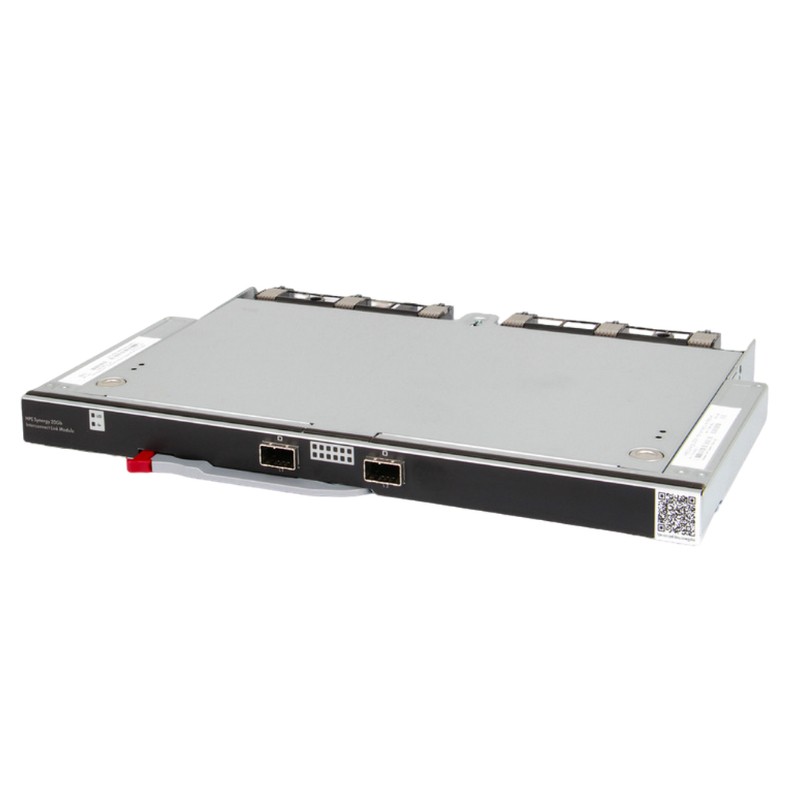


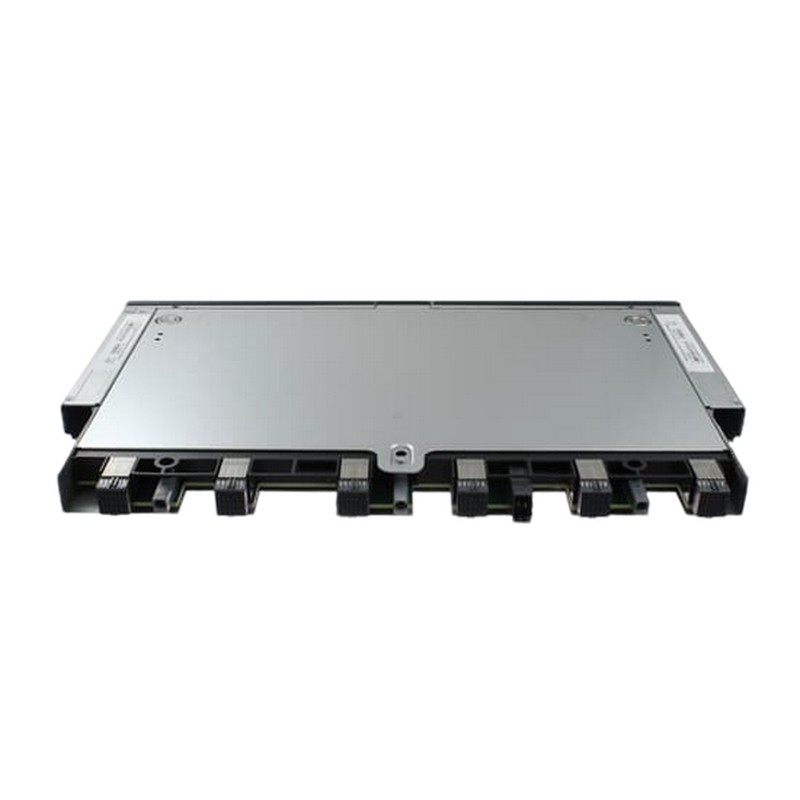
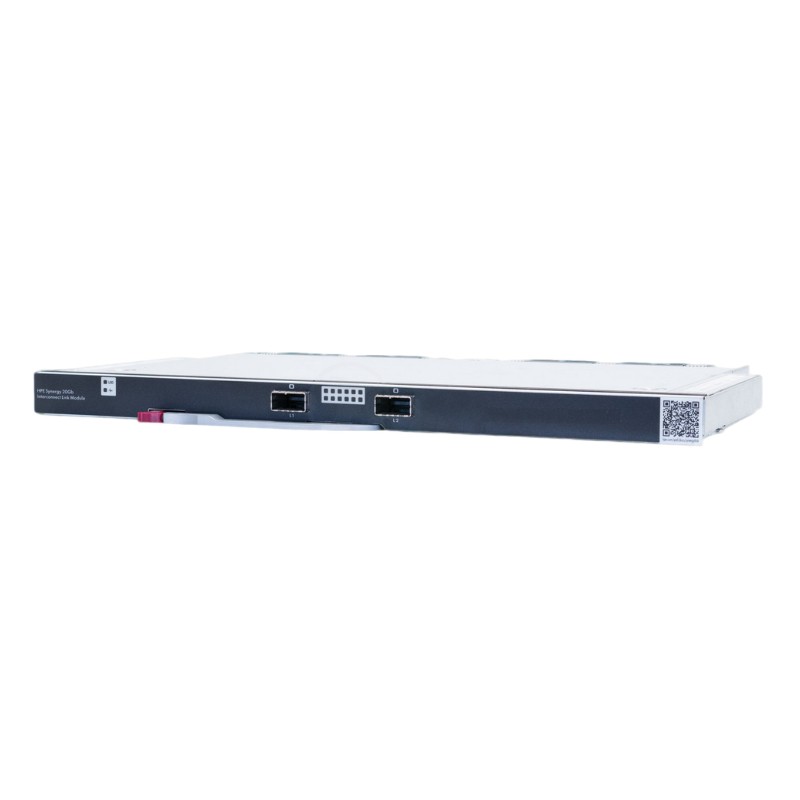
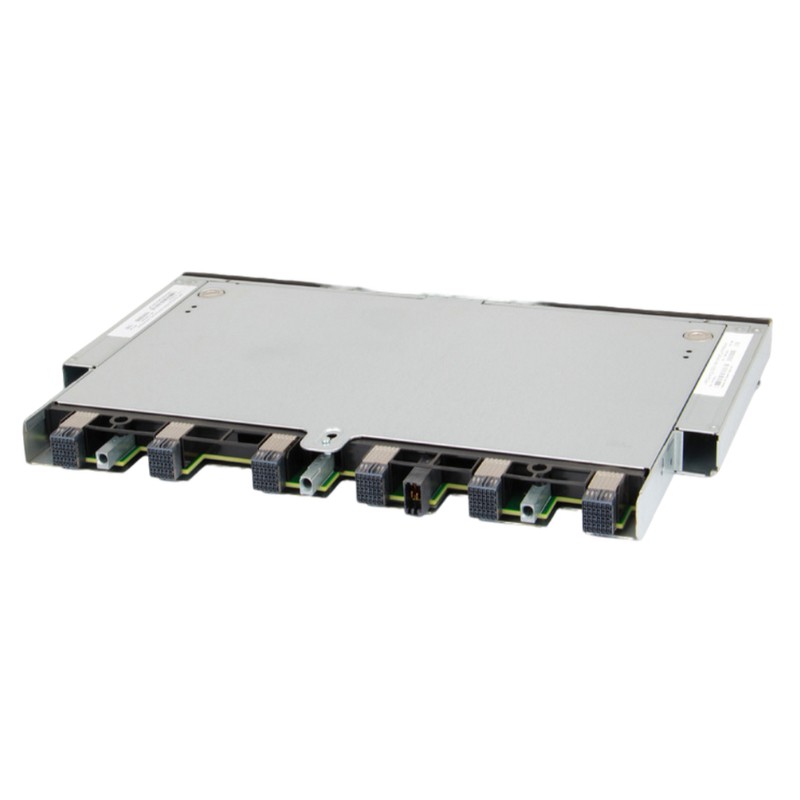
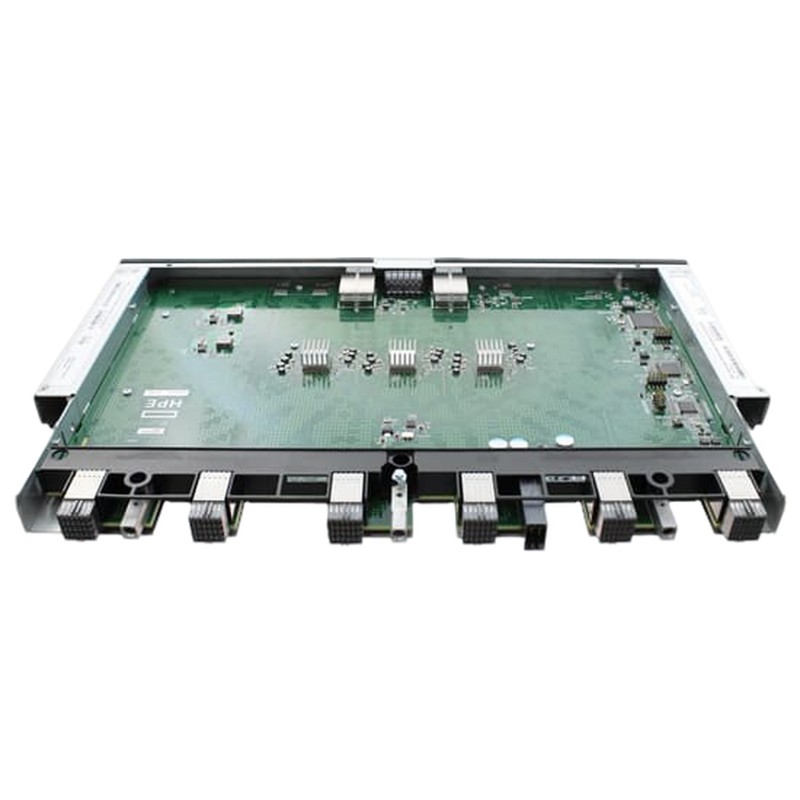
HPE 779218-B21 Synergy 14 x Interface Ports 20GB Interconnect Link Expansion Module. Excellent Refurbished with 1 year replacement warranty
The unit is produced by Hewlett Packard (HP), a global leader in enterprise computing solutions. The official manufacturer part number assigned to this specific interconnect module is 779218-B21, ensuring precise identification for procurement and compatibility checks.
The 779218-B21 HPE Synergy 14 x Interface Ports 20GB Interconnect Link Expansion Module is engineered to provide high-density, low-latency interconnectivity for composable infrastructure environments. Designed specifically for HPE Synergy chassis and composable systems, this expansion module extends the platform's native fabric capabilities to support demanding workloads and modern data center requirements. With a focus on performance, interoperability, and simplified management, the 20GB interconnect module enables enterprises to accelerate application deployment, consolidate networking, and future-proof infrastructure investments.
The module offers 14 interface ports operating at 20 gigabits per second, delivering aggregated throughput tailored for multi-tenant and high-performance compute clusters. Each port is architected to minimize jitter and latency while maximizing packet forwarding efficiency. The physical and logical topology integrates seamlessly into the HPE Synergy Frame Link architecture, leveraging the Synergy Composer and the HPE OneView management plane for centralized orchestration. Hardware-level optimizations reduce CPU overhead on attached compute nodes by offloading switching tasks to dedicated silicon, allowing compute resources to focus on application processing.
The 14-port layout is optimized for a balance between high port density and manageable cabling complexity. Bandwidth allocation across ports supports flexible segmentation, enabling administrators to partition link capacity for converged storage, east-west compute traffic, and management channels. Adaptive traffic steering techniques and link aggregation features ensure that bursty workloads and sustained throughput demands are handled without compromise. The module's bandwidth provisioning supports advanced QoS policies, enabling predictable latency for critical applications and dynamic allocation for less-sensitive workloads.
The 779218-B21 module is certified to operate with a broad range of HPE Synergy compute modules, storage modules, and interconnect modules. Compatibility extends to multiple generations of Synergy frames, but administrators should validate firmware and composer versions for optimal interoperability. HPE OneView integration provides a unified experience for lifecycle management, inventory discovery, firmware baselining, and configuration. Because HPE Synergy is a composable platform, the expansion module’s resources can be dynamically assigned to logical compositions, enabling infrastructure-as-code workflows and rapid reconfiguration.
Firmware management for the interconnect link expansion module is simplified through HPE OneView and the Synergy Composer. Administrators can stage firmware, create firmware baselines, and orchestrate rolling updates to minimize downtime. Driver compatibility ensures that operating systems and hypervisors running on Synergy compute modules detect and utilize the interconnect seamlessly. Proactive health monitoring, automated alerts, and telemetry data feed into HPE OneView dashboards, giving operations teams actionable insights into port status, error rates, and throughput trends.
Organizations deploying the 20GB interconnect module will notice significant performance improvements for workloads that require high bandwidth and low latency. Use cases include software-defined storage clusters, high-performance computing (HPC) nodes, virtualization hosts running dense VM populations, database clusters with heavy inter-node replication, and microservices architectures with intense east-west traffic. The additional interface ports support scaling out compute and storage without the typical network bottlenecks, enabling better consolidation and more efficient utilization of rack-level resources.
The 779218-B21 module’s silicon and packet handling are tuned for deterministic performance, which benefits real-time analytics, financial services workloads, and other latency-sensitive applications. By reducing serialization delay and implementing efficient queuing mechanisms, the interconnect minimizes variability in packet transmission times. Deterministic network behavior is particularly important in environments using distributed storage fabrics where write acknowledgment times and replication windows directly affect application performance.
The 779218-B21 expansion module supports scale-up and scale-out growth patterns inherent in modern data center strategies. As organizations add more Synergy frames and compute modules, the interconnect module provides additional uplink capacity and port availability to accommodate expansion. Investments in this module help future-proof infrastructure by enabling the adoption of denser compute nodes, GPU-accelerated racks, and containerized platforms without wholesale network redesign. The 20GB port speed also positions deployments to transition smoothly toward next-generation fabrics as they become available.
When designing a topology that includes this interconnect module, planners should account for spine-leaf patterns, uplink aggregation, and the physical placement of modules within the Synergy frame. Careful planning around port mapping reduces the risk of oversubscription and contention points. Redundant paths, paired modules, and appropriate link aggregation configurations contribute to a resilient and highly available network fabric. Network designers should model traffic flows to identify potential chokepoints and choose port mapping schemes that align with service-level objectives.
Reliability is built into the module’s hardware and firmware architecture, with features designed to enable uninterrupted operation under load. Redundancy options include dual interconnect pairings, active-active failover configurations, and path diversity to storage backends. HPE’s management tools support fast failover and automatic rerouting in case of link failure, thereby protecting critical workloads from single-point failures. Diagnostic LEDs, remote health checks, and built-in self-test mechanisms simplify fault isolation and corrective actions.
The 779218-B21 module provides comprehensive diagnostic data including error counters, CRC and parity error logs, and corrective action recommendations. Administrators can invoke remote loopback tests, port-level diagnostics, and link quality assessments directly from management consoles to verify connectivity and signal integrity. This diagnostic capability is critical for minimizing mean time to repair (MTTR) and maintaining consistent service levels in production environments.
Security considerations are integral to the deployment of interconnect modules. The 20GB module supports management plane isolation, role-based access control for configuration changes, and encrypted management sessions to prevent unauthorized alterations. When used in tandem with HPE OneView, organizations can maintain an auditable trail of configuration and firmware updates, assisting in compliance regimes and internal governance. Network segmentation techniques and VLAN support allow separation of tenant traffic, management traffic, and storage traffic, thereby reducing lateral movement risk.
Operational governance is strengthened through RBAC policies that limit who can modify interconnect settings, apply firmware updates, or initiate port reassignments. Integration with enterprise identity services and directory-based authentication simplifies user provisioning and deprovisioning. Additionally, logging and audit capabilities provide a historical record for forensic analysis and compliance reporting.
The interconnect link expansion module is designed to meet enterprise-grade power and thermal profiles for HPE Synergy frames. Power consumption scales with port utilization and packet forwarding load, and HPE’s capacity planning guidelines help administrators size power and cooling appropriately. The module’s physical footprint fits the Synergy architecture and aligns with rack-level airflow designs, enabling predictable thermal characteristics when multiple modules are deployed within a chassis.
Administrators should operate the module within specified temperature and humidity ranges and ensure unobstructed airflow through the chassis. Monitoring tools report thermal metrics and can trigger graceful workload migration or throttling interventions if thermal thresholds are approached. Proper labeling and cable management in the rack reduce strain on ports and simplify maintenance windows.
The 779218-B21 20GB interconnect module supports converged workloads by providing consistent throughput required by SAN and software-defined storage solutions. Interoperability testing with storage arrays, NVMe over Fabrics implementations, and virtualized storage appliances ensures predictable performance for block and file workloads. Virtualization platforms such as VMware vSphere, Microsoft Hyper-V, and various KVM distributions benefit from the module’s low-latency characteristics when deployed in hyperconverged or disaggregated architectures.
Cloud-native environments running Kubernetes or other orchestrators can leverage the expanded interconnect to support dense pod-to-pod communication, persistent storage traffic, and ingress/egress performance for microservices. Network policy enforcement, service mesh integration, and telemetry collection are all facilitated by a robust transport layer that the 20GB module provides. Ensuring CNI plugins and overlay networks are tuned to the underlying physical fabric maximizes the benefit of the interconnect’s bandwidth.
When compared to lower-speed modules or modules with fewer ports, the 20GB interconnect module provides a compelling advantage for bandwidth-hungry environments. Its higher per-port throughput reduces the need for complex aggregation and lowers the number of uplinks required to achieve desired bandwidth. Compared to next-generation higher-speed options, the module often presents a balance between cost and capability, making it suitable for organizations seeking immediate performance gains while planning for later migrations to higher-speed fabrics.
Decision-makers should align module choice with workload profile rather than adopting a one-size-fits-all approach. For latency-sensitive clusters and dense virtualization, the 20GB module often represents a sweet spot. For highly specialized environments such as extreme HPC or ultra-low-latency trading systems, alternative fabrics or specialized interconnects might be more appropriate. A phased approach that benchmarks target applications on candidate modules provides empirical data to guide procurement.
Optimizing the interconnect’s performance involves continual tuning of QoS policies, monitoring subscription levels, and aligning virtual network overlays with physical topology. Regularly collect telemetry and review trending reports to detect early signs of saturation or imbalanced traffic. Employ link aggregation sensibly and avoid over-provisioning virtual lanes that may inadvertently starve critical traffic. Automation of repetitive network tasks through HPE OneView templates reduces human error and accelerates repeatable deployments.


 Contact Us
 Information
 Catalog
 Solid State Drives (SSD)
 Network Switches
 Hard Disk Drives
 HBA & Controllers
 PC & Servers
 PC & Server Memory
 CPU & Processors
 Network Routers
 Power Supplies
 Tape Drives & Libraries
 Network Devices
 Computer & Network Cables