(7% discount is applied at checkout)
Cart is empty
Your go-to destination for cutting-edge server products
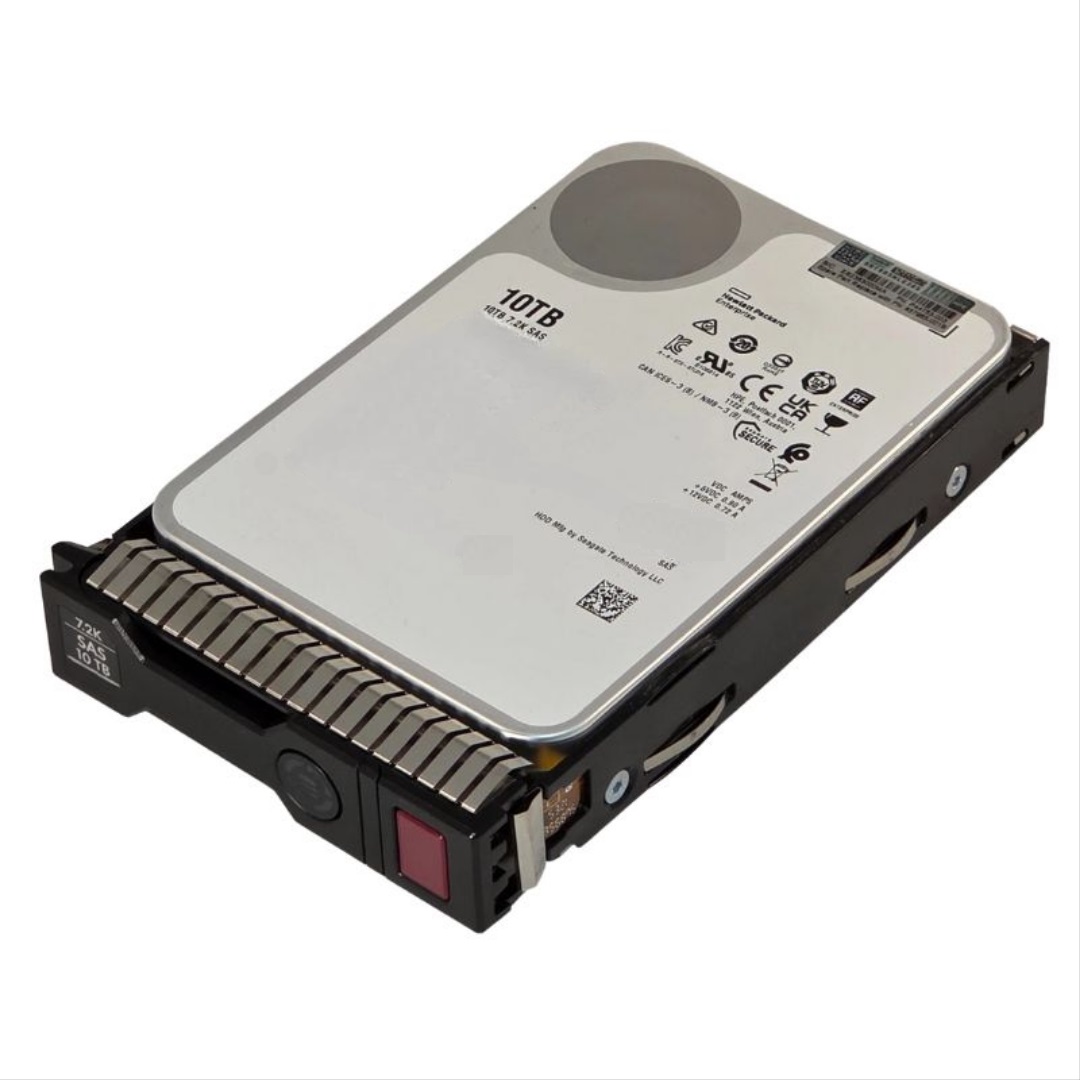


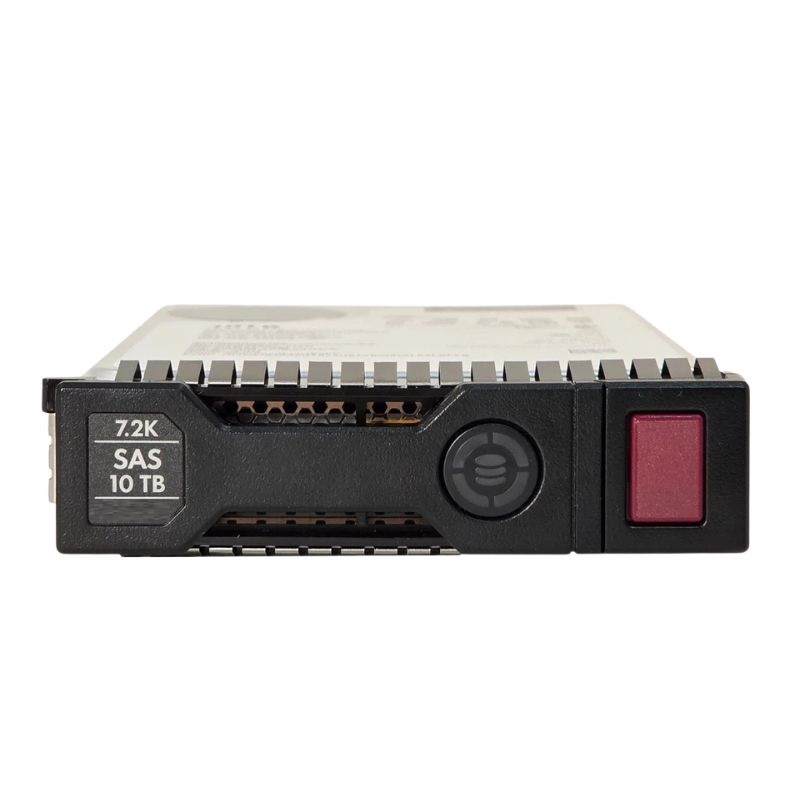
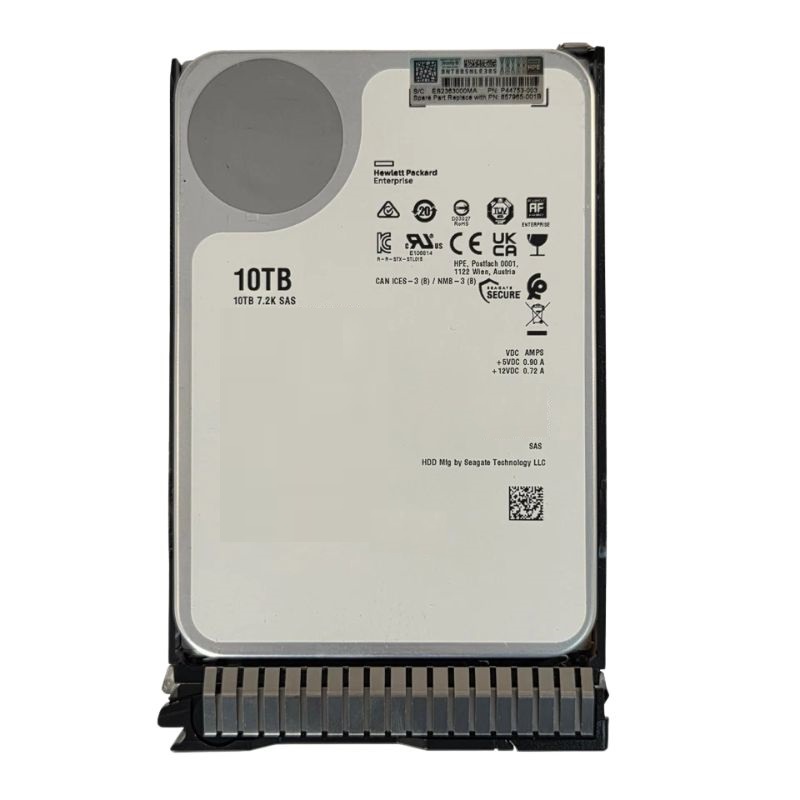
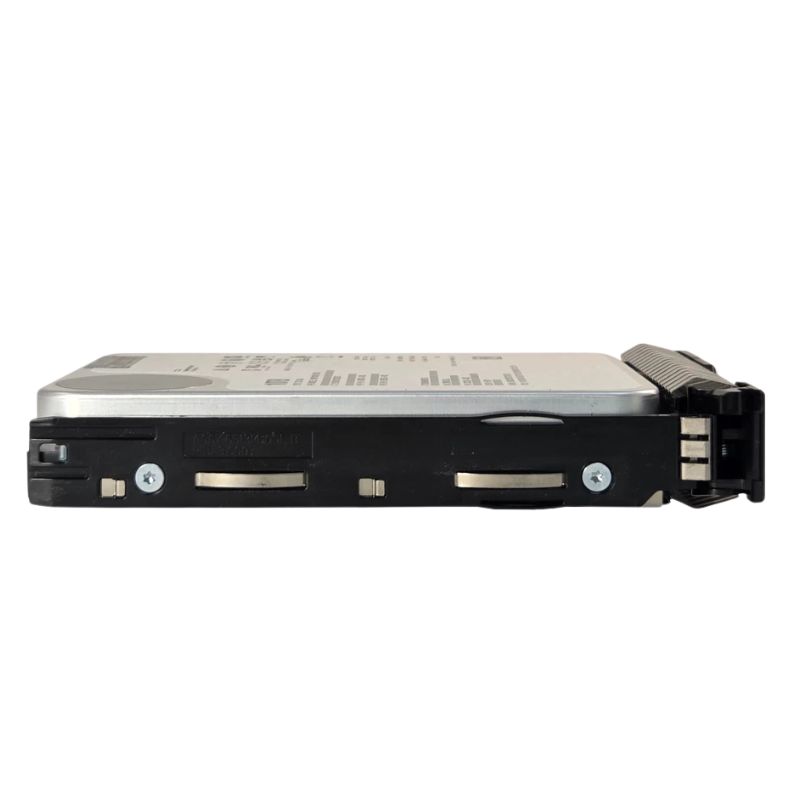
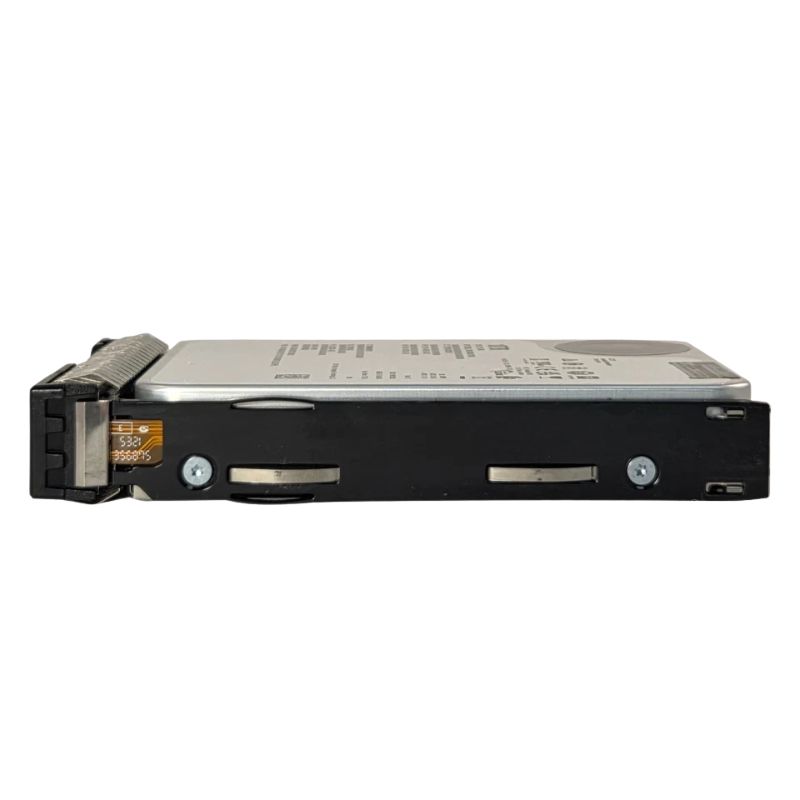
HPE 857652-003 10TB SAS 12GBPS 7.2K RPM 3.5 Inch LFF LP He 512e DS Hard Disk Drive. Excellent Refurbished with 1 year Replacement Warranty
The HPE 857652-003 10TB SAS hard disk drive is engineered to meet the evolving needs of enterprise data environments. Designed for reliability, performance, and scalability, this 3.5-inch Large Form Factor (LFF) drive provides robust storage capacity suitable for modern data centers, cloud infrastructures, and mission-critical applications. With a rotational speed of 7,200 RPM and a high-speed 12Gbps SAS interface, it ensures consistent throughput and dependable access to large volumes of data.
The HPE 857652-003 10TB SAS 12Gbps 7.2K RPM 3.5-inch LFF LP He 512e DS Hard Disk Drive represents a robust and highly reliable storage solution designed for modern enterprise environments that demand scalability, performance consistency, and data integrity. Built to handle large-scale data workloads, this category of drives is engineered to meet the evolving needs of data centers, cloud infrastructures, virtualization environments, and mission-critical applications. With increasing data generation across industries, organizations require storage devices that not only provide high capacity but also ensure efficient throughput and long-term reliability.
The 10TB storage capacity offered by this drive category allows enterprises to efficiently manage large volumes of structured and unstructured data without the need for frequent hardware expansion. As organizations continue to adopt big data analytics, machine learning, and real-time processing applications, the requirement for high-capacity drives becomes increasingly essential. The large form factor design enables optimal storage density in server environments, making it easier to scale storage infrastructure while minimizing physical footprint.
The large form factor configuration provides an advantage in terms of storage density, allowing fewer drives to store more data. This results in reduced power consumption per terabyte and lower overall operational costs. Data centers benefit significantly from this optimization, as it enables them to achieve higher storage efficiency while maintaining system performance and reliability.
Organizations can consolidate multiple smaller drives into fewer high-capacity units, simplifying storage management and improving system organization. This consolidation reduces hardware complexity and enhances maintenance efficiency, making it easier for IT teams to monitor and manage storage systems.
The SAS 12Gbps interface is a critical component of this category, providing high-speed data transfer capabilities that are essential for enterprise workloads. This interface ensures faster communication between the storage device and the host system, enabling quick access to stored data and improved application performance. Compared to older interfaces, SAS 12Gbps offers significant improvements in bandwidth and reliability, making it a preferred choice for enterprise storage solutions.
With a 12Gbps data transfer rate, this category of hard drives delivers consistent performance across various workloads. Whether handling large file transfers, database queries, or virtual machine operations, the drive maintains stable throughput, ensuring smooth and uninterrupted operations. This level of performance is particularly important for applications that require real-time data processing and low latency.
The SAS interface supports dual-port connectivity, allowing for redundant data paths. This feature enhances system availability and minimizes the risk of downtime in case of a connection failure. Enterprises that rely on continuous data access benefit greatly from this redundancy, as it ensures that operations can continue even during hardware issues.
The SAS protocol is designed for reliability and error handling, ensuring that data is transmitted accurately and securely. This makes it suitable for mission-critical applications where data integrity is of utmost importance.
The 7,200 revolutions per minute rotational speed provides a balance between performance and energy efficiency. This makes the drive suitable for a wide range of applications, including bulk storage, backup solutions, and nearline storage environments. While not as fast as high-performance drives with higher RPM, this category offers sufficient speed for most enterprise workloads while consuming less power.
Lower rotational speeds contribute to reduced power consumption, which is a critical factor in large-scale data centers. By optimizing energy usage, organizations can lower operational costs and reduce their environmental footprint. This makes the drive an ideal choice for businesses aiming to implement sustainable IT practices.
Operating at 7.2K RPM results in lower heat generation compared to higher-speed drives. This helps maintain optimal operating temperatures within server environments, reducing the need for extensive cooling systems and enhancing overall hardware longevity.
The drive delivers consistent performance for common enterprise tasks such as data archiving, file storage, and backup operations. Its balanced performance profile ensures reliability without unnecessary power consumption.
The helium-filled technology incorporated in this drive category plays a significant role in enhancing performance and efficiency. Helium is less dense than air, which reduces internal friction within the drive, allowing the platters to spin more smoothly. This results in improved energy efficiency, reduced wear and tear, and increased storage capacity within the same physical space.
The reduced friction inside helium-filled drives leads to less mechanical stress on components, extending the lifespan of the drive. This makes it a reliable choice for long-term data storage applications where durability is essential.
Helium-filled drives require less power to operate, contributing to overall energy savings in data centers. This is particularly beneficial for large-scale deployments where power efficiency is a key consideration.
The use of helium also helps in better heat dissipation, ensuring that the drive operates within safe temperature ranges. This improves overall system stability and reduces the risk of overheating.
The 512e sector format ensures compatibility with a wide range of legacy systems while still providing the benefits of advanced storage technologies. This format allows the drive to emulate traditional 512-byte sectors while internally using larger physical sectors for improved efficiency.
Organizations can easily integrate this drive into their existing infrastructure without requiring significant modifications. This compatibility reduces deployment complexity and accelerates system upgrades.
The advanced sector format enhances error correction capabilities, ensuring that data is stored and retrieved accurately. This is crucial for applications that require high levels of data reliability.
By using larger physical sectors, the drive reduces overhead and improves storage efficiency, allowing more usable capacity for data storage.
The inclusion of digitally signed firmware adds an additional layer of security to the drive, ensuring that only authenticated firmware can be installed. This protects the drive from unauthorized modifications and potential security threats.
Digitally signed firmware prevents the installation of unauthorized code, safeguarding the drive from malware and other cyber threats. This is particularly important in enterprise environments where data security is a top priority.
Organizations can confidently update firmware, knowing that the updates are verified and secure. This ensures that the drive remains up-to-date with the latest features and security enhancements.
The security features of this drive align with industry standards, making it suitable for use in regulated environments where data protection is critical.
The 3.5-inch large form factor design is widely used in enterprise servers and storage systems due to its ability to accommodate higher-capacity drives. This form factor is ideal for applications that require large-scale storage with minimal hardware complexity.
Many systems support hot-swapping of LFF drives, allowing administrators to replace drives without shutting down the system. This minimizes disruptions and ensures continuous operation.
The drive is built to withstand the demands of enterprise environments, offering durability and reliability even under heavy workloads.
Cloud service providers and data centers require storage solutions that can handle massive amounts of data while maintaining performance and reliability. This drive category meets these requirements, making it a preferred choice for large-scale deployments.
The high capacity and reliability of the drive make it ideal for backup and archiving applications. Organizations can store large volumes of data securely and access it when needed.
The drive provides sufficient performance for virtualization environments and database applications, ensuring smooth operation and efficient data management.
As data continues to grow exponentially, organizations need storage solutions that can scale with their requirements. This category of drives offers the scalability needed to expand storage capacity without significant infrastructure changes.
Enterprises can easily add more drives to their existing systems, allowing for seamless scalability. This flexibility ensures that storage infrastructure can grow alongside business needs.
The durability and reliability of the drive make it a cost-effective long-term investment. Organizations can rely on these drives for years without frequent replacements.


 Contact Us
 Information
 Catalog
 Solid State Drives (SSD)
 Network Switches
 Hard Disk Drives
 HBA & Controllers
 PC & Servers
 PC & Server Memory
 CPU & Processors
 Network Routers
 Power Supplies
 Tape Drives & Libraries
 Network Devices
 Computer & Network Cables