(7% discount is applied at checkout)
Cart is empty
Your go-to destination for cutting-edge server products
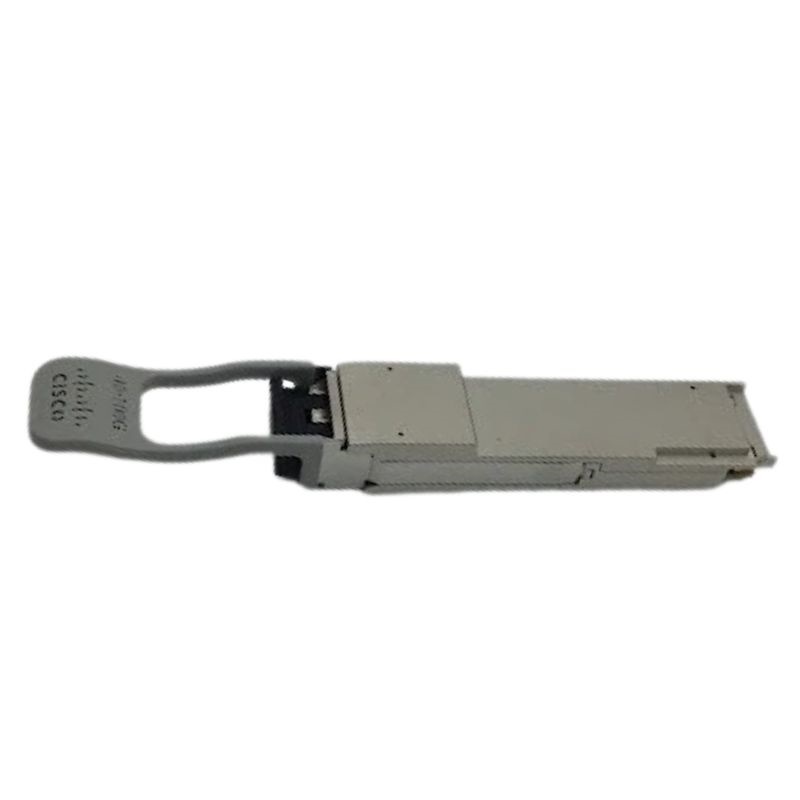


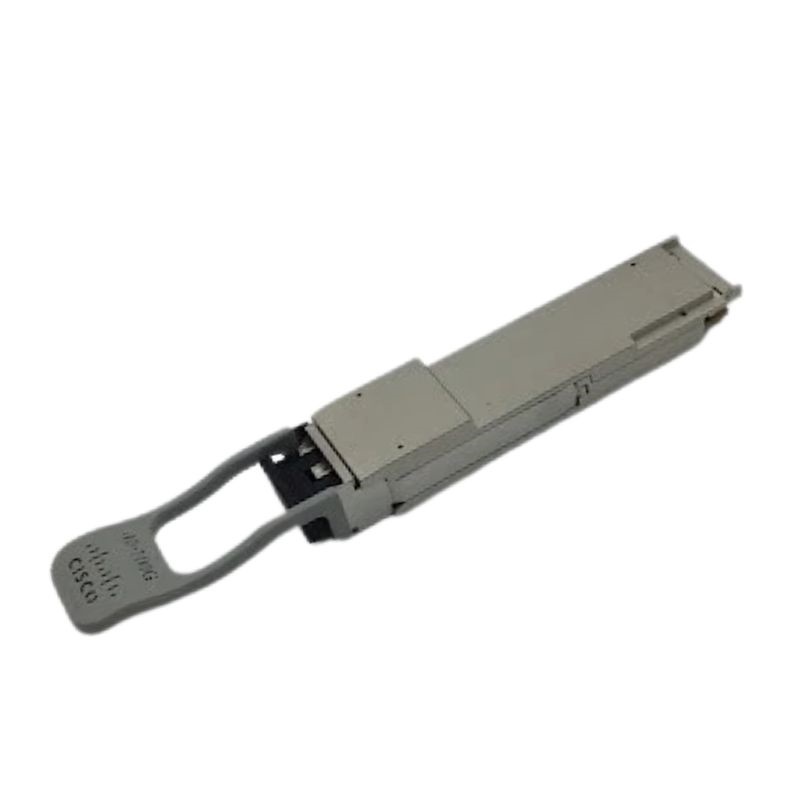
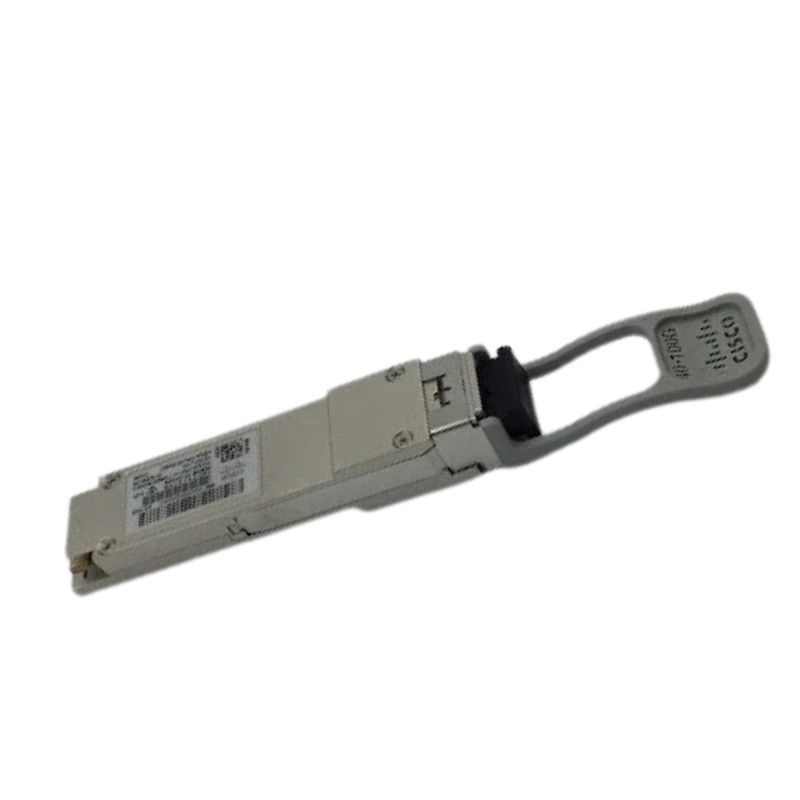
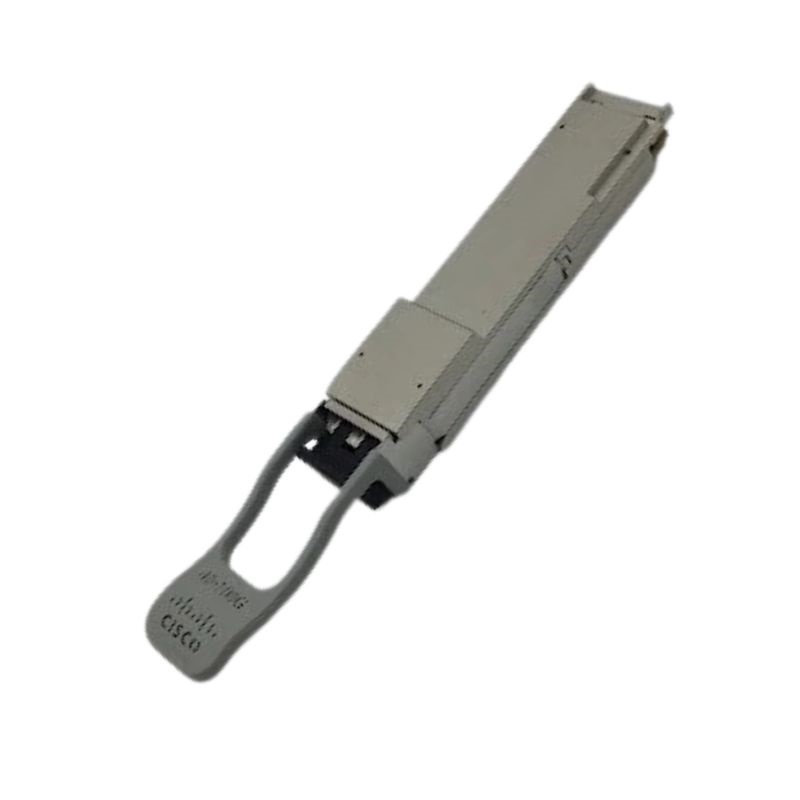
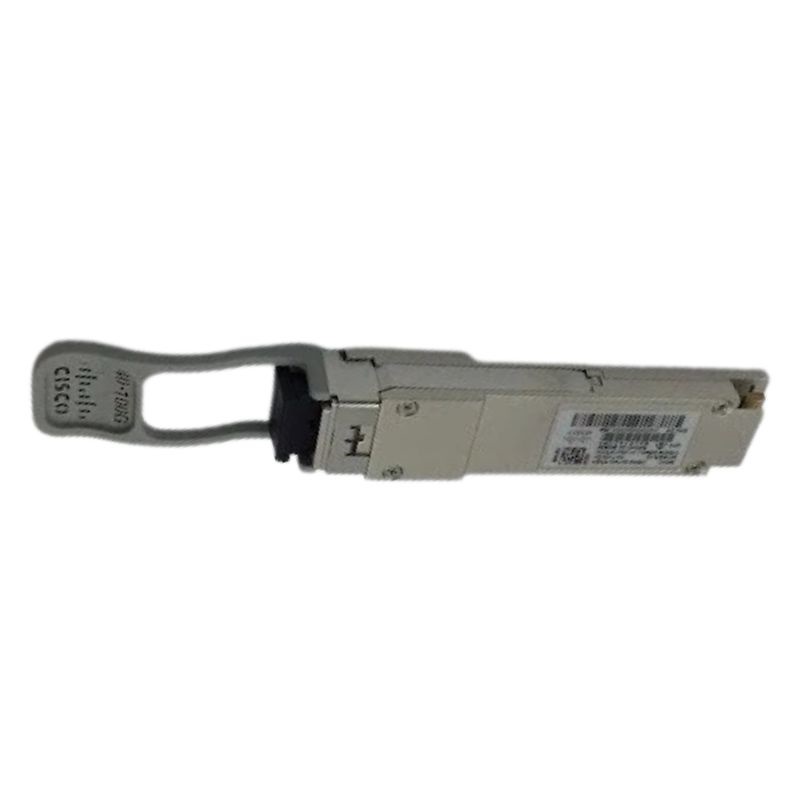
Cisco 10-3317-02 100 GBPS LC Multi-Mode QSFP+ Transceiver Module. Excellent refurbished with 1 year replacement warranty
| SKU/MPN | Warranty | Price | Condition | You save |
|---|---|---|---|---|
| 10-3317-02 | 1 Year Warranty | Contact us for a price | Excellent Refurbished | |
| 10-3317-02 | 1 Year Warranty | $230.00 | Factory-Sealed New in Original Box (FSB) | You save: $80.50 (26%) |
The CISCO 10-3317-02 LC multimode QSFP+ transceiver empowers demanding enterprise and data center environments with reliable 100 Gbps connectivity and flexible 40 Gbps operation. Designed for dense switching fabrics and aggregation layers, it delivers streamlined fiber links with minimal fuss.
Engineered for optical reliability, this QSFP+ module supports the following core capabilities to keep your links clean and predictable:
Built for Cisco ecosystems, the 10-3317-02 integrates neatly with switches and routers supporting QSFP/QSFP+ cages and 100GBASE-SR or 40GBASE-X optics. Its LC multimode design fits established cabling plants in many facilities.
The Cisco 10-3317-02 100 Gbps LC multi-mode QSFP+ transceiver module serves organizations that need high-density, high-performance connectivity in data centers, campus cores, aggregation layers, and service provider edge environments. Designed to fit the popular QSFP form factor and optimized for multi-mode fiber (MMF) with LC connectors, this module targets short-reach, ultra-low-latency links between top-of-rack (ToR) switches, spine-leaf fabrics, and high-performance servers or storage arrays. In many enterprise network refreshes, the module represents the practical middle ground between the raw throughput of 100 Gbps and the simplicity and familiarity of LC-terminated MMF cabling.
While the industry uses nuanced terminology for 100 Gbps optics, the 10-3317-02 category is tuned for users who want 100G speeds from a QSFP-class footprint with duplex LC connectors on multi-mode fiber. This combination enables painless patching in racks already standardized on LC, supports common cable plant topologies, and simplifies operations for teams who routinely handle LC jumpers. The result is a highly scalable, power-efficient transceiver option that shortens mean time to deploy, reduces cabling confusion, and supports consistent, predictable performance in clustered and modular switching designs.
As data center traffic patterns shift from north-south to east-west and microservices explode the number of lateral flows, core-to-leaf and leaf-to-server links require more bandwidth, lower jitter, and improved determinism. The Cisco 10-3317-02, as a 100 Gbps MMF LC module, fits naturally into the spine-leaf model, providing high-throughput aggregation without forcing a migration to unfamiliar connectors or exotic cable types. Its density and power efficiency allow operators to deploy many ports per rack unit, driving flatter network topologies and reducing oversubscription. In campus cores and large meeting spaces, it also helps unify aggregation backbones, supporting high-bandwidth applications like UHD video distribution, XR collaboration, and campus-scale Wi-Fi backhaul.
Enterprises and service providers deploy the Cisco 10-3317-02 category across multiple tiers of their infrastructure. The following scenarios illustrate where the module consistently adds value:
High-density leaf switches often require many 100G uplinks to spine switches. LC-terminated MMF makes these connections straightforward to manage. The module’s short-reach profile maps well to in-row or cross-row designs, and its compact footprint allows more uplinks per switch, supporting scale-out fabrics. In ToR aggregation, it links adjacent racks, row ends, or modular chassis with low latency, maintaining a predictable oversubscription ratio.
Modern servers equipped with 100G NICs and storage arrays running NVMe-over-Fabrics or high-throughput backup streams benefit from 100G links that are easy to patch and re-provision. The 10-3317-02 module enables direct switch-to-server and switch-to-storage runs on LC MMF, keeping cable trays clean and simplifying moves, adds, and changes. Its low-latency optics preserve the performance envelope required for parallel workloads, distributed databases, and real-time analytics pipelines.
Campus networks increasingly demand 100G to handle Wi-Fi 6/6E/7 aggregation, UHD signage, lecture capture, and collaboration suites. Using LC MMF where conduit space is constrained or where an existing MMF plant is already in place makes the 10-3317-02 category a practical backbone choice. Redundant 100G links between distribution and core maintain resiliency while future-proofing for streaming-heavy use cases.
In campus environments with adjacent buildings or short metro dark fiber spans compatible with MMF, these modules create cost-effective 100G uplinks without requiring specialized connectors. When coupled with proper environmental considerations and optical budgets, they deliver stable, high-bandwidth connectivity over short distances with excellent availability.
The LC multi-mode profile of the Cisco 10-3317-02 category simplifies cable plant planning. Understanding fiber grades, polishing types, and bend radius tolerances helps maintain optical budgets and link reliability.
Multi-mode deployments frequently rely on OM3, OM4, or OM5 fiber. OM3 supports 10G and many short-reach 40G/100G applications; OM4 increases distance headroom; OM5 provides wideband support for future wavelength-multiplexed MMF designs. For 100 Gbps LC MMF applications, choosing OM4 or better is common to maintain margin against insertion loss and connector wear. While exact maximum reaches depend on transceiver characteristics and optical budgets, operators typically select OM4 for its balance of performance and cost.
LC connectors used with 100G optics should have high-quality endfaces, clean ferrules, and proper APC/UPC polish as specified for the module. Most LC MMF links at 100G rely on UPC terminations to minimize return loss. Field technicians should use inspection scopes and cleaning kits as a standard practice. Even microscopic debris can introduce reflections, raise bit error rates (BER), or trigger link flaps under temperature changes.
LC duplex cassettes, angled patch panels, and horizontal cable managers keep jumpers strain-free and clearly labeled. Because port density rises with 100G adoption, color-coded boots or labeled wraps help prevent mis-patching during maintenance windows. Route LC jumpers through dedicated managers to maintain bend radius and reduce lateral pressure on switch ports, thereby lowering the risk of intermittent light loss from microbends.
Plan for total insertion loss across jumpers, connectors, splices, and patch panels. Create a per-link worksheet listing segment lengths, connector counts, and expected losses, then compare against the module’s loss budget. Add operational margin for aging, temperature variance, and accidental contamination. When links approach the maximum recommended reach, prefer high-grade OM4/OM5 and minimize unnecessary connectors.
Beyond raw throughput, the 10-3317-02 category emphasizes stable link performance under real-world conditions. The following attributes drive predictable outcomes in production networks:
Optical serialization delay for 100G LC MMF links is low and consistent. This predictable latency helps distributed applications maintain tight timing. Keep in mind that transceiver-to-transceiver variation is generally small; larger contributors to end-to-end latency include switch buffering, queuing policies, and traffic shaping. Pairing the module with quality line cards configured for cut-through or deep-buffer modes as appropriate ensures microbursts are handled without packet loss.
Modern 100G links typically employ FEC to improve link robustness and sustain a very low post-FEC BER, even as connectors age. Ensure that switch OS versions and port profiles use the recommended FEC mode for the optic. Mis-matched or disabled FEC can lead to subtle packet corruption, which manifests as retransmissions or application-layer slowdowns rather than obvious link down events.
High-density 100G deployments concentrate heat. The 10-3317-02 category is engineered for efficient power consumption, but rack airflow still matters. Use front-to-back (or back-to-front) airflow consistency across the row, maintain clean intake filters, and leave clearance around switch vents. Most modern chassis can report real-time optic temperatures; monitor these values and define alert thresholds slightly below the vendor’s maximum operating temperature for proactive maintenance.
QSFP-class optics are shielded to limit electromagnetic interference, but good practices still apply: avoid routing power cables tightly around fiber trunks, and keep transceivers latched securely. Use gentle insertion force and confirm the retaining mechanism clicks into place. Mechanically stressed modules—whether from heavy, unsupported jumpers or cramped cable trays—are more likely to exhibit intermittent link issues.
Enterprises frequently mix optics across device families and generations. The 10-3317-02 category is designed for compatibility with Cisco platforms that accept QSFP-class 100G modules and support LC MMF optics. Interoperability also depends on matching link parameters and supported encoding. When connecting different vendors across a dark fiber span, ensure both ends agree on wavelength profile, FEC settings, and speed negotiation behavior. When in doubt, lock both ends to identical port profiles and explicitly configure FEC.
Before deployment, verify that your switch OS release supports the transceiver PID and desired features (port breakout, telemetry, DOM monitoring). Some platforms allow breakouts of 100G to lower-speed lanes for migration; others expect dedicated 100G lanes. Release notes and hardware compatibility matrices are invaluable references when planning mixed-generation refresh projects.
Digital diagnostics (receive/transmit power, temperature, voltage, bias current) provide instant visibility into link health. Incorporate DOM polling into your NMS or telemetry pipeline. Trending DOM data over time reveals slow drift that might otherwise surprise you during peak loads. When receive power edges toward the lower threshold, schedule a fiber cleaning and inspection, and re-test.
Structured fiber cabling aims to balance agility with manageability. The Cisco 10-3317-02 category, with LC MMF, simplifies design choices while maintaining high density.
For short rack-adjacent runs, direct patching with LC duplex jumpers reduces connectors and loss. For larger deployments or multi-tenant facilities, cross-connects provide operational decoupling—customers can change equipment without provider involvement. Cross-connects also support standardized testing points and cleaner demarcation between spheres of control.
Where multiple 100G links run in parallel, deploy LC trunk cables in overhead trays, then fan out into short LC patch cords at the endpoint racks. Label trunk endpoints clearly, map them in your DCIM, and reserve slack loops for future re-termination. Avoid sharp bends entering vertical managers; microbends can introduce unpredictable attenuation that only appears under thermal stress.
Adopt a color scheme to differentiate 100G LC MMF from 10G and 40G runs. Combine colored dust caps, boot sleeves, and panel labels to prevent accidental moves. Ensure labeling survives cleaning solvents and does not peel in warm aisles. QR-coded labels tied to link documentation can save minutes per task across thousands of ports.
Although optical transceivers don’t process application data in the traditional sense, they still influence the security posture of your infrastructure by affecting availability and integrity of transport.
Procure the 10-3317-02 category from trusted sources to avoid counterfeit devices with substandard components. Authentic modules deliver consistent optical budgets and reliable DOM telemetry. Maintain purchase documentation and record vendor serials for audit trails and warranty claims.
In sensitive environments, consider tamper-evident seals on patch panels and locked cable managers. Use port security policies on switches to prevent unauthorized link state changes. Log module insertions and removals through syslog or telemetry—sudden inventory changes can be early indicators of accidental mis-patching or malicious activity.
Ensure alignment with relevant optical and safety standards. Follow proper laser safety practices when working with energized ports, including use of non-powered inspection where possible. Keep dust caps on unused ports to prevent debris ingress and accidental exposure.
Adopting 100 Gbps optics like the Cisco 10-3317-02 impacts both capital and operational expenditures. Thoughtful planning yields lower total cost of ownership over the module life.
Initial costs include transceiver PIDs, LC MMF jumpers, any necessary patch panel upgrades, and potentially higher-density line cards. By leveraging existing LC MMF plants, many sites avoid larger overhauls associated with alternative connectors. Right-sizing inventory and standardizing on a small set of optical SKUs drives volume pricing and simplifies procurement.
Operational savings come from faster turn-ups, fewer truck rolls for troubleshooting, and reduced training overhead. LC familiarity shortens maintenance windows and minimizes risk during large-scale moves, adds, and changes. Power and cooling efficiency at the transceiver level compound across dozens or hundreds of ports, translating into measurable utility savings over time.
When forecasting bandwidth growth, consider both vertical and horizontal scale. Vertically, higher-port-density line cards can increase total 100G ports per chassis. Horizontally, you can add spine tiers or expand leaf counts. A consistent optic like the 10-3317-02 category simplifies both approaches, letting you grow capacity without reconsidering cable plant assumptions every quarter.
Organizations rarely jump from 10G to 400G in one move. The 10-3317-02 category serves as a bridge on the journey, enabling staged upgrades that preserve existing investments.
Sites with extensive 10G LC MMF cabling can migrate key links to 100G by swapping optics and verifying optical budgets. In some designs, 40G uplinks can be consolidated into fewer 100G links, simplifying cabling and reducing oversubscription. Keep migration plans modular; convert a rack or row at a time, validating performance and updating documentation as you proceed.
While higher speeds increasingly rely on different modulation schemes and, often, different connectors or fiber types, building disciplined LC MMF practices now—clean documentation, cable hygiene, DOM monitoring—sets the operational foundation for multi-rate environments. A well-managed 100G layer makes it easier to introduce higher-rate islands where and when needed.
Resiliency comes from both physical redundancy and logical design. The 10-3317-02 category works well in architectures that emphasize fault domains and rapid convergence.
Use multiple 100G links per path and enable ECMP across fabric spines. Distribute links across separate line cards, chassis, and power feeds when possible. Keep LC jumpers for redundant links routed through different cable managers to reduce the chance of simultaneous damage during maintenance.
Link aggregation can bond several 100G ports into a logical pipe, smoothing failover in the event of a single transceiver or fiber issue. Combine with fast routing protocols (e.g., BFD-assisted convergence) to minimize micro-outages that sensitive applications would otherwise notice.
Even premium optics behave poorly in suboptimal environments. Controlling temperature, humidity, and dust extends module life and preserves performance.
Keep optics away from hotspots created by uneven airflow. In cold aisles, ensure sufficient clearance before patch panels to avoid kinking LC jumpers. In hot aisles, avoid leaving dust caps off unused ports; convection currents can carry debris into ferrules.
In facilities near heavy equipment or transport corridors, vibration can affect connector seating. Use secure cable managers and verify latches. For racks with frequent physical access, position critical 100G ports away from knee-height panels to prevent accidental bumps.
Adopt a “clean before connect” policy. Stock approved LC cleaning pens, inspection scopes with proper adapters, and lint-free wipes. Train technicians to recognize endface defects and to document cleaning actions in change records.
The complexity of 100G fabrics grows quickly. Good documentation transforms day-two operations from reactive troubleshooting into proactive reliability engineering.
Track each Cisco 10-3317-02 module by serial, rack location, device slot, and port. Link records should include fiber type, length, connector count, DOM baseline, and last cleaning date. Update records automatically where possible by ingesting switch inventory outputs into your CMDB.
Standardize port profiles for 100G LC MMF links—speed, FEC mode, QoS, error detection thresholds. Deploy via automation tools to eliminate configuration drift. Golden configs accelerate turn-ups and make troubleshooting more deterministic.
Stream DOM data and interface counters to a time-series database. Build dashboards to flag creeping Rx power decline or rising module temperature. Alert on rate-of-change, not just absolute thresholds, to catch issues early.
Optics choices influence the energy footprint of your network. The Cisco 10-3317-02 category’s efficient design helps organizations progress toward sustainability goals.
Per-port power savings accumulate in high-density fabrics. Lower thermal output reduces cooling loads, and stable optics minimize rework trips and out-of-cycle maintenance—both subtle contributors to sustainability.
At end-of-life, follow proper e-waste channels. Maintain a chain of custody for decommissioned modules and ensure sensitive labels are removed. Responsible recycling recovers valuable materials and keeps hazardous components out of landfills.
Standardizing on a concise optics catalog streamlines operations. When adopting the 10-3317-02 category, align procurement with both current projects and future growth.
Create a tiered inventory strategy: critical network fabrics receive higher spare ratios, while lab or non-critical links can rely on shared spares. Track usage trends—peaks in project activity often correlate with higher optics consumption. Use reorder points linked to lead times rather than fixed calendar intervals.
Choosing the right optic involves balancing cost, complexity, and performance. The 10-3317-02 category represents an LC MMF approach to 100G. Other common paths include MPO/MTP-based MMF, single-mode CWDM/CLR-class optics on LC, and direct-attach copper or active optical cables.
MPO-based solutions excel in massive parallelism and sometimes longer MMF reach, but they introduce new connector types and polarity management. For organizations with entrenched LC practices, the learning curve and different cleaning protocols may add operational friction. LC-based 100G, by contrast, leverages existing panels and skill sets.
Single-mode optics support much longer distances but at typically higher cost per port. They are ideal for inter-building, campus-wide, or metro links. Where distance requirements are modest and existing MMF plant is available, LC MMF modules like the 10-3317-02 remain the most economical choice.
For very short intra-rack or adjacent-rack connections, DACs (passive copper) or AOCs (integrated fiber) can be cost-effective. However, they reduce flexibility for moves and can complicate cable management in densely packed racks. LC MMF optics preserve modularity and let you adjust paths using standard patching methods.
To accelerate consistent deployments, create standardized templates tailored to the Cisco 10-3317-02 category.
Tracking the right KPIs yields actionable insights. For 100G LC MMF optics, consider the following metrics as part of your regular dashboard.
Veteran optical and network engineers develop habits that keep 100G links healthy. The following pragmatic tips are consistently useful in the field:
Misplaced cleaning pens and missing dust caps are common friction points. Stock extras in each row and in every technician’s toolkit. Caps protect endfaces during transport and non-use; a single missing cap in a dusty aisle can add minutes of cleaning later.
Photos caught in the CMDB help future technicians distinguish correct routing from anomalies. They also reveal subtle strain or bend-radius violations invisible in written records.
Even in well-labeled environments, a quick visual cue saves time during incidents. Adopt a neutral but consistent color scheme for 100G LC jumpers and communicate it across teams.
100 Gbps over multi-mode fiber with LC connectors, optimized for short-reach, high-density deployments typical of modern data centers and campus cores.
QSFP-class module delivering high port density and efficient power usage in fixed and modular switching platforms.
Leverages ubiquitous LC cabling, easing installation, moves, and troubleshooting while integrating with standard patch panels and cable managers.
Supports DOM metrics for proactive monitoring, FEC for error resilience, and consistent thermal behavior when paired with proper airflow management.
Ideal for leaf-spine fabrics, server/storage uplinks, campus aggregation, and short inter-building runs where MMF provides cost-effective bandwidth.


 Contact Us
 Information
 Catalog
 Solid State Drives (SSD)
 Network Switches
 Hard Disk Drives
 HBA & Controllers
 PC & Servers
 PC & Server Memory
 CPU & Processors
 Network Routers
 Power Supplies
 Tape Drives & Libraries
 Network Devices
 Computer & Network Cables