(7% discount is applied at checkout)
Cart is empty
Your go-to destination for cutting-edge server products
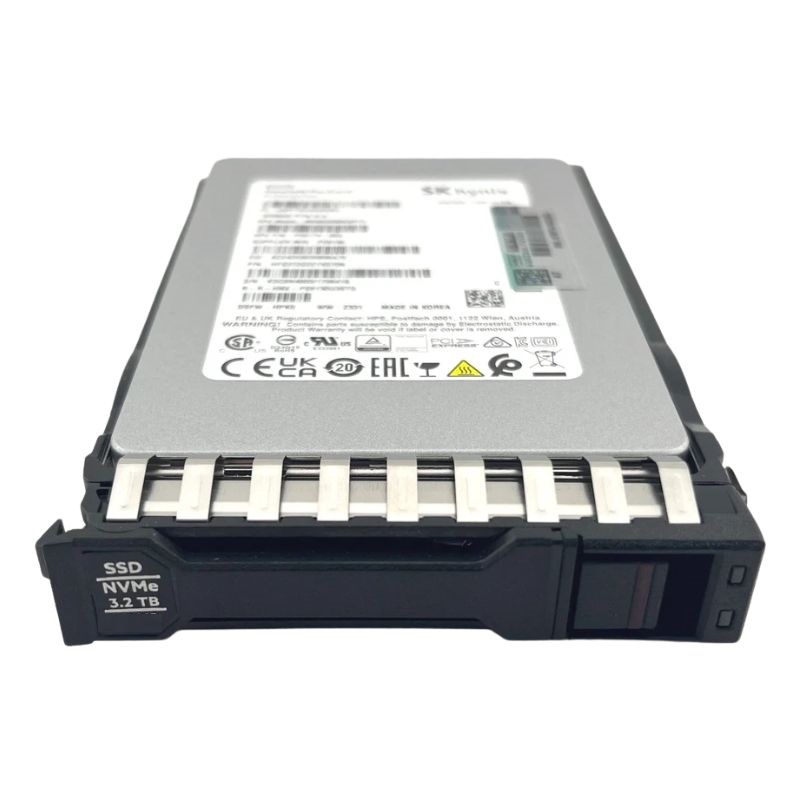


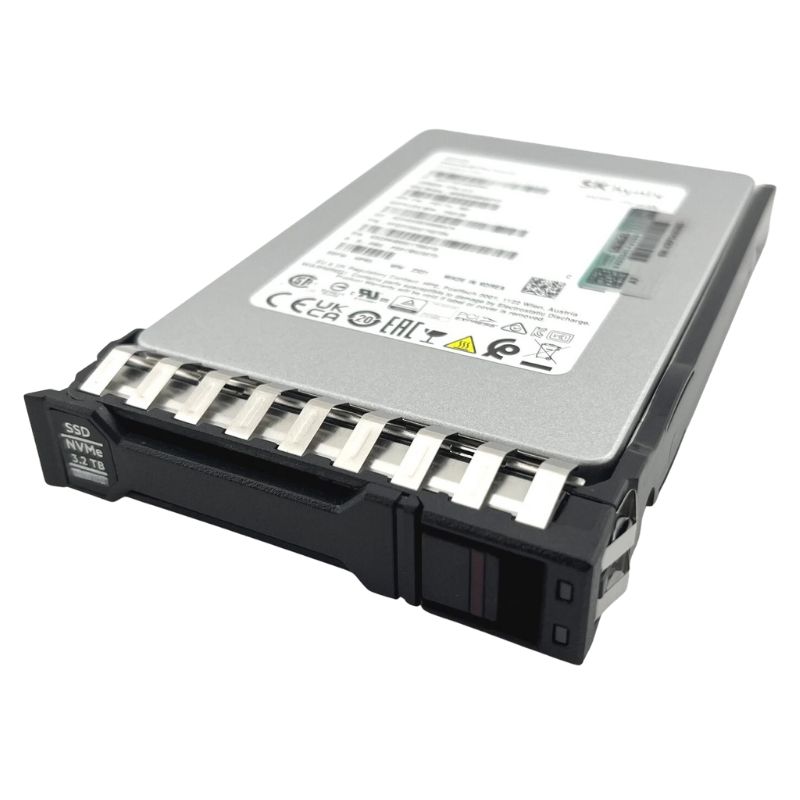
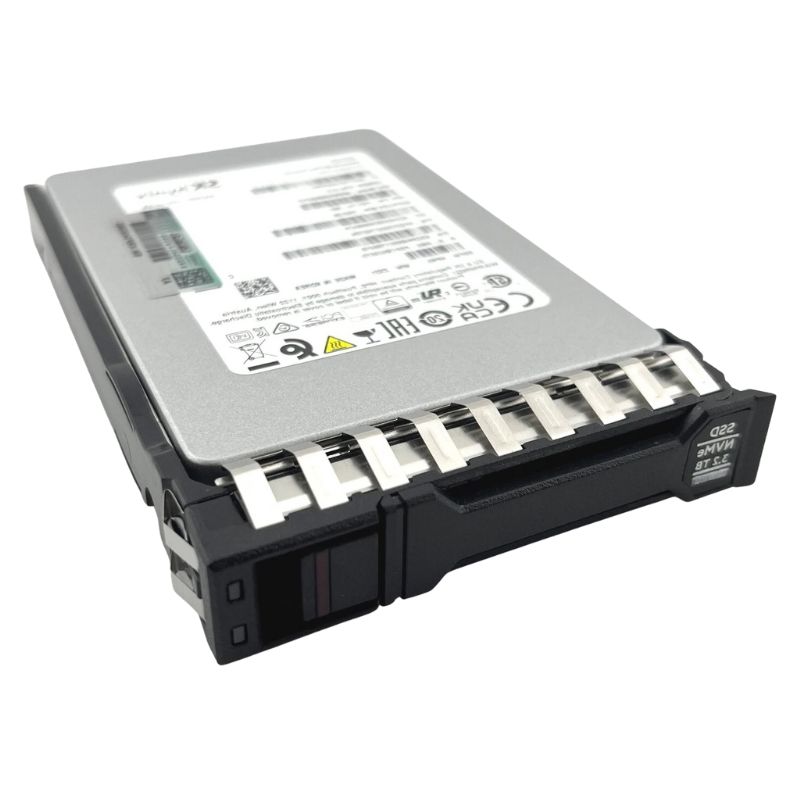
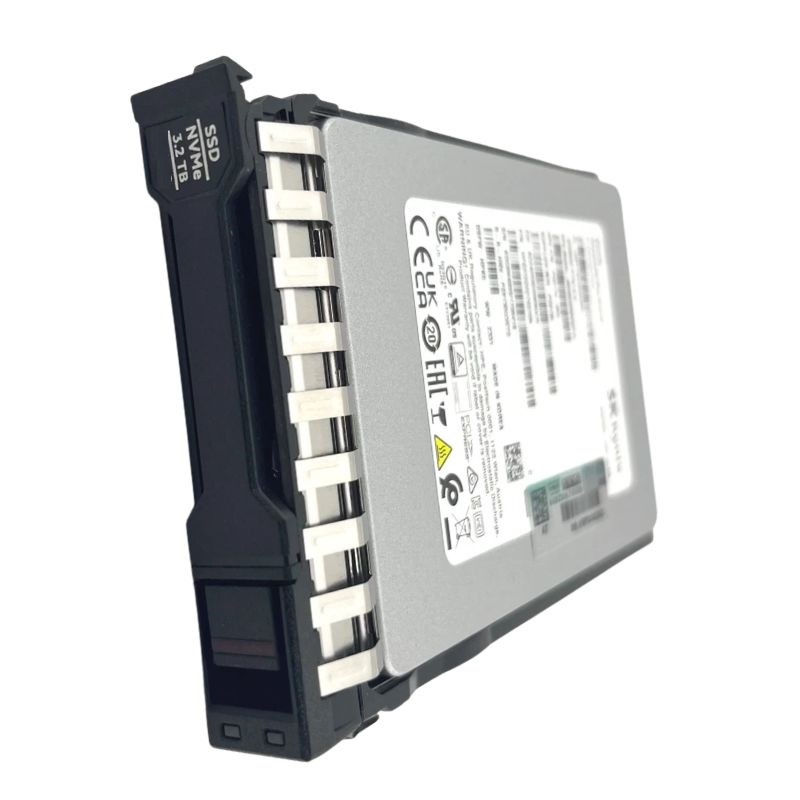
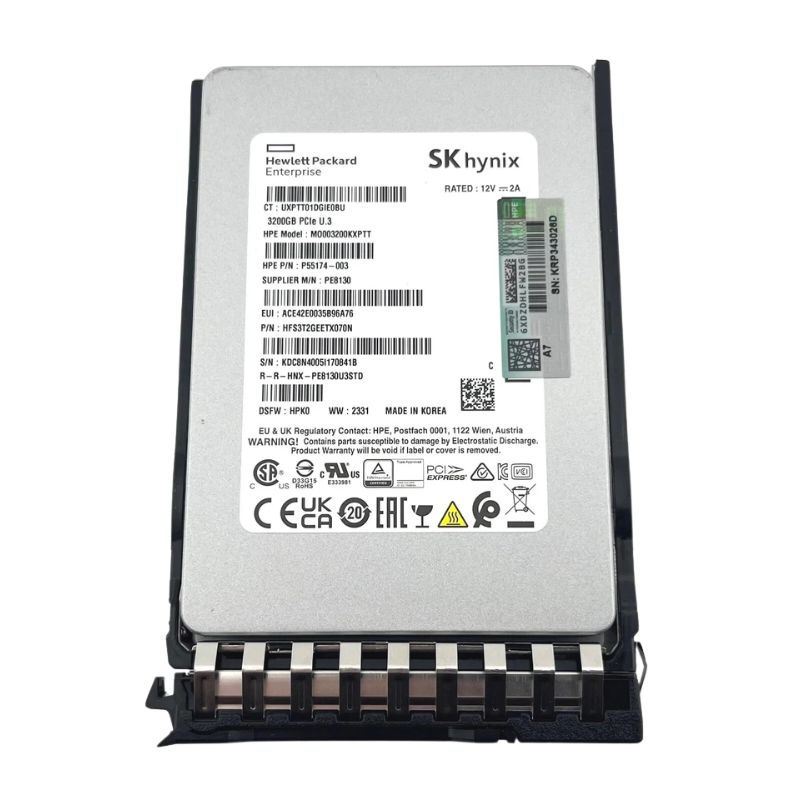
HPE P40571-B21 3.2TB NVMe Gen4 High Performance Mixed Use 2.5Inch SFF Bc U.3 Pm1735 Solid State Drive. Excellent Refurbished with 1 Year Replacement Warranty
The HPE P40571-B21 3.2TB NVMe Gen4 SSD delivers exceptional speed, endurance, and reliability for data-intensive environments. Designed for mixed-use applications, this compact 2.5-inch SFF drive enhances server responsiveness and accelerates complex workloads with next-level performance.
This Gen4 NVMe U.3 SSD ensures outstanding throughput, optimized latency, and seamless scaling for enterprise servers needing robust I/O processing.
The combination of NVMe Gen4 technology and TLC flash ensures dependable mixed-workload performance, making it ideal for virtualization, transaction-heavy databases, analytics engines, and cloud environments.
The HPE P40571-B21 is fully compatible with:
The HPE P40571-B21 3.2TB NVMe Gen4 High Performance Mixed Use 2.5Inch SFF Bc U.3 PM1735 Solid State Drive represents a class of enterprise storage designed for demanding mixed workload environments where a balance of throughput, low latency, sustained performance, and long-term endurance is required. As part of the NVMe Gen4 family and offered in a compact 2.5-inch Small Form Factor (SFF) with U.3 connector compatibility, this PM1735 series device addresses the needs of modern data centers, virtualized infrastructure, high-performance databases, and latency-sensitive applications. The category covers not only the raw drive itself but also related use cases, best practices for system integration, and buyer considerations that ensure the HPE P40571-B21 performs optimally in production environments.
The NVMe Gen4 interface delivers a significant leap in PCIe bandwidth compared to previous generations, enabling the P40571-B21 3.2TB NVMe drive to exploit higher I/O throughput and better parallelism. NVMe protocol is optimized for non-volatile memory, reducing software and hardware overhead associated with block-level protocols and allowing for much lower I/O latency. For workloads such as real-time analytics, OLTP databases, and mixed virtual machine environments, the combination of NVMe Gen4 with enterprise-grade firmware yields meaningful improvements in both single-threaded and concurrent I/O performance.
The 2.5-inch Small Form Factor (SFF) with U.3 backplane compatibility offers a versatile deployment path in modern server platforms. U.3 is a unified backplane interface capable of supporting NVMe and SATA devices through the same connector, which simplifies upgrade paths and reduces hardware complexity. The PM1735’s physical profile, coupled with U.3 capability, makes it an appropriate selection for servers and storage arrays that require high-density NVMe storage while maintaining hot-plugability and standard rack-level serviceability.
At the heart of the P40571-B21 is an enterprise-class controller and firmware stack engineered to manage mixed-use workloads efficiently. Sophisticated wear-leveling algorithms, internal error correction, and power-loss protection ensure data integrity and endurance. The underlying NAND configuration, optimized for performance and endurance, allows the drive to sustain heavy write cycles without dramatic performance degradation. Firmware quality is a critical differentiator in enterprise SSDs; the PM1735 firmware is tuned for predictable QoS and consistent latency under mixed sequential and random I/O patterns.
The HPE P40571-B21 3.2TB NVMe Gen4 SSD delivers a combination of high throughput and strong IOPS capability for mixed read/write workloads. In mixed-use categories, performance is not only about peak sequential bandwidth but about how well the device holds up under variable read-write ratios and background housekeeping tasks. The PM1735 is engineered to provide sustained performance under such conditions, ensuring that database transactions, caching layers, and virtualization hosts maintain responsiveness during heavy multi-tenant operations.
Low tail latency and predictable I/O response are crucial for latency-sensitive applications such as electronic trading platforms, real-time analytics, and interactive virtual desktops. The P40571-B21 emphasizes consistent latency performance across sustained workloads, minimizing jitter and avoiding latency spikes that can impact application SLAs. Techniques such as intelligent command queuing, prioritization, and firmware-managed garbage collection are applied to maintain QoS for business-critical services.
High-performance mixed-use SSDs must balance capacity with endurance. The 3.2TB capacity point is often selected to provide a cost-effective blend of storage density and write endurance. The PM1735 design targets enterprise-grade endurance metrics, enabling heavy write workloads over extended deployment lifecycles without jeopardizing data retention or drive longevity. For storage architects, estimating drive endurance in drive writes per day (DWPD) or total terabytes written (TBW) terms helps align procurement with expected workload intensity.
Virtualized environments place simultaneous, diverse I/O demands on storage. Virtual machine boot storms, snapshot operations, and guest-level workloads require a storage medium that can handle mixed sequential and random I/O with low latency. The HPE P40571-B21 3.2TB NVMe Gen4 drive is well-suited to being used as primary VM storage or as a high-performance tier in hyperconverged infrastructures, where consolidation and consistent performance are top priorities.
Relational and NoSQL databases demand predictable performance for small, random I/O operations. Transactional systems benefit from the low-latency, high-IOPS profile of Gen4 NVMe devices. Additionally, using PM1735 drives as an I/O accelerator or cache layer in front of slower media can dramatically increase application responsiveness and reduce overall system load. For read-heavy and mixed workloads, the 3.2TB capacity supports significant dataset sizes while preserving the performance needed for high transaction rates.
Data analytics and machine learning workflows often combine large sequential reads with bursts of random access. The high bandwidth of NVMe Gen4 supports fast dataset ingestion and model training iterations, while the drive’s mixed-use tuning supports unpredictable access patterns during experimentation and iterative development. For HPC clusters that require local fast storage or scratch spaces, the PM1735 offers a robust solution for temporary high-speed storage that accelerates compute workloads.
Reliability is an imperative for enterprise storage components. The HPE P40571-B21 is engineered with features to protect data during unexpected power loss, to detect and correct errors, and to report health telemetry through SMART attributes and vendor-specific monitoring. Power-loss protection mechanisms reduce the risk of data corruption during sudden power events, while advanced ECC and bad block management maintain data integrity over the drive’s lifecycle.
Manageability is central to the drive category—firmware updates, diagnostic utilities, and monitoring hooks are necessary for operational excellence. HPE provides support tools and firmware management pathways that facilitate integration with server management suites. System administrators can monitor drive health, endurance consumption, and performance counters to proactively replace drives before failure and to schedule firmware updates during maintenance windows. Integration with common management frameworks allows drives to be included in broader observability and alerting strategies.
Compatibility with server platforms, backplanes, and RAID or storage controller ecosystems needs careful evaluation. The PM1735’s U.3 interface increases interoperability across modern server chassis, but administrators should validate firmware compatibility, power and thermal characteristics, and hot-swap behavior with their specific HPE ProLiant or third-party servers. Interoperability testing and certification guidance should be consulted to ensure seamless operation within an existing infrastructure.
High-performance NVMe Gen4 SSDs generate more heat than their SATA predecessors. When deploying multiple P40571-B21 drives in high-density environments, appropriate server airflow, chassis design, and thermal profiles must be considered. Effective cooling strategies include ensuring proper airflow paths, using front-to-back cooling server designs, and monitoring drive temperature metrics to prevent thermal throttling that could impact performance. The PM1735 firmware typically includes thermal throttling safeguards to protect the device, but avoiding throttling through good system design yields the best sustained performance.
Power consumption should be part of any capacity planning exercise. NVMe Gen4 devices deliver superior performance but can draw higher peak and active power under load. System architects should factor drive power into overall server power budgets, rack PDU planning, and cooling capacity. The trade-off between power and performance can be optimized by using power management features offered at the host or drive level while maintaining required performance SLAs.


 Contact Us
 Information
 Catalog
 Solid State Drives (SSD)
 Network Switches
 Hard Disk Drives
 HBA & Controllers
 PC & Servers
 PC & Server Memory
 CPU & Processors
 Network Routers
 Power Supplies
 Tape Drives & Libraries
 Network Devices
 Computer & Network Cables