(7% discount is applied at checkout)
Cart is empty
Your go-to destination for cutting-edge server products
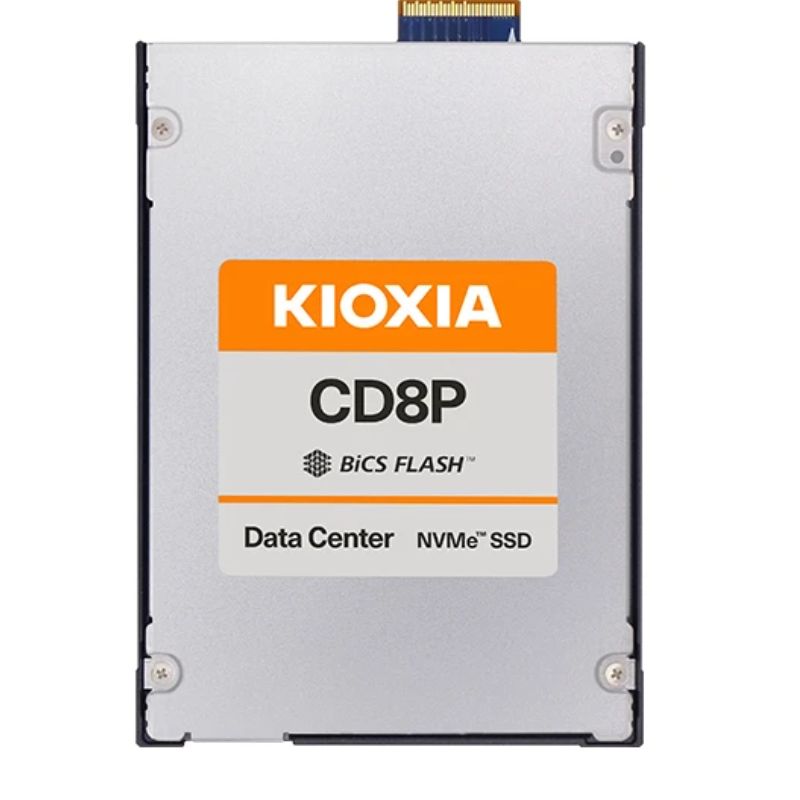


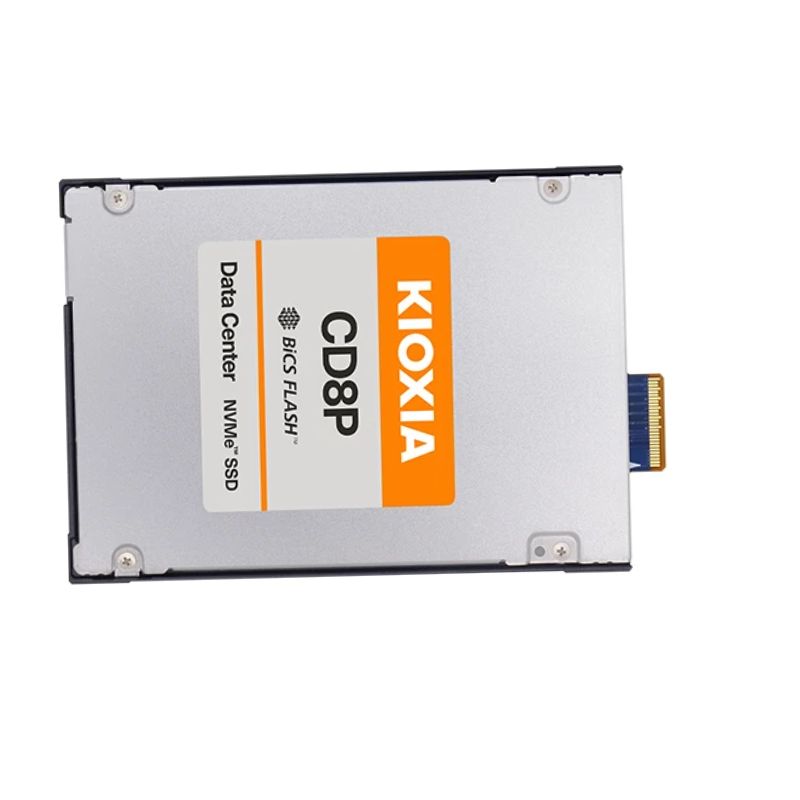
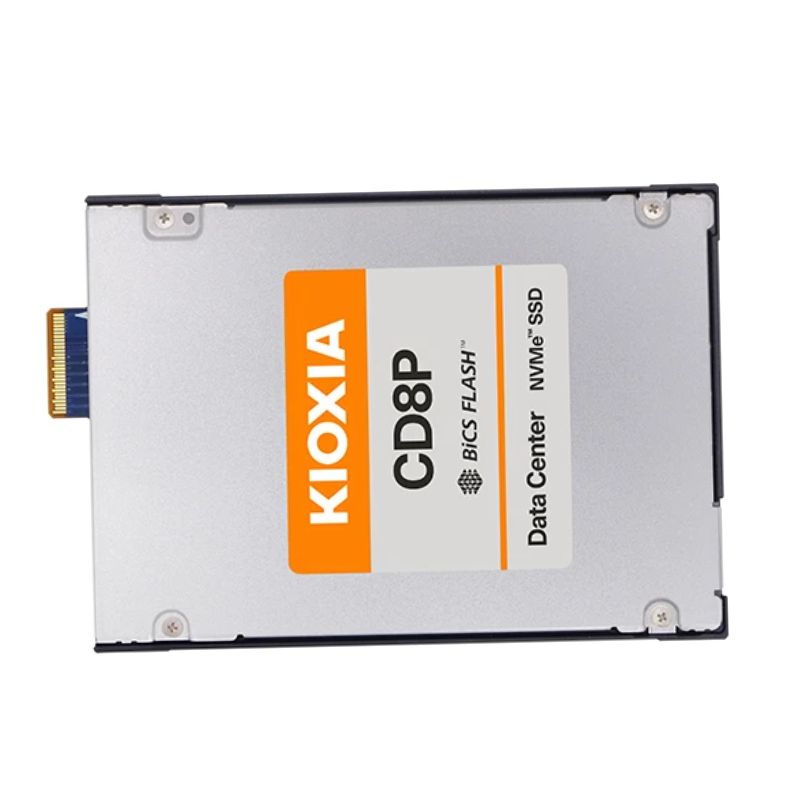
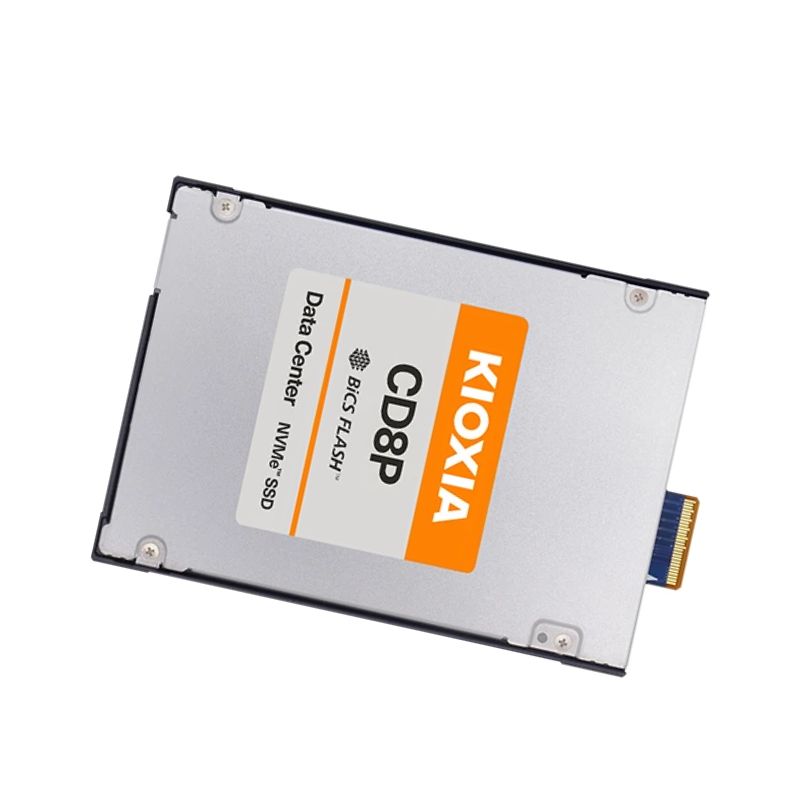
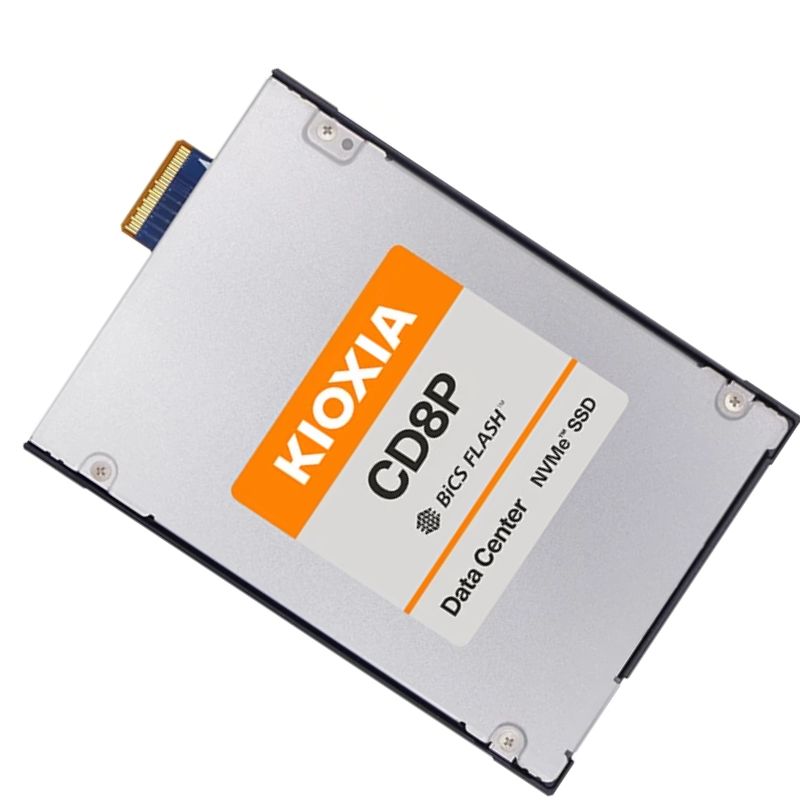
Kioxia KCD8DPJE15T3 CD8P 5.36TB E3.S PCIe 5.0 NVMe Enterprise SSD. New Sealed in Box (NIB) with 3 Years Replacement Warranty.
Belonging to the high-performance KIOXIA CD8P Series, this SED variant aims to deliver a blend of speed, endurance, and security that aligns with today’s stringent enterprise deployments. Whether supporting virtualization platforms, high-frequency analytics, or real-time data ingestion, the KCD8DPJE15T3 stands out with its ability to maintain superior throughput and consistent I/O patterns.
The Kioxia KCD8DPJE15T3 CD8P 5.36TB E3.S PCIe 5.0 NVMe Enterprise SSD represents a modern class of high-density, high-performance storage designed for data center and enterprise-class applications. This continuous category page description focuses on the product family and its subcategory positioning — enterprise NVMe solid-state drives in the E3.S form factor, optimized for PCIe Gen5 host interfaces. Content below is structured for search engines and human readers alike, emphasizing device features, architecture, deployment scenarios, performance characteristics, reliability attributes, manageability, and buying considerations.
Drives like the Kioxia KCD8DPJE15T3 sit in the enterprise NVMe SSD category targeted at server OEMs, cloud hyperscalers, edge compute platforms, and storage arrays that require sub-millisecond latency, high IOPS, and predictable throughput. This subcategory—PCIe 5.0 NVMe E3.S enterprise SSDs—bridges high-density capacity needs (multi-terabyte) with improved bandwidth and efficiency introduced by the PCIe Gen5 interface.
The Kioxia CD8P series (model KCD8DPJE15T3, 5.36TB) brings the following headline technical attributes that define the category:
Interface: PCIe Gen5 x4 with NVMe 2.1 command set support (backwards compatible with Gen4/Gen3 but optimized for Gen5 throughput).
Form factor: E3.S (EDSFF E3 Small) — a compact, thermally efficient, and hot-pluggable form factor suitable for dense server trays.
Capacity: 5.36TB nominal capacity in a single 3D NAND-based module, enabling high rack-level capacity in E3.S arrays.
Performance: Industry-leading sequential read/write bandwidth and random IOPS with multi-threaded workloads (detailed performance considerations below).
Enterprise features: Power-loss protection, end-to-end data path protection, and advanced error correction.
Security: Self-encrypting drive (SED) options, secure erase, and TCG Opal/Enterprise or other vendor-specific encryption support.
The E3.S (EDSFF E3 Small) form factor is a modern standard developed to meet next-generation storage density and thermal management needs:
Drives in the CD8P family are engineered for predictable, low-latency performance across demanding enterprise workloads. While exact numbers depend on host platform, firmware, and workload type, typical expectations for a PCIe 5.0 E3.S enterprise SSD include:
Enterprise SSD design centers on data protection and endurance. The Kioxia CD8P class offers:
Enterprise-grade drives specify endurance metrics such as drive writes per day (DWPD) or total bytes written (TBW) for warranty lifecycle planning. For capacity classes around 5.36TB, expect endurance optimized for mixed-use or data-center use cases—balancing cost per TB with write endurance for heavy duty-cycle environments.
The CD8P 5.36TB E3.S device is designed to accelerate and sustain a range of enterprise workloads:
Cloud providers deploy E3.S SSDs in high-density servers to deliver block storage, ephemeral VM volumes, and persistent data layers. The combination of capacity and PCIe Gen5 bandwidth supports multi-tenant I/O isolation and bursty workloads.
Databases benefit from low-latency random IOPS and consistent tail latency. The drive's endurance and power-loss protection ensure transactional integrity and predictable performance under sustained operations.
Virtual desktop infrastructure (VDI) and high-consolidation virtualization hosts require strong random read/write performance and QoS; E3.S drives offer the IOPS density to support large VM densities per server.
Analytic pipelines and HPC caches leverage fast sequential bandwidth and capacity for intermediate data sets, checkpoints, and scratch spaces.
Before purchasing or deploying CD8P class drives, validate the following compatibility vectors:
Modern Linux kernels and Windows Server editions provide NVMe drivers out of the box. For advanced features (telemetry, firmware updates), vendor tools or SDKs might be required.
E3.S drives often require direct airflow across the drive bay; confirm chassis airflow patterns and shading near adjacent components to avoid runtime throttling.
Understanding generational improvements helps justify migration and budget allocation.
PCIe Gen5 doubles the per-lane raw bandwidth over Gen4, translating to higher sequential throughput and headroom for multi-queue, parallel workloads. For latency-sensitive apps, Gen5 reduces serialization delays and buffer contention, offering improved tail latency in many cases.
The E3.S form factor and increased per-drive capacity reduce rack space consumed per TB, simplify cabling, and improve power efficiency per TB compared to older 2.5" U.2 drives.
Non-Volatile Memory Express (NVMe) — a protocol for accessing non-volatile storage media via PCIe, delivering low latency, parallelism, and high IOPS.
Peripheral Component Interconnect Express Generation 5 — a host interface standard doubling the per-lane bandwidth vs Gen4, enabling higher aggregate throughput for storage and accelerators.
Enterprise & Data Center Standard Form Factor — E3 Small variant optimized for small footprint, thermal management, and density in rack servers.
Drive Writes Per Day / Terabytes Written — common endurance metrics used to estimate drive longevity under sustained write activity.
For regulated industries (financial services, healthcare, government), ensure SSD security features align with compliance requirements. Key considerations include:
Hardware encryption (SED) secures data at rest. Confirm acceptable encryption algorithms, key lengths, and integration with your enterprise key manager.
Establish verified secure erase procedures using NVMe secure erase commands or cryptographic key destruction. Validate erasure through post-wipe audits and logs.


 Contact Us
 Information
 Catalog
 Solid State Drives (SSD)
 Network Switches
 Hard Disk Drives
 HBA & Controllers
 PC & Servers
 PC & Server Memory
 CPU & Processors
 Network Routers
 Power Supplies
 Tape Drives & Libraries
 Network Devices
 Computer & Network Cables