(7% discount is applied at checkout)
Cart is empty
Your go-to destination for cutting-edge server products
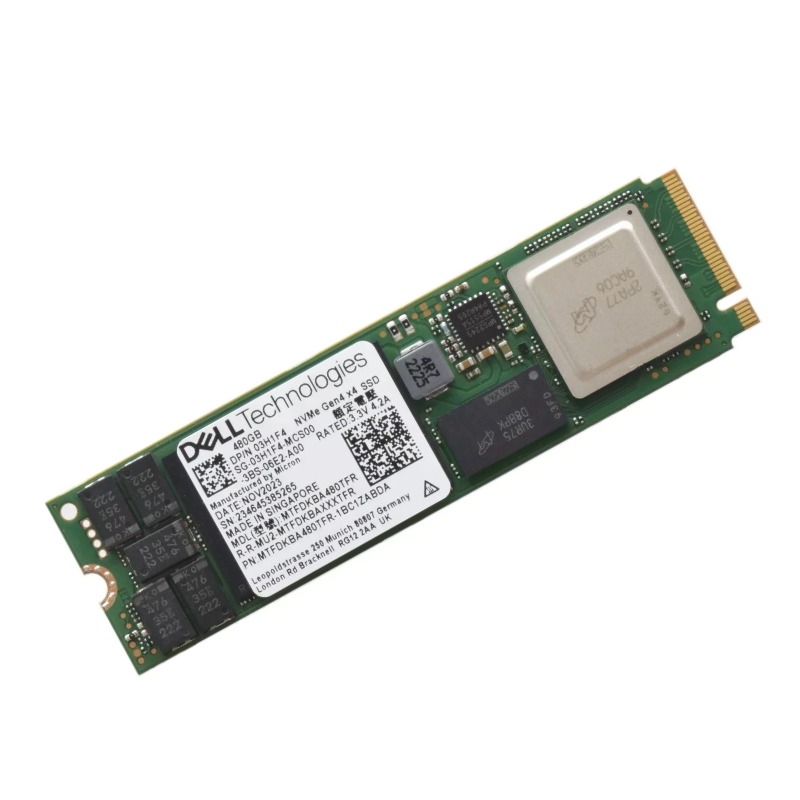


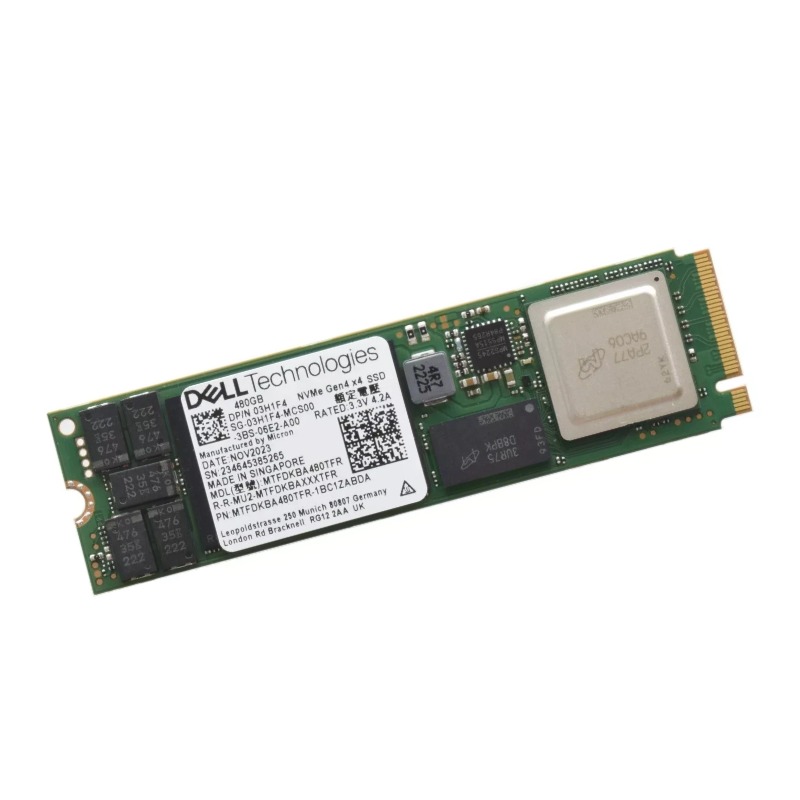
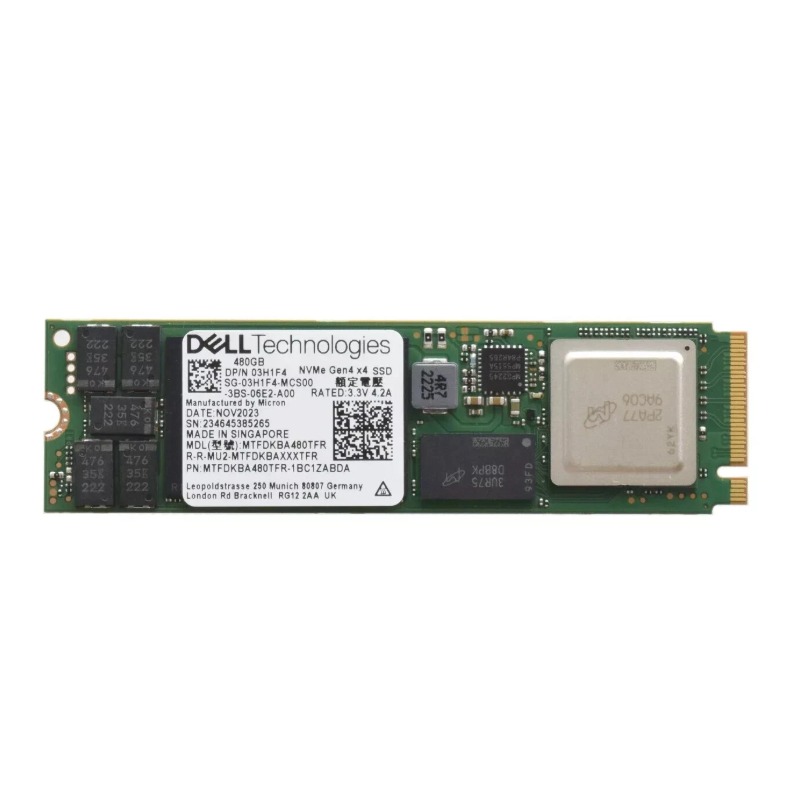
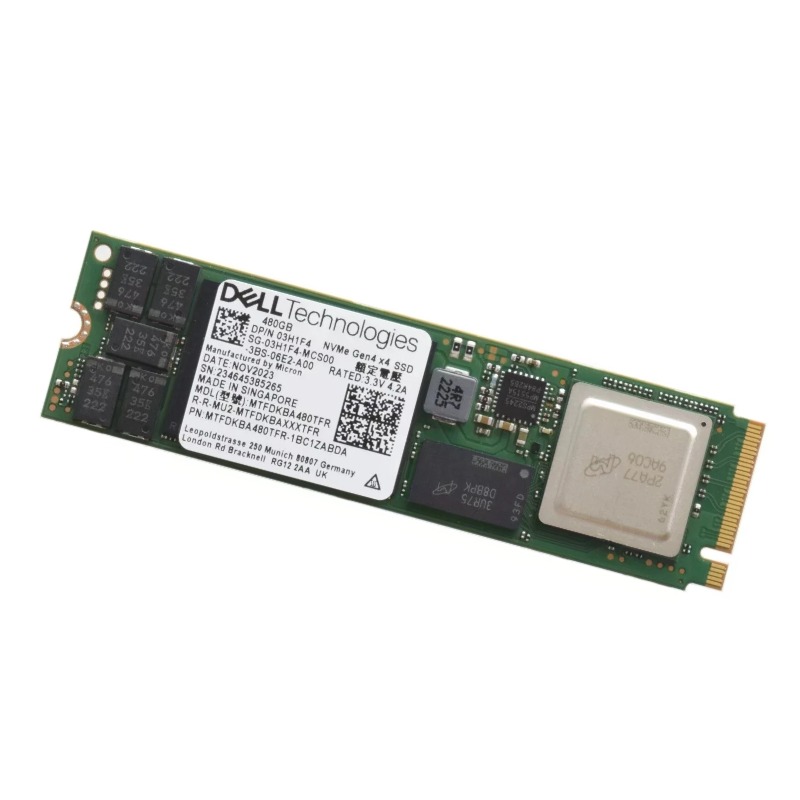
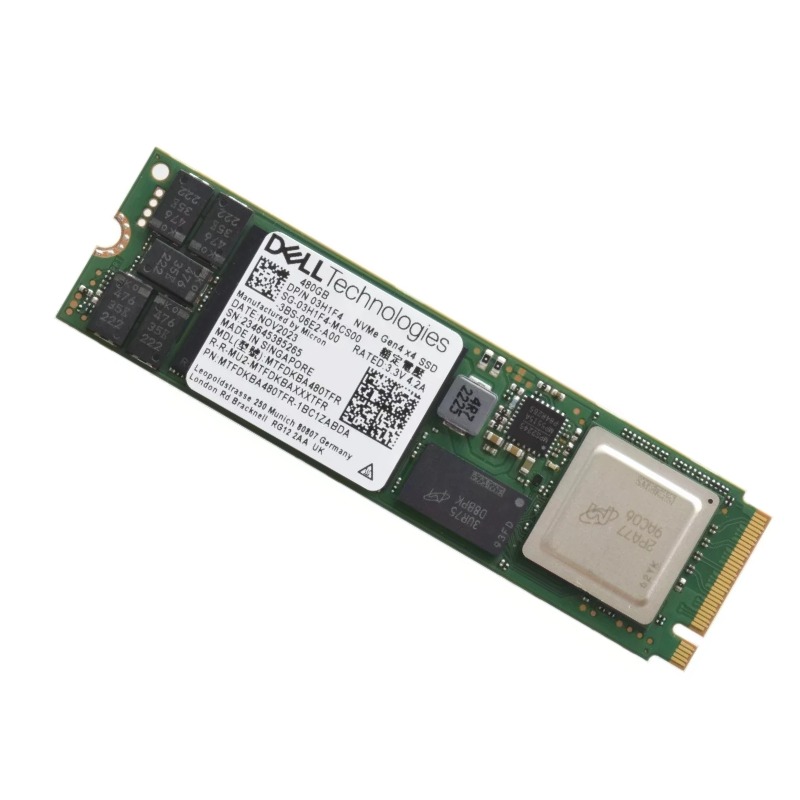
Dell Y2TGK 480GB M.2 (2280) PCIE 4.0 X4 (nvme) Read Intensive TLC Enterprise Class SSD. Excellent Refurbished with 1 year Replacement Warranty
This advanced 480GB M.2 (2280) PCIe 4.0 x4 NVMe solid-state drive is engineered for demanding data-center and server workloads. Designed for consistency, reliability, and rapid data access, it offers exceptional speed for read-focused environments across multiple generations of Dell PowerEdge systems.
The Dell Y2TGK 480GB M.2 (2280) PCIE 4.0 X4 NVMe Read Intensive TLC Enterprise Class Solid State Drive is engineered for enterprise environments that demand consistent throughput, high availability, and mission-critical data handling. Built on the PCIe Gen 4.0 interface, this NVMe SSD offers advanced bandwidth and accelerated command processing to support data-intensive workloads across virtualization clusters, enterprise applications, cloud deployments, edge computing platforms, and high-speed transactional systems. Its 480GB capacity fits a wide range of performance-driven IT infrastructures, making it suitable for read-focused workloads that require high IOPS, low latency, and fast access times in both small form factor servers and large-scale data centers.
The M.2 2280 form factor of the Dell Y2TGK enables seamless integration into compact server bays, blades, workstations, and rackmount chassis that prioritize density and airflow efficiency. Its enterprise class rating ensures enhanced durability, long-term performance stability, and optimized error management to align with business continuity standards. Combined with read-intensive endurance tuning, this solid state drive supports frequent read operations with low heat generation and predictable latency profiles. These performance characteristics position the Dell Y2TGK 480GB SSD as a reliable option for organizations scaling data access, analytics, AI inference workloads, boot drive configurations, and distributed storage architectures where dependable performance consistency matters.
The PCIe 4.0 X4 interface significantly enhances speed compared to previous PCIe generations, translating into faster data movement across storage pipelines and server architectures. With ultra-high throughput lanes and NVMe command sets optimized for parallel operations, the Dell Y2TGK SSD leverages the full capabilities of next-generation servers and workstation platforms. This interface is specifically engineered for environments requiring rapid boot times, ultra-fast application responsiveness, reduced wait time for database queries, and improved performance for software-defined storage applications.
NVMe architecture eliminates the bottlenecks associated with SATA and earlier protocol layers by enabling streamlined communication between the drive and the CPU. The result is lower latency request handling, superior command queuing efficiency, and increased I/O concurrency. Organizations relying on virtualization hypervisors, web servers, high-performance computing, and continuous data access scenarios benefit from the seamless command execution enabled by the Dell Y2TGK. By tapping into PCIe Gen 4 bandwidth, this SSD reduces read request delays, supports real-time analytics, and helps optimize the responsiveness of enterprise platforms that require large-scale data streaming and rapid load cycles.
The M.2 (2280) form factor is designed to deliver high-performance NVMe storage while minimizing physical footprint within server systems. Rather than relying on larger drive bays or cabled connections, the M.2 interface connects directly to the motherboard or backplane, reducing build complexity and improving airflow. The slim design of the Dell Y2TGK allows IT teams to deploy multiple drives within the same server node, increasing storage density and enabling more scalable architecture. This form factor is especially beneficial in cloud environments, edge devices, microservers, and compute-dense rack nodes where internal space and power budgets must be carefully optimized.
Enterprises adopting modular server designs or multi-node clusters can leverage the small footprint of M.2 drives to maximize both compute and storage resources. The Dell Y2TGK’s compact construction aligns with modern infrastructure trends including hyper-converged systems, AI-integrated devices, industrial IoT controllers, and distributed database appliances. By reducing physical bulk while retaining enterprise durability, this SSD supports forward-looking server designs that require both speed and space efficiency. In environments where every millimeter counts, the M.2 (2280) standard ensures seamless deployment without sacrificing performance.
The Dell Y2TGK 480GB uses advanced TLC (Triple-Level Cell) NAND flash memory optimized for read-intensive workloads. TLC technology provides high-density storage capacity with reliable endurance and cost efficiency, making it a practical choice for applications dominated by frequent reads and moderate write cycles. This makes the drive ideal for analytics dashboards, content delivery systems, virtual desktop infrastructure (VDI), web hosting services, media streaming, and other workloads where rapid retrieval of stored data is more common than constant rewriting.
Read-intensive tuning ensures lower wear rates during consistent read patterns, allowing the drive to deliver predictable performance over its operational lifetime. The SSD’s firmware manages wear-leveling, data integrity, thermal thresholds, and block-level optimization to extend lifespan and maintain reliability across long-term deployments. Organizations requiring dependable access to frequently referenced datasets—such as catalog libraries, machine learning models, operating system images, configuration databases, and documentation repositories—benefit from the endurance profile engineered into the Dell Y2TGK. The drive focuses on maintaining low latency, high read throughput, and stable performance across demanding enterprise conditions.
Because of its rapid read performance and NVMe-powered responsiveness, the Dell Y2TGK is commonly used as an enterprise boot drive within servers and workstations. Fast access times accelerate operating system loading, hypervisor initialization, and application launch sequences. This reduction in startup latency translates into quicker server recovery cycles, faster maintenance windows, and more efficient resource allocation in virtualized deployments. The responsiveness of NVMe storage helps IT teams streamline operational uptime and minimize performance throttling during system-level tasks.
The 480GB capacity provides more than enough space for OS images, management software, monitoring agents, diagnostic tools, and key operational frameworks. When deployed alongside additional storage arrays or network-attached systems, the Dell Y2TGK can serve as a high-speed root volume or caching layer that accelerates performance in hybrid storage stacks. Its read-optimized architecture ensures consistent efficiency during routine access cycles, system checks, and database queries essential to system management. For administrators who require faster load times and improved platform responsiveness, this SSD offers a stable foundation for enterprise boot infrastructures.
Data centers depend on high-throughput and low-latency storage to maintain operational efficiency across multi-tenant systems, distributed storage clusters, API-driven services, and large-scale query processing. The Dell Y2TGK 480GB enables responsive access to frequently requested data, reducing the lag experienced when handling database reads, content retrieval, indexing operations, and cache lookups. As workloads trend toward cloud-native, containerized, and microservice-based architectures, the need for fast and predictable read performance has become an essential factor in infrastructure planning.
The drive’s read-intensive design ensures higher resource availability for applications with burst-demand access patterns. Workloads such as content repositories, machine learning inference models, reporting engines, ERP dashboards, and analytics platforms benefit from quick file access and minimal delay. By reducing storage latency, the Dell Y2TGK supports real-time performance requirements in high-demand environments and contributes to improved service-level agreements (SLAs) and user experience metrics across enterprise operations.
Enterprise-class reliability is a core characteristic of the Dell Y2TGK 480GB PCIe NVMe SSD. Designed with durability and fault-tolerance in mind, this drive incorporates advanced error correction, data path protection, thermal monitoring, and wear-leveling mechanisms. These capabilities work together to maintain data integrity across continuous read cycles, temperature variations, and heavy usage patterns. Enterprise-grade firmware safeguards against data corruption while ensuring that the drive remains operational even under demanding workload pressures.
The SSD is engineered for 24/7 deployment, providing predictable performance and long-term stability required in mission-critical systems. Whether used in production environments, research facilities, financial platforms, healthcare databases, or logistics systems, the drive is built to handle non-stop operational cycles. With hardware-level protections, the Dell Y2TGK mitigates the risk of data loss and supports resilience strategies essential to modern IT infrastructures.
NVMe drives can generate significant heat during sustained high-speed operations, making thermal management critical for long-term reliability. The Dell Y2TGK incorporates thermal throttling safeguards and efficiency tuning to minimize overheating risks. These features help maintain stable read speeds and prevent performance degradation during prolonged workloads. Stable thermal behavior is essential in dense server environments, edge compute platforms, and systems with limited cooling capacity.
The drive’s firmware dynamically regulates performance based on thermal conditions, ensuring consistency rather than sudden performance drops. By maintaining optimal operating temperatures, the Dell Y2TGK supports uninterrupted workflows in virtualization clusters, storage caching applications, and data retrieval systems. Reliable thermal stability translates into lower maintenance demands, reduced risk of hardware failure, and improved total cost of ownership across multi-year deployments.
The Dell Y2TGK includes hardware-level error correction coding (ECC) and end-to-end data path protection to safeguard stored data against bit-level errors and signal disruptions. This is particularly important for read-intensive drives that undergo continuous access cycles. The firmware validates data integrity through multiple checkpoints, reducing the chance of corruption during transfer, storage, or retrieval. In enterprise settings where accuracy matters—such as financial records, scientific models, medical imaging, and transactional logs—these protections are essential for maintaining trust and consistency.
Additional safeguards like bad block management and wear-leveling algorithms ensure that storage cells are used efficiently and evenly. By preventing premature cell failure and ensuring consistent access times, these features help maintain long-term performance and minimize risk across the drive’s lifespan. The result is a reliable storage solution aligned with enterprise governance, compliance protocols, and operational continuity standards.
The Dell Y2TGK 480GB SSD supports scalable deployment models across diverse enterprise ecosystems. From small business servers to hyperscale cloud systems, the drive adapts to environments that require high read performance and reliable uptime. Its NVMe interface and compact M.2 design enable versatile configurations, making it suitable for standalone systems, clustered environments, and distributed computing frameworks.
Organizations transitioning to digital transformation, AI-powered analytics, remote access infrastructures, and automation platforms benefit from the drive’s fast data access capabilities. Whether scaling virtual machine instances, serving web content, supporting multi-layer caching, or enabling load-balanced microservices, the Dell Y2TGK delivers the responsiveness essential to maintaining efficiency in growing networks. Its 480GB capacity supports flexible deployment as a primary storage tier, acceleration layer, or boot device, depending on infrastructure requirements.
Virtual environments require fast and predictable read performance to ensure responsive virtual machine provisioning, user interaction, and workload balancing. The Dell Y2TGK enhances virtualization performance by reducing latency and accelerating disk-intensive operations. This helps ensure smoother application delivery, faster virtual desktop access, shorter load times, and more efficient resource distribution in multi-tenant systems.
Cloud-based platforms benefit from NVMe storage when handling large volumes of simultaneous read requests. The Dell Y2TGK helps reduce bottlenecks in database front-end access, configuration retrieval, software-defined storage layers, and distributed caching systems. Its speed and efficiency improve workloads across public cloud hosting, private cloud deployments, and hybrid cloud infrastructures where data availability and user responsiveness are crucial.
Edge computing architectures require compact, power-efficient, and high-performance storage capable of handling real-time data access. The M.2 2280 form factor and read-intensive performance profile of the Dell Y2TGK make it suitable for industrial gateways, autonomous systems, retail analytics devices, robotics controllers, and remote monitoring hardware. By enabling rapid data retrieval and low-latency read cycles, the SSD supports edge environments that rely on immediate decision-making and localized processing.
IoT deployments that store sensor logs, diagnostic libraries, machine models, and firmware images benefit from the drive’s enterprise-grade durability and consistent throughput. Its compact size allows integration into ruggedized systems with limited space, while its NVMe architecture ensures the responsiveness required for real-time analytics, machine learning inference, and event-driven computing at the network edge.
Beyond data center and cloud usage, the Dell Y2TGK 480GB also excels in professional workstation environments that demand speed, precision, and reliability. Engineers, content creators, data analysts, and developers benefit from reduced application load times, faster file indexing, and improved responsiveness during complex workflows. The PCIe 4.0 NVMe interface provides the throughput needed to support advanced toolchains, CAD modeling, simulation workloads, code compilation, and large dataset manipulation.
Workstations running high-resolution imaging, architectural rendering, scientific visualization, or AI-inference workloads rely on rapid data access to maintain productivity. The Dell Y2TGK supports streamlined operation by accelerating read-intensive tasks and delivering consistent performance under pressure. For professionals handling massive libraries, reference datasets, and project archives, the drive minimizes delays and boosts workflow continuity.
Software developers and QA engineers who require fast system responsiveness benefit from NVMe-powered storage for compiling code, launching virtual instances, and running iterative test cycles. The Dell Y2TGK’s low-latency access ensures that development pipelines can iterate faster, reducing bottlenecks and improving overall productivity. For environments leveraging continuous integration and continuous deployment frameworks, rapid storage access plays a critical role in delivering timely builds and system feedback.
Testing environments often need frequent access to static files, libraries, system images, and test datasets, making a read-intensive SSD like the Dell Y2TGK ideal for these tasks. Its durability and enterprise-grade reliability provide confidence in long-term performance across repeated access cycles, enabling more stable development and testing infrastructures.
Energy efficiency is a growing priority for data centers, corporate IT departments, and edge platforms aiming to reduce operational costs and environmental impact. The Dell Y2TGK’s solid-state architecture consumes less power than traditional HDDs and operates with lower heat output compared to heavier write-intensive storage solutions. Reduced power draw contributes to lower cooling requirements, helping optimize total cost of ownership across large-scale storage deployments.
The efficiency gains extend beyond power savings, as NVMe drives reduce mechanical latency, minimize downtime, and support faster processing cycles. These performance characteristics reduce the time spent waiting for data access, enabling systems to complete more tasks within the same operational window. In environments where efficiency translates directly into financial and productivity advantages, the Dell Y2TGK offers measurable value across enterprise infrastructures.
As an OEM enterprise-class drive, the Dell Y2TGK is designed for seamless compatibility with supported Dell servers, workstations, and storage platforms. OEM integration ensures that the drive meets Dell’s performance, reliability, and firmware standards, providing optimized plug-and-play functionality within compatible systems. This reduces the risk of configuration issues, firmware conflicts, or performance limitations that can arise when using non-certified components.
Compatibility extends to deployment in environments that rely on Dell management tools, security frameworks, and monitoring platforms. When paired with Dell infrastructure, the drive benefits from streamlined lifecycle management, predictable firmware updates, and cohesive system diagnostics. This integration reduces IT overhead and simplifies maintenance across enterprise deployments where stability and consistency are top priorities.
As organizations continue to adopt automation, AI integration, cloud migration, and real-time data analytics, the need for fast and stable storage becomes even more critical. The PCIe 4.0 architecture ensures that the Dell Y2TGK is aligned with next-generation server platforms and computing frameworks, offering a future-ready performance baseline that supports evolving technology demands.
Its NVMe foundation ensures compatibility with emerging software-defined storage models, containerized applications, and data-driven workflows that require optimized access times. The scalability of M.2 NVMe storage allows IT departments to deploy multiple drives within compact server configurations, increasing overall storage throughput and redundancy options without expanding physical footprints. In forward-looking infrastructures that prioritize performance per watt and performance per cubic inch, the Dell Y2TGK provides a solid foundation for growth.


 Contact Us
 Information
 Catalog
 Solid State Drives (SSD)
 Network Switches
 Hard Disk Drives
 HBA & Controllers
 PC & Servers
 PC & Server Memory
 CPU & Processors
 Network Routers
 Power Supplies
 Tape Drives & Libraries
 Network Devices
 Computer & Network Cables