(7% discount is applied at checkout)
Cart is empty
Your go-to destination for cutting-edge server products
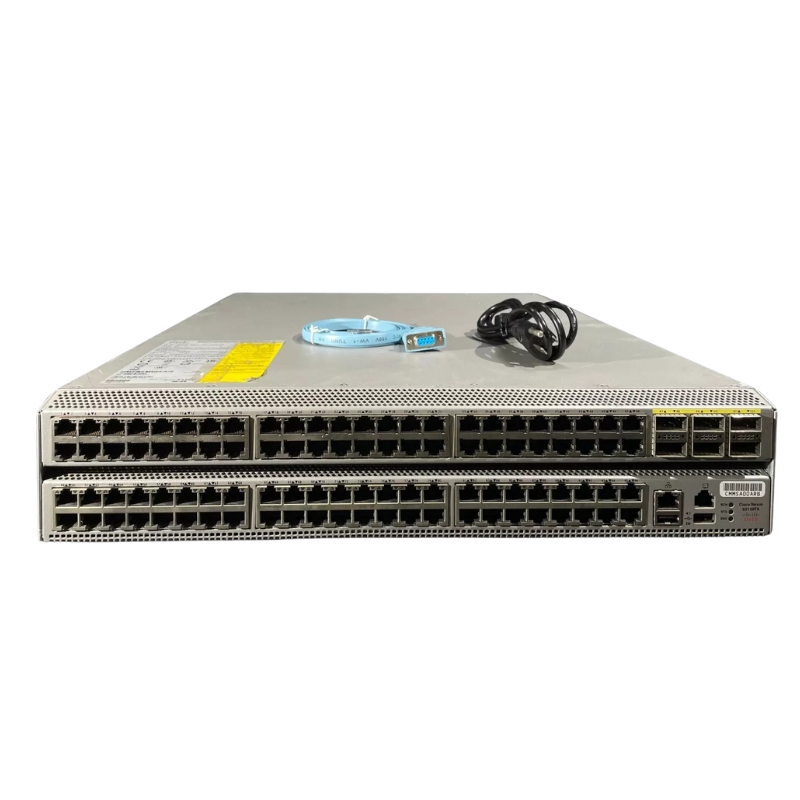


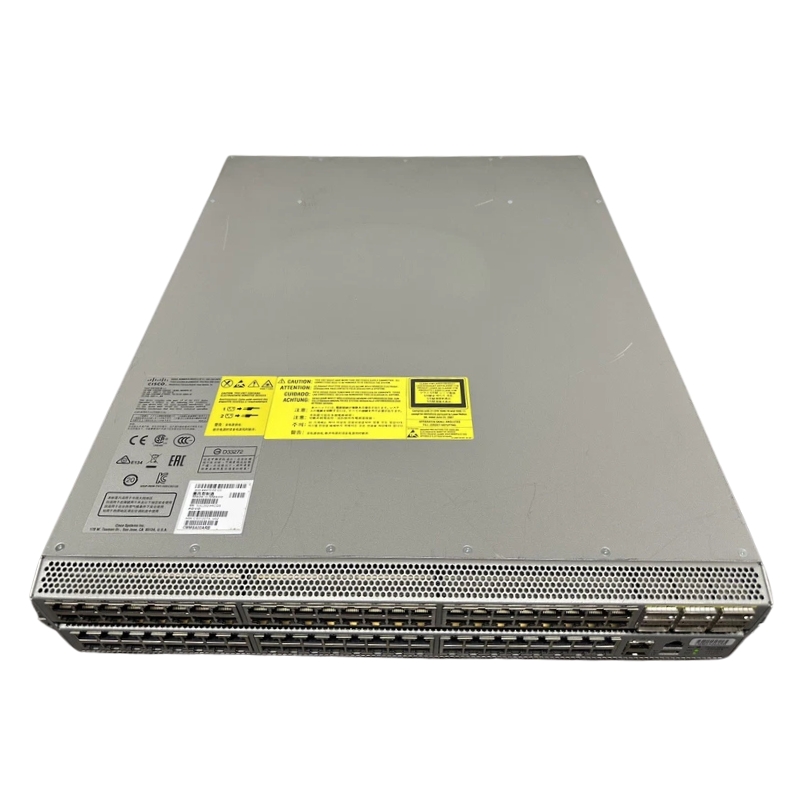
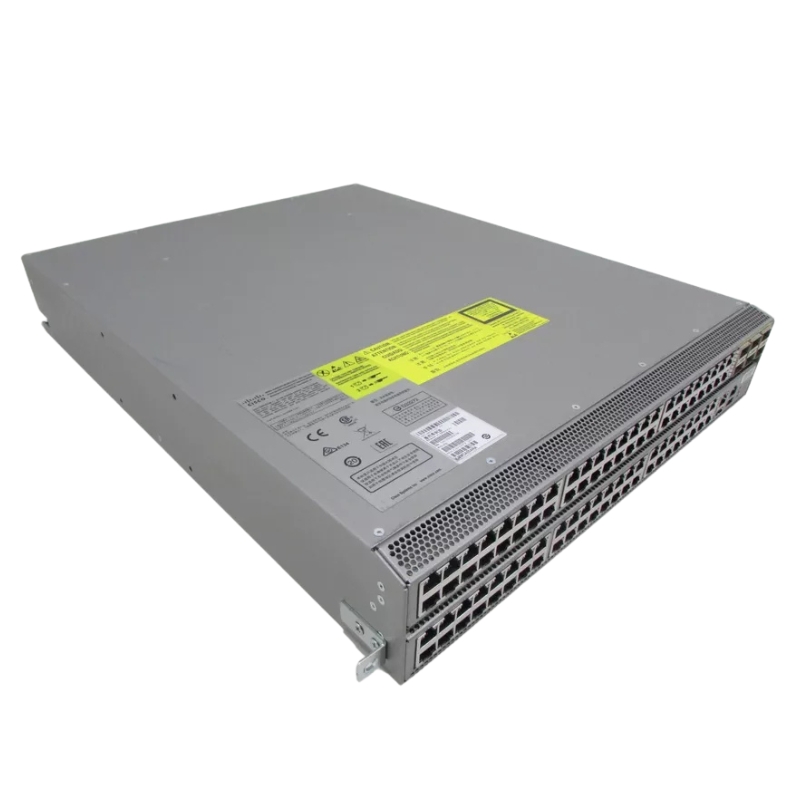
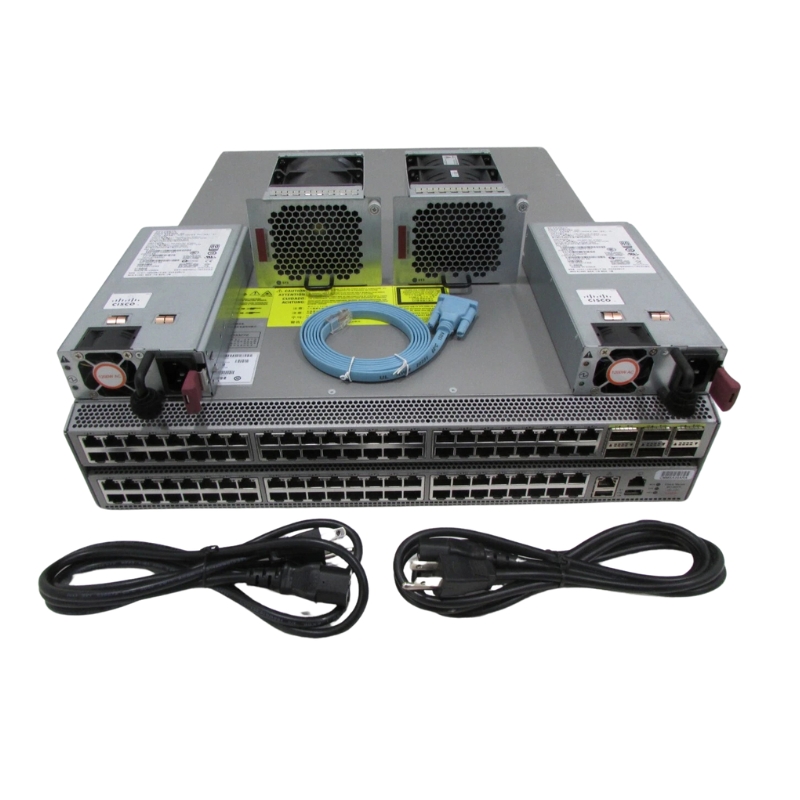
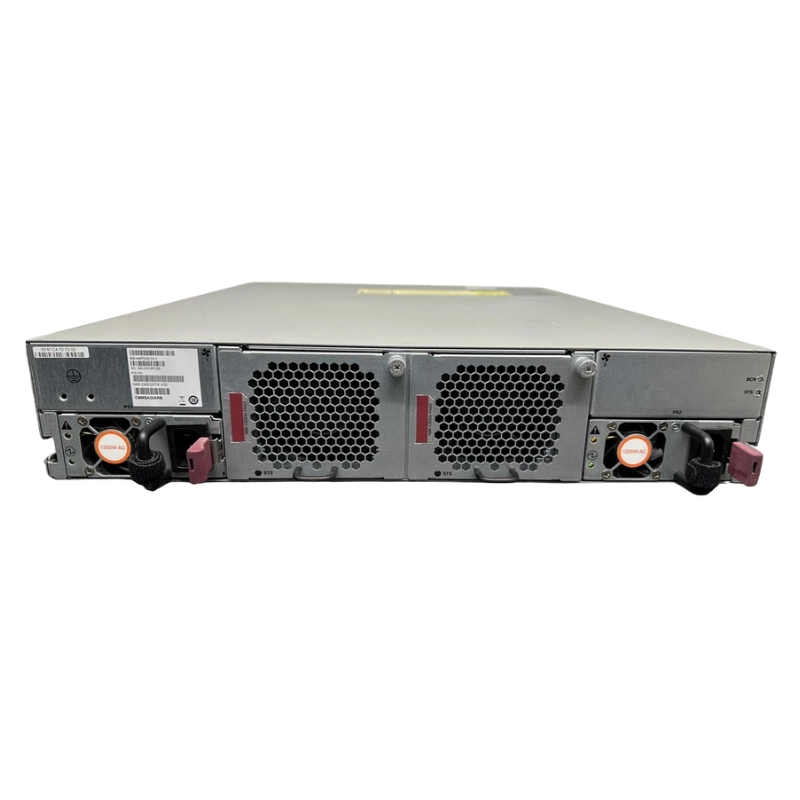
Cisco N9K-C93216TC-FX2 96 Ports Gigabit Qsfp28 / 40 Gigabit Qsfp28 + 96 X 10 Gigabit Ethernet Front And Side To Back Rack Mountable Managed Switch. Excellent Refurbished with 1 year replacement warranty
The Cisco Nexus 93216TC-FX2 represents a powerful L3 managed switch engineered for high-density, next-generation enterprise networks. Its flexible connectivity options, exceptional throughput, extensive Layer 3 routing capabilities, and resilient hardware design make it an ideal match for cloud-scale environments, mission-critical workloads, and enterprise core infrastructures requiring rock-solid stability.
The Cisco N9K-C93216TC-FX2 96 Ports Gigabit QSFP28 / 40 Gigabit QSFP28 + 96 x 10 Gigabit Ethernet front and side-to-back rack mountable managed switch sits at the intersection of high-density data center switching and flexible interface consolidation. This category description focuses on the full breadth of the product family, its technical composition, operational characteristics, and practical deployment scenarios for enterprises, service providers, hyperscalers, and cloud-edge environments. Emphasis is placed on the 96-port 10GbE fabric combined with high-performance QSFP28 uplinks capable of 40GbE/100GbE class aggregation, and the switch’s physical and logical attributes that make it a preferred choice for top-of-rack (ToR), middle-of-row (MoR), and leaf-spine architectures.
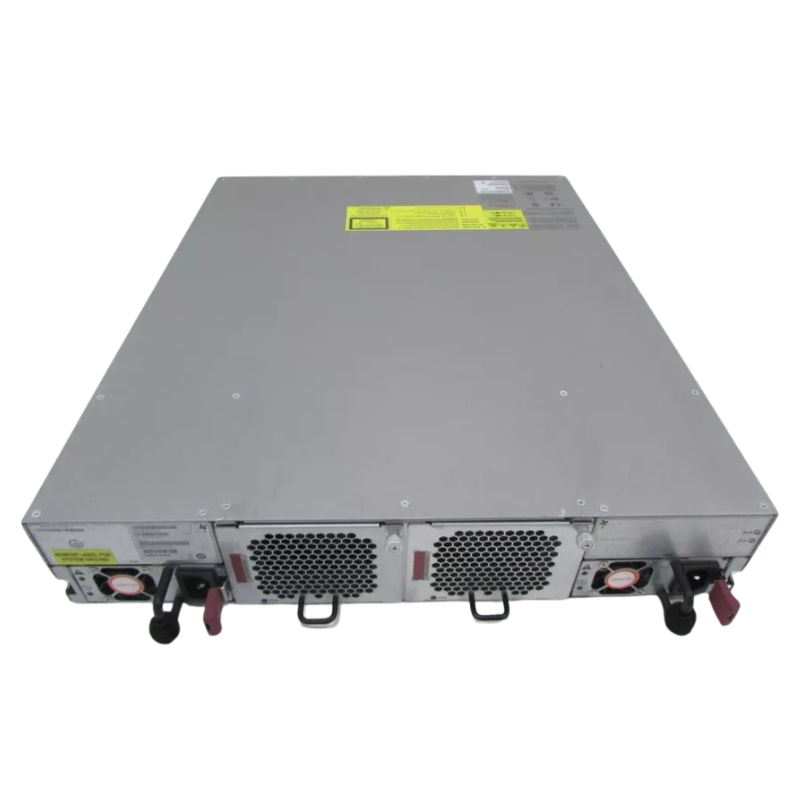
Physically engineered for dense deployments, this model is a full-featured 1U switch optimized for front and side-to-back airflow options to match data center thermal policies. The chassis is designed to support high port density while maintaining serviceable components and predictable airflow paths. Rack-mount hardware and mechanical fittings are engineered for rapid installation in standard 19-inch racks. Front-panel port placement is ergonomically arranged for simplified cable management and labelling, while internal heat sinks and redundant fan modules provide thermal stability under sustained line-rate throughput. The side-to-back cooling option aligns the device with cold-aisle/hot-aisle strategies commonly used in modern colocation and enterprise facilities, minimizing thermal recirculation and improving cooling efficiency when used in conjunction with containment or directed airflow systems.
The N9K-C93216TC-FX2 offers an integrated combination of high-density 10 Gigabit Ethernet ports and multi-rate QSFP28 uplink slots that support 40GbE and can be adapted for 100GbE use with suitable breakout or QSFP-DD options where hardware permits. The 96x 10GbE ports are ideal for server-facing connectivity and provide low-latency adjacency for east-west traffic, while the QSFP28 ports enable aggregated spine connections, inter-switch links, or high-bandwidth uplink consolidation. The physical port types accept standard SFP+ optics, DACs (direct-attach copper), AOC (active optical cables), and QSFP28 modules, enabling operators to choose the fiber type, reach, and transceiver brand that matches their cabling plant and budget. This flexibility minimizes forklift upgrades and extends the usable life of existing structured cabling investments.
Performance is a central characteristic of the N9K series, and the C93216TC-FX2 is engineered to deliver high switching fabric capacity with deterministic forwarding performance. The internal switching architecture supports full line-rate L2 and L3 forwarding across all ports and is optimized for microsecond-class latency in typical data center traffic patterns. Hardware-based packet forwarding, large TCAM and forwarding tables, and specialized silicon accelerate advanced features such as Access Control Lists (ACLs), routing policy enforcement, and multicast replication. For workloads demanding sustained heavy north-south and east-west throughput workloads, distributed storage clusters, and large-scale microservices this switch offers consistent throughput and predictable jitter characteristics.
The platform runs Cisco Nexus operating system variants and supports modern management paradigms including CLI, NX-API/REST, NETCONF, and streaming telemetry. Integration with orchestration and automation frameworks such as Ansible, Terraform, and Kubernetes CNI plugins is supported through programmatic APIs and streaming analytics. The OS provides role-based access control, granular auditing, and diagnostic tooling for proactive maintenance. Advanced features like virtual routing and forwarding (VRF), EVPN-VXLAN overlay support, and dynamic routing protocols (OSPF, BGP) enable unified underlay/overlay approaches. The software stack also supports automated provisioning workflows, zero-touch provisioning (ZTP), and integration with network controllers and management planes for centralized policy enforcement.
Security capabilities on this switch family include hardware-accelerated ACLs, micro-segmentation via VLAN and VRF, and integration with identity-aware network services. The platform facilitates east-west isolation for multi-tenant environments and hosts highly granular traffic filtering to protect critical workloads. Additional features such as MACsec support (where applicable and licensed), control-plane protection, and secure boot mechanisms reduce the attack surface and improve compliance posture. The switch also supports integration with external threat intelligence and NAC (network access control) systems, enabling dynamic isolation and remediation of compromised endpoints. These security primitives allow operators to translate organizational security policies directly into hardware-enforced rules, reducing time-to-protection and lowering the risk of lateral movement.
Built-in Quality of Service (QoS) features enable predictable application performance by shaping, policing, and prioritizing traffic flows. The switch supports hierarchical QoS constructs for complex traffic policies, latency-sensitive workload prioritization for voice or real-time streaming, and buffer management tailored to high-concurrency environments. Traffic engineering capabilities extend to link bundling and LAG (Link Aggregation Group) mechanisms, ECMP (Equal-Cost Multi-Path) routing for load balancing, and per-flow queuing to minimize head-of-line blocking. For organizations running storage protocols such as iSCSI or NVMe-oF, QoS controls ensure that storage traffic receives appropriate priority and that congestion points are mitigated without compromising other application classes.
High availability is achieved through redundant components and software resiliency features. Dual power supply units (where configured) support in-service replacement and minimize downtime during planned maintenance. The operating system supports non-disruptive upgrades, stateful process restart, and graceful restart capabilities that preserve forwarding state across software updates. For link-level redundancy, MLAG or similar multi-chassis aggregation technologies enable active-active configurations with fast convergence and minimal traffic interruption. The switch’s architecture provides predictable failover characteristics that align with strict service level agreements, ensuring that critical services remain continuity-assured even under component failure scenarios.
Interoperability is a major consideration for network upgrades, and the N9K-C93216TC-FX2 supports industry-standard protocols and media formats to ease integration. The switch interoperates with legacy 10GbE server NICs, existing 40GbE/100GbE aggregation layers, and optical networks. Migration paths from older platforms are supported through flexible transceiver options and break-out cable strategies, enabling gradual refreshes without large-scale rewiring. The device supports a range of routing and overlay technologies, facilitating coexistence with MPLS, VXLAN, and SDN overlays. Documentation and migration guides from the vendor typically provide recommended configurations and validation steps for complex upgrades involving spine-leaf conversions, VLAN renumbering, and path optimization.
The device is purpose-built for dense server aggregation, virtualization clusters, and distributed storage systems. Typical use cases include top-of-rack aggregation in server farms, leaf nodes in leaf-spine architectures for low-latency east-west traffic, and high-performance compute clusters requiring large numbers of 10GbE links. It also fits environments where compact port density and high uplink speed are both critical—for example, virtual desktop infrastructures, machine learning clusters, and content delivery edge nodes. Hybrid cloud deployments that require predictable performance and strong policy enforcement also benefit from the platform’s programmability and integration with cloud management tools.
The interplay between cable plant, transceiver selection, and reach requirements is central to a successful deployment. For server-facing ports, short reach SFP+ direct attach copper provides cost-effective connections for adjacent blades or rack servers, while fiber SFP+ optics extend reach across rows or buildings. QSFP28 uplinks can leverage passive copper for very short interconnects, active optical cables for mid-range links, and native QSFP28 transceivers when longer fiber runs or upgrade paths to 100GbE are envisioned. Proper selection of multimode or single-mode fiber, and attention to optical budgets, will determine overall reliability and headroom for future upgrades.
Integrating this switch into an ecosystem of compute, storage, and orchestration platforms benefits from reference architectures and validated designs. Cisco and partner ecosystems provide design guides for leaf-spine fabrics, converged infrastructure, and hyper-converged references. Integration with server vendors and storage vendors often includes validated interoperability matrices and recommended configurations for specific hypervisors or container platforms. These resources reduce design risk and accelerate time-to-production deployments by outlining tested cabling, firmware versions, and tuning parameters for predictable performance outcomes.


 Contact Us
 Information
 Catalog
 Solid State Drives (SSD)
 Network Switches
 Hard Disk Drives
 HBA & Controllers
 PC & Servers
 PC & Server Memory
 CPU & Processors
 Network Routers
 Power Supplies
 Tape Drives & Libraries
 Network Devices
 Computer & Network Cables