(7% discount is applied at checkout)
Cart is empty
Your go-to destination for cutting-edge server products
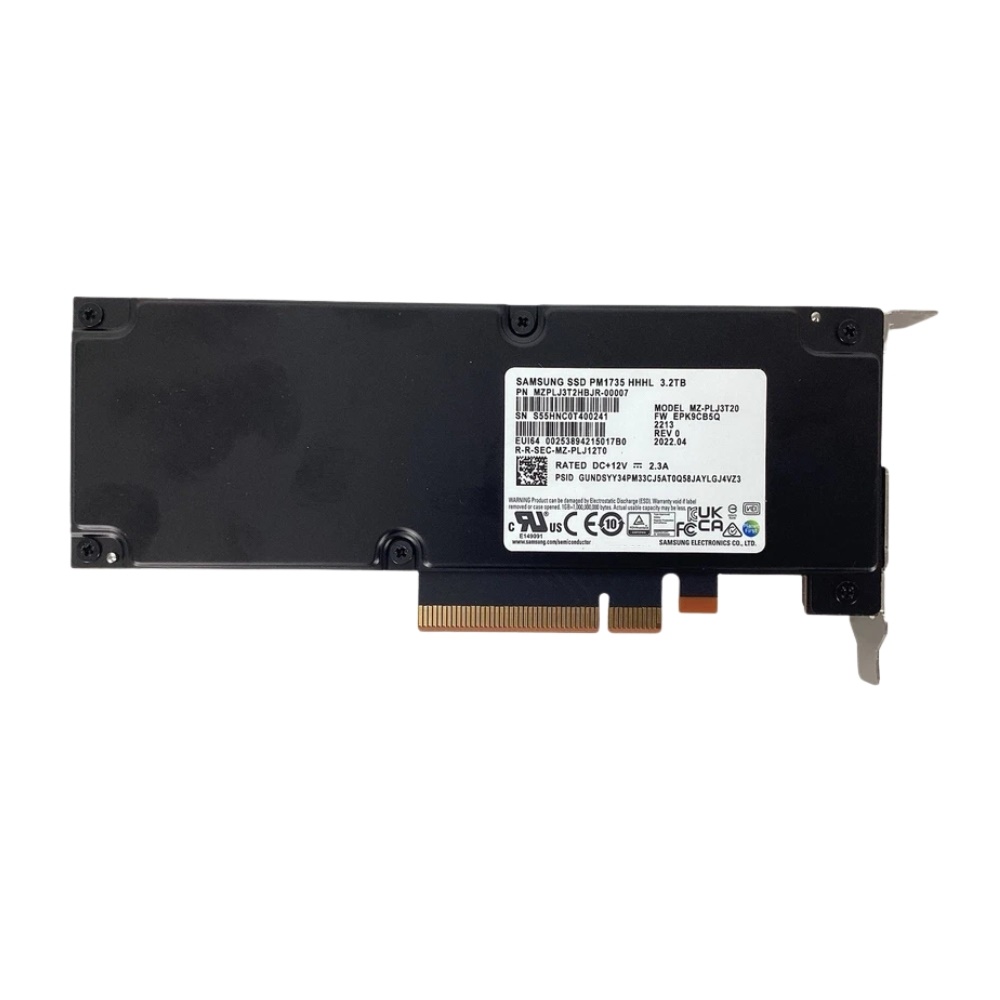


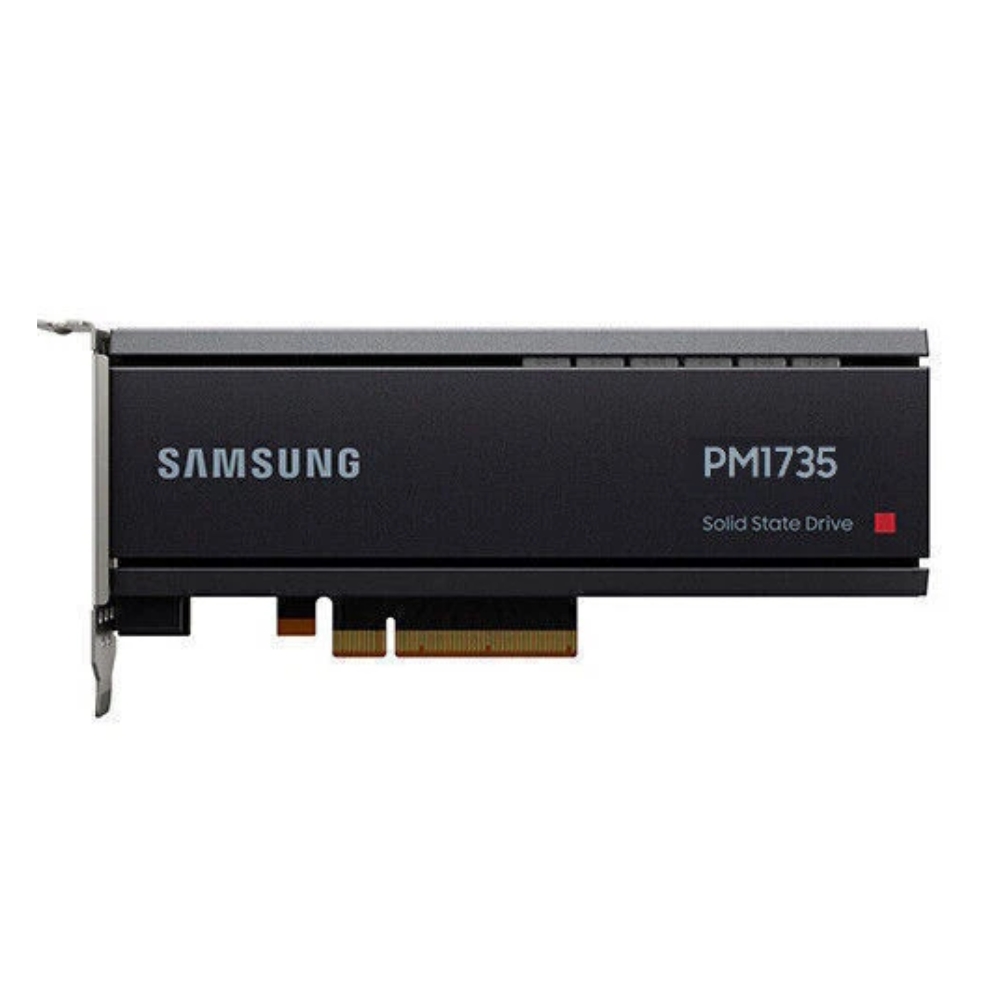
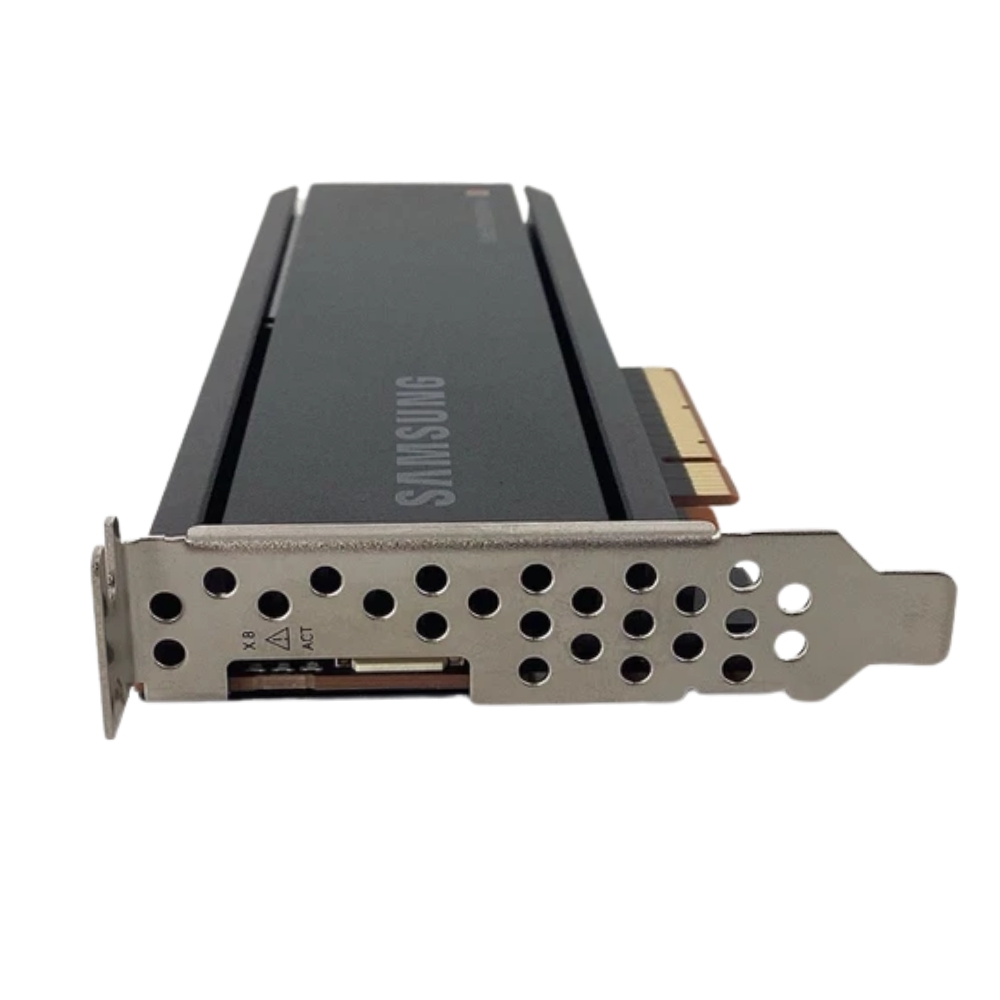
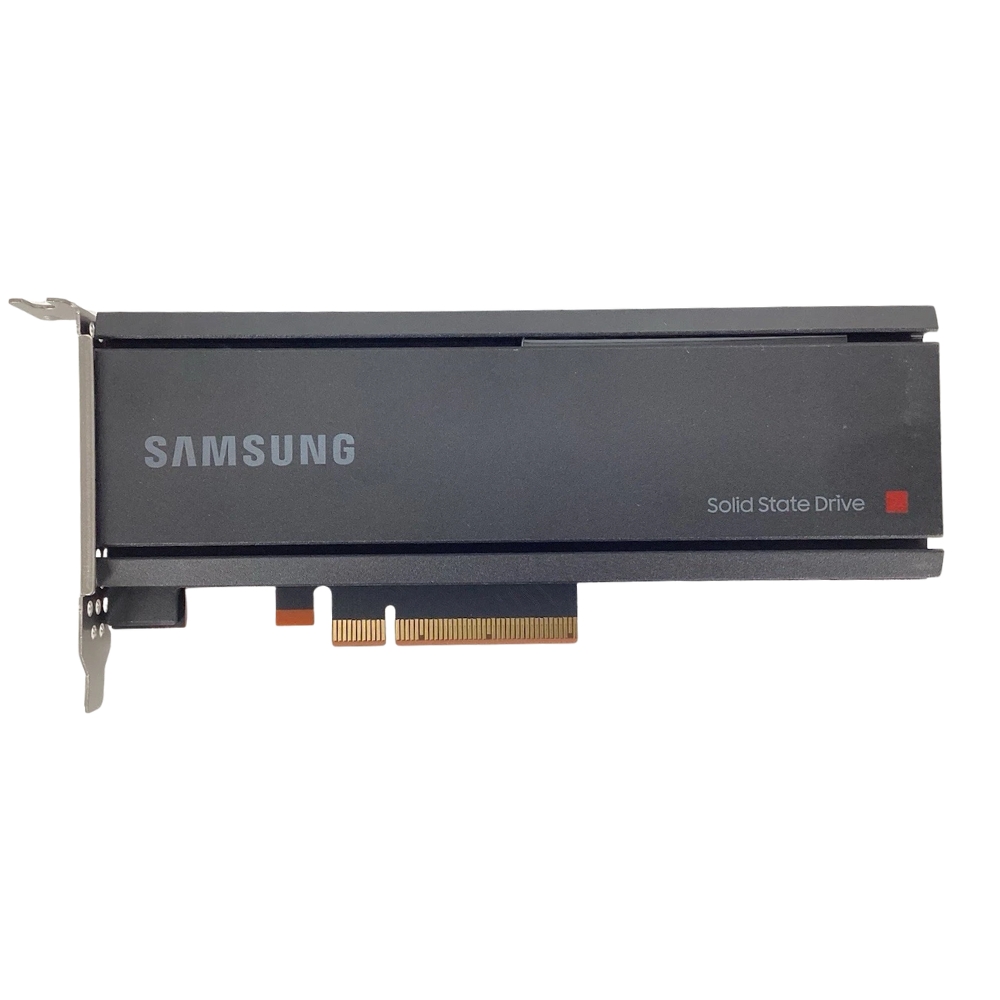
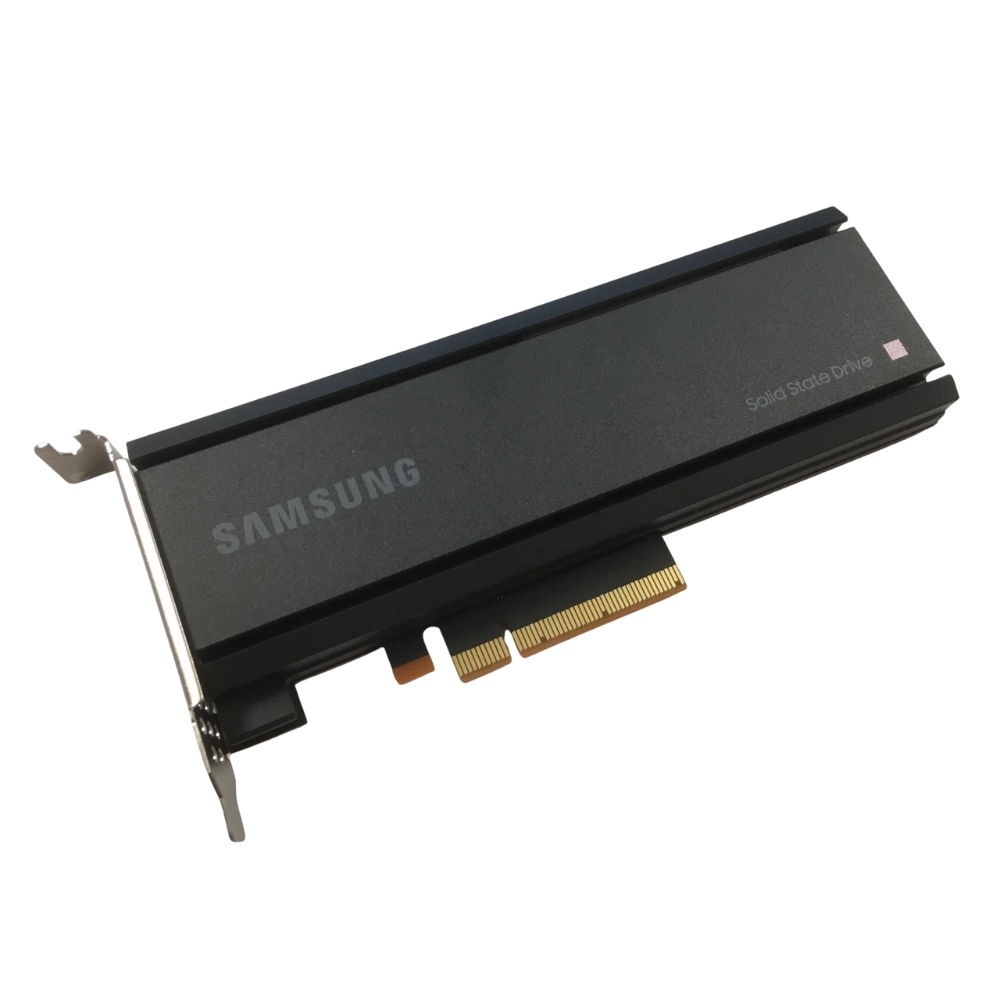
Samsung MZPLJ3T2HBJR-000H3 PM1735 3.2TB NVMe PCI Express 4.0X8 Solid State Drive. New Sealed in Box (NIB) with 3 Years Warranty - HPE Version
The Samsung PM1735 3.2TB NVMe Solid State Drive is a high-performance enterprise storage solution built for modern data centers. Powered by PCI Express 4.0 x8 and NVMe architecture, this internal SSD delivers ultra-fast throughput, low latency, and consistent performance for mission-critical workloads.
The Samsung MZPLJ3T2HBJR-000H3 PM1735 3.2TB NVMe PCI Express 4.0x8 Solid State Drive belongs to a high-performance enterprise NVMe SSD category engineered to meet the extreme throughput, low latency, and reliability requirements of modern data centers. This category focuses on leveraging the NVMe protocol over PCI Express Gen 4 architecture to eliminate legacy storage bottlenecks and deliver direct, high-speed access between storage media and the CPU. Enterprise NVMe SSDs in this class are designed to support data-intensive workloads where speed, scalability, and predictable performance are mission-critical.
The defining characteristic of this category is the NVMe protocol operating over PCI Express 4.0. NVMe was specifically designed for solid state storage, enabling parallel command queues and reducing latency compared to legacy protocols. When paired with PCIe Gen 4 technology, the Samsung PM1735 category delivers a substantial increase in throughput, enabling faster data access and higher transaction rates across enterprise workloads. PCI Express 4.0 doubles the bandwidth per lane compared to PCIe 3.0, and the x8 lane configuration further amplifies total available bandwidth.
One of the most significant advantages of this category is the direct communication path between the SSD and the CPU. NVMe over PCIe bypasses traditional storage controllers and reduces protocol overhead, resulting in dramatically lower latency. This design enables faster data processing and improves application responsiveness, particularly in environments where milliseconds or microseconds can influence outcomes. The Samsung PM1735 category leverages this direct communication to provide consistent performance even as workloads scale. This capability is essential in enterprise systems where multiple applications and services simultaneously access shared storage resources.
Enterprise NVMe SSDs in this category support a high number of parallel queues and commands, allowing them to handle concurrent operations efficiently. This parallelism is particularly valuable in multi-core, multi-threaded server architectures where storage must keep pace with compute capabilities. The PM1735 category is optimized to manage deep queue depths without performance degradation, ensuring stable throughput under heavy multi-user or multi-application access patterns. This makes the category suitable for modern enterprise workloads that rely on concurrency and scale.
The PM1735 series occupies a premium position within Samsung’s enterprise NVMe SSD portfolio. This category is designed for performance-intensive environments that require a balance of high throughput, low latency, and enterprise-grade reliability. Unlike consumer or client NVMe drives, the PM1735 category emphasizes sustained performance, firmware stability, and long-term operational consistency. Samsung’s expertise in NAND fabrication, controller development, and firmware engineering enables tight integration across all components. This vertical integration ensures that drives in the PM1735 category deliver predictable behavior and optimized performance across diverse enterprise platforms.
The 3.2TB capacity of this category reflects a strategic balance between storage density and performance. This capacity is well-suited for enterprise environments that prioritize speed and endurance while maintaining sufficient space for critical datasets. By deploying multiple 3.2TB NVMe drives, organizations can build scalable storage pools that deliver exceptional performance without sacrificing manageability. This capacity is commonly utilized in performance tiers within tiered storage architectures, where frequently accessed data is placed on high-speed NVMe media to maximize application responsiveness.
The PM1735 category is designed to integrate seamlessly into enterprise server platforms that support NVMe SSDs through standardized connectors and backplanes. This compatibility ensures that organizations can deploy these drives in existing infrastructures or new platforms without extensive redesign. Enterprise form factors emphasize durability, thermal efficiency, and serviceability, supporting hot-swap capabilities and continuous operation in data center environments.
Enterprise NVMe SSD categories such as the PM1735 are engineered to deliver exceptional read and write performance across sustained workloads. Unlike burst-oriented consumer drives, this category focuses on maintaining high throughput and low latency over extended periods of operation. The PM1735 category supports high sequential and random performance, enabling it to accelerate a wide range of enterprise applications. From large file transfers to small, random I/O operations, the drive maintains consistent behavior that supports predictable application performance.
Low latency is a defining attribute of this category. Transactional systems such as databases, financial platforms, and real-time analytics engines benefit from the rapid response times provided by NVMe over PCIe 4.0. The PM1735 category minimizes storage-induced delays, allowing applications to process transactions more efficiently. This low-latency profile is particularly important in environments where storage performance directly impacts user experience or revenue generation.
Enterprise workloads often involve continuous, high-volume data access rather than short bursts. The PM1735 category is optimized to handle sustained throughput demands without throttling or performance collapse. Advanced thermal management and firmware algorithms ensure stable operation even during prolonged intensive use. This reliability under load makes the category suitable for mission-critical systems that cannot tolerate unpredictable performance variations.
Samsung’s enterprise NVMe SSD categories are built upon advanced NAND flash technology and proprietary controllers. The PM1735 category benefits from high-quality NAND that is rigorously tested for endurance, reliability, and performance consistency. These components are designed to operate continuously in demanding data center conditions. The controller architecture plays a critical role in managing data flow, error correction, and wear leveling. In the PM1735 category, the controller is optimized to handle the high bandwidth and low latency demands of PCIe 4.0 while maintaining data integrity across the drive’s lifespan.
Data protection is a core requirement in enterprise storage categories. The PM1735 incorporates advanced error correction technologies that detect and correct data errors before they impact system operations. End-to-end data protection mechanisms ensure that data remains accurate as it travels between the host system and the NAND media. This emphasis on data integrity supports enterprise compliance requirements and reduces the risk of data corruption in critical applications.
Enterprise NVMe SSD categories include power loss protection features designed to safeguard data during unexpected power interruptions. The PM1735 category utilizes onboard components that help ensure in-flight data is safely committed to non-volatile memory. These reliability features distinguish enterprise SSDs from consumer-grade alternatives and are essential for maintaining data consistency in data center environments.
The Samsung PM1735 NVMe SSD category is designed to scale efficiently within modern data center architectures. As organizations adopt software-defined storage, hyper-converged infrastructure, and cloud-native platforms, storage solutions must integrate seamlessly and scale without introducing complexity. NVMe over PCIe enables high-density deployments with minimal latency overhead, allowing data centers to maximize performance per rack unit. The PM1735 category supports this scalability by delivering consistent performance across large numbers of deployed drives.
Virtualized environments and container platforms place unique demands on storage systems, requiring rapid access to shared resources and predictable performance isolation. The PM1735 category supports these requirements by delivering high IOPS and low latency, ensuring that virtual machines and containers operate efficiently.This capability enhances consolidation ratios and improves overall infrastructure utilization.
Cloud service providers and hyperscale data centers benefit from the performance and reliability characteristics of the PM1735 category. High-speed NVMe storage enables rapid provisioning, fast data access, and efficient resource allocation across large-scale platforms.The category’s focus on sustained performance and endurance aligns with the operational demands of cloud environments where storage is accessed continuously by diverse workloads.
Thermal management is a critical consideration in high-performance NVMe SSD categories. The PM1735 is engineered to operate within enterprise thermal envelopes, maintaining performance stability while minimizing heat generation. Efficient power usage contributes to lower cooling requirements and improved data center energy efficiency. This thermal efficiency supports dense deployments and reduces the risk of thermal throttling, ensuring that performance remains consistent even under heavy workloads.
The PM1735 category is intended for continuous, round-the-clock operation in mission-critical environments. Components are selected and validated to withstand constant activity, ensuring long service life and predictable behavior. Organizations that rely on uninterrupted access to data, such as financial institutions, telecommunications providers, and global enterprises, benefit from the durability and reliability offered by this category.
The Samsung PM1735 3.2TB NVMe SSD category supports a wide range of enterprise use cases. Industries that depend on high-speed data access and real-time processing leverage this category to enhance performance and operational efficiency. From database acceleration to artificial intelligence workloads, the PM1735 category provides the storage foundation required for modern data-driven operations.
Databases and analytics platforms benefit significantly from the low latency and high throughput of NVMe storage. The PM1735 category accelerates query execution, index access, and transaction processing, enabling faster insights and improved application performance. This advantage is particularly valuable in environments where large datasets must be processed rapidly to support business decision-making.
AI and machine learning workloads involve processing large volumes of data at high speed. The PM1735 category supports these workloads by providing rapid access to training datasets and inference models. High throughput and low latency reduce data access bottlenecks, improving overall pipeline efficiency. This capability supports innovation and accelerates time-to-results in research and production environments.
Enterprise storage categories are evaluated not only on performance but also on lifecycle management and vendor support. Samsung’s PM1735 category aligns with enterprise expectations for long-term availability, firmware stability, and comprehensive validation. Organizations can deploy this category with confidence, knowing that it is designed to integrate seamlessly into enterprise environments and supported throughout its lifecycle.
Firmware plays a critical role in maintaining performance and reliability in enterprise NVMe SSDs. The PM1735 category emphasizes firmware stability and predictable behavior, reducing the risk of unexpected performance anomalies. Ongoing firmware optimization ensures compatibility with evolving platforms while maintaining enterprise-grade reliability standards.
The PM1735 NVMe SSD category plays a strategic role in tiered and software-defined storage architectures. As a high-performance tier, it enables rapid access to frequently used data while complementing other storage media optimized for capacity or cost. This strategic placement enhances overall infrastructure efficiency and supports flexible storage management strategies.
Modern enterprises depend on fast, reliable storage to support data-driven operations. The Samsung PM1735 3.2TB NVMe PCI Express 4.0x8 SSD category delivers the performance, scalability, and reliability required to support these demands, making it a critical component in contemporary enterprise storage ecosystems.
Samsung’s reputation in enterprise memory and storage reinforces confidence in the PM1735 category. Proven engineering, extensive validation, and broad adoption contribute to its status as a trusted solution in high-performance data center environments.
As enterprise infrastructures evolve toward higher performance and lower latency architectures, the PM1735 NVMe SSD category provides a future-ready storage foundation. Its alignment with PCI Express 4.0 and NVMe standards ensures compatibility with next-generation servers and platforms while delivering immediate performance benefits.


 Contact Us
 Information
 Catalog
 Solid State Drives (SSD)
 Network Switches
 Hard Disk Drives
 HBA & Controllers
 PC & Servers
 PC & Server Memory
 CPU & Processors
 Network Routers
 Power Supplies
 Tape Drives & Libraries
 Network Devices
 Computer & Network Cables