(7% discount is applied at checkout)
Cart is empty
Your go-to destination for cutting-edge server products
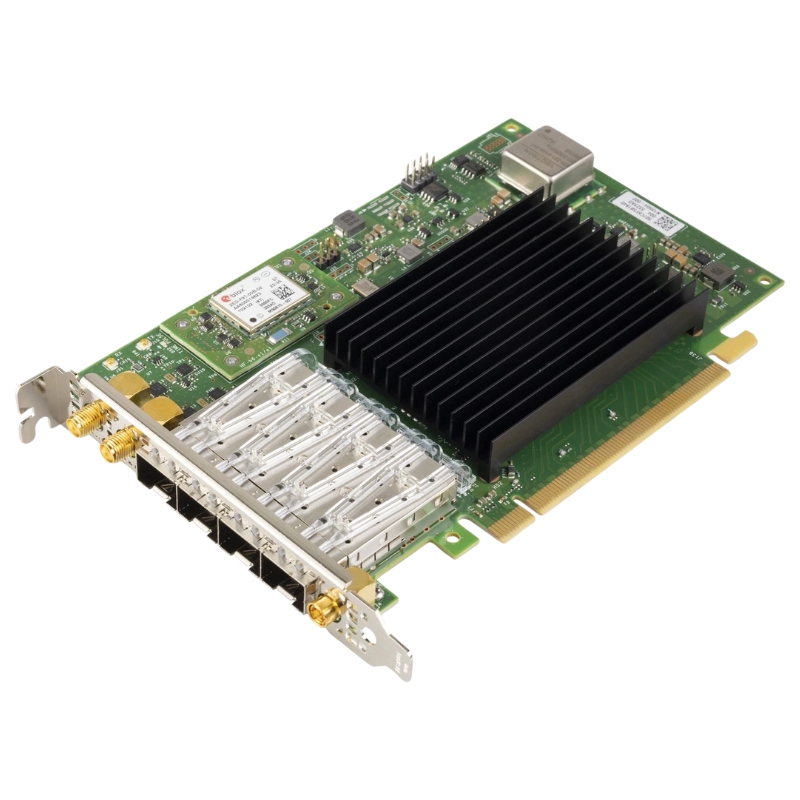


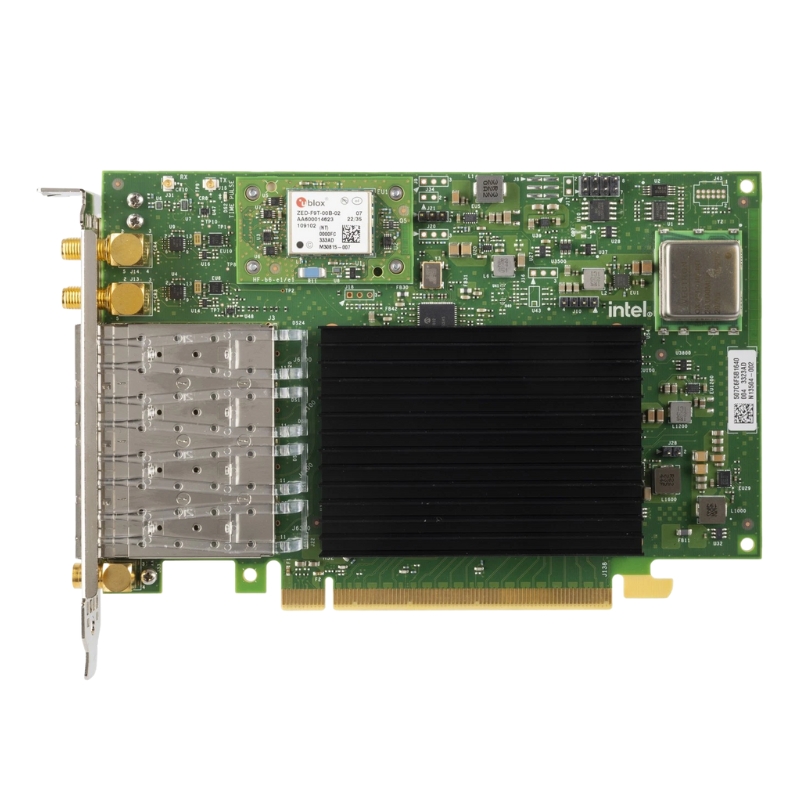
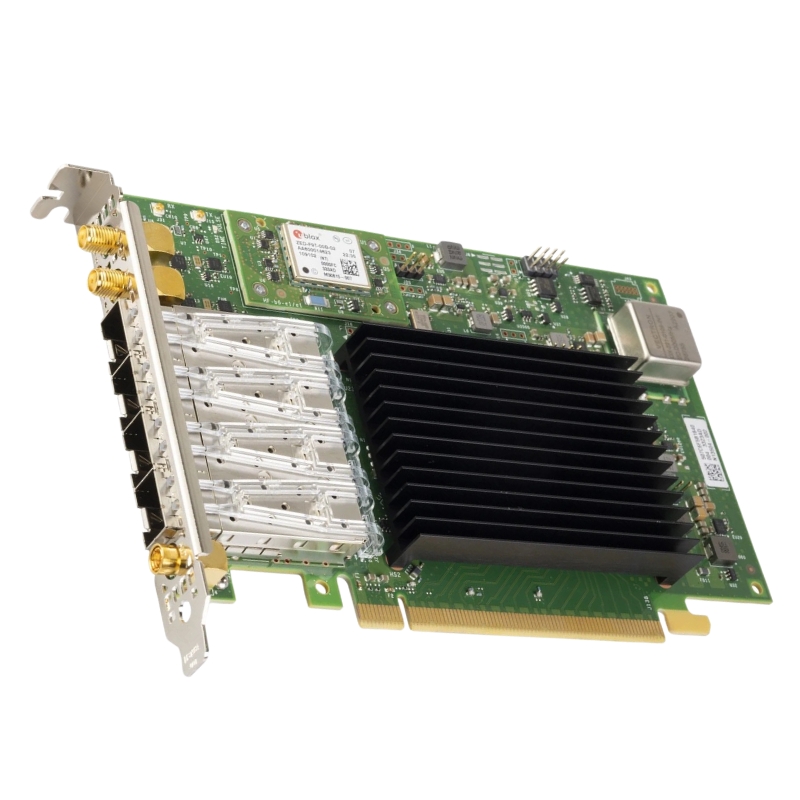
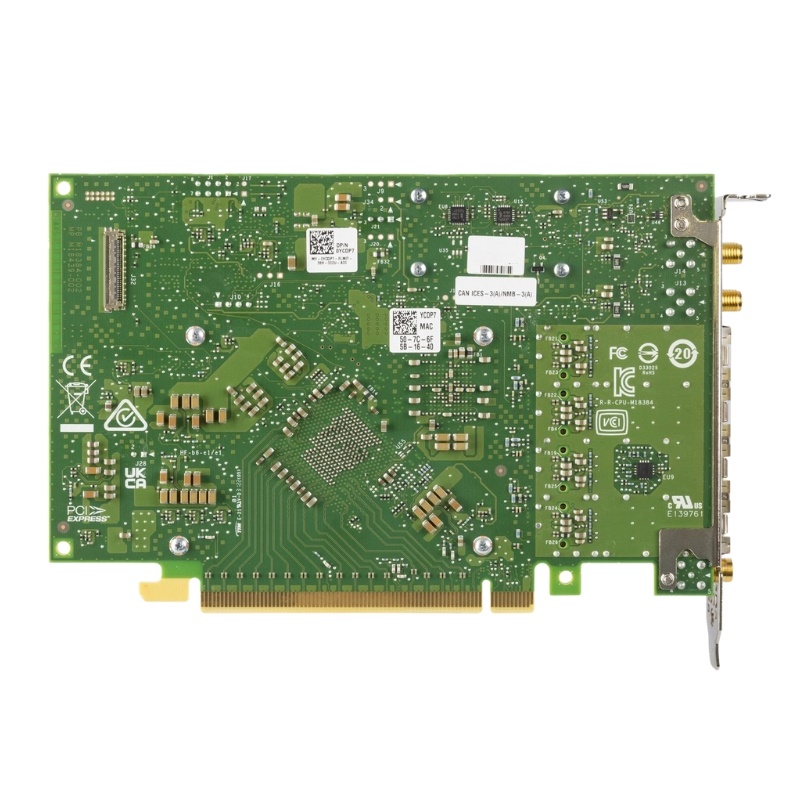
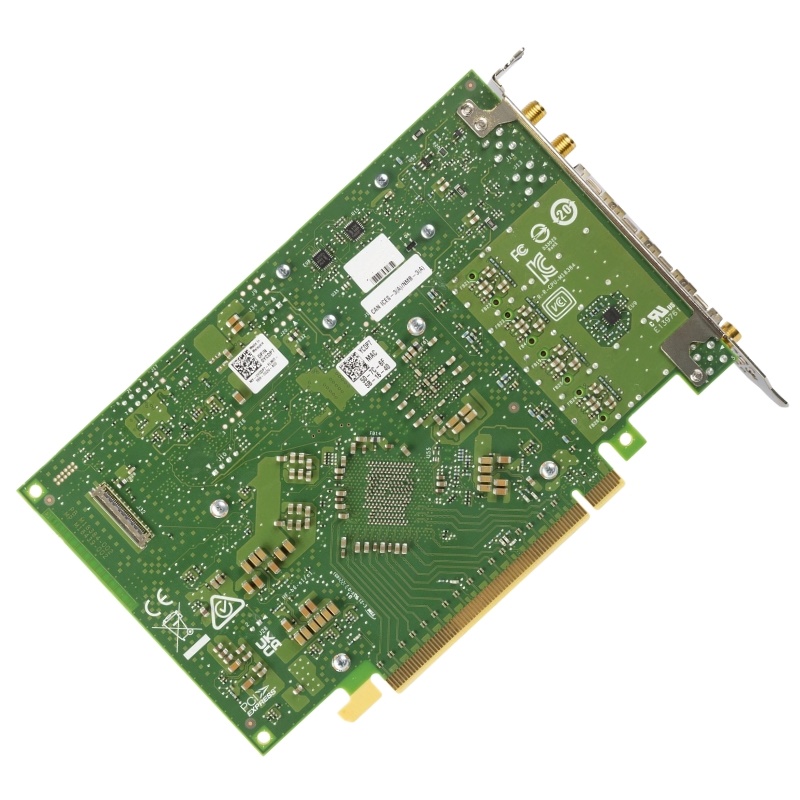
Dell 540-BDJB Intel E810-XXVDA4TG1 4 Ports 25/10GbE SFP28 Ethernet Network Adapter with IEEE 1588 PTP Without GNSS Mezzanine Card. Excellent Refurbished with 1 Year Replacement Warranty
The Dell 540-BDJB Intel E810-xxvda4tg1 Quad Port 25/10GbE SFP28 Ethernet Network Adapter represents the pinnacle of Dell's networking technology, designed for the most demanding modern data center, cloud, and telecommunications workloads. This adapter is part of the Intel Ethernet 800 Series family, specifically the E810 controller line, renowned for its robust performance, advanced feature set, and exceptional reliability. As a quad-port SFP28 card, it delivers a flexible combination of 25GbE or 10GbE connectivity per port, offering up to 100 Gbps of aggregate throughput.
Within the demanding ecosystem of modern data centers, cloud infrastructure, and high-performance computing, the network interface card (NIC) is the critical linchpin determining overall system performance, latency, and reliability. The Dell 540-BDJB, powered by the Intel E810-XXVDA4TG1 controller, represents the forefront of this technology. This Quad-Port 25/10GbE SFP28 Ethernet Network Adapter is engineered not just for raw bandwidth but for deterministic, precision operation. It integrates high-accuracy timing synchronization via IEEE 1588 Precision Time Protocol (PTP) and Synchronous Ethernet (SyncE), all without the need for an external GNSS mezzanine module. This standalone capability makes it a cornerstone for latency-sensitive and time-coherent applications, from financial trading and 5G telco cloud to advanced scientific research and real-time analytics.
The heart of the Dell 540-BDJB adapter is the Intel Ethernet Controller E810-XXVDA4T. This silicon represents a significant evolution in network controller design, built from the ground up to handle the massive data flows and ultra-low latency requirements of next-generation networks. Its architecture features a highly scalable and efficient packet processing pipeline, advanced queue management, and hardware-based virtualization support. The controller is designed to offload critical networking functions from the host CPU, freeing up valuable processing cycles for application workloads. This includes offloads for checksum, segmentation, and, most importantly for this category, precise timestamping and timing synchronization protocols. The integration of these features directly into the hardware is what enables the adapter's exceptional performance in timing-sensitive environments.
Each of the four ports supports SFP28 optical transceivers, allowing network architects to choose between 25GbE and 10GbE speeds on a per-port basis using the appropriate DAC (Direct Attach Copper) or AOC (Active Optical Cable) or optical modules. This flexibility enables seamless integration into existing 10GbE infrastructures while providing a clear, cost-effective migration path to 25GbE and future 100GbE aggregation. Auto-negotiation and link training features simplify deployment and ensure optimal link establishment with the connected switch.
The adapter is designed in a low-profile (LP) form factor, accompanied by a full-height bracket for installation versatility. It utilizes a PCI Express (PCIe) 4.0 x16 host interface, delivering double the bandwidth per lane compared to PCIe 3.0. This high-bandwidth bus is critical for sustaining the aggregate throughput of all four ports simultaneously without becoming a bottleneck, ensuring data flows smoothly between the network and the server's CPU and memory subsystems.
Each port supports data rates of 1 Gigabit Ethernet, 10 Gigabit Ethernet, and 25 Gigabit Ethernet, allowing for seamless integration into existing 10GbE infrastructures with a clear, cost-effective migration path to 25GbE. The use of SFP28 transceiver cages means network architects can choose the optimal optical or Direct Attach Copper (DAC) cable for each connection based on distance, cost, and power requirements.
Providing four high-speed ports in a single slot is crucial for server consolidation and top-of-rack (ToR) switch connectivity. It enables functions like NIC partitioning for multiple virtual machines or containers, link aggregation for increased bandwidth and redundancy, or dedicated connections for storage, management, and data networks. This density maximizes the utility of every server PCIe slot, a critical consideration in space-constrained data center environments.
The defining characteristic of the Dell 540-BDJB (E810-XXVDA4TG1) category is its integrated, high-precision timing synchronization. In traditional networks, servers and switches maintain independent, loosely synchronized clocks. For applications where microsecond or even nanosecond accuracy is required, this is insufficient. This adapter solves this challenge by incorporating a complete timing subsystem directly onto the card.
The adapter provides full hardware assistance for the IEEE 1588 PTP v2 standard, often referred to as the "network time protocol for precision." Unlike software-based PTP implementations that suffer from variable OS and stack latency, the E810 controller features a dedicated timestamping unit. This unit captures the precise moment a PTP packet enters or leaves the NIC hardware, applying a nanosecond-accurate timestamp before the packet is subject to any software queue delays. This hardware timestamping is the fundamental enabler for sub-microsecond clock synchronization across a properly configured network. The adapter can operate in various PTP profiles, including the stringent telecom profiles like G.8275.1 (Full Timing Support) and G.8275.2 (Partial Timing Support), making it ideal for 5G fronthaul/midhaul and central office deployments.
Complementing PTP is the adapter's SyncE functionality. SyncE is an ITU-T standard that allows Ethernet physical layer links to carry clock synchronization information, similar to how Synchronous Optical Network (SONET/SDH) works. It recovers and distributes a frequency reference directly from the Ethernet line code, providing a highly stable and jitter-free clock. The Dell E810 adapter can both receive a SyncE reference from an upstream device (e.g., a grandmaster clock or telecom switch) and transmit that recovered clock downstream. When used in conjunction with PTP (a technique known as "hybrid mode"), SyncE provides the stable frequency foundation, while PTP delivers precise phase and time-of-day alignment. This combination offers the highest possible level of synchronization robustness and accuracy.
Many high-precision timing cards require an add-on mezzanine module that houses a Global Navigation Satellite System (GNSS) receiver and a high-quality oven-controlled crystal oscillator (OCXO). The Dell 540-BDJB's innovative design integrates a high-stability, temperature-compensated oscillator directly on the main board. This "without GNSS" configuration is a major differentiator. It means the card can operate as a highly accurate ordinary clock or boundary clock within a PTP domain, slaved to the network, without the cost, cabling, and antenna placement challenges of a GNSS receiver. It simplifies deployment in locations where GNSS signals are unavailable (e.g., indoor data centers, basement server rooms) while still providing exceptional timing holdover performance if the upstream reference is lost. For applications requiring a grandmaster clock, a separate GNSS-disciplined grandmaster is typically used elsewhere in the network.
Beyond timing, the adapter is packed with features designed to maximize throughput, minimize latency, and ensure predictable performance under load.
The adapter utilizes a PCI Express 4.0 x16 host interface. This provides a massive 256 Gb/s (32 GB/s) of bidirectional bandwidth to the CPU, far exceeding the aggregate 100 Gb/s of the four network ports. This substantial headroom is essential. It ensures that the network interface is never the bottleneck, eliminating bus contention and allowing for full-line-rate performance on all ports simultaneously, even with small packet sizes. It also future-proofs the investment for faster network speeds or additional offload workloads.
For virtualized and cloud environments, the adapter offers comprehensive Single Root I/O Virtualization (SR-IOV) support. This allows a single physical adapter to present itself as multiple virtual functions (VFs), each of which can be assigned directly to a virtual machine. This bypasses the hypervisor's virtual switch for data movement, delivering near-bare-metal network performance and extremely low latency to each VM. The hardware-based isolation between VFs ensures security and performance predictability, which is critical in multi-tenant deployments.
The unique combination of high bandwidth, low latency, and integrated precision timing defines a specific set of high-value applications.
This is a primary use case. 5G networks, particularly in virtualized Radio Access Network (vRAN) and Open RAN (O-RAN) architectures, require extremely tight synchronization between radio units (RUs), distributed units (DUs), and centralized units (CUs). The Dell adapter, with its support for PTP telecom profiles and SyncE, is engineered to meet the stringent phase synchronization requirements (often within +/- 1.5 microseconds) for 5G Time Division Duplex (TDD) operations and carrier aggregation. It allows telcos to run DU/CU workloads on standard, high-volume servers in a central office or edge data center.
In financial markets, latency is measured in nanoseconds, and time synchronization across distributed trading systems is paramount. The adapter's hardware timestamping ensures accurate, tamper-resistant time-stamping of every trade and market data packet for regulatory compliance (e.g., MiFID II). Its ultra-low latency and deterministic performance ensure that algorithmic trading systems can execute strategies as fast as physically possible.
Modern smart grids and industrial IoT systems rely on synchronized sensor data and control signals across vast distances. Precision time protocol enables synchrophasor measurements in electrical substations for grid stability and allows for precise coordination of automated machinery in manufacturing, reducing errors and improving efficiency.
Recognizing the convergence of networking and storage, the adapter features robust offloads for Network Attached Storage (NAS) and Storage Area Network (SAN) protocols. It includes hardware acceleration for iSCSI and NVMe over Fabrics (NVMe-oF), streamlining block storage access over Ethernet networks. This reduces I/O latency and CPU overhead, enabling high-performance, software-defined storage solutions and disaggregated storage architectures.
As a Dell-branded and qualified product, this adapter undergoes rigorous testing and validation to ensure compatibility and optimal performance within Dell PowerEdge server platforms. It is manageable through standard Dell system management tools like iDRAC and OpenManage, providing inventory, health monitoring, and firmware update capabilities as part of the holistic server ecosystem. This integration reduces operational risk and simplifies lifecycle management.


 Contact Us
 Information
 Catalog
 Solid State Drives (SSD)
 Network Switches
 Hard Disk Drives
 HBA & Controllers
 PC & Servers
 PC & Server Memory
 CPU & Processors
 Network Routers
 Power Supplies
 Tape Drives & Libraries
 Network Devices
 Computer & Network Cables