(7% discount is applied at checkout)
Cart is empty
Your go-to destination for cutting-edge server products


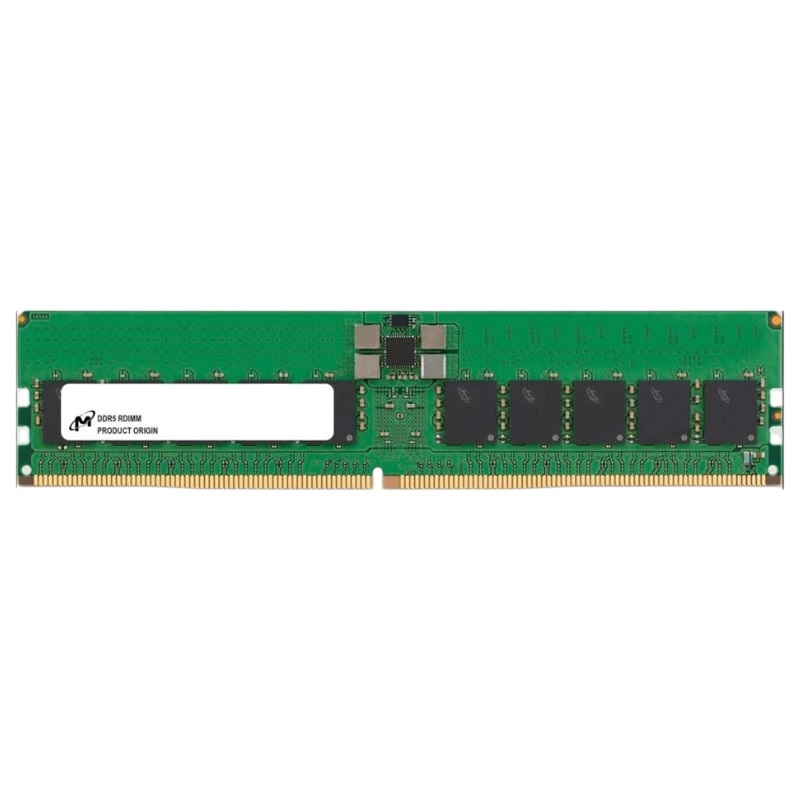
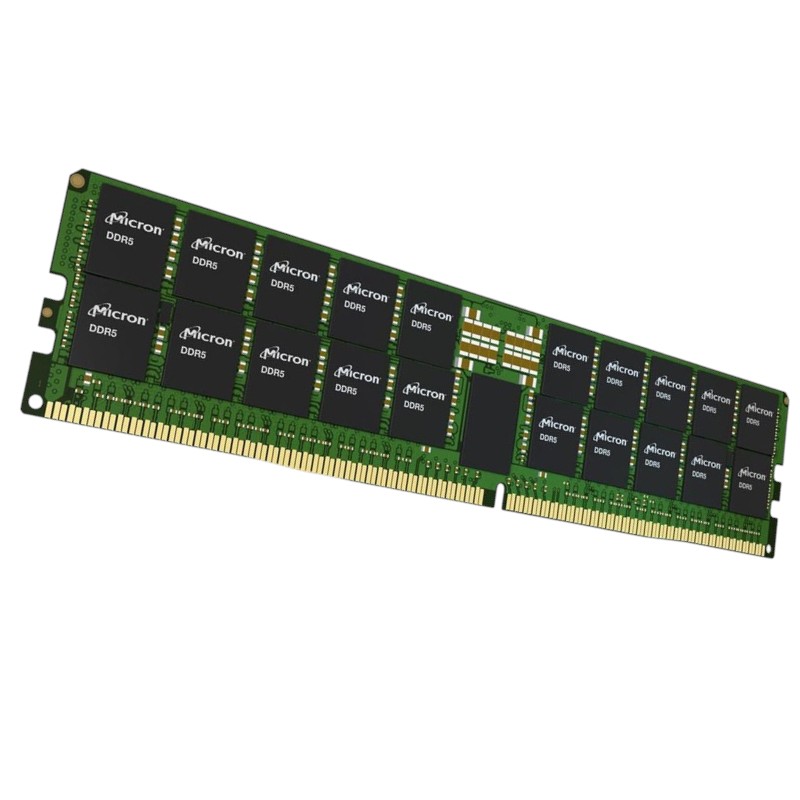
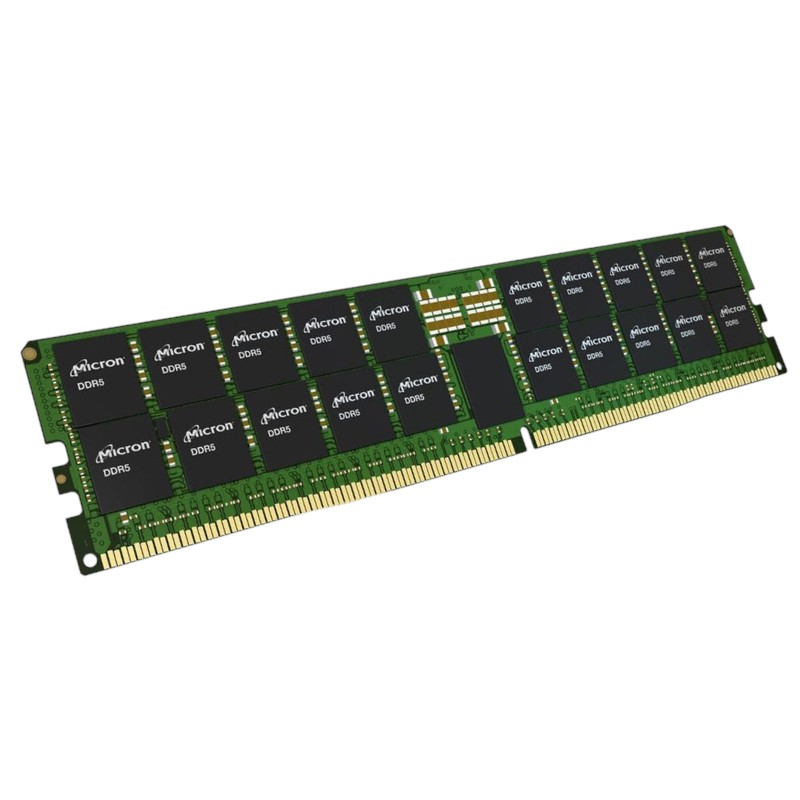
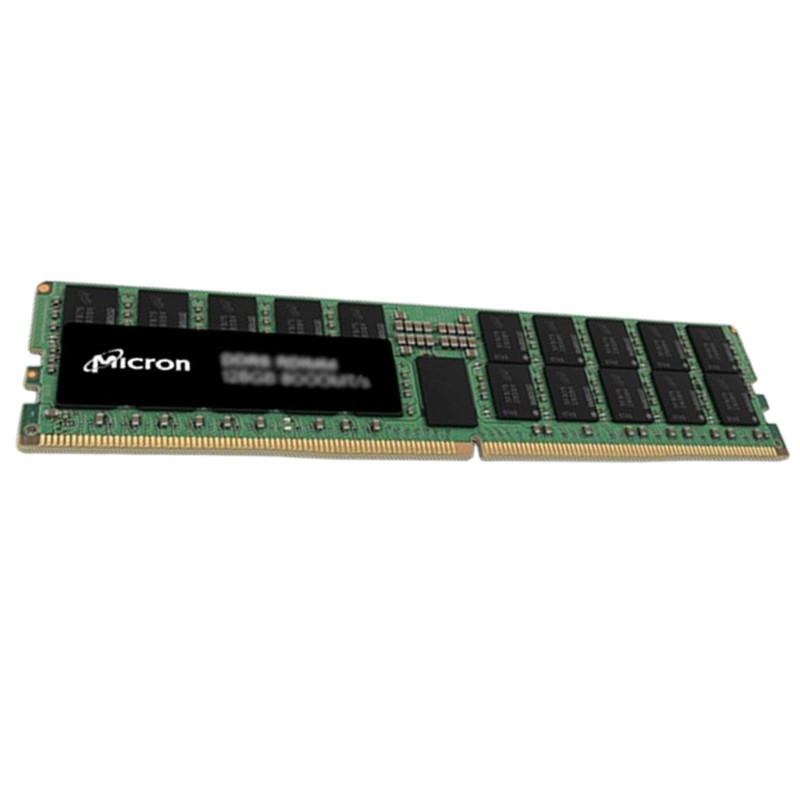
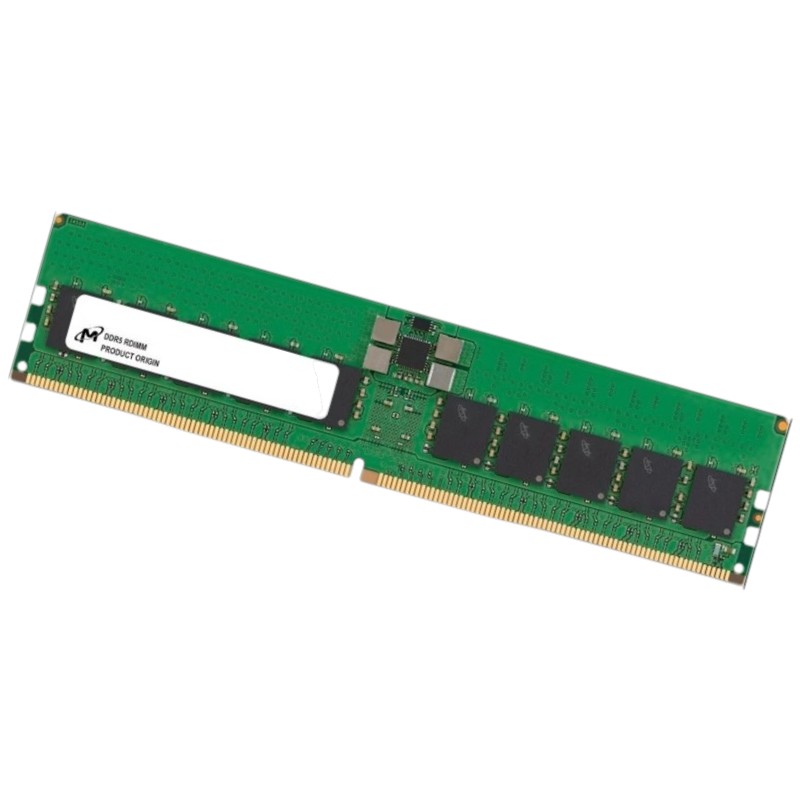
Micron MTC20F104XS1RC64B 48GB DDR5-6400MHz PC5-51200 CL52 ECC 288-Pin RDIMM Server Memory Module. New Sealed in Box (NIB) with 3-Years Warranty
The Micron MTC20F104XS1RC64B is a powerful 48GB DDR5-6400 RDIMM server memory module engineered for enterprise-grade performance. With ECC error correction, registered signal processing, and blazing 6400 MHz speed, this module ensures reliability and efficiency for demanding server applications.
The Micron MTC20F104XS1RC64B 48GB DDR5-6400 PC5-51200 CL52 ECC 288-Pin RDIMM Server Memory Module is engineered for enterprise-grade servers, virtualization infrastructure, hyperscale computing environments, and modern data center deployments requiring exceptional bandwidth, dependable stability, and optimized power efficiency. Built using advanced DDR5 architecture, this registered DIMM memory module delivers substantial improvements in memory throughput, scalability, and reliability when compared to earlier DDR4 server memory generations.
Designed specifically for high-performance server platforms, this Micron DDR5 RDIMM memory solution supports intensive enterprise workloads such as virtualization clusters, AI inference processing, cloud computing applications, edge analytics, software-defined storage, database acceleration, and mission-critical business applications. The 48GB capacity offers a balanced configuration suitable for servers that require substantial memory density without sacrificing scalability across multiple DIMM slots.
DDR5 technology dramatically enhances memory subsystem performance by increasing data transfer rates, improving channel efficiency, and reducing latency bottlenecks that commonly affect modern multi-core processors. With a speed rating of 6400MT/s and a PC5-51200 classification, this Micron server memory module enables enterprise systems to maintain faster communication between processors and memory resources.
The Micron MTC20F104XS1RC64B utilizes next-generation DDR5 SDRAM architecture designed specifically to support the evolving requirements of enterprise server environments. DDR5 memory technology introduces numerous advancements that improve overall server responsiveness, multitasking efficiency, and workload acceleration.
Compared with DDR4 memory modules, DDR5 RDIMM technology provides significantly increased bandwidth capabilities, enabling processors to access larger datasets more efficiently. Modern CPUs equipped with high core counts demand faster memory access to prevent performance bottlenecks, especially in virtualized infrastructures and high-density compute environments.
The registered DIMM architecture improves signal integrity and electrical stability by buffering command and address signals. This design enables enterprise servers to support larger memory capacities across multiple DIMM slots while maintaining dependable operation under continuous workloads.
Micron integrates advanced memory engineering techniques to optimize thermal management, signal consistency, and long-term reliability. The result is a server memory module capable of supporting enterprise workloads operating continuously in demanding data center conditions.
The 48GB memory capacity provides an effective balance between density, scalability, and operational flexibility. This capacity configuration is particularly beneficial for modern servers running mixed enterprise workloads, virtualization environments, and memory-intensive applications.
Many enterprise organizations deploy servers supporting dozens or even hundreds of virtual machines. Memory allocation directly affects virtualization density, application responsiveness, and infrastructure efficiency. A 48GB DDR5 RDIMM module enables IT administrators to configure servers with optimized memory layouts that maximize performance while controlling infrastructure costs.
Database systems also benefit significantly from higher-capacity RDIMM memory modules. Applications such as in-memory databases, analytics platforms, and transactional systems rely heavily on rapid memory access to minimize latency and accelerate query execution. By expanding available memory resources, organizations can reduce storage dependency and improve real-time data processing performance.
Cloud service providers frequently require balanced memory configurations across multi-socket servers. The 48GB configuration supports scalable deployment strategies that align with evolving workload demands while maintaining predictable system performance.
One of the defining characteristics of the Micron MTC20F104XS1RC64B server memory module is its DDR5-6400 speed rating. Operating at 6400MT/s, this RDIMM provides substantial memory bandwidth improvements over previous DDR4 memory standards.
Modern enterprise applications increasingly rely on high-speed memory subsystems to process large data volumes efficiently. AI workloads, virtualization infrastructures, machine learning environments, and cloud-native applications generate significant memory traffic that can overwhelm slower memory architectures.
DDR5-6400 memory technology helps eliminate these bottlenecks by enabling faster communication between CPUs and memory resources. Improved bandwidth supports faster application loading, reduced data retrieval latency, and enhanced multitasking performance across enterprise workloads.
The PC5-51200 specification identifies the theoretical peak bandwidth capability of this DDR5 memory module. High bandwidth availability is essential for enterprise servers processing intensive computational tasks, large-scale databases, and distributed workloads.
Servers equipped with PC5-51200 RDIMM memory can better handle concurrent operations across multiple cores and processors. This capability is particularly important in modern server architectures where CPUs feature extremely high core counts and parallel processing capabilities.
Applications involving virtualization, cloud orchestration, containerized services, and real-time analytics all benefit from the expanded throughput provided by PC5-51200 memory modules.
DDR5 introduces architectural enhancements that improve memory channel utilization and efficiency. Dual independent 32-bit channels within a single DIMM help optimize memory access operations and reduce contention during simultaneous requests.
This architectural advancement allows servers to maintain smoother performance during high-demand workloads. Enterprise systems running multiple virtual machines or intensive business applications can sustain higher operational efficiency while minimizing memory-related delays.
Error Correction Code technology plays a critical role in maintaining data integrity within enterprise computing environments. The Micron MTC20F104XS1RC64B incorporates ECC functionality to automatically detect and correct memory errors before they impact system stability or data accuracy.
Servers operating in enterprise data centers continuously process enormous volumes of sensitive information. Even minor memory errors can potentially cause application instability, corrupted datasets, or unexpected system interruptions. ECC memory helps mitigate these risks by identifying and correcting single-bit errors in real time.
Organizations deploying mission-critical applications depend heavily on ECC-enabled memory to maintain operational continuity. Financial services, healthcare systems, cloud hosting platforms, and enterprise databases all benefit from the enhanced reliability provided by ECC RDIMM memory technology.
Memory reliability directly affects server uptime and business continuity. ECC RDIMM modules help reduce the likelihood of memory-related crashes, improving overall system availability and operational consistency.
For enterprise IT environments, reduced downtime translates into improved productivity, lower operational risk, and enhanced service reliability. Servers equipped with Micron ECC memory modules can maintain stable performance under sustained workloads and demanding operational conditions.
The Micron DDR5 ECC RDIMM memory module is highly suitable for mission-critical infrastructure deployments requiring uninterrupted operation and dependable performance. Industries handling sensitive data and high transaction volumes rely heavily on enterprise-grade ECC memory to maintain compliance, operational integrity, and service continuity.
Applications such as enterprise resource planning systems, customer relationship management platforms, virtualization clusters, and cloud storage infrastructures benefit significantly from the reliability enhancements offered by ECC memory technology.
The 288-pin RDIMM form factor is specifically engineered for enterprise and data center servers. Registered DIMM modules differ from standard desktop memory by incorporating a register that buffers memory commands and addresses.
This buffering mechanism reduces electrical loading on the memory controller, enabling servers to support larger memory capacities and more DIMM modules per channel. Enterprise servers frequently utilize multiple memory channels and numerous DIMM slots, making RDIMM architecture essential for maintaining stability.
Signal integrity becomes increasingly important as memory speeds continue to rise. DDR5-6400 memory operates at extremely high frequencies, requiring advanced engineering to maintain accurate signal transmission.
The registered architecture improves signal quality and minimizes electrical noise, ensuring dependable communication between the memory subsystem and processors. This capability is essential for maintaining system stability in multi-socket server environments.
Data center operators frequently deploy high-density server configurations supporting extensive virtualization and cloud computing workloads. RDIMM memory enables these systems to achieve larger overall memory capacities without compromising reliability.
The Micron 48GB DDR5 RDIMM module supports scalable infrastructure growth while maintaining consistent performance across enterprise server platforms.
Micron is recognized globally for developing advanced memory and storage technologies for enterprise, industrial, and data center markets. The Micron MTC20F104XS1RC64B server memory module reflects the company’s focus on performance optimization, quality assurance, and long-term reliability.
Enterprise memory modules undergo rigorous validation and compatibility testing to ensure dependable operation across supported server platforms. Micron applies strict manufacturing standards and advanced semiconductor technologies to deliver stable performance under demanding operational conditions.
Each DDR5 RDIMM module is validated to support continuous operation in enterprise environments. Testing procedures evaluate thermal performance, signal integrity, compatibility, and operational consistency across varying workloads and environmental conditions.
Data centers operating continuously around the clock require memory modules capable of maintaining dependable performance under sustained utilization. Micron enterprise memory products are engineered to satisfy these demanding requirements.
Virtualization platforms place substantial demands on server memory resources. Hypervisors allocate memory to multiple virtual machines simultaneously, requiring high bandwidth, dependable stability, and scalable capacity.
The Micron 48GB DDR5-6400 ECC RDIMM module is optimized for virtualization infrastructures supporting enterprise applications, virtual desktop environments, cloud services, and containerized workloads.
Higher memory capacities allow organizations to deploy more virtual machines per physical server. Increased VM density improves hardware utilization efficiency while reducing infrastructure costs.
DDR5 bandwidth improvements also help maintain responsive virtual machine performance during periods of elevated resource utilization. Enterprise administrators can support more concurrent workloads without experiencing significant memory bottlenecks.
Cloud computing environments require memory subsystems capable of handling fluctuating workloads and dynamic resource allocation. The Micron DDR5 RDIMM module provides the bandwidth and reliability needed to support scalable cloud infrastructures.
Cloud-native applications, orchestration platforms, and distributed services all benefit from faster memory access and improved data throughput.
Artificial intelligence and machine learning applications frequently process massive datasets requiring high-speed memory access. Memory bandwidth limitations can significantly impact AI model training and inference performance.
The Micron MTC20F104XS1RC64B DDR5 RDIMM module helps accelerate data-intensive operations by delivering high-speed memory throughput and dependable stability.
AI applications often require rapid access to extensive datasets stored in system memory. DDR5-6400 bandwidth enables faster data movement between processors and memory resources, improving computational efficiency.
Analytics platforms processing real-time information streams also benefit from the improved memory responsiveness offered by DDR5 RDIMM technology.
Modern processors feature increasing numbers of cores and parallel execution capabilities. Without adequate memory bandwidth, processors may spend valuable time waiting for data retrieval operations.
High-performance DDR5 RDIMM memory helps reduce computational bottlenecks, allowing CPUs to operate more efficiently during intensive workloads.
Power efficiency remains a critical consideration for enterprise data centers. Memory subsystems contribute significantly to overall server power consumption, especially in large-scale deployments.
DDR5 technology introduces power management enhancements that improve energy efficiency while maintaining high performance levels. Lower operating voltages and improved power regulation contribute to reduced energy consumption compared with older memory generations.
DDR5 memory modules incorporate on-module power management integrated circuits that optimize voltage regulation and improve power delivery consistency. This enhancement helps improve overall system stability and operational efficiency.
Data centers deploying large server clusters can benefit from cumulative power savings achieved through DDR5 memory adoption.
Enterprise servers frequently operate in densely populated rack environments where thermal management is essential. Micron designs its RDIMM memory modules to maintain stable operation under elevated thermal conditions.
Efficient thermal characteristics help reduce cooling demands and support consistent server performance during continuous workloads.
The Micron MTC20F104XS1RC64B DDR5 ECC RDIMM module is designed for compatibility with modern enterprise server platforms supporting DDR5 registered memory technology. These include high-performance servers used for virtualization, cloud infrastructure, enterprise databases, and AI processing.
Server administrators should verify compatibility with motherboard chipsets, processor generations, and BIOS versions to ensure optimal performance and stability.
Many enterprise servers utilize multi-socket processor configurations to maximize computational performance. RDIMM memory architecture supports these complex systems by maintaining signal integrity across multiple memory channels and DIMM slots.
Multi-socket platforms running large-scale enterprise applications benefit significantly from the scalability and stability provided by DDR5 RDIMM memory modules.
Data center deployments demand hardware components capable of delivering predictable performance and dependable operation. The Micron DDR5 ECC RDIMM memory module aligns with enterprise infrastructure requirements by combining high bandwidth, ECC reliability, and scalable memory capacity.
Organizations modernizing their server environments can leverage DDR5 technology to improve application responsiveness, virtualization density, and overall infrastructure efficiency.
Enterprise workloads continue evolving toward increasingly data-intensive computing models. Applications such as big data analytics, cloud orchestration, virtualization, AI processing, and software-defined storage require high-performance memory subsystems capable of sustaining heavy operational demands.
The Micron MTC20F104XS1RC64B 48GB DDR5-6400 ECC RDIMM memory module provides the performance foundation necessary to support these modern enterprise workloads effectively.
Database applications rely heavily on rapid memory access to improve transaction processing speeds and query responsiveness. DDR5-6400 memory bandwidth helps reduce latency during data-intensive operations, improving database efficiency.
Organizations operating enterprise SQL platforms, NoSQL databases, and analytics engines can benefit from faster memory performance and enhanced system scalability.
Modern enterprise servers frequently execute numerous concurrent workloads simultaneously. High-speed DDR5 memory enables efficient multitasking by supporting rapid data transfers between memory and processors.
Parallel processing environments such as virtualization clusters and AI infrastructures benefit from improved memory responsiveness and higher throughput capabilities.
As organizations continue modernizing their IT infrastructure, DDR5 RDIMM memory plays an increasingly important role in achieving higher performance, greater scalability, and improved operational efficiency.
The Micron MTC20F104XS1RC64B 48GB DDR5-6400 ECC 288-Pin RDIMM Server Memory Module delivers a balanced combination of enterprise reliability, high-speed performance, scalable capacity, and energy-efficient operation for modern data center environments.
By supporting advanced enterprise workloads, virtualization platforms, AI applications, and cloud computing infrastructures, this Micron DDR5 RDIMM module helps organizations optimize server performance while preparing for future scalability requirements.


 Contact Us
 Information
 Catalog
 Solid State Drives (SSD)
 Network Switches
 Hard Disk Drives
 HBA & Controllers
 PC & Servers
 PC & Server Memory
 CPU & Processors
 Network Routers
 Power Supplies
 Tape Drives & Libraries
 Network Devices
 Computer & Network Cables