(7% discount is applied at checkout)
Cart is empty
Your go-to destination for cutting-edge server products
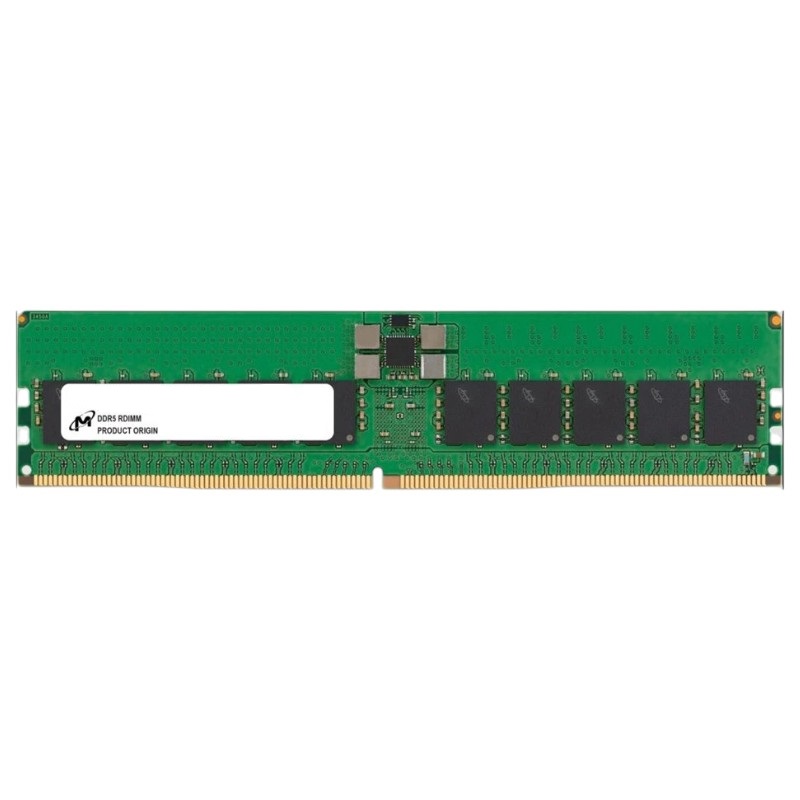


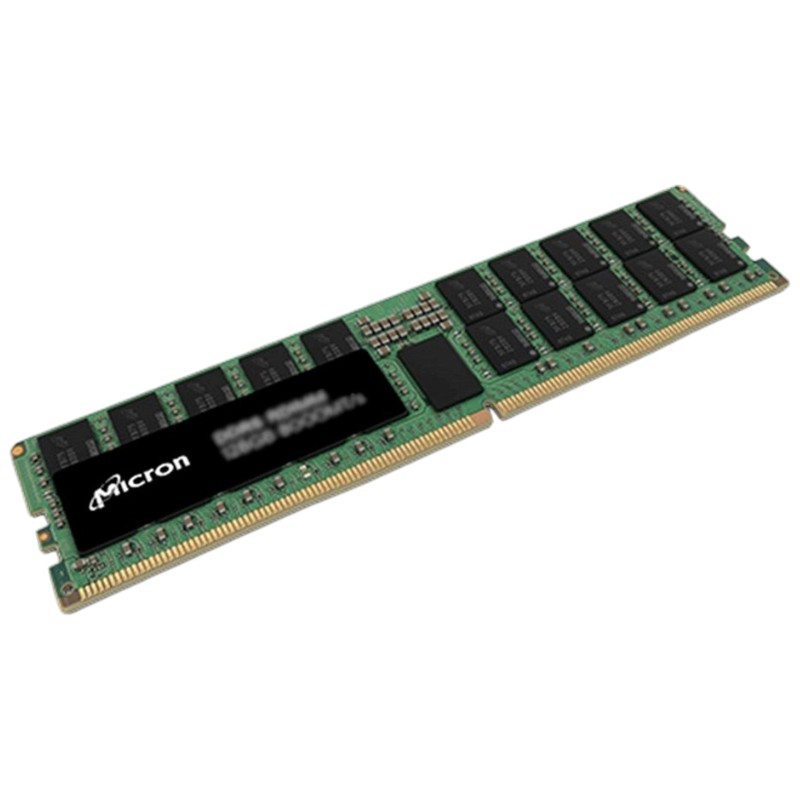
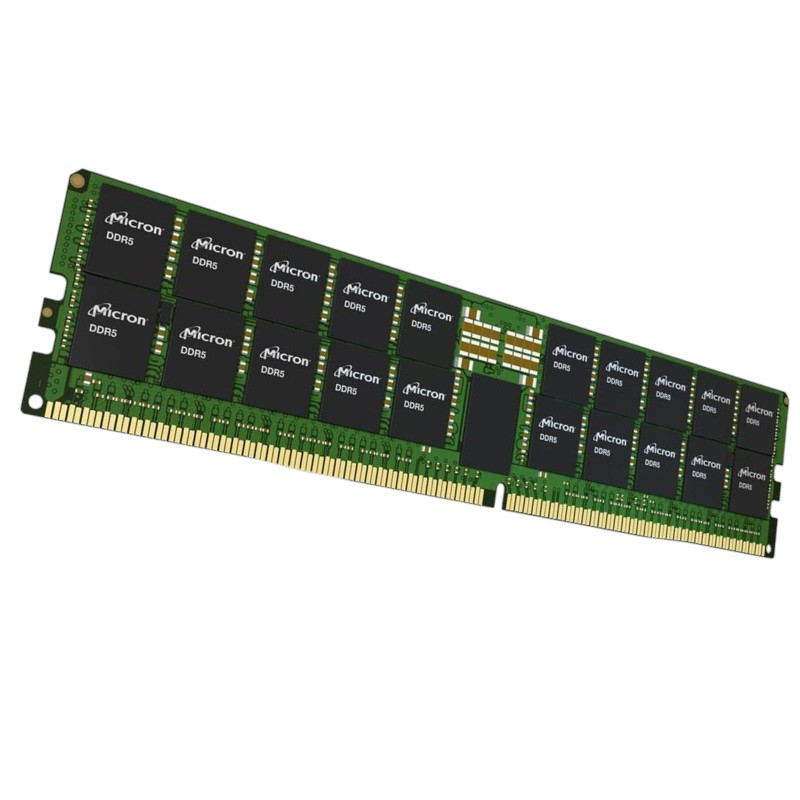
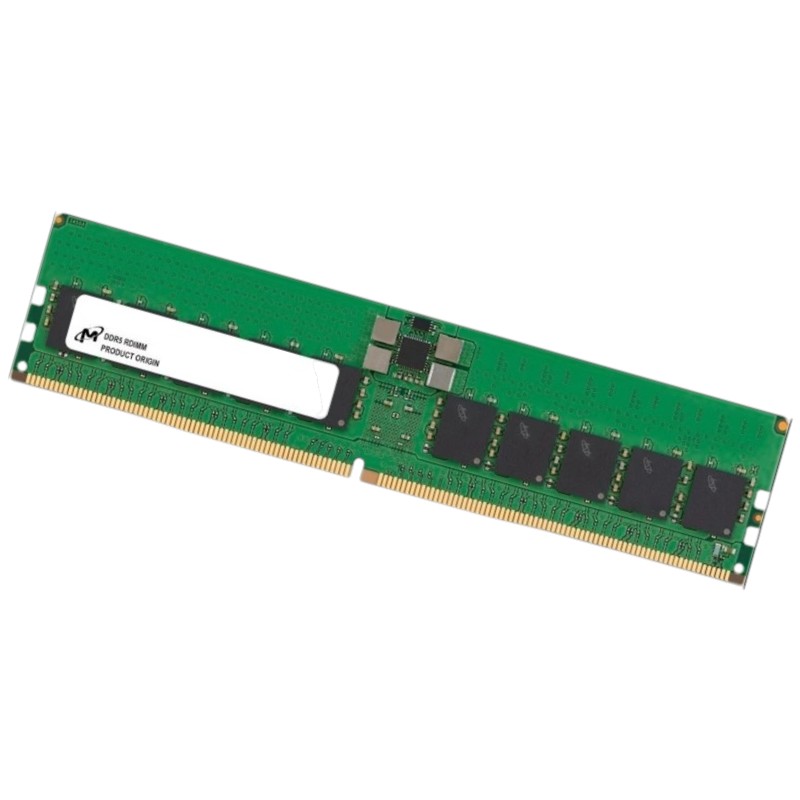
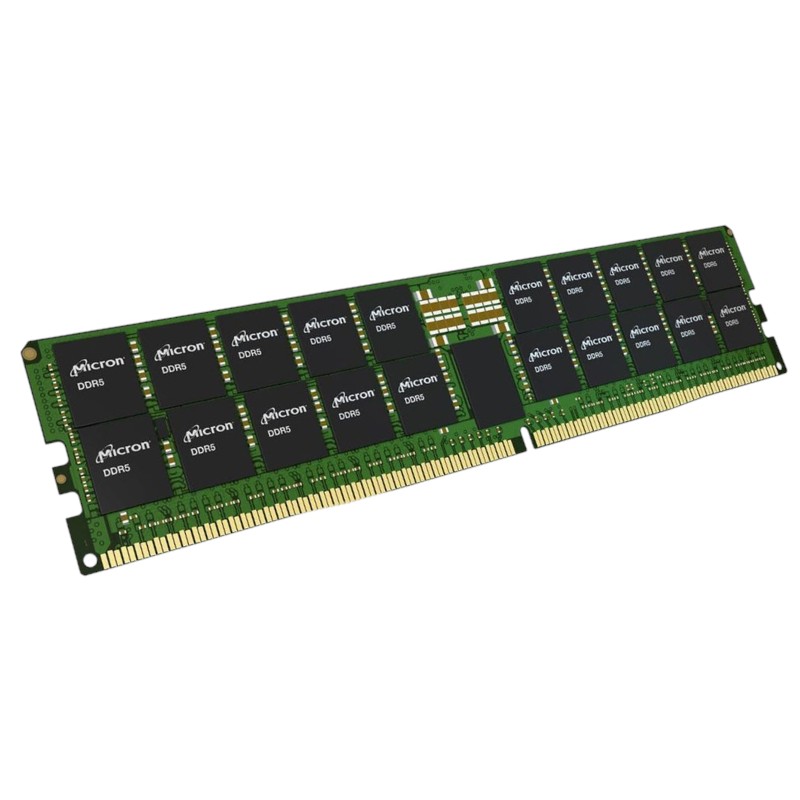
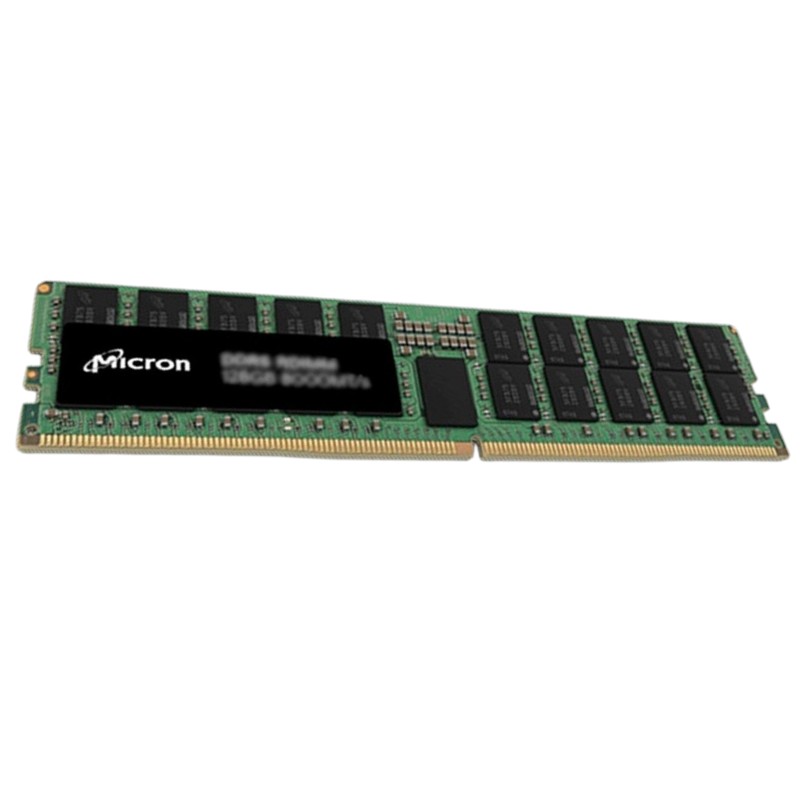
Micron MTC20F104XS1RC64BB1 48GB DDR5-6400MHz PC5-51200 CL52 ECC 288-Pin RDIMM Server Memory Module. New Sealed in Box (NIB) with 3-Years Warranty
The Micron MTC20F104XS1RC64BB1 is a robust 48GB DDR5-6400MHz RDIMM server memory module designed for enterprise-grade computing. With ECC error correction, registered signal processing, and high-speed performance, this module ensures stability, scalability, and efficiency for mission-critical workloads.
The Micron MTC20F104XS1RC64BB1 48GB DDR5-6400MHz PC5-51200 CL52 ECC 288-Pin RDIMM Server Memory Module represents a next-generation enterprise memory solution engineered for modern data center infrastructures, virtualization environments, enterprise servers, AI-driven workloads, and high-density computing platforms. Designed with advanced DDR5 technology, this registered DIMM delivers exceptional bandwidth, enhanced reliability, improved power efficiency, and scalable memory performance for demanding business applications.
As enterprise workloads continue to expand across cloud computing, machine learning, virtualization, software-defined storage, and real-time analytics, organizations require memory solutions capable of supporting continuous performance under sustained operational pressure. This Micron DDR5 RDIMM module is specifically optimized for enterprise-grade deployments where consistency, reliability, and memory integrity are essential.
The 48GB capacity provides a balanced configuration for organizations seeking optimized memory density without unnecessary overprovisioning. Combined with a 6400MHz operating speed and PC5-51200 bandwidth rating, the module supports accelerated data throughput for modern multi-core processors and memory-intensive applications.
DDR5 SDRAM technology introduces substantial improvements over previous-generation DDR4 server memory modules. The Micron MTC20F104XS1RC64BB1 utilizes advanced DDR5 architecture to improve data transfer rates, channel efficiency, memory bank management, and overall platform responsiveness. These enhancements make DDR5 an ideal choice for enterprise infrastructures that demand scalable performance and reduced latency.
DDR5 memory technology incorporates higher burst lengths, expanded bank groups, improved refresh efficiency, and enhanced power management. These architectural improvements help modern servers handle increasing computational demands while maintaining stable operational performance in mission-critical environments.
The 6400MHz memory frequency enables significantly higher transfer speeds compared to earlier DDR4 RDIMM solutions. This increased bandwidth allows processors to access data more efficiently, reducing memory bottlenecks and improving application responsiveness across enterprise workloads.
The PC5-51200 designation identifies the module’s theoretical peak transfer bandwidth capability. This bandwidth level enables enterprise servers to process large data sets efficiently while supporting modern CPU architectures designed for high-speed memory interaction.
High-bandwidth memory is especially important in virtualization clusters, database systems, artificial intelligence environments, and cloud computing infrastructures where multiple workloads simultaneously access memory resources. The enhanced throughput provided by the Micron DDR5-6400 RDIMM improves data handling efficiency while helping maintain consistent application performance.
Organizations deploying modern enterprise applications benefit from increased memory bandwidth because it minimizes latency during memory-intensive operations. Applications involving analytics, scientific modeling, virtualization, and enterprise resource planning can experience improved responsiveness and operational consistency.
Error Correcting Code technology is one of the most critical features in enterprise-grade server memory. The Micron MTC20F104XS1RC64BB1 incorporates ECC functionality to detect and correct memory errors automatically during operation. This capability helps preserve data integrity and system stability in environments where uptime and accuracy are essential.
ECC memory continuously monitors data transmissions between the processor and memory subsystem. If minor memory errors occur, the ECC mechanism identifies and corrects the issue before it affects system operations or application data. This functionality is especially important in servers operating continuously under heavy computational loads.
Enterprise infrastructures such as financial systems, cloud environments, healthcare platforms, research institutions, and database servers rely heavily on ECC memory to maintain operational integrity. Even small memory errors can lead to corrupted data, unexpected application crashes, or system instability. ECC RDIMM modules significantly reduce these risks.
Modern data centers operate around the clock and frequently manage thousands of simultaneous transactions, virtual machines, and application processes. ECC memory helps maintain stable server performance by reducing the likelihood of data corruption caused by transient memory faults.
In virtualization environments, a single physical server may host numerous virtual machines simultaneously. Memory integrity becomes increasingly important as workload density rises. The ECC capabilities of the Micron DDR5 RDIMM help ensure that hosted workloads remain stable and protected against memory-related errors.
Database applications also benefit substantially from ECC technology. Large transactional databases require precise memory operations to maintain consistent data integrity. ECC memory contributes to database reliability by minimizing the risk of memory corruption during intensive read and write operations.
Mission-critical infrastructures demand hardware components capable of delivering continuous operational consistency. The Micron 48GB DDR5 RDIMM is engineered to support enterprise environments where unexpected downtime can result in operational disruption or financial impact.
Industries including telecommunications, financial services, healthcare, government operations, and scientific computing rely on server memory solutions designed for maximum reliability. ECC technology combined with registered DIMM architecture provides improved signal integrity and operational stability in large-scale server deployments.
The Micron MTC20F104XS1RC64BB1 utilizes RDIMM architecture to enhance electrical stability and memory scalability in enterprise servers. Registered DIMMs incorporate a register between the memory controller and memory chips, reducing electrical load on the processor’s memory controller.
This architecture enables servers to support higher memory capacities and additional DIMM populations while maintaining stable performance. RDIMM technology is widely adopted in enterprise-class servers because it provides superior reliability in high-density memory configurations.
Compared with unbuffered DIMMs, registered DIMMs improve signal quality and timing consistency, particularly in multi-socket server platforms. This makes RDIMM memory ideal for virtualization hosts, database servers, and large-scale computing environments where memory scalability is essential.
Registered memory offers multiple operational advantages for modern server infrastructures. Improved signal integrity enables stable operation even when all memory slots are populated. This capability is especially important in high-density server environments that require large memory capacities.
RDIMM technology also helps reduce electrical stress on the processor memory controller. By buffering command and address signals, the memory subsystem can operate more efficiently under heavy workloads and multi-module configurations.
Enterprise IT administrators often prefer RDIMM memory because it supports larger server memory footprints while maintaining reliable long-term performance. This scalability is important for future infrastructure expansion and workload growth.
The 288-pin DIMM design conforms to modern DDR5 server platform standards and ensures compatibility with supported enterprise motherboards and server architectures. The physical layout is optimized for high-speed data transmission, thermal efficiency, and secure module installation.
Modern server manufacturers design enterprise platforms specifically around DDR5 RDIMM technology to maximize system performance and memory scalability. The standardized 288-pin design simplifies deployment, maintenance, and infrastructure upgrades across enterprise environments.
The 6400MHz operating speed of the Micron DDR5 RDIMM provides substantial performance advantages for computationally intensive workloads. Modern enterprise applications require rapid memory access to support high-performance processors, multi-threaded computing, and large-scale data processing.
High-frequency DDR5 memory reduces data transfer delays between the processor and system memory, enabling applications to execute more efficiently. This is particularly valuable for workloads involving virtualization, analytics, AI inference, machine learning, and cloud services.
Organizations deploying advanced computing infrastructures can benefit from the improved responsiveness and reduced latency associated with DDR5-6400 memory technology. Faster memory speeds contribute to overall server efficiency and improved workload handling capabilities.
Virtualization platforms place significant demands on system memory due to simultaneous operation of multiple virtual machines. The Micron 48GB DDR5 RDIMM supports virtualization environments by delivering the bandwidth and reliability necessary for efficient hypervisor performance.
Hypervisor platforms including VMware, Microsoft Hyper-V, and enterprise cloud infrastructures benefit from high-speed DDR5 memory because virtualized workloads frequently compete for shared system resources. Enhanced memory bandwidth helps reduce contention and improves overall VM responsiveness.
The 48GB capacity offers a balanced memory configuration for mid-range and large-scale virtualization hosts. IT administrators can optimize resource allocation while maintaining efficient memory utilization across virtual environments.
AI and machine learning applications require high-throughput memory subsystems capable of handling extensive data movement and computational processing. The Micron DDR5-6400 RDIMM supports these workloads by delivering enhanced bandwidth and reduced latency.
Training machine learning models, processing inference tasks, and managing large data sets all depend on efficient memory performance. Faster DDR5 memory contributes to reduced training times and improved application responsiveness in AI-focused infrastructures.
Organizations implementing AI-enabled analytics platforms or deep learning environments benefit from scalable memory solutions that can support continuous high-performance operation under demanding computational loads.
DDR5 memory technology introduces improved power management capabilities compared with earlier DDR generations. The Micron MTC20F104XS1RC64BB1 incorporates advanced energy efficiency features designed to support modern data center sustainability objectives.
Efficient power consumption is essential in enterprise infrastructures because large-scale server deployments can generate significant operational costs related to energy usage and cooling requirements. DDR5 memory helps reduce these concerns through optimized voltage regulation and improved power delivery mechanisms.
The module’s thermal characteristics are engineered for continuous server operation in enterprise rack environments. Effective thermal management contributes to component longevity, operational reliability, and sustained performance during heavy workloads.
Modern data centers prioritize energy efficiency to minimize operational expenses and environmental impact. DDR5 memory technology operates with enhanced efficiency, helping organizations improve infrastructure sustainability without compromising performance.
Lower power consumption can reduce heat generation within densely populated server racks. This contributes to improved cooling efficiency and potentially lower infrastructure maintenance costs over time.
Enterprise IT planners evaluating long-term operational efficiency often consider DDR5 memory as a strategic upgrade due to its balance of performance and energy optimization.
Thermal consistency is essential for maintaining server reliability in high-density computing environments. The Micron DDR5 RDIMM is engineered to support stable thermal performance during continuous enterprise operation.
Efficient heat dissipation helps prevent thermal throttling and supports sustained workload processing under demanding conditions. Servers operating in virtualization clusters, cloud infrastructures, and enterprise databases can benefit from memory modules designed for long-term thermal stability.
The Micron MTC20F104XS1RC64BB1 is intended for compatibility with enterprise-grade server platforms that support DDR5 ECC RDIMM technology. Modern server architectures from leading manufacturers utilize DDR5 memory to maximize processor performance and infrastructure scalability.
Before deployment, organizations should verify server compatibility based on motherboard specifications, chipset support, BIOS revisions, and processor memory controller capabilities. Enterprise servers supporting DDR5-6400 RDIMM configurations can leverage the module’s full performance potential.
Compatibility validation is particularly important in multi-socket server configurations where memory architecture and channel population guidelines influence overall system stability and performance.
Scalable enterprise infrastructures require memory solutions capable of adapting to future growth and workload expansion. The 48GB DDR5 RDIMM provides a flexible memory capacity suitable for expanding server deployments while maintaining efficient resource allocation.
Organizations planning long-term infrastructure scalability benefit from deploying memory modules designed to support evolving processor architectures and increasing application demands. DDR5 memory represents a forward-looking investment in enterprise computing modernization.
Scalable memory infrastructure is particularly important in cloud hosting environments, enterprise virtualization clusters, and software-defined data centers where workload requirements can grow rapidly over time.
Modern server processors incorporate advanced memory controllers optimized for DDR5 memory technology. The Micron DDR5-6400 RDIMM complements these processor architectures by delivering the bandwidth and responsiveness necessary for high-performance enterprise workloads.
High-core-count processors rely heavily on memory throughput to maintain computational efficiency. DDR5 memory enables processors to access data more rapidly, improving overall system responsiveness and reducing bottlenecks in memory-intensive operations.
The Micron MTC20F104XS1RC64BB1 is suitable for a wide variety of enterprise computing environments that demand stable memory performance and high-speed data access. Its combination of ECC protection, RDIMM architecture, DDR5 bandwidth, and optimized capacity supports modern enterprise IT strategies.
Applications involving cloud computing, virtualization, database management, analytics, AI processing, and enterprise application hosting all benefit from high-performance DDR5 memory infrastructure.
Cloud service providers require scalable and reliable memory solutions capable of supporting multi-tenant environments and continuously changing workloads. The Micron DDR5 RDIMM helps cloud infrastructures maintain operational consistency while supporting efficient workload distribution.
Cloud servers frequently handle variable processing demands, making high-bandwidth memory essential for maintaining user responsiveness and application availability. DDR5 memory contributes to smoother workload balancing and improved infrastructure efficiency.
Large-scale databases and analytics applications require rapid memory access for efficient query execution and data processing. The Micron DDR5-6400 module provides the bandwidth necessary to support intensive transactional workloads and real-time analytics operations.
Data-driven enterprises increasingly rely on in-memory processing technologies to improve application responsiveness and accelerate business intelligence workflows. High-speed DDR5 memory enhances these environments by reducing latency and improving overall system throughput.


 Contact Us
 Information
 Catalog
 Solid State Drives (SSD)
 Network Switches
 Hard Disk Drives
 HBA & Controllers
 PC & Servers
 PC & Server Memory
 CPU & Processors
 Network Routers
 Power Supplies
 Tape Drives & Libraries
 Network Devices
 Computer & Network Cables