(7% discount is applied at checkout)
Cart is empty
Your go-to destination for cutting-edge server products
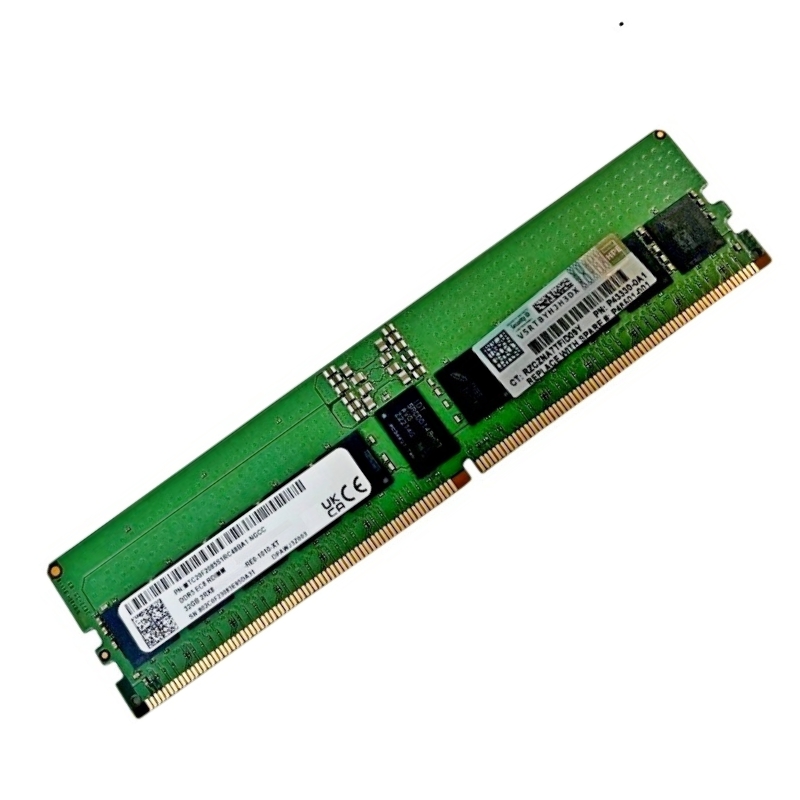


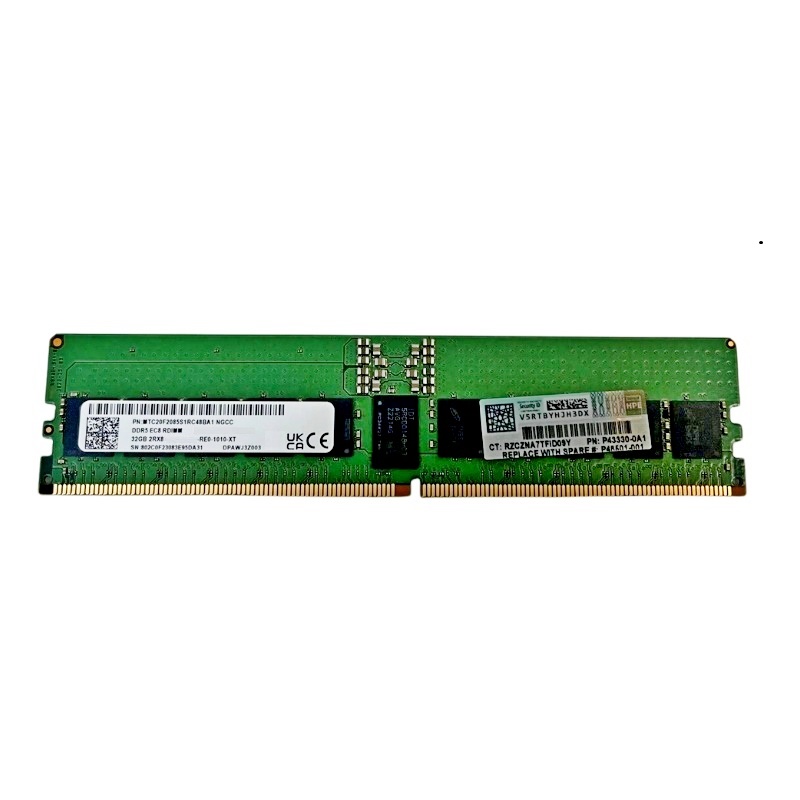
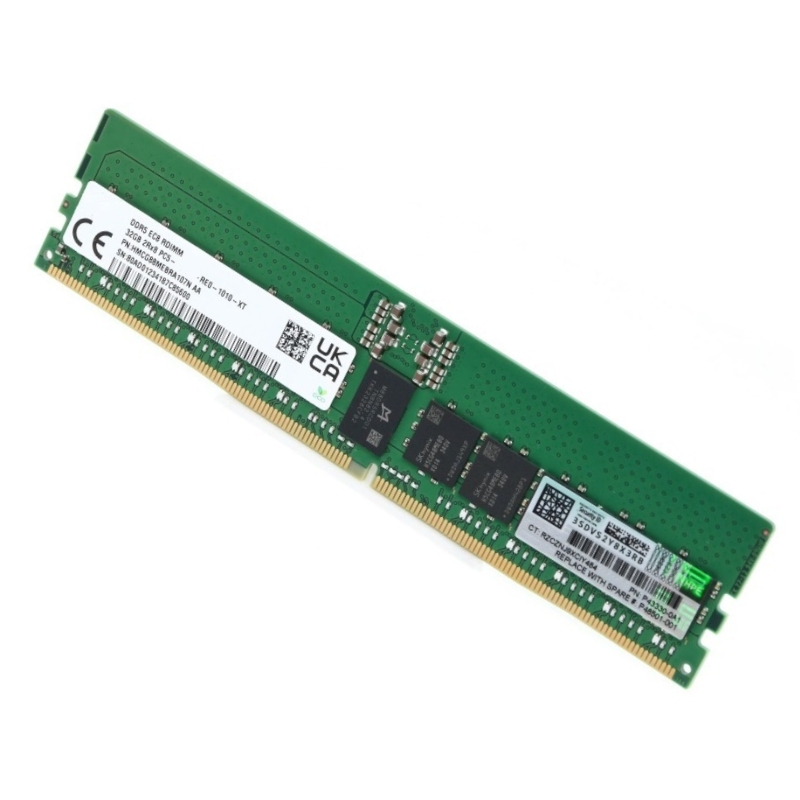
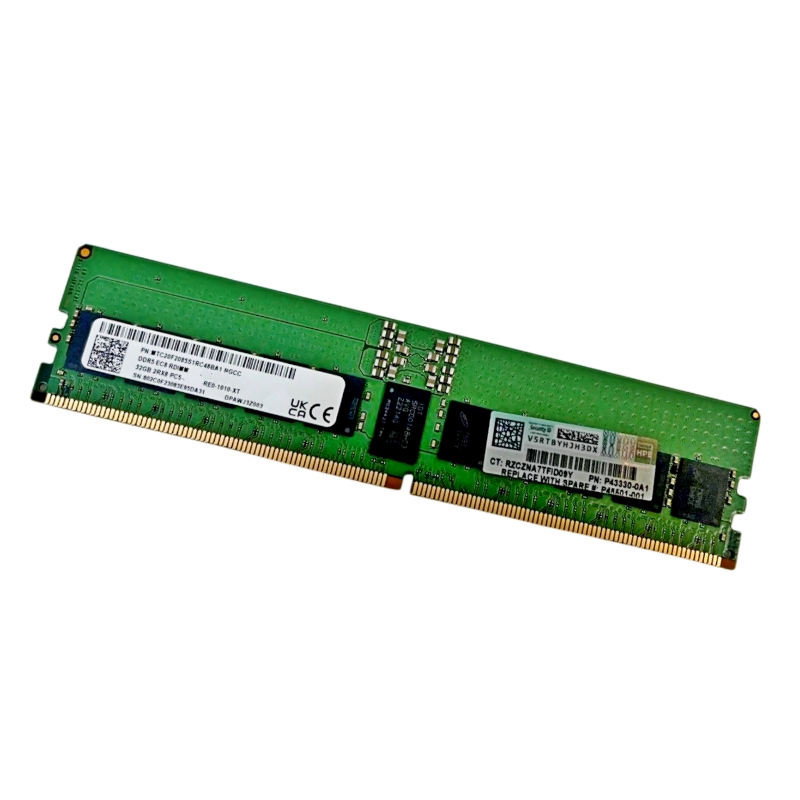
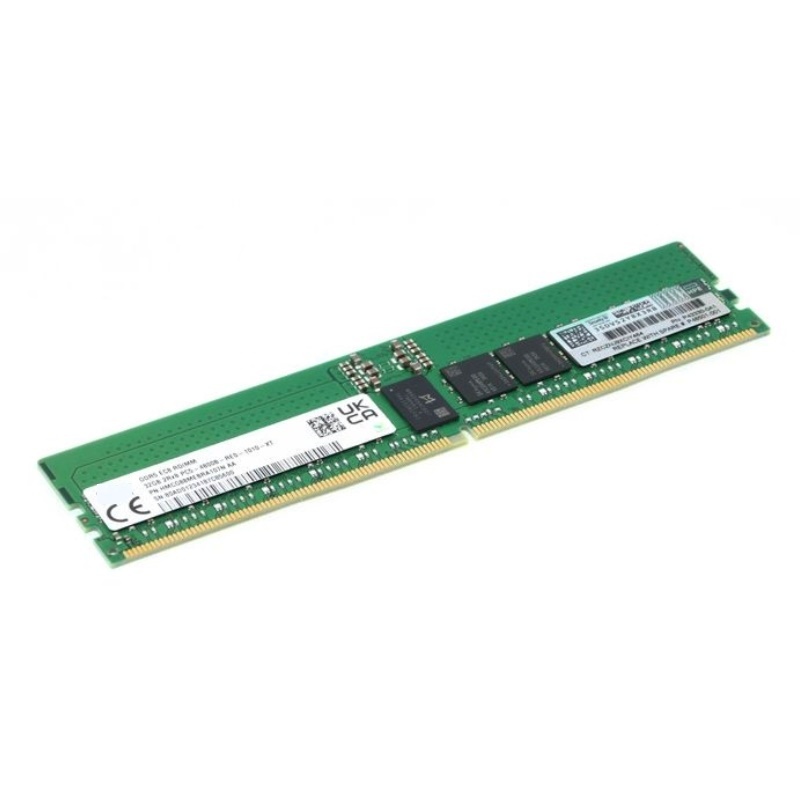
HPE P67987-B21 32GB 4800MHz PC5-38400 Cl42 ECC Registered Dual Rank X8 1.1v DDR5 SDRAM 288-Pin RDIMM Smart Memory Module. Factory-Sealed New in Original Box (FSB) with 3 Years Warranty
The HPE P67987-B21 32GB DDR5 Smart Memory module is an enterprise-grade RDIMM designed for HPE ProLiant Gen11, Apollo Family, and AMD-based server platforms. With DDR5 4800MT/s speed, ECC protection, and registered signal processing, this memory module delivers stable performance, improved bandwidth, and enhanced reliability for modern data center workloads.
The HPE P67987-B21 32GB 4800MHz PC5-38400 CL42 ECC Registered Dual Rank x8 1.1V DDR5 SDRAM 288-Pin RDIMM Smart Memory Module is a high-performance enterprise memory solution designed for HPE ProLiant Gen11, Apollo family systems, and supported AMD server platforms. It delivers stable bandwidth, improved power efficiency, and enterprise-grade reliability for modern workloads.
The 32GB capacity of the HPE P67987-B21 module provides an efficient balance between memory density and scalability in enterprise server environments. It allows system administrators to configure flexible memory layouts while preserving DIMM slots for future upgrades. This capacity is particularly useful for mid-range virtualization hosts, application servers, and departmental databases. It helps maintain cost-effective scaling without sacrificing performance or stability.
Using 32GB modules enables optimized DIMM slot distribution across multi-socket server systems. This allows balanced memory population across CPU channels, improving bandwidth efficiency. It also reduces thermal density compared to higher-capacity configurations. Efficient slot utilization is essential for maintaining airflow and system stability in dense server environments.
The 32GB capacity supports moderate-to-high virtual machine density per physical host. This enables better resource distribution across workloads. It improves VM scheduling efficiency in virtualization platforms. Balanced memory allocation enhances system responsiveness.
DDR5 memory technology introduces significant improvements in bandwidth, power efficiency, and internal architecture compared to DDR4. The HPE P67987-B21 module leverages these enhancements to deliver superior enterprise performance. It supports increased data throughput, improved bank group efficiency, and better power management. These improvements make it ideal for modern server workloads requiring high-speed memory access.
DDR5 introduces a more efficient bank group architecture that increases parallel memory operations. This enables simultaneous data processing across multiple internal memory segments. It reduces latency and improves throughput in enterprise workloads. Enhanced parallelism supports modern multi-threaded applications effectively.
Internal data routing in DDR5 modules is optimized for faster and more efficient memory transactions. This reduces bottlenecks and enhances performance consistency. It improves responsiveness in server applications. Efficient data handling is critical for enterprise computing workloads.
Operating at 4800MHz, this DDR5 RDIMM provides reliable and consistent memory performance suitable for enterprise environments. It ensures smooth communication between CPU and memory subsystems. The speed is optimized for stability rather than peak overclock performance. This makes it ideal for mission-critical workloads requiring predictable behavior.
The 4800MHz frequency ensures stable memory bandwidth for enterprise applications. It minimizes performance fluctuations under heavy load. This enhances system reliability and responsiveness. Consistent bandwidth is essential for production environments.
The PC5-38400 specification provides up to 38.4GB/s of theoretical memory bandwidth per module. This supports efficient processing of large datasets and complex workloads. It is suitable for virtualization, cloud computing, and analytics platforms. Standardized bandwidth ensures predictable performance across server environments.
This bandwidth level allows faster processing of enterprise workloads such as ERP and CRM systems. It improves transaction handling and data analysis speed. It reduces system bottlenecks under load. Efficient processing enhances operational productivity.
Virtualization platforms require consistent memory performance across multiple workloads. This module ensures stable operation under heavy multi-tenant environments. It improves resource allocation efficiency. Stability is critical for enterprise virtualization systems.
Error-Correcting Code (ECC) technology detects and corrects memory errors automatically before they affect system performance. Registered buffering enhances signal integrity in multi-DIMM configurations. This reduces electrical load and improves system stability. ECC Registered memory is essential for mission-critical enterprise servers.
The ECC system continuously monitors memory transactions for errors. It corrects single-bit faults automatically. This prevents system crashes and data corruption. Automatic correction improves reliability significantly.
By reducing memory-related failures, ECC increases system uptime. This is critical for servers operating in 24/7 environments. It minimizes downtime and operational disruptions. High uptime supports business continuity.
The CL42 latency timing is optimized for DDR5 operation at 4800MHz. While DDR5 latency values are numerically higher than DDR4, overall system performance improves significantly due to increased bandwidth. CL42 ensures stable synchronization between memory controller and DRAM chips. This results in consistent enterprise-grade performance.
CL42 timing ensures proper coordination of memory operations. This maintains system stability under heavy workloads. It supports predictable performance in enterprise environments. Balanced timing improves reliability.
DDR5 architecture compensates for latency with higher bandwidth. This improves real-world application responsiveness. It enhances data processing efficiency. Performance gains are noticeable in enterprise workloads.
The dual rank x8 architecture improves memory parallelism and efficiency by enabling multiple memory ranks to operate independently. This increases throughput and reduces access delays. The x8 configuration enhances error correction capabilities and signal stability. It is ideal for enterprise-grade server memory configurations.
Memory interleaving allows simultaneous access to multiple ranks. This reduces latency and improves throughput. It enhances multi-threaded application performance. Interleaving improves system efficiency significantly.
Dual rank architecture distributes memory workloads evenly across channels. This reduces bottlenecks and improves stability. It enhances consistency in server performance. Balanced distribution improves efficiency.
The HPE P67987-B21 operates at 1.1 volts, reducing power consumption compared to previous DDR4 modules. Lower voltage reduces heat generation and improves energy efficiency. This contributes to lower cooling requirements in data centers. Energy efficiency is a critical factor in modern enterprise IT environments.
Lower voltage operation significantly reduces heat generation. This improves thermal management in dense server racks. It enhances system stability and longevity. Reduced thermal output improves cooling efficiency.
Energy-efficient memory reduces electricity consumption across large deployments. This helps lower total cost of ownership. It improves long-term operational efficiency. Cost reduction is essential for enterprise scalability.
The 288-pin RDIMM form factor ensures compatibility with HPE ProLiant Gen11 and Apollo family servers. Registered buffering improves signal integrity in multi-module configurations. This enables stable and scalable memory expansion. The design supports enterprise-grade reliability.
Registered architecture reduces electrical load on the memory controller. This improves signal stability across DIMM configurations. It ensures reliable performance in enterprise systems. Signal integrity is critical for server stability.
The RDIMM design supports multiple memory modules per system. This allows scalable memory expansion as workloads grow. It supports long-term infrastructure planning. Scalability is essential for enterprise environments.
HPE Smart Memory modules undergo rigorous testing and validation to ensure compatibility with supported server platforms. This includes firmware integration, stress testing, and thermal validation. Smart Memory also supports advanced monitoring and diagnostics through HPE management tools. This ensures reliable long-term operation in enterprise environments.
HPE validates Smart Memory for seamless integration with ProLiant and Apollo systems. This reduces deployment risks and ensures stable operation. It improves system reliability significantly. Certification ensures enterprise readiness.
Smart Memory supports real-time health monitoring and diagnostics. Administrators can track memory performance and detect issues early. This improves maintenance efficiency. Enhanced visibility supports proactive IT management.
This DDR5 RDIMM is ideal for virtualization and cloud environments requiring balanced memory capacity and bandwidth. It supports multiple virtual machines and dynamic workloads. ECC protection ensures data integrity across shared environments. This improves scalability and efficiency in cloud infrastructure.
Cloud systems require efficient distribution of memory resources across tenants. This module ensures balanced allocation and performance isolation. It improves workload efficiency. Efficient allocation enhances cloud operations.
Faster memory access improves VM responsiveness in virtual environments. It reduces latency and improves user experience. This enhances overall system performance. Responsiveness is critical for cloud computing.
The HPE P67987-B21 module is designed for mission-critical workloads requiring continuous operation. It supports ERP, CRM, financial systems, and other enterprise applications. ECC protection, Smart Memory validation, and RDIMM architecture ensure stability. This makes it suitable for high-availability environments.
Enterprise applications depend on consistent memory behavior. This module ensures predictable performance across workloads. It enhances operational reliability. Reliable performance supports business continuity.


 Contact Us
 Information
 Catalog
 Solid State Drives (SSD)
 Network Switches
 Hard Disk Drives
 HBA & Controllers
 PC & Servers
 PC & Server Memory
 CPU & Processors
 Network Routers
 Power Supplies
 Tape Drives & Libraries
 Network Devices
 Computer & Network Cables