(7% discount is applied at checkout)
Cart is empty
Your go-to destination for cutting-edge server products
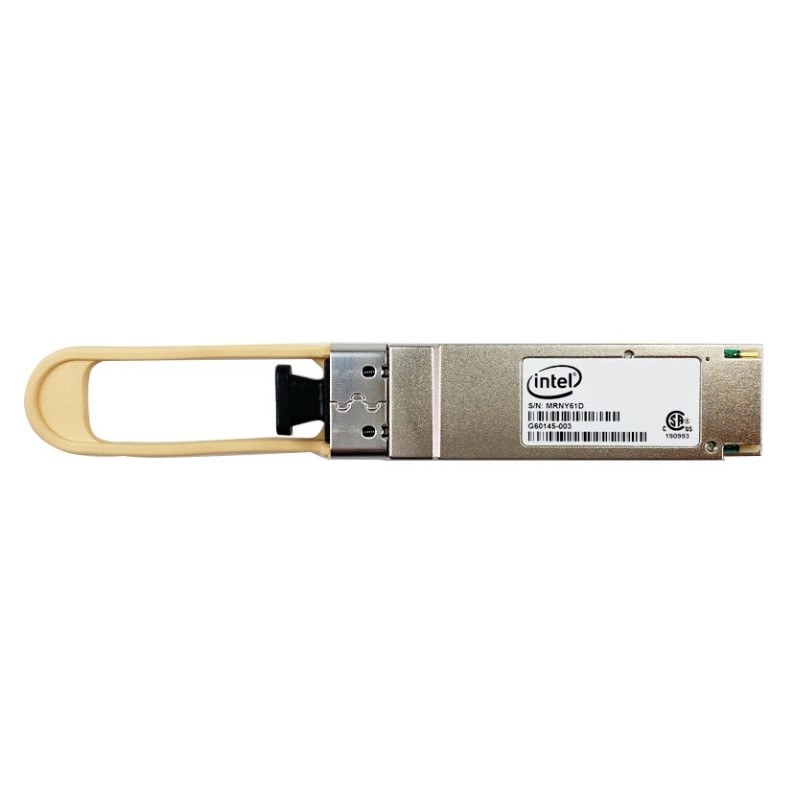


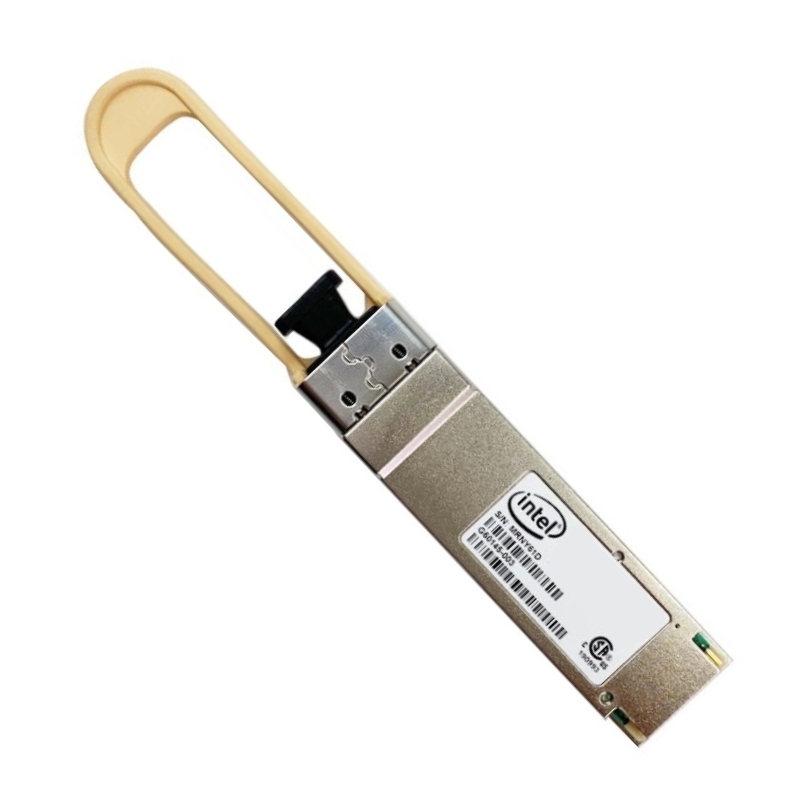
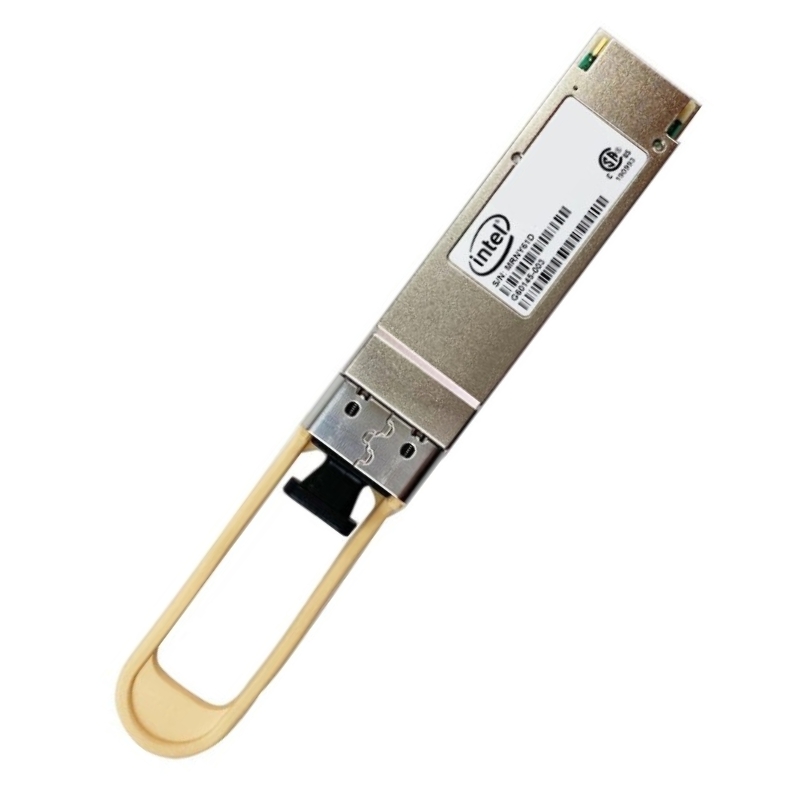
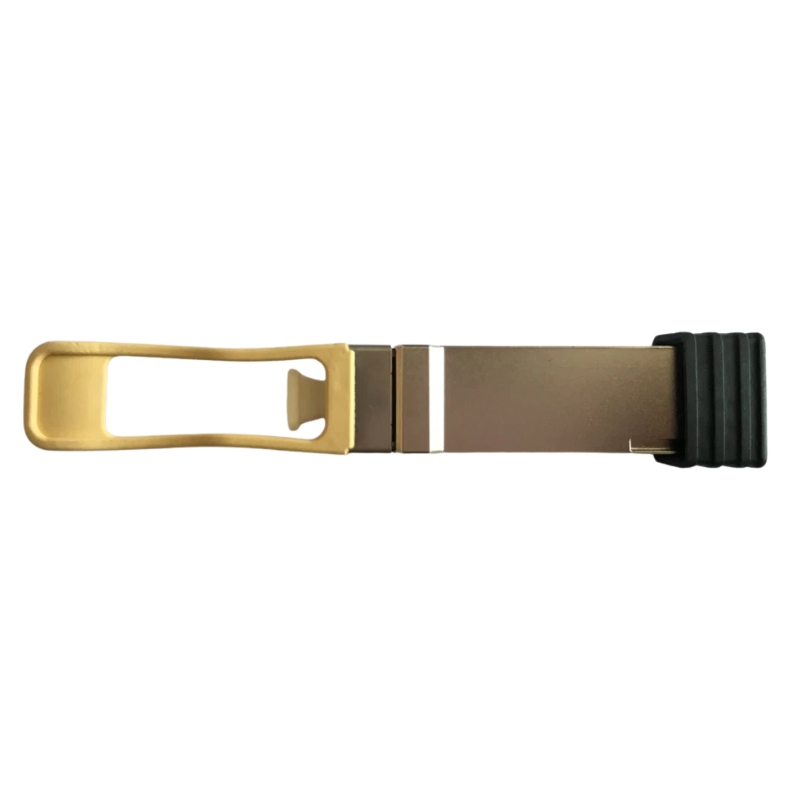
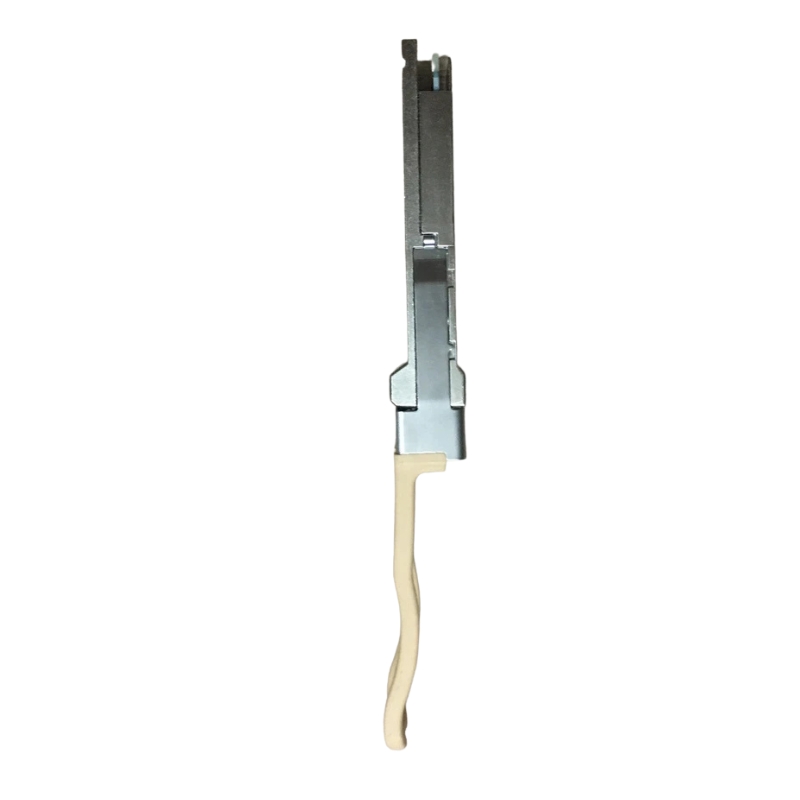
Intel G60145-003 40 Gigabit Ethernet SR4 QSFP+ Transceiver Module. Excellent Refurbished with 1 year replacement warranty
The G60145-003 Intel 40Gbps 40Base-SR4 QSFP+ Transceiver Module is a high-speed networking solution designed for enterprise environments. With multi-mode fiber support and advanced MTP/MPO connectors, this module ensures efficient data transmission across short distances.
The G60145-003 Intel 40Gbps 40GBase-SR4 Multi-Mode Fiber QSFP+ Transceiver Module is designed to provide reliable, high-bandwidth optical connectivity for enterprise, cloud, data center, and high-performance computing environments. As organizations continue to expand virtualization infrastructures, cloud services, storage networks, and large-scale data processing platforms, the demand for low-latency and high-throughput networking solutions continues to rise. This 40 Gigabit Ethernet optical transceiver addresses these requirements by delivering stable, high-speed data transmission over multimode fiber networks.
Built according to industry-standard QSFP+ specifications, the module supports 40Gbps Ethernet communication and utilizes 850nm wavelength technology for optimized short-range optical transmission. The transceiver is engineered for compatibility with modern networking architectures that require dependable connectivity between switches, routers, aggregation layers, and storage systems. Its compact QSFP+ form factor allows organizations to maximize port density while maintaining efficient power consumption and thermal performance.
40GBase-SR4 technology was developed to support high-speed Ethernet communications over multimode fiber infrastructures. Unlike traditional copper-based connectivity, SR4 optical transmission offers significantly higher bandwidth capabilities, reduced electromagnetic interference, and improved scalability. The G60145-003 module leverages parallel optical transmission techniques to achieve 40Gbps throughput while maintaining signal integrity across supported distances.
The SR4 designation refers to Short Reach technology utilizing four parallel transmission channels and four receiving channels. Each lane operates at approximately 10Gbps, collectively delivering aggregate bandwidth of 40Gbps. This architecture enables efficient data transfer across enterprise and data center environments where rapid communication between network devices is essential.
Multi-mode fiber cabling remains one of the most commonly deployed media types within enterprise facilities and data centers. The Intel G60145-003 QSFP+ transceiver is optimized for multi-mode fiber installations, making it a practical choice for organizations seeking cost-effective high-speed networking upgrades.
Multi-mode fiber provides several operational advantages, including simplified deployment, lower installation costs compared to long-distance single-mode fiber solutions, and compatibility with existing structured cabling infrastructures. Organizations that have already invested in OM3 or OM4 fiber environments can leverage the G60145-003 module to increase network throughput without requiring extensive cabling replacements.
The ability to transmit data over distances of up to 150 meters ensures sufficient coverage for most intra-data-center applications, server aggregation deployments, and switch-to-switch interconnections.
The primary function of the G60145-003 transceiver is to deliver 40 Gigabit Ethernet connectivity. This bandwidth capacity enables organizations to support demanding workloads, including cloud computing platforms, virtual machine migrations, big data analytics, software-defined networking infrastructures, and high-speed storage communications.
The 40Gbps transmission capability significantly exceeds the performance of traditional 1GbE and 10GbE environments. By increasing network capacity, organizations can reduce bottlenecks, improve application responsiveness, and support growing traffic demands generated by modern digital operations.
The module utilizes an 850nm optical wavelength specifically optimized for short-range multimode fiber communication. This wavelength provides an ideal balance between performance, efficiency, and cost-effectiveness for enterprise networking applications.
Optical transmission at 850nm supports high-speed communication while maintaining stable signal quality across supported distances. The technology is widely adopted throughout data centers because it enables efficient operation with standard multimode fiber cabling infrastructures.
The G60145-003 incorporates an MTP/MPO optical connector interface designed for parallel optical communication. MPO connectivity allows multiple fiber strands to be consolidated into a single compact connector, simplifying cable management while supporting high-bandwidth transmission requirements.
MTP/MPO connectors are particularly valuable in high-density networking environments where maximizing rack space and minimizing cable congestion are operational priorities. The connector architecture enables efficient deployment within data centers containing hundreds or thousands of interconnected devices.
The MPO interface supports streamlined installation procedures, enhanced cable organization, reduced airflow obstruction, and simplified network maintenance. By consolidating multiple optical channels into a single connector, organizations can maintain cleaner infrastructure layouts while supporting high-performance networking objectives.
The Intel G60145-003 transceiver supports optical communication distances of up to 150 meters when deployed with appropriate multimode fiber cabling. This transmission range is suitable for most data center deployments, including server racks, aggregation layers, storage arrays, and core network switches.
The 150-meter reach provides flexibility for network architects who require reliable connectivity across large facilities while maintaining low latency and consistent performance characteristics.
Modern data centers increasingly rely on leaf-spine architectures to achieve predictable performance and scalable bandwidth distribution. The G60145-003 QSFP+ transceiver plays an important role within these environments by enabling high-speed communication between leaf and spine switches.
Because leaf-spine architectures depend on extensive east-west traffic flows, high-bandwidth optical interconnections are critical. The module's 40Gbps throughput helps maintain low-latency communication paths while supporting increasing workloads generated by virtualization platforms and cloud applications.
Large-scale server deployments often require aggregation switches capable of handling traffic from hundreds or thousands of compute nodes. The Intel QSFP+ transceiver provides sufficient bandwidth to support these aggregation layers while ensuring efficient data movement throughout the infrastructure.
As server performance continues to improve through multi-core processors, high-speed memory, and accelerated storage technologies, networking infrastructure must evolve accordingly. The G60145-003 helps eliminate communication bottlenecks that could otherwise limit overall system performance.
Storage environments generate substantial traffic volumes, particularly in virtualized and cloud-based infrastructures. The 40Gbps connectivity provided by the transceiver enables efficient communication between storage controllers, servers, backup systems, and network switches.
Organizations deploying flash storage arrays, distributed storage platforms, and software-defined storage solutions benefit from high-bandwidth networking technologies that minimize data transfer delays and improve application responsiveness.
Enterprise applications continue to consume increasing amounts of network bandwidth. Video conferencing platforms, collaboration systems, virtual desktops, cloud applications, and analytics tools all contribute to growing traffic requirements.
The G60145-003 transceiver allows organizations to expand network capacity while maintaining stable performance under demanding workloads. Increased bandwidth availability supports business continuity initiatives and future infrastructure growth.
Network congestion can negatively impact application performance, user productivity, and service availability. By introducing 40Gbps connectivity into critical network paths, organizations can alleviate congestion and maintain more consistent communication performance across infrastructure components.
High-capacity optical links provide sufficient headroom for traffic spikes and workload fluctuations, reducing the likelihood of bottlenecks during peak operational periods.
The Quad Small Form-Factor Pluggable Plus design enables network equipment manufacturers to provide substantial port density within compact hardware platforms. The G60145-003 leverages this form factor to maximize connectivity while minimizing physical space requirements.
High-density networking environments benefit from increased scalability, improved rack utilization, and reduced infrastructure footprint. These advantages contribute to lower facility costs and more efficient resource utilization.
QSFP+ transceivers support hot-swappable operation, allowing administrators to install or replace modules without shutting down network equipment. This capability reduces maintenance-related downtime and simplifies infrastructure management procedures.
Operational flexibility is particularly important in mission-critical environments where service interruptions can have significant business consequences. Hot-swappable functionality supports continuous operation while facilitating upgrades and maintenance activities.
Power efficiency plays an increasingly important role in modern data centers. The Intel G60145-003 is engineered to deliver high-performance optical communication while maintaining efficient power consumption characteristics.
Reduced power requirements contribute to lower operational expenses, decreased cooling demands, and improved sustainability outcomes. Organizations operating large-scale networking infrastructures can realize meaningful benefits from energy-efficient optical technologies.
The transceiver is designed according to recognized industry specifications governing QSFP+ optical communication technologies. Standards compliance promotes interoperability across networking environments containing equipment from multiple vendors.
This interoperability helps organizations maintain deployment flexibility while protecting existing infrastructure investments. Network administrators can implement optical upgrades with greater confidence when utilizing standards-based components.
The G60145-003 is suitable for deployment across numerous enterprise networking scenarios involving high-performance switches, routers, aggregation platforms, and storage networking equipment. Its standards-based architecture supports integration within modern Ethernet infrastructures.
Organizations deploying advanced networking technologies require components capable of maintaining reliable communication under continuous operational conditions. The transceiver's design objectives align with these enterprise requirements.


 Contact Us
 Information
 Catalog
 Solid State Drives (SSD)
 Network Switches
 Hard Disk Drives
 HBA & Controllers
 PC & Servers
 PC & Server Memory
 CPU & Processors
 Network Routers
 Power Supplies
 Tape Drives & Libraries
 Network Devices
 Computer & Network Cables