(7% discount is applied at checkout)
Cart is empty
Your go-to destination for cutting-edge server products
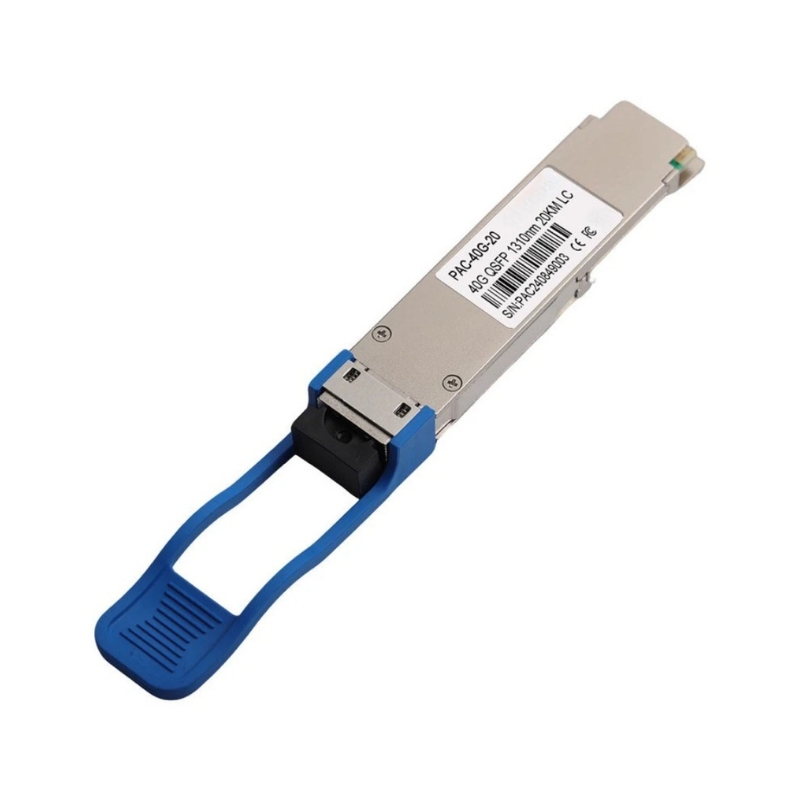


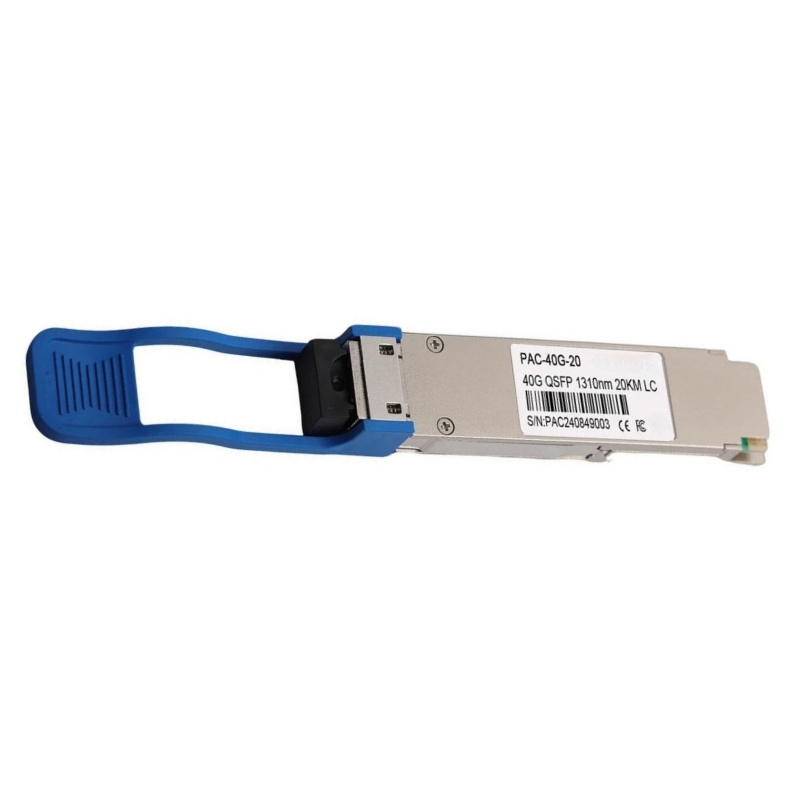
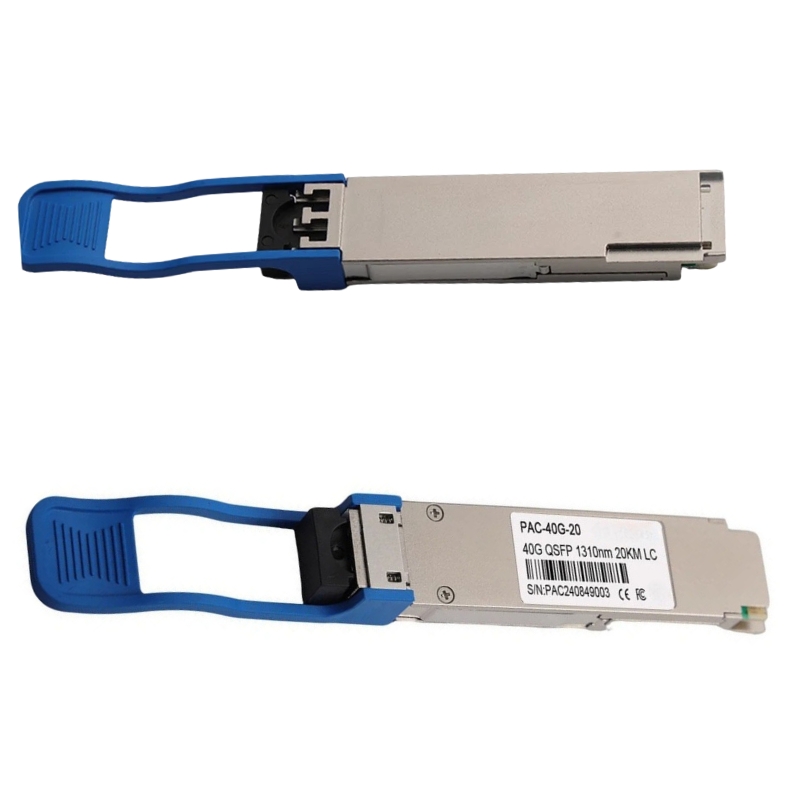
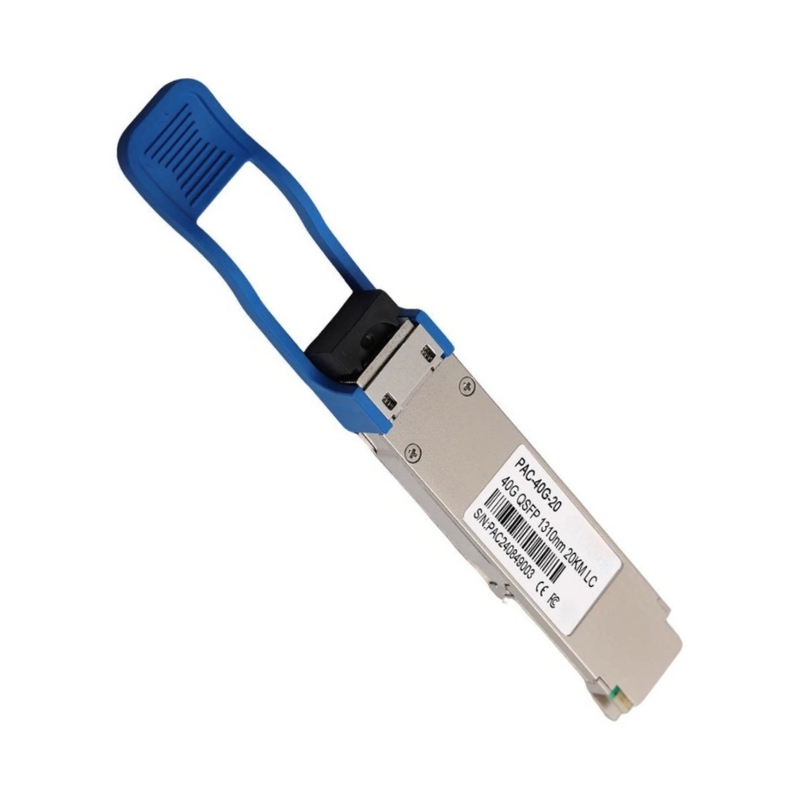
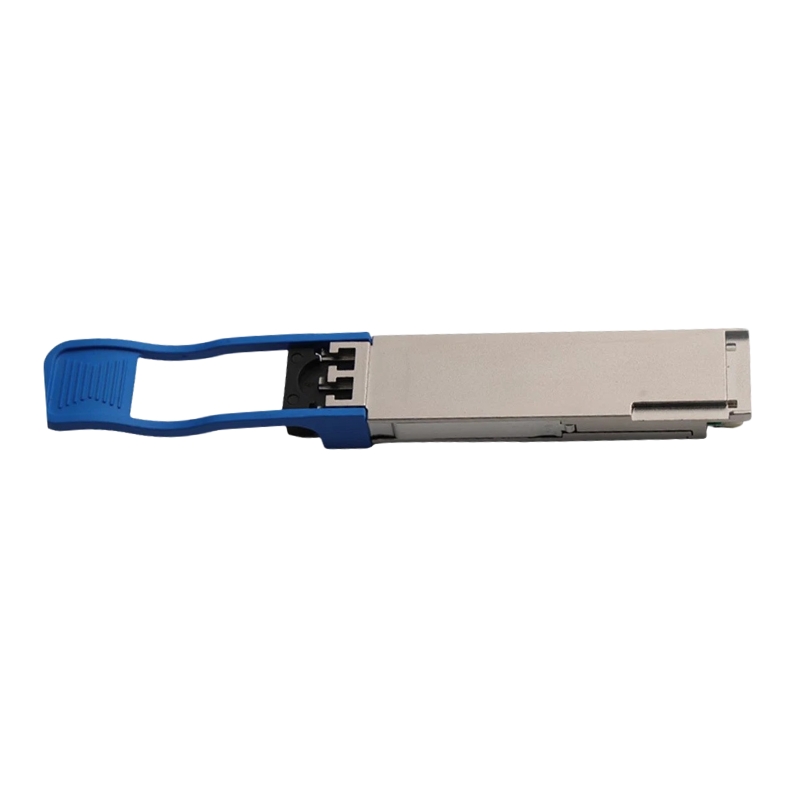
Intel E40GQSFPLR 40Gbps 40GBase-LR4 Single-mode Fiber 10km 1310nm MPO Connector QSFP+ Optics Transceiver Module. Excellent Refurbished with 1 year replacement warranty
The Intel E40GQSFPLR is a high-performance 40GbE QSFP+ transceiver module built for long-range optical networking across single-mode fiber infrastructure. Designed for 40GBASE-LR4 deployments, this hot-pluggable optic supports dependable 40 Gigabit Ethernet connectivity over distances of up to 10 kilometers, making it a practical choice for enterprise networks, campus backbones, data centers, and aggregation environments that require stable long-haul fiber links. With a 1310nm optical wavelength design and efficient QSFP+ form factor, this Intel transceiver helps simplify high-bandwidth connections while maintaining strong signal integrity and reliable interoperability with supported Intel Ethernet hardware.
The Intel E40GQSFPLR 40Gbps 40GBase-LR4 Single-Mode Fiber 10km 1310nm MPO Connector QSFP+ Optics Transceiver Module belongs to the high-speed optical networking category built for long-distance 40 Gigabit Ethernet transmission across enterprise, cloud, campus, and data center environments. This class of transceiver is designed for organizations that need dependable 40GbE bandwidth, stable optical signaling, and extended fiber reach without moving to a much larger or more power-hungry interface. In practical deployments, a 40G LR4 optical module fills the gap between short-reach multimode optics and far more complex transport equipment, giving network architects a direct path to high-capacity interconnects over single-mode cabling infrastructure.
Within the broader QSFP+ optics market, the Intel E40GQSFPLR category is especially relevant to environments that rely on predictable throughput, reduced latency, and clean migration paths from 10GbE to 40GbE. Enterprises often need to consolidate links, reduce the number of optical ports required in aggregation layers, and support traffic growth created by virtualization, cloud applications, analytics, storage replication, and east-west data center traffic. A 40GBase-LR4 transceiver helps address these needs by providing a compact, pluggable optical solution that supports long-range single-mode fiber communication up to 10 kilometers while preserving the density advantages of the QSFP+ form factor.
The naming structure of this module reveals much about its intended role. The 40Gbps designation identifies its aggregate data rate, placing it in the 40 Gigabit Ethernet class used for high-capacity uplinks, switch interconnects, router aggregation links, and backbone connectivity. The 40GBase-LR4 standard points to long-reach optical transmission using four lanes of optical signaling in the 1310nm window over single-mode fiber. The 10km distance target makes it appropriate for inter-building connections, metro-edge enterprise links, data center extension, and long campus backbone runs. The QSFP+ format ensures high port density and operational convenience, while the optical design is optimized for performance consistency in demanding production networks.
The Intel E40GQSFPLR sits inside the specialized segment of 40GbE optical modules used where copper direct-attach cabling is not practical and short-reach multimode optics cannot cover the required distance. In many organizations, network teams deploy several classes of transceivers simultaneously. Short-range server rows may use direct-attach copper or short-reach optics, while aggregation switches, core switches, and geographically separated network zones require a long-reach optical module such as a 40G LR4 QSFP+ transceiver. This creates a layered optical strategy in which the Intel E40GQSFPLR category becomes central to medium-to-long distance transport inside private network estates.
The category also appeals to buyers seeking a balance between bandwidth growth and infrastructure efficiency. Rather than running four separate 10GbE links for a single high-capacity uplink, a 40GbE LR4 transceiver can deliver equivalent aggregate throughput through one QSFP+ port. That consolidation improves port utilization, simplifies link management, and reduces the operational complexity associated with multiple parallel connections. For environments with rapidly growing traffic profiles, the use of 40G LR4 optics often represents a cleaner and more scalable architecture than stacking numerous lower-speed links.
Another reason this category remains important is the longevity of 40GbE in production networks. Although 100GbE and higher speeds are common in large hyperscale facilities, a significant portion of enterprise, education, healthcare, telecom edge, and commercial data center infrastructure continues to rely on 40GbE for aggregation and distribution. The Intel E40GQSFPLR therefore serves a mature but still highly relevant networking tier, where proven compatibility, manageable cost per link, and straightforward deployment are often more important than pushing to the newest optical speed grade.
The Intel E40GQSFPLR belongs to a family of transceivers built around parallel electrical lanes and wavelength-multiplexed optical transmission. In the 40GBase-LR4 model, the 40Gbps aggregate throughput is typically achieved by using four transmit lanes and four receive lanes, each carrying approximately 10Gbps class signaling. Internally, the module converts the host-side electrical data into optical signals and maps those signals across multiple wavelengths in the 1310nm region. These wavelengths are multiplexed onto the fiber path for long-distance transmission and then demultiplexed at the far end.
This lane-based optical architecture is one of the reasons LR4 transceivers are so effective for long-distance Ethernet links. Instead of trying to push the entire 40Gbps load through a single optical channel, the design spreads the traffic across multiple lanes while still presenting a single 40GbE interface to the switch or router. The result is a practical blend of performance, signal integrity, and standards-based interoperability. For the network operator, the complexity remains hidden inside the module, while deployment feels similar to installing any other hot-swappable QSFP+ optic.
The optical engine of a long-reach QSFP+ module is engineered for low error rates, reliable signal recovery, and stable performance over single-mode fiber. Depending on vendor implementation, the module may integrate laser sources, optical multiplexing components, receiver photodiodes, signal conditioning elements, digital diagnostics support, and management circuitry. The Intel E40GQSFPLR category is associated with this enterprise-grade optical architecture, intended to deliver dependable long-haul data center and backbone connectivity within the 40GbE layer.
The QSFP+ form factor remains one of the most important reasons 40GbE optics gained wide adoption. It provides a compact footprint that allows switches and routers to expose high-density 40GbE connectivity without the larger dimensions associated with earlier optical module formats. For network designers, this means more aggregate bandwidth in a smaller rack footprint and a cleaner scaling path for spine, aggregation, and core layers.
Another major advantage is hot-pluggable serviceability. A QSFP+ module can generally be installed or replaced without shutting down the host device, which is valuable in environments where maintenance windows are limited and uptime is critical. Optical refreshes, link replacements, and migration projects become much more manageable when the transceiver itself is a pluggable component rather than a fixed optical interface. The Intel E40GQSFPLR category benefits directly from this operational flexibility, making it attractive to organizations that prioritize maintainability and rapid deployment.
The 1310nm optical region is widely used for long-reach single-mode Ethernet optics because it offers a practical balance between attenuation characteristics, component maturity, and system design efficiency. In a 40GBase-LR4 implementation, multiple wavelengths are typically arranged around the 1310nm window to carry the four optical lanes required for 40GbE transmission. This wavelength strategy supports long-distance performance while remaining compatible with the design principles established for enterprise and data center Ethernet optics.
For network buyers, the 1310nm designation is more than a technical footnote. It signals that the module is intended for single-mode transport rather than short multimode runs. It also indicates that the optic is aligned with long-reach deployment scenarios such as cross-campus links, inter-building trunks, and regional facility connections. The Intel E40GQSFPLR category therefore addresses a different set of network challenges than a short-range SR4 optic, even though both may operate at the same nominal 40Gbps Ethernet rate.
One of the defining characteristics of the Intel E40GQSFPLR category is its support for single-mode fiber with a transmission distance of up to 10 kilometers. That distance specification is crucial in real-world network design because it determines where the optic can be used without additional transport equipment. In enterprise and campus environments, 10km reach is often more than sufficient to connect core facilities, branch buildings, security operations centers, edge compute rooms, disaster recovery sites, and private cloud infrastructure across a metropolitan footprint or large institutional campus.
Single-mode fiber is often the preferred medium for long-distance optical communication because it minimizes modal dispersion and supports stable high-speed signaling over much longer spans than multimode fiber. A transceiver like the Intel E40GQSFPLR leverages those single-mode characteristics to provide 40GbE connectivity in places where multimode optics would fail to meet distance requirements. This makes it especially useful for organizations with existing SMF backbone cabling or those planning infrastructure with future growth in mind.
The 10km reach also expands deployment flexibility. Network architects can design topologies based on operational needs rather than being constrained by short optical distance ceilings. Core and aggregation devices can be placed in separate facilities. Redundant data halls can be linked across a campus. A central storage environment can be connected to compute clusters in another building. Security and monitoring systems can be aggregated into a central location without sacrificing bandwidth. All of these use cases become easier when the optical layer supports long-range transport within the standard Ethernet framework.
Single-mode fiber has become a strategic medium for modern network backbones because it supports long distance, low attenuation, and a clear path to higher future speeds. In a typical enterprise deployment, multimode fiber may still be common within short in-room or same-row connections, but single-mode fiber is often selected for building backbones, campus trunks, metro links, and inter-facility paths. When a 40GbE LR4 module is paired with this fiber infrastructure, it enables high-capacity connectivity without requiring an overhaul of the physical cabling environment.
The Intel E40GQSFPLR category fits naturally into this approach. It gives organizations a way to exploit the long-distance strengths of SMF while maintaining the operational familiarity of pluggable Ethernet optics. This is particularly important in environments that must balance budget, growth, uptime, and interoperability across mixed vendor network estates. By using a standards-aligned 40G LR4 optical module, administrators can extend 40GbE across backbone distances while preserving the modularity of the switch and router platform.
The Intel E40GQSFPLR product title positions this module within an MPO connector context, which is relevant to buyers working with structured fiber systems and high-density optical cabling designs. MPO connectivity is often associated with streamlined cabling management, efficient trunk deployment, and faster installation in dense rack and backbone environments. In large-scale data centers and enterprise distribution zones, MPO-based fiber assemblies can simplify cable routing and reduce congestion compared with managing many individual fiber pairs.
Within the broader category of long-reach optical transceivers, MPO-oriented deployments are particularly attractive where standardized trunk cabling, patch panel efficiency, and organized migration strategies are priorities. Even when network teams evaluate specific connector styles or breakout options, the presence of MPO in the product naming helps signal that the module category belongs in structured, high-density fiber architectures rather than ad hoc patching arrangements. This matters in modern facilities where cable plant discipline has a direct impact on airflow, serviceability, and future scalability.
High-density optical environments place a premium on cable organization. As 40GbE and higher-speed links accumulate across aggregation rows, storage fabrics, and core switch clusters, cable complexity can become a serious operational problem. MPO-based connectivity models are often adopted to keep that complexity under control. For buyers browsing the Intel E40GQSFPLR category, the transceiver is therefore not just a speed upgrade; it is part of a larger optical design strategy focused on efficient cable plant management and long-term network cleanliness.
Structured cabling matters because transceivers do not operate in isolation. Their effectiveness depends on the quality, organization, and future readiness of the surrounding optical infrastructure. A 40GbE LR4 module installed in a poorly managed cable environment may still link up, but troubleshooting, scaling, and maintenance become far more difficult over time. In contrast, a structured fiber plant built around clear labeling, standardized patching, and disciplined connector management supports cleaner operations and faster fault isolation.
The Intel E40GQSFPLR category is well suited to structured 40GbE deployments where administrators want a consistent optical standard for backbone and aggregation links. In such environments, transceiver selection is part of a broader architecture that includes patch panels, trunk assemblies, cable pathways, polarity planning, and documented link budgets. A long-reach QSFP+ module with enterprise-grade characteristics becomes a dependable component within that larger framework.
When evaluating a 40GBase-LR4 transceiver category, network buyers typically focus on more than the headline data rate. Real value comes from the combination of throughput, reach, optical stability, compatibility, power behavior, thermal performance, and monitoring capabilities. The Intel E40GQSFPLR category is relevant because it sits at the intersection of these factors, providing a 40GbE optical link that is both operationally practical and technically suited to long-distance single-mode use cases.
Aggregate bandwidth is the first obvious metric. A 40Gbps optical module allows administrators to move substantial traffic volumes across a single pluggable interface, reducing the need for multiple lower-speed links. But performance also depends on how the optic behaves under sustained production loads. In a core or aggregation role, the module may carry a mix of application traffic, storage synchronization, backup jobs, voice flows, management traffic, and virtual machine movement. Stability under those conditions is essential.
Another critical factor is signal quality over the full supported distance. Long-reach optics must preserve optical integrity across the specified fiber span while accounting for connector losses, patch panels, and environmental variation. A well-designed 40G LR4 module is expected to deliver clean optical transmission and dependable receiver performance when installed within proper link budget guidelines. That reliability is especially important in networks where the 40GbE link carries business-critical services and downtime has financial or operational consequences.
Port efficiency is a major driver behind 40GbE adoption. Many organizations outgrow 10GbE uplinks long before they are ready to redesign the entire core around 100GbE. A 40GbE QSFP+ transceiver gives them an intermediate but powerful upgrade path. By consolidating four 10GbE equivalents into one 40GbE optical link, the network gains higher aggregate throughput while simplifying port management and reducing cable count.
This consolidation can have ripple effects across the whole architecture. Switch uplink slots are used more efficiently. Core devices can serve more downstream systems without consuming excessive front-panel real estate. Aggregation layers can be simplified. In some cases, link aggregation groups can be redesigned around fewer, faster members, which reduces operational overhead while preserving resilience. The Intel E40GQSFPLR category is therefore not merely about raw speed; it is about using network hardware more intelligently.
Long-reach optical links are often expected to remain in service for years. That places heavy importance on optical stability, clean transmission characteristics, and consistent performance over time. In the Intel E40GQSFPLR category, buyers generally expect enterprise-class optics suitable for permanent infrastructure links rather than temporary lab use. This means the module should fit environments where uptime, predictable error rates, and sustained production operation matter more than short-term convenience.
In practical terms, stability influences how confidently administrators can use the optic for backbone and aggregation paths. If a 40GbE LR4 module supports steady performance over the full intended span, the organization can rely on it for replication traffic, centralized storage access, backup windows, and large-scale east-west data movement. That is exactly the type of workload profile that makes long-reach 40GbE optics strategically important in modern infrastructure.
One of the most important reasons buyers select a branded 40GbE transceiver category is platform compatibility. A transceiver is only useful when it is recognized by the host device, interoperates cleanly with the network operating system, and delivers stable behavior under real traffic loads. The Intel E40GQSFPLR category is associated with environments that demand reliable integration with compatible switches, routers, adapters, and network appliances built for QSFP+ optics.
Compatibility affects more than whether the port comes up. It influences diagnostics visibility, thermal behavior, digital monitoring support, firmware interaction, and long-term supportability. Enterprise IT teams typically prefer transceivers that align with the qualification practices of their infrastructure vendor or that have a clear reputation for interoperability in standards-based QSFP+ environments. This is particularly true when the link in question sits at the core of application delivery, storage networking, or inter-site connectivity.
The category is therefore attractive to organizations that need a known, purpose-built optical module for Intel-oriented or Intel-adjacent 40GbE ecosystems. In data center environments using Intel networking hardware, the value of selecting a matching optics family often lies in predictable deployment, simplified support conversations, and reduced uncertainty during installation. For resellers and systems integrators, that same predictability can translate into smoother project delivery and lower post-installation troubleshooting effort.


 Contact Us
 Information
 Catalog
 Solid State Drives (SSD)
 Network Switches
 Hard Disk Drives
 HBA & Controllers
 PC & Servers
 PC & Server Memory
 CPU & Processors
 Network Routers
 Power Supplies
 Tape Drives & Libraries
 Network Devices
 Computer & Network Cables