(7% discount is applied at checkout)
Cart is empty
Your go-to destination for cutting-edge server products
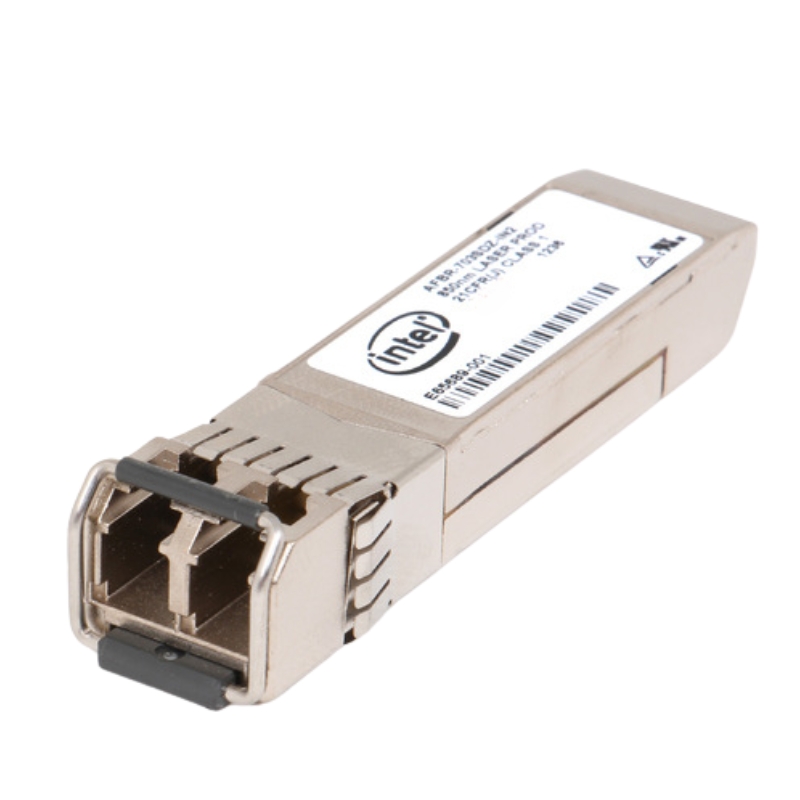


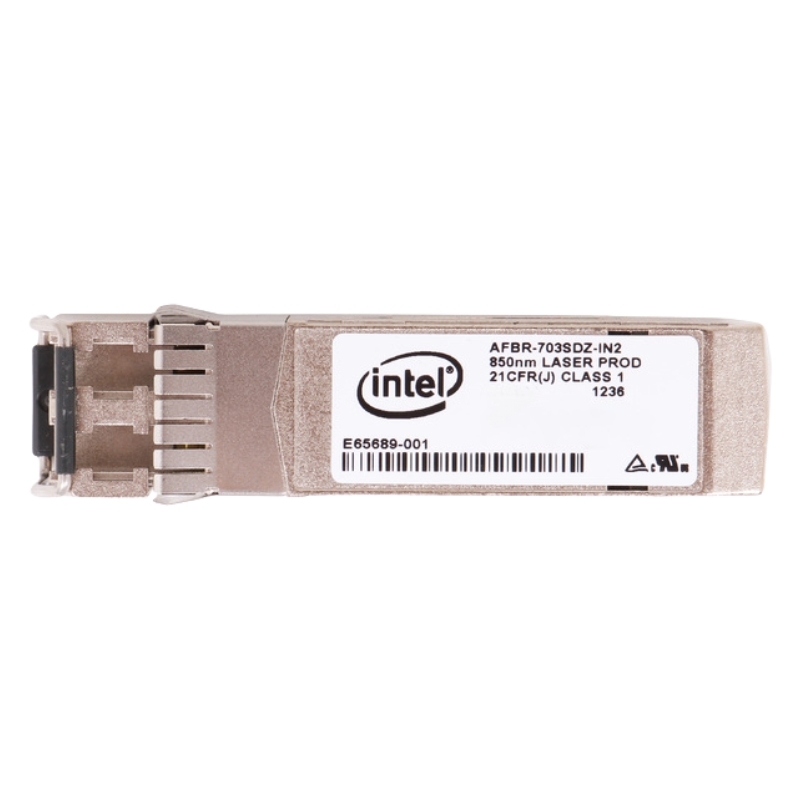
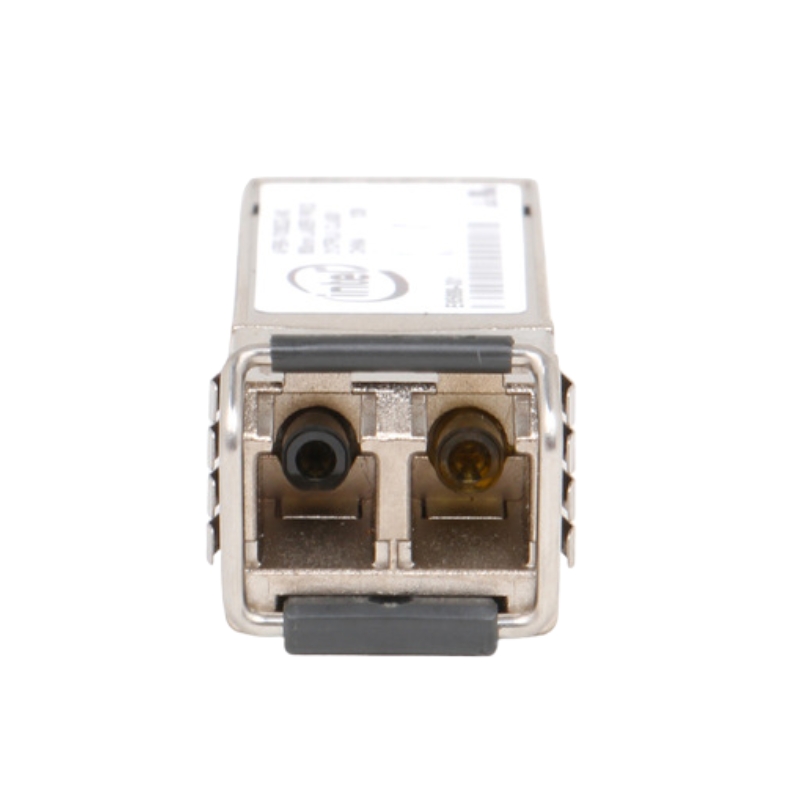
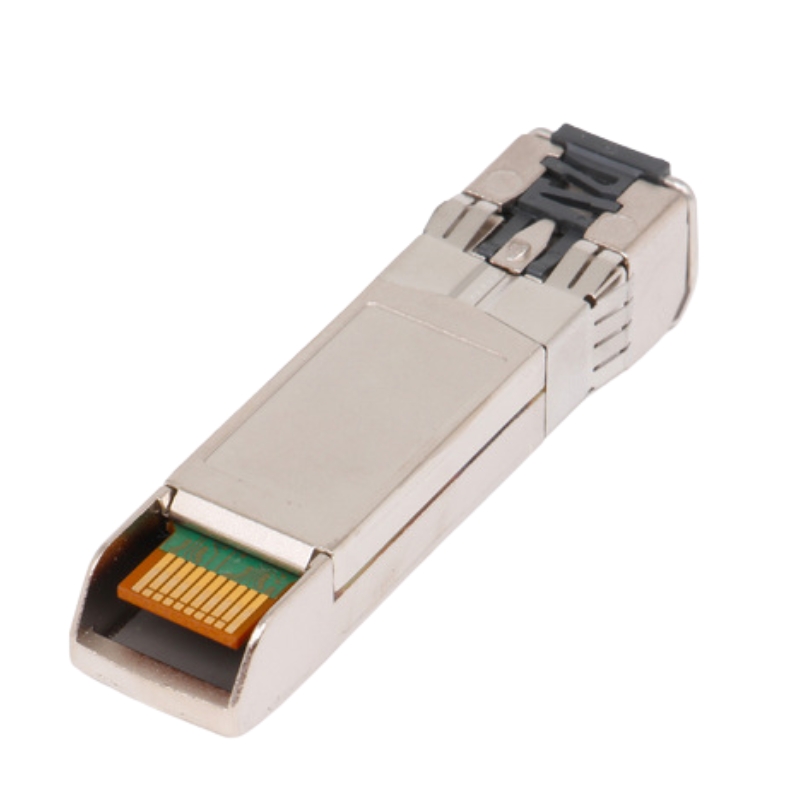
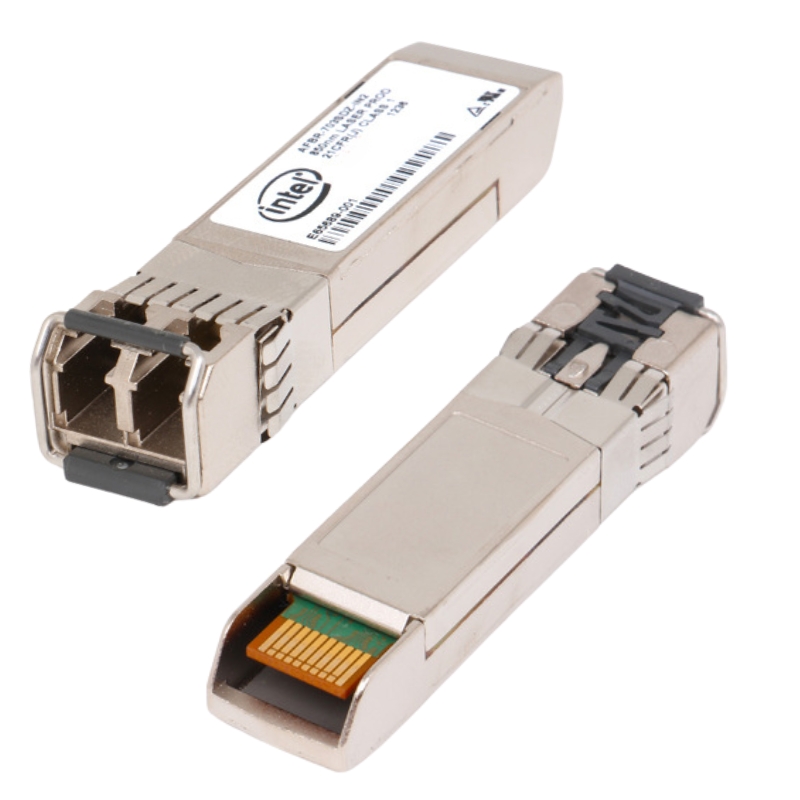
Intel E65689-001 Dual Rate Multi-mode SFP+ SR Transceiver. Factory-Sealed New in Original Box (FSB) with 3-Years Warranty
The Intel E65689-001 is a dual-rate SFP+ transceiver module built for high-speed optical networking environments that require dependable short-range fiber connectivity. Designed as a hot-pluggable plug-in module, this Intel optical transceiver supports both 1000BASE-SX and 10GBASE-SR operation, making it a practical choice for organizations that need flexibility across Gigabit Ethernet and 10 Gigabit Ethernet deployments. It is engineered for wired network infrastructures where stable signal delivery, compact form factor, and straightforward SFP+ integration are essential for switches, servers, storage platforms, and enterprise network adapters.
The Intel E65689-001 Dual Rate Multi-mode SFP+ SR Transceiver belongs to a highly important category of short-reach optical networking components built for enterprise, server, storage, and data center connectivity. This transceiver category is centered on compact hot-pluggable optical modules that enable fast and reliable communication across multi-mode fiber environments, supporting both Gigabit Ethernet and 10 Gigabit Ethernet operation in infrastructures where bandwidth, link stability, and low-latency data movement are essential. As organizations continue to expand virtualization, cloud workloads, storage traffic, and east-west data flows inside facilities, dual rate SFP+ SR transceivers remain a practical and cost-effective choice for short-distance optical interconnects.
The Intel E65689-001 is associated with dual rate optical operation, which makes this category especially attractive for environments transitioning between legacy Gigabit deployments and newer 10GbE architectures. Rather than treating the transceiver as a simple accessory, enterprise buyers often view this class of module as a strategic network building block because it influences compatibility, switch-to-server design, adapter connectivity, cable planning, rack density, and long-term infrastructure flexibility. In a modern server room or data center, transceivers such as the Intel E65689-001 help bridge physical network layers with the performance requirements of virtualized applications, clustered storage, backup platforms, and latency-sensitive workloads.
The broader category of dual rate multi-mode SFP+ SR transceivers serves organizations that need short-range optical links using a compact pluggable format. The term dual rate indicates support for both 1GbE and 10GbE signaling profiles, depending on the host hardware and deployment design. In practical terms, this gives network planners more flexibility when integrating switches, network adapters, storage systems, and appliances across environments that may not be standardized on a single speed tier.
Within enterprise infrastructure, a dual rate SFP+ SR module can support staged upgrades, mixed-speed deployments, and operational continuity across legacy and modern hardware generations. This is particularly useful when a business is migrating from older Gigabit Ethernet server connectivity to 10 Gigabit aggregation, or when different sections of a facility operate at different performance levels. The category is therefore valuable not only for immediate connectivity, but also for infrastructure transition planning, hardware lifecycle extension, and network modernization strategies.
The short-reach SR classification is another defining characteristic. SR transceivers are commonly used over multi-mode fiber for in-building, in-row, or intra-data-center links where the required distance is moderate and where copper cabling may be less efficient or less scalable. In high-density environments, multi-mode fiber with SFP+ SR optics offers a balance of performance, manageability, and cable footprint efficiency. The Intel E65689-001 sits directly in this category, making it relevant for top-of-rack switching, access-layer optical uplinks, storage interconnects, and high-performance server attachment.
The small form-factor pluggable plus architecture has become a foundational standard in enterprise networking because it combines compact size, hot-swappable deployment, and modular flexibility. A product such as the Intel E65689-001 benefits from this mature ecosystem by fitting into SFP+ capable network adapters, switches, and other compatible hardware without requiring large fixed optical assemblies. This modular design makes it easier for organizations to standardize on common port architectures while selecting the appropriate transceiver type for each use case.
Because the transceiver is removable, IT teams can deploy, replace, upgrade, or reconfigure links without redesigning the host device. This becomes especially valuable in data centers where hardware refresh cycles do not happen uniformly. One rack may contain newer 10GbE servers, another may still rely on earlier connectivity patterns, and a third may be used for storage or test environments. Using pluggable optics allows administrators to adapt physical links to actual operational needs instead of being locked into a single permanent media type.
The compact nature of the SFP+ format also supports high port density. In environments where switch front-panel space is limited, small optical modules allow more interfaces in the same physical footprint. This is a major advantage for aggregation switches, top-of-rack designs, blade chassis networking, and high-density compute clusters. When every rack unit matters, a transceiver category that supports compact optical scaling becomes central to infrastructure efficiency.
Dual rate optical modules occupy an important niche because they help unify mixed-speed network environments. A dual rate transceiver is designed to support two Ethernet signaling modes, typically 1000BASE-SX for 1 Gigabit operation and 10GBASE-SR for 10 Gigabit operation, depending on the connected equipment. For organizations managing a blend of legacy and newer systems, this can reduce the need to stock separate optics for every migration phase.
In a practical enterprise setting, dual rate capability can support gradual network transformation. A company may have older servers or switches still operating at 1GbE while newer aggregation layers, virtualization hosts, or storage nodes move to 10GbE. A dual rate module category gives network teams more flexibility during these transitions. It can help reduce inventory complexity, support reuse in compatible platforms, and provide a smoother path from legacy network designs toward higher-bandwidth architectures.
This capability is especially useful in large organizations with multiple facilities, distributed server rooms, or phased procurement cycles. Instead of treating every hardware generation as a fully separate ecosystem, administrators can standardize around transceiver families that align with more than one speed class. The Intel E65689-001 therefore fits into a category valued for lifecycle adaptability, not just raw performance.
The Intel E65689-001 is part of the multi-mode fiber SR transceiver category, which is optimized for short-range optical communication over fiber commonly deployed inside data centers, enterprise buildings, and campus facilities. Multi-mode fiber remains popular for short-distance high-speed networking because it offers strong bandwidth performance over practical in-building distances while often being easier to integrate into existing structured cabling plans than single-mode infrastructure for similar short-range applications.
Short-reach optical modules are typically chosen for links such as server-to-switch, switch-to-switch within a room, rack-to-rack interconnects, storage network uplinks, and aggregation inside enterprise facilities. In these scenarios, the objective is usually not ultra-long-distance transport, but dependable high-speed communication across predictable distances where optical media offers benefits in signal integrity, cable weight, and electromagnetic immunity.
SR optics are commonly associated with 850 nm operation and are engineered for multi-mode fiber types such as OM2, OM3, or OM4 depending on the performance target and supported distance profile. In the context of the Intel E65689-001 category, the practical advantage is that organizations can build high-throughput optical links for server and switching environments without the cost and design considerations associated with long-range single-mode deployments. This makes the category highly relevant for dense data halls, enterprise wiring rooms, and modernized campus core environments.
Intel has long been a major supplier of server networking components, including Ethernet adapters and optical accessories used in enterprise, cloud, and OEM server platforms. As a result, a transceiver such as the Intel E65689-001 is often evaluated not only as a generic optical module, but also as part of a broader Intel Ethernet ecosystem. Buyers searching for this category frequently want assurance around validated interoperability with Intel adapters, firmware behavior, optical link negotiation, and dependable operation in server-class environments.
In enterprise procurement, compatibility is often one of the most important factors when choosing an optical module. Even when an SFP+ optic conforms to common standards, organizations may still prefer vendor-associated or validated transceivers for operational consistency, support alignment, and reduced risk during deployment. This is particularly relevant in environments using Intel Ethernet adapters where validated optical modules can simplify rollout planning and troubleshooting.
Compatibility considerations usually extend beyond the transceiver itself. Administrators must consider the host adapter model, switch port configuration, firmware level, supported optical profiles, cabling grade, and target speed mode. A dual rate module adds another layer of planning because the host platform must properly support the desired signaling mode. The Intel E65689-001 category therefore appeals to buyers who want a short-range optical solution associated with Intel networking platforms and who prioritize predictable behavior in professional server environments.
One of the most significant reasons organizations adopt the Intel E65689-001 category is to support 10 Gigabit Ethernet connectivity in short-range optical environments. As server density, storage traffic, virtualization overhead, and application concurrency continue to rise, 1GbE links can become a limiting factor for performance-sensitive workloads. The move to 10GbE helps alleviate bandwidth constraints, improve data movement efficiency, and support more demanding application ecosystems.
In virtualization clusters, a single physical host may carry production application traffic, storage traffic, migration traffic, backup traffic, and management traffic across a shared set of uplinks. A 10GbE optical connection provides much more headroom for these aggregated workloads than older 1GbE links. This can reduce contention, improve user responsiveness, and support better workload consolidation. For organizations trying to maximize server utilization, the physical network layer becomes a critical enabler, and SFP+ SR transceivers play a direct part in that design.
Backup and replication operations also benefit from 10GbE optical links. When nightly backup windows are shrinking or disaster recovery synchronization requirements are becoming more stringent, network throughput can materially affect operational success. A dual rate SFP+ SR module provides a pathway toward higher throughput while maintaining deployment flexibility in mixed environments. This is one reason why such optics remain relevant in both new builds and upgrade projects.
The Intel E65689-001 dual rate multi-mode SFP+ SR transceiver category is well suited to infrastructure modernization because it can support both immediate needs and transitional architectures. Many organizations do not refresh their entire network stack at once. Instead, they upgrade in layers, perhaps replacing server adapters first, then access switches, then storage uplinks, and finally aggregation paths. A dual rate optical module can align well with this incremental model because it provides a bridge between older and newer speed environments where supported.
For example, a business may deploy new 10GbE-capable Intel adapters in a cluster while still maintaining compatibility with surrounding network infrastructure during a migration phase. In another scenario, a spare optical module may need to serve in more than one role depending on which part of the facility requires support. In these cases, the versatility of a dual rate optic can reduce friction during change management and simplify inventory planning.
Modernization projects also often involve data center consolidation, hyperconverged infrastructure rollout, private cloud expansion, or SAN-to-Ethernet convergence strategies. All of these trends increase pressure on the network fabric. The transceiver category represented by the Intel E65689-001 is relevant because it supports compact, short-range, high-throughput optical links that can be used in these redesigned architectures without requiring the physical overhead of larger fixed optical components.
Storage networking is one of the areas where the Intel E65689-001 category can deliver especially strong value. Whether the environment uses network-attached storage, iSCSI, converged infrastructure, backup appliances, or software-defined storage, the physical transport layer must support predictable throughput and dependable connectivity. Short-range SFP+ SR transceivers are often selected for these workloads because they provide a practical way to connect storage systems and hosts over optical links within the same room or facility zone.
In converged environments, where storage and application traffic may share common Ethernet fabrics, 10GbE becomes even more important. The network must accommodate multiple workload classes without causing contention that affects application responsiveness or backup performance. A dual rate SFP+ optic category helps organizations transition storage-adjacent infrastructure from legacy bandwidth limitations toward higher-capacity designs.
Optical connectivity can also be beneficial where storage racks are separated from compute racks by structured cable runs that are easier to manage with fiber than with thick copper assemblies. The lighter cable footprint and clean patching model of multi-mode fiber can help reduce congestion in cable managers and improve service access in dense storage environments. For facilities focused on neat cabling and long-term maintainability, this is a meaningful operational advantage.
Transceivers are often small in size, but their operational impact is large. A failed or incompatible optical module can disrupt production applications, isolate a server, interrupt storage access, or degrade redundancy across a critical cluster. For that reason, organizations often prioritize proven transceiver categories with strong ecosystem alignment and predictable deployment behavior. The Intel E65689-001 category fits into this operational mindset because it addresses a common enterprise need with a compact, serviceable optical module associated with Intel networking environments.
Maintainability is one of the key strengths of pluggable optics. When a module must be replaced, technicians can remove and swap the transceiver without replacing the host adapter or switch hardware. This lowers service complexity and can reduce downtime during incident response. In planned maintenance scenarios, removable optics also make it easier to test different cabling paths, move equipment between racks, or reassign ports during topology changes.


 Contact Us
 Information
 Catalog
 Solid State Drives (SSD)
 Network Switches
 Hard Disk Drives
 HBA & Controllers
 PC & Servers
 PC & Server Memory
 CPU & Processors
 Network Routers
 Power Supplies
 Tape Drives & Libraries
 Network Devices
 Computer & Network Cables