(7% discount is applied at checkout)
Cart is empty
Your go-to destination for cutting-edge server products
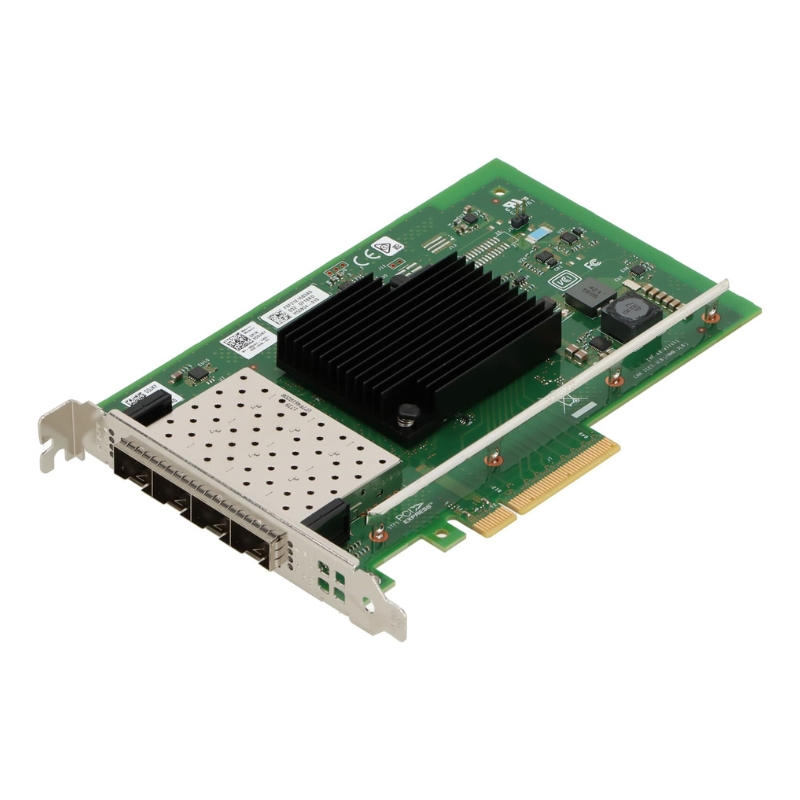


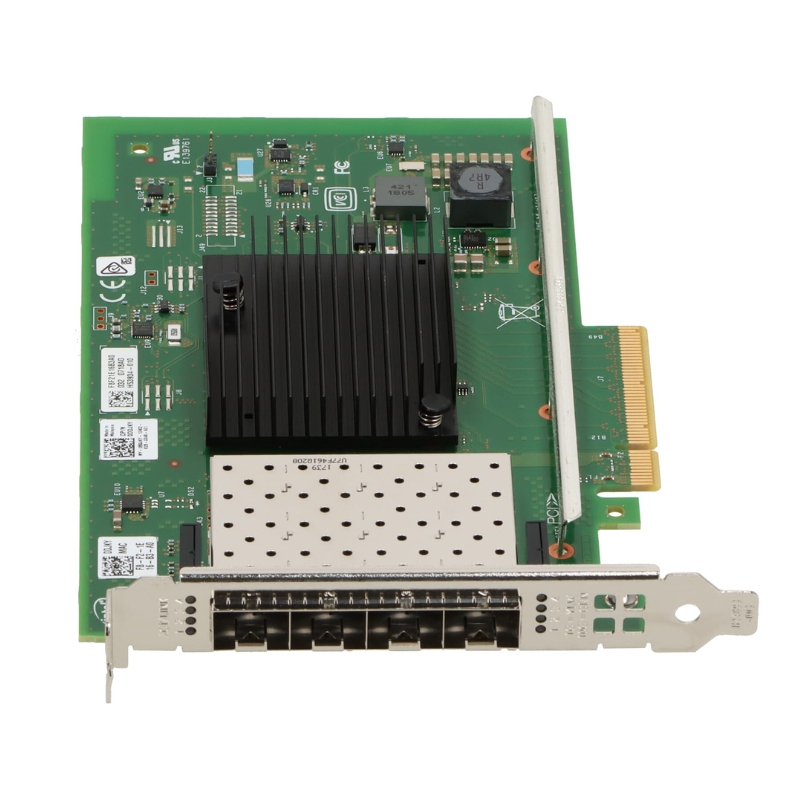
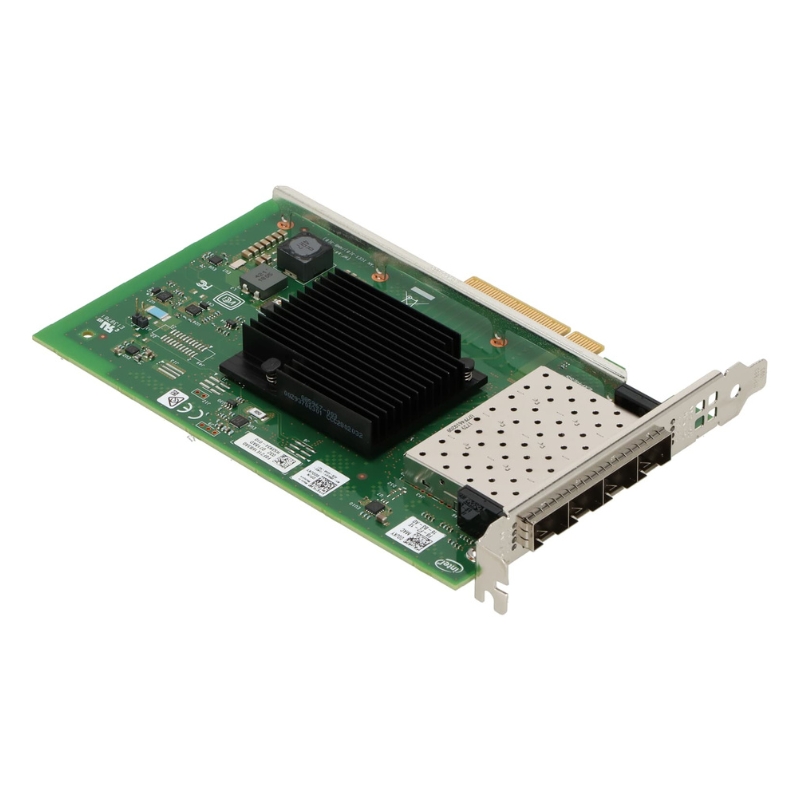
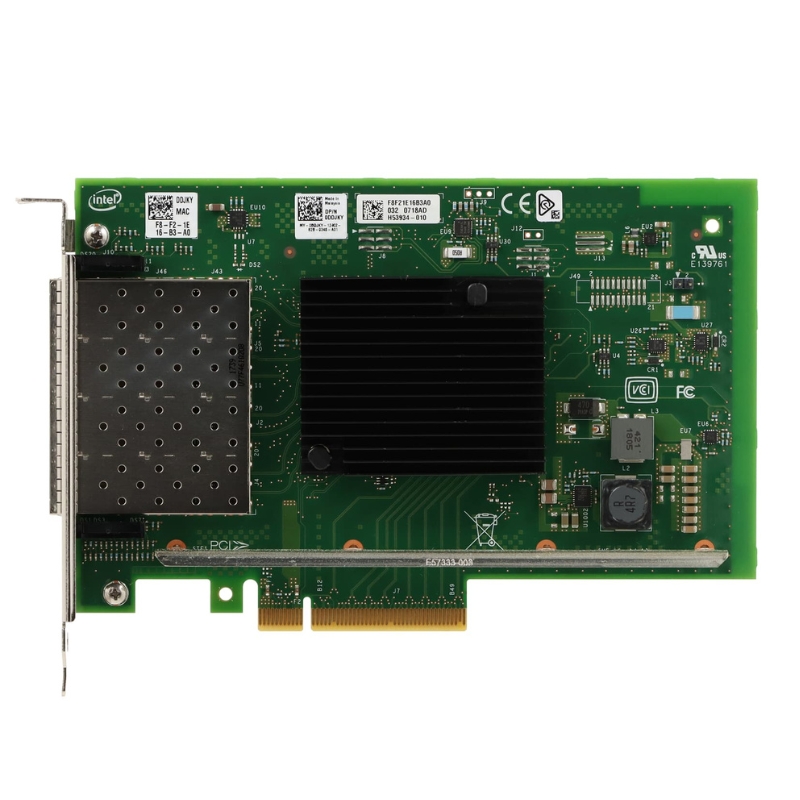
Intel E810XXVDA4 4-Port 25 Gigabit SFP28 x 2 Ethernet Adapter. Excellent Refurbished with 1 year replacement warranty - Dell Version
| SKU/MPN | Warranty | Price | Condition | You save |
|---|---|---|---|---|
| E810XXVDA4 | 1 Year Warranty | $274.00 | Excellent Refurbished | You save: $95.90 (26%) |
| E810XXVDA4 | 1 Year Warranty | $844.00 | Factory-Sealed New in Original Box (FSB) | You save: $295.40 (26%) |
The Intel E810XXVDA4 is a high-performance multi-port Ethernet network interface card designed for enterprise-grade workloads, data centers, virtualization environments, and high-throughput cloud computing infrastructures. This advanced adapter delivers ultra-fast connectivity, scalable bandwidth, and modern networking features optimized for demanding server applications.
Engineered as a plug-in PCI Express solution, this adapter supports high-speed data transmission, intelligent offloading, and low-latency communication protocols, making it a reliable choice for next-generation IT infrastructures.
The Intel E810XXVDA4 4-Port 25 Gigabit SFP28 x 2 Ethernet PCI Express Adapter belongs to a high-performance class of server networking hardware designed for modern data center infrastructures, enterprise cloud environments, and hyperscale computing platforms. This category of network interface cards (NICs) is engineered to support extremely high bandwidth workloads, low-latency data transmission, and advanced network virtualization capabilities required in today’s distributed computing ecosystems. As data volumes grow exponentially and applications demand real-time responsiveness, adapters like the Intel E810 series play a foundational role in ensuring seamless connectivity between compute nodes, storage arrays, and external network services.
This category of PCI Express Ethernet adapters is defined by its ability to deliver multiple high-speed ports, advanced packet processing, and scalable architecture support. With the increasing adoption of 25 Gigabit Ethernet as a replacement for legacy 10 Gigabit infrastructure, the demand for SFP28-based solutions has grown significantly. These adapters are designed not only to increase throughput but also to optimize CPU utilization, reduce bottlenecks, and enhance workload efficiency across virtualized and containerized environments.
The Intel E810 series is built on a next-generation Ethernet controller architecture that prioritizes flexibility, scalability, and performance optimization. It incorporates advanced packet processing engines that offload computational overhead from the host CPU, enabling servers to dedicate more processing power to application-level tasks rather than network management functions. This architectural approach significantly improves overall system efficiency in environments where high packet-per-second throughput is required.
A defining characteristic of the Intel E810XXVDA4 adapter category is its multi-port configuration, which enables simultaneous operation of multiple high-speed SFP28 interfaces. This design supports network segmentation, load balancing, and redundancy within a single adapter footprint. In dense data center deployments, multi-port adapters reduce physical hardware requirements while maximizing connectivity density, making them ideal for blade servers, rack-mounted systems, and high-availability clusters.
The integration of PCI Express 4.0 x16 interface support ensures that the adapter can fully utilize available system bandwidth. PCIe 4.0 doubles the data transfer rate compared to PCIe 3.0, allowing the network adapter to handle significantly higher traffic loads without becoming a bottleneck. This is particularly important for workloads involving high-speed storage access, real-time analytics, and distributed computing frameworks where network latency directly impacts performance outcomes.
SFP28 technology represents a major advancement in compact, high-speed networking interfaces. Supporting 25 Gigabit Ethernet per lane, SFP28 modules provide superior bandwidth density while maintaining backward compatibility with existing fiber and direct attach copper infrastructure. The Intel E810XXVDA4 adapter leverages these capabilities to deliver scalable connectivity options suitable for both short-range and long-range deployments within enterprise and cloud environments.
One of the primary advantages of 25 Gigabit Ethernet technology is its ability to offer a balanced upgrade path between 10G and 40G solutions. It allows organizations to scale bandwidth incrementally without overhauling entire network infrastructures. This makes the category highly attractive for businesses transitioning toward high-performance computing clusters, artificial intelligence workloads, and virtualization-heavy environments where traffic demands are continuously increasing.
In cloud computing environments, the Intel E810XXVDA4 adapter category is widely deployed to support distributed virtual machines, microservices architectures, and container orchestration systems. Cloud providers rely on its multi-port architecture to ensure efficient traffic distribution across compute nodes while maintaining low-latency communication between services. The ability to handle large-scale east-west traffic makes it essential for modern cloud-native applications.
Storage systems such as NVMe over Fabrics benefit significantly from the high throughput and low latency characteristics of 25 Gigabit Ethernet adapters. The Intel E810 series enables fast and reliable data transfer between storage arrays and compute servers, reducing access times and improving overall system responsiveness. This is particularly important in environments where large datasets are processed in real time, such as financial analytics, scientific research, and media rendering pipelines.
Virtualized environments depend heavily on efficient network interface cards capable of handling multiple virtual machine traffic streams simultaneously. The Intel E810XXVDA4 adapter supports advanced virtualization features that allow for efficient partitioning of network resources. This ensures consistent performance across virtual workloads while minimizing interference between tenants in multi-tenant environments.
The adapter includes a wide range of hardware offloading capabilities designed to reduce CPU overhead and improve network efficiency. These offloads include checksum calculation, segmentation offload, and packet classification functions. By handling these tasks at the hardware level, the adapter ensures that server CPUs remain available for application processing rather than being consumed by network-related computations.
Low latency is a critical requirement for modern enterprise applications such as high-frequency trading, real-time analytics, and interactive cloud services. The Intel E810XXVDA4 category is engineered to minimize packet processing delays through optimized data paths and intelligent buffering systems. This results in faster response times and improved user experience across latency-sensitive applications.
Quality of Service mechanisms built into the adapter allow for intelligent traffic prioritization based on application requirements. This ensures that mission-critical workloads receive the necessary bandwidth and low latency treatment even during periods of network congestion. Such capabilities are essential in enterprise environments where multiple services compete for shared network resources.
Modern networking environments require robust security measures integrated directly into hardware components. The Intel E810 series incorporates advanced security features that support secure packet handling, encrypted traffic acceleration, and trusted execution pathways. These features help protect sensitive data as it traverses internal and external network channels.
Reliability is a core requirement for enterprise-grade network infrastructure. The multi-port design of the Intel E810XXVDA4 adapter enables redundancy configurations that ensure continuous network availability even in the event of a port failure. This is particularly important in mission-critical environments such as financial systems, healthcare infrastructure, and cloud service providers.
The adapter is designed to integrate seamlessly with a wide range of server platforms, including rack-mounted servers, blade systems, and high-density compute nodes. Its PCI Express 4.0 interface ensures compatibility with modern motherboard architectures while maintaining backward compatibility with earlier PCIe generations where applicable.
Comprehensive driver support across major operating systems ensures broad deployment flexibility. This includes compatibility with enterprise Linux distributions, Windows Server environments, and virtualization hypervisors. Such broad support simplifies deployment in heterogeneous IT environments where multiple operating systems coexist.
The adapter is engineered to work within diverse networking ecosystems, supporting a wide range of switches, optical modules, and direct attach copper cables. This interoperability ensures that organizations can integrate the adapter into existing infrastructure without requiring extensive redesign or replacement of networking components.
In hyperscale environments, where thousands of servers operate in coordinated clusters, high-density network adapters like the Intel E810XXVDA4 play a critical role in maintaining efficient communication. The multi-port design reduces switch port requirements while increasing overall network throughput per server node.
Edge computing deployments require compact yet powerful networking solutions capable of handling localized processing and data aggregation. The adapter’s high bandwidth capabilities make it suitable for edge nodes that must process large data streams before transmitting aggregated results to central data centers.
As enterprise workloads continue to evolve, networking infrastructure must remain adaptable to increasing performance demands. The Intel E810XXVDA4 adapter category is designed with scalability in mind, ensuring that it can support future advancements in application architectures, including edge AI, real-time analytics, and distributed cloud-native systems.
While 25 Gigabit Ethernet represents a significant advancement, it also serves as a transitional technology toward even higher-speed standards such as 50G and 100G Ethernet. The architectural flexibility of the Intel E810 series ensures compatibility with evolving networking standards, protecting infrastructure investments over time.
Software-defined networking continues to reshape how enterprise networks are managed and optimized. The adapter’s support for programmable network features allows administrators to implement dynamic traffic policies, automated scaling, and real-time network adjustments based on application demand.


 Contact Us
 Information
 Catalog
 Solid State Drives (SSD)
 Network Switches
 Hard Disk Drives
 HBA & Controllers
 PC & Servers
 PC & Server Memory
 CPU & Processors
 Network Routers
 Power Supplies
 Tape Drives & Libraries
 Network Devices
 Computer & Network Cables