(7% discount is applied at checkout)
Cart is empty
Your go-to destination for cutting-edge server products
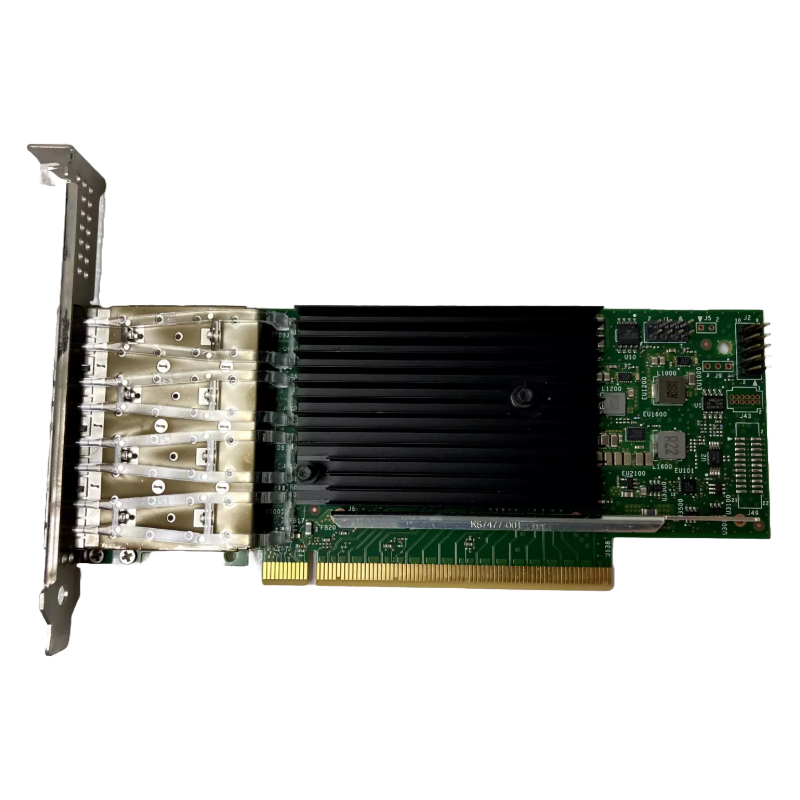


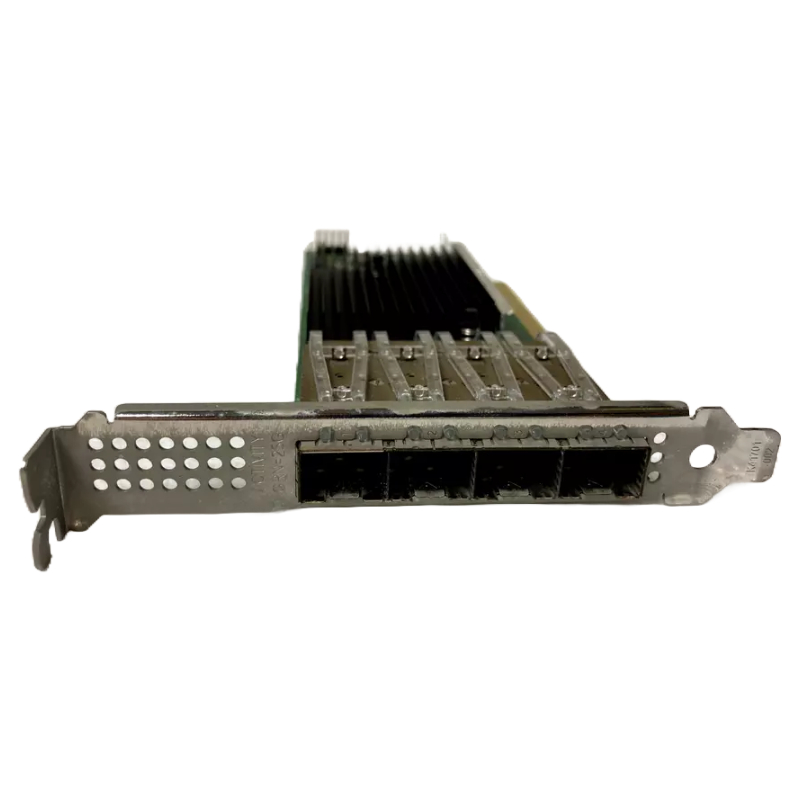
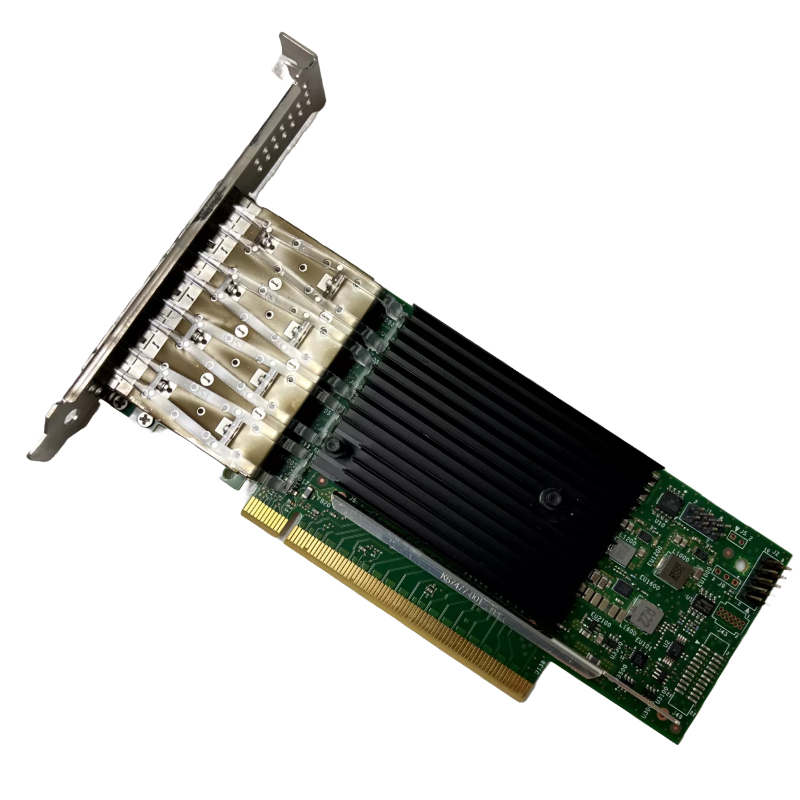
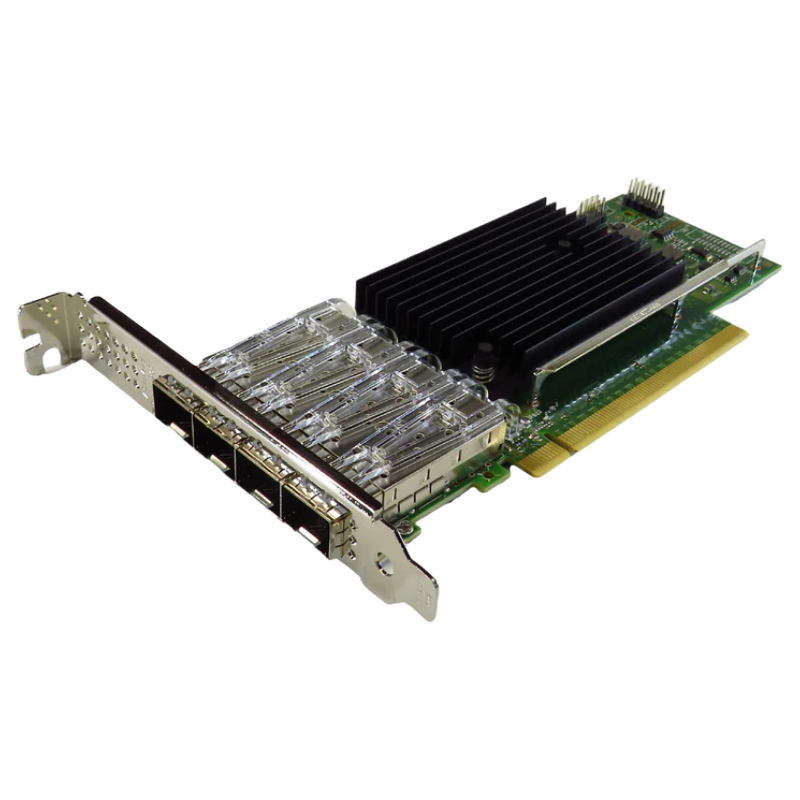
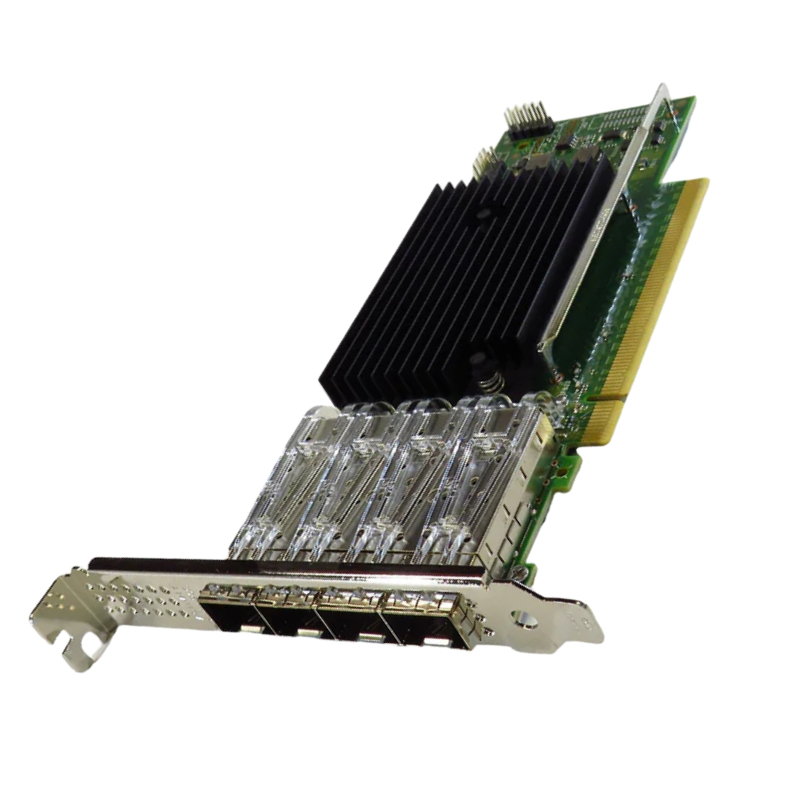
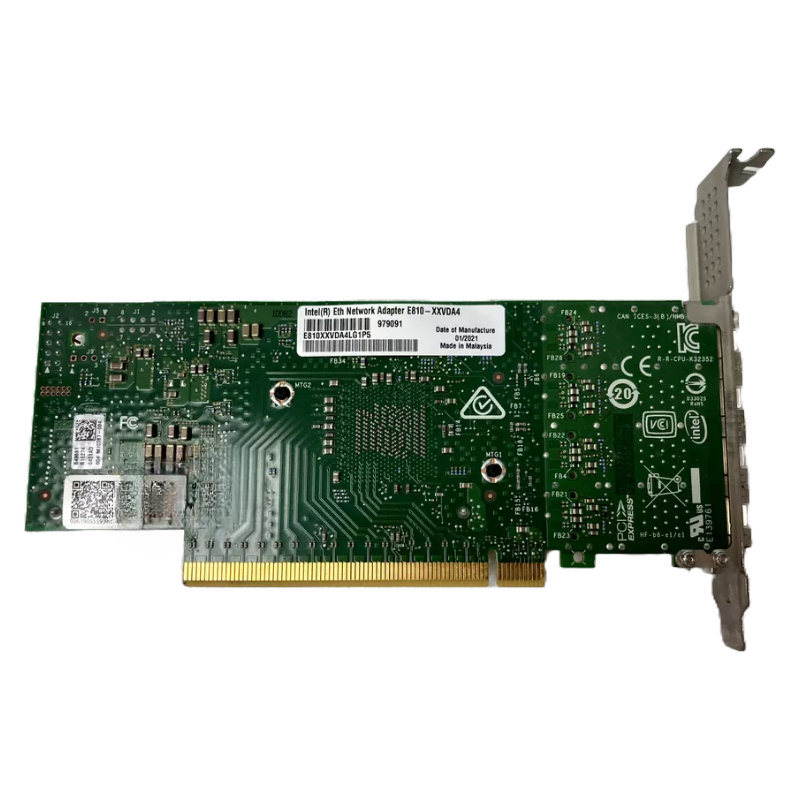
Intel E810XXVDA4LG1P5 Quad-port PCI-E Low Profile 25 Gigabit Ethernet Network Adapter. Excellent Refurbished with 1-Year Replacement Warranty
| SKU/MPN | Warranty | Price | Condition | You save |
|---|---|---|---|---|
| E810XXVDA4LG1P5 | 1 Year Warranty | $372.00 | Excellent Refurbished | You save: $130.20 (26%) |
| E810XXVDA4LG1P5 | 1 Year Warranty | $689.00 | New Sealed in Box (NIB) | You save: $241.15 (26%) |
The Intel E810XXVDA4LG1P5 is a high-performance quad-port PCIe network interface card designed for modern enterprise data centers. It delivers ultra-fast connectivity, advanced virtualization features, and optimized traffic handling for cloud computing, storage networks, and high-speed server environments.
The Intel E810XXVDA4LG1P5 Quad-port PCI-E Low Profile 25 Gigabit Ethernet Network Adapter represents a high-density networking solution engineered for modern data center environments that demand exceptional throughput, deterministic latency, and scalable bandwidth aggregation. Built for cloud-native workloads, virtualization clusters, storage-intensive infrastructures, and high-performance computing nodes, this adapter integrates four independent 25GbE interfaces into a compact low-profile PCI Express form factor, enabling efficient use of server expansion slots while maximizing network interface density per system.
This category of network adapter is positioned for enterprises that require advanced Ethernet connectivity beyond traditional 10GbE solutions, addressing evolving workload patterns such as AI-driven analytics, real-time data replication, software-defined networking, and distributed microservices architectures. By combining PCIe 4.0 x16 bandwidth with Intel’s advanced E810 controller architecture, the adapter ensures that each port operates with minimal bottlenecks and consistent line-rate performance under heavy concurrent traffic conditions.
The quad-port configuration enables consolidation of multiple network links into a single hardware component, reducing PCI slot consumption while increasing network interface availability per server node. This design approach is particularly beneficial in hyper-converged infrastructure where compute, storage, and networking resources must coexist within constrained physical chassis space. Each port operates independently, allowing for flexible segmentation of traffic flows across different virtual networks, storage paths, or application tiers.
The architecture supports parallel data streams that can be distributed across ports for load balancing or redundancy configurations. This ensures uninterrupted service delivery in mission-critical environments where failover capabilities and traffic isolation are essential for maintaining uptime and service quality.
The low-profile bracket design allows deployment in compact servers, edge computing nodes, and blade systems where internal space is limited. Despite the reduced physical footprint, the adapter maintains full electrical and thermal compliance for sustained 25GbE operations. The engineering behind the compact design ensures that airflow efficiency within dense server racks is not compromised, which is essential for maintaining stable operating temperatures in multi-node deployments.
The mechanical structure of the adapter is optimized for tool-less installation in compatible PCIe slots, reducing deployment time in large-scale server provisioning environments. The bracket alignment, PCB layering, and connector positioning are all engineered to minimize interference with adjacent expansion cards and internal cabling routes, ensuring clean integration within enterprise chassis designs.
The PCIe 4.0 x16 interface provides a significant increase in available bandwidth compared to previous generations, enabling the adapter to fully support multiple 25GbE ports operating simultaneously at line rate. This ensures that aggregate throughput is not constrained by host bus limitations, allowing for efficient packet processing even under heavy multi-tenant workloads.
With enhanced signaling rates and improved encoding efficiency, PCIe 4.0 reduces latency between the network adapter and the CPU subsystem. This is particularly important in environments where microsecond-level response times are required, such as financial trading systems, real-time analytics engines, and distributed storage clusters.
The adapter supports advanced offloading mechanisms that reduce CPU overhead by handling packet processing tasks directly on the network interface controller. This includes checksum offloading, segmentation tasks, and intelligent packet classification. By minimizing CPU intervention, system resources can be redirected toward application processing rather than network management tasks, improving overall server efficiency.
The internal architecture distributes packet processing across multiple hardware queues, enabling parallel processing of incoming and outgoing traffic streams. This reduces contention within the host system and ensures stable performance even when multiple virtual machines or containers are simultaneously generating network traffic.
At the core of the adapter lies Intel’s E810 controller architecture, designed to support next-generation Ethernet workloads. The controller integrates high-performance packet processing engines, programmable data paths, and intelligent traffic management features that allow dynamic adaptation to varying network conditions.
This architecture enables support for advanced networking protocols and virtualization technologies, ensuring compatibility with modern software-defined networking stacks. It also provides hardware-level acceleration for encryption and tunneling protocols, which enhances secure communication without degrading performance.
The controller includes sophisticated traffic shaping capabilities that allow precise control over bandwidth allocation per port or per virtual interface. This ensures that critical workloads receive prioritized network resources while maintaining fairness across less time-sensitive applications.
Packet distribution is managed through multiple hardware queues that separate traffic based on priority, protocol type, or virtual function assignment. This reduces congestion and ensures predictable performance in multi-tenant environments where multiple applications share the same physical infrastructure.
Each of the four 25GbE ports is capable of delivering sustained high-speed data transfer rates suitable for demanding workloads such as large-scale database replication, high-resolution media processing, and distributed machine learning pipelines. When combined, the adapter delivers substantial aggregate throughput that supports bandwidth-intensive enterprise applications.
The 25GbE standard offers a balanced evolution between 10GbE and 40GbE technologies, providing higher bandwidth efficiency while maintaining compatibility with existing fiber infrastructure in many enterprise deployments. This makes it a cost-effective upgrade path for organizations transitioning toward higher network performance tiers.
Latency optimization is achieved through a combination of hardware acceleration, optimized driver stacks, and reduced interrupt handling overhead. These improvements ensure that packet transmission and reception occur with minimal delay, which is critical for real-time applications and distributed computing systems.
The adapter is engineered to deliver consistent latency characteristics under varying load conditions. This deterministic behavior is essential for applications requiring predictable network response times, such as telecommunications infrastructure, high-frequency data processing, and storage replication services.
Support for RDMA over Converged Ethernet enables direct memory-to-memory data transfer between systems without involving the CPU in data movement operations. This significantly reduces latency and CPU utilization, allowing faster synchronization across distributed systems.
In environments such as storage clusters and high-performance computing grids, RDMA capabilities provide a substantial performance advantage by minimizing overhead and enabling near wire-speed data transfers between nodes.
The zero-copy mechanism eliminates redundant data copying between network buffers and application memory spaces. This enhances overall system efficiency and reduces memory bandwidth consumption, which is particularly important in large-scale distributed environments where multiple data streams operate concurrently.
The adapter is well-suited for cloud data centers where virtual machine density and containerized workloads require flexible and high-performance networking. Its multi-port architecture allows for separation of management, storage, and application traffic, improving network organization and security segmentation.
In cloud environments, scalability is essential, and the adapter supports dynamic provisioning of virtual functions that can be assigned to different tenants or workloads. This ensures efficient utilization of physical network resources while maintaining isolation between different service domains.
High-speed storage networks benefit significantly from the adapter’s ability to handle large sequential data transfers with minimal latency. It is particularly effective in distributed storage systems where data replication and redundancy require continuous high-bandwidth communication between nodes.
The adapter enhances performance in distributed file systems by reducing bottlenecks associated with traditional network interfaces. This allows faster file synchronization, improved backup operations, and more efficient data recovery processes in enterprise storage environments.
HPC workloads often involve tightly coupled parallel processing tasks that rely heavily on fast inter-node communication. The adapter’s low latency and high throughput characteristics make it suitable for scientific simulations, computational modeling, and large-scale data analysis workloads.
The adapter supports virtualization technologies that enable multiple isolated network interfaces to be created on a single physical port. This allows efficient resource sharing across virtual machines while maintaining strict traffic separation between tenants.
Each virtual function can be assigned dedicated bandwidth and routing policies, ensuring predictable performance in multi-tenant cloud environments where workload diversity is high.
Software-defined networking frameworks benefit from the adapter’s programmable capabilities, which allow dynamic configuration of traffic flows based on centralized network policies. This improves agility in enterprise environments where network configurations must adapt rapidly to changing application requirements.
Network policies can be applied in real time to control traffic prioritization, security filtering, and bandwidth allocation. This ensures consistent compliance with organizational network governance standards while maintaining operational flexibility.
The adapter integrates hardware acceleration for encryption protocols, ensuring secure data transmission without introducing significant processing overhead. This is particularly important in environments where encrypted traffic is the norm rather than the exception.
By offloading cryptographic operations to dedicated hardware components, system CPUs remain available for application-level processing, improving overall system performance under secure workloads.
Traffic segmentation capabilities ensure that sensitive data flows can be isolated from general network traffic. This reduces the risk of unauthorized access and improves compliance with enterprise security policies and regulatory frameworks.
Virtual interfaces can be configured with independent security policies, allowing granular control over traffic access and routing behavior. This enhances overall network resilience and reduces exposure to potential security threats.
The adapter is designed for compatibility across major enterprise operating systems, ensuring seamless integration into heterogeneous IT environments. Driver optimization ensures consistent performance across different kernel architectures and networking stacks.
This broad compatibility reduces deployment complexity and enables organizations to integrate the adapter into existing infrastructure without extensive reconfiguration.
Advanced management utilities provide visibility into port performance, traffic distribution, and error statistics. These tools enable administrators to monitor network health and optimize configuration settings based on real-time performance data.
Monitoring systems can analyze traffic patterns to identify potential bottlenecks or performance degradation trends, enabling proactive network optimization before issues impact production workloads.
The adapter is engineered to accommodate future network scaling requirements, ensuring long-term relevance in rapidly evolving data center environments. Its architecture supports incremental upgrades in software-defined networking frameworks and emerging Ethernet standards.
This forward-looking design approach ensures that infrastructure investments remain viable as bandwidth demands continue to increase across enterprise workloads and cloud-native applications.
In environments where server density is a critical factor, the quad-port design allows for significant consolidation of network interfaces, reducing hardware complexity and improving rack-level efficiency. This supports more effective utilization of physical space in large-scale data centers.
The adapter is designed with power efficiency considerations that help reduce overall energy consumption per gigabit of data transferred. This contributes to lower operational costs and supports sustainability goals in enterprise infrastructure planning.


 Contact Us
 Information
 Catalog
 Solid State Drives (SSD)
 Network Switches
 Hard Disk Drives
 HBA & Controllers
 PC & Servers
 PC & Server Memory
 CPU & Processors
 Network Routers
 Power Supplies
 Tape Drives & Libraries
 Network Devices
 Computer & Network Cables