
(7% discount is applied at checkout)
Cart is empty
Your go-to destination for cutting-edge server products
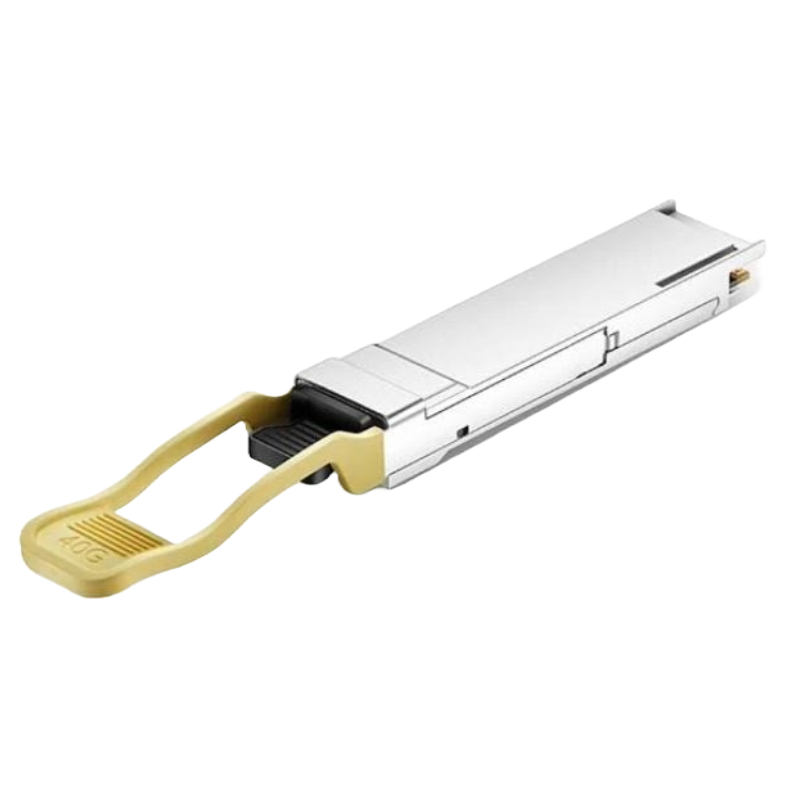
Intel J10986-001 QSFP+ 40 Gigabit Ethernet 40GBASE-LR MPO Multi-Mode Transceiver Module. New Sealed in Box (NIB) with 3 Years Warranty
The Intel J10986-001 QSFP+ Transceiver Module is designed to meet the evolving demands of high-performance networking environments. This 40 Gigabit Ethernet (40GBASE-LR) transceiver supports long-range connectivity over multi-mode fiber and is a critical component for data centers, enterprise networks, and high-bandwidth applications that require stable, high-speed data transmission. Built with Intel's renowned engineering, this module ensures compatibility, reliability, and excellent performance at an extended range of up to 6.2 miles. The device operates at a wavelength of 1310nm, offering low power consumption and high throughput, which makes it an ideal choice for businesses seeking scalable, future-proof network infrastructure.
The J10986-001 Intel QSFP+ 40 Gigabit Ethernet Transceiver category represents a high-performance class of optical networking modules engineered for modern data center environments, enterprise switching infrastructures, and high-throughput backbone networks. Designed to support 40GbE (40 Gigabit Ethernet) connectivity, these transceiver modules deliver scalable bandwidth, low latency, and efficient power consumption for mission-critical applications. Built under Intel’s strict quality and interoperability standards, this QSFP+ module category ensures seamless integration with compatible switches, routers, and network interface hardware across multi-vendor ecosystems.
This category is widely adopted in environments requiring high-density port aggregation, including cloud computing platforms, virtualization clusters, storage area networks (SAN), and hyperscale data centers. The J10986-001 series emphasizes optical precision, signal integrity, and stable transmission over both short-range and long-range fiber infrastructure, enabling reliable performance in demanding network architectures.
The QSFP+ (Quad Small Form-Factor Pluggable Plus) architecture used in the J10986-001 Intel transceiver is built to support four independent high-speed lanes, each operating at 10Gbps, combined to deliver an aggregated 40Gbps throughput. This parallel lane structure significantly improves bandwidth efficiency while maintaining compact physical dimensions suitable for high-density switch environments.
Engineered with advanced optical components, the module integrates laser transmitters, photodiodes, signal conditioning circuits, and digital diagnostic monitoring (DDM/DOM) capabilities. These elements work together to ensure optimal signal conversion between electrical and optical domains. The module also incorporates error correction and signal integrity enhancement technologies to minimize packet loss and maintain stable transmission across supported distances.
The internal design emphasizes thermal stability and power efficiency, ensuring consistent operation even in high-load data center racks. Intelligent power management reduces heat output, extending hardware lifespan and improving overall system reliability.
The J10986-001 Intel QSFP+ transceiver category includes a set of standardized technical specifications designed to support enterprise-grade networking performance. These specifications ensure that the Intel QSFP+ 40G transceiver category can support demanding workloads such as real-time analytics, cloud orchestration, high-frequency trading systems, and large-scale virtualization clusters without performance degradation.
The J10986-001 Intel QSFP+ 40 Gigabit Ethernet Transceiver category is widely deployed in modern data center architectures where high-speed connectivity is essential. It plays a crucial role in spine-leaf network topologies, enabling fast uplink and downlink communication between aggregation and core switches.
In cloud computing environments, these transceivers facilitate high-bandwidth communication between compute nodes, storage arrays, and distributed applications. This ensures seamless workload balancing and rapid data synchronization across virtual machines and containers.
Enterprise networks utilize this module category for backbone connectivity between departmental switches, ensuring stable and high-throughput data transfer across geographically distributed offices. Additionally, hyperscale providers leverage these transceivers for inter-rack and inter-row connectivity, where performance consistency and low latency are critical.
The J10986-001 Intel QSFP+ transceiver is engineered for compatibility with a wide range of Intel Ethernet switches and network interface cards (NICs), ensuring plug-and-play deployment in supported infrastructures. Its interoperability extends to many third-party networking devices that adhere to IEEE 40GBASE standards.
Compatibility is a key advantage of this category, allowing IT administrators to integrate the module into heterogeneous network environments without extensive configuration changes. Firmware-level validation ensures that the transceiver communicates effectively with supported hardware platforms, reducing deployment complexity and minimizing downtime.
This flexibility makes the Intel QSFP+ 40G module category suitable for organizations transitioning from 10G to 40G networks, enabling gradual infrastructure scaling while maintaining backward compatibility where required.
The J10986-001 Intel QSFP+ 40G transceiver category supports multiple fiber optic transmission configurations tailored to different networking requirements. Short-range models typically utilize multimode fiber (MMF), which is ideal for intra-data-center communication over limited distances. Long-range variants leverage single-mode fiber (SMF) to achieve extended transmission distances with minimal signal attenuation.
MPO/MTP connectors enable high-density fiber termination, allowing four optical lanes to be transmitted simultaneously through a single connector interface. This design significantly reduces cable clutter and improves airflow within server racks.
The optical signaling system is optimized for minimal dispersion and low insertion loss, ensuring data integrity even in high-interference environments. This makes the module category highly suitable for high-performance computing clusters and latency-sensitive applications.
Performance optimization is a core feature of the J10986-001 Intel QSFP+ 40 Gigabit Ethernet Transceiver category. The module is designed to maintain stable throughput under sustained heavy workloads, making it ideal for environments with continuous data streaming and packet-intensive operations.
Advanced signal conditioning ensures reduced jitter and improved bit error rates (BER), which is essential for maintaining data integrity across high-speed optical links. The module’s architecture supports efficient load balancing across multiple lanes, reducing congestion and improving network responsiveness.
In high-density switch deployments, thermal efficiency becomes critical. The QSFP+ design minimizes heat output while maintaining full performance, allowing multiple modules to operate simultaneously without compromising system stability.
Scalability is a defining characteristic of the J10986-001 Intel QSFP+ transceiver category. As organizations expand their digital infrastructure, the need for higher bandwidth and lower latency becomes increasingly important. This module supports seamless network scaling from 10G to 40G architectures, enabling incremental upgrades without complete infrastructure overhauls.
Spine-leaf architectures benefit significantly from this scalability, as QSFP+ modules provide high-speed uplinks between layers of network switches. This ensures that data flows efficiently across distributed systems while maintaining consistent performance under heavy load conditions.
Reliability is central to the design of the J10986-001 Intel QSFP+ 40G transceiver category. Built-in redundancy mechanisms and error detection protocols ensure continuous operation even in the event of partial signal degradation. Digital diagnostics allow administrators to monitor module health in real time, detecting potential issues before they impact network performance.
Hot-swappable functionality enables replacement without system downtime, which is critical in enterprise environments requiring 24/7 availability. The robust physical design ensures resistance to environmental stress factors such as vibration, temperature fluctuation, and electromagnetic interference.
The J10986-001 Intel QSFP+ transceiver category supports a wide range of industry applications including cloud infrastructure, artificial intelligence computing clusters, financial trading systems, media streaming platforms, and large-scale enterprise storage networks.
In AI and machine learning environments, high-speed interconnects enable rapid dataset transfer between GPU clusters, significantly reducing training time. In financial systems, low-latency transmission ensures real-time data processing for trading algorithms and market analysis tools.
The transition to 40 Gigabit Ethernet using Intel QSFP+ transceiver technology represents a significant evolution in enterprise networking. It bridges the gap between legacy 10G systems and next-generation 100G infrastructures, offering a balanced solution for performance and cost efficiency. As data demands continue to grow across cloud computing, edge computing, and AI-driven workloads, the importance of reliable high-speed optical modules such as the J10986-001 category continues to increase, supporting scalable and future-ready network architectures.


 Contact Us
 Information
 Catalog
 Solid State Drives (SSD)
 Network Switches
 Hard Disk Drives
 HBA & Controllers
 PC & Servers
 PC & Server Memory
 CPU & Processors
 Network Routers
 Power Supplies
 Tape Drives & Libraries
 Network Devices
 Computer & Network Cables