(7% discount is applied at checkout)
Cart is empty
Your go-to destination for cutting-edge server products
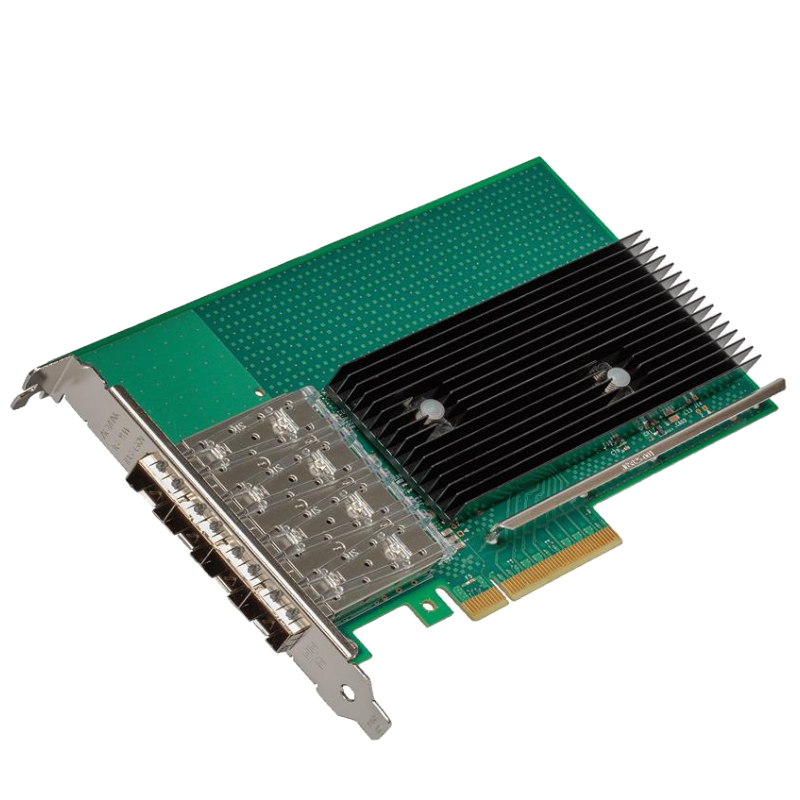


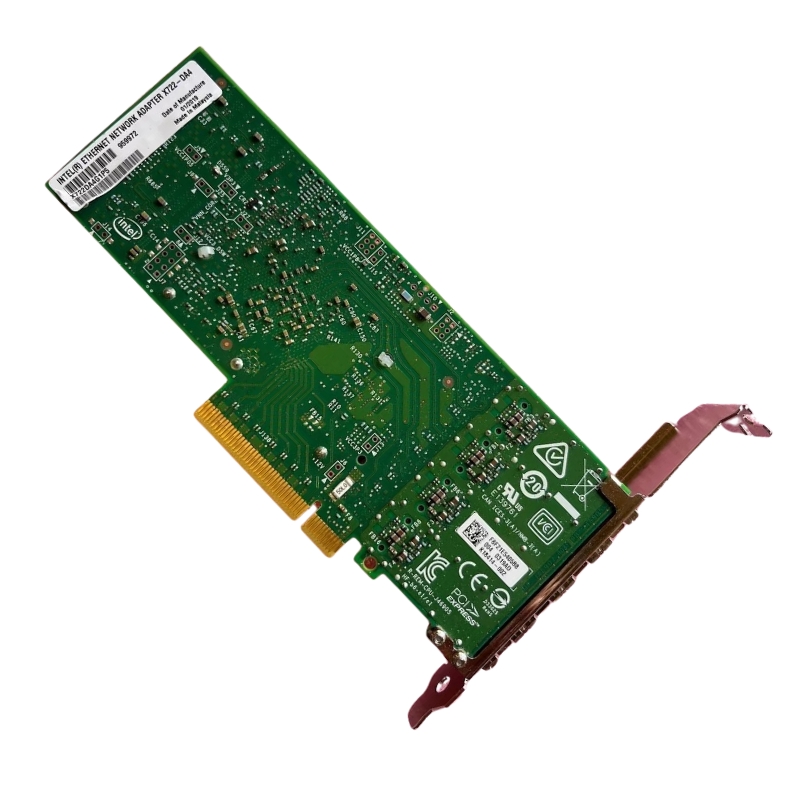
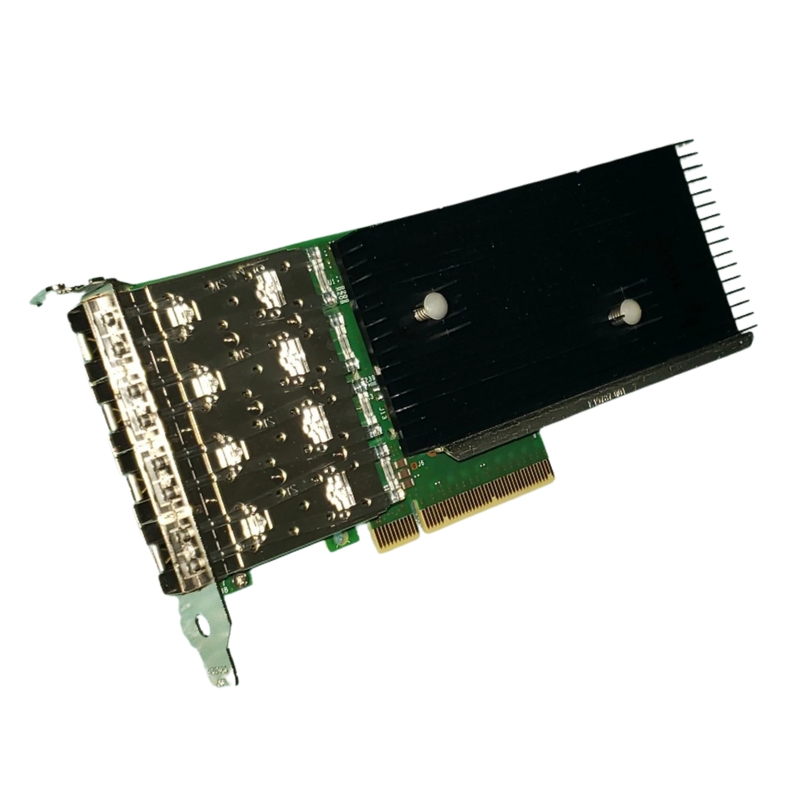
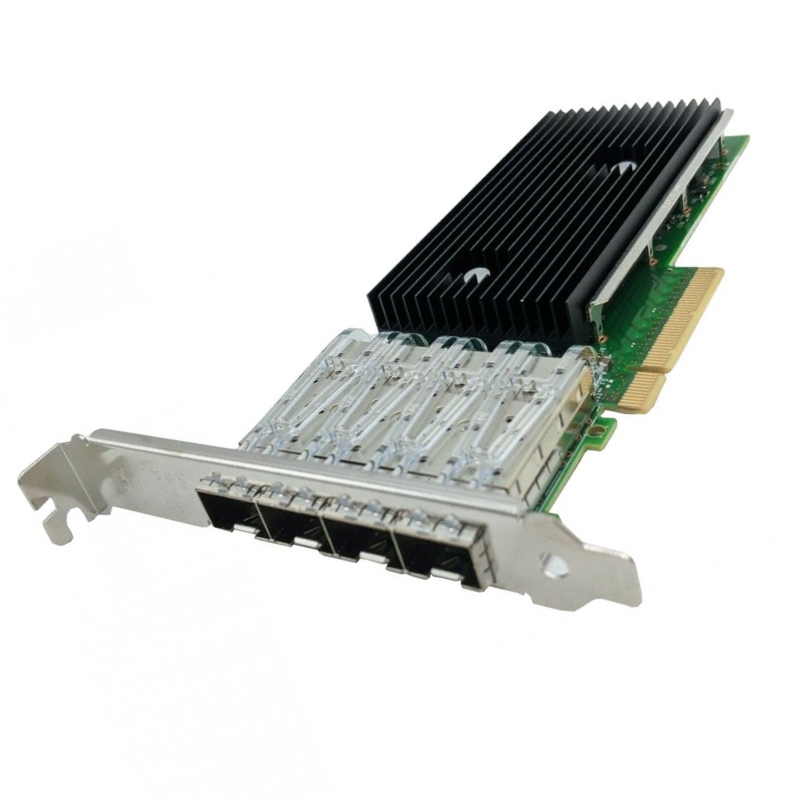
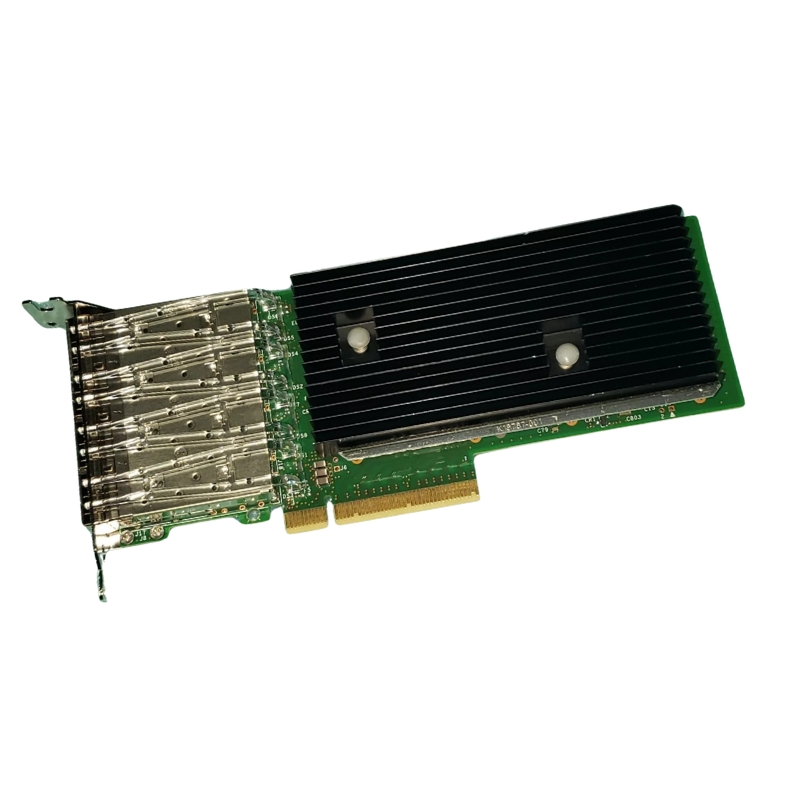
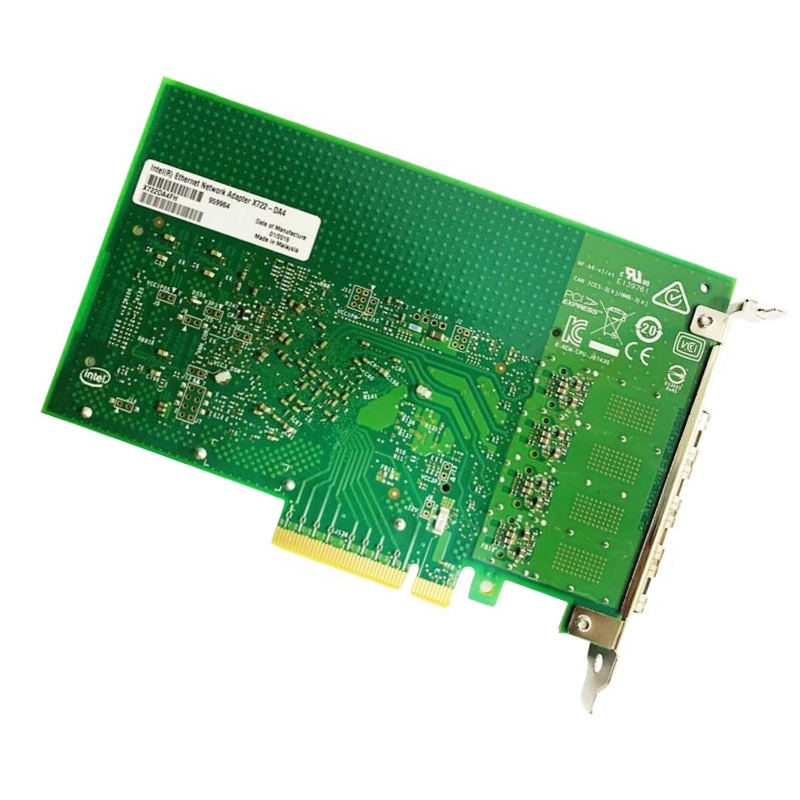
Intel X722DA4 Low Profile OCP 10 Gigabit Ethernet PCI-Express Network Adapters with 4 Ports at 10GBPS. Excellent Refurbished with 1 Year Replacement Warranty
| SKU/MPN | Warranty | Price | Condition | You save |
|---|---|---|---|---|
| X722DA4 | 1 Year Warranty | $428.00 | New Sealed in Box (NIB) | You save: $149.80 (26%) |
| X722DA4 | 1 Year Warranty | Contact us for a price | Excellent Refurbished |
The Intel X722DA4 is a low‑profile OCP plug‑in network adapter equipped with four 10‑gigabit Ethernet ports, engineered to deliver fast, stable, and efficient connectivity for modern enterprise servers. Built on a PCI‑Express architecture, it supports high‑bandwidth workloads, virtualization environments, and storage‑centric applications that demand reliable throughput, reduced latency, and consistent multi‑port 10GbE performance across diverse network infrastructures.
The Intel X722DA4 Low Profile OCP 10 Gigabit Ethernet PCI Express Network Adapter with four independent 10Gbps ports represents a high-density networking solution engineered for modern enterprise infrastructures. Built on Intel Ethernet Controller X722 architecture, this adapter is designed to deliver consistent throughput, low latency packet processing, and optimized data movement across high-performance computing environments. Its quad-port configuration enables simultaneous multi-channel data flow, allowing servers to handle parallel workloads efficiently without congestion bottlenecks. The integration of OCP form factor support ensures compatibility with next-generation modular server platforms that demand scalable and serviceable network components.
This network adapter is positioned for environments where deterministic performance and high bandwidth utilization are critical. Its design focuses on minimizing CPU overhead through hardware offload capabilities while maintaining compatibility with advanced virtualization and cloud-native systems. The low profile configuration further allows deployment in compact server chassis, blade systems, and dense rack environments where space efficiency is essential.
The Intel X722DA4 network adapter leverages a PCI Express interface to deliver high-speed communication between the network controller and the host system. PCI Express architecture enables scalable lane allocation, ensuring that the adapter can handle sustained high throughput across multiple 10 Gigabit Ethernet channels. This design reduces data transfer latency and enhances packet processing efficiency at the hardware level.
In addition to PCI Express integration, the Open Compute Project (OCP) form factor enhances modular deployment capabilities. OCP design principles focus on open hardware standardization, enabling interoperability across compatible server platforms. This allows data center operators to deploy, replace, and upgrade network modules with reduced operational complexity. The combination of PCI Express performance and OCP modularity results in a flexible networking architecture suitable for cloud-scale infrastructure.
Each of the four ports on the Intel X722DA4 operates at 10 Gigabit Ethernet speed, enabling aggregate bandwidth suitable for high-demand workloads such as virtualization clusters, database systems, and large-scale storage networks. The architecture ensures line-rate performance under sustained traffic conditions, maintaining consistent packet delivery without jitter or degradation.
The Ethernet controller integrates advanced packet processing pipelines that support efficient frame handling, checksum offloading, and segmentation optimization. These capabilities reduce dependency on host CPU resources and improve overall system responsiveness. The adapter is engineered to maintain stable throughput even under mixed traffic patterns, including small packet workloads and large sequential transfers.
The quad-port configuration of the Intel X722DA4 provides significant advantages in network aggregation scenarios. By consolidating multiple physical connections into a single adapter, system architects can reduce PCIe slot consumption while increasing total network bandwidth. This configuration is particularly beneficial in high-density server environments where expansion slots are limited.
Each port operates independently, allowing for load balancing across multiple network paths. This design supports redundancy strategies and enhances fault tolerance by enabling traffic failover in the event of link disruption. Network administrators can implement advanced routing and aggregation strategies to optimize data distribution across available interfaces.
The low profile physical design of the Intel X722DA4 adapter ensures compatibility with space-constrained server chassis. This is particularly relevant for rack-mounted systems, blade servers, and edge computing deployments where physical real estate is limited. Despite its compact form, the adapter maintains full functional capability across all four 10GbE ports.
Thermal efficiency is also optimized within the low profile structure. The heat dissipation layout is engineered to maintain stable operating temperatures under sustained network load. This ensures long-term reliability and reduces the risk of thermal throttling in densely packed server environments.
The Intel X722DA4 network adapter is widely suited for enterprise data center environments that require consistent high-speed connectivity. It supports workloads including virtual machine clustering, distributed storage systems, and high-volume transactional databases. Its quad-port architecture allows for efficient segmentation of network traffic across different functional layers of infrastructure.
In virtualization environments, the adapter supports high-density virtual machine deployment by providing dedicated bandwidth allocation per virtual network interface. This improves isolation between workloads and ensures predictable network performance across multi-tenant systems.
Virtualization environments benefit significantly from the hardware acceleration capabilities embedded within the Intel X722 controller. The adapter supports virtualization offload technologies that reduce hypervisor overhead and improve virtual machine network performance. Features such as Virtual Machine Device Queues enhance packet steering efficiency across virtual workloads.
Cloud infrastructure deployments rely on scalable and consistent networking performance. The Intel X722DA4 supports dynamic workload balancing across multiple ports, enabling cloud service providers to distribute traffic efficiently across compute nodes. This improves resource utilization and reduces network congestion during peak demand periods.
One of the core engineering advantages of the Intel X722DA4 adapter lies in its hardware-based offload capabilities. By transferring compute-intensive networking tasks away from the CPU, the adapter enhances overall system performance. Functions such as checksum calculation, segmentation offload, and packet classification are processed at the controller level.
This reduces CPU utilization and frees processing resources for application-level workloads. As a result, systems equipped with this adapter can handle higher concurrency levels without performance degradation. The packet processing pipeline is optimized for both small packet environments and large throughput streaming scenarios.
The Intel X722DA4 adapter is supported across a wide range of enterprise operating systems. Driver compatibility ensures stable integration with Linux distributions, Windows Server environments, and virtualization hypervisors. The driver architecture is optimized for stability, performance tuning, and long-term enterprise support.
Network administrators benefit from standardized driver interfaces that enable consistent configuration across heterogeneous environments. This simplifies deployment processes and reduces operational complexity when scaling infrastructure across multiple server platforms.
Security is a fundamental component of modern network architecture, and the Intel X722DA4 incorporates features that support traffic segmentation and isolation. Hardware-based filtering mechanisms allow administrators to define controlled traffic pathways, reducing exposure to unauthorized network access.
In virtualized environments, network isolation ensures that individual workloads remain separated at the hardware interface level. This improves compliance with security policies and reduces the risk of cross-tenant data leakage in shared infrastructure systems.
The Intel X722DA4 adapter supports converged networking environments where storage and data traffic share unified infrastructure. This enables efficient deployment of storage over Ethernet technologies, reducing the need for separate storage networks. The adapter's high bandwidth capacity ensures that storage traffic remains stable even under heavy compute workloads.
By consolidating networking and storage pathways, enterprises can simplify infrastructure design and reduce hardware overhead. This convergence improves scalability and allows more efficient utilization of network resources across data center environments.
High availability is a critical requirement in enterprise networking systems. The quad-port design of the Intel X722DA4 enables redundant link configurations that ensure continuous network availability in the event of hardware or link failure. Traffic can be dynamically rerouted across active ports to maintain uninterrupted service.
This redundancy model is essential for mission-critical applications that require continuous uptime. The adapter supports failover mechanisms that integrate with enterprise network management systems to ensure automatic recovery and load redistribution.
The Intel X722DA4 adapter is engineered for broad compatibility across enterprise server architectures. Its OCP and PCI Express integration allows it to function seamlessly within standardized server ecosystems. This ensures that organizations can integrate the adapter into existing infrastructure without requiring extensive hardware redesign.
Compatibility with leading server vendors and motherboard designs ensures smooth deployment across heterogeneous environments. This flexibility supports long-term infrastructure planning and reduces dependency on proprietary networking hardware.
High performance computing environments require consistent network optimization to maintain application efficiency. The Intel X722DA4 supports advanced traffic management features that ensure balanced workload distribution across all active ports. This reduces congestion and improves throughput stability under heavy usage conditions.
The adapter is particularly effective in environments where multiple applications compete for network resources. Its architecture ensures fair distribution of bandwidth while maintaining low latency for critical processes.
Scalability is a defining characteristic of the Intel X722DA4 network adapter. Its quad-port design allows infrastructure architects to expand network capacity without increasing hardware complexity. This is particularly valuable in cloud data centers and distributed computing environments.
As workloads grow, the adapter supports seamless scaling through additional network segmentation and load balancing strategies. This ensures that infrastructure can evolve without requiring fundamental redesign of networking components.


 Contact Us
 Information
 Catalog
 Solid State Drives (SSD)
 Network Switches
 Hard Disk Drives
 HBA & Controllers
 PC & Servers
 PC & Server Memory
 CPU & Processors
 Network Routers
 Power Supplies
 Tape Drives & Libraries
 Network Devices
 Computer & Network Cables