
(7% discount is applied at checkout)
Cart is empty
Your go-to destination for cutting-edge server products
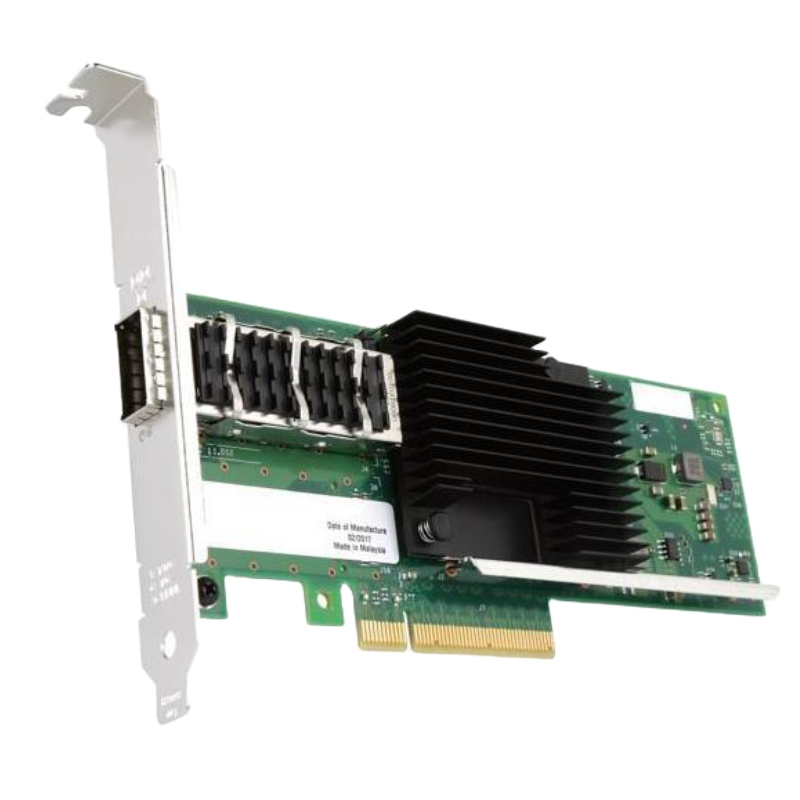
Intel XL710-QDA1 40 Gigabit Ethernet QSFP+ PCI-Express Converged Network Adapter Plug-in Card. Excellent Refurbished with 1 year replacement warranty
The Intel XL710-QDA1 Converged Network Adapter Card is a powerful solution designed for enterprise-grade networking. Featuring 40 Gigabit Ethernet QSFP+ connectivity, this PCIe 3.0 x8 plug-in card delivers exceptional throughput, advanced virtualization support, and energy-efficient performance for modern data centers.
The Intel XL710-QDA1 40 Gigabit Ethernet QSFP+ PCI-Express Converged Network Adapter Plug-in Card represents a high-performance networking solution designed for modern data centers, enterprise cloud infrastructures, and high-throughput computing environments. Built on advanced Intel Ethernet controller architecture, this adapter delivers ultra-low latency, high bandwidth throughput, and enhanced scalability for server-to-server communication, storage access, and virtualized workloads. It is engineered to support the growing demands of bandwidth-intensive applications, including large-scale virtualization, software-defined networking, and high-performance storage systems.
As organizations transition toward consolidated and software-defined data center environments, the need for reliable 40GbE connectivity becomes essential. This adapter provides the necessary foundation for optimizing network performance while reducing hardware complexity. It integrates seamlessly into PCI Express-based server platforms, ensuring efficient data transfer between CPU, memory, and network interfaces.
At the core of the XL710-QDA1 adapter lies Intel’s advanced Ethernet controller architecture designed for high throughput and efficient packet processing. The controller is optimized for parallel data processing, enabling efficient handling of multiple queues and reducing CPU overhead. This architecture ensures that network traffic is distributed effectively across available processing cores, improving system responsiveness under heavy workloads.
The design emphasizes scalability and flexibility, allowing the adapter to support modern networking protocols and virtualization technologies. The hardware offload capabilities significantly reduce the burden on host processors, enabling them to focus on application-level tasks rather than network packet handling.
The data path within the adapter is optimized for minimal latency and maximum throughput. Packet buffering, segmentation, and reassembly processes are handled efficiently to ensure smooth transmission of large datasets. This is particularly beneficial in environments where real-time data processing is required, such as financial trading systems and scientific computing clusters.
By reducing packet processing overhead and improving pipeline efficiency, the adapter ensures consistent performance even under peak network loads.
The Intel XL710-QDA1 utilizes a PCI Express Gen3 x8 interface, providing sufficient bandwidth to support full-duplex 40 Gigabit Ethernet operations. This interface ensures that data transfer between the network adapter and the host system remains efficient and stable, even under sustained high traffic conditions.
The PCIe architecture allows the adapter to communicate directly with system memory, minimizing bottlenecks and ensuring optimal performance for data-intensive applications. The high-speed interface is particularly beneficial for virtualized environments where multiple virtual machines share the same physical network resources.
Designed for enterprise-grade servers, the adapter fits into standard PCIe slots and supports a wide range of server platforms. It is commonly deployed in rack-mounted servers, blade systems, and high-density computing nodes. Compatibility with Intel-based server architectures ensures smooth integration into existing infrastructure without requiring major hardware modifications.
The XL710-QDA1 supports 40 Gigabit Ethernet connectivity, enabling extremely high data transfer rates suitable for modern enterprise workloads. This level of bandwidth is essential for applications involving large-scale data replication, backup systems, and distributed storage architectures.
The adapter is capable of handling simultaneous bidirectional traffic without performance degradation, ensuring consistent throughput across multiple network streams.
Low latency is a critical requirement in modern networking environments. The adapter is engineered to minimize packet processing delays, enabling faster communication between servers and storage systems. This is particularly important in environments such as high-frequency trading, real-time analytics, and distributed computing clusters.
Through advanced hardware acceleration, the adapter reduces CPU involvement in packet processing tasks. Features such as checksum offloading, segmentation offload, and interrupt moderation contribute to efficient network performance and reduced system overhead.
Single Root I/O Virtualization (SR-IOV) is a key feature of the XL710-QDA1 adapter, enabling efficient allocation of network resources to virtual machines. This allows multiple virtual instances to directly access physical network hardware, improving performance and reducing latency compared to software-based virtualization methods.
SR-IOV enhances scalability in cloud environments, allowing data centers to host a larger number of virtual machines without compromising network performance.
By reducing hypervisor overhead, the adapter improves virtual machine density within server environments. This leads to more efficient resource utilization and lower operational costs in cloud infrastructures. Workloads such as web hosting, application deployment, and container orchestration benefit significantly from this capability.
The adapter is also optimized for Network Function Virtualization (NFV), enabling network services such as routing, firewalling, and load balancing to be deployed in virtualized environments. This enhances flexibility and reduces dependency on specialized hardware appliances.
In enterprise environments, the adapter is used to support mission-critical applications requiring high availability and consistent network performance. It ensures stable communication between servers, storage arrays, and application clusters.
Cloud service providers rely on high-speed networking solutions like the XL710-QDA1 to support large-scale multi-tenant environments. The adapter ensures efficient traffic isolation and bandwidth allocation across multiple users and services.
High-performance computing environments require extremely fast inter-node communication. The adapter provides the necessary bandwidth and low latency required for scientific simulations, AI model training, and large-scale data analysis.
The adapter supports checksum offloading, reducing CPU workload by handling error detection at the hardware level. Segmentation offloading enables large data packets to be efficiently broken into smaller segments for transmission without CPU intervention.
Large Send Offload (LSO) and Large Receive Offload (LRO) technologies enhance throughput by reducing packet processing overhead. These features are particularly beneficial in high-bandwidth environments where large volumes of data are transmitted continuously.
Efficient interrupt moderation reduces CPU interruptions caused by network traffic, allowing better system performance under heavy load. Multi-queue management ensures that network traffic is distributed across multiple CPU cores for parallel processing.
The Quad Small Form-factor Pluggable Plus (QSFP+) interface enables 40GbE connectivity through a compact and efficient port design. This interface supports high-density networking environments where space optimization is critical.
The adapter supports a range of QSFP+ transceivers and cables, including direct attach copper (DAC) and optical fiber solutions. This flexibility allows deployment in different networking environments depending on distance and performance requirements.
In data center racks, QSFP+ connectivity reduces cable clutter and improves airflow management. This contributes to better cooling efficiency and improved hardware longevity.
The adapter includes hardware-level security features designed to protect data integrity and prevent unauthorized access. These features support secure packet processing and encryption-ready data handling.
Network segmentation capabilities ensure that traffic from different virtual machines or applications remains isolated. This enhances security in multi-tenant environments such as cloud hosting platforms.
Firmware integrity checks help ensure that only trusted firmware is executed on the adapter, reducing the risk of malicious modifications and enhancing system security.
The adapter is supported by Intel network drivers and management utilities that provide configuration, monitoring, and optimization capabilities. These tools allow administrators to fine-tune performance and manage network interfaces efficiently.
The adapter is compatible with major operating systems including enterprise Linux distributions and Windows Server environments. This ensures broad deployment flexibility across different IT infrastructures.
Advanced monitoring tools provide visibility into network performance metrics such as throughput, error rates, and latency. This helps administrators maintain optimal network health and quickly diagnose issues.
Efficient load balancing ensures that network traffic is distributed evenly across available resources. This prevents congestion and improves overall system stability under high demand conditions.
By aligning network queues with CPU cores, the adapter improves processing efficiency and reduces context switching overhead. This results in more predictable performance under heavy workloads.
In virtualized environments, bandwidth allocation can be managed to ensure fair resource distribution among virtual machines. This prevents network saturation and improves service quality.
The adapter is widely used in storage area networks where high-speed data transfer between servers and storage arrays is essential. It supports fast backup, replication, and data recovery operations.
Media streaming platforms benefit from high-bandwidth networking solutions that can handle large volumes of concurrent data streams. The adapter ensures smooth content delivery with minimal buffering.
Big data environments require rapid data ingestion and processing capabilities. The XL710-QDA1 supports these requirements by providing fast and reliable network connectivity for distributed computing frameworks.
AI training workloads require high-speed communication between compute nodes. The adapter ensures efficient data exchange, reducing training time and improving model development efficiency.


 Contact Us
 Information
 Catalog
 Solid State Drives (SSD)
 Network Switches
 Hard Disk Drives
 HBA & Controllers
 PC & Servers
 PC & Server Memory
 CPU & Processors
 Network Routers
 Power Supplies
 Tape Drives & Libraries
 Network Devices
 Computer & Network Cables