(7% discount is applied at checkout)
Cart is empty
Your go-to destination for cutting-edge server products
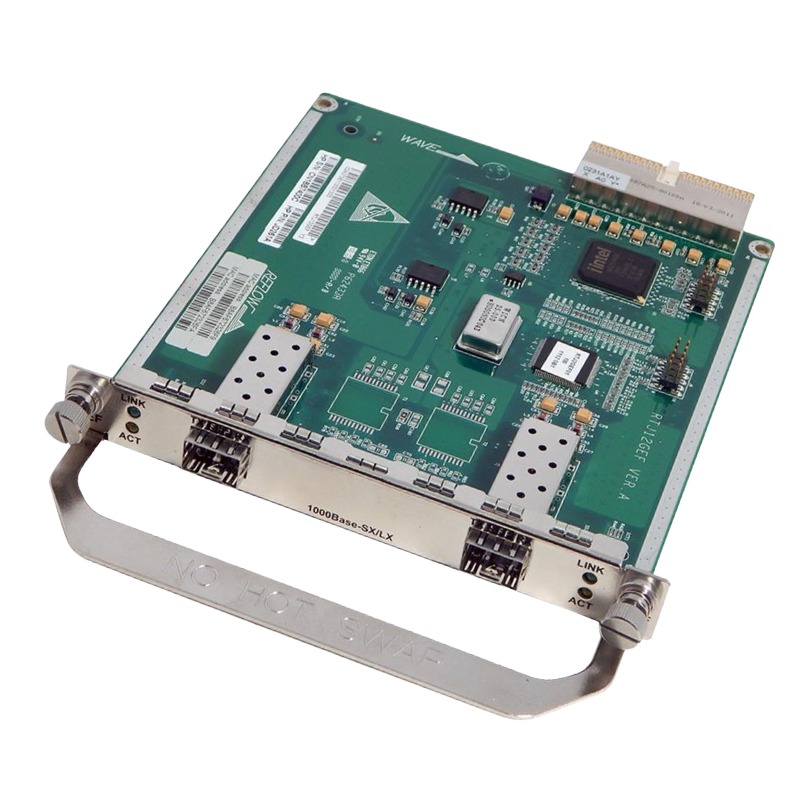


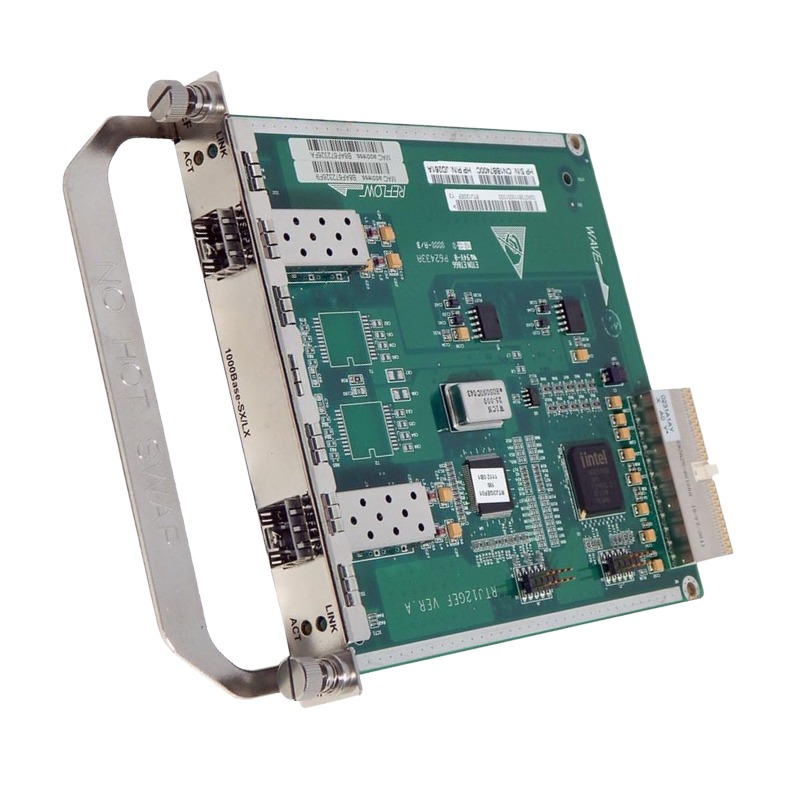
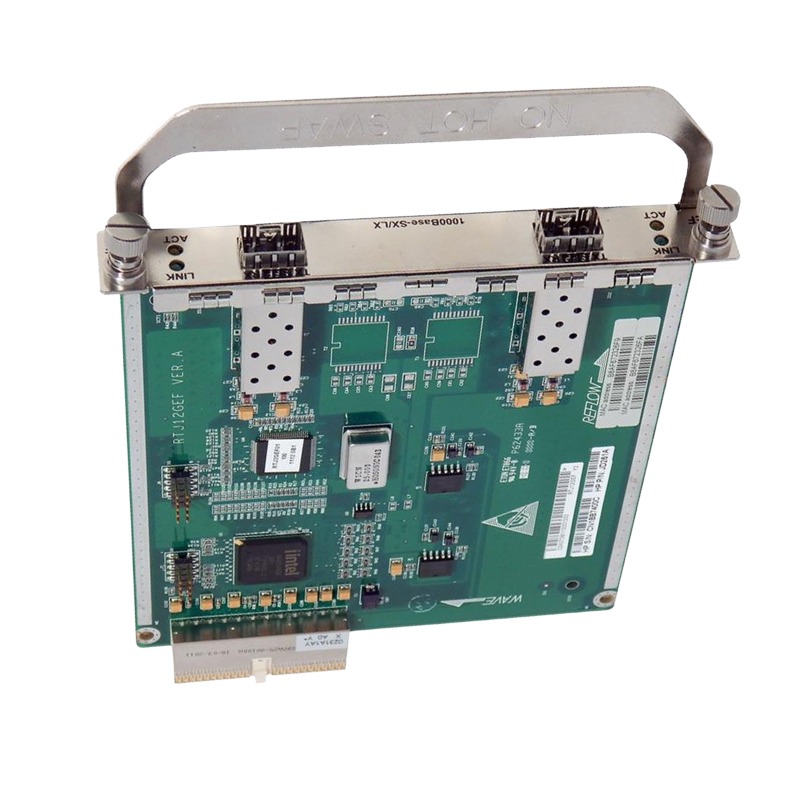
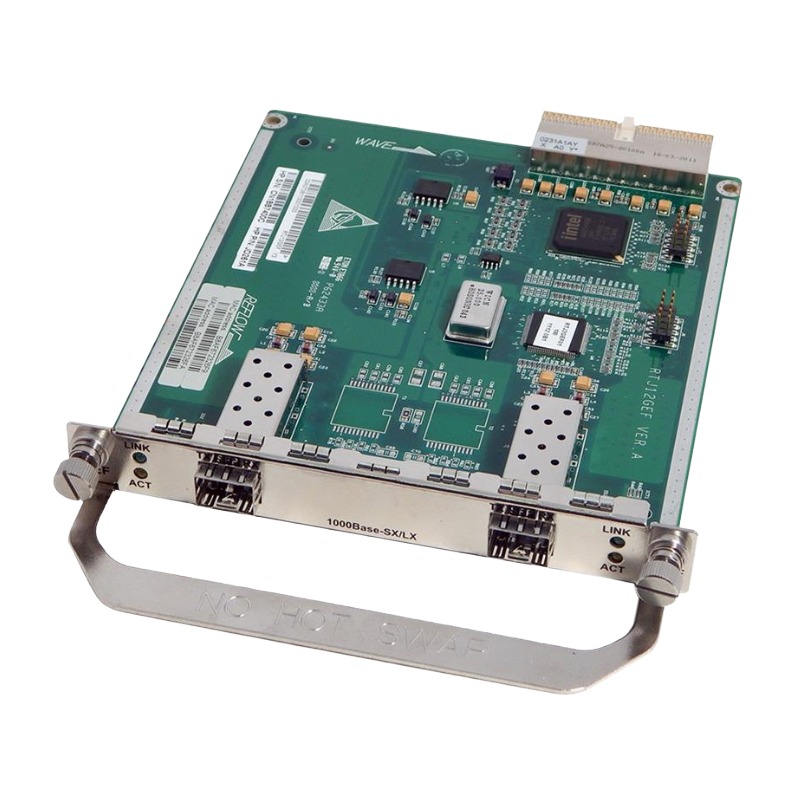
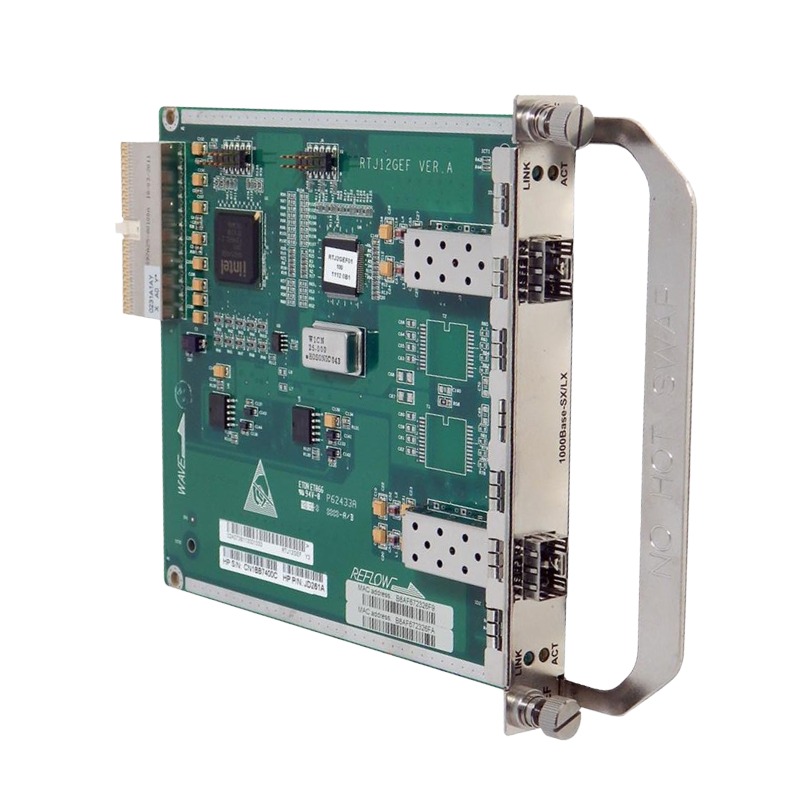
HPE JD261A MSR 2-Ports 1000Base-X MIN Gigabit Ethernet Expansion Module. Factory-Sealed New in Original Box (FSB) with 3 Years Warranty
JD261A HPE MSR 2-Port 1000Base-X MINI Gigabit Ethernet Expansion Module — Product Overview
The JD261A is an HPE (HP) branded expansion module engineered to add two 1000Base-X ports to compatible MSR routers and network platforms. Designed for high-speed optical connectivity, this compact module delivers Gigabit Ethernet performance over fiber, enabling reliable uplinks, carrier-grade aggregation, and resilient fiber-based access links for enterprise and service provider networks.
Deploying the JD261A expansion module provides immediate advantages for fiber-based network segments:
Network architects and IT managers choose the JD261A for its simplicity and operational advantages. Primary benefits include:
This module is ideal for:
The JD261A exposes two SFP-style cages that accept a wide range of GBIC/SFP transceivers, allowing operators to select short-reach multimode optics (1000Base-SX) or long-reach single-mode optics (1000Base-LX/LH), depending on link distance and fiber plant. The mini module conserves space and maintains airflow profiles of the chassis, while meeting the mechanical and thermal constraints specified by HPE for MSR expansion modules.
Each 1000Base-X port operates at full Gigabit Ethernet speed (1 Gbps) and supports auto-negotiation where applicable with SFPs that indicate capability. The module forwards packets at wire speed, preserving advanced switching and routing functions. Because the JD261A uses standard SFP interfaces, latency is primarily determined by the router’s forwarding plane and the choice of transceivers rather than the module itself.
The JD261A is manufactured to integrate with HPE MSR series routers and specified HPE modular systems. Before purchase and installation, verify compatibility with your router model and firmware revision to ensure the module is supported and that any required software license is present. Typical supported platforms include MSR models that accept mini expansion modules or equivalent HP modular chassis with matching slot types.
For optimal performance and feature availability, update the router’s OS image to a recommended release that explicitly lists JD261A compatibility. Some advanced features (such as vendor-specific QoS or enhanced security modules) may require particular firmware versions or licenses. Always consult HPE release notes and compatibility matrices when planning upgrades.
The SFP cages accept transceivers from multiple vendors. While generic SFPs typically work, using HPE-branded or certified optics reduces the risk of vendor lockouts or diagnostic discrepancies. When deploying third-party optics, validate administrative notices and test the link for stability, optical power margins and error rates.
Deploy JD261A modules when branch routers require fiber uplinks to aggregation points. With dual SFP ports, administrators can implement primary and backup fiber links, or aggregate both ports for higher throughput to regional aggregation routers.
In small data centers or edge compute closets, JD261A modules provide a cost-effective optical interface for connecting server racks or micro-data centers to aggregation switches. Use LACP for resilient uplinks and enable QoS for latency-sensitive applications such as storage or virtualization traffic.
Service providers and large enterprises can use the module to add gigabit optical ports at the edge of MSR routing platforms, enabling connection to metro fiber rings and wavelength services offered by carriers. The optical flexibility supports both single-mode and multimode deployments depending on network architecture.
Built to vendor quality standards, the JD261A is designed for continuous duty in controlled racks and wiring closets. Proper cooling, dust control and power stability extend operational life. Use manufacturer guidance for ambient temperature ranges and airflow patterns when installing the module.
The module complies with standard industry safety and electromagnetic compatibility guidelines as applicable for HPE networking hardware. Check product documentation for explicit certification listings, including regional marks (CE, FCC, etc.) if compliance is required for specific installations or procurement.
The module is commonly identified by the manufacturer part number JD261A. When procuring, verify the SKU, shipping packaging and revision identifiers to ensure you receive the correct variant. Authorized resellers and HPE channel partners can confirm warranty status and available extended support packages.
Warranty terms vary by region and reseller policies. Typically, HPE modules are covered under the platform’s hardware warranty; extended support contracts such as HPE Care Pack provide advanced replacement, on-site support and accelerated RMA processing. Maintain spare modules if network uptime is critical so you can quickly swap faulty units and minimize downtime.
Plan for lifecycle events such as end-of-sale (EOS) and end-of-support (EOSu) by tracking HPE announcements. When designing long-term networks, prefer modular solutions that allow incremental upgrades and ensure future optical technologies (e.g., 10G or higher) can be accommodated via alternate slots or uplink modules.
Physical security for modules includes locked racks, tamper-evident seals, and restricted access to wiring closets. At the logical level, configure access control for the router (role-based access, secure management protocols such as SSH/SNMPv3) and harden interfaces by using ACLs, port security and disabling unused services.
The optical layer can be susceptible to unauthorized taps or fiber interception. Use secure routing domain design, encryption over sensitive links (IPsec), and monitor for unusual traffic patterns to detect possible fiber security issues. In carrier and government environments, consider link encryption and physical route diversity for critical circuits.
Compared to multi-port copper modules, the JD261A’s fiber-oriented design provides longer reach and reduced electromagnetic susceptibility. Versus higher speed 10Gb modules, JD261A is more cost-efficient for Gigabit needs but does not provide 10Gb throughput. It is a practical choice when the immediate requirement is gigabit fiber connectivity rather than future 10G migration.


 Contact Us
 Information
 Catalog
 Solid State Drives (SSD)
 Network Switches
 Hard Disk Drives
 HBA & Controllers
 PC & Servers
 PC & Server Memory
 CPU & Processors
 Network Routers
 Power Supplies
 Tape Drives & Libraries
 Network Devices
 Computer & Network Cables