(7% discount is applied at checkout)
Cart is empty
Your go-to destination for cutting-edge server products
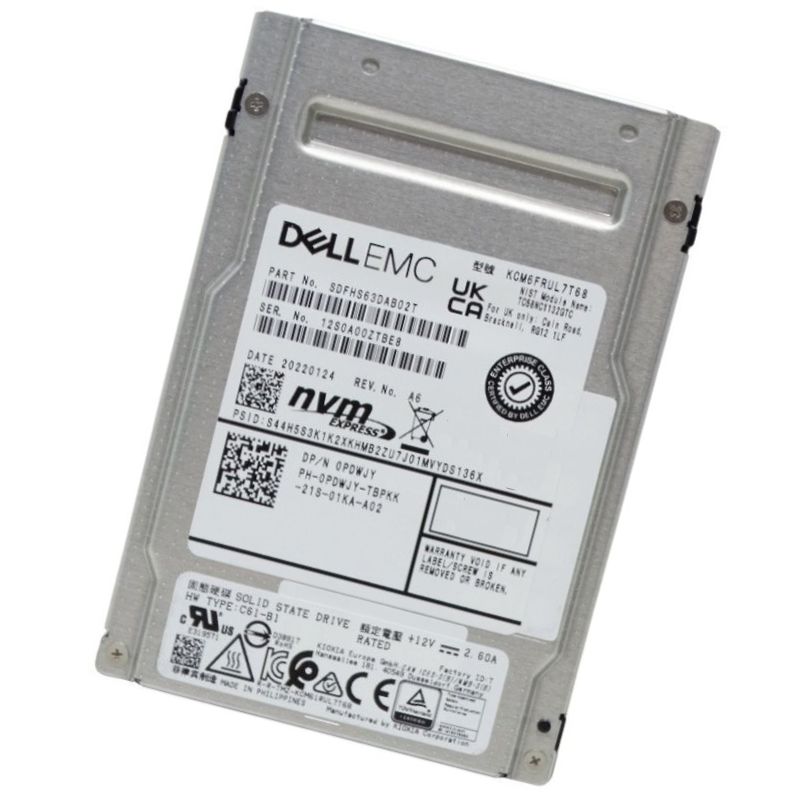


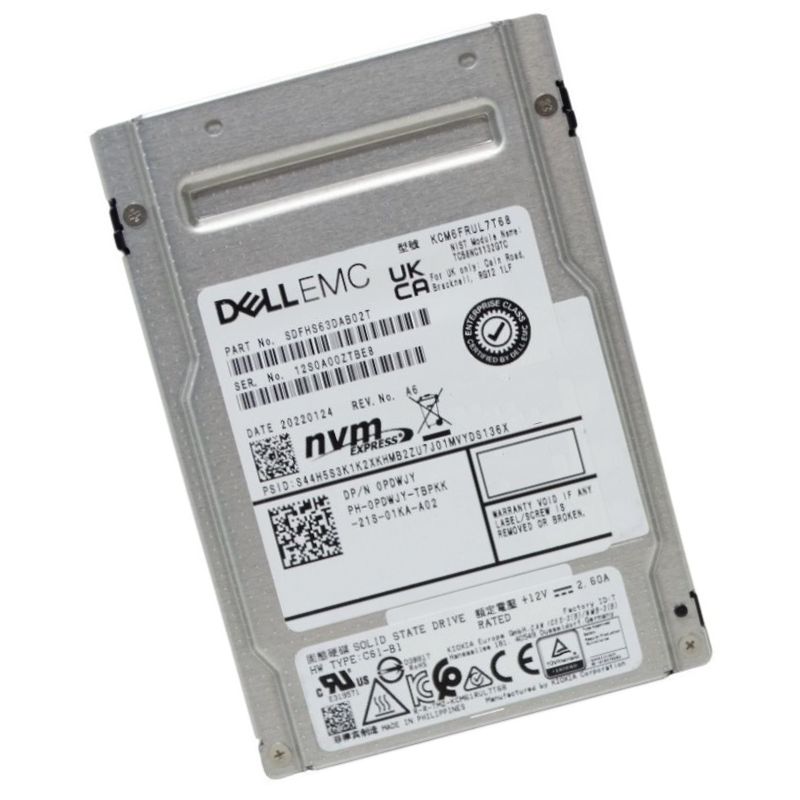
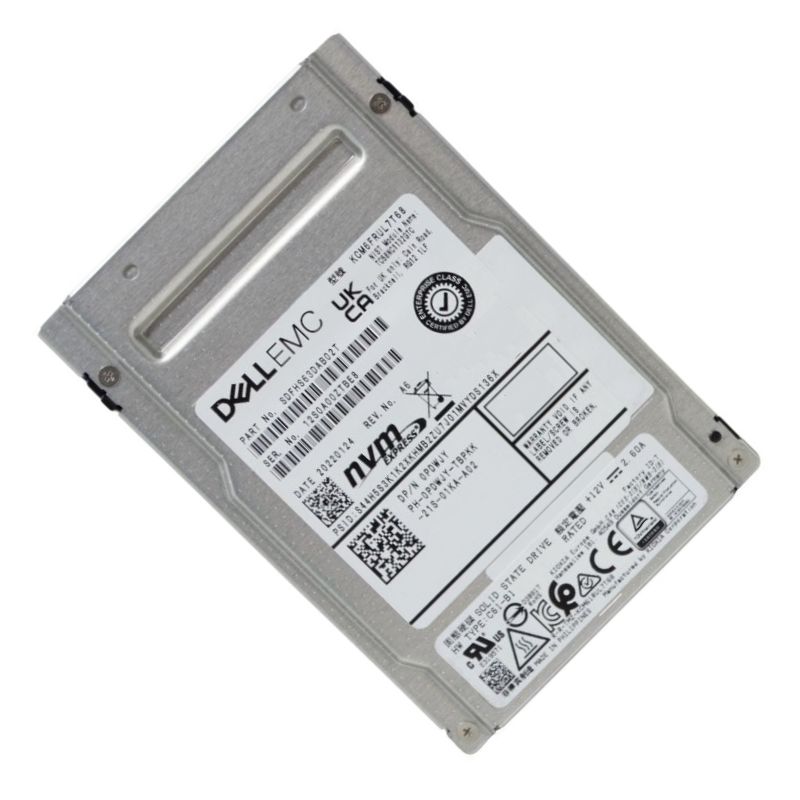
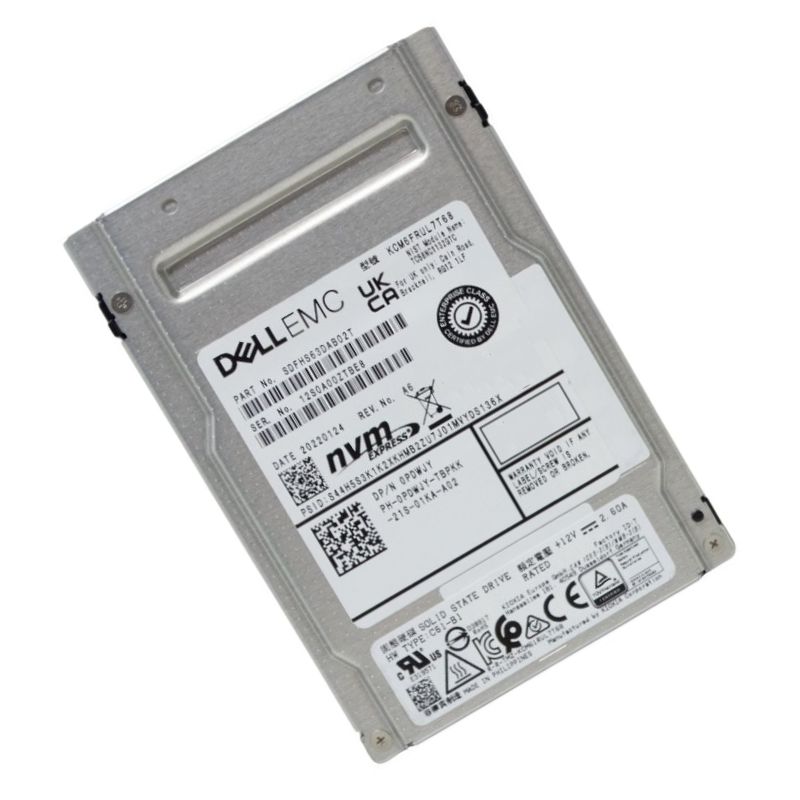
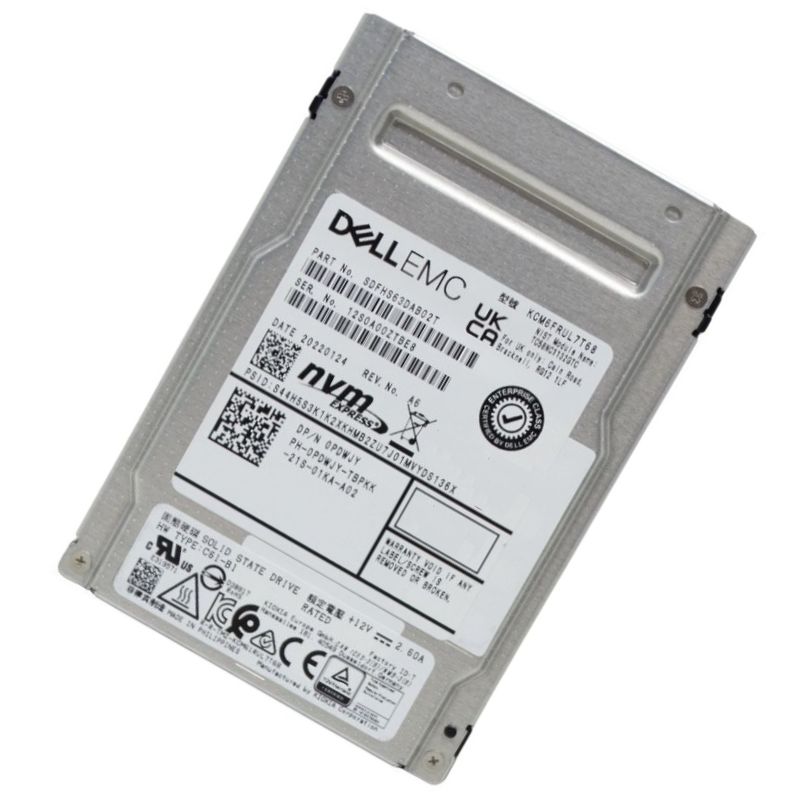
Kioxia SDF3080DAB01T CM7-R 30.72TB U.2 PCIe NVMe SSD. Excellent Refurbished with 1 year Replacement Warranty - Dell Version
Overview of the 30.72TB Solid State Drive
The Kioxia SDF3080DAB01T CM7-R 30.72TB U.2 PCIe NVMe SSD is an advanced enterprise-grade solid-state drive engineered for high-capacity, high-performance, and mission-critical data center environments. Built on Kioxia’s latest BiCS FLASH™ 3D TLC NAND technology, this enterprise SSD delivers an exceptional combination of endurance, low latency, and sustained throughput, making it an ideal solution for hyperscale cloud deployments, software-defined storage, virtualization platforms, AI workloads, and enterprise database acceleration.
Designed in the industry-standard 2.5-inch U.2 form factor, the CM7-R series SSD integrates seamlessly into modern enterprise server infrastructures. Supporting PCIe Gen4 x4 and NVMe 1.4 specifications, the drive significantly enhances input/output operations per second (IOPS), sequential bandwidth, and response consistency. The massive 30.72TB storage capacity allows organizations to consolidate workloads, reduce rack space utilization, and improve overall storage density while minimizing power consumption per terabyte.
As a read-intensive enterprise SSD, the CM7-R is optimized for applications requiring frequent data retrieval with moderate write workloads. This makes it especially suitable for content delivery networks, cloud storage systems, analytics engines, media repositories, and large-scale web hosting environments. Its enterprise-class firmware includes advanced reliability features such as power loss protection, end-to-end data path protection, namespace management, and robust error correction mechanisms.
One of the defining strengths of the Kioxia SDF3080DAB01T CM7-R 30.72TB SSD is its exceptional sequential performance. Leveraging PCIe Gen4 x4 connectivity, the drive can deliver dramatically improved bandwidth over previous PCIe Gen3 solutions, enabling faster data movement across demanding enterprise environments.
Sequential read speeds can exceed enterprise expectations, making the drive highly effective for large file transfers, backup acceleration, data lake retrieval, streaming analytics, and virtual machine deployment. Organizations managing large unstructured datasets can benefit from reduced latency during file access and significantly faster processing pipelines.
In addition to sequential throughput, the CM7-R provides impressive random read and mixed workload performance. High random IOPS capability ensures rapid response times for transactional systems, metadata-heavy applications, and distributed storage clusters where thousands of simultaneous read requests occur continuously.
Applications such as NoSQL databases, indexing engines, real-time search platforms, and web-scale application hosting can leverage the SSD’s ability to maintain predictable low latency under sustained pressure.
Latency consistency is critical in enterprise computing. The Kioxia CM7-R minimizes performance variability through sophisticated controller design and optimized firmware scheduling. This allows storage administrators to maintain service-level agreements and improve application responsiveness across cloud-native workloads.
With 30.72TB of usable flash storage in a single U.2 drive, the Kioxia SDF3080DAB01T provides exceptional storage density. Enterprises can deploy fewer drives to achieve desired capacity targets, simplifying storage architecture and reducing operational complexity.
High-capacity SSD deployment supports efficient server consolidation, allowing organizations to maximize available drive bays while improving compute-to-storage ratios. This is especially beneficial in dense 1U and 2U rack servers where physical space is limited.
By replacing multiple lower-capacity drives with fewer 30.72TB SSDs, data centers can significantly reduce rack occupancy and cable management overhead. Fewer drives also mean reduced cooling requirements and improved airflow efficiency.
The CM7-R serves as an excellent foundation for premium storage tiers where both speed and capacity are essential. It can function as a high-speed cache tier, primary transactional storage layer, or dedicated application acceleration pool within hybrid storage environments.
The Kioxia CM7-R adopts the widely supported 2.5-inch U.2 interface, making integration straightforward across enterprise servers, storage appliances, and hyperconverged infrastructure platforms. The familiar U.2 form factor enables hot-swappable deployment and simplifies maintenance procedures.
Hot-swappable functionality allows administrators to replace or expand storage resources without shutting down critical systems. This feature minimizes service interruptions and supports continuous business operations.
The drive is compatible with major enterprise server vendors and storage platforms, including rack servers, blade servers, virtualization clusters, and software-defined storage nodes. Compatibility with standard NVMe backplanes ensures broad deployment flexibility.
PCIe Gen4 technology doubles theoretical throughput compared to PCIe Gen3, enabling storage systems to process significantly larger data volumes with reduced bottlenecks. This improvement directly benefits AI model training, machine learning inference, and analytics workloads that depend on rapid storage access.
Deploying PCIe Gen4 SSDs helps organizations modernize infrastructure and prepare for future software requirements. As enterprise applications continue demanding faster data access, PCIe Gen4 storage provides the performance headroom needed for scalability.
Cloud providers and managed hosting platforms benefit from the expanded bandwidth available through PCIe Gen4. Multiple virtual machines and containers can share storage resources more efficiently while maintaining predictable quality of service.
NVMe 1.4 dramatically reduces command overhead compared to legacy SATA and SAS protocols. This allows the CM7-R to process storage requests with minimal CPU intervention, improving overall system efficiency.
Namespace support enables administrators to partition the SSD into isolated logical storage regions. This functionality is useful in multi-tenant cloud environments where workload segregation and independent management are required.
Advanced telemetry capabilities provide detailed performance metrics and health data, enabling proactive maintenance and predictive failure analysis. Administrators can monitor endurance usage, temperature trends, and throughput behavior to optimize lifecycle management.
The CM7-R leverages Kioxia’s proprietary BiCS FLASH™ 3D TLC NAND technology, designed to improve density, reliability, and power efficiency. Multi-layer cell stacking enables greater storage capacity without increasing physical drive dimensions.
Enterprise-grade TLC NAND offers balanced endurance and performance suitable for read-intensive workloads. Intelligent wear leveling and flash management algorithms maximize usable lifespan while maintaining consistent responsiveness.
Compared to spinning disk alternatives, NAND flash technology dramatically reduces energy usage. This translates into lower operational costs and improved sustainability across large-scale deployments.
Public and private cloud infrastructures benefit significantly from the CM7-R’s read-focused optimization. Object storage systems, shared file services, and distributed content repositories can deliver faster customer experiences while reducing backend complexity.
CDN operators handling high-volume media distribution require low-latency access to cached assets. The CM7-R enables rapid retrieval of video segments, images, software packages, and downloadable content.
Analytics platforms frequently read large historical datasets for pattern recognition and forecasting. The SSD’s combination of high capacity and rapid throughput accelerates query execution and reduces data preparation delays.
VDI environments depend on rapid boot storms and responsive user sessions. The Kioxia CM7-R improves login performance and application launch speed across dense virtual desktop deployments.
Unexpected power interruptions can compromise data integrity. The CM7-R incorporates enterprise-grade power loss protection capacitors that preserve in-flight data and ensure metadata consistency during sudden outages.
Comprehensive data integrity safeguards monitor information as it moves through the controller, cache, and NAND layers. This minimizes the risk of silent corruption and improves storage reliability.
Sophisticated ECC mechanisms detect and correct bit-level errors, extending flash lifespan and preserving long-term data accuracy. These protections are essential for mission-critical enterprise environments.
Enterprise firmware validation helps prevent unauthorized modifications and supports secure infrastructure deployment. Firmware stability contributes to predictable performance and reduced maintenance incidents.
Intelligent power management enables the SSD to adjust energy consumption according to workload demands. Idle and low-utilization periods consume less power, reducing operating expenses.
Virtualized environments benefit from higher VM density when backed by low-latency NVMe storage. The CM7-R supports more simultaneous workloads per host while maintaining consistent application performance.
Live migration, cloning, and snapshot creation complete more rapidly with high-throughput SSD storage. This improves operational agility and maintenance efficiency.
The drive integrates effectively with distributed storage platforms such as Ceph, VMware vSAN, and other hyperconverged systems that require dependable NVMe flash performance.
Enterprise relational databases demand rapid access to indexes, logs, and frequently queried datasets. The Kioxia CM7-R reduces query latency and improves transaction responsiveness.
Modern distributed databases such as Cassandra, MongoDB, and Elasticsearch benefit from fast random read performance and scalable capacity.
Data warehouses and business intelligence systems rely on fast scan performance. The SSD enables quicker reporting and accelerated dashboard refresh cycles.
AI and machine learning pipelines often require rapid access to massive training datasets. The 30.72TB capacity allows large model datasets to reside on ultra-fast local flash storage.
Low-latency read performance improves model inference responsiveness, enabling faster predictions in production AI applications.
High-performance computing clusters can use the CM7-R to accelerate simulation checkpoints, shared datasets, and high-speed scratch storage workloads.
Regulatory environments demand dependable storage behavior and auditability. Enterprise-grade SSD features support compliance initiatives in healthcare, finance, and government sectors.
Secure firmware controls and advanced internal protections help safeguard sensitive information throughout the storage lifecycle.
Reduced failure rates and enhanced predictability contribute to stronger disaster recovery readiness and business continuity planning.
PCIe NVMe architecture dramatically outperforms SAS and SATA interfaces, delivering significantly greater bandwidth and lower latency.
NVMe supports extensive command queue parallelism, enabling better scaling across multi-core CPUs and concurrent applications.
The massive 30.72TB capacity allows enterprises to consolidate more effectively than with legacy SSD technologies.


 Contact Us
 Information
 Catalog
 Solid State Drives (SSD)
 Network Switches
 Hard Disk Drives
 HBA & Controllers
 PC & Servers
 PC & Server Memory
 CPU & Processors
 Network Routers
 Power Supplies
 Tape Drives & Libraries
 Network Devices
 Computer & Network Cables