(7% discount is applied at checkout)
Cart is empty
Your go-to destination for cutting-edge server products
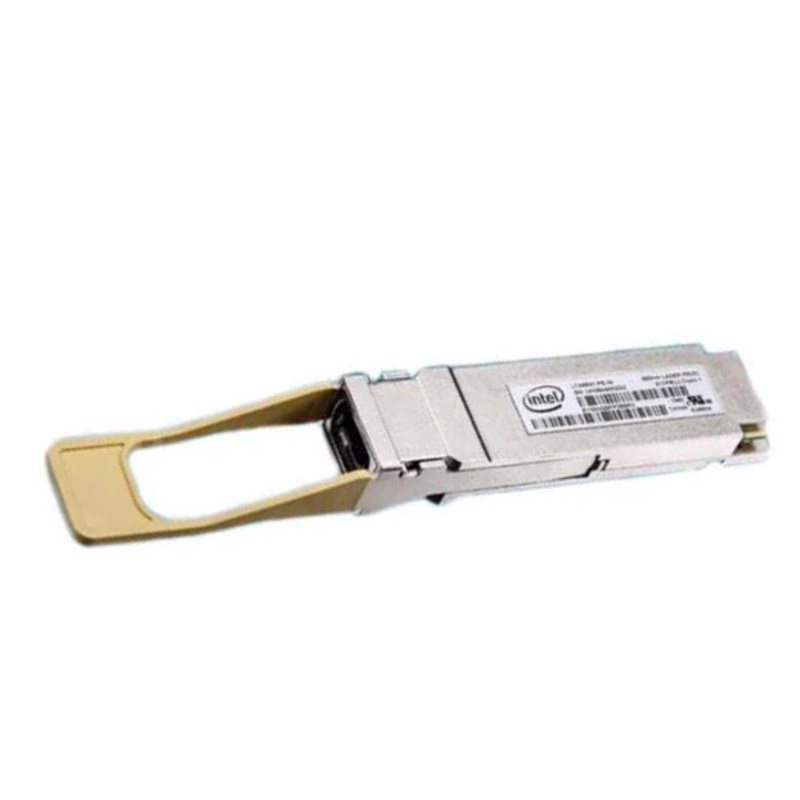


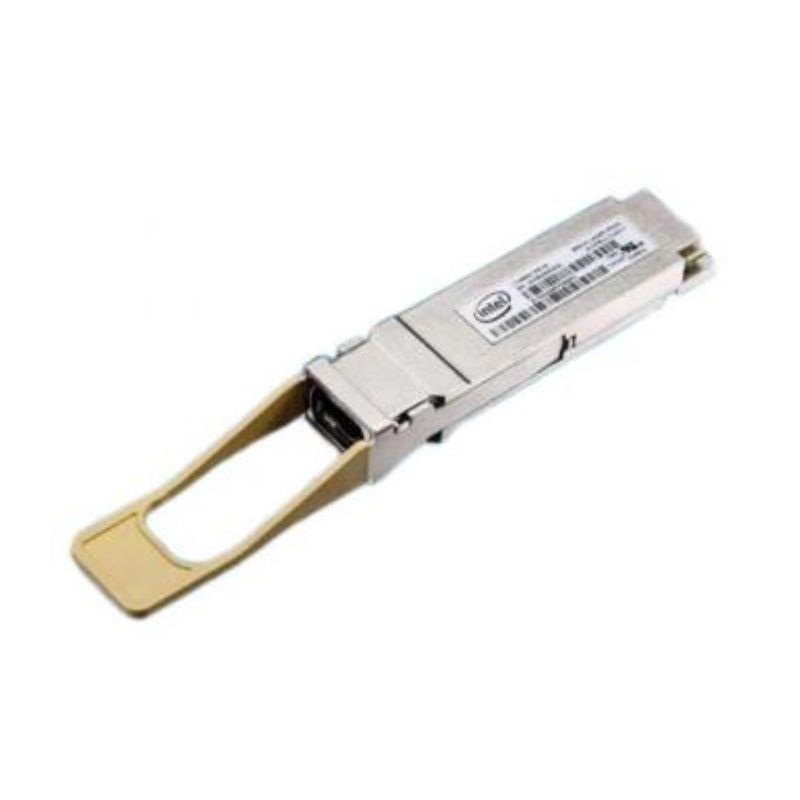
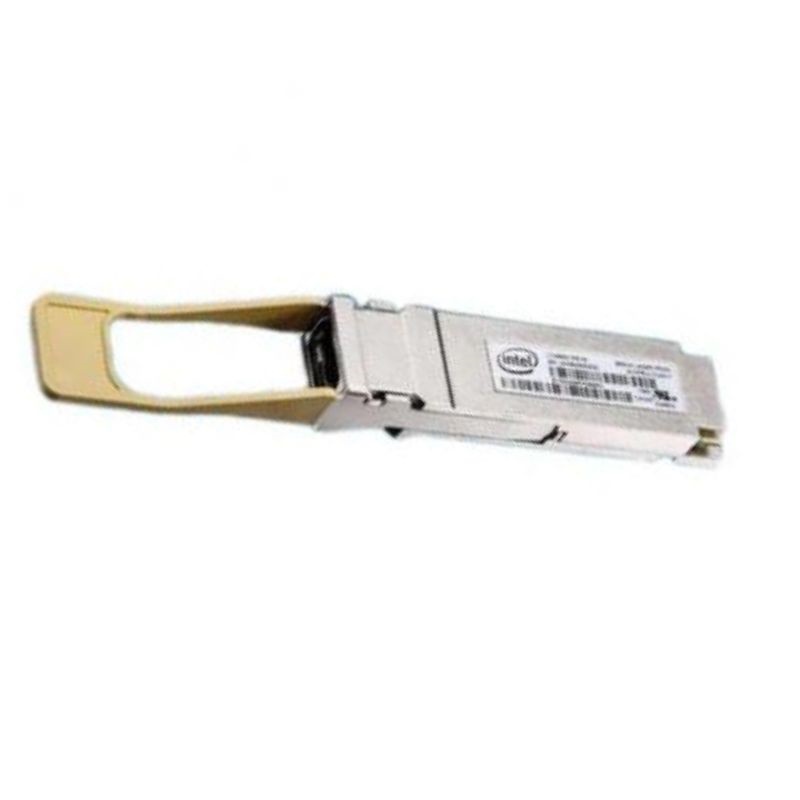
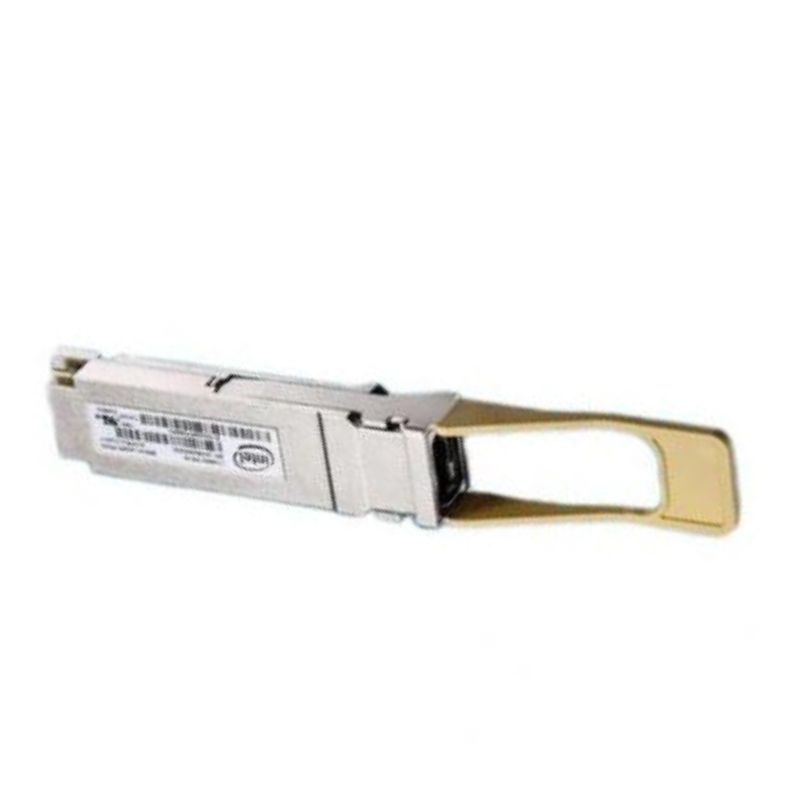
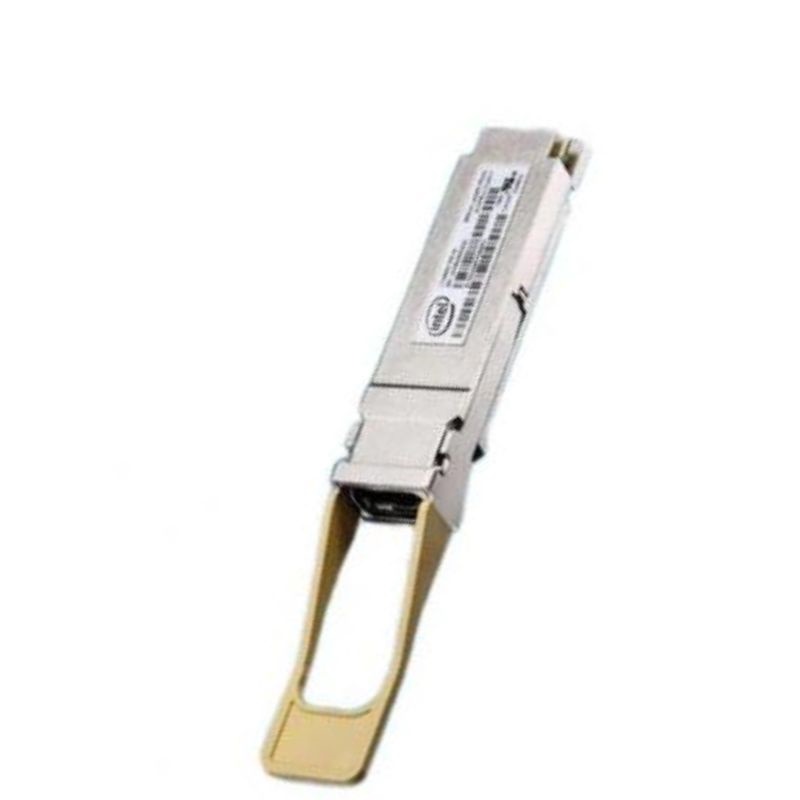
Intel LTA8531-PE-IN 100GBPS QSFP28 Optic Short Range Ethernet Transceiver Module. Factory-Sealed New in Original Box (FSB) with 3-Years Warranty
The Intel LTA8531-PE-IN QSFP28 transceiver is a high-speed 100 Gigabit Ethernet optical module engineered for short-range fiber connectivity. Designed for modern data center interconnects and enterprise networking environments, it delivers ultra-fast transmission, stable signal integrity, and seamless compatibility with Intel Ethernet infrastructure.
Technical Specifications
High-Performance 100G Optical Networking Solution
The Intel LTA8531-PE-IN 100Gbps QSFP28 Optical Short Range Ethernet Transceiver Module belongs to the high-performance optical networking category designed for ultra-fast data transmission across modern enterprise, hyperscale data center, cloud infrastructure, and high-performance computing environments. This category represents a critical segment of next-generation networking hardware where bandwidth density, signal integrity, energy efficiency, and interoperability define operational success.
As global data consumption continues to increase exponentially due to artificial intelligence workloads, cloud-native architectures, virtualization clusters, edge computing expansion, and 5G network backhaul demands, the need for 100 Gigabit Ethernet connectivity has become a foundational requirement. The QSFP28 form factor, combined with short-range optical capabilities, enables high-throughput communication between servers, switches, and storage systems while maintaining minimal latency and optimal power efficiency.
The Intel LTA8531-PE-IN module is engineered to support high-density switching environments where scalability and performance must coexist without compromise. It is widely categorized under short-range optical transceivers optimized for multimode fiber deployments within data centers and enterprise backbone networks.
The QSFP28 architecture used in the Intel LTA8531-PE-IN module is built to support aggregated 100 Gigabit per second throughput using four parallel lanes, each operating at 25Gbps. This design ensures efficient bandwidth distribution while maintaining signal integrity across short-range optical fiber links. The architecture is optimized for low latency and high-density switching environments where rapid data exchange between network nodes is essential.
By leveraging parallel optical signaling, QSFP28 transceivers minimize bottlenecks that traditionally occur in lower-speed Ethernet standards. This enables seamless support for modern workloads such as distributed computing, virtualization migration, real-time analytics, and cloud orchestration.
Short range optical modules in this category are designed specifically for multimode fiber infrastructure, typically used within data centers and enterprise campuses. The Intel LTA8531-PE-IN module is optimized for high-speed transmission over short distances, allowing efficient communication between adjacent racks, top-of-rack switches, and aggregation layers.
Multimode fiber compatibility ensures cost-effective deployment while maintaining high bandwidth capabilities. This makes short range QSFP28 modules an essential component in structured cabling systems where dense server deployments require rapid and reliable interconnectivity.
The use of parallel fiber lanes enhances overall signal efficiency by distributing data streams across multiple channels simultaneously. This reduces congestion and improves overall throughput consistency, ensuring stable performance even under heavy network utilization conditions. The architecture also improves redundancy and fault tolerance at the physical transmission layer.
Modern data centers rely heavily on high-density server clusters that require constant high-speed communication between compute nodes. The Intel LTA8531-PE-IN module enables seamless integration between servers and switching infrastructure, supporting workloads that demand continuous data exchange and low-latency processing.
Applications such as container orchestration platforms, microservices architectures, and distributed database systems depend on consistent high-throughput connectivity to function efficiently. This module ensures that inter-node communication remains fast and reliable across large-scale deployments.
In modern leaf-spine network topologies, 100Gbps optical transceivers play a critical role in ensuring uniform latency and bandwidth distribution across the network fabric. The Intel LTA8531-PE-IN module supports high-speed uplinks between leaf and spine switches, eliminating bottlenecks and enabling horizontal scalability.
This architecture allows data centers to expand seamlessly by adding additional leaf switches without compromising performance or network consistency. The short range optical capability ensures efficient intra-data-center communication with minimal signal degradation.
Cloud service providers depend on robust networking infrastructure to support multi-tenant environments, virtual machine provisioning, and dynamic resource allocation. The Intel LTA8531-PE-IN module facilitates high-speed communication between cloud nodes, enabling rapid data synchronization and workload balancing across distributed systems.
Its high bandwidth capacity supports cloud-native applications that require continuous scaling, including containerized workloads, serverless computing environments, and distributed storage systems.
The primary advantage of the Intel LTA8531-PE-IN module is its ability to deliver 100Gbps Ethernet performance with consistent reliability. This high throughput capability supports data-intensive applications that require rapid transmission of large datasets across network infrastructures.
Industries such as financial trading, artificial intelligence model training, scientific research, and media production rely heavily on high-speed data movement. The module ensures these workloads operate without network-induced delays or throughput limitations.
Latency plays a crucial role in determining overall network performance, especially in environments where real-time data processing is required. The QSFP28 architecture of the Intel LTA8531-PE-IN module minimizes propagation delay by optimizing optical signal conversion and transmission pathways.
This results in faster response times for applications such as high-frequency trading systems, real-time analytics platforms, and interactive cloud-based services where milliseconds can significantly impact performance outcomes.
Energy efficiency is a key consideration in modern data center design. High-density optical transceivers must balance performance with power consumption to reduce operational costs and maintain thermal stability. The Intel LTA8531-PE-IN module is engineered with optimized power usage characteristics that reduce heat generation while maintaining full 100Gbps performance.
Lower power consumption contributes to reduced cooling requirements, improved rack density, and more sustainable data center operations. Efficient thermal management ensures long-term reliability and consistent performance under continuous workloads.
Short range QSFP28 modules are typically deployed within multimode fiber infrastructures designed for intra-data-center connectivity. The Intel LTA8531-PE-IN module integrates seamlessly into structured cabling systems where OM3 and OM4 fiber types are commonly used to support high-speed optical transmission.
These fiber types provide sufficient bandwidth capacity for 100Gbps transmission over short distances while maintaining cost efficiency compared to single-mode fiber deployments.
Efficient structured cabling is essential in high-density data center environments. The compact QSFP28 form factor allows for dense port configurations within switches and patch panels, reducing physical space requirements while maintaining high performance connectivity.
Proper cabling design ensures minimal signal interference, improved airflow, and easier maintenance operations within large-scale infrastructure environments.
Virtualization environments frequently require live migration of virtual machines between physical hosts without downtime. The high bandwidth capability of the Intel LTA8531-PE-IN module ensures that memory and storage states can be transferred rapidly across network links, minimizing disruption during migration processes.
This capability is essential for maintaining high availability in enterprise cloud environments where workload balancing and hardware maintenance require continuous system operation.
Modern application deployment relies heavily on container orchestration platforms that distribute workloads across clusters of servers. High-speed networking ensures that containers communicate efficiently, supporting microservices architectures and distributed processing systems.
The module provides the necessary bandwidth to support high-frequency communication between containerized services operating across multiple nodes.
High-performance computing environments require extremely fast interconnects to process complex simulations, modeling tasks, and scientific computations. The Intel LTA8531-PE-IN module supports these requirements by enabling high-speed data transfer between compute nodes in clustered environments.
Applications such as climate modeling, molecular simulations, and astrophysics research depend on consistent high-throughput communication to achieve accurate and timely results.
AI and machine learning workloads generate massive amounts of data that must be exchanged between GPUs, CPUs, and distributed storage systems. The 100Gbps bandwidth provided by the QSFP28 module ensures efficient gradient synchronization and dataset distribution across training clusters.
This reduces training time for large-scale neural networks and improves overall computational efficiency in AI research environments.
Modern data centers are designed with scalability in mind, allowing incremental expansion as computational demand increases. The Intel LTA8531-PE-IN module supports this scalability by providing a standardized high-speed interface that integrates easily into existing infrastructure.
Organizations can expand network capacity without redesigning entire systems, ensuring cost-effective growth and operational continuity.
As network fabrics evolve toward higher speeds and greater density, 100Gbps optical modules serve as a foundational building block. The QSFP28 standard ensures compatibility with emerging networking technologies while maintaining backward compatibility with existing infrastructure designs.
Enterprise environments require networking components that maintain stable operation under continuous workloads. The Intel LTA8531-PE-IN module is designed for reliability in mission-critical systems where downtime is not acceptable.
Its robust optical signaling and engineering design ensure consistent performance across long operational cycles.
High-speed optical networks often incorporate redundancy mechanisms to ensure uninterrupted connectivity. The module supports redundant paths and failover configurations that enhance overall network resilience.
This is essential for industries such as finance, healthcare, and telecommunications where uninterrupted data flow is critical.
Fiber optic communication inherently provides improved security compared to copper-based systems due to reduced electromagnetic leakage. The Intel LTA8531-PE-IN module benefits from this physical layer security, making it suitable for sensitive data environments.
Maintaining data integrity at 100Gbps speeds requires precise signal processing and error minimization techniques. The module ensures reliable transmission across optical channels, reducing packet loss and maintaining consistent communication quality.
High-bandwidth optical transceivers eliminate bottlenecks that commonly occur in lower-speed network architectures. The Intel LTA8531-PE-IN module ensures smooth data flow across enterprise environments, improving overall system efficiency.
Organizations investing in 100Gbps optical transceivers are building a foundation for long-term digital transformation. The Intel LTA8531-PE-IN module supports evolving infrastructure demands while maintaining compatibility with existing systems.
The Intel LTA8531-PE-IN 100Gbps QSFP28 Optical Short Range Ethernet Transceiver Module represents a strategic component in modern networking ecosystems, enabling organizations to achieve high-speed connectivity, scalable infrastructure design, and reliable performance across complex digital environments without introducing structural limitations or performance bottlenecks.


 Contact Us
 Information
 Catalog
 Solid State Drives (SSD)
 Network Switches
 Hard Disk Drives
 HBA & Controllers
 PC & Servers
 PC & Server Memory
 CPU & Processors
 Network Routers
 Power Supplies
 Tape Drives & Libraries
 Network Devices
 Computer & Network Cables