(7% discount is applied at checkout)
Cart is empty
Your go-to destination for cutting-edge server products
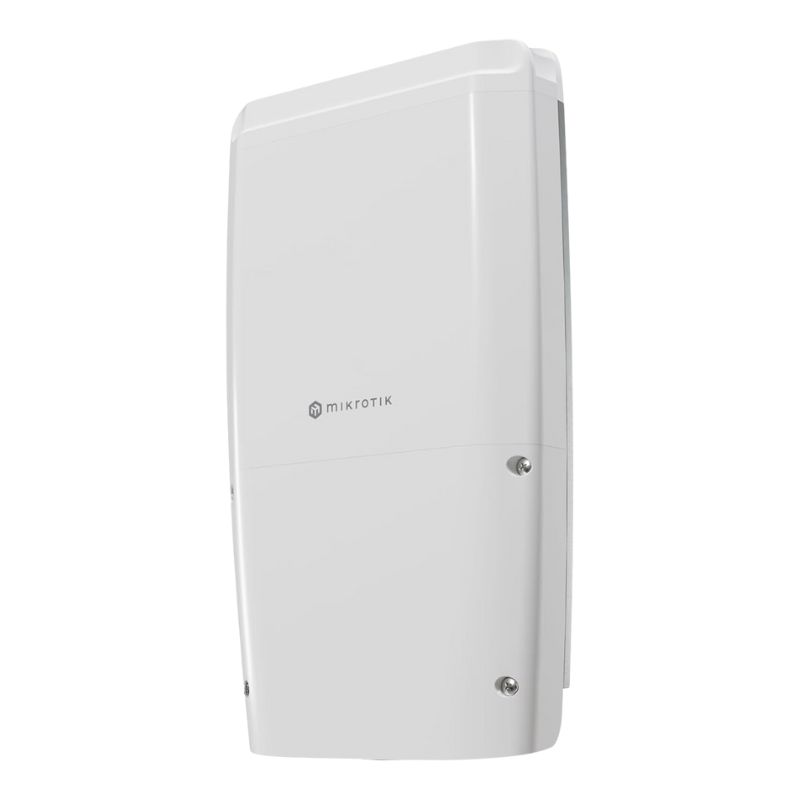


MikroTik CRS504-4XQ-OUT 100Gbps 4x Ethernet Outdoor Cloud Router Switch. New Sealed with 1 Year Replacement Warranty. Call
The MikroTik CRS504-4XQ-OUT is a high-performance 100Gbps outdoor cloud router switch engineered for demanding networking environments. Designed for extreme weather conditions, this device combines routing and switching capabilities in a rugged, weather-resistant enclosure, making it ideal for ISPs, data centers, and enterprise-grade outdoor deployments.
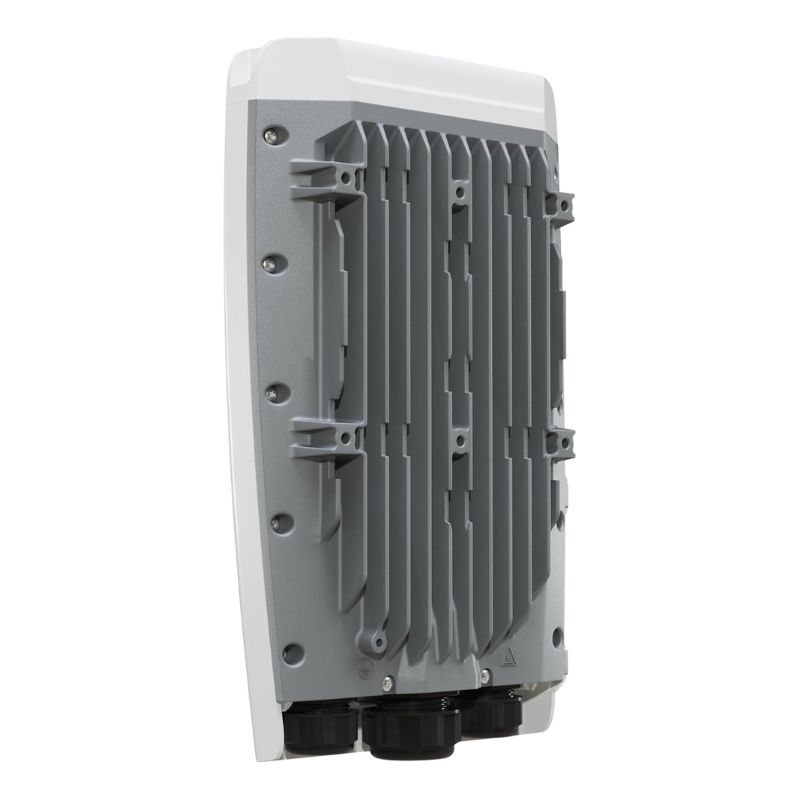
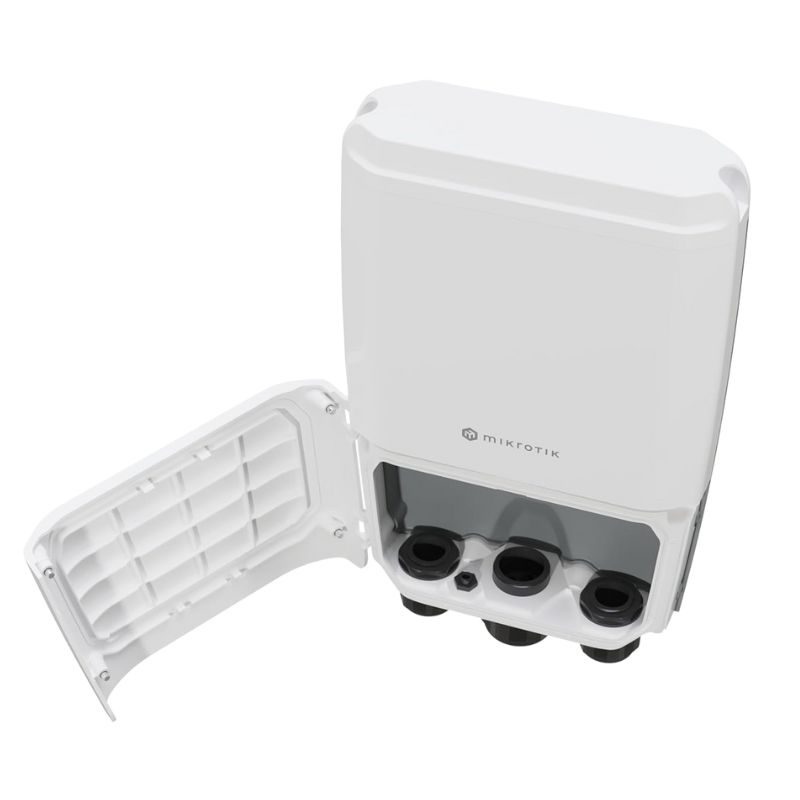
The very essence of the CRS504-4XQ-OUT category is its hardened exterior. This is not a standard rack switch placed in a box; it is engineered from the ground up for permanent outdoor installation.
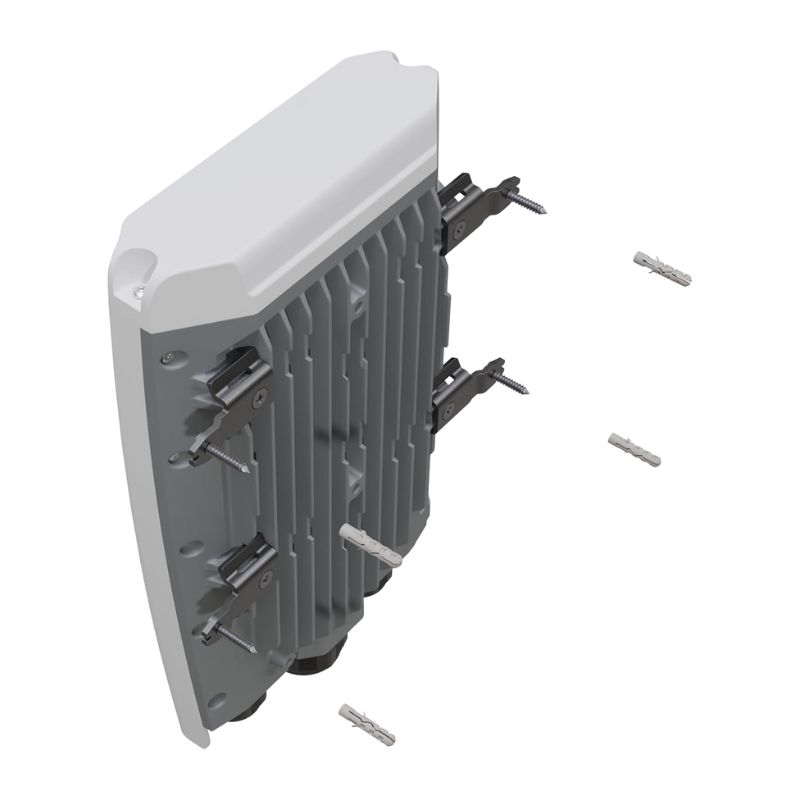
The device's IP68-rated aluminum enclosure provides an impervious barrier against the elements. It is designed to withstand continuous exposure to rain, snow, dust, and corrosive atmospheres. The extended operating temperature range of -40°C to +60°C ensures reliable operation from desert heat to arctic cold, a critical requirement for nationwide or global network deployments.
A key differentiator in this category is the complete absence of fans. The switch leverages a massive, finned aluminum heatsink that forms the body of the unit itself. This passive thermal design accomplishes two major goals: it eliminates the most common point of failure in outdoor gear (fan bearings clogging or freezing), and it enables truly silent, zero-maintenance operation—ideal for noise-sensitive deployments like residential areas or pristine natural environments.
For power input, the category emphasizes flexibility and surge protection. The device typically accepts a wide range of DC input voltages. Most critically, it incorporates robust lightning and surge protection on all interfaces, including Ethernet ports and power terminals, which is non-negotiable for equipment mounted on towers, poles, or rooftops.
Beneath its rugged shell, the CRS504-4XQ-OUT houses a formidable switching core that places it at the pinnacle of MikroTik's Cloud Router Switch lineup.
At its heart lies a Marvell Prestera 98DX8212 switch ASIC. This chip provides wire-speed, layer-3 switching and routing on all four 100G ports simultaneously. The non-blocking switch fabric capacity of 400 Gbps full-duplex ensures that there are no internal bottlenecks, enabling true 100G line-rate performance for every port, a necessity for aggregating multiple 10G/25G/40G backhaul links or for high-capacity DCI links.
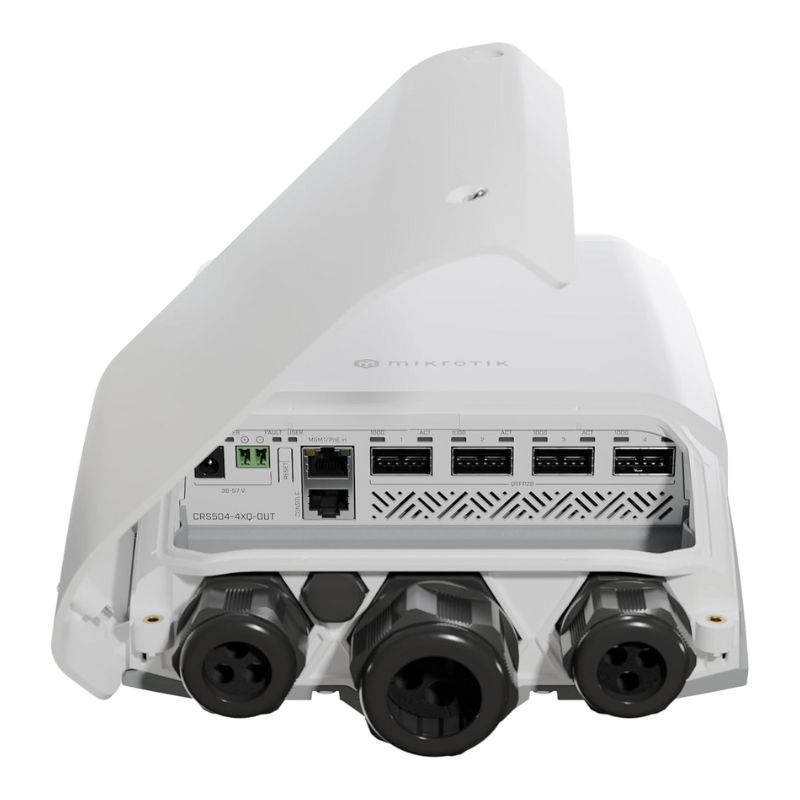
The four QSFP28 cages offer tremendous versatility. Each port can operate natively as a single 100G interface using QSFP28 optics (e.g., SR4, LR4, ER4 Lite). Alternatively, through breakout cables, each port can be split into four independent 25G or 10G interfaces (using QSFP28 to 4x SFP28 or SFP+ DAC/breakout optics), effectively transforming the switch into a compact 16-port 25G aggregation node. This flexibility allows network architects to tailor the device to various stages of network evolution without changing hardware.
The feature set, managed via the familiar RouterOS, is comprehensive for this category. It includes:
Layer 3 Hardware Offloading: Wire-speed routing for IPv4 and IPv6 static routes, OSPF, BGP, and RIP.
MPLS Hardware Support: Enables MPLS switching, VPWS, and VPLS tunnels for carrier and enterprise VPN services.
Advanced QoS: Hierarchical Quality of Service (HQoS) with multiple queues per port, allowing precise traffic prioritization and shaping even at 100G rates.
Enhanced Security: Hardware-accelerated ACLs, MAC security, and DHCP snooping help secure the network edge without impacting performance.
This category serves specific, high-stakes applications where its unique blend of performance and ruggedization solves critical challenges.
For 5G and advanced LTE networks, cell sites are generating unprecedented data volumes. The CRS504-4XQ-OUT can be deployed at a hub site, often on a tower or mast, to aggregate multiple 10G or 25G mid-haul and backhaul links from several cell sites into a single, high-capacity 100G uplink to the core network. Its outdoor design allows it to be placed optimally in the radio network, reducing fiber runs and latency.
Connecting data centers across a city or metro area often requires placing switching equipment in colocation facilities or purpose-built cabinets. The CRS504's ruggedness allows for more flexible and cost-effective placement in less controlled environments, providing a compact, high-performance 100G or 4x 25G DCI link termination point with advanced MPLS/VPLS capabilities for isolation and tunneling.
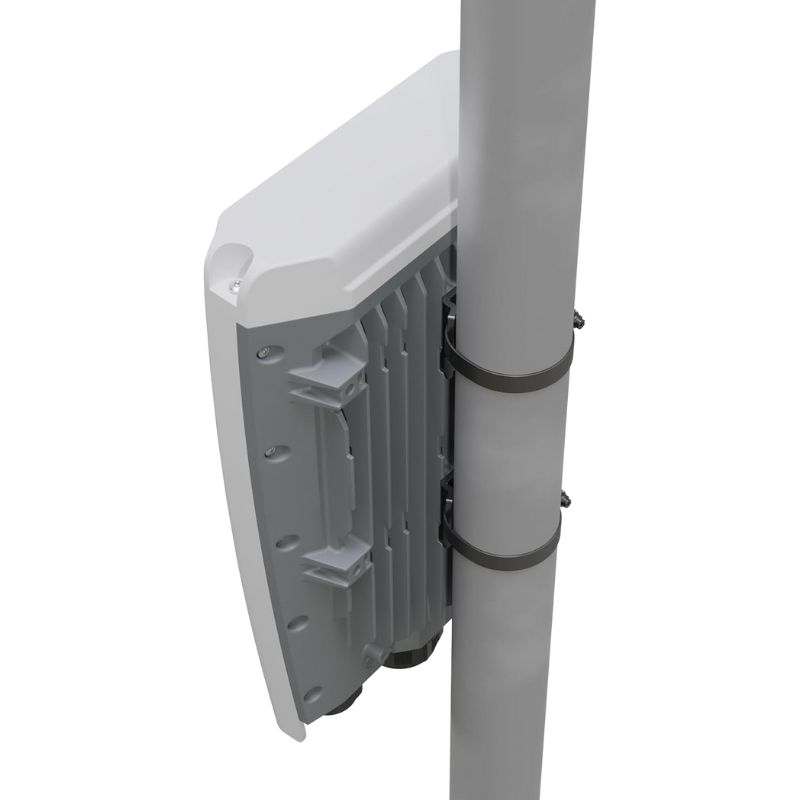
Modern cities deploy vast networks for traffic management, public safety cameras, environmental sensors, and public Wi-Fi. The CRS504-4XQ-OUT can act as a resilient, outdoor core switch for such mesh networks, aggregating traffic from thousands of devices across a municipality. Its silent operation and immunity to weather make it suitable for installation on light poles, traffic signal cabinets, or building facades.
When paired with outdoor 100G capable wireless units (like certain mmWave radios) or as a terminal for dark fiber, this switch provides the high-speed Ethernet handoff directly at the antenna or fiber termination point. This minimizes cable complexity and signal loss, ensuring the full bandwidth of the link is usable.
The device runs the full-featured RouterOS, providing a consistent management experience across the MikroTik ecosystem but scaled for high performance.
Configuration can be performed via CLI, WinBox, or WebFig. For large-scale deployments, API access and support for scripting enable automation. The inclusion of a 1G management port (RJ45) provides a dedicated out-of-band management path, crucial for recovering from configuration errors on the main data ports.
As part of the Cloud Router Switch series, this device benefits from ongoing firmware development that adds new features, optimizations, and security updates, protecting the investment over its long operational lifespan in the field.
Successfully implementing this category of switch requires careful planning around several key factors.
Choosing the correct QSFP28 transceivers and cables is paramount. Options include MikroTik-branded optics or third-party coded modules. For outdoor runs, consider using single-mode optics (LR4, ER4 Lite) for distances beyond 100 meters. Direct Attach Cables (DACs) are cost-effective for very short connections within a cabinet or to an adjacent radio, but are not suitable for outdoor runs between enclosures due to susceptibility to EMI and environmental damage.
While the switch itself is highly efficient, ensuring clean, stable DC power at the deployment site is essential. Deploying it with a reliable, outdoor-rated DC power supply or rectifier, and considering passive PoE out capabilities for powering auxiliary equipment like fans in a secondary enclosure or a GPS receiver, is part of system design.
The CRS504-4XQ-OUT occupies a unique niche. It contrasts with traditional indoor 100G switches that require a controlled, temperature-regulated environment and a significant footprint in a rack. It also differs from most "outdoor hardened" switches which are often lower port-density, lower-speed devices designed for access layer applications. By offering data center-level port density and performance in an outdoor package, MikroTik has created a category that bridges the gap between the core network and the harsh physical world, enabling network architectures that were previously complex and expensive to build. It stands as a testament to the evolution of edge networking, where the edge is no longer at the door of a climate-controlled hut, but truly out in the field.


 Contact Us
 Information
 Catalog
 Solid State Drives (SSD)
 Network Switches
 Hard Disk Drives
 HBA & Controllers
 PC & Servers
 PC & Server Memory
 CPU & Processors
 Network Routers
 Power Supplies
 Tape Drives & Libraries
 Network Devices
 Computer & Network Cables