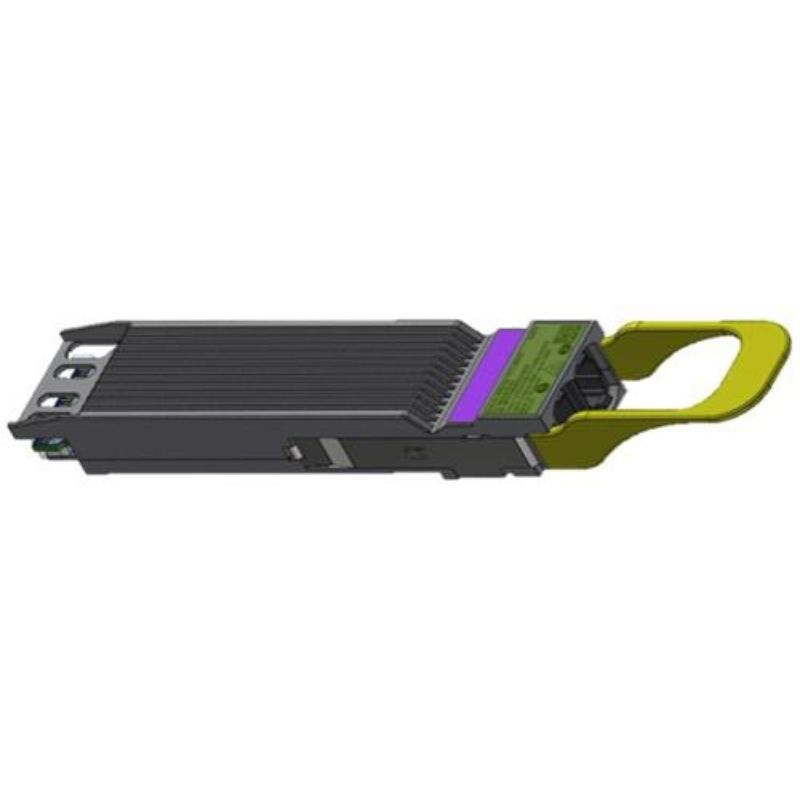
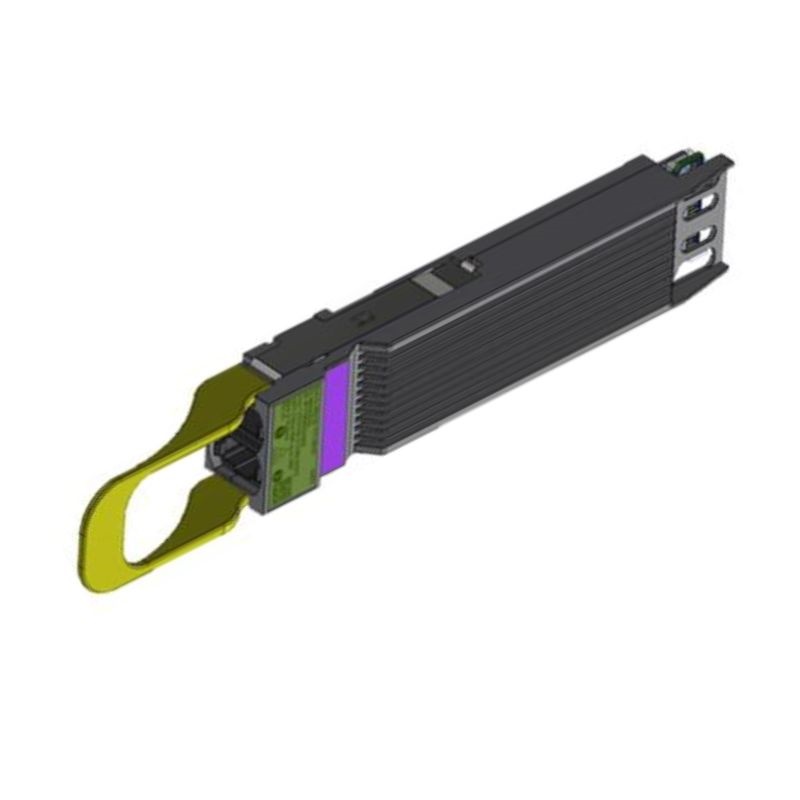
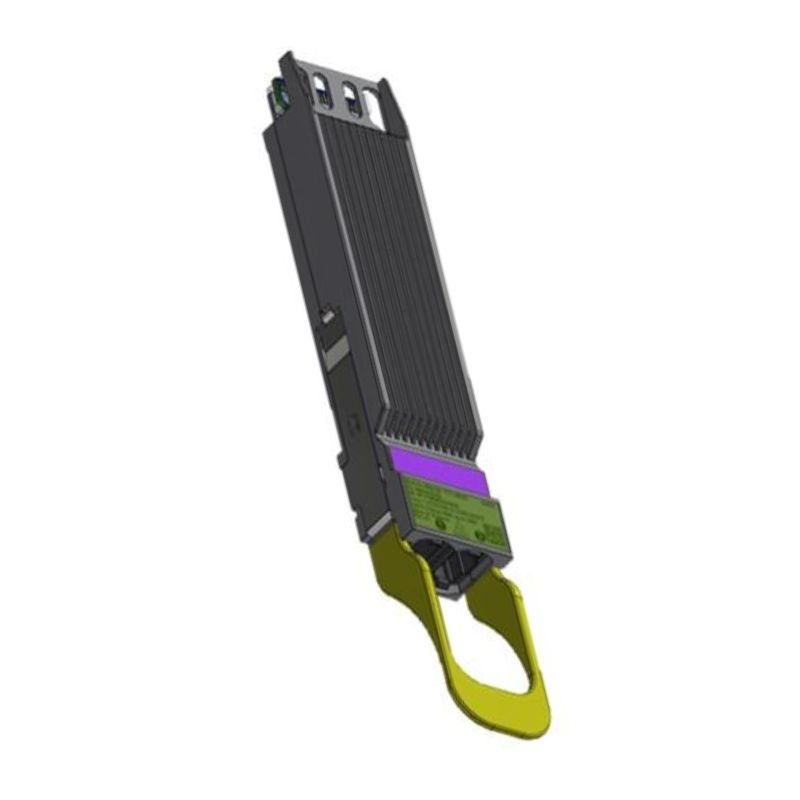
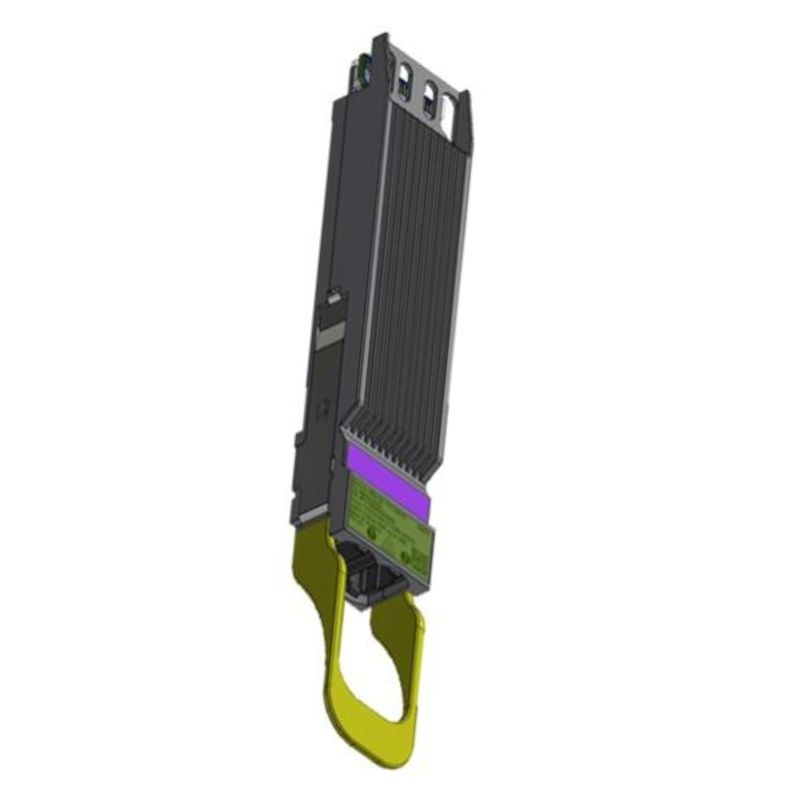
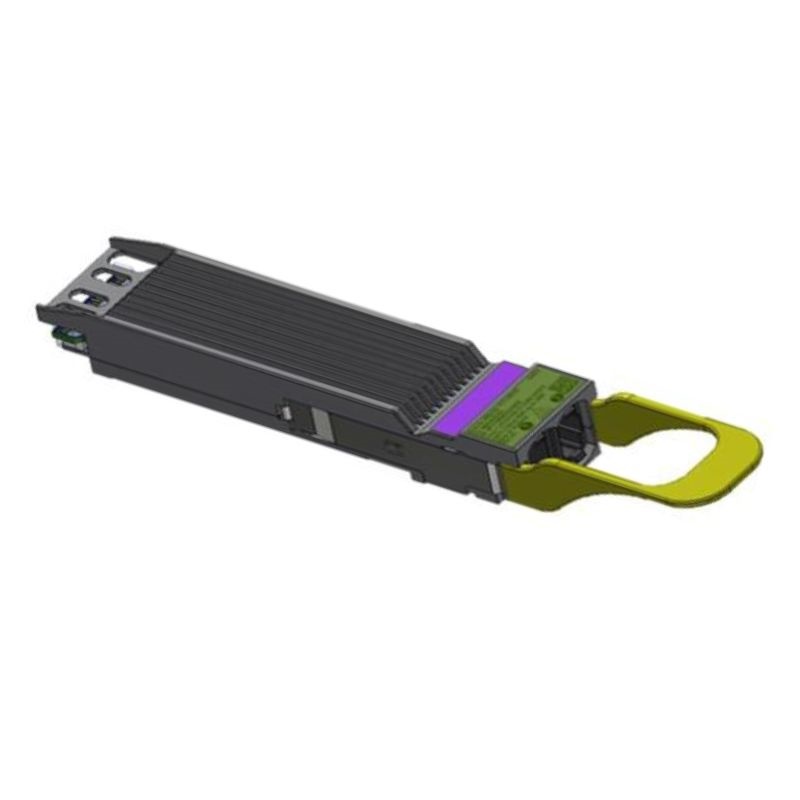
NVIDIA 980-9I30G-00NM00 800GBPS Twin-Port OSFP DR8 Transceiver
The NVIDIA 980-9I30G-00NM00 is a high-performance
800Gbps twin-port OSFP single mode DR8 transceiver, purpose-built for
next-generation data center and high-performance computing networks.
Supporting 2x400Gb/s channels with parallel 8-channel
architecture, this module delivers reliable transmission with advanced
100G-PAM4 modulation and offers a maximum reach of
500 meters using single mode fiber.
Key Specification
- Manufacturer: Nvidia
- Part Number: 980-9I30G-00NM00
- Product Type: Twin-Port OSFP Transceiver
Technical Highlights of NVIDIA MMS4X00-NM
- 800Gbps throughput with dual 400Gb/s connectivity
- 8-channel parallel design for superior bandwidth efficiency
- 100G-PAM4 modulation for fast and consistent data flow
- Compatible with both InfiniBand and Ethernet protocols
- Maximum reach of 500m with single mode fiber
- Integrated finned-top OSFP shell for advanced cooling
- Fully compliant with CMIS 4.0 and OSFP MSA standards
Core Design and Build
The MMS4X00-NM utilizes two MPO-12/APC optical connectors,
each carrying four 100G-PAM4 lanes for seamless 400Gbps transmission. With
dual transceiver engines, this OSFP module enables large-scale
deployments, such as 64 ports of 400Gb/s in a 32-cage Quantum-2 switch.
Spectrum-4 switches further enhance scalability, offering 32 or 64 cages for
up to 128 400G ports in dense networking environments.
Firmware and Protocol Adaptability
Designed with protocol flexibility in mind, the transceiver firmware
auto-detects and supports InfiniBand or Ethernet depending
on the host switch. This seamless adaptability ensures optimal interoperability
across NVIDIA Quantum-2 and Spectrum-4 switches without requiring manual
configuration.
Cooling and Thermal Design
High-speed modules generate significant heat, which is why this
finned-top OSFP shell design is essential. It delivers
enhanced thermal performance for air-cooled switches,
ensuring reliability and durability in demanding data center workloads.
Performance Specifications
- Data Rate: 800Gbps (2x400Gbps)
- Optical Reach: Up to 500m on SMF
- Modulation: 100G-PAM4 per channel
- Connectors: Two MPO-12/APC optical connectors
- Laser: 1310nm EML for reliable signal integrity
- Power: 17W max, with 1.5W low-power sleep mode
- Operating Temp: 0°C to +70°C
- Form Factor: Hot-pluggable OSFP, RoHS compliant
Applications and Use Cases
This 800Gbps twin-port OSFP DR8 module is primarily
deployed for linking Quantum-2 and Spectrum-4 switches across
medium-distance interconnects. Its 500-meter reach makes
it an ideal solution for large-scale data centers requiring reliable
high-bandwidth connections between clusters.
Typical Deployment Scenarios
- High-performance computing (HPC) clusters
- Cloud data center switch-to-switch connectivity
- Artificial Intelligence (AI) and Deep Learning infrastructure
- Enterprise-scale Ethernet and InfiniBand networks
- DGX-H100 system compatibility with flat-top variant (-NM-FLT)
Reliability and Compliance
NVIDIA ensures each MMS4X00-NM module undergoes
rigorous production-level testing for quality, durability, and
out-of-the-box readiness. The design adheres to
OSFPMSA.org and CMIS 4.0 compliance,
while being fully RoHS certified and Class 1 laser safe.
Key Advantages
- Seamless integration with NVIDIA’s end-to-end ecosystem
- Future-proof scalability for evolving data center needs
- Optimized error correction for extended 500m reach
- Energy efficiency with advanced low-power modes
- Guaranteed compatibility with Quantum-2 and Spectrum-4 switches
NVIDIA 980-9I30G-00NM00
With its cutting-edge 800Gbps performance, support for
dual network protocols, and robust thermal management design,
this transceiver is engineered for mission-critical applications where
speed, scalability, and reliability are non-negotiable.
Its balance of high efficiency, compliance, and advanced engineering
makes it a top choice for organizations building the next generation of
high-bandwidth, low-latency infrastructure.
Positioning of Nvidia 800 GBPS OSFP DR8 Transceiver
The Nvidia 980-9I30G-00NM00 800 Gbps Twin-port OSFP Single-Mode DR8 500 m transceiver sits at the center of next-generation leaf–spine fabrics, AI cluster backbones, and scale-out storage networks where ultra-high throughput and low latency are paramount. Built for dense 800 GbE deployments and backward-aware with common 400 GbE design ideas, this module consolidates multiple high-speed electrical lanes into parallel single-mode optical lanes optimized for short-reach data center runs up to 500 meters. The “Twin-port” OSFP form factor supports exceptionally high faceplate density while enabling flexible breakout and migration paths for operators moving from 100/200/400 GbE to 800 GbE.
As a DR-class parallel single-mode optic, this device targets clean, unobstructed data-hall links—top-of-rack to aggregation, spine to super-spine, and AI pod interconnects—delivering the balanced mix of reach, cost, thermals, and serviceability that modern hyperscale designs demand. Network architects can standardize on this module for predictable performance across rows and meet tight oversubscription budgets without resorting to exotic cabling.
Key Value Propositions
- Massive bandwidth: An 800 Gbps line rate in a single OSFP footprint reduces cabling complexity and switch radix pressure.
- Predictable 500 m reach: Single-mode DR8 optics are purpose-built for structured cabling links across typical data halls with patch fields and fiber trunks.
- Twin-port OSFP efficiency: A faceplate-dense approach that helps align with 1RU/2RU high-port-count switches and AI fabrics.
- Investment protection: Parallel-optics design patterns support straightforward breakouts and staged migrations as fabric speeds evolve.
- Operational simplicity: Digital diagnostics, DOM/DDL monitoring, and hot-swap serviceability align well with standard data center practices.
Form Factor, Signaling, and Optical Architecture
The 980-9I30G-00NM00 leverages the OSFP (Octal Small Form-Factor Pluggable) mechanical envelope to host high-density electrical I/O and integrated optics. Internally, multiple electrical lanes from the switch ASIC are converted to parallel single-mode optical lanes using PAM4 modulation. As a DR-class optic, the module targets deterministic, low-loss, single-mode channels with streamlined dispersion management.
OSFP Twin-Port Concept
“Twin-port” references the module’s ability to present two logical high-speed ports within a single OSFP housing, enabling flexible operational modes such as single 800 GbE or split functionality aligned to platform and software capabilities. This consolidated approach increases panel density and preserves power envelope advantages while simplifying faceplate design and airflow.
Electrical Lane Topology
- Host interface: High-speed electrical lanes from the switch/NIC ASIC routed over the OSFP cage into the module’s retimer/gearbox.
- PAM4 signaling: 4-level pulse-amplitude modulation for high spectral efficiency at the host and over fiber.
- Error correction: Link-layer Forward Error Correction (FEC) on the host contributes to robust BER performance typical of hyperscale fabrics.
Parallel Single-Mode Optics
DR8 optics employ eight parallel single-mode lanes in each direction to achieve the aggregate line rate. The module couples to a multi-fiber connector at the front panel, simplifying trunking and structured cabling practices. The parallel approach scales bandwidth while maintaining short-reach simplicity for intra-data-center links.
DR-Class for 500 m
- Optimized reach: 500 m covers leaf–spine spans with cross-connects and patch panels in most data halls.
- Cost and power balance: DR-class optics avoid complexity inherent in long-haul dispersion compensation while delivering predictable performance.
- Operational consistency: Standardized link budgets simplify MACsec and telemetry planning across large fleets.
Use Cases and Deployment Patterns
Operators adopt the Nvidia 980-9I30G-00NM00 in several repeatable topologies to scale east–west bandwidth, accelerate AI/ML training backbones, and unify high-performance storage and compute fabrics. Below are representative patterns that take advantage of the module’s DR8 parallel optics and 500 m reach.
Leaf–Spine and Spine–Super-Spine Fabrics
In classic Clos designs, 800 GbE uplinks from leaf to spine dramatically reduce the number of links and optics required to achieve a given oversubscription ratio. With Twin-port OSFP, operators can deploy high-port-count switches with more 800 GbE lanes per RU, supporting:
- Higher bisectional bandwidth without increasing cabling density beyond manageable levels.
- Modular growth as additional leaf blocks or spines are commissioned.
- Straight-through structured cabling in meet-me zones with MPO-based trunks.
AI/ML Cluster Interconnect
Training clusters and inference fabrics benefit from low-latency, lossless-or-near-lossless designs. Using 800 GbE DR8 for pod-to-pod and rack-to-row interconnect:
- Gradient synchronization and all-reduce operations move at line-rate, minimizing step-time penalties.
- Predictable 500 m reach supports cross-row GPU fabric stitching and unified namespace designs for distributed datasets.
- Thermal and power envelopes align with dense switch platforms commonly used in AI networks.
High-Performance Storage and HPC Fabrics
Parallel single-mode DR8 enables deterministic storage backbones—NVMe/TCP, RoCE-v2, or iSCSI at massive aggregate bandwidths—ensuring headroom for bursty workloads and replication streams. HPC clusters can use 800 GbE to complement or bridge specialized interconnects in multi-fabric architectures.
Migration From 400 GbE to 800 GbE
Many environments progress from 100/200/400 GbE toward 800 GbE. With the 980-9I30G-00NM00, planners can stage migrations:
- Progressive rollouts: Introduce 800 GbE uplinks at the spine layer while maintaining 400 GbE downlinks, then upgrade leaves.
- Breakout strategies: Use Twin-port logic and parallel cabling to present multiple lower-rate endpoints during transition periods (platform support dependent).
- Re-use structured cabling: Preserve single-mode trunks where connector and polarity plans already align with DR-class optics.
Physical Characteristics and Handling
The module is a hot-pluggable OSFP unit with an integrated heatsink designed for front-to-back airflow chassis. Installation and removal follow standard OSFP latch procedures.
Front-Panel Connectivity
- Connector type: Parallel single-mode multi-fiber connector aligned to DR8 transmission (consult platform BOM for exact connector mapping and keying).
- Polarity management: Use factory-terminated trunks with defined polarity (Type-B or platform-recommended) to ensure correct lane mapping.
- APC vs UPC considerations: Follow the transceiver and patch panel specifications for end-face geometry compatibility to maintain return-loss targets.
Thermal Envelope and Airflow
OSFP modules dissipate more power than legacy small-form factors due to higher SerDes counts and optical engines. Ensure:
- Unobstructed airflow: Keep cable bend-radius and slack management from impeding heatsink airflow.
- Chassis alignment: Deploy in platforms rated for high-power OSFP optics with adequate front-to-back or back-to-front cooling.
- Ambient control: Maintain data-hall inlet temperatures within vendor-recommended ranges for thermal margin under peak load.
Cleaning and Contamination Control
- Dry cleaning first: Use lint-free sticks and one-click cleaners approved for the connector type.
- Inspect every time: “Inspect–Clean–Inspect” before insertion to protect the ferrules and preserve insertion loss budgets.
- Dust caps: Keep protective caps on both module and patch cords whenever disconnected.
Performance Considerations and Link Budgets
DR-class 500 m links are engineered for single-mode fiber with very low insertion and return loss. A typical data-hall path includes the transceiver, patch panel jumpers, trunks, and a cross-connect. Staying within a conservative loss budget ensures error-free operation with margin for aging and temperature variation.
Elements That Influence Link Quality
- Connector count: Each mated pair adds insertion loss and return-loss effects; fewer, higher-quality connections improve margin.
- Fiber specification: G.652.D or compatible low-water-peak single-mode fiber is standard in modern facilities.
- Cable plant cleanliness: Microscopic debris dramatically increases reflectance and insertion loss; strict hygiene preserves performance.
- Proper polarity: Ensures correct lane alignment for DR8 parallel optics and avoids unlit lanes or alignment errors.
FEC and BER Behavior
The host platform applies Forward Error Correction appropriate for PAM4 links, trading small latency overhead for orders-of-magnitude BER improvement. In steady-state conditions, corrected codewords should remain within operational thresholds; monitoring counters in production helps detect marginal optics or plant issues early.
Telemetry and DOM/DDL
- Receive/Transmit power levels: Track trends over time to spot fiber degradation or contamination.
- Module temperature and bias currents: Thermal excursions or abnormal currents might indicate airflow or device health concerns.
- FEC statistics: Rising corrected error counts can serve as a lead indicator for physical-layer drift.
Cabling and Polarity Planning
A successful 800 GbE DR8 rollout hinges on getting the cabling design right from the start. Parallel single-mode connectors, trunk cabling, cassettes (if used), and patching schemas must be chosen and documented meticulously.
Structured Cabling Best Practices
- Documented lanes: Keep lane mapping diagrams for every panel to reduce MOP errors.
- Factory-terminated trunks: Pre-terminated MPO trunks minimize field splicing variability and simplify turn-ups.
- Polarity verification: Validate Type-B (or recommended) polarity end-to-end with a visual fault locator before migration windows.
- Slack management: Use horizontal managers and radius guides to prevent micro-bends and maintain airflow.
Breakout and Aggregation Options
Depending on platform support and intended topology, Twin-port OSFP modules can participate in designs that aggregate or split bandwidth logically. When planning breakouts:
- Confirm host capabilities: Not all systems support all breakout permutations; check the switch/NIC datasheet and OS feature matrix.
- Use correct harnesses: Choose breakout assemblies rated for single-mode parallel optics with the correct fiber count and connector geometry.
- Label meticulously: Breakouts complicate lane accounting; precise labeling prevents mis-patching and troubleshooting delays.
Compatibility and Interoperability
Though data centers increasingly standardize optics within a vendor ecosystem, multi-vendor interoperability remains important in brownfield sites. The Nvidia 980-9I30G-00NM00 leverages common DR-class optical characteristics to enable interop where platforms support equivalent link profiles and FEC behavior.
Host Platforms and Operating Systems
- Switch ASIC families: Deploy with platforms that expose OSFP ports designed for 800 GbE DR-class optics.
- NICs/adapters: High-end adapters in GPU servers and storage nodes may support 800 GbE uplinks over OSFP cages via appropriate risers or front-panel designs.
- Network OS: Ensure the operating system version advertises the module correctly, exposes DOM/DDL data, and supports requested breakouts.
Inter-Vendor Links
For links between different switch vendors, align on:
- Identical optical class: DR8-to-DR8 to maintain symmetrical budgets.
- FEC mode: Both ends should use compatible FEC profiles expected by the 800 GbE standard environment.
- Autonegotiation/link training: Validate that both systems manage lane training and alignment in accordance with platform guides.
Power, Cooling, and Environmental Planning
High-density 800 Gbps deployments elevate attention to power and thermal design. While OSFP was developed with generous thermal headroom relative to earlier form factors, the cumulative load across a full chassis is substantial.
Rack-Level Considerations
- Per-RU thermal budget: Confirm switch power with populated 800 G ports; size rack PDUs and cooling accordingly.
- Airflow directionality: Use matching airflow SKUs (F2B or B2F) across servers, switches, and PDUs to prevent hot-air recirculation.
- Containment strategies: Hot-aisle or cold-aisle containment improves delta-T and reduces fan duty cycles.
Device-Level Thermal Hygiene
- Uniform population: Evenly distribute populated ports to prevent localized hotspots while staging rollouts.
- Periodic lint removal: Dust accumulation on faceplates and filters reduces effective airflow; schedule regular maintenance.
- Telemetry alerts: Set temperature thresholds in the NOS for proactive notification before throttling or link flaps occur.
Operations, Monitoring, and Lifecycle
Running large fleets of 800 GbE optics successfully requires intentional operations—from staging and burn-in to steady-state monitoring and graceful retirement. The 980-9I30G-00NM00 fits into familiar operational workflows common in hyperscale and enterprise data centers.
Staging and Burn-In
- Initial inspection: Verify part numbers, serials, and firmware where applicable, logging assets into the CMDB before deployment.
- Clean and inspect: Ensure all connectors are clean and within return-loss targets using inspection scopes.
- Baseline telemetry: Record Tx/Rx power, bias, and temperature under idle and traffic profiles to establish reference values.
Steady-State Monitoring
- Optical power drift: Trend analysis detects slow degradation and enables time-based maintenance rather than reactive swaps.
- Corrected/uncorrected error counters: Rising error rates may indicate fiber plant issues, thermal stress, or impending module failure.
- Environmental correlation: Correlate module temperature with room sensors and switch fan speeds to tune airflow strategies.
Change Management and MOPs
- Pre-change validation: Light-level and continuity checks before maintenance windows minimize surprises.
- Backout plans: Keep spare optics staged per row and test revert procedures.
- Post-change audits: Confirm inventory, telemetry baselines, and documentation updates immediately after work is complete.
Security and Compliance Considerations
Physical-layer security is often overlooked. While optics themselves are passive from a policy standpoint, their configuration and telemetry can inform broader security postures.
Optical-Layer Security Hygiene
- Inventory integrity: Validate module IDs and vendor OUI as part of admission checks for network devices.
- Tamper evidence: Use port locks or latching blank panels in sensitive environments to deter unauthorized changes.
- Telemetry baselines: Sudden shifts in Rx power or FEC rates on secure interconnects can signal unauthorized physical changes.
Compliance Frameworks
Data centers governed by compliance standards should document the optical layer in asset and change records. While the module’s function is transport, accurate record-keeping contributes to audit completeness and faster incident response.
Procurement, Spares, and TCO Planning
The economics of 800 GbE are driven by port density, power efficiency, and operational simplicity. A well-planned procurement and spares strategy lowers total cost of ownership (TCO) over the module’s lifecycle.
Spares Philosophy
- Stock by row or POD: Position spares near AI pods or spine rows to cut MTTR for critical fabrics.
- Rotate through burn-in: Periodically cycle spares into service during maintenance to verify health.
- Track failure modes: Use repair codes (contamination, thermal, electrical) to refine handling practices and training.
TCO Levers
- Density per RU: Twin-port OSFP helps reduce the count of modules and jumpers versus lower-rate designs.
- Energy per bit: Modern PAM4 optics deliver improved joules/bit compared with earlier generations, especially when airflow is optimized.
- Operational consistency: Standardizing on DR-class for short-reach single-mode simplifies inventories and reduces training overhead.
Comparison With Adjacent Optic Classes
Selecting the right optic depends on reach, cost, and cabling constraints. The 980-9I30G-00NM00, as a DR8-class 500 m parallel single-mode module, complements other single-mode and multi-mode options.
DR8 vs. DR4/FR-Class
- Lane count: DR8 uses more parallel lanes to achieve higher aggregate bandwidth in the same or similar reach profile.
- Reach targets: DR-class aims at 500 m in data centers; FR-class extends to 2 km for campus or inter-building links.
- Cabling: DR8 leverages higher-count MPO connectors; DR4 may use a smaller fiber count for 400 G applications.
Single-Mode vs. Multi-Mode
- Upgrade path: Single-mode scales to higher rates with fewer reach constraints than multi-mode inside large halls.
- Plant consistency: If the site standardizes on SMF trunks, DR-class modules reduce SKU fragmentation.
- Cost tradeoffs: While SMF optics may carry a higher unit price than MMF at shorter reaches, the long-term scalability often offsets initial costs.
Design Patterns for AI Fabrics
AI training networks drive new traffic patterns and demand low-latency, non-blocking designs. The Nvidia 980-9I30G-00NM00 supports these patterns by delivering high bandwidth per port and predictable reach that maps well to GPU rack layouts.
Common AI Topologies
- Folded Clos with uniform 800 G links: Simplifies capacity planning and keeps per-hop latency predictable.
- Hybrid fabrics: Use 800 G DR8 for inter-pod connections while GPUs communicate over specialized in-rack interconnects.
- Disaggregated storage: Isolate storage pods on 800 GbE and pin traffic using policies to keep east–west flows inside the shortest path.
Operational Tips for AI Clusters
- Congestion control: Align QoS, ECN, and buffer tuning with high-throughput optical links to avoid head-of-line blocking.
- Telemetry at scale: Export per-port DOM and FEC counters to the AI scheduler or observability platform for workload-aware remediation.
- Spare capacity: Overprovision a small percentage of 800 G links for maintenance switchover and failure isolation.
Sustainability and Efficiency
Consolidating bandwidth into fewer, denser ports can contribute to greener data centers by lowering energy per transported bit and reducing material counts across cabling and connectors.
Design Choices That Improve Sustainability
- Right-sizing reach: Choosing 500 m DR-class optics for intra-hall links avoids over-engineering with longer-reach modules.
- Structured cabling reuse: Extending the life of SMF trunks minimizes waste and project downtime.
- Thermal optimization: Proper containment and airflow reduce fan duty cycles at both server and switch layers.
Planning Checklist for Large-Scale Rollouts
- Validate that all target switches support OSFP 800 G DR-class optics and required FEC profiles.
- Audit the SMF plant for connector type, polarity, end-face geometry, and total insertion loss.
- Pre-stage a documented lane mapping plan for every cross-connect and cabinet.
- Establish procurement of cleaning tools approved for the connector type.
- Develop a spares strategy with per-row staging and periodic rotation through burn-in.
- Define telemetry baselines and alert thresholds prior to production cutover.
- Train field teams on DR8 handling, polarity verification, and inspection procedures.
Glossary of Terms
- OSFP: Octal Small Form-Factor Pluggable, a high-density pluggable transceiver form factor.
- DR (Data Center Reach): Optical class targeting 500 m single-mode reach for intra-hall links.
- DR8: Parallel single-mode optic using eight optical lanes per direction to achieve high aggregate bandwidth.
- PAM4: Four-level pulse-amplitude modulation delivering higher bits per symbol than NRZ.
- FEC: Forward Error Correction, a coding technique improving BER on high-speed links.
- DOM/DDL: Digital Optical Monitoring (or Diagnostics) that exposes module health metrics.
- SMF: Single-Mode Fiber used for long-reach and high-capacity links.
- MPO: Multi-fiber Push-On connector used for parallel optics cabling.
Specification-Oriented Highlights
While exact figures depend on platform and production revisions, the following highlights summarize what operators generally expect from an 800 Gbps Twin-port OSFP DR8 500 m module in modern data centers:
- Data rate: 800 Gbps aggregate per module with PAM4 modulation.
- Optical class: DR-style single-mode optimized for up to 500 m structured cabling.
- Physical interface: OSFP with integrated heatsink designed for high-density front panels.
- Optical lanes: Parallel single-mode lanes consistent with DR8 link design.
- Diagnostics: DOM/DDL telemetry available for Tx/Rx power, temperature, and bias currents.
- Use cases: Leaf–spine fabrics, AI/ML clusters, HPC/storage backbones, and pod interconnects.
Design and Operations Best Practices Summary
Design
- Choose DR8 for short-reach single-mode links within the data hall where 800 Gbps per port is required.
- Engineer MPO-based trunks with documented polarity end-to-end.
- Size power and cooling for full OSFP population at 800 Gbps rates.
Deployment
- Follow inspect–clean–inspect for every connector.
- Capture baseline DOM and FEC statistics on day-0.
- Validate link with traffic tests before entering production.
Operations
- Trend telemetry to predict failures early and schedule replacements.
- Maintain up-to-date runbooks and lane mapping diagrams.
- Keep spares near critical rows or AI pods for rapid remediation.
Cabling Examples and Lane Mapping Concepts
Because DR8 relies on multiple parallel lanes, thoughtful lane mapping ensures each optical path reaches the correct receiver. While exact pinouts are vendor-specific, the following conceptual examples illustrate how to avoid common pitfalls:
Straight-Through Trunk With Cross-Connect
- Endpoint A: Nvidia 980-9I30G-00NM00 in a leaf switch.
- Panel A: MPO feed-through with labeled lane positions and polarity.
- Trunk: Factory-terminated MPO single-mode trunk across the hot aisle to Row B.
- Panel B: Matching MPO feed-through; maintain labeling consistency.
- Endpoint B: Identical OSFP DR8 module at the spine switch.
Verification Steps
- Use a polarity tester or light source to confirm lane order.
- Check DOM values after patching; symmetrical power at both ends indicates correct mapping.
- Run a low-rate test pattern first to verify continuity before saturating the link.
Breakout Panels and Harnesses
When using breakouts for testing or migration, ensure each lane group terminates on the correct receiver side. Mis-alignments can cause “dark” lanes even though the trunk appears seated properly.
Inventory Management and Version Control
Treat optics like firmware-bearing assets even when the primary value is physical. Track part numbers, revisions, and deployment history to streamline replacements and audits.
CMDB Fields to Capture
- Part number: 980-9I30G-00NM00
- Serial number and manufacturing date code
- Location (row, rack, U position, port)
- Service/tenant associati
- Install date, last maintenance date
Lifecycle Events
- Arrival QA: Physical inspection and initial DOM sanity check.
- Deployment: Recorded with baseline telemetry and link tests.
- Maintenance swaps: Documented with reason codes and post-swap validation.
- Retirement: Sanitization and recycling in accordance with e-waste policies.
Edge Cases and Special Scenarios
Some environments present challenges beyond the typical data-hall deployment. Planning for edge cases ensures continuity during unusual conditions.
High-Vibration or Dynamic Racks
- Use strain-relief clips and cable managers to avoid micro-movements at connectors.
- Re-inspect connections after mechanical work in the rack (e.g., server swaps, rail adjustments).
Mixed-Generation Fabrics
- Document rate-matching points where 800 G uplinks aggregate 400 G leaves.
- Monitor queues and buffer behavior at rate transitions to prevent congestion.
Quality Assurance and Acceptance Testing
A rigorous acceptance process lowers risk when cutting over mission-critical services. Establish clear pass/fail thresholds and verify them consistently.
Suggested Acceptance Tests
- Optical: Insertion loss measurements fall within budget; end-face inspection passes on all connections.
- Protocol: Link negotiation and FEC lock within expected time windows.
- Traffic: Line-rate tests with zero frame loss and acceptable latency jitter.
- Stability: Multi-hour burn-in under sustained throughput without thermal or error alarms.
Operational Metrics That Matter
Focus on a concise set of metrics that predictively indicate link health and performance for the Nvidia 980-9I30G-00NM00 modules.
Core KPIs
- Rx optical power trend (per lane)
- FEC corrected/uncorrected codewords over rolling intervals
- Module temperature versus room inlet temperature
- Interface error rates (CRC, symbol errors)
- Link flaps with timestamps and correlated events
Modern Observability Integration
Integrate optical telemetry with your broader observability toolchain so that physical-layer issues are visible to network SREs and application owners.
Data Pipeline
- Collection: NOS exports DOM/DDL metrics via streaming telemetry.
- Storage: Time-series database with retention tuned to capacity planning needs.
- Visualization: Dashboards highlight outliers and trend deviations.
- Automation: Alerting rules open tickets and trigger runbooks automatically.
Future-Proofing and Roadmap Alignment
Adopting 800 Gbps DR8 positions your infrastructure for forthcoming performance tiers while maintaining manageable complexity today. The Twin-port OSFP architecture provides a springboard for incremental bandwidth increases and feature roll-ins as switch silicon generations advance.
Strategic Considerations
- Uniform 800 G core: Standardize at the spine and scale capacity by adding leaf blocks rather than increasing layers.
- Optical plant longevity: Design SMF trunks and connectors to remain serviceable across multiple speed upgrades.
- Interoperability testing: Maintain a lab environment to validate new NOS versions and optic batches before production.





 Contact Us
 Information
 Catalog
 Solid State Drives (SSD)
 Network Switches
 Hard Disk Drives
 HBA & Controllers
 PC & Servers
 PC & Server Memory
 CPU & Processors
 Network Routers
 Power Supplies
 Tape Drives & Libraries
 Network Devices
 Computer & Network Cables