(7% discount is applied at checkout)
Cart is empty
Your go-to destination for cutting-edge server products
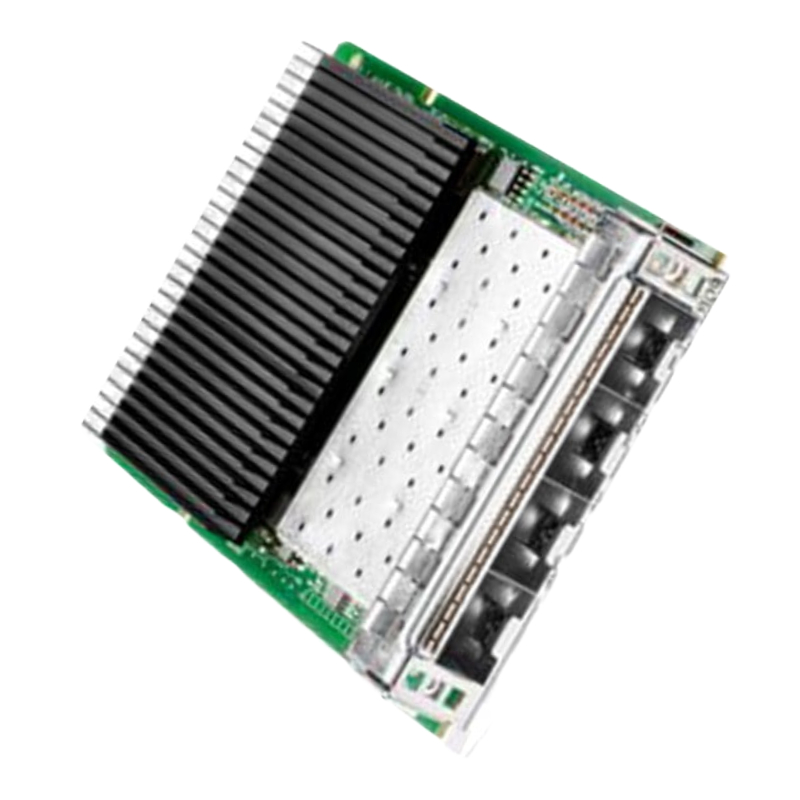


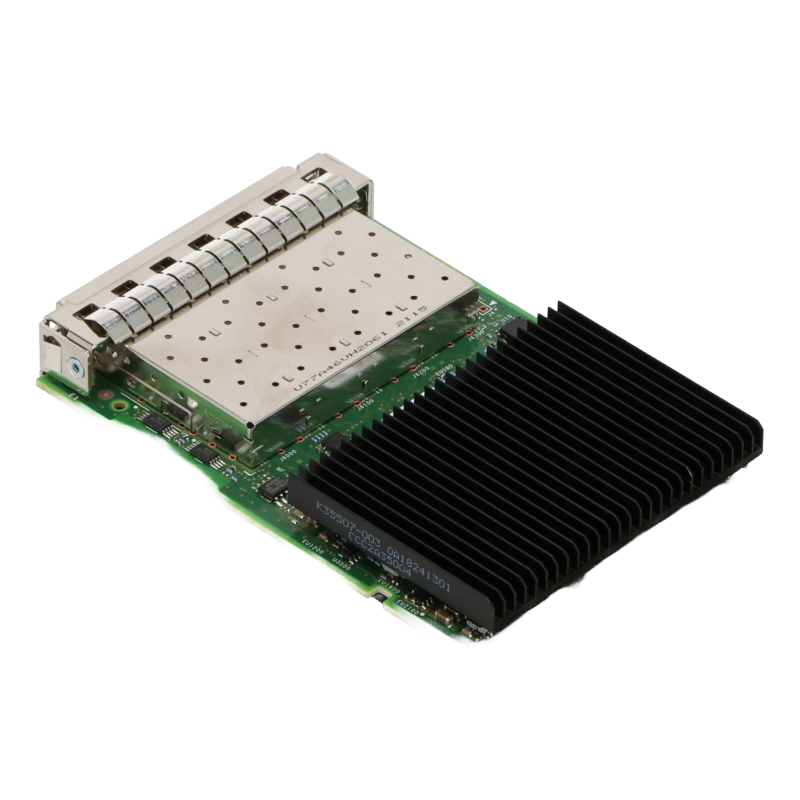
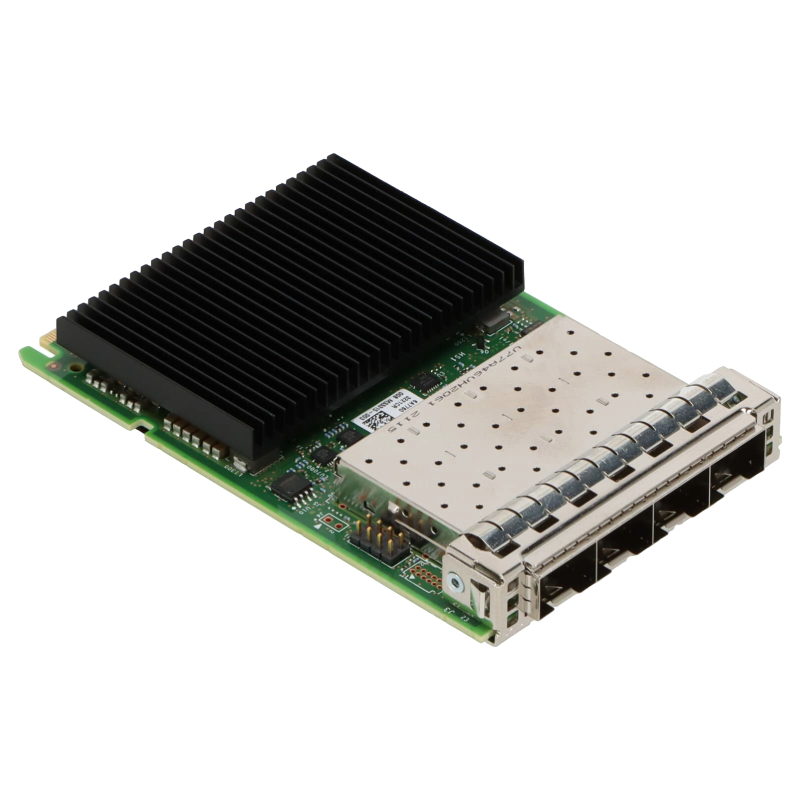
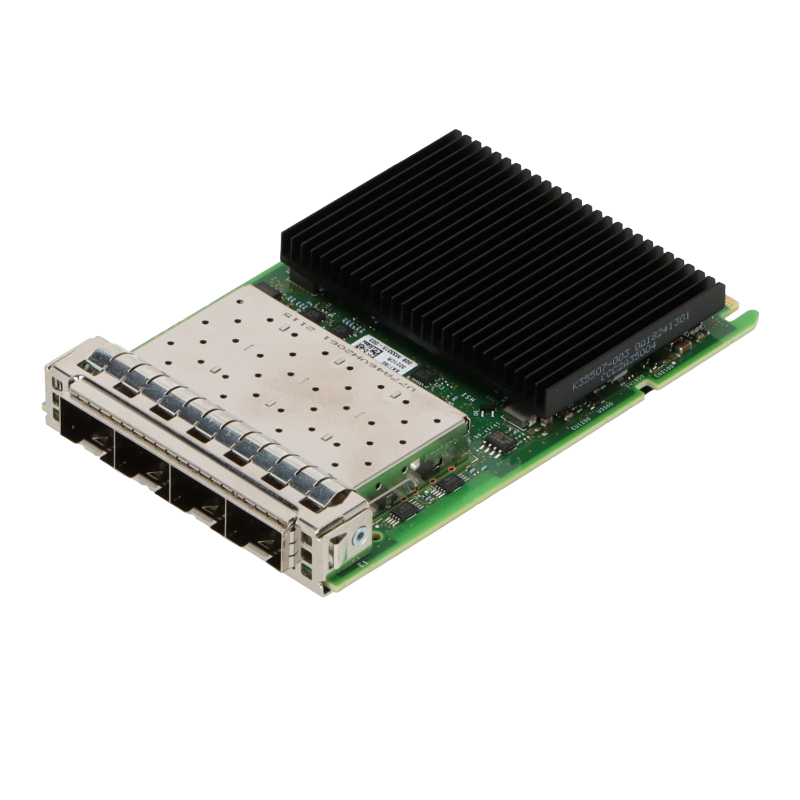
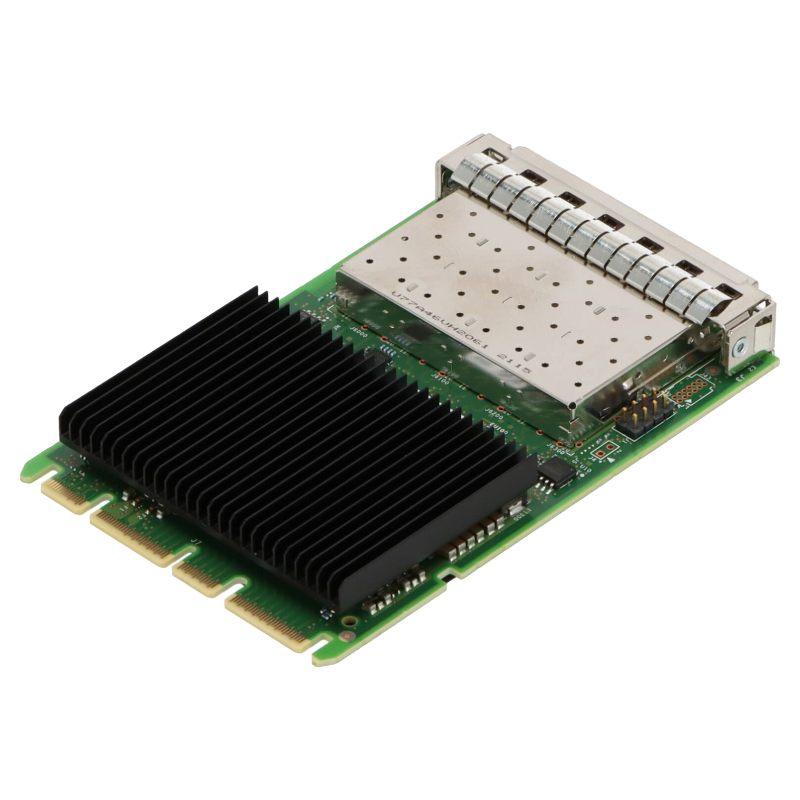
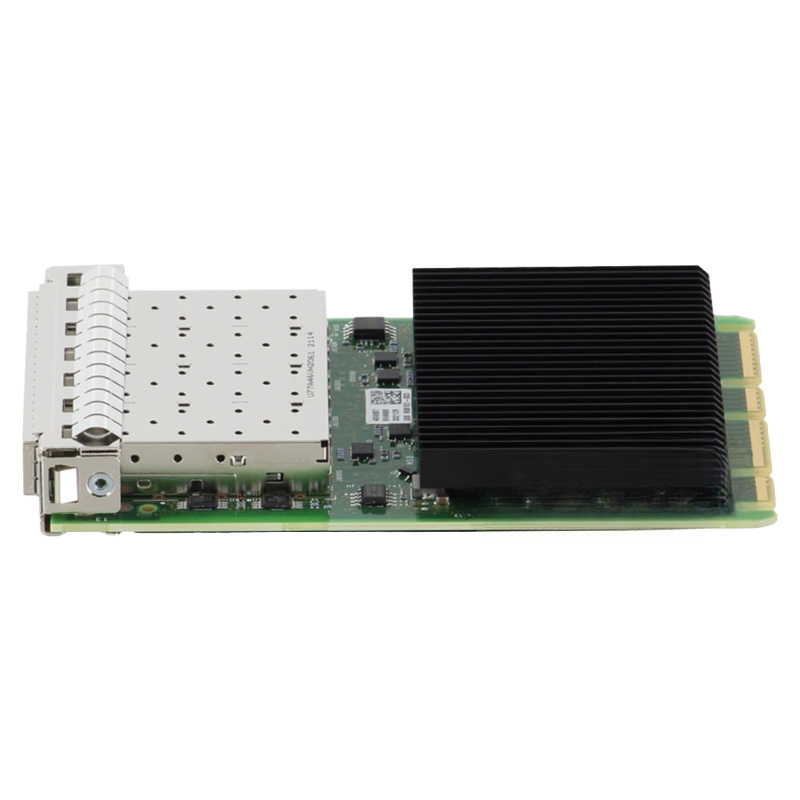
Dell WK9RR Intel E810-XXVDA4TGG1 4 Port 10/25GbE SFP28 Precision Timing Adapter with Gnss. New Sealed in Box (NIB) with 1 Year Warranty - Intel Version
| SKU/MPN | Warranty | Price | Condition | You save |
|---|---|---|---|---|
| WK9RR | 1 Year Warranty | $546.00 | Excellent Refurbished | You save: $191.10 (26%) |
| WK9RR | 1 Year Warranty | $1,222.00 | New Sealed in Box (NIB) | You save: $427.70 (26%) |
Dell WK9RR Intel E810-XXVDA4TGG1 10/25GbE Adapter Outline
The Dell WK9RR Intel E810-XXVDA4TGG1 is a high-performance enterprise network adapter engineered to support modern data center environments, cloud infrastructure, telecommunications platforms, and high-bandwidth workloads. Featuring four SFP28 ports with flexible 1GbE, 10GbE, and 25GbE connectivity options, this adapter delivers advanced networking capabilities combined with precision timing functionality through integrated GNSS support.
Designed for scalable deployments and demanding enterprise operations, this PCI Express 4.0 x16 network interface card provides exceptional throughput, low latency, and efficient traffic management while supporting multiple networking standards.
The Dell WK9RR Intel E810-XXVDA4TGG1 Quad Port 10/25GbE SFP28 Precision Timing Adapter with GNSS is designed for environments that require deterministic networking, high-throughput packet handling, low latency, and synchronized timing across distributed computing platforms. Built around Intel Ethernet Controller E810 architecture and integrated into Dell enterprise platforms, this adapter combines advanced Ethernet connectivity with hardware-assisted timing capabilities and satellite-based synchronization functionality.
Organizations operating edge computing environments, telecommunications deployments, financial trading infrastructures, private cloud architectures, and modern data centers increasingly require precise timing in addition to network bandwidth. This specialized adapter addresses both requirements simultaneously through quad-port 10GbE and 25GbE SFP28 connectivity together with integrated GNSS timing support.
The Intel E810 controller family introduces scalable Ethernet processing designed to support virtualization, cloud-native networking, and emerging edge workloads. The Dell WK9RR implementation delivers enterprise-class throughput while maintaining efficient CPU utilization through intelligent offloading mechanisms.
Unlike conventional network interface cards that simply move packets between servers and switches, this adapter incorporates programmable packet processing, enhanced traffic control mechanisms, and advanced telemetry features. These capabilities support environments where timing and data delivery consistency directly impact operational outcomes.
The quad-port design enables simultaneous multi-network participation, allowing organizations to segment workloads across management, storage, synchronization, and application traffic while maintaining operational flexibility.
Network modernization initiatives frequently involve mixed-speed environments where existing infrastructure coexists alongside newer high-bandwidth deployments. The Dell WK9RR supports both 10 Gigabit Ethernet and 25 Gigabit Ethernet operation, allowing staged migration strategies without immediate replacement of switching infrastructure.
Twenty-five gigabit networking offers improved bandwidth density compared with previous generations while maintaining practical cabling and power characteristics. This balance makes the adapter suitable for organizations expanding east-west traffic capacity inside virtualized environments.
By supporting SFP28 transceiver compatibility, administrators gain deployment flexibility across varying distance requirements and optical configurations.
The four independent SFP28 interfaces create opportunities for bandwidth aggregation, redundancy implementation, and workload separation. Enterprises can configure individual ports to serve dedicated network roles or combine interfaces for expanded throughput capacity.
Multiple ports reduce congestion risk while improving application responsiveness across environments containing storage replication, container orchestration, distributed analytics, and virtualization traffic.
Quad-port architecture supports numerous operational models including:
Dedicated uplinks for clustered applications, isolated synchronization networks, segmented tenant traffic, independent virtual switching paths, and resilient failover configurations.
This flexibility allows organizations to adapt network policies according to operational requirements rather than hardware limitations.
SFP28 interfaces support efficient cable management and modular optical selection. Administrators may deploy short-range optical links for intra-rack communication or long-range optics for inter-building connectivity.
The modular nature of SFP28 technology simplifies upgrades and minimizes lifecycle disruption.
One of the defining capabilities of the Dell WK9RR adapter is integrated precision timing support. Time synchronization has become increasingly important as distributed applications require coordinated operations across geographically separated resources.
Accurate timing allows event correlation, transaction ordering, network orchestration, monitoring precision, and improved operational visibility.
Hardware-assisted timing reduces dependency on software synchronization processes and improves timestamp consistency.
Software timestamping introduces variability due to operating system scheduling and processing delays. Hardware timestamping embedded within the network adapter enables timing measurements closer to packet ingress and egress.
This improved measurement accuracy benefits latency-sensitive environments where microsecond-level consistency influences operational performance.
Hardware timing capabilities support network analytics, industrial automation, edge synchronization, financial applications, telecommunications infrastructure, and distributed compute clusters.
Organizations deploying deterministic networking can use hardware timestamps to improve event reconstruction and network observability.
Global Navigation Satellite System functionality transforms the adapter from a traditional network interface into a synchronized timing platform. GNSS technologies deliver highly accurate reference timing through satellite signals.
This capability enables servers to maintain synchronized clocks across broad geographic areas without relying exclusively on upstream timing infrastructure.
GNSS support is particularly useful in environments requiring independent timing reference sources.
Integrated satellite synchronization reduces timing drift and improves consistency between distributed systems. Organizations gain improved alignment across analytics platforms, event processing pipelines, and infrastructure monitoring environments.
GNSS integration can strengthen resilience by providing timing continuity even during network disruptions.
Stable timing contributes to improved application coordination and more predictable operational behavior. Time-sensitive workloads benefit from reduced synchronization error accumulation.
Independent timing references reduce dependence on centralized timing systems and support higher infrastructure resilience.
Virtualized environments demand efficient packet processing to support growing VM density. The Intel E810 architecture supports advanced queue management and traffic steering mechanisms that help maintain predictable performance.
Workloads hosted within hypervisors benefit from improved throughput distribution and reduced processing overhead.
Containerized applications generate dynamic east-west traffic patterns that challenge traditional network adapters. The Dell WK9RR accommodates these environments through scalable packet handling and efficient network resource allocation.
Microservices communication patterns benefit from reduced latency and accelerated data movement.
The adapter supports modern software-defined networking strategies and integrates into automated infrastructure environments.
Cloud operators can align network scaling with evolving application requirements.
Business-critical environments require continuous connectivity and fault tolerance. Quad-port architecture provides multiple design approaches for resilience without introducing excessive infrastructure complexity.
Traffic can be distributed across interfaces while preserving service continuity during maintenance or hardware events.
Multiple physical interfaces support sophisticated traffic distribution strategies designed to maximize uptime and maintain service consistency.
Organizations implementing active-active or active-standby architectures gain improved operational flexibility.
Load distribution enhances throughput utilization and helps prevent localized congestion.
Balanced network operation improves application responsiveness under variable demand.
Modern data center security increasingly depends on controlled network separation. Multiple ports allow logical and physical traffic isolation across business functions.
Segmentation strategies improve visibility while reducing unnecessary communication paths.
Advanced adapter capabilities support more granular traffic handling and policy implementation.
Improved control mechanisms strengthen operational governance across enterprise deployments.
Organizations hosting multiple workloads can maintain clearer boundaries between application domains.
This contributes to stronger security posture and simplified operational management.
High-port-density network adapters help reduce hardware sprawl while maintaining network scalability. Consolidating multiple interfaces into a single adapter simplifies server design and reduces slot consumption.
Data center teams gain additional flexibility for storage expansion and accelerator deployment.
Modern Ethernet controllers emphasize improved performance-per-watt characteristics.
Reducing overhead and consolidating networking functions contributes to more efficient infrastructure utilization.
Combining high-speed networking and precision timing into one adapter reduces additional hardware requirements.
This integrated approach can simplify procurement, deployment, and lifecycle management.
Telecommunications networks depend heavily on synchronized operations across distributed systems. Precision timing adapters help maintain coordinated service delivery and improve operational consistency.
Edge infrastructure particularly benefits from integrated timing references where centralized synchronization may not always be practical.
Edge deployments require fast decision-making close to data sources. Combining 25GbE connectivity with timing precision supports real-time processing scenarios.
Applications operating at the network edge can maintain accurate event ordering and synchronized execution.
Accurate timing enables more consistent service experiences and improved operational analytics.
Infrastructure teams gain better visibility into performance relationships across distributed environments.
The Dell WK9RR adapter is engineered to integrate efficiently with enterprise server environments and support standardized deployment workflows.
Compatibility alignment simplifies provisioning, maintenance, firmware management, and operational governance.
Enterprise network adapters must function across diverse software environments. This platform is positioned for broad infrastructure compatibility across virtualization platforms, operating systems, and orchestration frameworks.
Support for advanced networking features enables organizations to align hardware capabilities with evolving infrastructure goals.
Scalable networking investments help organizations prepare for future bandwidth growth while maintaining continuity with existing operational practices.
Long-term infrastructure planning benefits from flexible deployment options and integrated timing functionality.
As organizations generate more data and expand distributed computing models, network interfaces must evolve beyond simple connectivity.
The Dell WK9RR Intel E810-XXVDA4TGG1 Quad Port 10/25GbE SFP28 Precision Timing Adapter with GNSS combines scalable Ethernet performance, precision synchronization, and deployment flexibility into a unified platform suitable for advanced enterprise networking strategies.
Its combination of quad-port connectivity, hardware timing, GNSS synchronization, virtualization optimization, and high-speed Ethernet capability positions it for demanding workloads requiring both performance and timing accuracy.


 Contact Us
 Information
 Catalog
 Solid State Drives (SSD)
 Network Switches
 Hard Disk Drives
 HBA & Controllers
 PC & Servers
 PC & Server Memory
 CPU & Processors
 Network Routers
 Power Supplies
 Tape Drives & Libraries
 Network Devices
 Computer & Network Cables