(7% discount is applied at checkout)
Cart is empty
Your go-to destination for cutting-edge server products
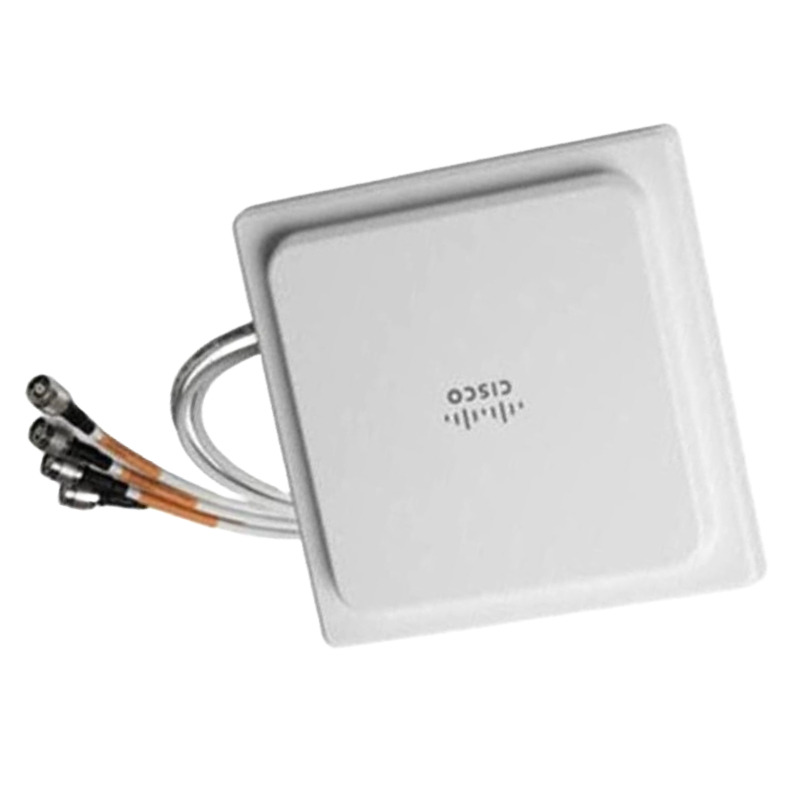


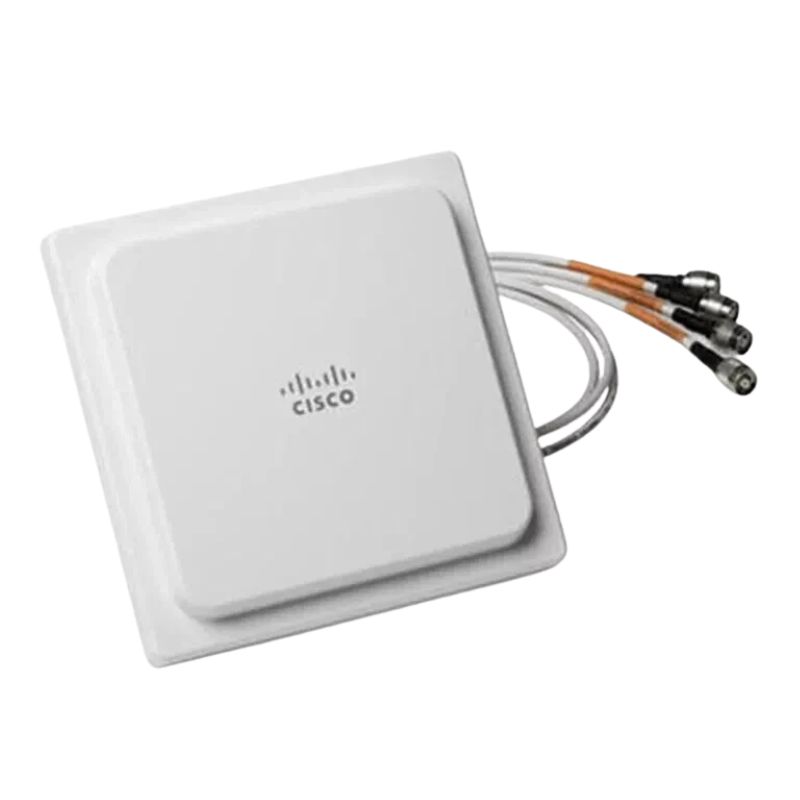
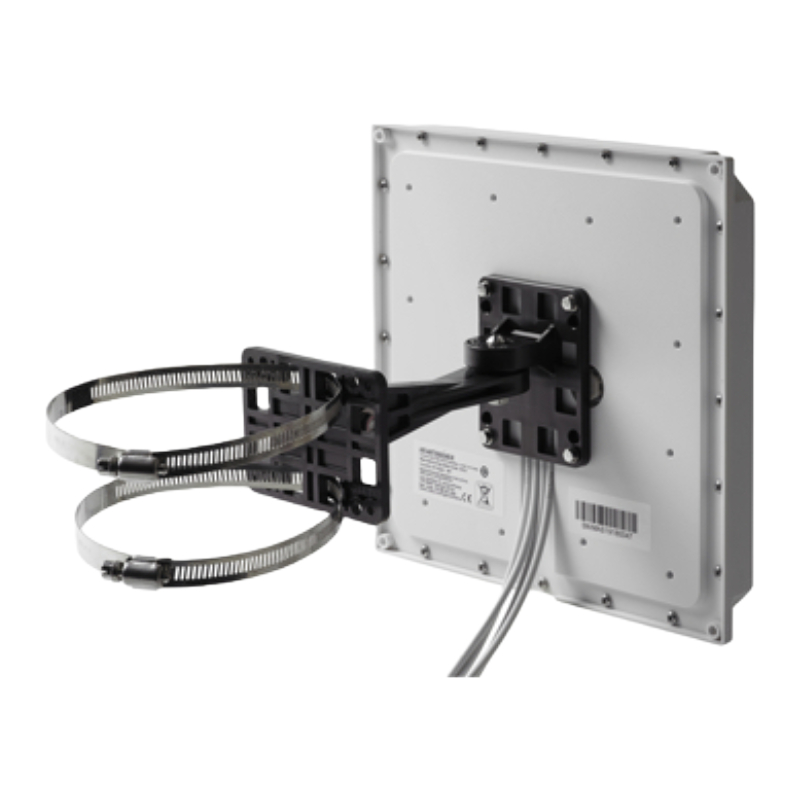
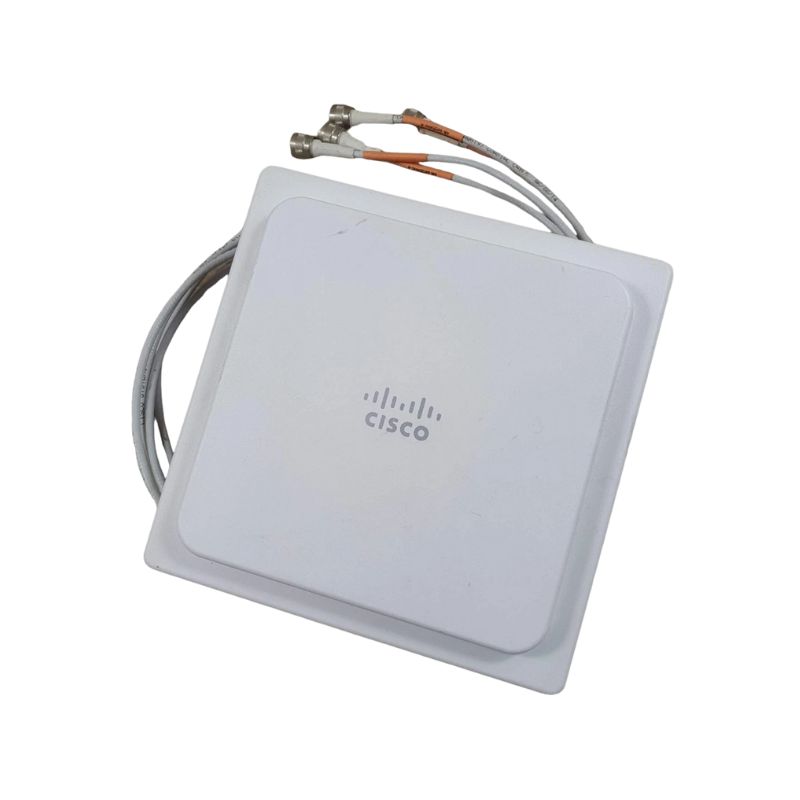
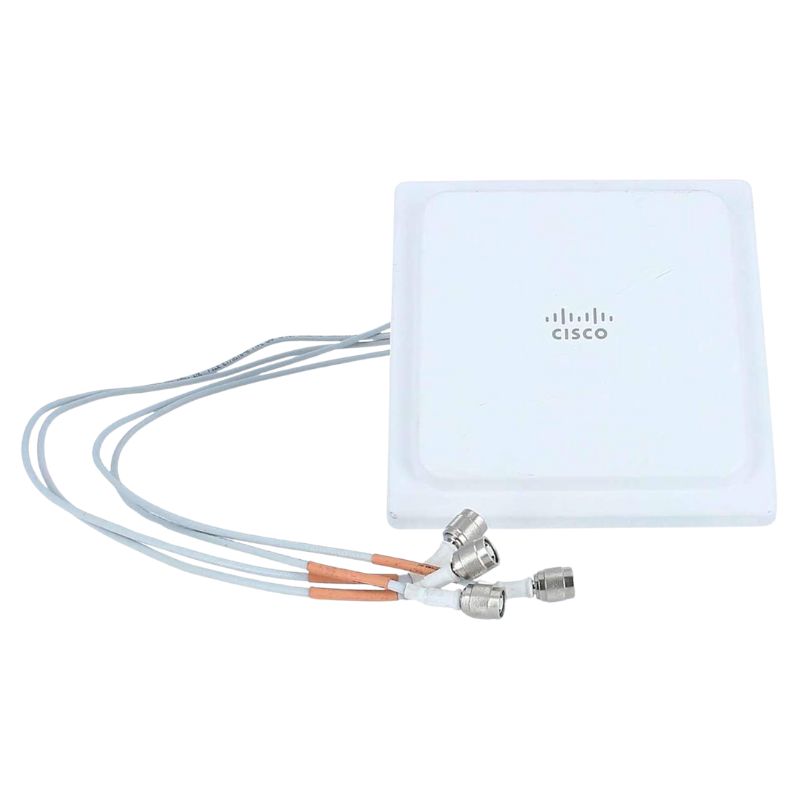
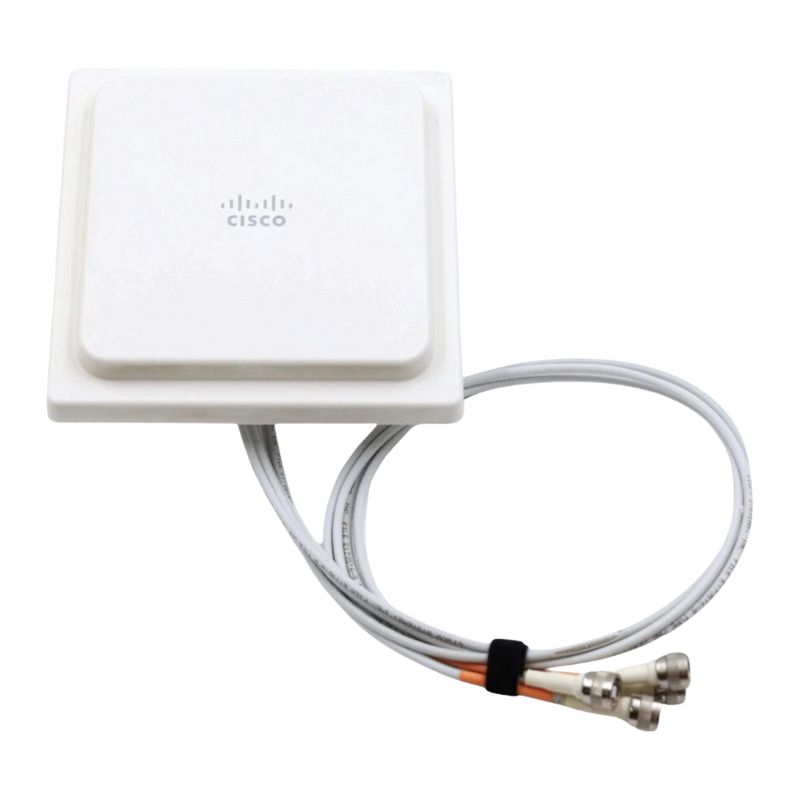
Cisco AIR-ANT2566D4M-R= Aironet Dual Band Antenna Directional Wi-Fi Patch. Factory-Sealed New in Original Box (FSB) with 1 year replacement warranty
| SKU/MPN | Warranty | Price | Condition | You save |
|---|---|---|---|---|
| AIR-ANT2566D4M-R= | 1 Year Warranty | $470.00 | Factory-Sealed New in Original Box (FSB) | You save: $164.50 (26%) |
| AIR-ANT2566D4M-R= | 1 Year Warranty | $190.00 | Excellent Refurbished | You save: $66.50 (26%) |
The Cisco AIR-ANT2566D4M-R= Aironet Dual Band Antenna Directional Wi-Fi Patch is a professional-grade wireless networking antenna designed to enhance the performance, coverage, and reliability of enterprise Wi-Fi deployments. This directional patch antenna belongs to the Cisco Aironet antenna family and is engineered for organizations that require stable wireless communication, improved signal control, and optimized connectivity across modern wireless environments. Built for dual-band operation, this antenna supports both 2.4 GHz and 5 GHz frequency ranges, making it suitable for current-generation wireless networks that depend on flexible frequency management and efficient spectrum utilization.
Directional Wi-Fi patch antennas are widely used when network administrators need to focus wireless energy toward a specific area rather than broadcasting signals evenly in all directions. The Cisco AIR-ANT2566D4M-R= provides controlled signal distribution that can help reduce interference, improve point-to-point wireless communication, and strengthen connectivity in targeted coverage zones. This makes it a valuable component for warehouses, offices, educational facilities, healthcare environments, retail locations, transportation areas, and other commercial installations where wireless performance is critical.
Designed as an accessory for compatible Cisco Aironet access points, this antenna helps organizations customize their wireless infrastructure according to building layouts, user density, and network requirements. The directional design allows network engineers to create more predictable coverage patterns, especially in environments where standard omnidirectional antennas may not deliver the desired performance.
A dual band directional Wi-Fi patch antenna combines advanced antenna design principles with practical deployment flexibility. Unlike traditional antennas that distribute radio frequency signals in a circular pattern, patch antennas are designed to focus energy in a particular direction. This directional behavior allows wireless signals to travel farther toward intended areas while minimizing unnecessary radiation outside the target zone.
The Cisco AIR-ANT2566D4M-R= operates across two major Wi-Fi frequency bands, allowing compatibility with wireless networks that use different standards and devices. The 2.4 GHz band is commonly associated with broader coverage and better penetration through obstacles, while the 5 GHz band provides access to additional channels and often supports higher performance in less congested wireless environments. Supporting both bands enables network administrators to balance coverage and capacity requirements.
Patch antenna technology is commonly selected for professional wireless installations because it provides a combination of compact design, focused coverage, and dependable radio frequency performance. The flat panel structure of a patch antenna makes it suitable for wall mounting and other fixed installations where directional coverage is preferred.
One of the key advantages of a directional antenna is improved control over wireless signal propagation. In large facilities, wireless signals can overlap, reflect, and interfere with surrounding networks. A directional antenna helps network designers manage these challenges by concentrating energy where it is needed most.
The Cisco AIR-ANT2566D4M-R= can be used to support wireless coverage planning by directing connectivity toward specific zones such as aisles, meeting rooms, production areas, or open workspaces. This approach can help create more efficient wireless environments where users experience consistent connectivity and reduced signal problems.
Wireless performance depends on many factors, including access point placement, environmental conditions, client device capability, and network configuration. A high-quality directional antenna works as part of a complete wireless design strategy by helping administrators align coverage patterns with physical locations and operational needs.
The Cisco AIR-ANT2566D4M-R= Aironet Dual Band Antenna Directional Wi-Fi Patch is designed for many enterprise applications where controlled wireless coverage is important. Businesses often use directional antennas to improve network availability in challenging environments where standard antenna configurations may not provide sufficient performance.
Warehouses and industrial facilities frequently present unique wireless challenges because of large open spaces, metal structures, storage racks, and changing layouts. A directional Wi-Fi patch antenna can help deliver wireless connectivity to targeted areas while reducing unnecessary signal spread.
Industrial wireless networks often support inventory systems, barcode scanners, handheld terminals, automation equipment, and operational applications. Reliable connectivity in these environments is essential, and antenna selection plays an important role in achieving consistent wireless performance.
Schools, universities, libraries, and public institutions require dependable wireless access for large numbers of users. Directional antennas can assist in designing coverage zones that support classrooms, lecture halls, study areas, and specialized facilities.
Because user density can vary significantly throughout educational environments, wireless infrastructure needs careful planning. The Cisco AIR-ANT2566D4M-R= helps provide another option for administrators designing networks that must support diverse wireless usage patterns.
The Cisco AIR-ANT2566D4M-R= is built to meet enterprise networking expectations with a design focused on reliability and practical installation. Cisco Aironet accessories are developed to work with compatible wireless equipment, helping organizations maintain consistent performance across their wireless infrastructure.
The patch antenna form factor provides a clean and professional appearance while allowing flexible placement. Its compact panel-style design is often preferred for installations where traditional protruding antennas are not ideal. This makes it suitable for environments where aesthetics, space limitations, or physical protection are important considerations.
Supporting both major Wi-Fi frequency bands allows this antenna to serve as a flexible solution for networks that operate across different wireless technologies. Dual band support is especially valuable as organizations continue transitioning toward newer wireless standards while maintaining compatibility with existing devices.
Wireless environments are constantly evolving, and network equipment must adapt to changing requirements. A dual band directional antenna provides a practical way to improve wireless design without replacing an entire network infrastructure.
Proper antenna placement is essential for achieving the expected wireless results. Directional antennas require careful alignment because their performance depends on the direction in which signals are focused. Network professionals typically consider building structure, coverage requirements, access point location, and user distribution before installation.
When installed correctly, the Cisco AIR-ANT2566D4M-R= can help create more predictable wireless coverage patterns. Poor placement or incorrect orientation may reduce effectiveness, which is why professional wireless planning is an important part of enterprise deployments.
Organizations choose Cisco Aironet antenna solutions because wireless connectivity is a fundamental requirement for business operations. A directional patch antenna offers several practical benefits, including improved signal focus, better coverage management, and greater flexibility in network design.
One major benefit is the ability to direct wireless coverage toward specific areas. This can be particularly useful in environments where network administrators need to avoid unnecessary coverage outside intended zones. Focused coverage can also contribute to improved wireless planning by allowing better control of signal distribution.
Another advantage is compatibility with dual-band wireless networks. Since many modern devices use both 2.4 GHz and 5 GHz connections, a dual band antenna provides broader support for different client devices and network configurations.
Reliable wireless access depends on multiple components working together, including access points, antennas, network controllers, cabling, and configuration settings. The antenna is a critical part of the radio communication system because it directly influences how signals travel.
The Cisco AIR-ANT2566D4M-R= supports improved wireless experiences by helping create stronger connections in targeted areas. For users, this can translate into smoother access to applications, fewer connectivity disruptions, and more dependable network performance.
Selecting an antenna requires understanding the physical environment and intended wireless coverage goals. Directional antennas are typically chosen when coverage needs to extend toward a specific area, while other antenna types may be better suited for general coverage requirements.
The Cisco AIR-ANT2566D4M-R= Aironet Dual Band Antenna Directional Wi-Fi Patch is ideal for scenarios where controlled coverage and dual-band support are priorities. Network designers evaluate factors such as distance, obstacles, interference sources, and user locations when determining whether a directional patch antenna is the appropriate choice.
As organizations increase their dependence on wireless technologies, network infrastructure must be prepared for growing demand. Additional users, connected devices, cloud applications, and mobility requirements continue to increase the importance of efficient wireless design.
A high-quality antenna solution helps businesses extend the usefulness of their existing wireless investments. The Cisco AIR-ANT2566D4M-R= supports scalable network planning by providing a flexible option for expanding or improving wireless coverage.
Cisco Aironet antenna products are widely recognized in enterprise networking because they are designed to complement professional wireless systems. Antenna selection is an important step in creating reliable wireless communication, and Cisco provides options for different installation scenarios.
The AIR-ANT2566D4M-R= represents a specialized approach to wireless coverage by focusing radio signals in a controlled direction. This makes it a valuable choice for organizations that need precision rather than broad, unrestricted wireless distribution.
Whether used in commercial offices, industrial spaces, educational facilities, or specialized deployments, a directional dual band patch antenna can contribute to a stronger and more organized wireless environment. Its combination of focused coverage, dual-band capability, and enterprise-focused design makes it suitable for modern networking requirements.


 Contact Us
 Information
 Catalog
 Solid State Drives (SSD)
 Network Switches
 Hard Disk Drives
 HBA & Controllers
 PC & Servers
 PC & Server Memory
 CPU & Processors
 Network Routers
 Power Supplies
 Tape Drives & Libraries
 Network Devices
 Computer & Network Cables