(7% discount is applied at checkout)
Cart is empty
Your go-to destination for cutting-edge server products
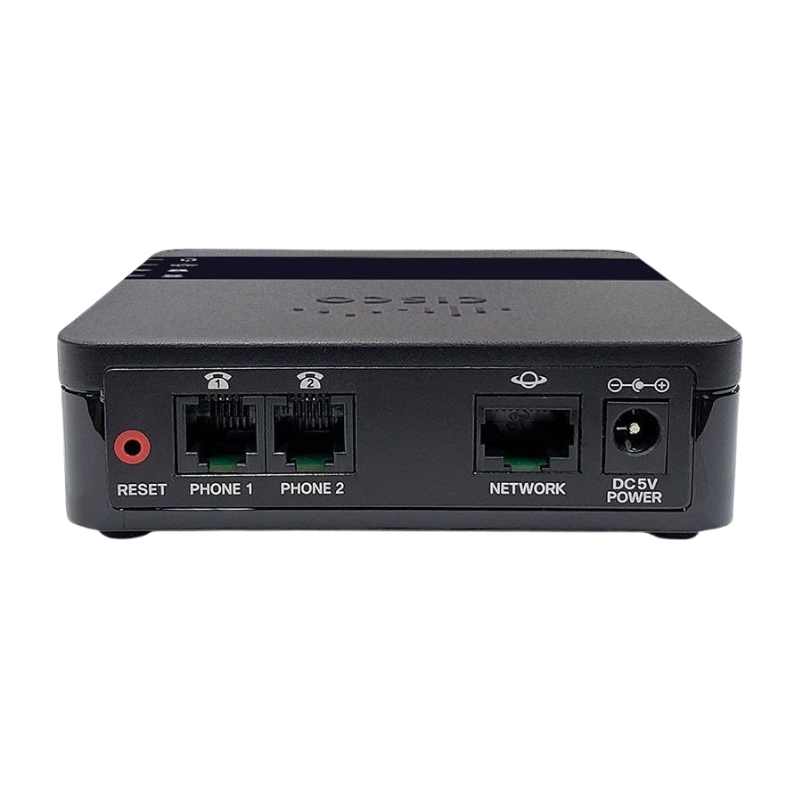


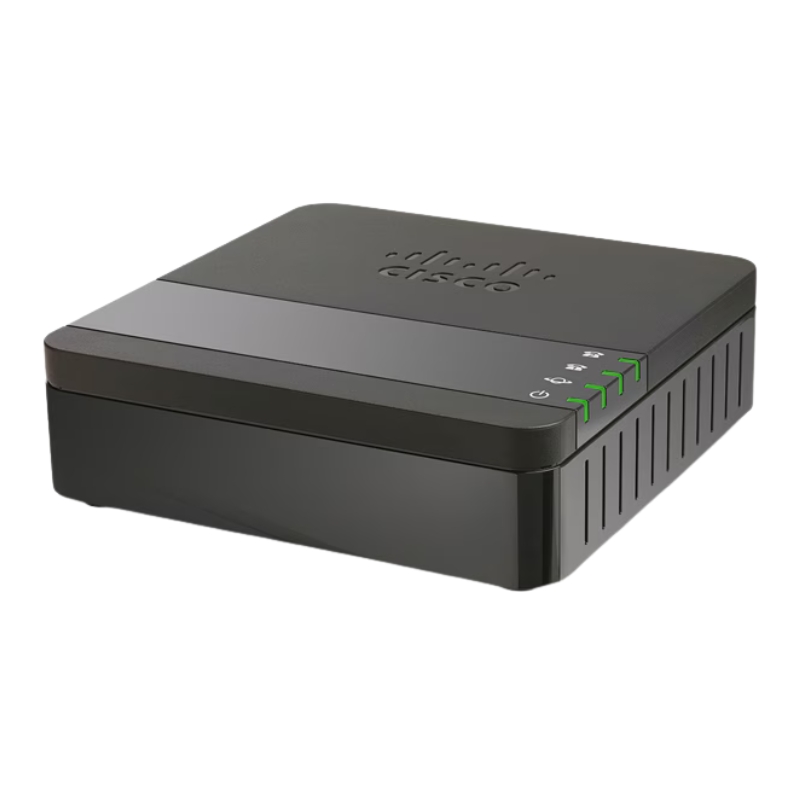
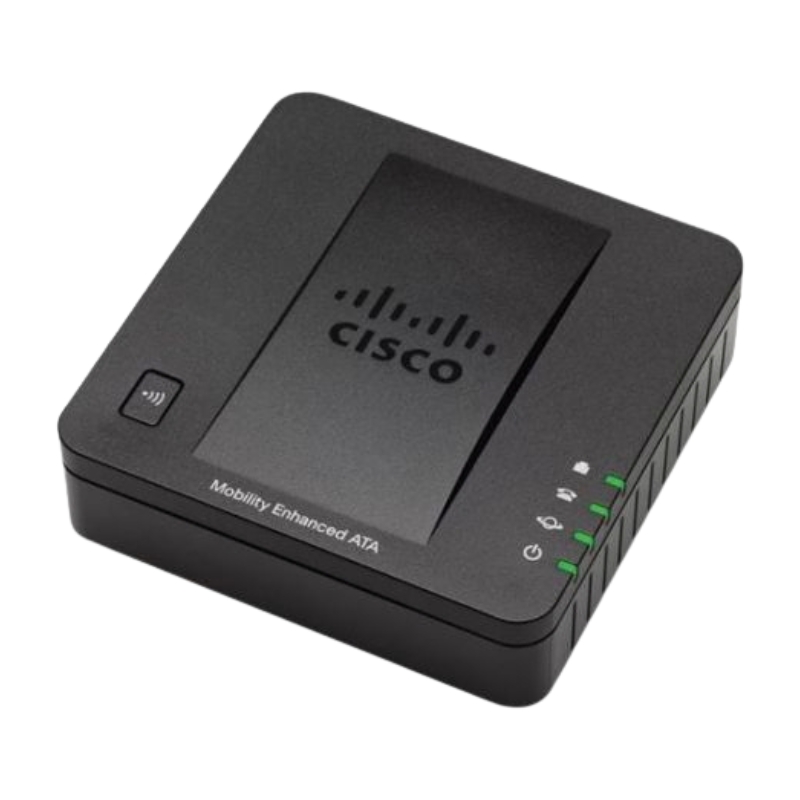
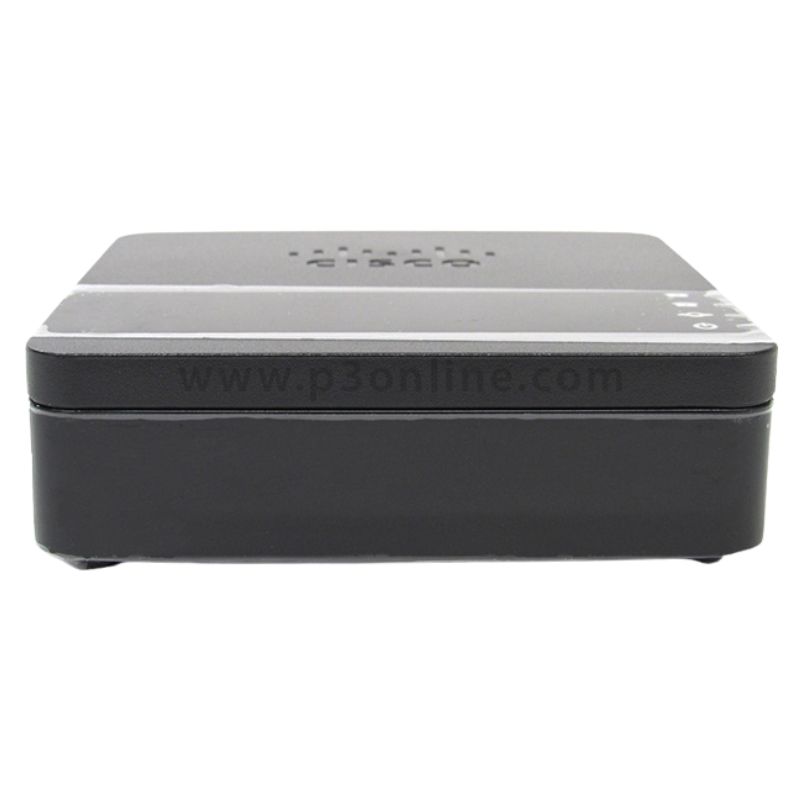
Cisco ATA190 2 Ports VoIP Gateway External Power Adapter 100Base-TX. Factory-Sealed New in Original Box (FSB) with 1 year replacement warranty
| SKU/MPN | Warranty | Price | Condition | You save |
|---|---|---|---|---|
| ATA190 | 1 Year Warranty | $60.00 | Excellent Refurbished | You save: $21.00 (26%) |
| ATA190 | 1 Year Warranty | $115.00 | Factory-Sealed New Retail in Original Box (FSB) | You save: $40.25 (26%) |
The ATA190 is a compact dual-port VoIP gateway solution engineered to bridge traditional analog telephony devices with modern IP-based communication systems. Designed for enterprise-grade voice transmission, this external power adapter-supported unit delivers reliable 100Base-TX Ethernet connectivity, ensuring stable and efficient voice-over-IP performance across business environments. The Cisco ATA190 is widely recognized for enabling seamless migration from legacy telephony infrastructure to advanced digital communication networks while maintaining voice clarity and operational efficiency.
The Cisco ATA190 2 Ports VoIP Gateway External Power Adapter 100Base-TX represents a compact and efficient analog telephone adapter solution designed to bridge traditional telephony systems with modern Voice over Internet Protocol communication infrastructures. This device plays a crucial role in enterprise communication modernization by enabling analog voice devices such as telephones, fax machines, and legacy communication endpoints to operate seamlessly over IP-based networks. Built to support stable Ethernet connectivity through 100Base-TX interfaces, the adapter provides reliable voice transmission while ensuring compatibility with modern network environments.
Organizations transitioning from traditional Public Switched Telephone Network environments to IP-based telephony systems require reliable gateway solutions capable of maintaining communication continuity. The Cisco ATA190 platform fulfills this requirement by serving as an interface between analog devices and VoIP systems. This allows businesses to preserve existing hardware investments while adopting scalable and flexible communication technologies that align with modern networking standards.
The core functionality of the Cisco ATA190 device is centered on analog to digital signal conversion. Traditional analog voice signals generated by telephones or fax machines are transformed into digital data packets suitable for transmission across IP networks. This process ensures that voice communication retains clarity, reduces latency, and maintains synchronization across distributed communication endpoints.
The conversion process involves multiple stages of signal processing, including encoding, packetization, transmission over Ethernet networks, and decoding at the receiving endpoint. The adapter ensures that voice quality is preserved during these transformations, making it suitable for enterprise communication environments that demand consistent and reliable performance.
By supporting 100Base-TX Ethernet connectivity, the device ensures compatibility with widely deployed network infrastructures. This allows seamless integration into existing LAN environments without requiring significant modifications to network architecture. The adapter’s compact design also supports flexible deployment across office environments, remote branches, and distributed communication systems.
Modern enterprises are increasingly dependent on unified communication systems that integrate voice, video, messaging, and collaboration tools into a single platform. The Cisco ATA190 plays a supportive role in this transformation by enabling legacy analog devices to participate in unified communication environments without requiring immediate hardware replacement.
This capability is particularly important for organizations with large installed bases of analog telephony equipment. Instead of undertaking costly infrastructure replacements, businesses can deploy VoIP gateway adapters to extend the operational life of existing devices while gradually migrating toward fully digital communication systems.
The adapter contributes to infrastructure efficiency by reducing operational complexity and enabling centralized management of communication endpoints. Network administrators can configure and manage voice traffic alongside data traffic, creating a unified communication framework that improves visibility and control across enterprise networks.
The Cisco ATA190 is designed to operate within standard Ethernet network environments using 100Base-TX connectivity. This ensures compatibility with a wide range of switches, routers, and network infrastructure components commonly found in enterprise and small business environments.
Ethernet-based communication transport provides several advantages, including predictable performance, scalability, and integration with existing IP routing frameworks. By leveraging Ethernet standards, the adapter ensures that voice traffic can be transmitted alongside other data services without requiring dedicated telephony infrastructure.
The device is typically deployed within local area networks where it connects analog endpoints to IP-based communication servers. This architecture allows organizations to centralize voice services while maintaining decentralized access for users across multiple physical locations.
One of the primary use cases of the Cisco ATA190 adapter is the integration of legacy analog telephony devices into modern IP communication systems. Many organizations continue to rely on analog phones and fax machines due to operational requirements, regulatory constraints, or cost considerations.
The adapter provides a transitional pathway that enables these devices to function within IP-based environments without requiring immediate replacement. This approach supports gradual migration strategies that minimize disruption while allowing organizations to adopt new communication technologies at their own pace.
Analog device integration ensures continuity of operations for critical communication workflows, including customer service operations, internal communication systems, and document transmission processes that still rely on fax-based communication methods in certain industries.
The Cisco ATA190 utilizes an external power adapter design that separates power management from the main communication unit. This design choice improves thermal efficiency, reduces internal component complexity, and enhances overall device reliability.
External power architecture allows for easier replacement and maintenance of power components without affecting the core communication functionality of the device. It also supports stable voltage delivery, ensuring consistent operation across varying electrical environments.
In enterprise deployments, external power adapters contribute to simplified maintenance procedures and improved system uptime. By isolating power conversion from communication processing, the device achieves greater operational stability and reduced risk of internal hardware failure due to power fluctuations.
Voice quality is a critical consideration in VoIP communication systems. The Cisco ATA190 incorporates mechanisms to ensure that voice signals are transmitted efficiently and with minimal degradation. Packet-based transmission over IP networks introduces challenges such as latency, jitter, and packet loss, all of which can impact communication clarity.
The adapter is designed to mitigate these issues through efficient encoding and transmission strategies that prioritize voice data integrity. By optimizing packet flow and maintaining synchronization between sending and receiving endpoints, the device ensures clear and consistent voice communication.
In enterprise environments, maintaining high voice quality is essential for customer interactions, internal coordination, and mission-critical communication workflows. The adapter contributes to maintaining professional communication standards across distributed networks.
The Cisco ATA190 is suitable for a wide range of deployment scenarios across enterprise, small business, educational, healthcare, and service provider environments. Its compact form factor and flexible connectivity options make it adaptable to various operational requirements.
In enterprise environments, the adapter is commonly used to connect analog desk phones in administrative offices, reception areas, and support departments. It also supports integration of fax machines in departments that require document transmission capabilities.
In small business environments, the device enables cost-effective adoption of VoIP communication systems without requiring full replacement of existing analog telephony infrastructure. This allows businesses to modernize communication systems while maintaining budget efficiency.
Organizations with distributed office locations require reliable communication systems that support seamless connectivity between headquarters and remote branches. The Cisco ATA190 facilitates this requirement by enabling analog devices in remote offices to connect to centralized IP communication systems.
This distributed architecture supports unified communication strategies that ensure all employees, regardless of location, have access to consistent communication services. It also enables centralized management of voice traffic, simplifying administrative oversight and improving operational coordination.
Remote office deployment scenarios benefit from reduced infrastructure requirements, as the adapter eliminates the need for separate analog telephony systems at each location. Instead, voice communication is routed through centralized IP networks.
The Cisco ATA190 supports scalable communication deployment strategies that allow organizations to expand their VoIP infrastructure gradually. As communication requirements grow, additional adapters can be deployed to support new endpoints without requiring significant changes to existing network architecture.
This scalability is particularly beneficial for organizations experiencing growth, restructuring, or digital transformation initiatives. It allows communication systems to evolve in alignment with business needs while maintaining operational continuity.
Scalable deployment also supports phased migration strategies where analog systems are gradually replaced or integrated into IP-based communication environments over time.
Reliable communication systems are essential for maintaining business continuity and operational efficiency. The Cisco ATA190 is designed to support continuous voice communication by providing stable connectivity and consistent performance across network environments.
Operational reliability is achieved through robust hardware design, stable power delivery, and efficient network communication protocols. These factors contribute to minimizing downtime and ensuring uninterrupted communication services.
In business environments where communication is critical to customer service, operational coordination, and internal workflows, reliable VoIP gateway solutions play an essential role in maintaining productivity and service quality.
Digital transformation initiatives often require organizations to transition from legacy communication systems to modern IP-based infrastructures. The Cisco ATA190 serves as a transitional technology that enables this migration without disrupting existing communication workflows.
By supporting analog device integration, the adapter allows organizations to adopt digital communication technologies gradually. This reduces transition risk and ensures that operational continuity is maintained throughout the migration process.
Legacy system support is particularly important in industries where analog communication devices remain in use due to regulatory requirements, operational dependencies, or cost constraints.
The Cisco ATA190 is applicable across multiple industries that require reliable voice communication solutions. Its versatility allows it to be deployed in environments with diverse communication needs and operational requirements.
In healthcare environments, it supports communication between administrative systems and legacy devices used in patient coordination. In educational institutions, it enables communication across administrative offices and departmental units. In retail environments, it supports customer service communication systems and point-of-contact operations.
Service providers may also utilize the adapter to support customer deployments where analog device integration is required as part of broader communication service offerings.


 Contact Us
 Information
 Catalog
 Solid State Drives (SSD)
 Network Switches
 Hard Disk Drives
 HBA & Controllers
 PC & Servers
 PC & Server Memory
 CPU & Processors
 Network Routers
 Power Supplies
 Tape Drives & Libraries
 Network Devices
 Computer & Network Cables