(7% discount is applied at checkout)
Cart is empty
Your go-to destination for cutting-edge server products
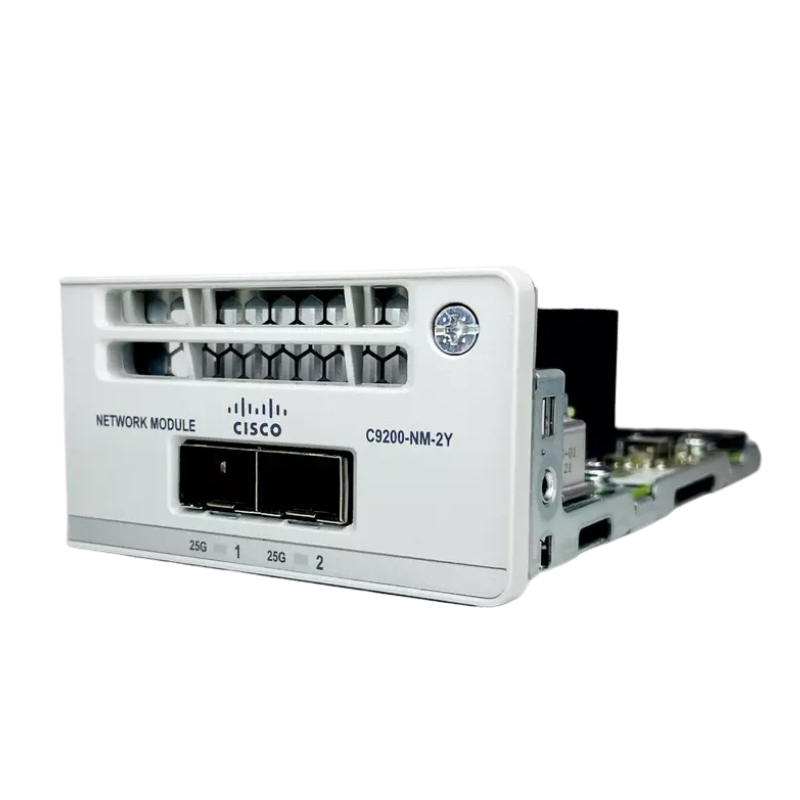


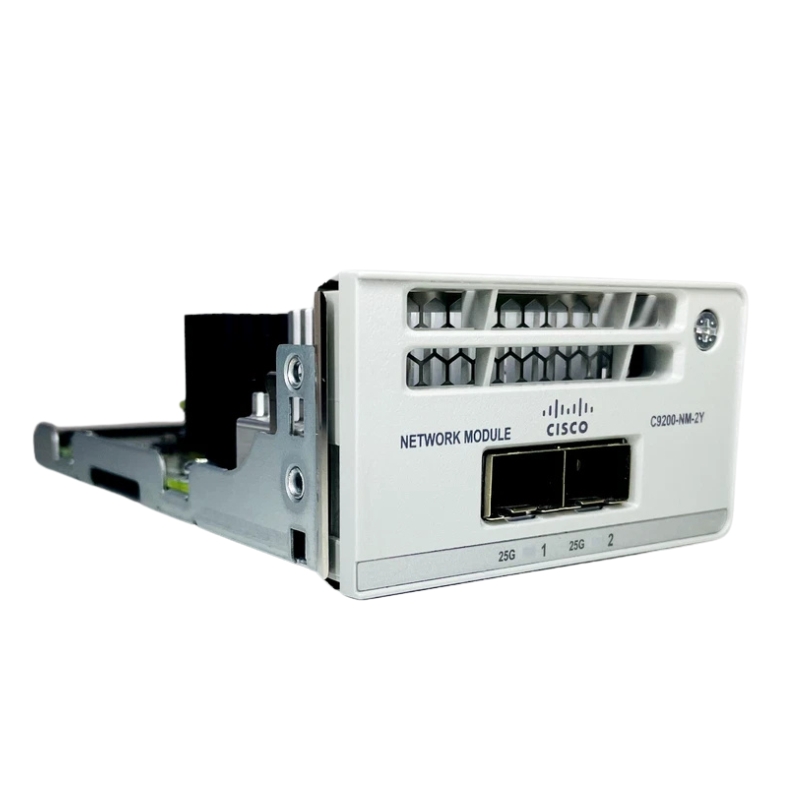
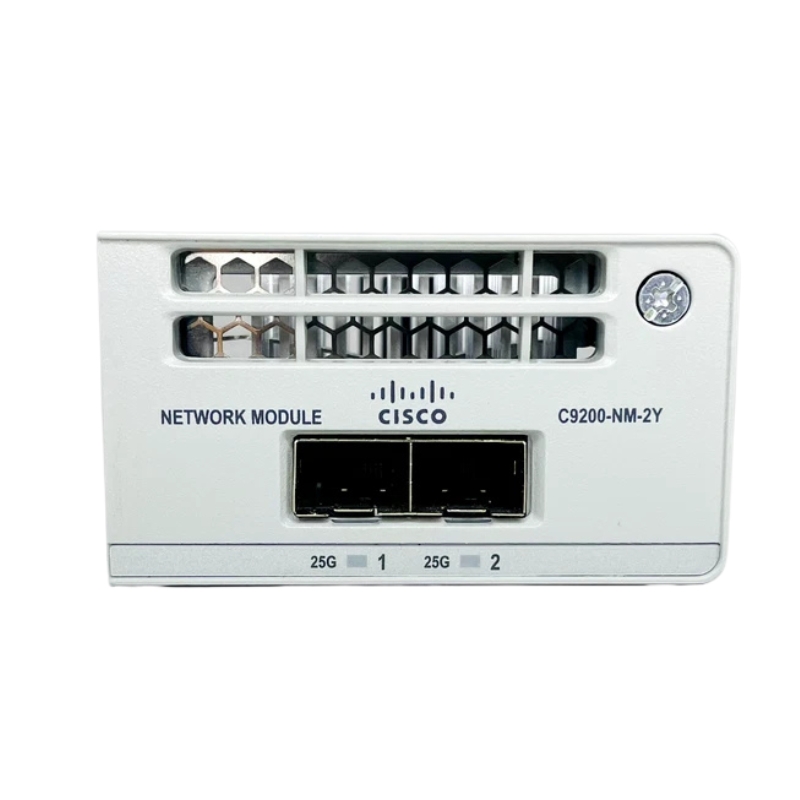
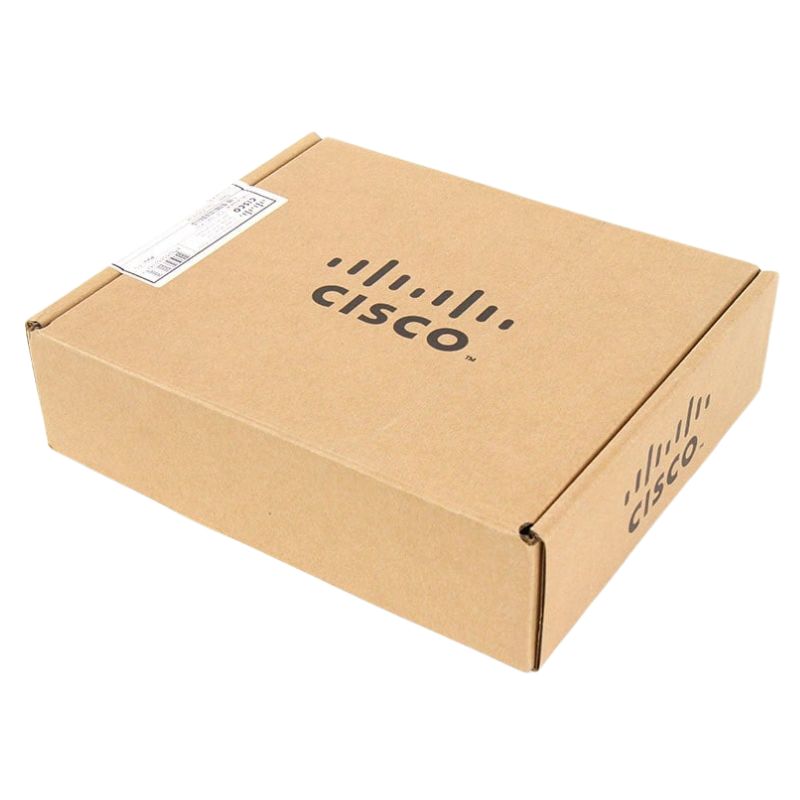
Cisco C9200-NM-2Y 2 Ports 25 Gigabit Expansion Module. Factory-Sealed New in Original Box (FSB) with 1 year replacement warranty
| SKU/MPN | Warranty | Price | Condition | You save |
|---|---|---|---|---|
| C9200-NM-2Y | 1 Year Warranty | $630.00 | Excellent Refurbished | You save: $220.50 (26%) |
| C9200-NM-2Y | 1 Year Warranty | $825.00 | Factory-Sealed New Retail in Original Box (FSB) | You save: $288.75 (26%) |
The Cisco C9200-NM-2Y is a high-performance network expansion module designed to enhance switching capacity with ultra-fast connectivity. It is engineered for enterprise-grade environments that require reliable and scalable high-speed data transmission.
The Cisco C9200-NM-2Y 2 Ports 25 Gigabit Expansion Module represents a high-performance network expansion solution engineered to extend the capabilities of enterprise-class switching infrastructure. Designed for integration within the Cisco Catalyst 9200 Series ecosystem by Cisco, this network module enables enhanced uplink capacity, improved bandwidth aggregation, and optimized data forwarding performance for modern campus and enterprise environments. As organizations continue to evolve toward higher-speed connectivity requirements driven by cloud computing, virtualization, and data-intensive applications, the role of modular uplink expansion becomes increasingly critical.
This module is specifically engineered to deliver two 25 Gigabit Ethernet ports, enabling scalable uplink configurations that support high-throughput network architectures. It provides a seamless extension mechanism for Catalyst 9200 switches, ensuring that enterprises can adapt their infrastructure without requiring complete hardware replacement. The result is a cost-efficient, future-ready networking model that aligns with digital transformation strategies.
Within the Catalyst 9200 Series switching architecture, the Cisco C9200-NM-2Y module functions as a modular uplink component that enhances the base switch’s connectivity capabilities. The design philosophy of the Catalyst 9200 platform emphasizes modularity, resilience, and scalability, allowing organizations to tailor their switching infrastructure based on evolving bandwidth requirements. The expansion module slots directly into supported switch models, enabling immediate activation of high-speed uplink ports without complex reconfiguration.
The modular architecture allows network administrators to separate core switching logic from uplink performance scaling. This ensures that performance upgrades can be applied independently of switching hardware refresh cycles, which significantly reduces total cost of ownership and extends infrastructure lifecycle.
In contemporary enterprise networks, the Cisco C9200-NM-2Y module plays a critical role in supporting hierarchical network designs such as access, distribution, and aggregation layers. By providing 25 Gigabit uplink capacity, it ensures that access layer switches can efficiently transmit large volumes of traffic toward aggregation switches and core network infrastructure without bottlenecks.
This capability is particularly important in environments where bandwidth-intensive workloads such as video conferencing, cloud-based applications, and large-scale data transfers are common. The module effectively bridges the gap between traditional 1 Gigabit or 10 Gigabit access layers and high-capacity backbone infrastructures.
The defining feature of the Cisco C9200-NM-2Y module is its dual 25 Gigabit Ethernet interfaces. These interfaces are designed to deliver ultra-high-speed data transmission with minimal latency, ensuring that enterprise networks can support next-generation workloads. Each port is engineered to maintain consistent throughput under sustained traffic loads, which is essential for mission-critical applications.
The 25 Gigabit standard represents a significant advancement over traditional 10 Gigabit Ethernet uplinks, offering a substantial increase in bandwidth without the complexity and cost associated with higher-tier technologies such as 40 Gigabit or 100 Gigabit Ethernet. This makes it an optimal choice for organizations seeking a balance between performance and investment efficiency.
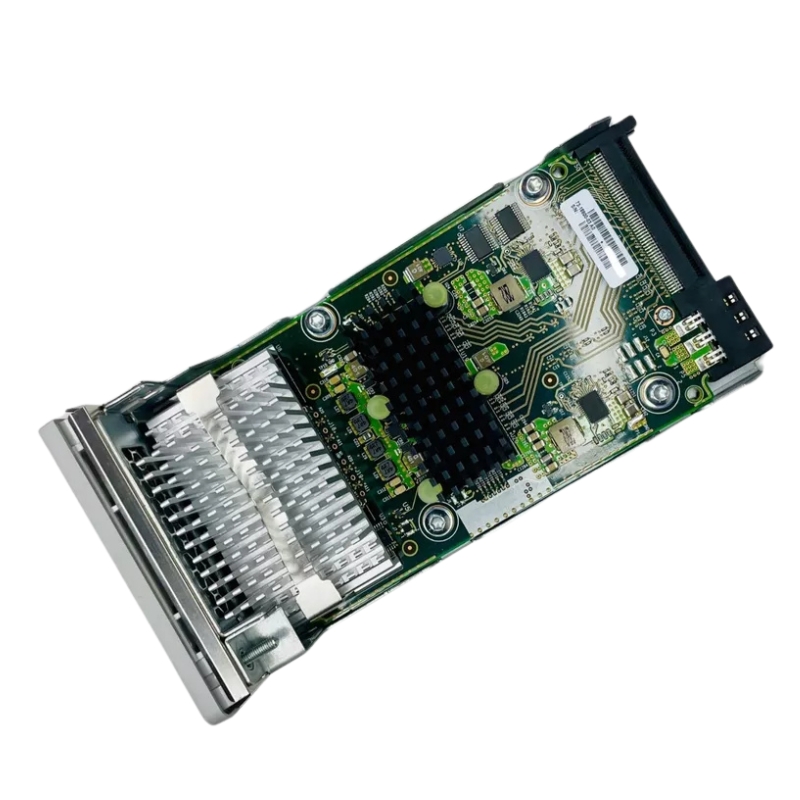
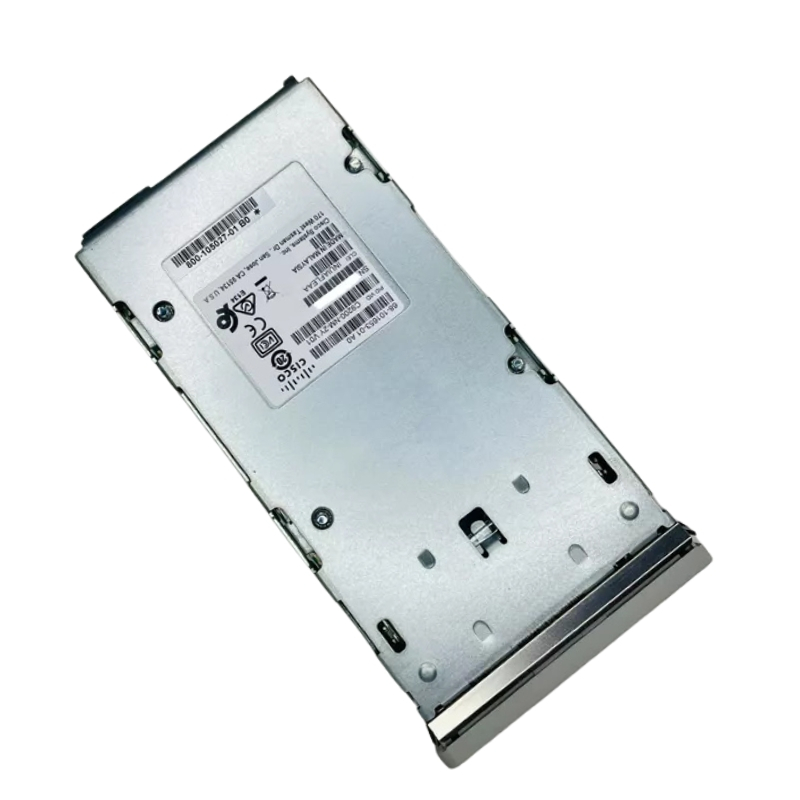
The module is built with a compact and efficient form factor that aligns with Cisco’s modular switch design philosophy. Its physical construction emphasizes durability, thermal efficiency, and operational stability. The internal circuitry is optimized for high-speed signal processing, ensuring minimal packet loss and consistent transmission integrity.
Thermal management is achieved through passive and system-assisted cooling mechanisms, allowing the module to operate reliably within enterprise-grade environments. The robust engineering ensures that it can withstand continuous operation in data-intensive networking conditions without degradation in performance.
The Cisco C9200-NM-2Y module supports high-speed fiber connectivity standards commonly used in enterprise uplink environments. This ensures compatibility with a wide range of optical transceivers and structured cabling systems. The flexibility in media support allows network architects to design scalable topologies that accommodate both short-range and long-range connectivity requirements.
One of the primary advantages of the Cisco C9200-NM-2Y module is its ability to significantly enhance bandwidth aggregation. By providing dual 25 Gigabit ports, the module enables load distribution across multiple uplinks, reducing congestion and improving overall network efficiency. This is particularly beneficial in high-density access environments where multiple endpoints generate simultaneous traffic streams.
The module also enhances traffic engineering capabilities by allowing network administrators to segment data flows across different uplinks based on policy, application type, or service priority. This ensures that critical applications receive consistent bandwidth allocation even during peak usage periods.
Latency reduction is a key performance characteristic of the Cisco C9200-NM-2Y module. The architecture is optimized to minimize forwarding delays, ensuring that packets traverse the network with maximum efficiency. This is essential for real-time applications such as VoIP, video conferencing, and financial transaction systems where microsecond-level delays can impact performance.
In enterprise campus environments, the module is commonly deployed at the access or distribution layer to provide high-speed uplinks to core switching infrastructure. This ensures that large numbers of connected devices, including desktops, wireless access points, and IoT devices, can communicate effectively with centralized data resources.
The scalability offered by the module allows organizations to expand their network footprint without redesigning their entire infrastructure. This makes it an ideal solution for growing enterprises with evolving connectivity requirements.
At the data center edge, the Cisco C9200-NM-2Y module facilitates high-speed aggregation of traffic between server clusters and core switching systems. This ensures efficient data flow between compute resources and external network segments, reducing bottlenecks and improving application performance.
As organizations increasingly adopt hybrid cloud architectures, the need for reliable and high-speed uplink connectivity becomes essential. The module supports seamless integration with cloud gateways and WAN optimization systems, ensuring consistent performance across distributed environments.
The Cisco C9200-NM-2Y module is designed with operational flexibility in mind, supporting hot-swappable installation in compatible Catalyst 9200 switches. This allows network administrators to install or replace the module without powering down the system, minimizing downtime and maintaining service continuity.
This capability is particularly valuable in enterprise environments where uptime is critical and maintenance windows are limited. The hot-swappable design ensures that network expansion or upgrades can be performed with minimal operational disruption.
The Cisco C9200-NM-2Y module supports both Layer 2 switching and Layer 3 routing capabilities depending on the configuration of the host switch. This dual-layer support enables flexible deployment strategies, allowing the module to function in both traditional switching environments and routed network topologies.
Quality of Service (QoS) integration ensures that traffic traversing the module can be prioritized based on application requirements. This allows mission-critical data flows to receive higher priority over less sensitive traffic, improving overall network performance and user experience.
As enterprise networks expand, scalability becomes a key requirement. The Cisco C9200-NM-2Y module enables organizations to scale uplink capacity without replacing existing switching hardware. This modular scalability reduces capital expenditure while ensuring that network performance keeps pace with organizational growth.
The module supports a strategic upgrade path for enterprises transitioning from lower-speed uplinks to higher-speed architectures. By adopting 25 Gigabit connectivity, organizations can prepare their infrastructure for future migration toward even higher-speed technologies while maintaining operational stability.
The dual-port architecture of the Cisco C9200-NM-2Y module supports redundancy configurations that enhance network availability. In the event of a link failure, traffic can be rerouted through an alternative uplink, ensuring continuous network operation without service interruption.
The module incorporates advanced error detection and correction mechanisms that ensure data integrity across high-speed transmissions. This reduces packet loss and enhances overall network reliability, particularly in high-demand environments.
Security is a fundamental aspect of enterprise networking, and the Cisco C9200-NM-2Y module integrates seamlessly into secure network architectures. It supports encrypted data transmission when used in conjunction with compatible security protocols implemented on the host switch.
The module supports integration with network access control systems that regulate device connectivity and enforce security policies. This ensures that only authorized devices can access network resources through the high-speed uplinks.
Traffic engineering strategies can be implemented across the dual 25 Gigabit ports to balance network load effectively. This ensures that no single uplink becomes a performance bottleneck, thereby improving overall throughput consistency.


 Contact Us
 Information
 Catalog
 Solid State Drives (SSD)
 Network Switches
 Hard Disk Drives
 HBA & Controllers
 PC & Servers
 PC & Server Memory
 CPU & Processors
 Network Routers
 Power Supplies
 Tape Drives & Libraries
 Network Devices
 Computer & Network Cables