(7% discount is applied at checkout)
Cart is empty
Your go-to destination for cutting-edge server products
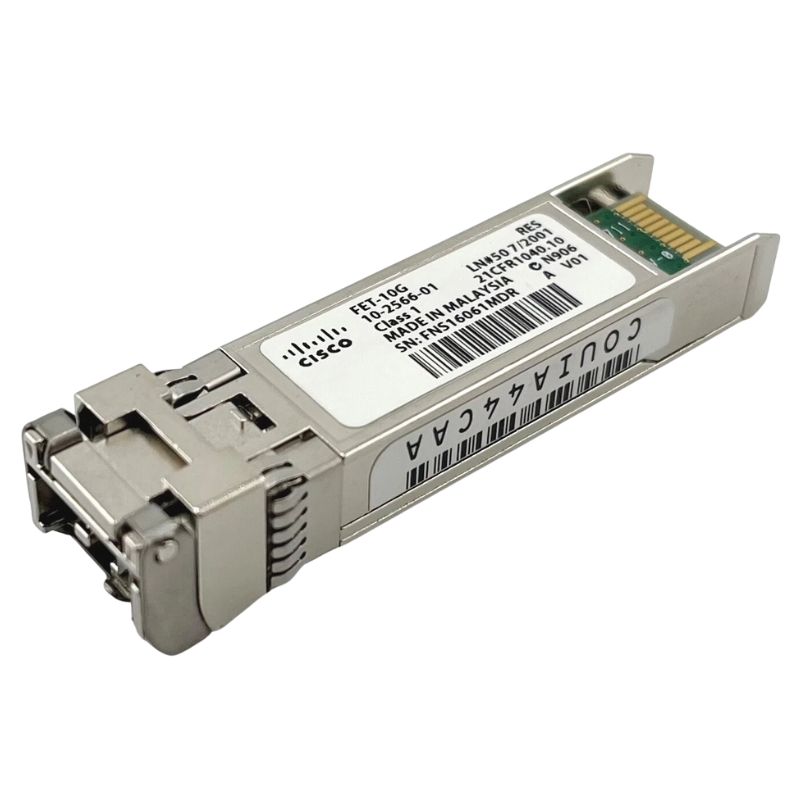


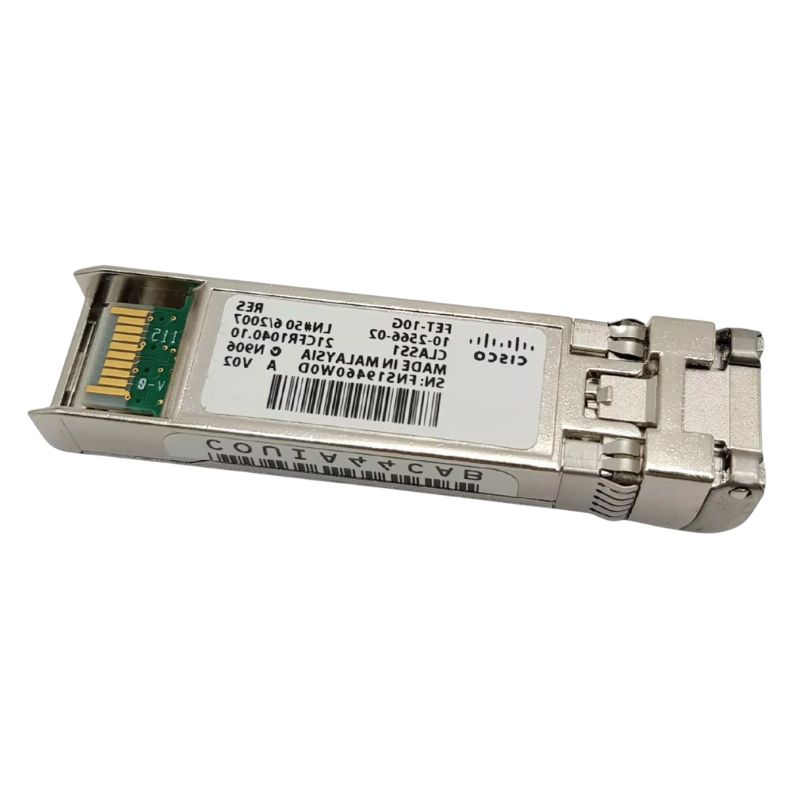
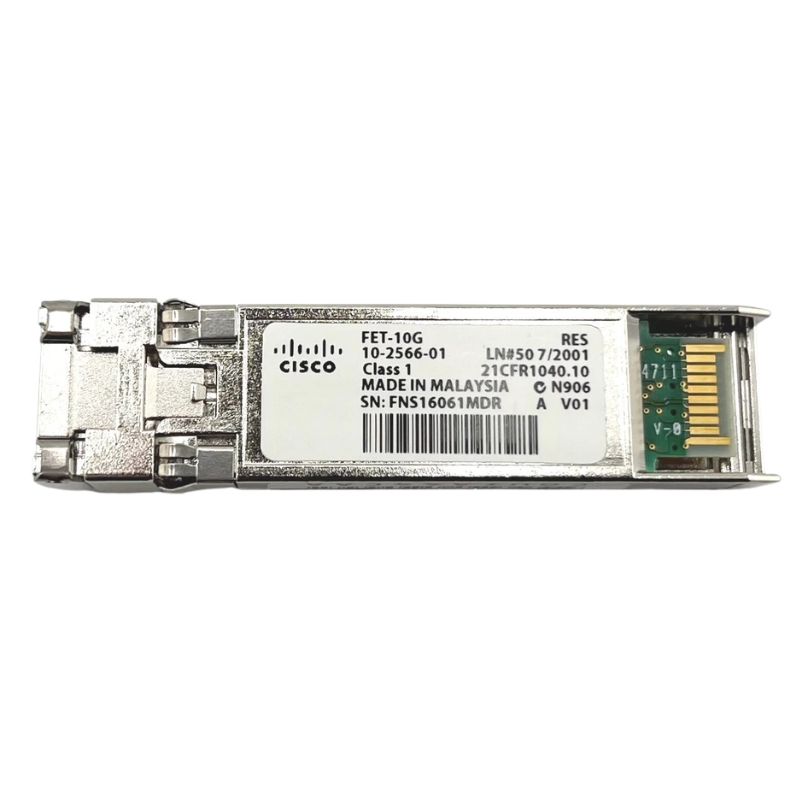
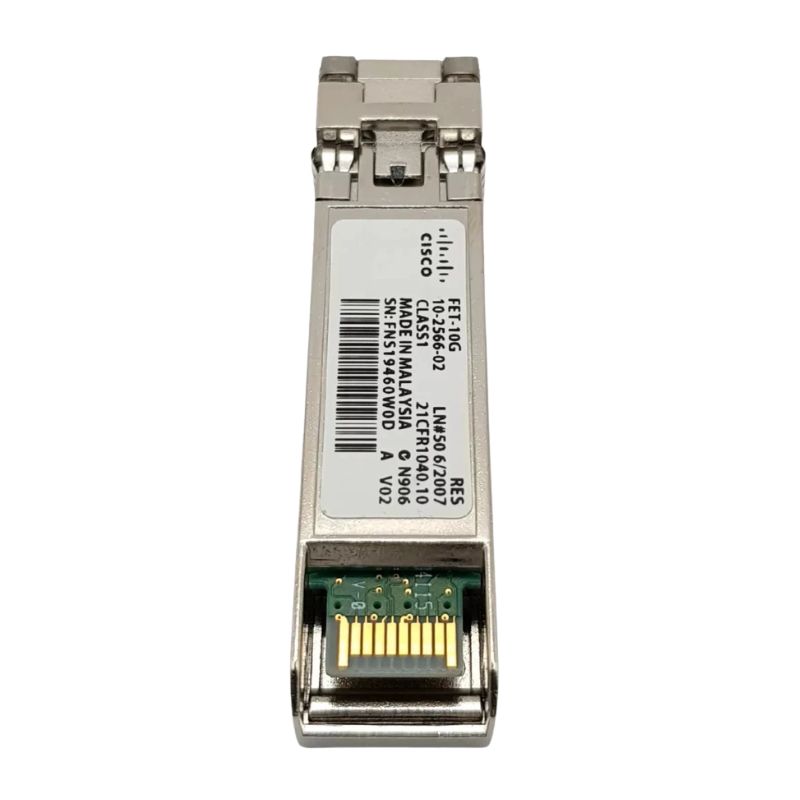
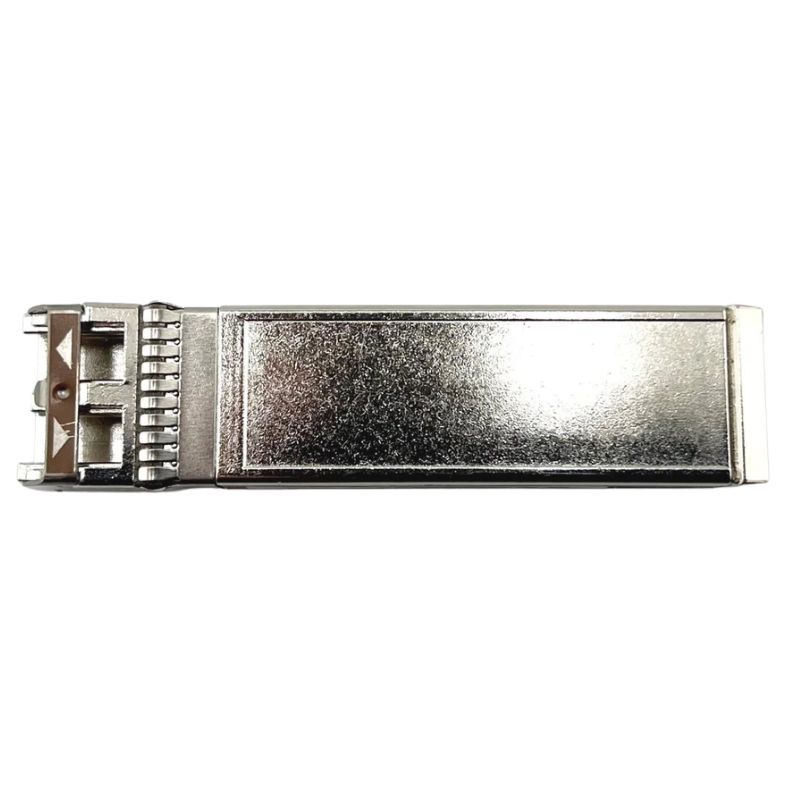
Cisco FET-10G Fabric Extender Transceiver LC Connector. Factory-Sealed New in Original Box (FSB) with 1 year replacement warranty
| SKU/MPN | Warranty | Price | Condition | You save |
|---|---|---|---|---|
| FET-10G | 1 Year Warranty | $48.00 | Excellent Refurbished | You save: $16.80 (26%) |
| FET-10G | 1 Year Warranty | $65.00 | Factory-Sealed New Retail in Original Box (FSB) | You save: $22.75 (26%) |
The Cisco FET-10G Fabric Extender transceiver is a high-performance networking component designed for reliable data transmission in data center and enterprise environments. This SFP+ optical module ensures fast and stable connectivity for modern network infrastructure.
The Cisco FET-10G Fabric Extender Transceiver LC Connector is a high-performance optical networking component designed to support scalable data center architectures and high-bandwidth switching environments. It is commonly deployed in conjunction with Cisco Fabric Extender (FEX) systems to provide reliable, low-latency connectivity between parent switches and extended fabric modules. As part of modern enterprise and cloud infrastructure, this transceiver plays a critical role in ensuring consistent data transmission across distributed network topologies where performance, density, and reliability are essential design factors.
Manufactured within the broader ecosystem of this transceiver is engineered to meet strict optical networking standards while supporting the operational requirements of high-density switching fabrics. Its LC connector interface ensures compatibility with industry-standard fiber optic cabling, enabling streamlined deployment across multiple networking environments without requiring proprietary cabling modifications.
The FET-10G transceiver is optimized for 10 Gigabit Ethernet connectivity, making it suitable for aggregation layers, server access networks, and data center interconnect scenarios where predictable throughput and minimal signal degradation are essential. Its integration into Cisco Fabric Extender architectures enables network administrators to simplify switch management while maintaining high levels of performance and scalability.
In Cisco Fabric Extender architecture, the FET-10G transceiver acts as a physical and logical extension of a parent switch. Instead of operating as an independent switching entity, Fabric Extenders rely on upstream switches to manage forwarding decisions, policies, and control-plane functions. The transceiver provides the high-speed optical link that binds these components together, ensuring that data flows seamlessly between endpoints and the central switching fabric.
This architecture reduces operational complexity by consolidating management functions at the parent switch level. The transceiver, therefore, becomes a critical enabler of this design philosophy, supporting consistent bandwidth delivery while minimizing configuration overhead at the edge of the network.
One of the defining advantages of using the Cisco FET-10G Fabric Extender Transceiver LC Connector is its contribution to centralized network management. Instead of configuring multiple independent switches, administrators manage a single logical switch domain. The transceiver ensures that all remote Fabric Extender modules maintain continuous, high-speed communication with the parent system.
This model is particularly beneficial in large-scale enterprise deployments where thousands of server connections must be managed efficiently. The optical link provided by the transceiver guarantees that control signals and data traffic remain synchronized across the distributed fabric architecture.
The Cisco FET-10G transceiver operates using advanced optical signaling techniques designed for 10 Gigabit Ethernet transmission. It converts electrical signals from networking equipment into optical signals transmitted through fiber optic cables. At the receiving end, these optical signals are converted back into electrical form for processing by connected network devices.
This conversion process allows for significantly greater transmission distances and reduced electromagnetic interference compared to traditional copper-based connections. The use of fiber optics ensures signal integrity even in environments with high levels of electrical noise, such as data centers and industrial networking facilities.
The LC connector used in this transceiver is a small form-factor fiber optic interface designed for high-density networking environments. Its compact design allows multiple connections to be installed within limited rack space while maintaining secure physical coupling between fiber strands and optical modules.
The latch mechanism of the LC connector ensures stable engagement with minimal signal loss. This design is particularly important in environments where vibration, airflow, or frequent cable adjustments could otherwise compromise connection stability.
The transceiver is typically designed in a compact form factor compatible with standard SFP+ ports, allowing it to be easily inserted into supported Cisco networking hardware. This modular approach enables network operators to upgrade or replace transceivers without replacing entire switching systems, significantly reducing infrastructure costs.
Its physical design emphasizes thermal efficiency and signal stability, ensuring that it performs reliably under continuous high-throughput workloads common in enterprise and cloud data centers.
Energy efficiency is an important consideration in modern networking equipment. The FET-10G transceiver is optimized for low power consumption while maintaining full 10 Gigabit performance. This helps reduce operational costs in large-scale deployments where hundreds or thousands of transceivers may be in use simultaneously.
Designed for enterprise environments, the transceiver supports a wide operating temperature range. This ensures reliable performance in controlled data center conditions as well as less predictable edge environments where cooling efficiency may vary. Thermal stability is critical for maintaining consistent optical performance and preventing signal drift over extended periods of operation.
The Cisco FET-10G Fabric Extender Transceiver LC Connector is designed to integrate seamlessly with compatible Cisco switches and Fabric Extender modules. Its compatibility ensures that administrators can deploy it within existing Cisco network infrastructures without requiring extensive reconfiguration or additional hardware modifications.
Within ecosystems built around interoperability is a core design principle, allowing components like the FET-10G transceiver to function consistently across multiple hardware generations and platform revisions.
The LC connector interface ensures compatibility with a wide range of fiber optic cabling standards, including both single-mode and multi-mode fiber depending on deployment requirements. This flexibility allows organizations to adapt the transceiver to different network distances and bandwidth needs without redesigning their entire cabling infrastructure.
While designed for 10 Gigabit Ethernet environments, the transceiver often coexists with other transceiver types within hybrid network architectures. This enables gradual upgrades from lower-speed networks while preserving existing investments in infrastructure. Compatibility considerations are especially important in enterprise environments where network downtime must be minimized.
In server access networks, the FET-10G transceiver is frequently used to connect top-of-rack switches to Fabric Extender modules. This arrangement reduces cabling complexity while increasing port density, allowing more servers to be connected within a single rack unit.
The high-speed optical link ensures that server traffic is transmitted efficiently to aggregation layers, reducing latency and improving overall application performance.
Cloud service providers rely on scalable networking components to support dynamic workloads. The FET-10G transceiver supports these environments by providing predictable performance and low-latency connectivity between distributed network elements. Its reliability makes it suitable for virtualized infrastructure where consistent bandwidth allocation is required.
At the enterprise core and aggregation layers, the transceiver helps maintain high-speed links between switching domains. This ensures that data flows smoothly across large organizational networks, supporting applications such as unified communications, storage replication, and real-time analytics.
One of the key performance advantages of the Cisco FET-10G transceiver is its ability to maintain extremely low latency. Optical transmission inherently reduces signal delay compared to copper-based systems, making it ideal for applications requiring near-real-time data processing.
With support for 10 Gigabit Ethernet speeds, the transceiver ensures that network backbones can handle high data volumes without congestion. This is particularly important in environments where multiple high-bandwidth applications operate simultaneously, such as virtualization clusters and large-scale database systems.
Advanced signal processing and optical clarity contribute to low bit error rates. This improves overall network stability and reduces the likelihood of retransmissions, which can negatively impact performance in high-demand environments.
Optical transceivers require careful handling to prevent contamination or physical damage. The LC connector interface should be protected from dust and debris, as even small particles can significantly impact signal quality.
When installing the transceiver into compatible hardware, proper alignment with the SFP+ port is essential. The module should be inserted gently until it clicks into place, ensuring a secure connection without forcing the component.
Effective cable management supports both performance and maintainability. Fiber optic cables connected to LC connectors should be routed in a manner that avoids excessive bending or tension. This helps preserve signal integrity and reduces the risk of long-term physical degradation.
Unlike copper-based networking systems, optical fiber used with LC connectors is immune to electromagnetic interference. This makes the transceiver especially valuable in environments with heavy electrical equipment or dense cabling systems.
Temperature fluctuations can affect optical signal performance. The transceiver is engineered to maintain stable performance across a wide thermal range, ensuring consistent throughput even under varying environmental conditions.
Although optical transceivers do not directly enforce network security policies, they contribute to secure infrastructure by maintaining reliable physical layer connectivity. Secure fiber routing and controlled access to networking hardware reduce the risk of tampering.
In high-availability network architectures, multiple FET-10G links may be deployed to ensure redundancy. If one link fails, traffic can be rerouted through alternate paths, maintaining uninterrupted service.
The robustness of the transceiver makes it suitable for mission-critical systems such as financial platforms, healthcare networks, and large-scale enterprise applications where downtime is not acceptable.
As organizations continue to expand their digital infrastructure, scalable components like the Cisco FET-10G transceiver play an important role in supporting increased bandwidth requirements. Its modular design allows it to be integrated into evolving network architectures without requiring complete system replacement.
Fabric Extender technology continues to evolve, and the transceiver remains a foundational element in supporting these advancements. Its role in connecting distributed network components ensures that it remains relevant in both current and next-generation deployments.


 Contact Us
 Information
 Catalog
 Solid State Drives (SSD)
 Network Switches
 Hard Disk Drives
 HBA & Controllers
 PC & Servers
 PC & Server Memory
 CPU & Processors
 Network Routers
 Power Supplies
 Tape Drives & Libraries
 Network Devices
 Computer & Network Cables