(7% discount is applied at checkout)
Cart is empty
Your go-to destination for cutting-edge server products
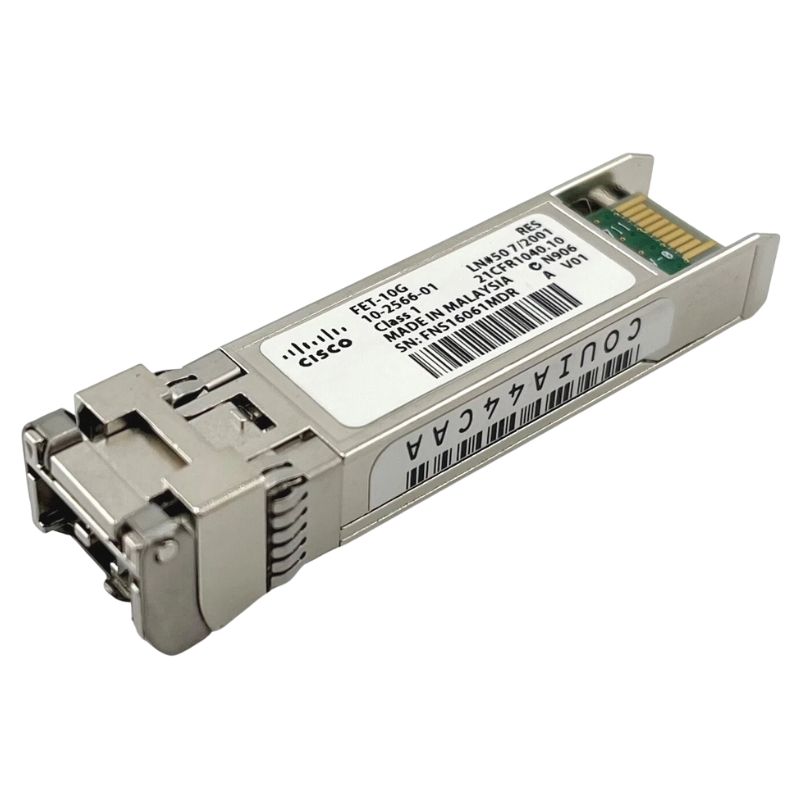


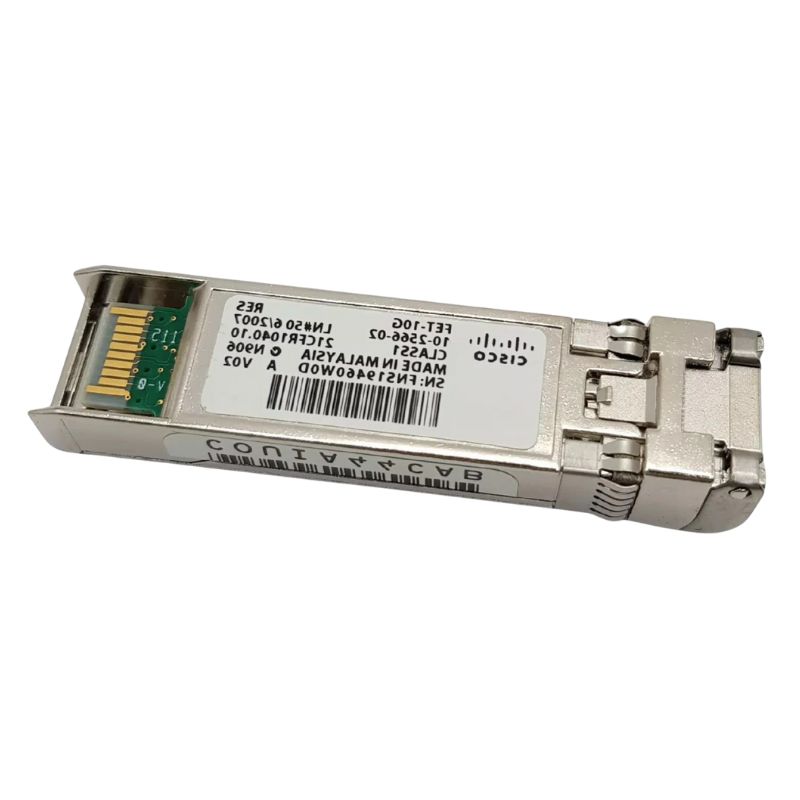
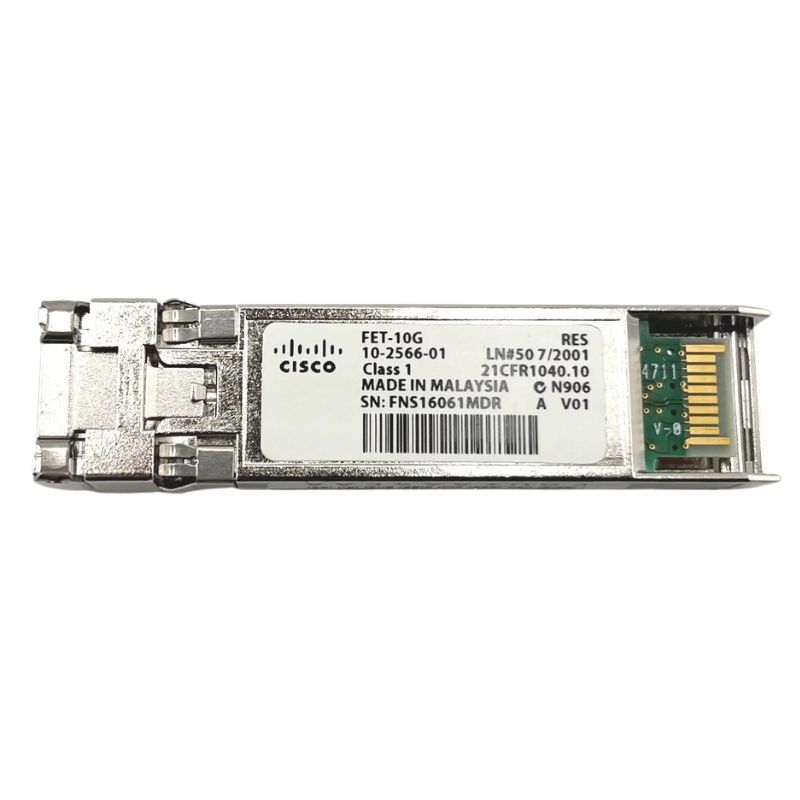
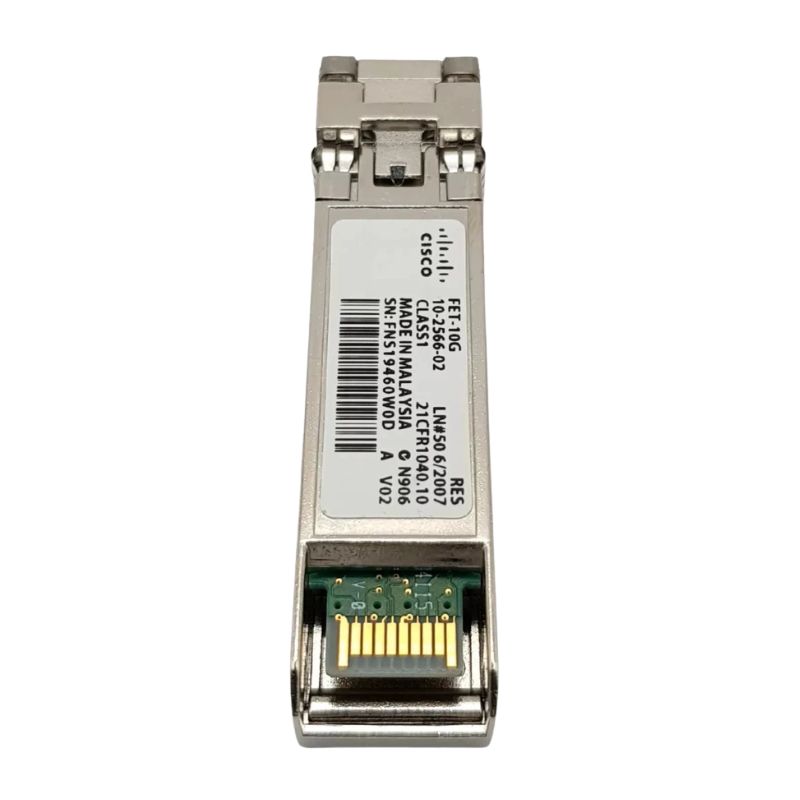
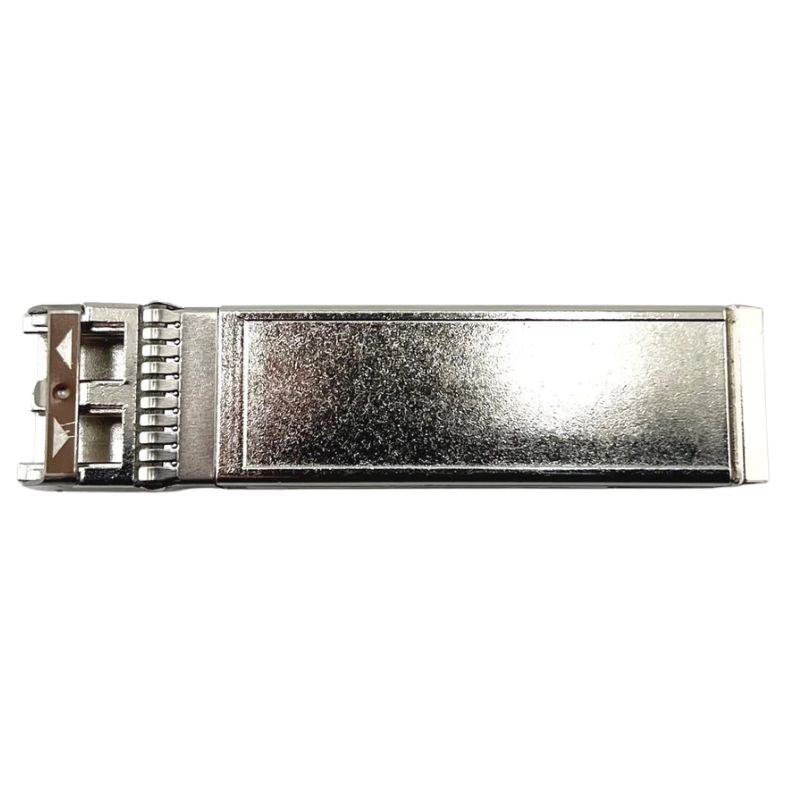
Cisco FET-10G Fabric Extender SFP+ Transceiver Module. Excellent Refurbished with 1 year replacement warranty
| SKU/MPN | Warranty | Price | Condition | You save |
|---|---|---|---|---|
| FET-10G | 1 Year Warranty | $48.00 | Excellent Refurbished | You save: $16.80 (26%) |
| FET-10G | 1 Year Warranty | $65.00 | Factory-Sealed New Retail in Original Box (FSB) | You save: $22.75 (26%) |
The Cisco FET-10G is a high-performance transceiver designed to deliver reliable connectivity for enterprise networks. This compact device ensures seamless integration with Cisco systems, offering speed and efficiency for modern data centers.
The Cisco FET-10G Fabric Extender SFP+ Transceiver Module category represents a critical segment of high-speed data center interconnect technology designed for scalable, low-latency, and high-throughput networking environments. Built to support modern enterprise and service provider infrastructures, these modules are engineered to extend the fabric architecture of switch systems, enabling seamless communication between parent switches and Fabric Extenders within a unified switching domain. In the broader ecosystem of enterprise networking, plays a central role in defining standards and delivering hardware solutions that align with the increasing demand for virtualized workloads, cloud computing, and dense server deployments.
The Cisco FET-10G Fabric Extender SFP+ Transceiver Module category is particularly associated with 10 Gigabit Ethernet connectivity, where performance, reliability, and deterministic latency are essential. These modules are typically deployed in environments where modular scalability and simplified network management are required, such as large-scale data centers, enterprise aggregation layers, and high-performance computing clusters.
Fabric extension is a networking paradigm designed to simplify the management of large-scale switch deployments by collapsing multiple physical switching elements into a single logical switch. Within this architecture, Fabric Extender devices function as remote line cards of a parent switch, effectively extending the switching fabric across multiple rack locations. The Cisco FET-10G SFP+ transceiver modules are fundamental components enabling this architecture, providing the high-speed uplink connectivity required to maintain consistent communication between the parent switch and the extender.
This design significantly reduces operational complexity by centralizing control and management functions in the parent switch while distributing physical connectivity closer to end devices such as servers, storage systems, and virtualization nodes. As a result, network administrators benefit from reduced configuration overhead, simplified provisioning, and improved scalability without compromising performance.
The adoption of fabric extender-based designs using 10G SFP+ modules enhances both operational efficiency and physical scalability. Instead of managing numerous independent switches, administrators can treat multiple fabric extenders as a unified extension of a single switching system. This approach not only reduces configuration errors but also streamlines firmware upgrades, policy enforcement, and traffic engineering decisions.
In high-density computing environments, the ability to scale horizontally without increasing management complexity is a crucial advantage. The FET-10G transceiver modules ensure that uplink connections between the extender and the core switch maintain sufficient bandwidth to support east-west traffic flows typical of virtualized workloads and distributed applications.
The Cisco FET-10G Fabric Extender SFP+ Transceiver Module category is built around the 10 Gigabit Ethernet standard, which defines data transmission rates of up to 10 billion bits per second. This standard is widely adopted in enterprise and data center environments due to its balance of performance, cost-efficiency, and compatibility with existing networking infrastructure.
The SFP+ form factor used in these modules is an enhanced version of the Small Form-factor Pluggable interface, optimized specifically for 10G speeds. It provides reduced power consumption, improved thermal performance, and higher port density compared to earlier optical transceiver designs.
Within the Cisco FET-10G module ecosystem, data transmission can occur through optical fiber or direct attach copper solutions depending on deployment requirements. Optical signaling relies on laser-based transmission over single-mode or multimode fiber, allowing long-distance connectivity with minimal signal degradation. Electrical signaling, on the other hand, is typically used for short-range interconnects within racks or adjacent equipment enclosures.
The modulation techniques used in these modules ensure high signal integrity and low bit error rates even in environments with significant electromagnetic interference. This is particularly important in dense data center installations where multiple high-speed cables run in close proximity.
Signal integrity is maintained through advanced encoding techniques and error correction mechanisms embedded within the transceiver design. These mechanisms ensure that data packets transmitted across the fabric extender links arrive accurately and in sequence. This reliability is essential for maintaining synchronization between the parent switch and remote fabric extenders, especially under heavy traffic loads.
The SFP+ form factor is a compact and highly efficient design that allows multiple transceiver modules to be installed in a single switch chassis. This high port density is a defining characteristic of modern data center switches, enabling organizations to maximize connectivity within limited rack space. The Cisco FET-10G Fabric Extender SFP+ Transceiver Module leverages this design to support dense deployment scenarios without sacrificing thermal or electrical performance.
The compact nature of SFP+ modules also contributes to improved airflow within networking equipment. Reduced physical footprint allows for more efficient cooling strategies, which is essential in environments where thermal management directly impacts system reliability and performance.
Power efficiency is a critical consideration in the design of high-speed transceiver modules. The Cisco FET-10G modules are optimized to minimize power draw while maintaining consistent performance levels. This efficiency translates into reduced operational costs and lower cooling requirements within data center environments.
Thermal stability is achieved through precision-engineered components and materials that dissipate heat effectively. This ensures that the modules can operate continuously under high utilization without performance degradation.
The Cisco FET-10G Fabric Extender SFP+ Transceiver Module category is primarily designed for integration with Cisco Nexus switching platforms and associated fabric extender systems. These modules enable seamless interoperability between different layers of the Cisco data center networking architecture, ensuring consistent performance and unified management.
Integration within a Cisco fabric environment allows administrators to extend switching capabilities across multiple physical locations while maintaining a single point of control. This architecture reduces the complexity of network topologies and simplifies troubleshooting processes.
Virtualization has transformed modern data center design, and the FET-10G transceiver modules play an essential role in supporting virtual machine mobility, distributed workloads, and software-defined networking models. By providing high-bandwidth, low-latency connections between fabric components, these modules ensure that virtualized environments can operate efficiently without network bottlenecks.
In environments where workload mobility is frequent, consistent network performance is essential. The predictable latency characteristics of 10G SFP+ connections help maintain application stability during virtual machine migrations and dynamic resource allocation.
In enterprise data centers, Cisco FET-10G Fabric Extender SFP+ Transceiver Modules are commonly used to simplify network architecture while supporting high-density server deployments. These environments require predictable performance and simplified management, both of which are enabled by fabric extender technology.
Enterprise networks often prioritize scalability and operational consistency, and the fabric extender model ensures that expansion can occur without introducing additional management complexity. This makes it easier for organizations to grow their infrastructure in response to increasing business demands.
Cloud service providers rely heavily on scalable and resilient networking solutions to support multi-tenant environments. The Cisco FET-10G module category provides the necessary bandwidth and flexibility to support diverse workloads across shared infrastructure. Its ability to integrate into large-scale fabric architectures makes it ideal for cloud-native deployments.
Service provider networks benefit from the simplified provisioning and centralized management capabilities enabled by fabric extender designs. This reduces operational overhead while improving service delivery efficiency.
One of the primary advantages of 10G SFP+ transceiver modules is their ability to maintain low latency while supporting high throughput. In fabric extender architectures, this ensures that data flows between end devices and core switching infrastructure remain consistent and predictable. The Cisco FET-10G modules are optimized to minimize buffering delays and maximize forwarding efficiency.
Throughput optimization is achieved through hardware-level forwarding mechanisms that reduce reliance on software-based processing. This ensures that network traffic can be handled at line rate even under heavy load conditions.
Reliability is a key requirement in data center environments where downtime can have significant operational and financial consequences. The Cisco FET-10G Fabric Extender SFP+ Transceiver Module category is engineered to maintain stable performance even during sustained periods of high network utilization.
Redundant design principles and robust error handling mechanisms contribute to high availability, ensuring that network connectivity remains uninterrupted even in demanding operational scenarios.
The evolution from traditional standalone switching architectures to fabric-based designs represents a significant shift in data center networking. Early network designs relied on independent switches that required individual configuration and management. The introduction of fabric extenders and 10G SFP+ modules transformed this model by enabling centralized control and distributed connectivity.
This transition has allowed organizations to scale their networks more efficiently while reducing operational complexity. The Cisco FET-10G module category is a key enabler of this transformation, providing the physical layer connectivity required for fabric extension.
As data center demands continue to evolve, there is a growing emphasis on higher-speed interconnects and more efficient network architectures. While 10G SFP+ modules remain widely deployed, they also serve as a foundation for understanding and transitioning to higher-speed technologies such as 25G, 40G, and 100G Ethernet.
The principles established by fabric extender systems, including centralized control, distributed connectivity, and scalable architecture, continue to influence the development of next-generation networking solutions.


 Contact Us
 Information
 Catalog
 Solid State Drives (SSD)
 Network Switches
 Hard Disk Drives
 HBA & Controllers
 PC & Servers
 PC & Server Memory
 CPU & Processors
 Network Routers
 Power Supplies
 Tape Drives & Libraries
 Network Devices
 Computer & Network Cables