(7% discount is applied at checkout)
Cart is empty
Your go-to destination for cutting-edge server products
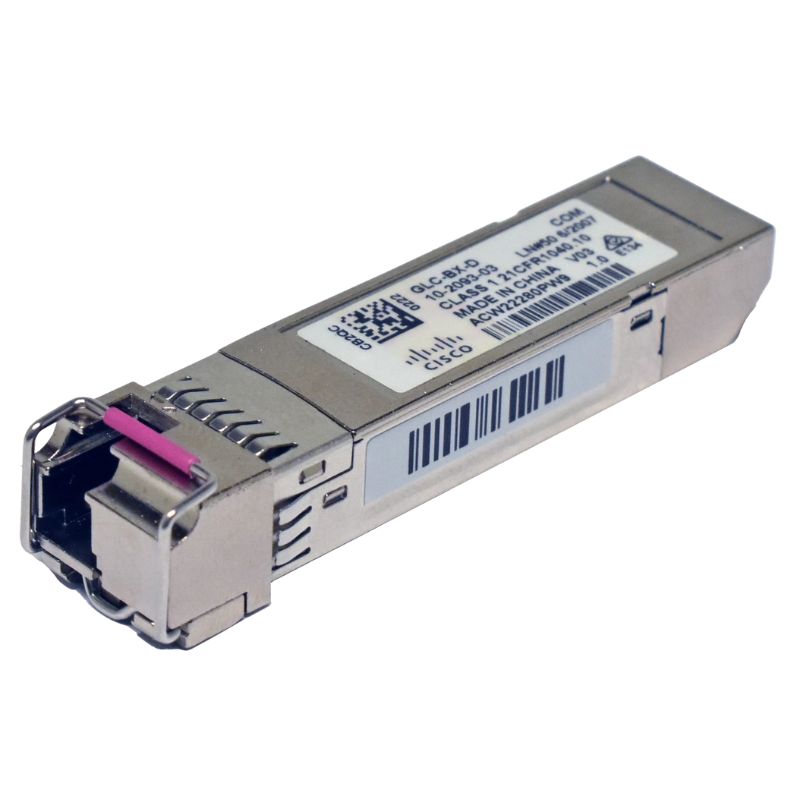


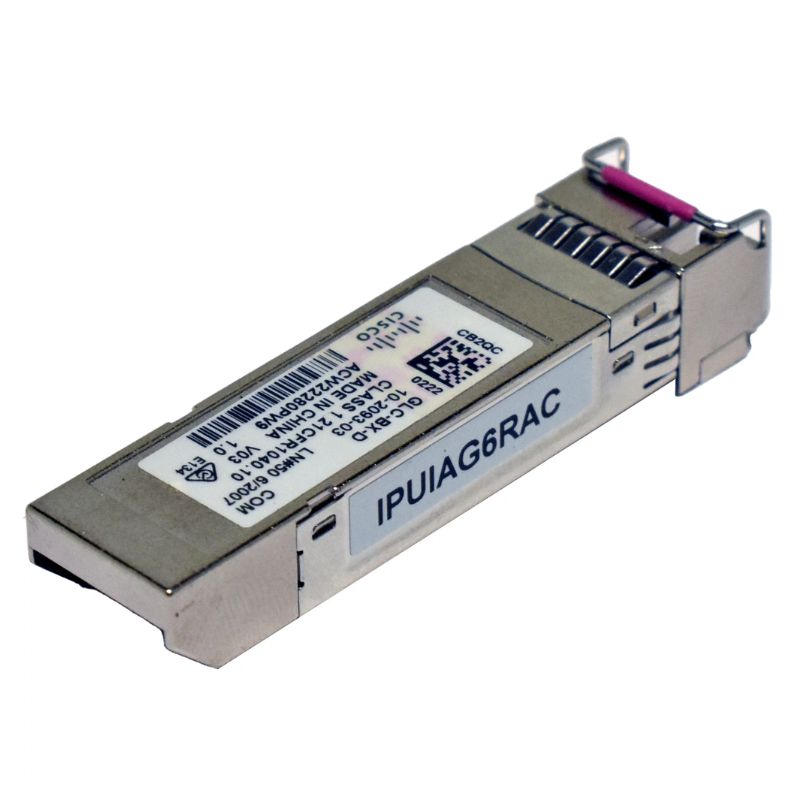
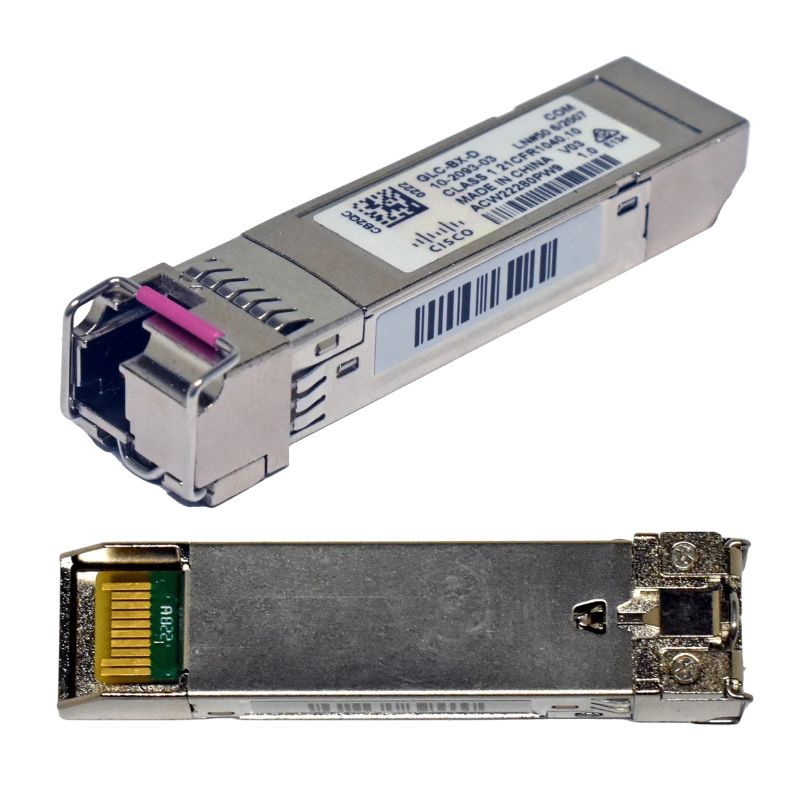
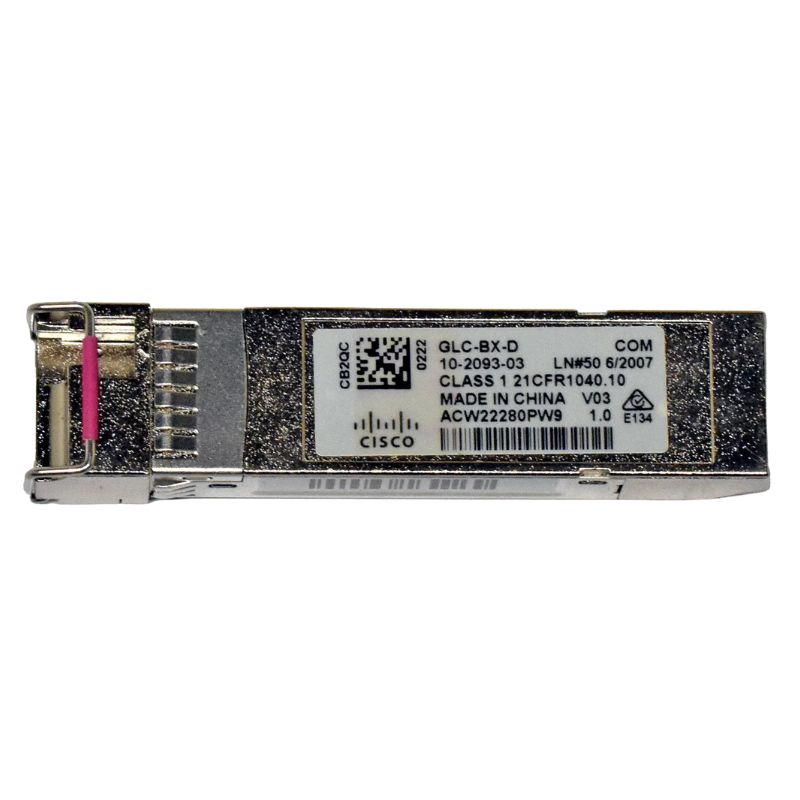
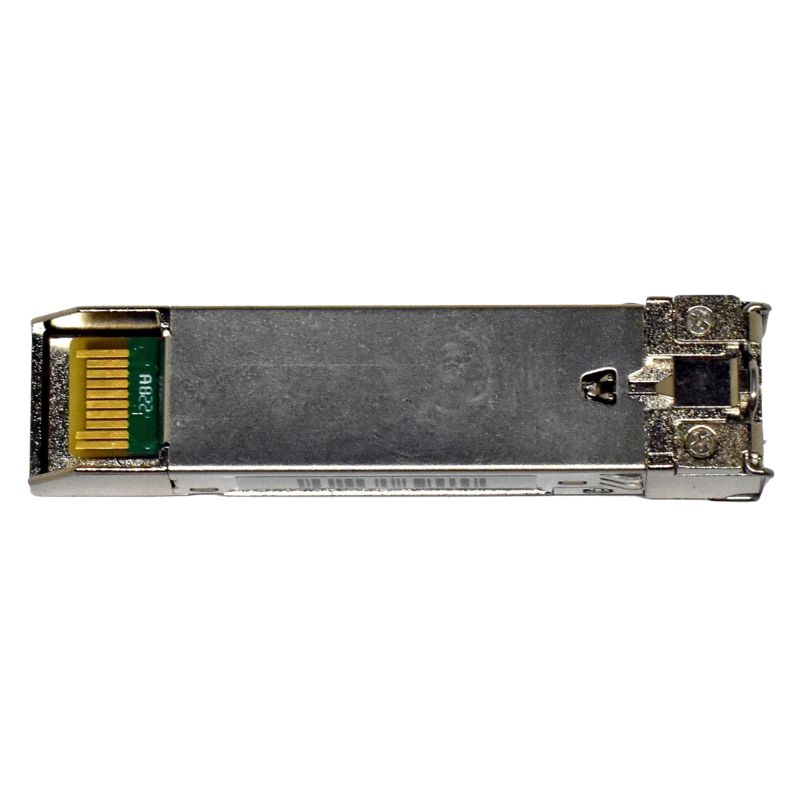
Cisco GLC-BX-D SFP 1GBPS Single Mode Transceiver Module. Factory-Sealed New in Original Box (FSB) with 1 year replacement warranty
| SKU/MPN | Warranty | Price | Condition | You save |
|---|---|---|---|---|
| GLC-BX-D | 1 Year Warranty | $114.00 | Excellent Refurbished | You save: $39.90 (26%) |
| GLC-BX-D | 1 Year Warranty | $290.00 | Factory-Sealed New Retail in Original Box (FSB) | You save: $101.50 (26%) |
The Cisco GLC-BX-D is a high-performance 1Gbps 1000Base-BX-D optical transceiver module designed for reliable data communication over single-mode fiber. It supports a transmission distance of up to 10 kilometers with 1490nm TX and 1310nm RX wavelengths, making it ideal for enterprise networking environments.
The Cisco GLC-BX-D 1Gbps Single Mode Transceiver Module represents a highly specialized optical networking component designed for efficient, reliable, and high-performance Gigabit Ethernet connectivity over single-mode fiber infrastructure. This transceiver belongs to the widely deployed Small Form-Factor Pluggable (SFP) family, engineered to support modern enterprise, campus, and service provider network architectures that require stable long-distance data transmission with minimal signal loss and maximum interoperability.
1Gbps SFP single-mode transceivers such as the GLC-BX-D are engineered to convert electrical signals into optical signals and vice versa, enabling seamless data communication across fiber optic cables. These modules are commonly used in environments where high bandwidth, low latency, and extended transmission distances are essential. Unlike multimode solutions, single-mode transceivers utilize a narrow light path, significantly reducing dispersion and allowing data transmission over much longer distances.
In enterprise-grade networking infrastructures, 1Gbps SFP modules are often deployed in backbone connections, data center interconnects, and campus networking segments. The GLC-BX-D module is particularly valued for its ability to support stable communication links between distributed network nodes, ensuring uninterrupted service delivery for critical applications such as cloud services, virtualization platforms, and centralized data storage systems.
One of the most important aspects of the GLC-BX-D category is its cost efficiency in fiber deployment. By leveraging bidirectional optical transmission over a single strand of fiber, organizations can significantly reduce cabling complexity and infrastructure costs. This makes it an ideal solution for organizations seeking scalable networking solutions without excessive physical fiber expansion.
The GLC-BX-D module is designed specifically for single-mode fiber (SMF), which allows it to transmit optical signals over long distances with minimal attenuation. The laser-based transmission system ensures high signal integrity and reduced interference, making it suitable for long-haul network links between buildings or network aggregation points.
A defining characteristic of the GLC-BX-D module is its bidirectional communication capability. Using wavelength division multiplexing principles, it allows simultaneous transmission and reception of data over a single fiber strand. This design eliminates the need for separate transmit and receive fibers, significantly simplifying fiber management in complex installations.
The module is built in a compact SFP form factor, enabling hot-swappable functionality. This allows network administrators to install, replace, or upgrade modules without powering down the host device. This capability is essential for maintaining uptime in enterprise environments where network availability is critical.
The optical components within the GLC-BX-D module are engineered for high precision and stability. Advanced laser diodes and photodetectors ensure accurate signal conversion, while internal circuitry manages power consumption and thermal regulation. This results in consistent performance even in high-density networking environments.
In enterprise campuses, the GLC-BX-D module is commonly used to interconnect buildings, departments, or network distribution layers. Its ability to maintain stable connectivity over long distances makes it suitable for connecting remote switches without requiring additional active networking equipment.
Within data centers, these modules are deployed to establish high-speed links between top-of-rack (ToR) switches, aggregation switches, and core network layers. The consistent 1Gbps throughput ensures reliable communication between server clusters and storage systems, contributing to optimized workload distribution and reduced latency.
Telecom providers utilize GLC-BX-D modules for extending access networks and connecting distributed infrastructure nodes. The single-mode BiDi capability reduces fiber usage, which is particularly advantageous in large-scale metropolitan fiber deployments where infrastructure efficiency is critical.
Service providers often deploy these modules to expand their service coverage areas without investing heavily in additional fiber routes. The long-range transmission capabilities of single-mode fiber paired with Cisco’s optical reliability make the GLC-BX-D a dependable choice for scalable network expansion.
Reliability is a key advantage of this transceiver category. Designed to meet strict industry standards, the GLC-BX-D ensures stable network performance under varying environmental conditions. Its robust optical design minimizes packet loss and signal degradation, supporting uninterrupted data flow.
The BiDi design significantly reduces fiber requirements by enabling full-duplex communication over a single strand. This leads to lower installation costs, simplified cable management, and improved scalability in both new and existing network deployments.
Being part of Cisco’s ecosystem, the GLC-BX-D integrates seamlessly with compatible Cisco networking equipment. This ensures optimal interoperability, firmware compatibility, and consistent performance across enterprise-grade infrastructures, reducing configuration complexity and operational risks.
The module is engineered for low power consumption, making it suitable for energy-conscious deployments. Its efficient thermal design helps maintain optimal operating temperatures even in high-density switch environments, contributing to long-term hardware reliability.
The GLC-BX-D module maintains a consistent data transfer rate of 1Gbps, making it ideal for standard Gigabit Ethernet applications. This ensures predictable network behavior, which is critical for applications requiring steady bandwidth allocation such as VoIP, video conferencing, and enterprise applications.
When paired with compatible single-mode fiber infrastructure, the module can support long-distance connectivity, making it suitable for inter-building links and distributed network architectures. This extended reach eliminates the need for intermediate signal regeneration equipment in many scenarios.
The optical-to-electrical conversion process within the GLC-BX-D module is optimized for minimal latency. This is particularly important in environments where real-time data transmission is required, such as financial systems, cloud computing platforms, and distributed databases.
The module supports a straightforward plug-and-play installation process, allowing network engineers to quickly deploy or replace transceivers without complex configuration steps. This simplifies maintenance and reduces network downtime during upgrades or repairs.
The GLC-BX-D is designed for compatibility with a wide range of Cisco switches and routers that support SFP interfaces. This ensures seamless integration into existing network architectures without requiring major hardware modifications or additional licensing complexities.
Proper deployment requires pairing the GLC-BX-D module with a corresponding BiDi transceiver operating at complementary wavelengths. This ensures proper bidirectional communication over a single fiber strand, maintaining signal integrity and network efficiency.
As organizations scale their operations, the need for flexible and expandable network infrastructure becomes critical. The GLC-BX-D module supports this scalability by enabling efficient fiber utilization and simplifying network extension across multiple locations.
In layered network architectures, these modules are commonly used between access, distribution, and core layers. Their consistent performance ensures smooth traffic flow across hierarchical network structures, improving overall system efficiency.
By enabling redundant and alternative fiber paths, GLC-BX-D modules contribute to improved network resilience. This ensures continued operation even in the event of partial infrastructure failure, supporting high availability requirements in enterprise environments.
In enterprise IT environments, these modules support internal networking, cloud access, and communication systems. Their reliability and performance stability make them a foundational component of modern IT infrastructure design.
Government institutions and educational campuses often rely on single-mode transceiver modules for secure, long-distance connectivity between buildings and departments. The GLC-BX-D ensures stable communication channels for administrative and academic systems.
Cloud service providers utilize these modules to maintain high-speed connectivity between server clusters, storage arrays, and distributed data centers. The predictable performance of 1Gbps links supports efficient cloud service delivery.


 Contact Us
 Information
 Catalog
 Solid State Drives (SSD)
 Network Switches
 Hard Disk Drives
 HBA & Controllers
 PC & Servers
 PC & Server Memory
 CPU & Processors
 Network Routers
 Power Supplies
 Tape Drives & Libraries
 Network Devices
 Computer & Network Cables