(7% discount is applied at checkout)
Cart is empty
Your go-to destination for cutting-edge server products
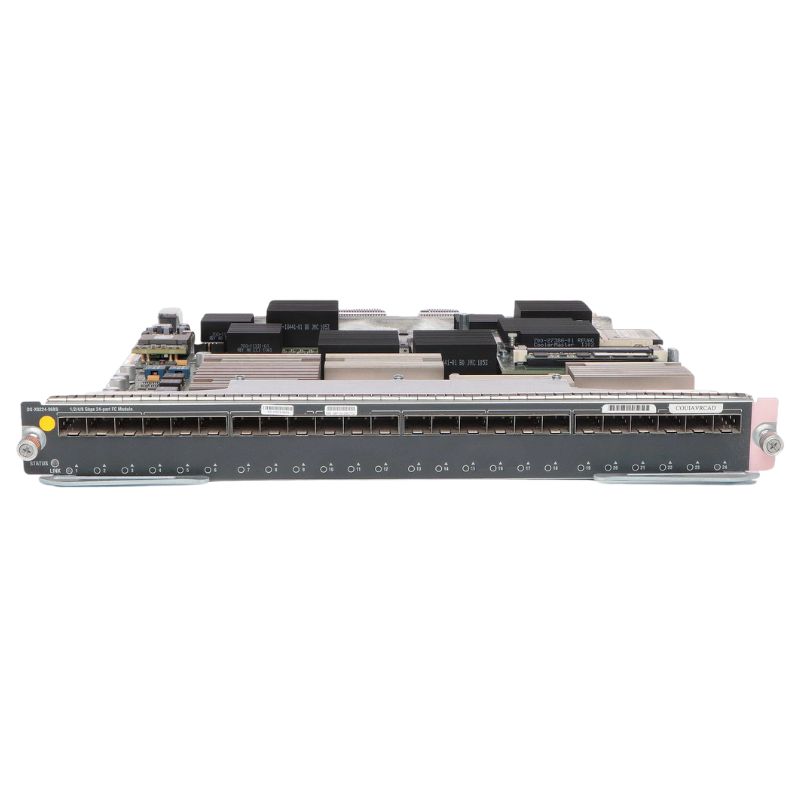


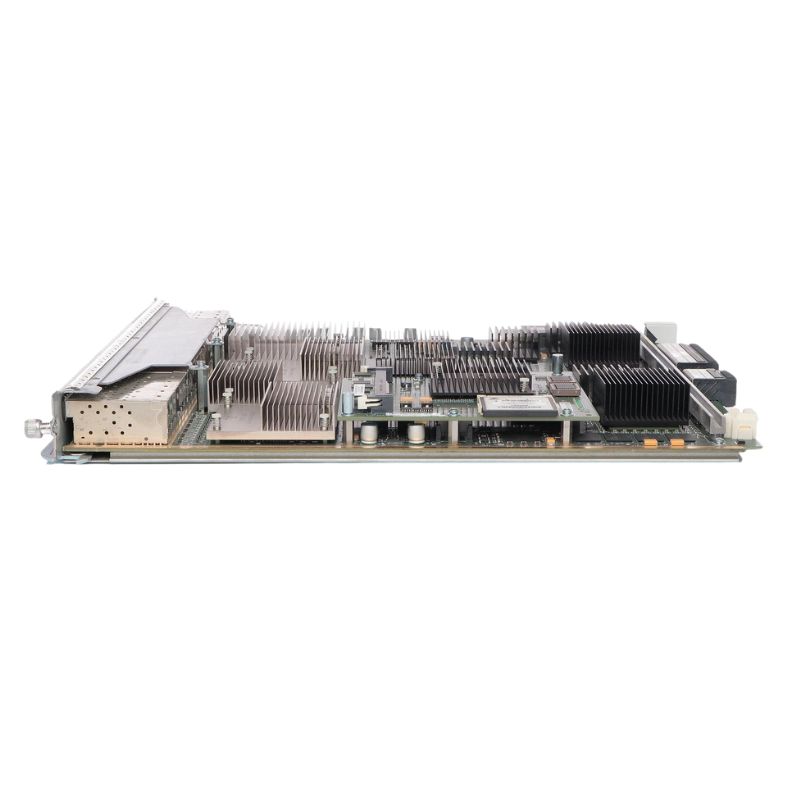
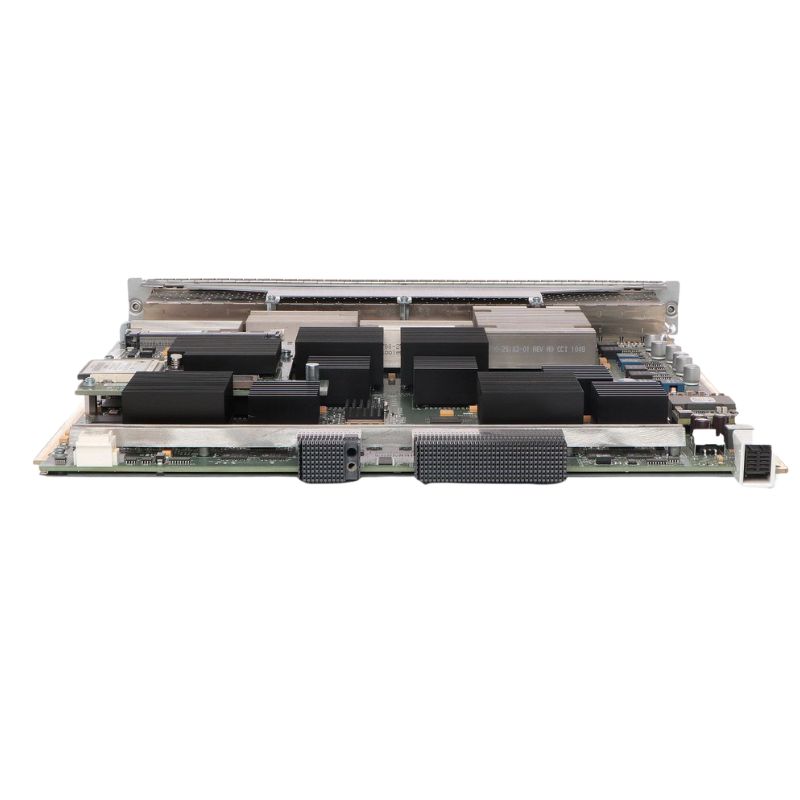
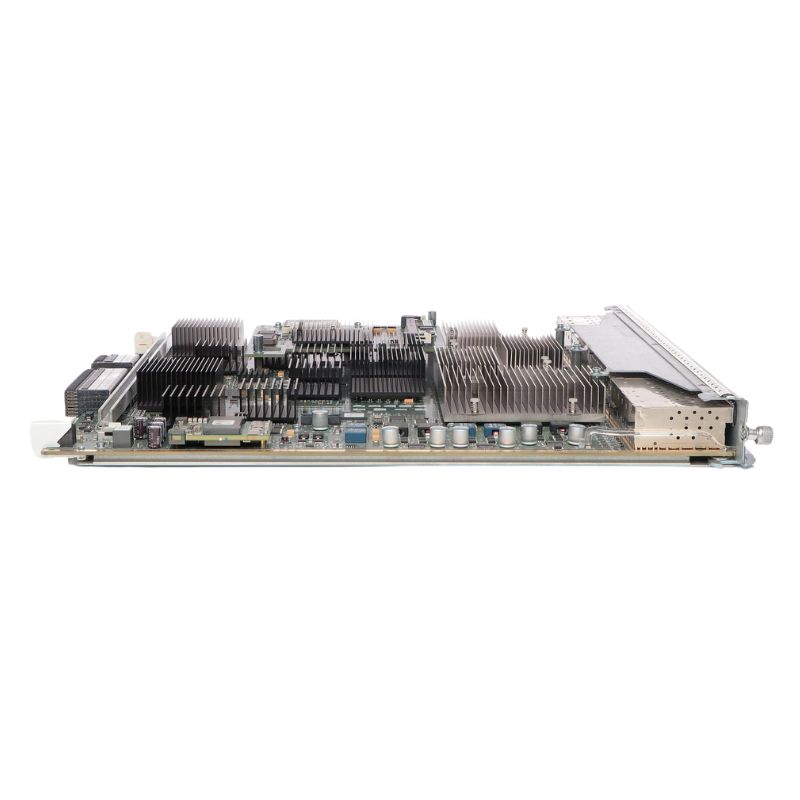
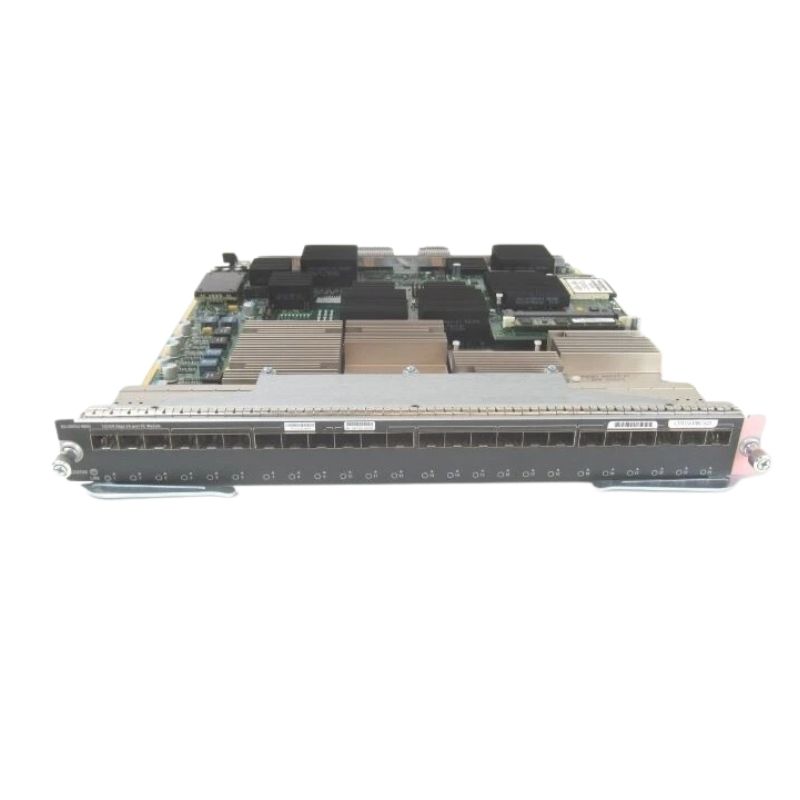
Cisco DS-X9224-96K9 MDS 9000 Series 8-Gbps 24 Ports Expansion Module. Factory-Sealed New in Original Box (FSB) with 1 year replacement warranty
| SKU/MPN | Warranty | Price | Condition | You save |
|---|---|---|---|---|
| DS-X9224-96K9 | 1 Year Warranty | $99.00 | Excellent Refurbished | You save: $34.65 (26%) |
| DS-X9224-96K9 | 1 Year Warranty | $185.00 | Factory-Sealed New Retail in Original Box (FSB) | You save: $64.75 (26%) |
The Cisco DS-X9224-96K9 offers a reliable and scalable 24-port Fibre Channel solution engineered for high-performance data center environments. Designed as a plug-in module, it enhances SAN efficiency while supporting advanced security, management, and interoperability standards.
Built to maintain optimal connectivity in storage area networks, this module delivers consistent throughput, resilient architecture, and seamless compatibility with a vast range of Fibre Channel protocols.
The module supports an array of secure remote administration technologies, enabling smooth oversight and configuration without physical access.
Its extensive protocol adherence ensures compatibility within complex SAN infrastructures, maintaining consistent reliability across diverse storage applications.
The Cisco DS-X9224-96K9 24 Ports 8 Gbps Fibre Channel Switching Module represents a high-density, enterprise-grade SAN switching family designed for modern data center storage fabrics. Positioned for mission-critical storage area network (SAN) deployments, this category focuses on modular, high-throughput switching modules that deliver low latency and consistent performance for block storage, databases, virtualization platforms, backup and restore operations, and large-scale virtualization clusters. The module’s support for 8 Gigabit per second (8 Gbps) Fibre Channel connectivity across 24 ports makes it an ideal fit where predictable low-latency transactions and rapid storage access are essential. This category page targets IT architects, storage administrators, network engineers, and procurement teams searching for a reliable Fibre Channel switching module with extensive enterprise capabilities including fabric services, zoning, quality of service, and advanced security features.
Designed for medium to large data centers and service provider environments, the Cisco DS-X9224-96K9 module category emphasizes a balance between port density and high speed. These modules are suited for primary SAN fabrics supporting SAN-attached systems, storage arrays, tape libraries for backup, and clustered host environments. They are appropriate for transactional databases, virtual desktop infrastructure (VDI) backends, intensive I/O virtualization workloads, and consolidated backup infrastructures. The category is particularly compelling where scale-out storage topologies demand predictable throughput at 8 Gbps while preserving the flexibility to aggregate multiple modules into a resilient, multi-chassis fabric.
Products in this category differentiate on several fronts: consistent 8 Gbps line-rate forwarding, high port density in a compact module form factor, robust fabric services such as zoning and fabric binding, end-to-end path visibility, and integrated management that aligns with Cisco’s NX-OS or MDS operating environments. The category emphasizes enterprise resiliency features including hot-swappable components, redundant management interfaces, and support for interoperability with multi-vendor Fibre Channel fabrics. In addition, advanced diagnostics, performance monitoring, and SAN analytics capabilities are common across offerings in this group, enabling administrators to proactively manage storage performance and rapidly diagnose faults.
The defining performance characteristic of the 24 Ports 8 Gbps Fibre Channel Switching Module category is its ability to sustain full-line-rate throughput across all ports while preserving ultra-low latency. With each port capable of 8 Gbps operation, aggregate bandwidth is designed to support concurrent, high-volume I/O from clustered servers and storage arrays. Latency metrics are optimized for block storage traffic patterns, minimizing queuing and avoiding microbursts that can impact transactional workloads. These modules implement hardware-accelerated switching and buffer management to ensure deterministic performance under mixed I/O loads.
Scalability is achieved through flexible inter-switch links (ISLs), port trunking, and support for multi-chassis fabrics. A single module can be combined with additional modules in a chassis or across multiple chassis to create a broad, scalable fabric. This category supports fabric topologies that scale in both port count and throughput, enabling organizations to start with a modest configuration and expand without disruptive architecture changes. Features such as NPIV (N_Port ID Virtualization) and port aggregation allow administrators to scale host connectivity and consolidate server-to-storage topologies effectively.
High-availability mechanisms are central to the design of modules in this category. Redundant power and management paths, non-disruptive firmware upgrades, and automatic failover mechanisms ensure minimal interruption to storage traffic. ISL redundancy and path failover protocols are used to preserve connectivity in the event of link or device failures. Hardware components in these modules are typically rated for 24x7 operations and engineered to operate in data center temperature and power conditions, contributing to overall operational continuity.
The 24-port configuration offers a compact but powerful port density that fits within modular chassis systems. This density is particularly useful for consolidating SAN endpoints within a single chassis slot, decreasing wiring complexity and maximizing the use of chassis expansion capabilities. The form factor balances airflow, cooling requirements, and serviceability, allowing for efficient placement within rack environments where space density and thermal considerations are top priorities.
At the core of modules in this category are high-performance switching fabrics supported by purpose-built ASICs engineered for Fibre Channel frame forwarding. These ASICs handle frame switching at line rate with hardware-based services for frame-based features including virtual SANs, class of service, and priority flow control. The silicon enables features such as consistent buffering, microsecond-level forwarding decisions, and advanced error detection mechanisms to preserve data integrity across the fabric.
Thermal engineering for 24-port 8 Gbps modules accounts for continuous heavy I/O and sustained link activity. These modules are designed to work within chassis airflow patterns and leverage redundant power supplies at the chassis level. Environmental tolerances adhere to data center standards, and the physical design supports hot-swap operations for minimal service disruption. Detailed power and thermal specifications are provided per model to aid capacity planning and rack-level power distribution design.
Interoperability is a key characteristic for Fibre Channel switching modules since SAN environments often include storage arrays, host bus adapters, and tape libraries from multiple vendors. This category emphasizes standards-compliant Fibre Channel behavior and proven interoperability with major storage vendors and server platforms. Tested compatibility matrices and interoperability guides help administrators plan heterogeneous fabric deployments, ensuring that devices from different vendors operate seamlessly together.
Firmware compatibility and software lifecycle considerations are vital when deploying modules at scale. These modules support rolling upgrades and non-disruptive firmware update procedures where possible, minimizing downtime during maintenance windows. Compatibility documentation and release notes are published to guide administrators through upgrade paths, feature enablement dependencies, and interoperability testing protocols.
Integration with advanced storage array services such as thin provisioning, deduplication, replication, and array-level encryption is achieved through standardized fabric features. The switching module category enables these services by providing stable, low-latency connectivity, proper zoning, and consistent performance guarantees needed for storage arrays to operate optimally. Integration guides and validated design patterns are typically provided to ensure predictable results in enterprise environments.
When deployed as the primary SAN fabric, the 24 Ports 8 Gbps module supports production databases, ERP systems, and other latency-sensitive applications. Its performance profile is tailored for workloads that require consistent block storage access, and its management capabilities allow operators to tune fabric behavior to match application QoS requirements. High-availability features are used to create redundant paths and eliminate single points of failure for mission-critical services.
Large virtualization projects and consolidation of multiple workloads benefit from a fabric that can handle high concurrency and aggressive IOPS patterns. The module’s capacity to support multiple virtual machines per host via NPIV and to maintain isolation via zoning makes it well-suited for virtualized data centers. Administrators can consolidate multiple storage silos into a centralized SAN, simplifying management and increasing utilization efficiency.
For backup and disaster recovery deployments, the module category supports tape library attachments, replication traffic, and high-throughput backup windows. The deterministic behaviour at 8 Gbps ensures that backup windows are predictable and that replication links remain stable during peak activity. Robust monitoring and diagnostics help ensure that backup operations complete successfully and replication remains in sync across recovery sites.
While individual model SKUs may vary, the general technical profile for the Cisco DS-X9224-96K9 24 Ports 8 Gbps Fibre Channel Switching Module category includes 24 Fibre Channel ports capable of 1/2/4/8 Gbps operation, hardware-accelerated frame forwarding, support for fabric services such as zoning and name server, comprehensive management interfaces including CLI and APIs, and advanced monitoring telemetry. The module’s hardware supports FC ports in SFP/SFP+ style transceiver sockets, detailed per-port statistics, and advanced buffering mechanisms to reduce head-of-line blocking and preserve throughput under mixed traffic patterns. Additionally, features such as flow control, link-based and class-based QoS, and port-based access control are commonly supported to enable differentiated service handling across storage workloads.
The category typically includes features such as E_Port and F_Port support, trunking for ISLs, NPIV support for virtualization, WWN-based zoning, fabric binding, persistent zoning, and path management protocols compatible with enterprise host bus adapters. Diagnostic features include fabric-wide health checks, link error analysis, and per-flow diagnostics to simplify root-cause analysis. Many models in the category also support extensive logging and audit capabilities for change management and regulatory compliance.


 Contact Us
 Information
 Catalog
 Solid State Drives (SSD)
 Network Switches
 Hard Disk Drives
 HBA & Controllers
 PC & Servers
 PC & Server Memory
 CPU & Processors
 Network Routers
 Power Supplies
 Tape Drives & Libraries
 Network Devices
 Computer & Network Cables