(7% discount is applied at checkout)
Cart is empty
Your go-to destination for cutting-edge server products
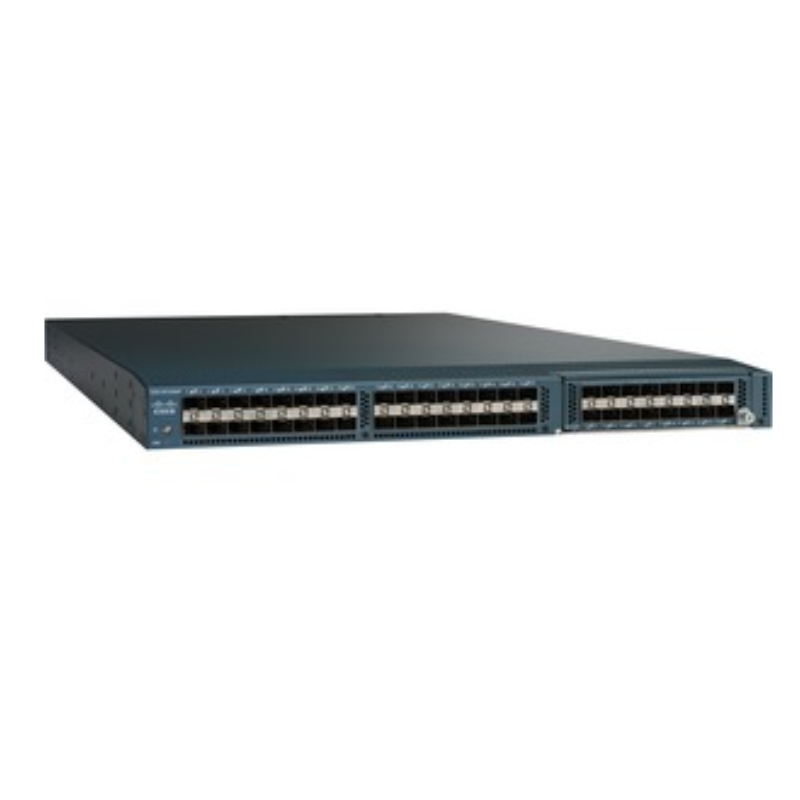


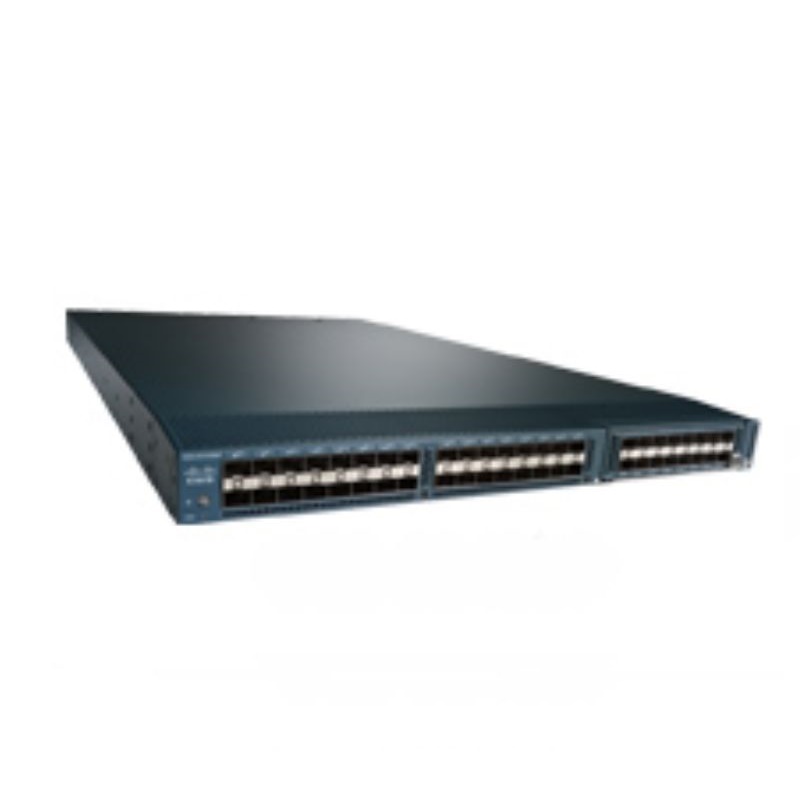
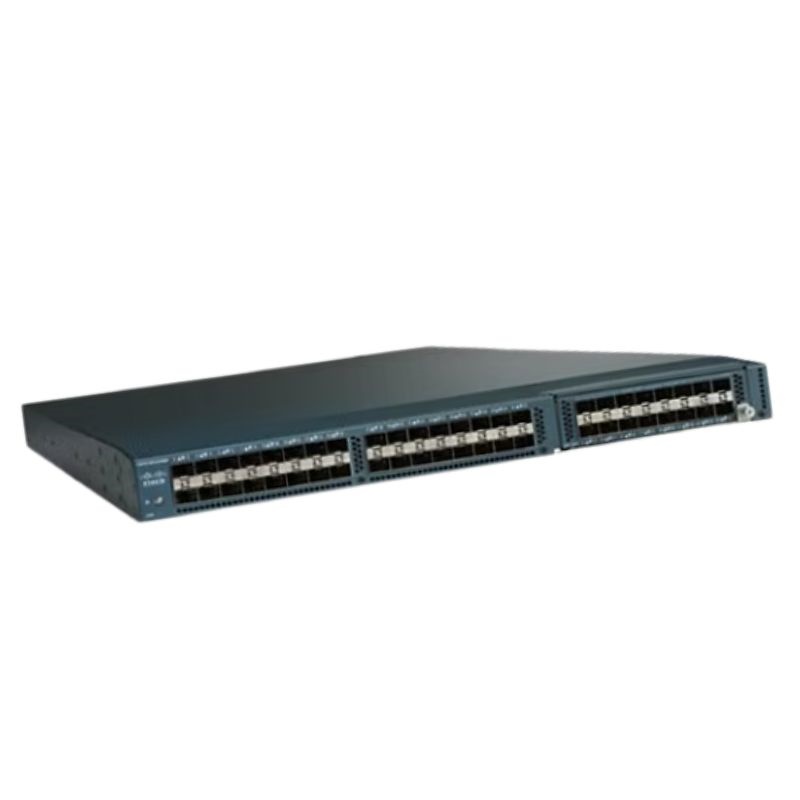
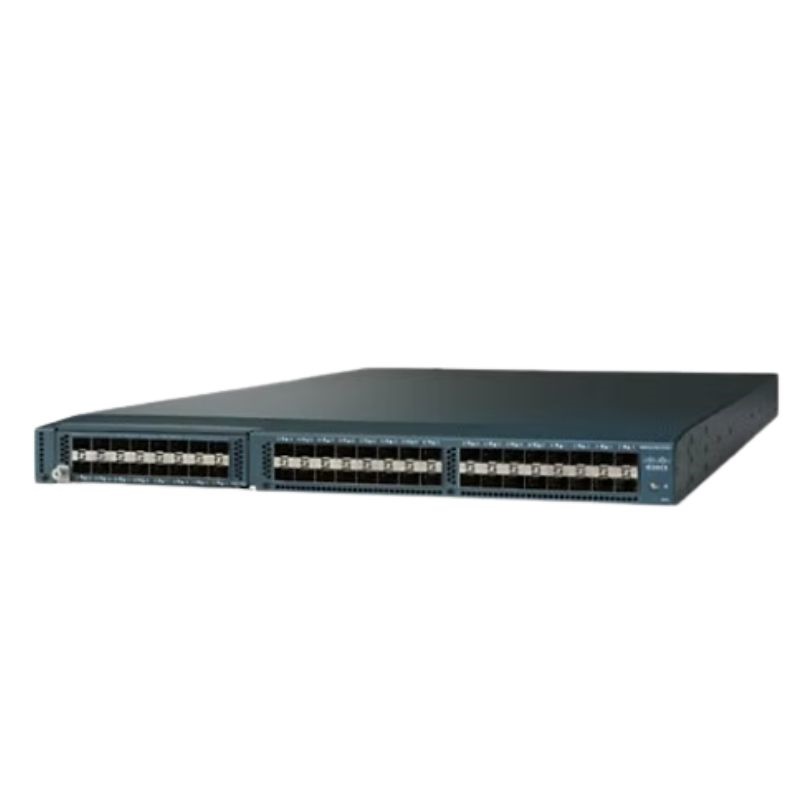
Cisco UCS-SP8-B-FI48 48 Ports Fabric Interconnect 10 Gigabit Layer 2 Rack-mountable 1U. Factory-Sealed New in Original Box (FSB) with 1 year replacement warranty
The Cisco UCS-SP8-B-FI48 is a powerful 48-port Fabric Interconnect expansion module designed for high-density enterprise networking environments. Engineered this 10 Gigabit Layer 2 rack-mountable 1U solution enhances scalability, improves bandwidth distribution, and ensures seamless integration within Unified Computing System (UCS) infrastructures.
The Cisco UCS-SP8-B-FI48 48 Ports Fabric Interconnect 10 Gigabit Layer 2 Rack-mountable 1U is a high-performance unified network switching platform designed for enterprise-grade data center environments. Built to serve as the central point of connectivity in Cisco Unified Computing System (UCS) architectures, this fabric interconnect delivers high-throughput, low-latency switching while simplifying server, storage, and network integration. Its 48-port 10 Gigabit Ethernet configuration ensures scalable bandwidth distribution across multiple compute nodes, making it an essential backbone component for modern virtualized infrastructures, private clouds, and high-density server deployments.
This category of fabric interconnect systems is engineered for organizations requiring simplified network management, consolidated fabric design, and deterministic performance for mission-critical workloads. The 1U rack-mountable form factor allows efficient utilization of rack space while maintaining enterprise-class redundancy and throughput capabilities. The Cisco UCS-SP8-B-FI48 is particularly suited for data centers that demand predictable Layer 2 switching behavior combined with centralized UCS management features.
Fabric interconnects in Cisco UCS environments act as both network switches and management planes for compute and storage traffic. The UCS-SP8-B-FI48 model represents a high-density switching solution optimized for aggregation of multiple blade servers, rack servers, and virtualization clusters. By integrating network switching and unified management into a single device, it reduces operational complexity and enhances performance consistency across distributed systems.
In a traditional data center architecture, separate switching layers often introduce configuration overhead and inconsistent policy enforcement. In contrast, fabric interconnect systems streamline these functions by centralizing them, allowing administrators to manage entire server pools as a single logical domain. This approach significantly improves deployment efficiency, reduces human error, and enhances scalability for growing enterprise workloads.
The Layer 2 switching architecture embedded within the Cisco UCS-SP8-B-FI48 enables efficient frame forwarding based on MAC address tables. This ensures deterministic traffic flow within the data center fabric, reducing unnecessary routing overhead. Layer 2 design is particularly beneficial in environments where latency-sensitive applications such as financial trading platforms, virtualization clusters, and high-performance computing systems are deployed.
The switch fabric intelligently learns MAC addresses dynamically and optimizes forwarding paths for maximum throughput. This design allows seamless communication between server nodes without introducing unnecessary complexity at higher network layers. As a result, organizations benefit from simplified troubleshooting, predictable traffic patterns, and enhanced network stability.
The internal switching engine of the UCS-SP8-B-FI48 is optimized for high-throughput packet forwarding. With support for 10 Gigabit Ethernet across all ports, the system ensures that bandwidth-intensive workloads such as virtualization migration, distributed storage replication, and large-scale database synchronization can operate without bottlenecks.
Traffic optimization mechanisms within the fabric interconnect prioritize efficient packet distribution and minimize congestion through intelligent buffering and forwarding logic. This contributes to reduced latency and improved application responsiveness across all connected nodes.
One of the defining features of this category is the high port density offered by the 48-port configuration. Each port supports 10 Gigabit Ethernet connectivity, enabling large-scale server aggregation within a single switching device. This is particularly valuable in environments where rack space optimization and cable management efficiency are critical operational requirements.
The high port count allows administrators to consolidate multiple top-of-rack switches into a unified fabric interconnect layer. This consolidation reduces hardware footprint, lowers power consumption, and simplifies network topology design. It also enables more streamlined cabling structures, reducing physical clutter and improving airflow within racks.
In UCS deployments, the 48 ports serve as primary uplinks for blade chassis and rack servers. Each server can be connected through virtual interfaces that are managed centrally by the fabric interconnect system. This abstraction allows network policies to be applied uniformly, eliminating the need for manual configuration on individual switches.
Server aggregation through the UCS-SP8-B-FI48 also enables dynamic resource allocation, where compute nodes can be reassigned or reconfigured without physical rewiring. This flexibility is essential for modern cloud environments where workloads frequently shift across virtual machines and containers.
Virtualized environments require high-bandwidth interconnects to support live migration, distributed storage access, and multi-tenant networking. The UCS-SP8-B-FI48 is designed to accommodate these demands by offering scalable port availability and consistent throughput performance.
As virtualization density increases, network traffic patterns become more complex. The fabric interconnect ensures that east-west traffic between virtual machines remains efficient and uncongested, maintaining optimal performance across hyperconverged infrastructure clusters.
The compact 1U rack-mountable design of the Cisco UCS-SP8-B-FI48 is a critical advantage in high-density data center environments. Space efficiency is a primary concern in enterprise deployments, and reducing physical footprint without sacrificing performance is a key design objective of this category.
By consolidating 48 high-speed ports into a single rack unit, organizations can significantly reduce the number of switching devices required in their infrastructure. This leads to improved rack utilization, simplified maintenance procedures, and reduced cooling requirements.
Efficient thermal design ensures that the UCS-SP8-B-FI48 maintains optimal operating temperatures even under heavy network loads. The chassis is engineered to support high airflow patterns that dissipate heat generated by high-speed switching components.
Power efficiency is another critical aspect of the design. By integrating multiple switching functions into a single platform, energy consumption is reduced compared to distributed switch architectures. This contributes to lower operational costs and improved sustainability metrics in enterprise data centers.
The fabric interconnect is designed for deployment in a wide range of enterprise environments, from on-premises data centers to hybrid cloud edge facilities. Its robust construction ensures stable performance under varying environmental conditions, including temperature fluctuations and high-density rack configurations.
The Cisco UCS-SP8-B-FI48 is not merely a switch but a central component of the UCS management ecosystem. It integrates tightly with Cisco UCS Manager, enabling administrators to control compute, network, and storage resources from a single interface. This unified management approach simplifies infrastructure provisioning and reduces configuration complexity.
Within UCS environments, the fabric interconnect serves as the authoritative control point for policy enforcement. Server profiles, network configurations, and storage connectivity settings are all managed centrally, allowing for consistent deployment across large-scale infrastructures.
Policy-based management enables administrators to define configuration templates that can be applied automatically to multiple servers. This reduces manual intervention and ensures consistency across deployments. The UCS-SP8-B-FI48 plays a critical role in enforcing these policies at the network layer, ensuring that all connected devices adhere to predefined operational standards.
Rapid provisioning is a major advantage of UCS-based architectures. New servers can be integrated into the network without requiring extensive manual configuration. The fabric interconnect automatically assigns network identities and applies appropriate policies, significantly reducing deployment time.
Modern enterprise applications require robust network infrastructures capable of handling massive data throughput. The UCS-SP8-B-FI48 is optimized for such workloads, supporting environments such as big data analytics, virtualization clusters, enterprise databases, and cloud-native applications.
With 10 Gigabit Ethernet connectivity across all ports, the system ensures that data-intensive applications can operate without network-induced bottlenecks. This is essential for maintaining application performance in environments where data volumes are continuously increasing.
Latency-sensitive applications require deterministic network behavior. The fabric interconnect minimizes latency through optimized switching logic and high-speed internal architecture. This is particularly important for financial systems, real-time analytics platforms, and distributed computing frameworks.
The UCS-SP8-B-FI48 supports convergence of multiple traffic types, including storage, compute, and management traffic. This convergence simplifies network architecture while maintaining performance isolation between different workload types.
Reliability is a cornerstone of Cisco UCS fabric interconnect design. The UCS-SP8-B-FI48 incorporates redundant components and high-availability mechanisms to ensure continuous operation in mission-critical environments. This reduces downtime risks and ensures consistent service availability.
Operational stability is further enhanced through robust hardware design and advanced monitoring capabilities. Administrators can track performance metrics, detect anomalies, and proactively manage network health.
The system architecture supports redundancy in key functional areas, ensuring that failures do not disrupt network operations. This includes failover capabilities for management functions and resilient switching pathways for data traffic.


 Contact Us
 Information
 Catalog
 Solid State Drives (SSD)
 Network Switches
 Hard Disk Drives
 HBA & Controllers
 PC & Servers
 PC & Server Memory
 CPU & Processors
 Network Routers
 Power Supplies
 Tape Drives & Libraries
 Network Devices
 Computer & Network Cables