(7% discount is applied at checkout)
Cart is empty
Your go-to destination for cutting-edge server products
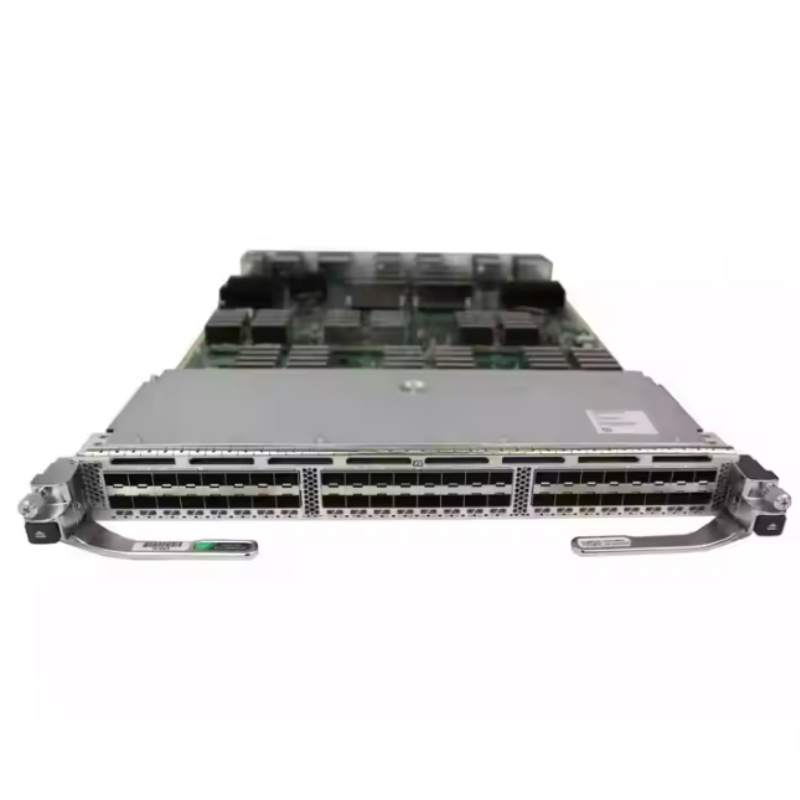


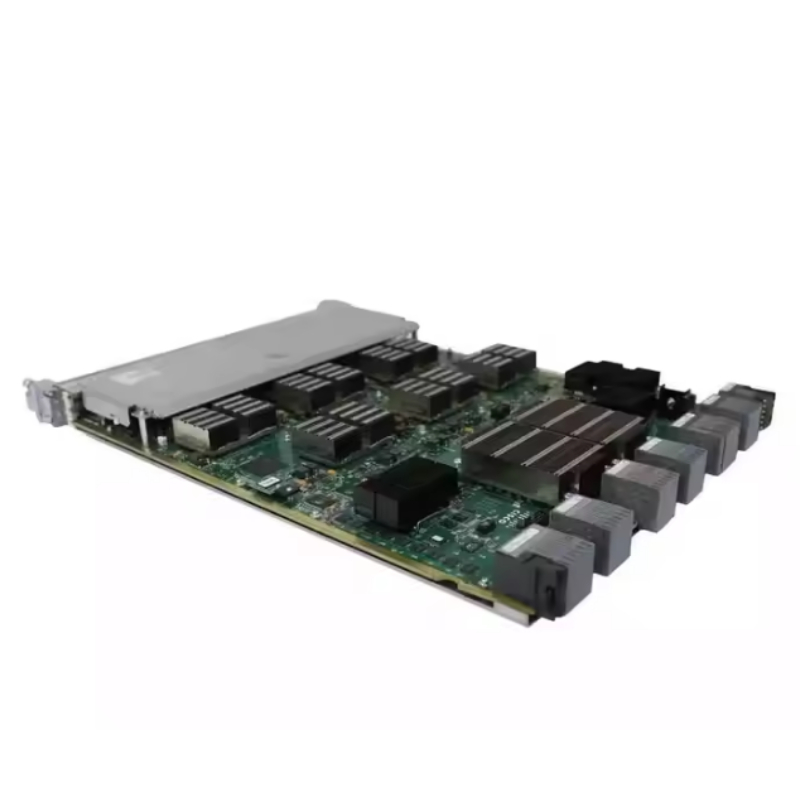
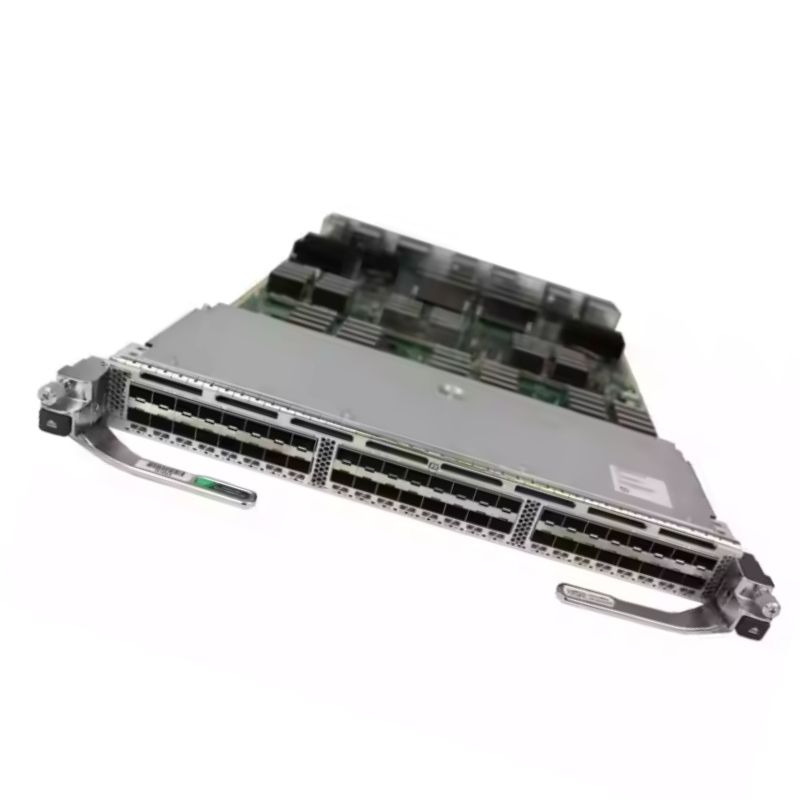
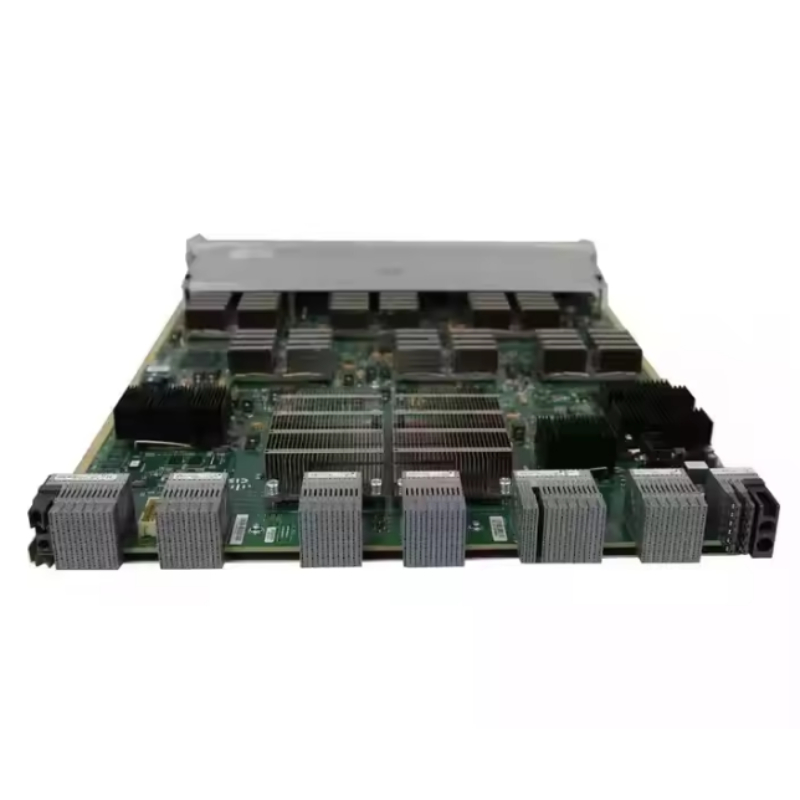
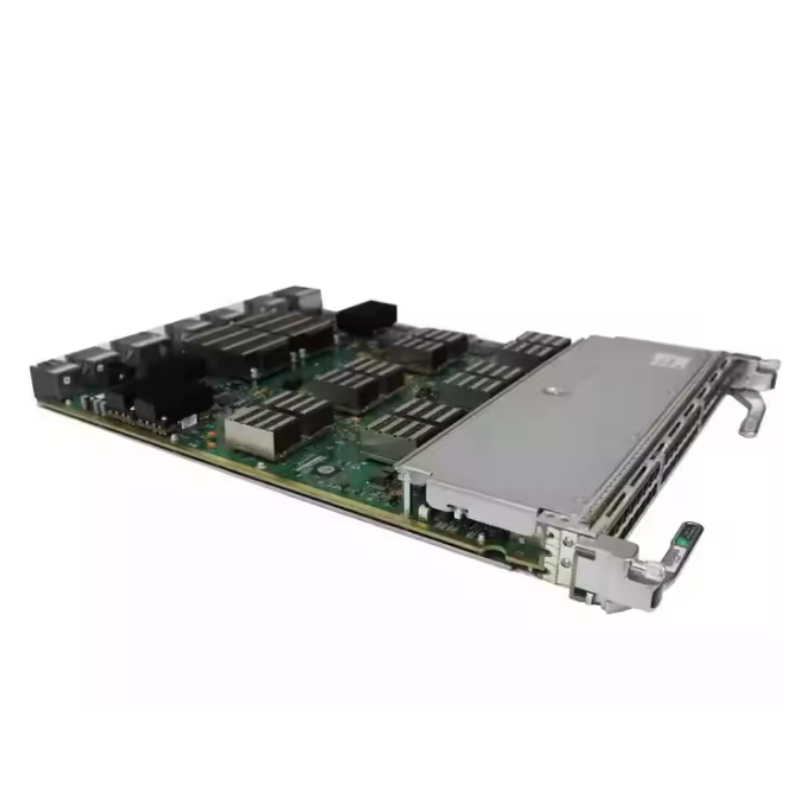
Cisco N77-F348XP-23 Nexus Fiber 1 and 10G 7700 F3-Series 48 Ports Expansion Module. Factory-Sealed New in Original Box (FSB) with 1-Year Replacement Warranty
| SKU/MPN | Warranty | Price | Condition | You save |
|---|---|---|---|---|
| N77-F348XP-23 | 1 Year Warranty | $7,990.00 | Factory-Sealed New in Original Box (FSB) | You save: $2,796.50 (26%) |
| N77-F348XP-23 | 1 Year Warranty | $185.00 | Excellent Refurbished | You save: $64.75 (26%) |
As part of the Cisco Nexus 7700 F3-Series module family, the N77-F348XP-23 is positioned for environments where high-speed Ethernet connectivity, predictable forwarding performance, operational flexibility, and dense port availability are essential. The module accommodates networks transitioning from traditional 1 Gigabit Ethernet access and aggregation connections toward broader 10 Gigabit Ethernet deployment. This dual-speed capability makes the expansion module particularly useful in mixed-generation infrastructures where existing systems must remain connected while newer servers, storage platforms, appliances, and network devices are introduced.
The N77-F348XP-23 Cisco Nexus Fiber 1 and 10G 7700 F3-Series 48-Port Expansion Module is a high-density data center networking component designed for organizations that require scalable 1 Gigabit Ethernet and 10 Gigabit Ethernet fiber connectivity within the Cisco Nexus 7700 modular switching architecture. Built for demanding enterprise, cloud, service provider, virtualization, and large-scale data center environments, this expansion module provides a flexible method of increasing network port capacity while maintaining the performance characteristics expected from a modular Cisco Nexus platform. Its 48-port configuration enables network architects to consolidate substantial numbers of fiber connections into a single line card, helping improve rack efficiency, simplify structured cabling, and support continued infrastructure growth.
Port density is a critical consideration in modern data center design, especially when organizations must support large numbers of physical servers, virtualization hosts, storage systems, security appliances, and downstream network switches. The N77-F348XP-23 Cisco Nexus 7700 F3-Series expansion module delivers 48 fiber-oriented Ethernet ports in a modular form factor, allowing a compatible Nexus 7700 chassis to accommodate a substantial number of network connections without requiring numerous standalone switches.
High-density connectivity can contribute to more efficient infrastructure planning. By concentrating multiple 1G and 10G Ethernet interfaces within a single modular switching platform, data center operators can reduce unnecessary equipment sprawl and create a more centralized network architecture. This approach can simplify administration, streamline cabling pathways, and provide a clearer strategy for future expansion. Organizations can add line-card capacity as network requirements evolve rather than replacing an entire switching environment whenever additional interfaces are needed.
The ability to accommodate both 1 Gigabit Ethernet and 10 Gigabit Ethernet requirements gives the N77-F348XP-23 valuable flexibility in heterogeneous network environments. Many established data centers continue to operate equipment that uses 1G connections, while newer computing and storage platforms increasingly depend on 10G connectivity. A module designed around both speed classes can help organizations manage gradual technology transitions without forcing immediate replacement of functioning infrastructure.
For example, legacy application servers, management interfaces, specialized appliances, and older network systems may continue to operate effectively with 1 Gigabit Ethernet. At the same time, virtualization hosts, high-performance application servers, storage gateways, and aggregation links may require 10 Gigabit Ethernet to accommodate increased traffic volumes. The N77-F348XP-23 allows these differing requirements to be incorporated into a broader Nexus 7700 switching environment.
This flexibility can be particularly valuable during phased infrastructure modernization projects. Instead of redesigning the entire network around a single interface speed, administrators can plan upgrades according to application demand, equipment lifecycle, budget availability, and operational priorities. As bandwidth requirements increase, the network can evolve toward greater use of 10 Gigabit Ethernet while continuing to support appropriate 1G connections.
The Cisco Nexus F3-Series family is associated with high-performance data center networking requirements and modular switching deployments. The N77-F348XP-23 is designed to operate as part of this ecosystem, providing a combination of interface density and Ethernet flexibility for compatible Nexus 7700 chassis configurations. Modular architecture enables organizations to select line cards according to specific connectivity requirements and build a switching platform that aligns with current workloads and anticipated growth.
In large networks, a modular approach can provide significant operational advantages. Different sections of the infrastructure may have different bandwidth, media, and port-density requirements. Rather than deploying an identical fixed switch for every purpose, administrators can configure a modular chassis with suitable expansion modules. This can create a more adaptable environment for aggregation, core connectivity, server networking, and other high-density applications.
The F3-Series design is particularly relevant for organizations seeking to maintain consistent data center switching architecture while expanding capacity. Adding a compatible module can be more straightforward than introducing a completely separate switching platform with different management processes, operational characteristics, and maintenance requirements. Standardizing around a modular Nexus environment may also help network teams maintain consistent configuration practices and infrastructure policies.
The N77-F348XP-23 is intended for the Cisco Nexus 7700 family, a modular switching platform developed for large-scale data center and enterprise networking applications. The modular chassis concept separates the physical switching platform into configurable components, allowing organizations to select appropriate supervisors, fabric resources, power systems, cooling components, and interface modules according to deployment requirements.
Within this architecture, the expansion module provides the physical network interfaces required to connect external devices and network segments. Its 48-port density can help maximize the connectivity available from a chassis slot, making it useful where large numbers of fiber links must be accommodated. This is especially relevant in facilities where rack space, power allocation, and operational simplicity must be carefully managed.
A compatible Nexus 7700 chassis equipped with suitable line cards can serve as a central switching platform for numerous network roles. Depending on the overall architecture, these roles may include data center aggregation, core switching, inter-switch connectivity, server network concentration, and connections to other infrastructure systems. The N77-F348XP-23 contributes to this modular strategy by expanding the number of available 1G and 10G fiber interfaces.
Network growth rarely occurs at a constant rate. New applications, virtualization projects, business expansion, data-intensive services, storage requirements, and cloud integration can all increase demand for physical interfaces and network bandwidth. The N77-F348XP-23 Cisco Nexus expansion module supports a scalable infrastructure model by allowing additional port capacity to be incorporated into a compatible modular chassis.
This expansion capability can help organizations avoid premature replacement of core networking equipment. When available chassis capacity and system compatibility permit, additional modules can be introduced to accommodate new connections. Such modular expansion can extend the useful operational life of a switching platform and provide greater flexibility when planning network investments.
Fiber connectivity is widely used in enterprise and data center networks because it supports high-speed communication across a variety of deployment distances while providing resistance to electromagnetic interference. The N77-F348XP-23 is designed for fiber-oriented 1G and 10G Ethernet connections, making it suitable for environments where network links extend between racks, equipment rows, network zones, or other infrastructure locations.
Fiber-based networking can be particularly beneficial in dense data centers containing substantial electrical equipment. Optical communication is not affected by electromagnetic interference in the same manner as copper-based electrical signaling, making fiber a useful medium for certain high-performance and electrically demanding environments. Fiber connectivity also provides deployment flexibility because different compatible optical transceiver types can address varying distance and cabling requirements, subject to platform and module support.
Organizations should select appropriate transceivers, fiber types, connector arrangements, and cabling infrastructure according to the intended network design. Factors such as link distance, wavelength, multimode or single-mode requirements, supported optics, and overall platform compatibility should be evaluated before deployment. Proper optical planning helps ensure reliable operation and allows the N77-F348XP-23 to be integrated effectively into the wider network.
Aggregation layers collect traffic from multiple access switches, server groups, appliances, or infrastructure zones and forward that traffic toward higher-capacity sections of the network. The 48-port density of the N77-F348XP-23 makes it suitable for aggregation-oriented designs where numerous fiber connections must terminate within a centralized modular switching platform.
In such environments, individual connections may originate from top-of-rack switches, end-of-row switches, application zones, storage-related systems, or specialized appliances. Consolidating these connections within a Nexus 7700 chassis can provide a structured approach to network design. High interface density helps reduce the number of separate devices required to terminate large quantities of links and can simplify the physical organization of network connectivity.
The availability of 1G and 10G connectivity is also useful for aggregation environments containing equipment from different generations. Some downstream systems may require 1G links, while higher-demand infrastructure can use 10G connections. This flexibility supports mixed environments and can help organizations maintain connectivity during staged equipment refresh cycles.
Server virtualization has significantly increased network bandwidth requirements in many data centers. A single physical host may run numerous virtual machines, containers, application services, or infrastructure workloads. As more workloads share a physical server, the amount of traffic passing through the host network interfaces can increase substantially. High-density 10 Gigabit Ethernet connectivity can therefore play an important role in supporting virtualized computing environments.
The N77-F348XP-23 can contribute to a network architecture designed for virtualization by providing numerous high-speed fiber interfaces within a compatible Nexus 7700 platform. These connections may be used to aggregate traffic from server access switches or connect other network infrastructure supporting virtualized workloads. The module's density can be advantageous in large environments where many 10G links must be concentrated into a centralized switching system.
Virtualization also creates dynamic traffic patterns. Workloads may communicate with databases, storage platforms, application tiers, security services, and other virtual machines located across the data center. A scalable switching architecture helps provide the connectivity foundation required for these interactions. By expanding available interface capacity, the N77-F348XP-23 can support broader network growth associated with increased virtualization density.
Many organizations operate networks containing a combination of established and newer technologies. Complete replacement of existing infrastructure may be impractical because of cost, operational risk, application dependencies, or maintenance schedules. The N77-F348XP-23 supports a more gradual modernization strategy by providing connectivity suitable for both 1 Gigabit Ethernet and 10 Gigabit Ethernet requirements.
During a migration project, older systems may remain connected at their appropriate network speed while new infrastructure is introduced with higher-bandwidth interfaces. This allows technical teams to prioritize upgrades according to business importance rather than replacing every connected system simultaneously. A modular platform can also provide additional flexibility because interface capacity can be expanded as migration projects progress.
This approach may help reduce disruption during technology refresh initiatives. Network administrators can plan equipment replacement in stages, validate new systems, migrate workloads, and adjust physical connectivity according to operational requirements. The N77-F348XP-23 provides the dense interface capacity needed to support these transitional environments within a compatible Cisco Nexus 7700 architecture.
Data center rack space is a valuable resource. Every additional standalone network device consumes rack units, power connections, cooling capacity, cabling space, and management attention. High-density modular line cards such as the N77-F348XP-23 can support infrastructure consolidation by providing many network interfaces within an existing compatible chassis.
Consolidation does not simply reduce the number of physical devices. It can also simplify the overall infrastructure layout. Fewer independent switches may mean fewer separate power arrangements, management endpoints, and inter-device connections. A modular switching platform can centralize multiple networking functions within a structured chassis architecture, potentially improving operational consistency.
The 48-port configuration is especially useful for high-density environments. Rather than distributing fiber links across numerous lower-density devices, administrators can concentrate connections into a smaller number of modular components. This can improve rack organization and provide a clearer physical topology, particularly when combined with disciplined cable management and documentation practices.
Standardization is an important consideration for organizations operating complex network environments. Using compatible modules within an established Cisco Nexus architecture can help maintain consistent operational practices across the infrastructure. Network teams can work within a familiar platform rather than managing numerous unrelated switching systems with different interfaces, configuration models, and maintenance procedures.
The N77-F348XP-23 fits into a modular ecosystem designed for scalable data center deployment. For organizations already using compatible Nexus 7700 equipment, adding an appropriate F3-Series expansion module may provide a practical method of increasing connectivity while preserving the broader architectural model. This consistency can support operational efficiency, troubleshooting processes, change management, and infrastructure planning.
Standardization may also simplify spare-parts planning and technical documentation. When a network is built around a defined family of compatible equipment, administrators can create clearer deployment standards and maintenance procedures. However, compatibility should always be verified against the exact chassis, software release, fabric configuration, power capacity, cooling requirements, and supported transceiver documentation before installation.
Successful deployment of the N77-F348XP-23 requires more than simply installing the module into an available chassis slot. Network planners should evaluate the complete system configuration to ensure that the module is appropriate for the intended environment. This includes confirming chassis compatibility, supported software versions, available fabric resources, power capacity, cooling requirements, transceiver support, and the desired network topology.
Port allocation should also be planned carefully. Administrators may need to determine which interfaces will operate at 1G or 10G speeds, how fiber connections will be distributed, and which network zones or devices will use specific ports. Clear port documentation can make future maintenance and troubleshooting significantly easier, especially in high-density installations containing hundreds of physical connections.
Cabling design is another important consideration. Fiber patching should be organized to prevent excessive congestion and accidental disconnection. Appropriate labeling, cable routing, bend-radius management, and patch-panel organization can improve long-term reliability. High-density line cards provide substantial connectivity, but disciplined physical infrastructure management is necessary to realize their full operational benefits.
The physical capabilities of a fiber networking module depend partly on the optical transceivers and cabling used with it. Organizations deploying the N77-F348XP-23 should verify supported optical modules for the specific Cisco Nexus 7700 hardware and software configuration. Different transceivers may be intended for short-distance multimode fiber, longer-distance single-mode fiber, or other specialized connectivity requirements.
Choosing the correct optical solution requires consideration of link length, fiber type, connector compatibility, optical budget, wavelength, and network speed. A short connection within a data center row may have different requirements from a link connecting equipment located in separate rooms or buildings. Matching the optical components to the actual deployment helps prevent unnecessary expense and reduces the likelihood of connectivity problems.
Administrators should also maintain clean fiber connections and follow appropriate handling procedures. Contamination on optical connectors can affect signal quality, while excessive bending or physical stress can damage fiber cables. Proper installation and maintenance practices are therefore important components of a reliable high-density fiber network.
Modern business applications often depend on consistent network connectivity. Database platforms, enterprise applications, virtualized workloads, collaboration services, analytics systems, and cloud-connected services may generate significant volumes of traffic. The N77-F348XP-23 provides a dense interface platform for connecting network segments that support these demanding workloads.
Ten Gigabit Ethernet connectivity offers substantially greater bandwidth than traditional 1 Gigabit Ethernet, making it appropriate for systems that need to exchange larger volumes of data. In environments where numerous high-bandwidth links converge, a modular switching architecture can provide the physical capacity required to support network growth. The N77-F348XP-23 enables organizations to add a significant number of 10G-capable fiber interfaces within a compatible chassis.
At the same time, continued support for 1G connectivity can be valuable for lower-bandwidth systems. Not every device requires a 10G interface, and maintaining appropriate connectivity options can help organizations allocate network resources according to actual requirements. This balance between high-speed capability and legacy support contributes to the module's usefulness in diverse enterprise environments.
A modular expansion strategy allows network infrastructure to evolve without requiring complete replacement whenever connectivity requirements change. The N77-F348XP-23 represents this approach by adding 48 ports of fiber-oriented 1G and 10G Ethernet capacity to a compatible Cisco Nexus 7700 system.
For organizations with predictable growth, modular expansion can make capacity planning more manageable. Initial deployments can be sized according to current requirements while preserving the ability to add suitable line cards later. This may help balance capital expenditure with operational demand and reduce the need to purchase excessive unused capacity at the beginning of a project.
Large enterprises and service providers often manage networks that must accommodate substantial numbers of connections while maintaining structured operational practices. The N77-F348XP-23 can support these environments by providing dense fiber connectivity in a modular switching platform. Its 48-port design is useful where interface scale is a major consideration and where network growth must be accommodated efficiently.
Enterprise deployments may use the module to connect aggregation switches, infrastructure systems, server environments, or specialized network appliances. Service provider environments may require similarly dense connectivity for internal infrastructure, service platforms, or network aggregation. The precise role depends on the architecture, but the module's combination of density and speed flexibility makes it applicable to a broad range of high-capacity Ethernet designs.
Organizations operating multiple data centers may also benefit from standardized hardware architectures. Using compatible modular platforms across facilities can help create consistent operational procedures and simplify engineering practices. The N77-F348XP-23 can form part of such a standardized strategy when its capabilities align with the organization's technical requirements.
Network equipment procurement often includes both new deployments and maintenance of established infrastructure. The N77-F348XP-23 may be relevant for organizations expanding an existing compatible Nexus 7700 environment, replacing a failed or damaged module, maintaining spare inventory, or supporting a planned capacity increase.
When sourcing an expansion module, buyers should verify the exact part number and ensure that the hardware matches the intended system configuration. Similar-looking modules may have different port types, performance characteristics, compatibility requirements, or supported features. Accurate identification is particularly important in modular data center equipment because the line card must operate correctly with the chassis, supervisors, fabric modules, software, and optical components.
Organizations purchasing refurbished or pre-owned enterprise networking equipment should also consider testing, condition, warranty coverage, and supplier support. Properly evaluated replacement hardware can provide a practical option for maintaining established infrastructure, especially when an organization is not yet ready to migrate to a different switching architecture.
Compatibility should be treated as a central part of the purchasing and deployment process. The N77-F348XP-23 is designed for a specific family of modular networking systems, and successful operation depends on the complete platform configuration. Administrators should confirm support for the exact Nexus 7700 chassis model, installed supervisor modules, fabric modules, software release, power configuration, and cooling arrangement.
Optical compatibility is equally important. The selected transceivers must be supported for the intended port speed and network medium. Fiber type and distance requirements should be matched to the chosen optics. If the module is being introduced into an existing production chassis, administrators should also evaluate the potential effect of software upgrades or configuration changes that may be required.
Data center networks continue to evolve as computing density, virtualization, application traffic, and storage requirements increase. A switching architecture must therefore provide sufficient flexibility to accommodate both current systems and future growth. The N77-F348XP-23 Cisco Nexus Fiber 1 and 10G 7700 F3-Series 48-Port Expansion Module addresses this requirement by combining high port density with support for two widely deployed Ethernet speed classes.
For environments still using substantial 1G infrastructure, the module can provide connectivity that aligns with existing equipment. For systems requiring greater bandwidth, 10G capability supports higher-performance network links. This combination can reduce the complexity associated with maintaining entirely separate switching platforms for different generations of equipment.
As infrastructure changes, the value of a modular platform becomes increasingly apparent. New applications can create unexpected bandwidth demands, acquisitions can add systems that must be integrated, and data center consolidation projects can increase interface density. A 48-port expansion module provides a substantial block of additional connectivity that can be incorporated into a compatible chassis according to operational requirements.
When evaluating the N77-F348XP-23 for procurement, technical and commercial requirements should be considered together. The exact hardware revision, condition, included accessories, warranty terms, and compatibility with the existing network environment can all affect purchasing decisions. Enterprise buyers should ensure that the product description accurately identifies the required Cisco part number and that the module is suitable for the intended Nexus 7700 configuration.
For replacement projects, matching the existing module specification is especially important. A direct replacement should be evaluated against the installed hardware and software environment to minimize deployment complications. For capacity expansion projects, administrators should confirm that sufficient chassis resources are available and that the planned port configuration aligns with the overall network design.
Transceivers and fiber cabling may be sourced separately depending on the deployment. Buyers should therefore determine whether optical modules are included and whether existing optics are compatible with the intended configuration. Planning these components together can help avoid delays during installation and ensure that the module can be placed into service efficiently.
The N77-F348XP-23 Cisco Nexus Fiber 1 and 10G 7700 F3-Series 48-Port Expansion Module provides a practical connectivity option for organizations maintaining or expanding compatible modular data center networks. Its dense interface configuration can support significant numbers of fiber connections while helping organizations preserve a centralized and scalable switching architecture.
By supporting both 1 Gigabit Ethernet and 10 Gigabit Ethernet requirements, the module can serve environments at different stages of network modernization. Established equipment can remain connected where appropriate, while higher-bandwidth systems can take advantage of faster interfaces. This flexibility can be particularly useful for enterprises that upgrade infrastructure gradually rather than through complete network replacement.
The modular nature of the Nexus 7700 platform also allows organizations to align expansion with actual demand. Additional connectivity can be introduced when required, helping technical teams respond to server growth, virtualization expansion, new applications, network consolidation, and changing business requirements. With careful compatibility verification, optical planning, physical installation, and network configuration, the N77-F348XP-23 can provide high-density fiber connectivity for demanding enterprise and data center environments.


 Contact Us
 Information
 Catalog
 Solid State Drives (SSD)
 Network Switches
 Hard Disk Drives
 HBA & Controllers
 PC & Servers
 PC & Server Memory
 CPU & Processors
 Network Routers
 Power Supplies
 Tape Drives & Libraries
 Network Devices
 Computer & Network Cables