(7% discount is applied at checkout)
Cart is empty
Your go-to destination for cutting-edge server products
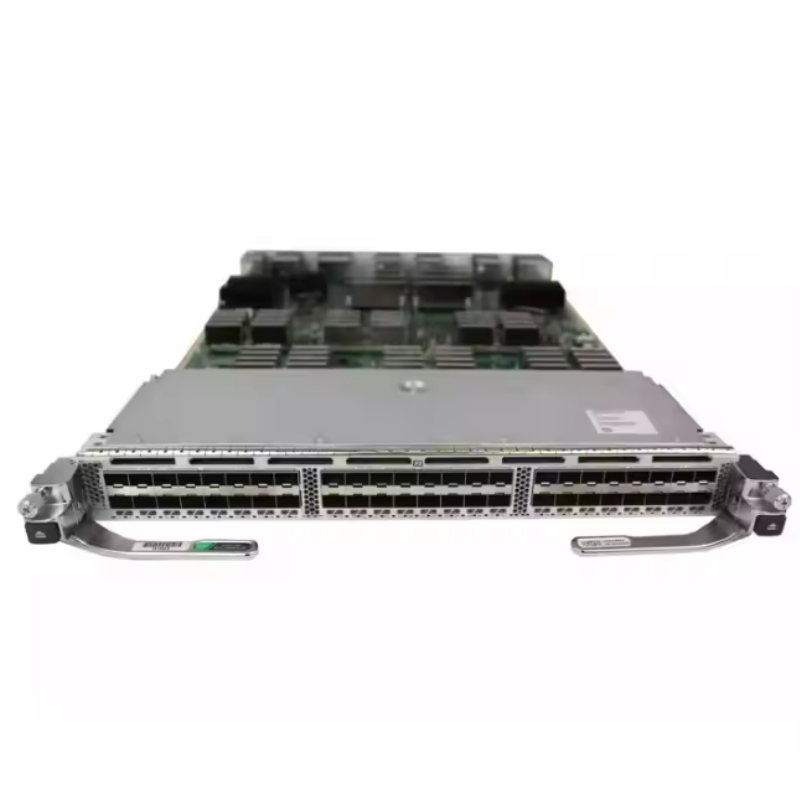


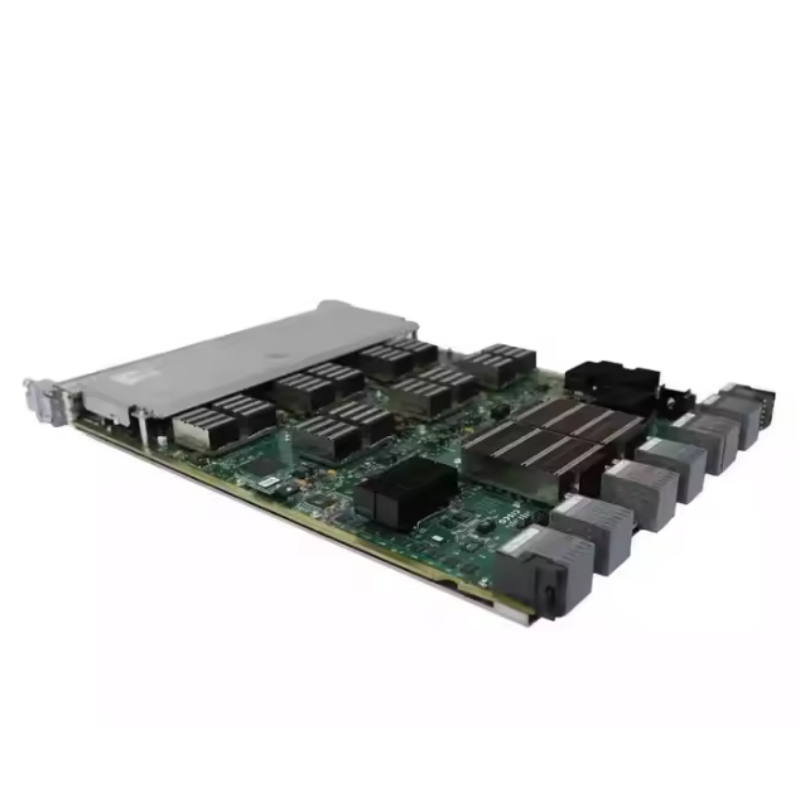
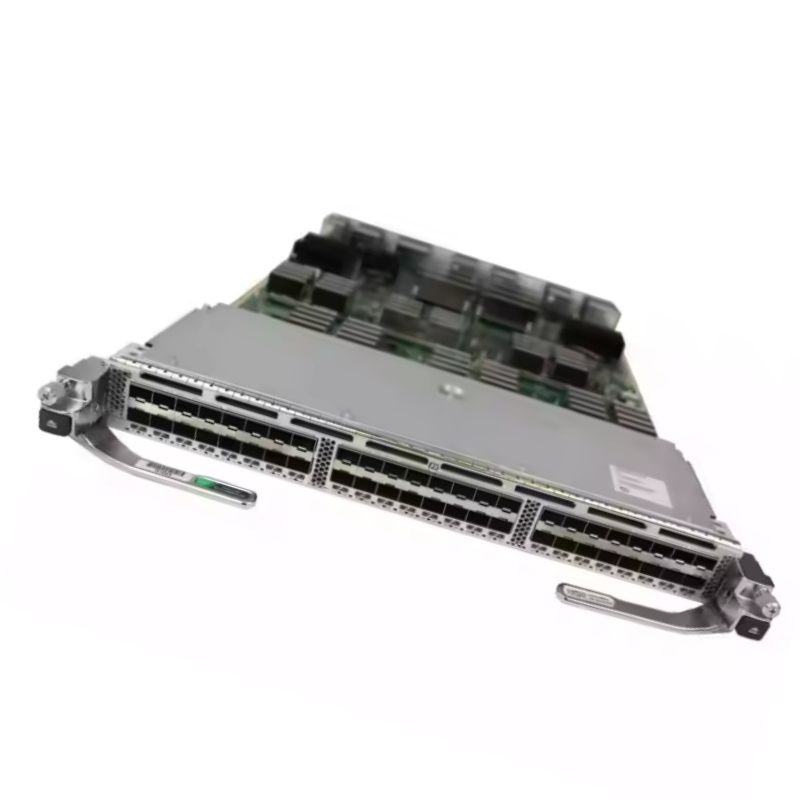
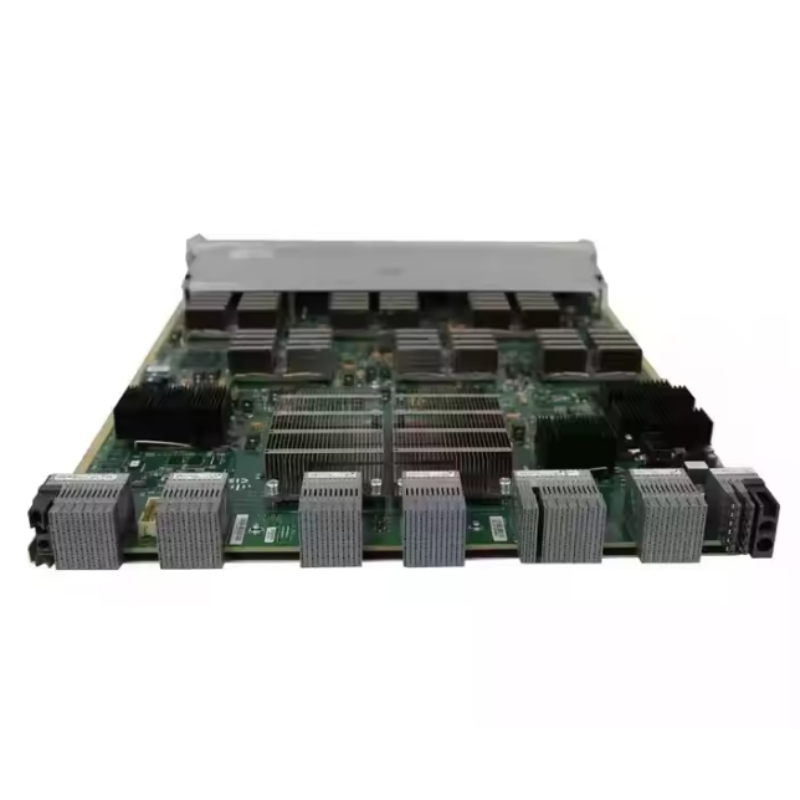
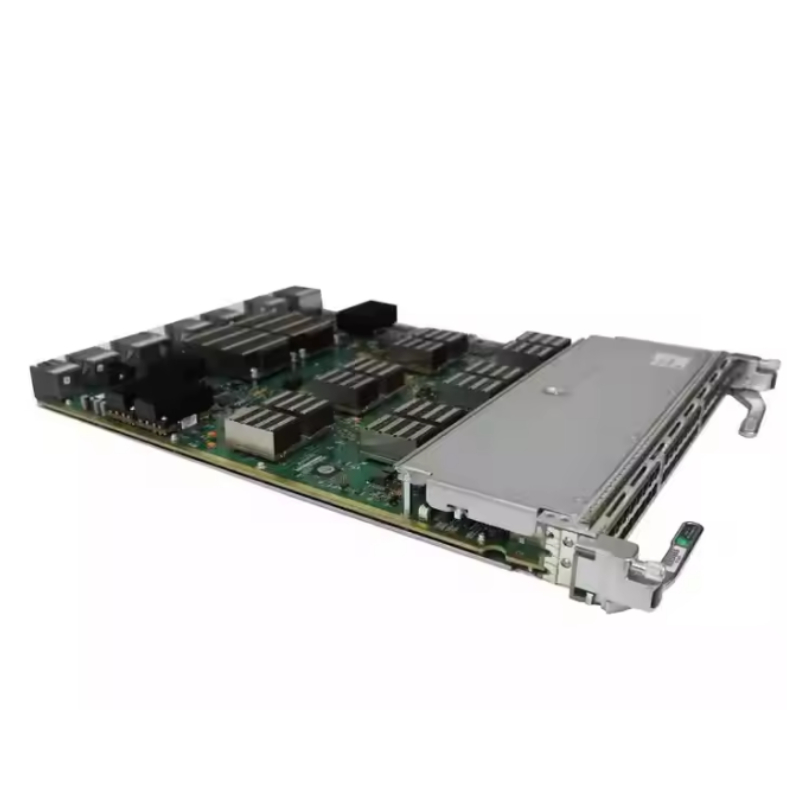
Cisco N77-F348XP-23 Nexus Fiber 1 and 10G 7700 F3-Series 48 Ports Expansion Module. Excellent Refurbished with 1 year replacement warranty
| SKU/MPN | Warranty | Price | Condition | You save |
|---|---|---|---|---|
| N77-F348XP-23 | 1 Year Warranty | $7,990.00 | Factory-Sealed New in Original Box (FSB) | You save: $2,796.50 (26%) |
| N77-F348XP-23 | 1 Year Warranty | $185.00 | Excellent Refurbished | You save: $64.75 (26%) |
The N77-F348XP-23 Cisco Nexus Fiber 1 and 10G 7700 F3-Series 48 Ports Expansion Module is a high-density data center networking component designed for organizations that require scalable Ethernet connectivity, dependable switching performance, and flexible deployment across Cisco Nexus 7700 Series modular platforms. Built as part of the F3-Series family of line cards, this expansion module provides 48 fiber-oriented ports capable of supporting 1 Gigabit Ethernet and 10 Gigabit Ethernet connectivity, allowing network architects to consolidate multiple access, aggregation, and data center interconnection requirements within a single modular switching environment.
Designed for demanding enterprise and service-provider infrastructures, the N77-F348XP-23 enables organizations to expand network capacity without replacing the complete switching platform. Its modular architecture supports progressive infrastructure growth, making it suitable for data centers where bandwidth requirements, server populations, storage systems, virtualization environments, and application workloads continue to evolve. By adding a compatible F3-Series expansion module to an appropriate Cisco Nexus 7700 chassis, administrators can increase port density while maintaining a centralized and manageable switching architecture.
One of the defining characteristics of the N77-F348XP-23 Cisco Nexus expansion module is its 48-port configuration. High port density is particularly valuable in modern data centers because it enables a greater number of network connections within the available chassis space. Rather than deploying numerous independent switches to accommodate growing connectivity requirements, organizations can use modular line cards to expand an existing Cisco Nexus 7700 platform.
The combination of 1 Gigabit Ethernet and 10 Gigabit Ethernet support provides useful flexibility for mixed-speed network environments. Many data centers continue to operate equipment with different interface requirements. Legacy servers, management systems, specialized appliances, and certain network devices may use 1GbE connectivity, while newer servers, storage platforms, virtualization hosts, and aggregation links commonly require 10GbE. A module designed to accommodate both speeds can simplify infrastructure planning and help organizations manage gradual technology transitions.
The N77-F348XP-23 is intended for deployment within compatible Cisco Nexus 7700 Series switching systems. Modular switches are widely used in large-scale network environments because they provide a structured approach to capacity expansion. A chassis can accommodate different line cards and infrastructure components, allowing organizations to create a switching system aligned with specific port density, interface type, bandwidth, and operational requirements.
Within this architecture, the expansion module functions as an interface resource that increases the number of available Ethernet connections. This approach can be particularly beneficial for data centers that expect future growth. Instead of replacing a fixed-configuration switch when available ports are exhausted, administrators can expand a compatible modular platform by installing additional supported line cards when chassis capacity permits.
The Cisco Nexus 7700 family is associated with data center switching environments where availability, scalability, traffic handling, and centralized network operations are important considerations. The N77-F348XP-23 complements this modular design by providing a substantial concentration of 1GbE and 10GbE interfaces. This makes the module relevant for server connectivity, network aggregation, service appliances, storage-related Ethernet traffic, and other high-density applications.
As an F3-Series expansion module, the N77-F348XP-23 belongs to a generation of Cisco Nexus line cards developed for advanced data center networking requirements. F3-Series modules are designed for environments that demand efficient forwarding, feature-rich networking capabilities, and compatibility with modular Nexus switching architectures. The platform-oriented design allows organizations to integrate the module into a broader switching strategy rather than treating each group of ports as an isolated networking resource.
Data center networks must accommodate numerous traffic patterns. Traditional client-to-server traffic is only one part of the overall workload. Modern infrastructures frequently handle substantial east-west traffic between application servers, virtual machines, storage resources, databases, analytics systems, and distributed services. High-density switching modules can help support these traffic flows by providing numerous interfaces within a centralized chassis architecture.
The N77-F348XP-23 is particularly relevant where 10 Gigabit Ethernet remains an important server and aggregation technology. Although faster Ethernet standards are increasingly deployed for specific backbone and high-performance applications, 10GbE continues to provide practical bandwidth for a wide range of enterprise workloads. The ability to support 1GbE alongside 10GbE further increases deployment flexibility in environments that have not migrated every connected device to a single interface speed.
Supporting multiple Ethernet speeds can reduce the complexity associated with mixed-generation infrastructure. Data centers rarely replace every server, appliance, and network component simultaneously. Instead, hardware is typically upgraded according to lifecycle schedules, application priorities, budget availability, and operational requirements. Consequently, a switching environment may need to accommodate both established 1GbE devices and higher-bandwidth 10GbE systems.
The N77-F348XP-23 provides a practical foundation for this type of heterogeneous network. Organizations can use available interfaces according to compatible platform and transceiver requirements, creating a flexible connection layer for diverse equipment. This capability can support phased migrations in which older systems remain operational while newer devices are introduced.
Scalability is a central consideration when designing enterprise and data center networks. Infrastructure requirements can change quickly as organizations deploy additional applications, increase virtualization density, expand cloud-connected services, introduce new storage platforms, or add physical servers. The N77-F348XP-23 provides a modular method for increasing network interface capacity within a compatible Cisco Nexus 7700 switching system.
A 48-port expansion module can significantly increase the connectivity available from a single chassis slot. This density can help organizations optimize rack space and reduce the need to introduce additional standalone switching devices solely to gain more ports. Consolidation within a modular platform can also simplify certain aspects of infrastructure administration by keeping switching resources within a common architectural framework.
Modular scalability is especially useful in large facilities where network growth is planned over several years. An organization may initially deploy a chassis with only the line cards required for current workloads and add further modules as demand develops. This incremental approach can align infrastructure investment more closely with actual expansion requirements.
The N77-F348XP-23 Cisco Nexus 7700 F3-Series expansion module is suitable for data center environments that require a combination of interface density, modular scalability, and fiber-based Ethernet connectivity. Enterprise networks often support critical workloads that depend on reliable communication among servers, databases, application platforms, storage resources, and external network services.
In these environments, network equipment must be selected with both current and future requirements in mind. Port availability that is adequate today may become insufficient after server consolidation projects, virtualization growth, application expansion, or organizational acquisitions. A modular switching platform allows network teams to respond to these changes by increasing interface capacity within the existing chassis architecture where supported.
The 48-port configuration also makes the N77-F348XP-23 relevant for network consolidation projects. By concentrating numerous connections on a single line card, administrators can create organized connectivity patterns and potentially reduce the number of separate devices required for particular deployment designs. The exact architecture depends on chassis configuration, software support, transceiver selection, cabling, redundancy requirements, and overall network topology.
Fiber-optic networking is widely used in data centers because it can support high-speed communication across distances and environments where copper connectivity may not be the preferred option. The N77-F348XP-23 is designed around fiber-oriented 1GbE and 10GbE connectivity, making it suitable for infrastructures that rely on optical transceivers and fiber cabling.
Optical connectivity can provide significant deployment flexibility because different supported transceiver types may address different distance and cabling requirements. Network planners can select appropriate compatible optics based on link length, fiber type, operational standards, and connected equipment. Proper transceiver and cabling compatibility should always be verified for the specific Cisco Nexus hardware and software configuration.
Virtualization has transformed the way data center resources are deployed. A single physical server may host numerous virtual machines, containers, application services, and workloads. As server utilization increases, network interfaces can become responsible for carrying significantly more traffic than in traditional one-application-per-server environments. The N77-F348XP-23 provides high-density 10GbE connectivity that can be useful for connecting virtualization hosts and other consolidated computing systems.
Ten Gigabit Ethernet can provide the bandwidth needed for many virtualized workloads, including application traffic, management communication, backup operations, and other network services. The actual performance requirements of a virtualized environment depend on workload characteristics and network design, but having a substantial number of 10GbE-capable ports provides architects with greater flexibility when allocating connectivity resources.
The module can also support infrastructure modernization where organizations are transitioning from 1GbE server connectivity toward 10GbE. Rather than requiring a complete migration at one time, mixed-speed capability can support staged deployment strategies. This allows compatible existing systems to remain connected while newer equipment takes advantage of increased Ethernet bandwidth.
Data center space is valuable, and efficient use of rack infrastructure can influence both operational costs and expansion planning. A modular switch equipped with high-density line cards can provide substantial interface capacity without requiring a separate fixed switch for every group of connections. The N77-F348XP-23 contributes 48 ports from a single expansion module, helping organizations maximize the connectivity available from a compatible Cisco Nexus 7700 chassis.
Higher port density may also simplify physical network architecture in large deployments. Instead of distributing connections across numerous independent switching units, administrators can centralize more interfaces within a modular platform. This can contribute to a more structured network design, although proper cable management and documentation remain essential when handling large numbers of fiber connections.
For facilities with extensive server populations, the ability to add dozens of interfaces through one line card can be valuable during expansion projects. New racks, server clusters, or application platforms may require substantial additional network capacity. A compatible modular expansion strategy can provide that capacity while preserving the broader chassis-based architecture.
The N77-F348XP-23 can serve various roles depending on the architecture of the data center network. In some deployments, its ports may be used to connect servers and appliances directly. In others, the module may contribute to aggregation designs by connecting downstream switching equipment or other network infrastructure. The flexibility of a modular platform allows network architects to adapt interface resources to specific topology requirements.
Aggregation networks collect traffic from multiple access-layer devices and forward it toward core switching, services, or external networks. A 48-port 1GbE and 10GbE expansion module can provide a substantial number of connections for such environments. Appropriate design must account for traffic patterns, oversubscription, uplink capacity, redundancy, and application requirements.
In data center access applications, high port density can support numerous connected systems while 10GbE capability provides increased bandwidth for demanding hosts. Organizations can allocate ports according to the performance profile of connected equipment, helping create an infrastructure that accommodates a broad range of network endpoints.
Business-critical applications depend on network availability. Although resiliency is determined by the complete system architecture rather than a single line card, modular platforms provide building blocks that can be incorporated into redundant network designs. Organizations may deploy multiple chassis, redundant paths, resilient protocols, and carefully planned connectivity to reduce the impact of individual component or link failures.
The N77-F348XP-23 can participate in these broader designs by providing the physical interfaces needed for diverse connections. Multiple links can be distributed according to the organization's topology and availability strategy. Proper planning should include compatible hardware, software releases, optics, cabling, power, cooling, and redundancy configurations.
Modern applications generate increasingly complex traffic patterns. Distributed databases, virtualization platforms, cloud services, analytics systems, and application clusters may exchange large volumes of information between servers. This east-west traffic can place substantial demands on the switching infrastructure. The N77-F348XP-23 provides numerous Ethernet interfaces that can form part of a network designed to handle these application-driven communication requirements.
Ten Gigabit Ethernet connectivity is well suited to many enterprise applications where 1GbE may create bandwidth limitations. Increasing interface capacity can help support data-intensive workloads, although overall application performance also depends on server hardware, storage systems, network architecture, congestion management, and other factors.
For organizations maintaining a mixture of application generations, the module's ability to accommodate 1GbE and 10GbE connectivity can be advantageous. Less demanding systems can continue using lower-speed connections where appropriate, while performance-sensitive workloads can use higher-bandwidth interfaces.
Infrastructure modernization does not always require the immediate replacement of every networking component. Many organizations prefer phased upgrade strategies that protect existing investments while gradually introducing higher-performance technologies. The N77-F348XP-23 can support such strategies by providing both 1GbE and 10GbE connectivity within a compatible modular switching platform.
During a phased migration, older systems can remain operational while new servers and appliances are introduced with faster interfaces. Over time, the proportion of 10GbE connections can increase as equipment is refreshed. This approach can reduce disruption and provide greater flexibility in budgeting and deployment scheduling.
Modular hardware can also help organizations respond to changing capacity requirements. If network growth exceeds initial expectations, additional compatible expansion modules may be installed where chassis resources permit. This provides a structured path for increasing port density without redesigning the entire switching environment.
Managing a large number of network devices can increase operational complexity. Modular switching platforms can help consolidate interface capacity into fewer chassis-based systems, potentially simplifying aspects of monitoring, configuration, and infrastructure organization. The N77-F348XP-23 adds 48 network interfaces to the broader Cisco Nexus 7700 environment, allowing administrators to manage these connections as part of the platform.
Centralized management does not eliminate the need for detailed operational procedures. Network teams should maintain accurate configuration records, interface descriptions, cable maps, monitoring systems, and change-management practices. However, a modular architecture can provide a consistent foundation for managing large numbers of physical interfaces.
The N77-F348XP-23 can be relevant across several categories of large-scale networking environments. Enterprise data centers may use the module to connect servers, business applications, security systems, and infrastructure services. Cloud-oriented facilities may require dense Ethernet connectivity for virtualization clusters and distributed computing platforms. Service providers may use modular switching equipment in environments where scalable interface capacity is essential.
Each deployment has different performance and feature requirements, making compatibility assessment important. Network architects should evaluate the complete solution, including chassis model, supervisor modules, fabric capacity, software release, transceivers, cabling, and connected equipment. The line card is one component within a larger system, and its capabilities are best realized when the surrounding infrastructure is correctly designed.
Long-term infrastructure planning requires a balance between immediate requirements and future scalability. Purchasing excessive capacity before it is needed can increase costs, while deploying a platform with insufficient expansion capability may lead to premature replacement. Modular switching systems provide an alternative by allowing organizations to install interface capacity according to actual demand.
The N77-F348XP-23 supports this model by offering 48 ports in an expandable line-card format. An organization can increase connectivity as server counts grow, new services are introduced, or existing applications require additional bandwidth. This approach can make network development more predictable and provide a clearer expansion path.
For data centers experiencing steady growth, high-density modules can reduce the frequency with which entirely new switching systems must be introduced. The ability to expand within a compatible chassis can help maintain architectural consistency and simplify future capacity planning.
Proper optical connectivity requires careful selection of compatible transceivers and fiber cabling. The required optical module depends on the intended Ethernet speed, transmission distance, fiber type, and network design. Administrators should verify Cisco-supported transceiver options for the specific line card, chassis, and software release before installation.
Fiber cabling must also match the selected optical technology. Multimode and single-mode fiber are designed for different applications and distance requirements, and connector types must be compatible with the installed transceivers. A well-planned optical infrastructure can improve reliability, simplify maintenance, and provide a clearer path for future upgrades.
Organizations operating mission-critical applications frequently design networks with redundant components and alternative traffic paths. The N77-F348XP-23 can provide interface capacity for these architectures by supporting connections to multiple devices and network segments. Redundancy may be implemented at several levels, including physical links, switching systems, power infrastructure, and network protocols.
High availability depends on the complete design rather than any individual component. Network planners should consider failure domains, maintenance procedures, software upgrades, chassis redundancy, and path diversity. A high-density module can contribute to these designs by providing sufficient interfaces to establish multiple connections where required.
Network equipment is a long-term infrastructure investment, and organizations often require platforms that can adapt to changing business and technical requirements. The N77-F348XP-23 provides a method of expanding compatible Cisco Nexus 7700 systems with additional 1GbE and 10GbE ports. This modularity can help organizations align network growth with server deployments, application expansion, and changing bandwidth demands.
As data centers evolve, network requirements may shift toward higher speeds, increased virtualization density, and more distributed application architectures. Even within these changing environments, 1GbE and 10GbE connectivity may continue to serve numerous operational roles. A high-density expansion module can therefore remain useful for connecting established systems, application servers, appliances, and other network resources.
Effective infrastructure planning should account for expected growth, available chassis resources, software lifecycle considerations, compatible optics, power requirements, and future migration strategies. When deployed as part of a carefully designed Cisco Nexus environment, the N77-F348XP-23 can provide substantial connectivity capacity while supporting a structured and scalable approach to data center networking.
For organizations maintaining substantial 10 Gigabit Ethernet deployments, the N77-F348XP-23 provides a concentrated interface platform within the Cisco Nexus 7700 architecture. Forty-eight available ports can support a significant number of servers, appliances, or network connections from a single module. This density is useful in facilities where many systems require reliable 10GbE access and where efficient use of modular chassis capacity is a priority.
The module also addresses environments where 1GbE remains necessary. This dual-speed capability supports practical infrastructure management because network modernization frequently occurs over extended periods. Organizations can continue operating compatible lower-speed equipment while allocating 10GbE connectivity to systems that benefit from greater bandwidth.
By combining high port density, fiber-oriented connectivity, modular expansion, and support for established Ethernet speeds, the N77-F348XP-23 serves as a specialized component for scalable Cisco Nexus data center environments. It can help network teams expand connectivity, organize infrastructure growth, support diverse workloads, and maintain a flexible switching architecture as operational requirements continue to develop.


 Contact Us
 Information
 Catalog
 Solid State Drives (SSD)
 Network Switches
 Hard Disk Drives
 HBA & Controllers
 PC & Servers
 PC & Server Memory
 CPU & Processors
 Network Routers
 Power Supplies
 Tape Drives & Libraries
 Network Devices
 Computer & Network Cables