(7% discount is applied at checkout)
Cart is empty
Your go-to destination for cutting-edge server products
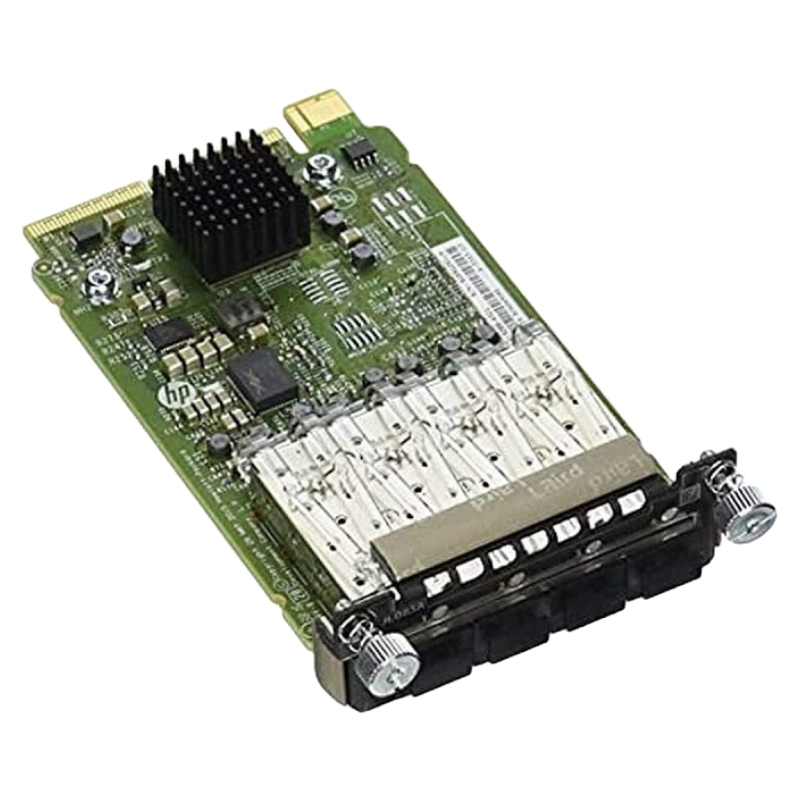


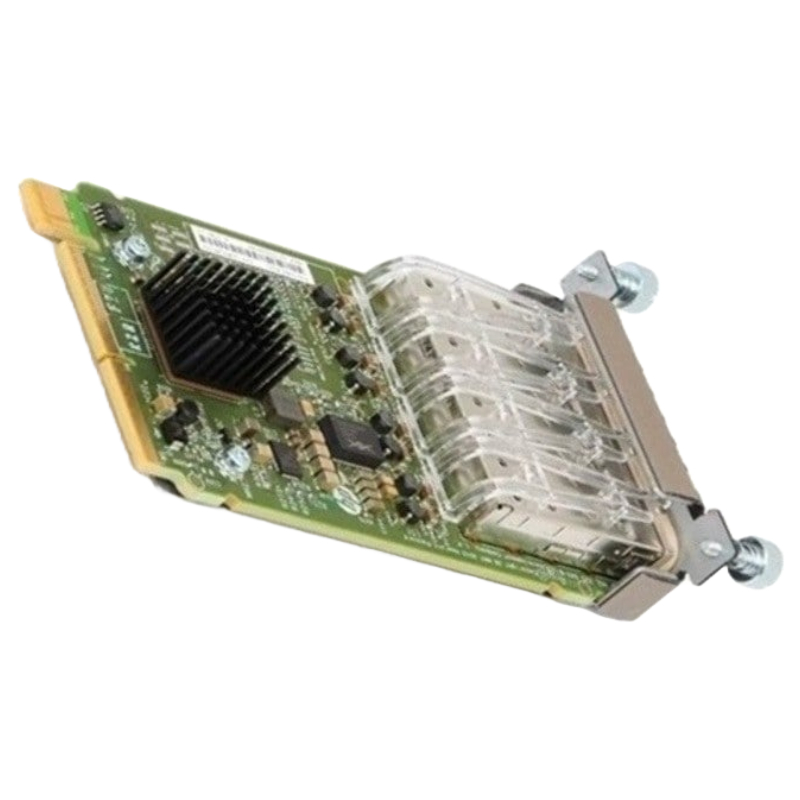
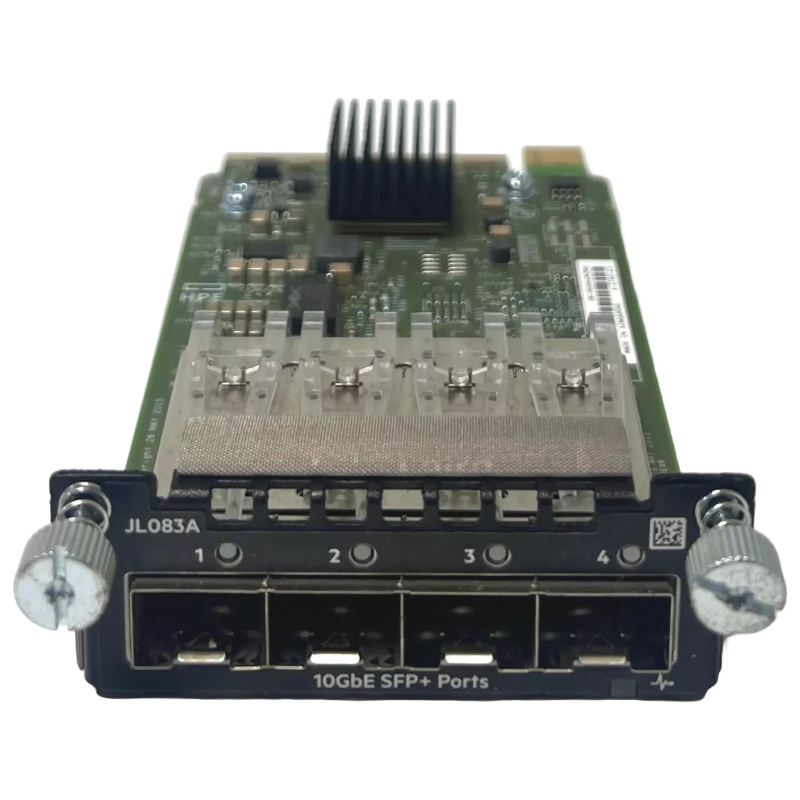
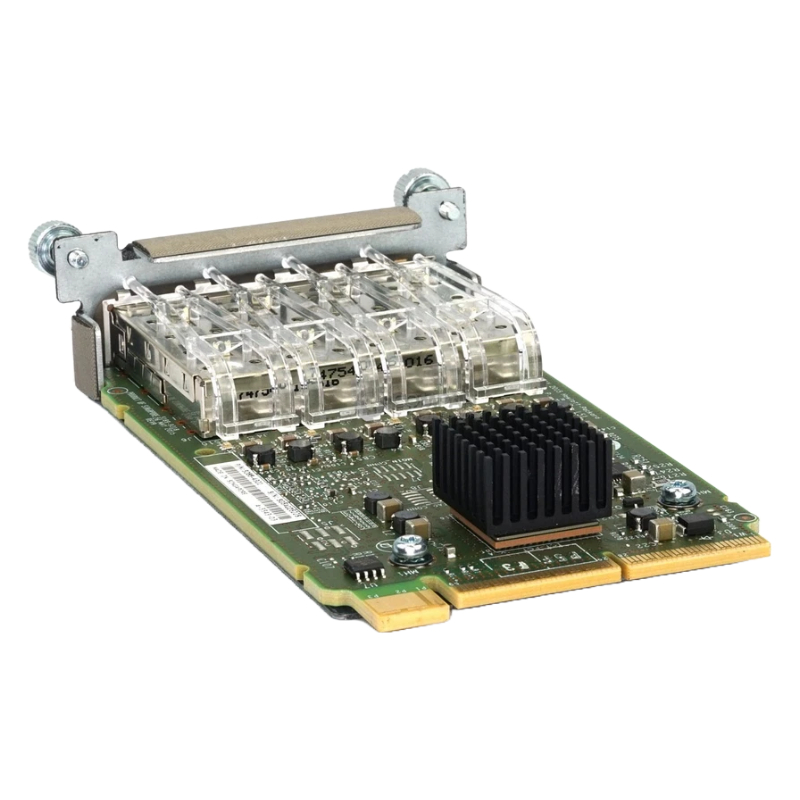
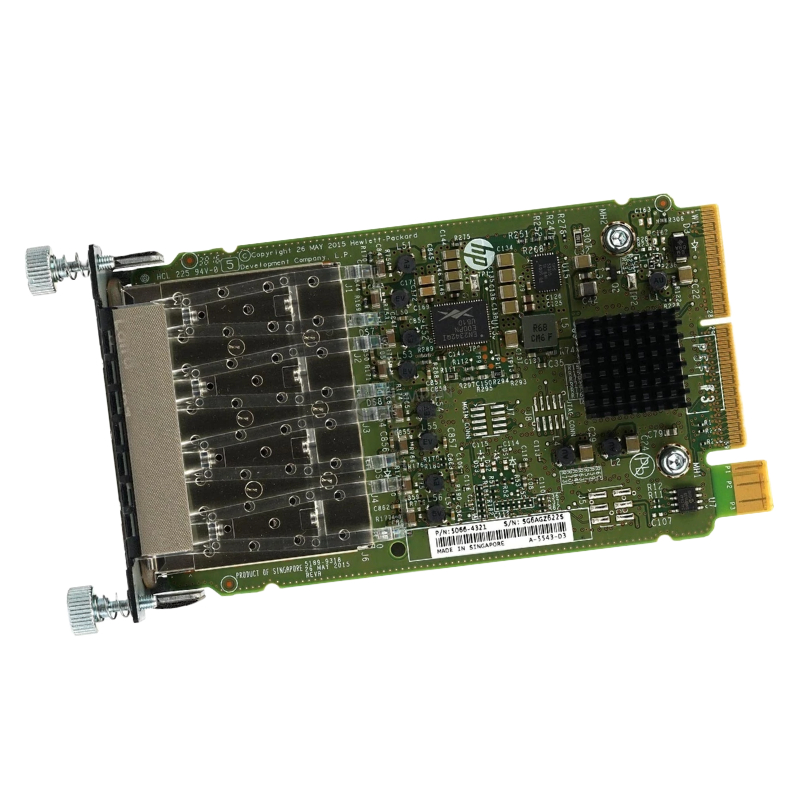
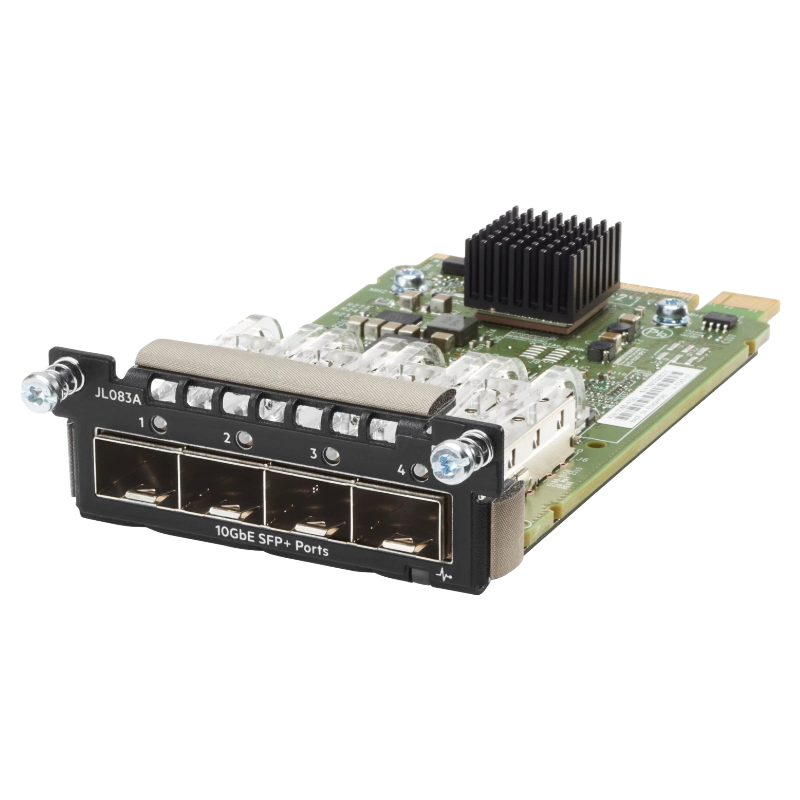
HPE JL084A Aruba 3810M 4-port Stacking Module. Factory-Sealed New in Original Box (FSB) with 3 Years Warranty
The HPE JL084A Aruba 3810M Stacking Module delivers four dedicated high‑speed stack ports engineered to streamline inter‑switch communication and strengthen multi‑switch performance. Designed for scalable enterprise deployments, this plug‑in module enhances bandwidth distribution, simplifies unified management, and integrates seamlessly with Aruba’s modular switching ecosystem—ideal for campus networks and business environments requiring resilient, efficient stacking capabilities.
The HPE JL084A Aruba 3810M 4-port stacking module is designed as a high-performance expansion component engineered to extend the capabilities of enterprise-grade switching environments built on the Aruba 3810M Series platform. Within modern network infrastructures, stacking technology plays a critical role in simplifying management, increasing resiliency, and enabling scalable architecture without introducing unnecessary complexity. This stacking module integrates directly into compatible Aruba switches to form a unified switching system that behaves as a single logical device while maintaining distributed hardware performance across multiple physical units.
In enterprise campus networks, aggregation layers and access layers require seamless growth capability, and the stacking module provides a structural foundation for such expansion. By enabling multiple switches to operate together under a single control plane, the module ensures that administrators can manage large-scale switching environments with significantly reduced operational overhead while maintaining high throughput and deterministic performance across all connected units.
The HPE JL084A Aruba 3810M 4-port stacking module is engineered to deliver high-speed interconnectivity between multiple Aruba 3810M switches. Each stacking port is designed to provide dedicated bandwidth channels that form a resilient stacking ring or mesh topology, depending on deployment requirements. This allows the switching infrastructure to maintain uninterrupted communication even if a single link or node experiences failure.
The module is architected to optimize internal switching efficiency by minimizing latency between stack members. Unlike traditional uplink aggregation methods, stacking modules operate at a deeper system level, enabling synchronized forwarding tables, shared control logic, and unified configuration management. This architecture ensures that all switches in the stack function cohesively, delivering predictable performance across distributed hardware.
One of the primary strengths of the Aruba 3810M stacking system is its ability to support resilient network topologies that prioritize uptime and fault tolerance. The JL084A stacking module supports redundant ring configurations that allow traffic to reroute instantly in the event of a link disruption. This capability ensures that business-critical applications remain operational even during partial network failures.
High availability is achieved through continuous synchronization between stack members. Each switch shares state information, configuration parameters, and forwarding data, allowing failover events to occur seamlessly without manual intervention. The stacking system is designed to maintain operational integrity even when individual nodes are added or removed, making it suitable for dynamic enterprise environments where network scaling is frequent.
Scalability is a core requirement in modern networking, particularly in environments where user demand and data traffic grow continuously. The HPE Aruba JL084A stacking module enables horizontal scaling by allowing additional Aruba 3810M switches to be integrated into an existing stack. This eliminates the need for complex hierarchical redesigns when expanding network capacity.
By utilizing stacking architecture, organizations can increase port density, throughput capacity, and overall switching performance without introducing multiple independent management domains. This unified approach simplifies administrative tasks and reduces configuration inconsistencies across devices. As a result, enterprises can scale their infrastructure in a controlled and predictable manner.
The stacking module enhances system performance by creating a high-speed backplane between connected switches. This backplane acts as a dedicated communication channel that bypasses traditional uplink bottlenecks. As traffic flows between stack members, the module ensures that forwarding decisions are executed with minimal latency, enabling efficient handling of high-volume data workloads.
The architecture of the JL084A module is optimized for data-intensive environments such as virtualization clusters, cloud edge deployments, and enterprise data distribution networks. By distributing processing loads across multiple switches while maintaining centralized control, the system achieves a balance between performance and operational simplicity.
A significant advantage of stacking is the consolidation of management interfaces. With the Aruba 3810M stacking module, multiple physical switches operate as a single logical unit. This means that administrators can configure VLANs, routing protocols, security policies, and QoS settings from a single management plane rather than configuring each switch individually.
This unified management approach reduces the likelihood of configuration drift and improves operational consistency across the network. It also reduces the time required for troubleshooting, as system logs and diagnostics are centralized within the stack framework. This makes the JL084A module particularly suitable for large enterprise environments where operational efficiency is a priority.
At the network edge, the stacking module plays a crucial role in aggregating traffic from multiple access switches before forwarding it to higher-tier network layers. This aggregation process improves traffic flow efficiency and reduces congestion at core routing points.
In distribution layer designs, stacking enables multiple switches to behave as a single routing entity. This simplifies the deployment of dynamic routing protocols and improves convergence times in case of network changes. The JL084A module ensures that the stack operates as a cohesive system capable of adapting to changing traffic patterns in real time.
The physical design of the HPE Aruba JL084A stacking module is optimized for seamless integration into the Aruba 3810M chassis. The module is installed directly into the designated expansion slot, allowing immediate activation of stacking capabilities once configured through the system interface.
The internal architecture includes high-speed interconnect circuits designed to minimize signal degradation and maximize throughput stability. This ensures that stacking communication remains reliable even under high utilization conditions. The module is built to align with enterprise hardware durability standards, ensuring long-term operational stability in demanding environments.
The Aruba 3810M stacking module is designed to support long-term infrastructure growth. As organizational needs evolve, additional switches can be integrated into existing stacks without requiring major redesigns. This makes the JL084A module a strategic component in future-proof network planning.
By enabling incremental expansion, enterprises can align network growth with business development cycles. This ensures that capital investments in networking infrastructure remain efficient and scalable over time.
In environments characterized by continuous high traffic loads, operational stability becomes a critical requirement. The stacking module ensures that system performance remains consistent even under sustained utilization. Load distribution across multiple switches prevents bottlenecks and ensures balanced resource consumption.
This stability is particularly valuable in environments such as financial institutions, large enterprise campuses, and service provider edge networks where downtime or performance degradation can have significant operational impact.


 Contact Us
 Information
 Catalog
 Solid State Drives (SSD)
 Network Switches
 Hard Disk Drives
 HBA & Controllers
 PC & Servers
 PC & Server Memory
 CPU & Processors
 Network Routers
 Power Supplies
 Tape Drives & Libraries
 Network Devices
 Computer & Network Cables