(7% discount is applied at checkout)
Cart is empty
Your go-to destination for cutting-edge server products
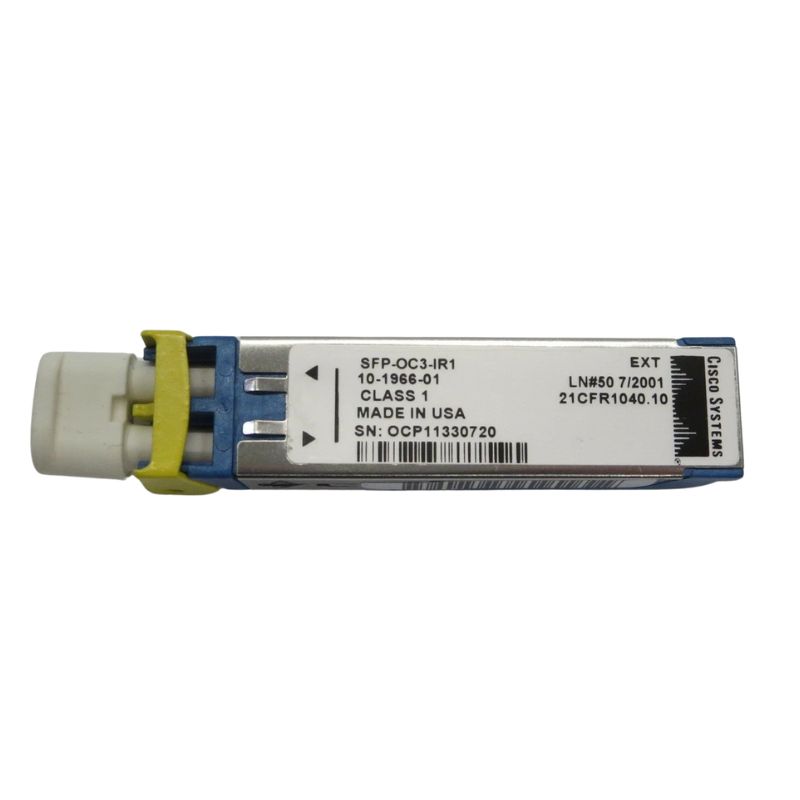


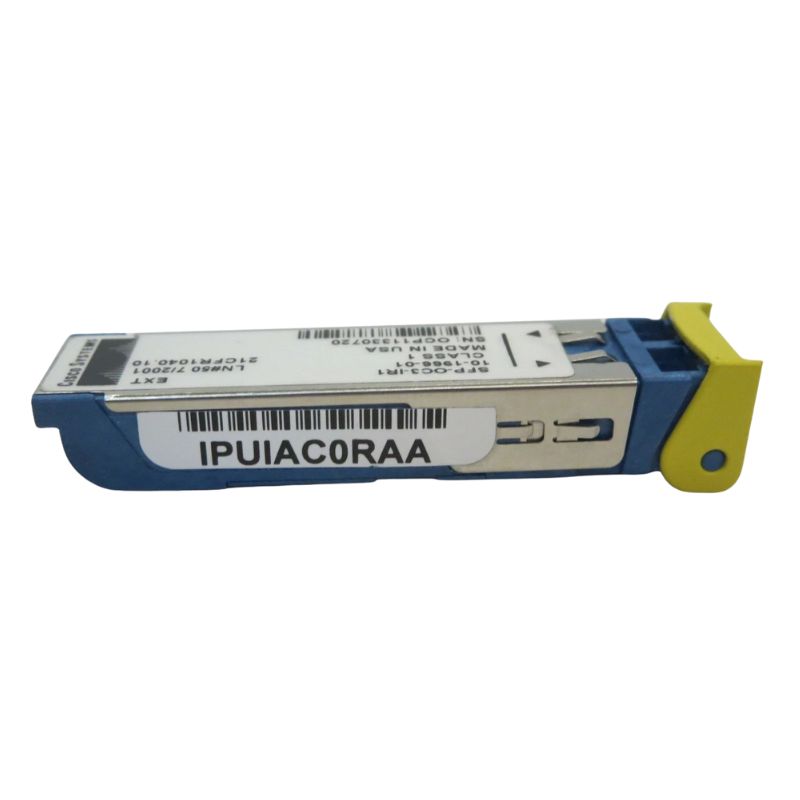
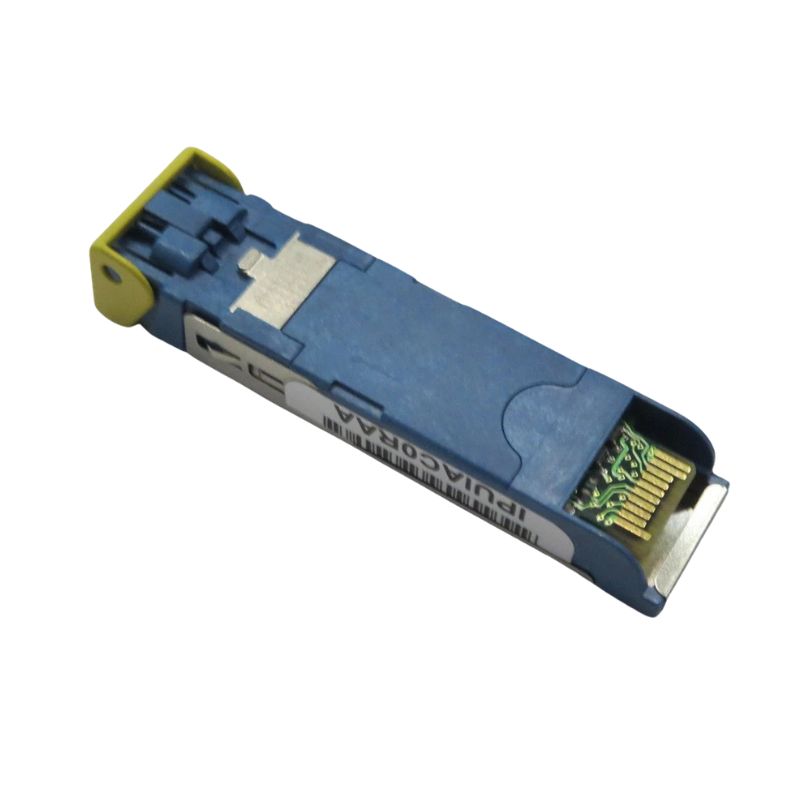
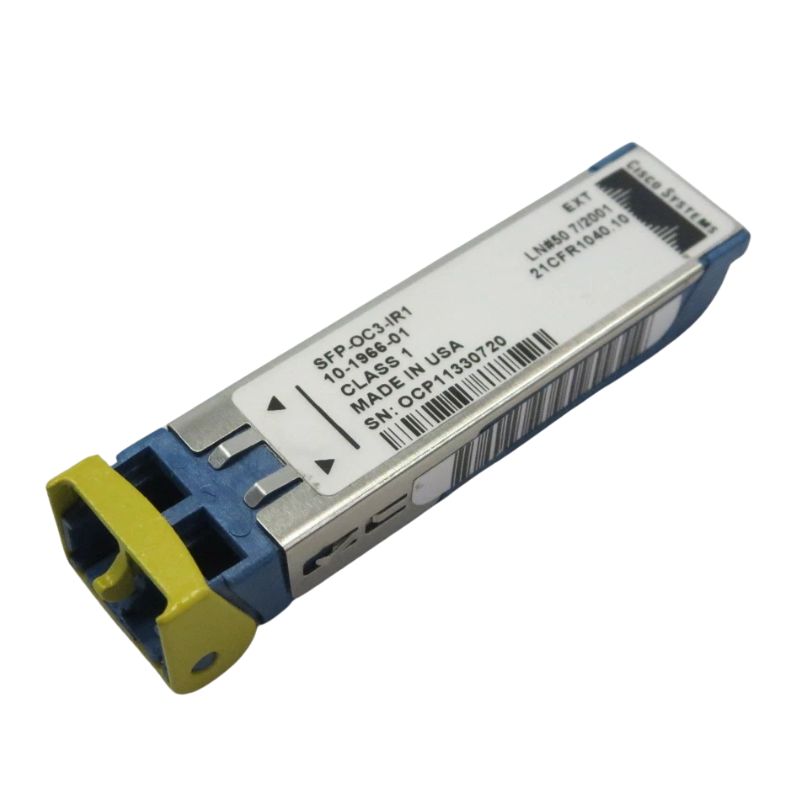
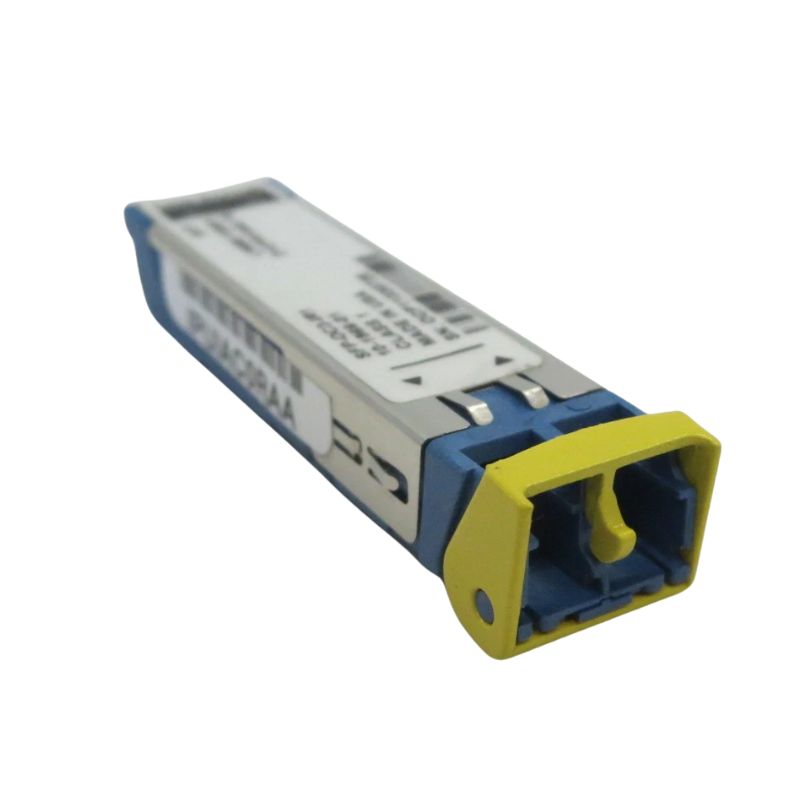
Cisco SFP-OC3-IR1 OC3/STM1 SFP Single-Mode Fiber Transceiver Module. Factory-Sealed New in Original Box (FSB) with 1 year replacement warranty
| SKU/MPN | Warranty | Price | Condition | You save |
|---|---|---|---|---|
| SFP-OC3-IR1 | 1 Year Warranty | $48.00 | Excellent Refurbished | You save: $16.80 (26%) |
| SFP-OC3-IR1 | 1 Year Warranty | $295.00 | Factory-Sealed New Retail in Original Box (FSB) | You save: $103.25 (26%) |
The SFP-OC3-IR1 Cisco Single-Mode Fiber Transceiver Module is a high-performance optical networking component designed to deliver reliable SONET/SDH optical transmission at OC-3 (155.52 Mbps) data rates over single-mode fiber infrastructure. Built for carrier-grade environments, enterprise backbone networks, and telecommunications systems, this transceiver supports Intermediate Reach (IR1) specifications, making it ideal for medium-distance optical links that require stability, low latency, and consistent signal integrity.
Engineered for seamless integration with Cisco networking equipment, the module follows the Small Form-Factor Pluggable (SFP) standard, enabling hot-swappable installation and simplified maintenance. Its robust optical characteristics ensure compatibility with legacy systems while maintaining the performance expectations of modern optical transport networks.
The Cisco SFP-OC3-IR1 module is optimized for OC-3/STM-1 applications, typically operating at a wavelength suitable for single-mode fiber transmission. It supports Intermediate Reach distances, generally up to 15–40 kilometers depending on fiber quality and network design. This makes it a dependable choice for metro-area networks, enterprise campus interconnects, and service provider aggregation layers.
The optical performance of the SFP-OC3-IR1 Cisco transceiver is a defining feature, enabling stable transmission of 155 Mbps traffic across single-mode fiber. The module uses precision laser technology to ensure consistent wavelength output, minimizing attenuation and dispersion across longer fiber spans. This allows network operators to maintain clean signal propagation even in environments with moderate optical loss.
Its receiver section is designed with high sensitivity photodetectors that can accurately interpret weak optical signals, ensuring data integrity over extended distances. This balance between transmitter strength and receiver sensitivity is critical for maintaining error-free transmission in SONET-based infrastructures.
The SFP-OC3-IR1 module is widely compatible with Cisco routers, switches, and optical transport platforms that support SFP-based interfaces. It is commonly deployed in enterprise-grade Cisco systems where OC-3 interfaces are required for WAN connectivity, legacy telecommunication integration, or carrier-grade transport networks.
Its plug-and-play design allows network engineers to insert or replace modules without shutting down the system, reducing downtime and improving operational efficiency. Cisco’s intelligent platform recognition ensures that the module is automatically identified and configured when installed in supported devices.
The SFP-OC3-IR1 module is specifically engineered for single-mode fiber (SMF), which offers significantly lower signal attenuation compared to multimode fiber. Single-mode fiber enables long-distance optical communication with minimal signal distortion, making it the preferred medium for telecom and enterprise backbone networks.
By utilizing a narrow core diameter, single-mode fiber allows only one propagation mode of light, reducing modal dispersion and enabling clearer signal transmission over longer distances. This architecture is essential for achieving the intermediate reach capabilities of the SFP-OC3-IR1 module.
The IR1 designation in SFP-OC3-IR1 refers to Intermediate Reach optical performance standards defined within SONET/SDH frameworks. This classification is typically designed for fiber spans that exceed short-reach limitations but do not require ultra-long-haul amplification systems.
IR1 modules strike a balance between cost efficiency and performance, making them ideal for metropolitan area networks (MANs), enterprise inter-building connections, and regional telecom infrastructure. They eliminate the need for excessive signal regeneration while maintaining high transmission reliability.
The versatility of the SFP-OC3-IR1 module allows it to be deployed across multiple networking environments where stable OC-3 connectivity is required. Its role is particularly important in legacy system integration and hybrid optical networks where SONET/SDH protocols remain in use.
Cisco-designed optical modules are known for their high reliability standards, and the SFP-OC3-IR1 is no exception. It is built to withstand demanding operational conditions, including temperature variations, continuous uptime requirements, and high-density switch environments.
Advanced error correction compatibility within SONET systems ensures that the module maintains consistent bit error rates (BER), which is essential for mission-critical applications. The hardware is also designed to resist optical degradation over time, ensuring long lifecycle performance.
One of the most significant advantages of the SFP-OC3-IR1 module is its hot-swappable capability. This allows technicians to install or replace the transceiver without powering down the networking equipment. In large-scale network operations, this feature significantly reduces downtime and maintenance costs.
Hot-swappability also enables flexible network scaling, allowing administrators to upgrade or modify optical interfaces based on evolving bandwidth requirements without disrupting active services.
The module is designed with low power consumption architecture, ensuring minimal heat generation even in high-density deployments. Efficient thermal management is essential in modern networking environments where multiple optical modules operate simultaneously within confined chassis spaces.
By reducing power draw, the SFP-OC3-IR1 helps optimize overall system energy efficiency, making it suitable for environmentally conscious and cost-sensitive infrastructure deployments.
When deploying SFP-OC3-IR1 modules, several design considerations must be evaluated to ensure optimal performance. These include fiber quality, connector cleanliness, link budget calculations, and distance planning based on attenuation levels.
Although modern networks increasingly adopt higher-speed protocols such as Gigabit Ethernet and 10G/40G optics, the SFP-OC3-IR1 remains relevant for legacy SONET infrastructures. Many service providers continue to operate hybrid environments where OC-3 circuits are required for compatibility with older systems.
This module bridges the gap between legacy telecom systems and modern Cisco-based switching environments, ensuring continuity and interoperability across network generations.
The SFP-OC3-IR1 module offers several advantages that make it a preferred choice in both enterprise and carrier-grade deployments. Its stability, compatibility, and cost-effective performance make it suitable for organizations requiring dependable OC-3 connectivity without transitioning to higher-cost next-generation optics.
Despite the rapid evolution of high-speed optical networking technologies, OC-3 modules like the SFP-OC3-IR1 continue to hold value in specialized environments. Many telecom networks, government systems, and enterprise infrastructures still rely on SONET-based architectures for stability and regulatory compliance. As long as hybrid optical systems exist, demand for reliable and standardized modules such as the SFP-OC3-IR1 Cisco transceiver will remain consistent, particularly in environments where upgrade cycles are gradual and interoperability is essential.


 Contact Us
 Information
 Catalog
 Solid State Drives (SSD)
 Network Switches
 Hard Disk Drives
 HBA & Controllers
 PC & Servers
 PC & Server Memory
 CPU & Processors
 Network Routers
 Power Supplies
 Tape Drives & Libraries
 Network Devices
 Computer & Network Cables