(7% discount is applied at checkout)
Cart is empty
Your go-to destination for cutting-edge server products
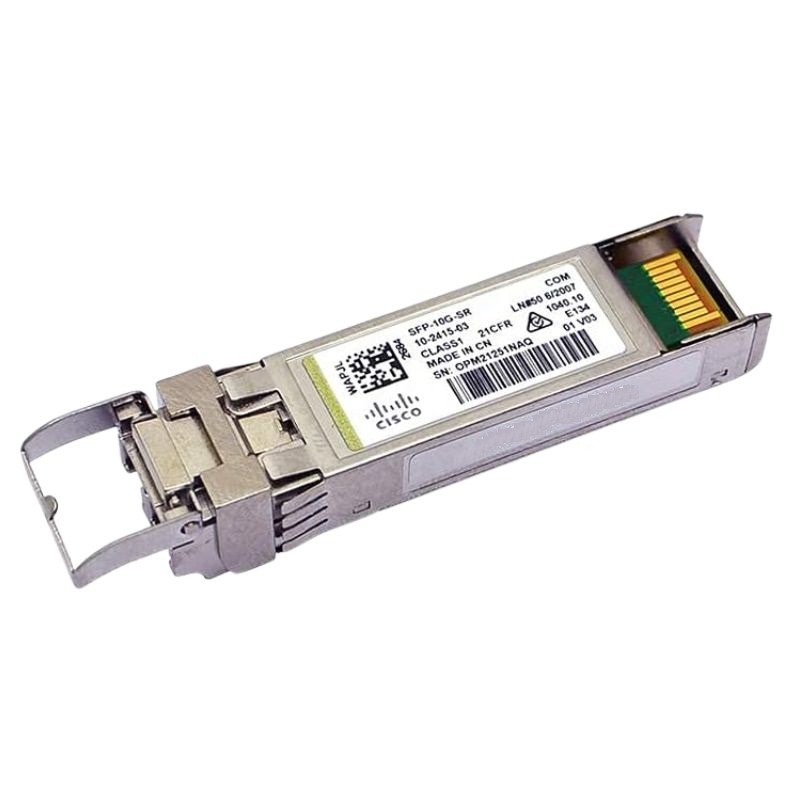


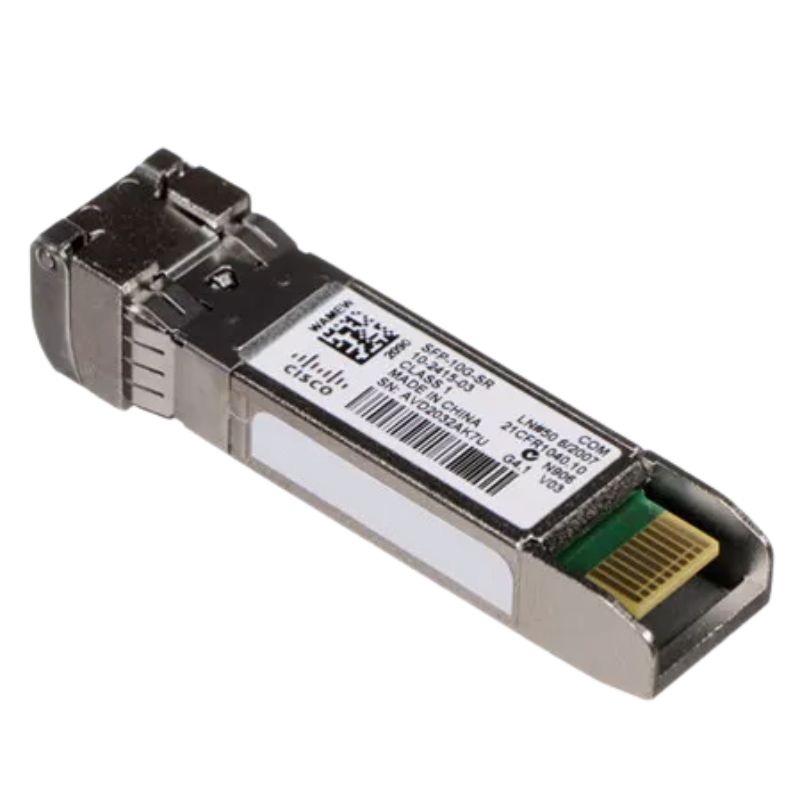
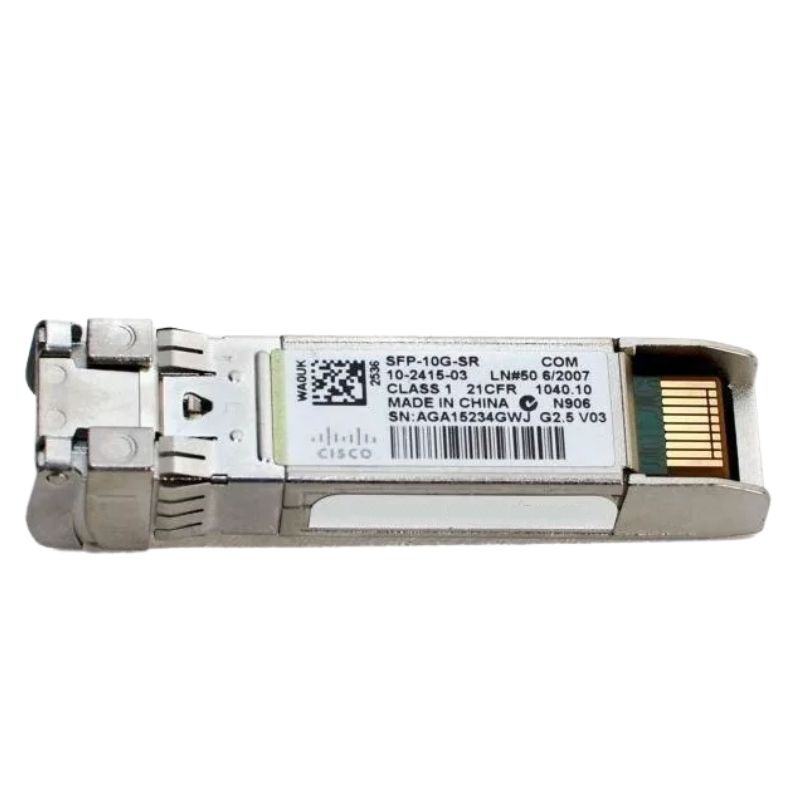
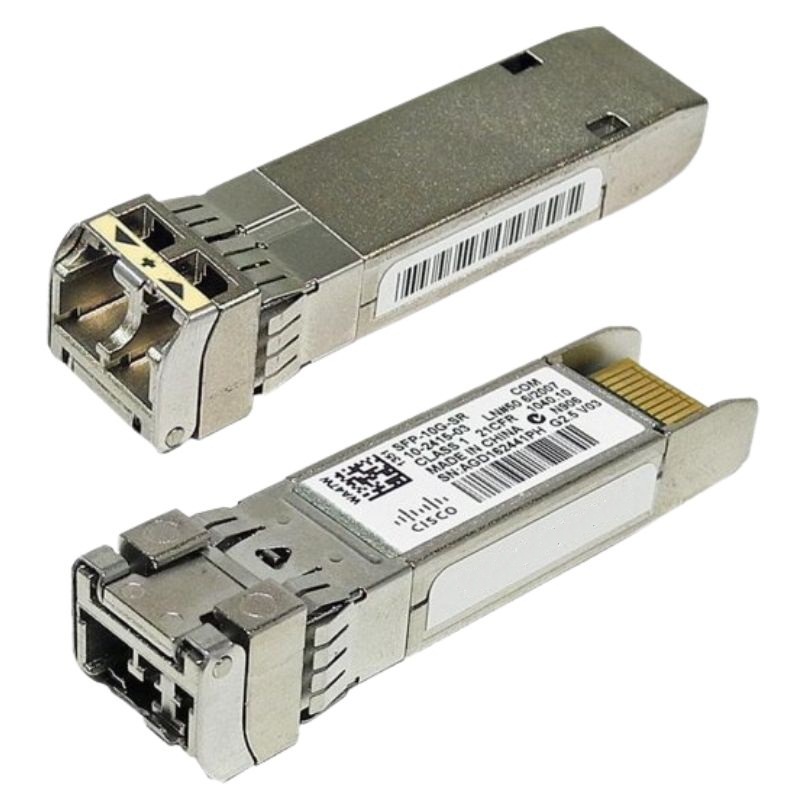
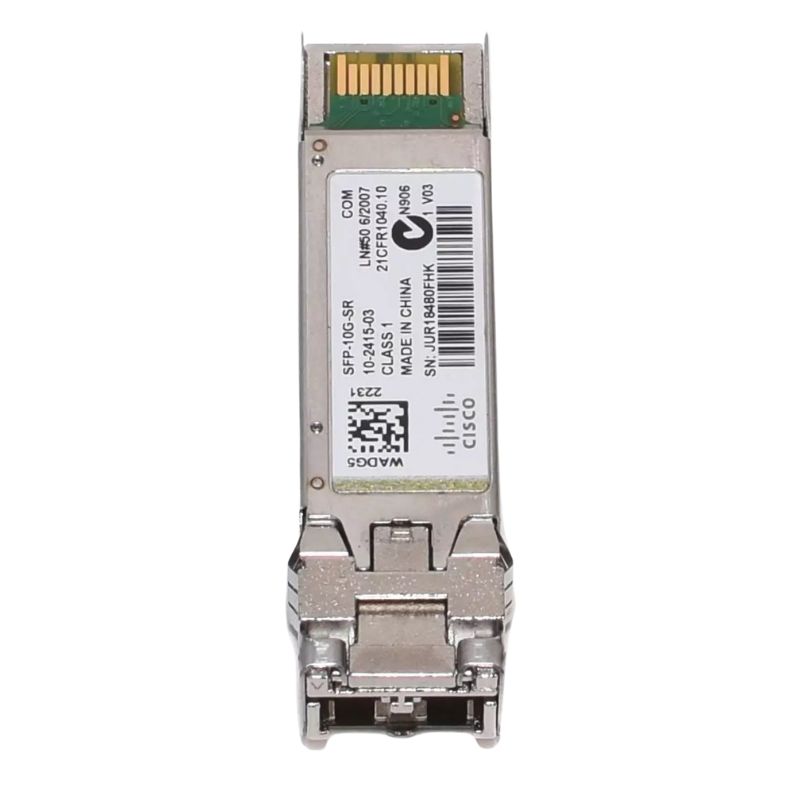
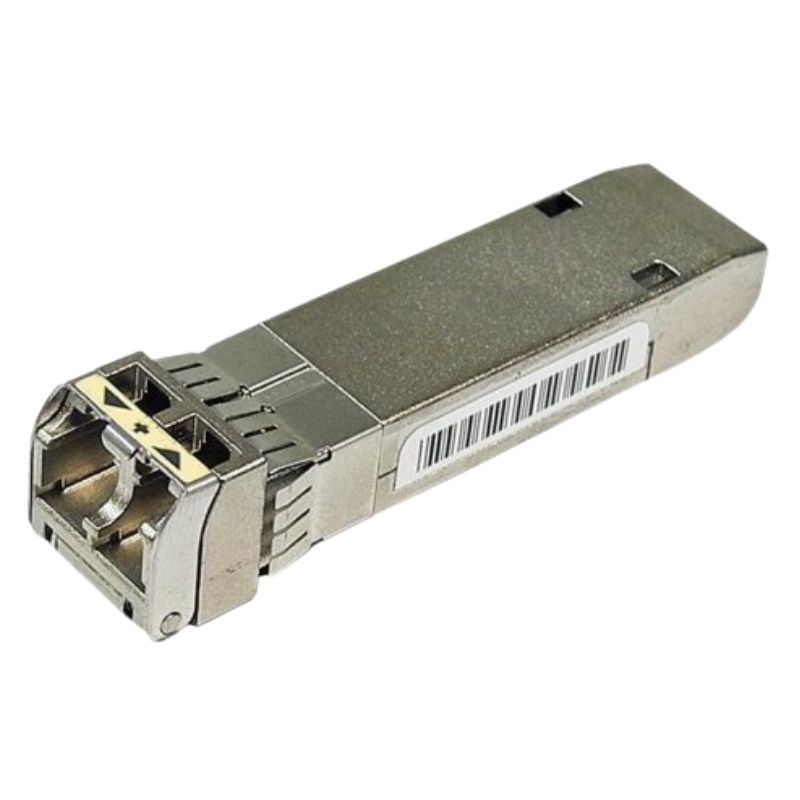
Cisco 10-2415-03 10GBPS SFP+ SR Network Transceiver Module. Excellent Refurbished with 1 year replacement warranty
| SKU/MPN | Warranty | Price | Condition | You save |
|---|---|---|---|---|
| 10-2415-03 | 1 Year Warranty | $48.00 | Excellent Refurbished | You save: $16.80 (26%) |
| 10-2415-03 | 1 Year Warranty | $185.00 | New Sealed in Box (NIB) | You save: $64.75 (26%) |
Cisco 10-2415-03 10Gbps SFP+ SR Fiber Transceiver Overview
The Cisco 10-2415-03 10 Gigabit SFP+ SR Transceiver Module is designed to deliver high-speed optical networking performance for enterprise and data center environments. Featuring reliable 10Gb Ethernet connectivity, this compact hot-pluggable module supports short-range fiber communication with exceptional transmission efficiency and stable network operation.
The Cisco 10-2415-03 10GBPS SFP+ SR Network Transceiver Module is engineered to support modern high-bandwidth network environments where performance, reliability, and efficient optical communication are essential. Designed for short-range optical transmission over multimode fiber infrastructure, this transceiver module enables organizations to build scalable, low-latency network architectures that maintain operational consistency under demanding traffic conditions.
As data centers, enterprise campuses, virtualization environments, and cloud-driven infrastructures continue evolving, optical connectivity solutions remain central to maintaining uninterrupted communication. The Cisco 10-2415-03 SFP+ SR module addresses these requirements by providing stable 10 Gigabit Ethernet transmission capabilities while preserving compatibility with networking environments that depend on compact, hot-swappable transceiver technologies.
The module delivers optimized optical performance through an SFP+ interface architecture that reduces physical space requirements while supporting substantial throughput. Organizations seeking to modernize existing fiber infrastructures frequently select this category of transceiver because it combines compact installation, efficient thermal operation, and dependable communication across short-distance optical links.
SFP+ technology represents an advanced generation of compact networking interfaces developed to support high-speed data communication. Unlike larger legacy transceiver formats, SFP+ modules deliver enhanced port density and more efficient network expansion capabilities while maintaining enterprise-grade performance.
The Cisco 10-2415-03 category belongs to the Short Range optical transceiver segment, specifically optimized for 10 Gigabit Ethernet connectivity over multimode fiber environments. These modules support rapid deployment scenarios and allow administrators to increase network throughput without extensive redesign of switching or routing hardware.
Network operators frequently deploy SFP+ SR modules within aggregation layers, server access environments, and storage connectivity systems because of their ability to support demanding workloads while minimizing signal degradation.
Short Range optical transceivers remain highly relevant because many enterprise facilities operate within controlled environments where transmission distances remain relatively limited. Data centers, office campuses, and managed network rooms often require fast communication between switches, storage arrays, and servers rather than long-distance metropolitan connectivity.
The Cisco 10-2415-03 module addresses these deployment requirements by emphasizing efficient short-distance optical performance, allowing businesses to maximize infrastructure utilization while maintaining cost efficiency and predictable operational behavior.
The compact form factor enables deployment in networking environments where rack density and cable organization are priorities. Smaller transceiver dimensions contribute to improved airflow inside networking enclosures and simplify hardware maintenance procedures.
Hot-swappable functionality allows administrators to install, remove, or replace modules without shutting down active equipment. This capability significantly reduces maintenance windows and minimizes operational disruption during upgrades or replacements.
The module supports 10 Gigabit Ethernet optical communication designed for short-range connectivity using multimode fiber cabling infrastructure. Optical transmission technologies employed in this category focus on maintaining consistent signal quality while reducing attenuation and transmission errors.
Because optical communication relies on light rather than electrical signaling across copper pathways, organizations often experience improved resistance to electromagnetic interference and better overall data integrity.
Advanced optical transmission mechanisms enable precise conversion between electrical network signals and optical outputs. This process contributes to reduced latency and more predictable throughput behavior across connected devices.
Maintaining signal integrity becomes increasingly important as network traffic intensity grows. Cisco transceiver solutions are commonly implemented in environments requiring stable communication between critical infrastructure systems.
Organizations increasingly depend on applications that consume substantial network resources. Virtual machines, cloud applications, database synchronization, media streaming, analytics platforms, and storage replication all generate large volumes of traffic.
The Cisco 10-2415-03 category provides the bandwidth necessary to support these activities while reducing congestion and maintaining efficient packet delivery throughout the network.
Compact optical modules simplify expansion strategies and reduce dependence on oversized hardware solutions. Administrators can increase connection capacity while preserving rack efficiency and minimizing cable management challenges.
The ability to deploy numerous optical interfaces within limited physical space creates opportunities for scalable network growth.
Reliability remains one of the most important characteristics in enterprise networking. Optical modules designed for business environments prioritize stable operation under continuous workloads.
Predictable thermal behavior, durable connector interfaces, and enterprise-focused manufacturing standards contribute to long-term infrastructure stability.
Data centers require rapid communication among servers, storage arrays, switches, and virtualization platforms. The Cisco 10-2415-03 transceiver category supports these environments by enabling efficient optical interconnections that maintain throughput consistency.
High-density deployment capabilities make this category suitable for rack-to-rack and switch-to-switch communication where space optimization remains essential.
Enterprise networking environments frequently depend on layered architectures. Core switches aggregate traffic from distribution and access layers while maintaining centralized communication paths.
Optical SFP+ modules contribute to improved interconnect performance and support increased traffic demand generated by expanding organizational operations.
Cloud computing and virtualization technologies continue to increase demands on network throughput. Workload migration, resource balancing, and centralized storage access require fast and dependable connectivity.
The Cisco 10-2415-03 transceiver category supports these objectives by delivering stable high-speed communication between infrastructure components.
Proper compatibility validation remains essential before transceiver deployment. Administrators should evaluate switch support matrices, firmware alignment, optical requirements, and interface specifications to ensure consistent performance.
Matching network hardware with approved optical modules can improve operational predictability and reduce troubleshooting complexity.
Existing fiber infrastructure should be assessed to determine connector conditions, cable quality, and transmission requirements. Multimode fiber environments frequently provide an effective foundation for short-range optical deployments.
Careful infrastructure planning helps maximize performance and supports long-term scalability.
Fiber cleanliness and connector integrity directly influence transmission consistency. Regular inspection and maintenance procedures help preserve optical performance throughout the deployment lifecycle.
Network performance is influenced by environmental conditions. Maintaining proper airflow around switching equipment contributes to stable operating temperatures and reduces thermal stress on optical components.
Organizations frequently incorporate structured cooling approaches to maintain long-term reliability.
Deploying transceivers with future growth in mind enables organizations to accommodate expanding application requirements without major redesign initiatives.
Capacity planning practices often include bandwidth forecasting, utilization analysis, and staged infrastructure expansion.
Optical networking technologies support efficient communication with lower susceptibility to electromagnetic interference. These characteristics contribute to improved consistency in environments with dense electronic equipment.
Optical modules simplify reconfiguration and network expansion by allowing administrators to adjust connectivity layouts without extensive hardware replacement.
Organizations adopting optical networking solutions position themselves to support evolving digital transformation initiatives and increasing application requirements.
Network planning begins with understanding throughput requirements, application demands, and anticipated growth. Selecting a transceiver category aligned with operational goals contributes to sustained infrastructure efficiency.
High-density optical deployments allow organizations to maximize switch utilization while preserving flexibility for future expansion projects.
Businesses continue transitioning toward software-defined networking, hybrid cloud environments, and distributed application models. Optical connectivity solutions remain foundational technologies that enable these transformations.
The Cisco 10-2415-03 10GBPS SFP+ SR Network Transceiver Module category supports organizations seeking dependable optical communication, efficient deployment flexibility, and scalable high-performance networking designed for continuously evolving infrastructure demands.


 Contact Us
 Information
 Catalog
 Solid State Drives (SSD)
 Network Switches
 Hard Disk Drives
 HBA & Controllers
 PC & Servers
 PC & Server Memory
 CPU & Processors
 Network Routers
 Power Supplies
 Tape Drives & Libraries
 Network Devices
 Computer & Network Cables