(7% discount is applied at checkout)
Cart is empty
Your go-to destination for cutting-edge server products
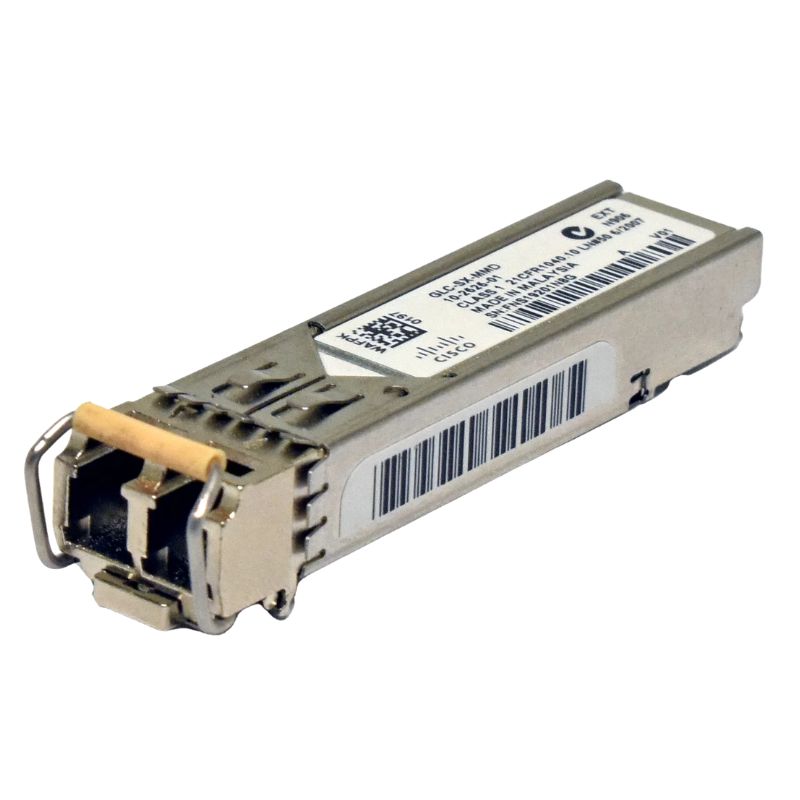


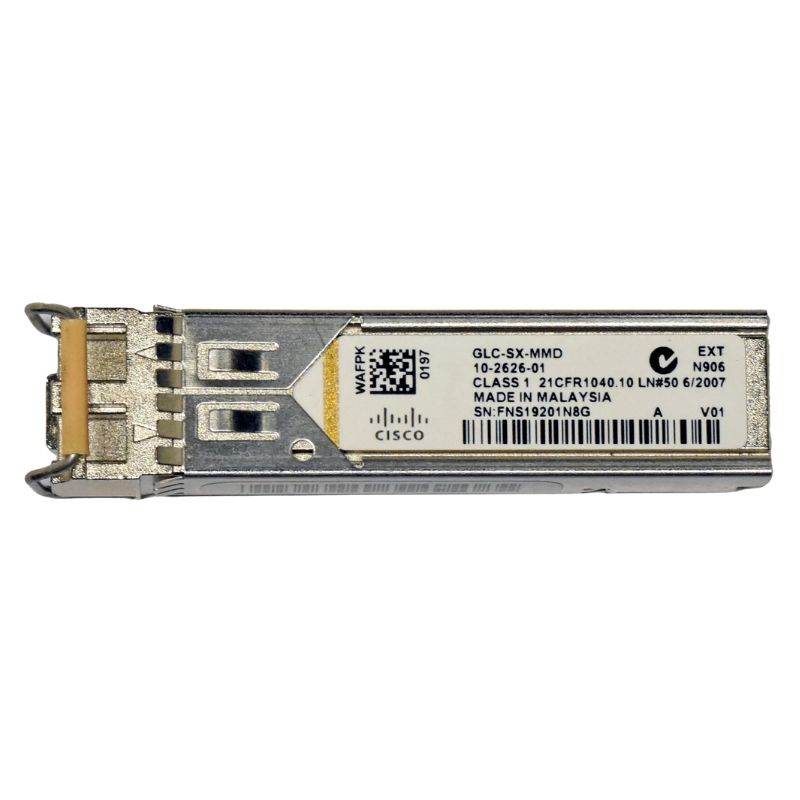
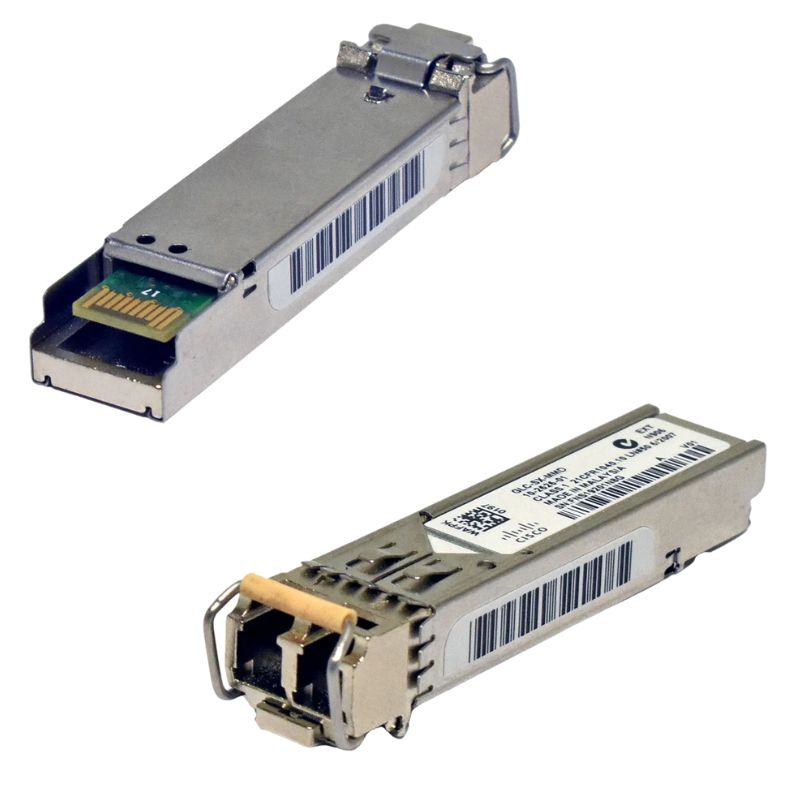
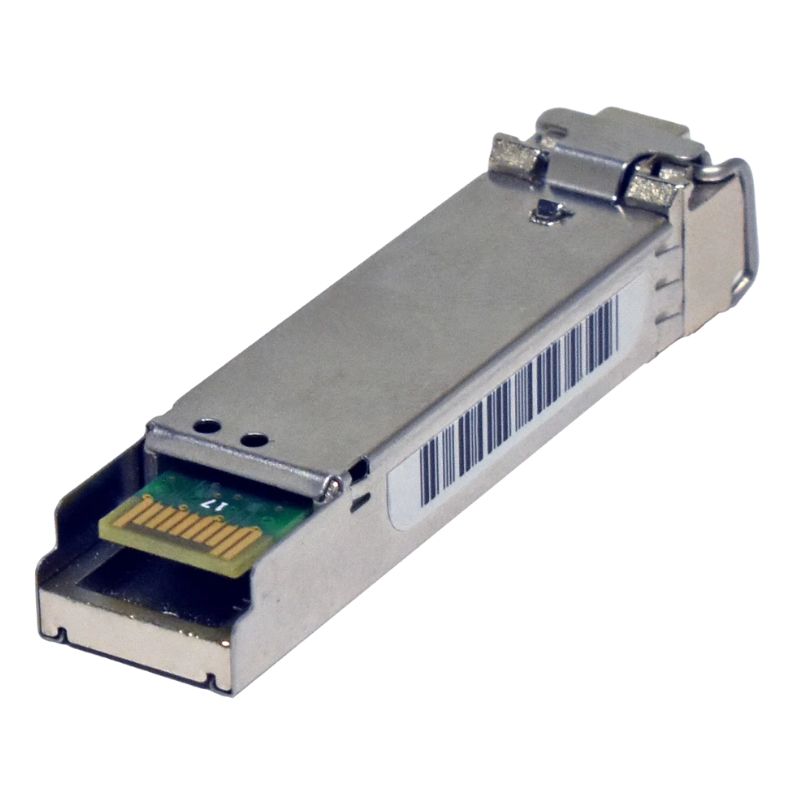
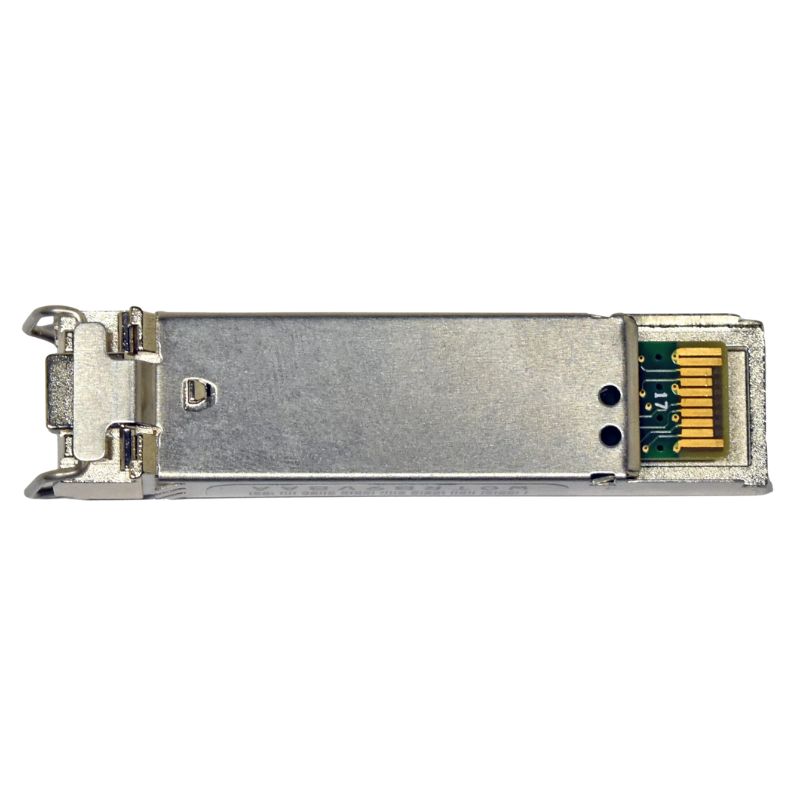
Cisco 10-2626-01 1000BASE-SX Transceiver Module. Excellent Refurbished with 1 year replacement warranty
| SKU/MPN | Warranty | Price | Condition | You save |
|---|---|---|---|---|
| 10-2626-01 | 1 Year Warranty | $53.00 | Excellent Refurbished | You save: $18.55 (26%) |
| 10-2626-01 | 1 Year Warranty | $150.00 | Factory-Sealed New in Original Box (FSB) | You save: $52.50 (26%) |
The Cisco 10-2626-01 optical transceiver module is a high-performance 1Gbps 1000Base-SX fiber networking solution designed for reliable Gigabit Ethernet connectivity over multi-mode fiber infrastructure. This hot-swappable LC connector SFP module ensures stable data transmission, low latency, and efficient short-range optical communication in enterprise and data center environments.
The Cisco 10-2626-01 1Gbps 1000Base-SX Multi-Mode Fibre 850nm LC Connector Transceiver Module is a critical component in high-performance optical networking environments where reliable short to medium-range data transmission is required. Designed to operate at 1 Gigabit per second speeds, this module supports 1000Base-SX Ethernet standards, making it ideal for enterprise LAN backbones, data centers, and storage area networks that depend on consistent and low-latency communication across fiber optic links.
1000Base-SX is a Gigabit Ethernet standard that operates over multimode fiber using an 850nm wavelength. This standard is specifically optimized for short-range communication, typically within data centers or campus networks. The Cisco 10-2626-01 module uses vertical-cavity surface-emitting lasers (VCSELs) that operate efficiently at this wavelength, ensuring cost-effective and energy-efficient optical transmission. The use of multimode fiber allows multiple light paths, which is ideal for relatively short distances where high bandwidth is needed without the expense of single-mode infrastructure.
The 850nm wavelength is widely used in short-range optical communication because it provides a balance between performance and cost efficiency. At this wavelength, the transceiver can achieve high data integrity over multimode fiber while maintaining low power consumption. The signal propagation characteristics of 850nm light allow it to travel through fiber cores with minimal attenuation over typical enterprise distances, making it suitable for server-to-switch and switch-to-switch connections within structured cabling systems.
The Cisco 10-2626-01 module is equipped with an LC duplex connector, which is one of the most widely adopted fiber connector types in modern networking. The LC interface is known for its compact design, allowing higher port density in switches and patch panels. The duplex configuration supports simultaneous bidirectional communication, enabling full-duplex data transmission which is essential for modern Ethernet traffic patterns.
The LC connector's small form factor significantly enhances port density, which is crucial in environments where rack space is limited. The precision ferrule alignment ensures minimal insertion loss and optimal optical coupling between connected fibers. This precision reduces signal degradation and improves overall network reliability, especially in high-traffic environments such as enterprise aggregation layers.
The module adheres to the Small Form-Factor Pluggable (SFP) standard, allowing hot-swappable installation in compatible networking devices. This design enables network administrators to replace or upgrade transceivers without shutting down the entire system, thereby improving operational efficiency and minimizing downtime in critical network infrastructures.
Hot-swappability is a key feature of SFP modules like the Cisco 10-2626-01. It allows network operators to insert or remove modules while the system is powered on, which is essential for maintaining continuous service in enterprise environments. This capability supports scalable network expansion and simplifies maintenance procedures in large-scale deployments.
The module supports a data rate of 1 Gigabit per second, which is sufficient for a wide range of enterprise applications including server interconnects, storage access, and high-speed internet backbone distribution. This throughput ensures smooth handling of data-intensive operations such as virtualization, cloud computing access, and real-time application processing.
One of the key advantages of optical transceivers like this is their ability to deliver extremely low latency communication. The optical conversion process minimizes electrical interference and allows near-instant signal propagation across fiber links, ensuring optimal performance in latency-sensitive applications such as financial systems, VoIP, and real-time analytics platforms.
The Cisco 10-2626-01 module is designed for short-range optical communication, typically supporting distances up to 220 meters on OM1 fiber and up to 550 meters on OM2 or OM3 fiber types under optimal conditions. These distance capabilities make it particularly suitable for intra-building and campus-wide deployments where high-speed connectivity is required between network nodes.
Multimode fiber compatibility plays a significant role in determining performance outcomes. OM1 fibers with larger core diameters may experience higher modal dispersion, which limits distance, whereas OM3 and OM4 fibers provide enhanced bandwidth-distance performance due to improved laser optimization. The module is engineered to adapt effectively within these multimode environments, ensuring stable signal transmission.
In modern data centers, high-speed interconnectivity between servers, storage systems, and switches is essential for maintaining operational efficiency. The Cisco 10-2626-01 module supports these environments by providing stable Gigabit Ethernet connectivity that ensures rapid data transfer between infrastructure components. Its reliability is particularly valuable in virtualization-heavy environments where multiple virtual machines rely on consistent network throughput.
The module is commonly used for server-to-switch connections, where it ensures that data flows efficiently between compute nodes and aggregation switches. This connectivity reduces bottlenecks and supports balanced traffic distribution, which is critical in cloud computing and enterprise virtualization systems.
Within enterprise campuses, the module enables high-speed backbone connections between different buildings or network segments. Its multimode fiber compatibility allows organizations to deploy cost-effective fiber infrastructure without sacrificing performance. This makes it an ideal solution for universities, corporate offices, and government institutions requiring scalable network expansion.
The use of optical transceivers in campus environments allows for efficient segmentation of network traffic. By isolating different departments or services on separate fiber links, organizations can improve security, reduce congestion, and enhance overall network performance.
Beyond Cisco-specific compatibility, the module adheres to IEEE 802.3z standards for Gigabit Ethernet over fiber, allowing interoperability with a wide range of third-party networking devices. This flexibility makes it suitable for heterogeneous network environments where equipment from multiple vendors may be deployed.
Many deployments benefit from the module’s support for digital diagnostic monitoring (DDM), which provides real-time information about optical performance parameters such as temperature, voltage, laser bias current, and transmitted power levels. This allows network administrators to proactively identify issues and maintain optimal performance.
The Cisco 10-2626-01 module is engineered for low power consumption, which reduces heat generation and contributes to overall system efficiency. This is particularly important in high-density switch environments where thermal management is a key concern.
Energy efficiency in networking hardware contributes to reduced operational costs and improved sustainability. By minimizing power usage per port, organizations can scale their network infrastructure without significantly increasing energy demands.
Designed for continuous operation, the module offers long-term stability suitable for 24/7 network environments. Its robust construction and adherence to strict optical standards ensure consistent performance over extended operational periods.
In redundant network architectures, multiple transceivers can be deployed to ensure failover capabilities. This enhances network resilience and ensures uninterrupted service delivery in case of hardware issues or link failures.
As organizations continue to expand their digital infrastructure, the need for scalable and reliable connectivity solutions becomes increasingly important. The Cisco 10-2626-01 module supports this scalability by enabling flexible fiber-based network expansion without major infrastructure overhauls.
Modern networks often combine copper and fiber technologies. This module plays a crucial role in bridging high-speed fiber backbones with traditional Ethernet systems, ensuring seamless integration across different network layers.
While 1Gbps connectivity remains widely used, the foundational role of modules like the Cisco 10-2626-01 continues to be relevant in hybrid environments where legacy systems coexist with newer high-speed technologies. Its reliability and compatibility ensure that it remains a valuable component in evolving network infrastructures.
As optical networking technology evolves, standards such as 10GbE and beyond continue to develop. However, 1Gbps multimode solutions remain essential for cost-effective deployments where ultra-high bandwidth is not required but stability and reliability are critical.


 Contact Us
 Information
 Catalog
 Solid State Drives (SSD)
 Network Switches
 Hard Disk Drives
 HBA & Controllers
 PC & Servers
 PC & Server Memory
 CPU & Processors
 Network Routers
 Power Supplies
 Tape Drives & Libraries
 Network Devices
 Computer & Network Cables