(7% discount is applied at checkout)
Cart is empty
Your go-to destination for cutting-edge server products
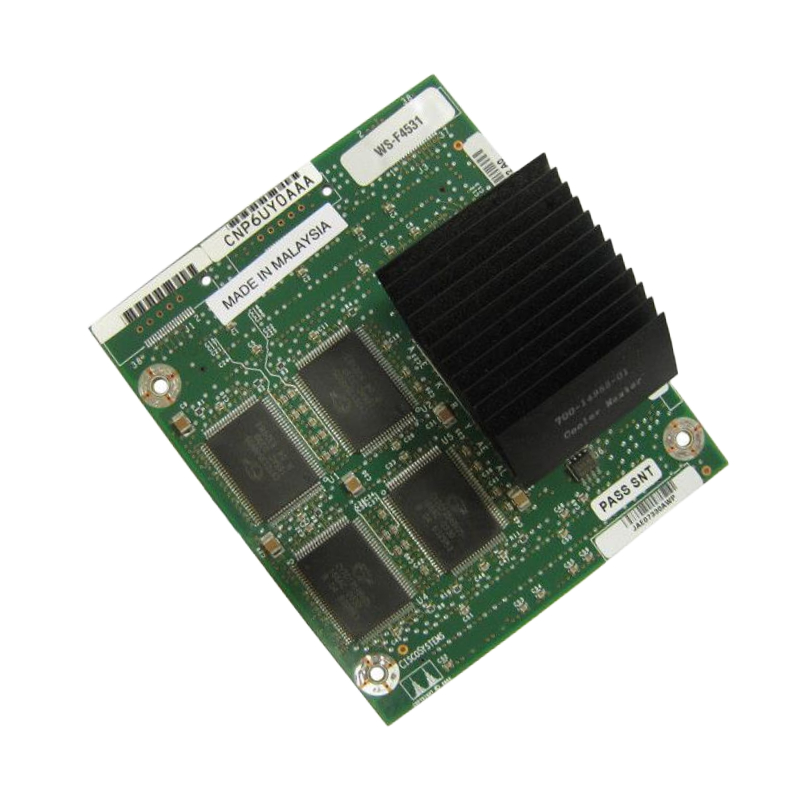


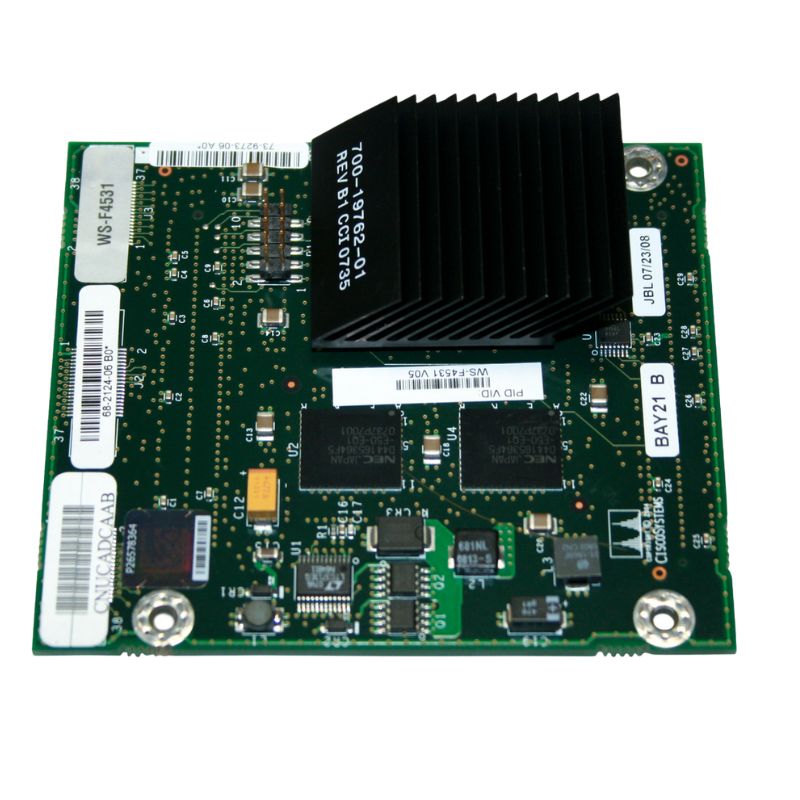
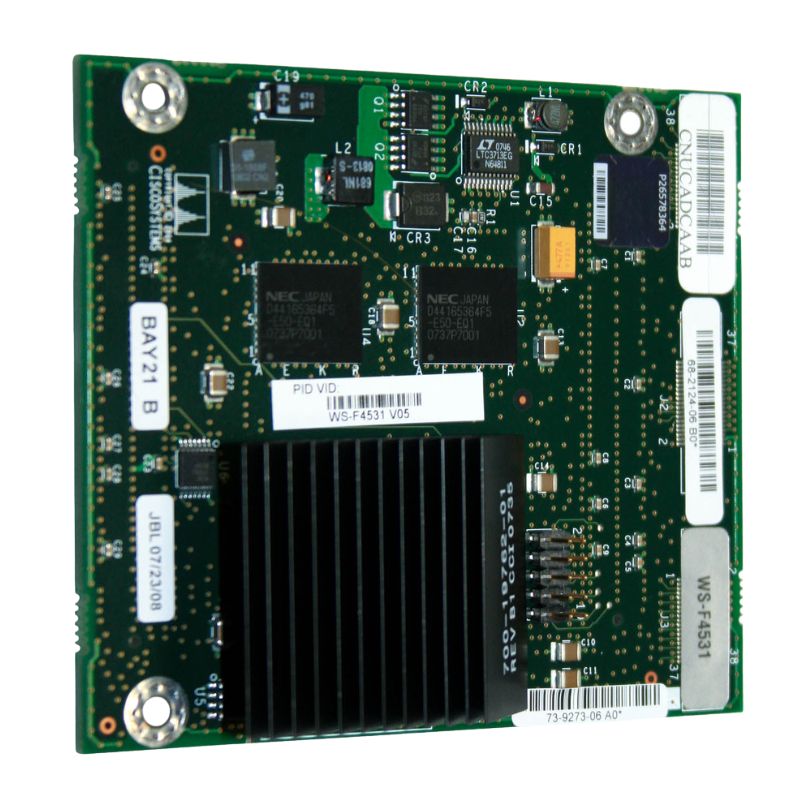
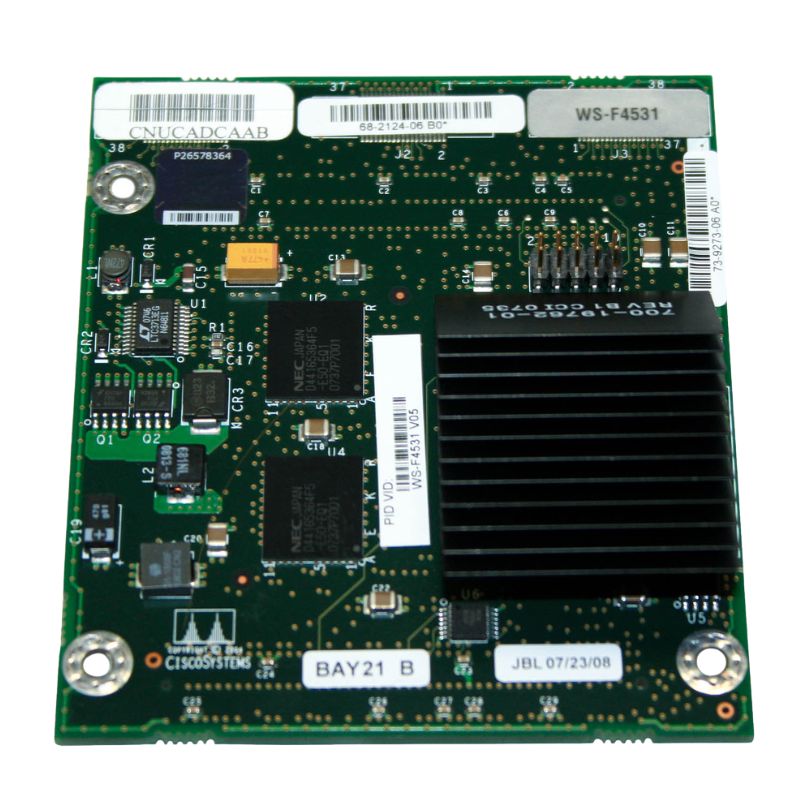
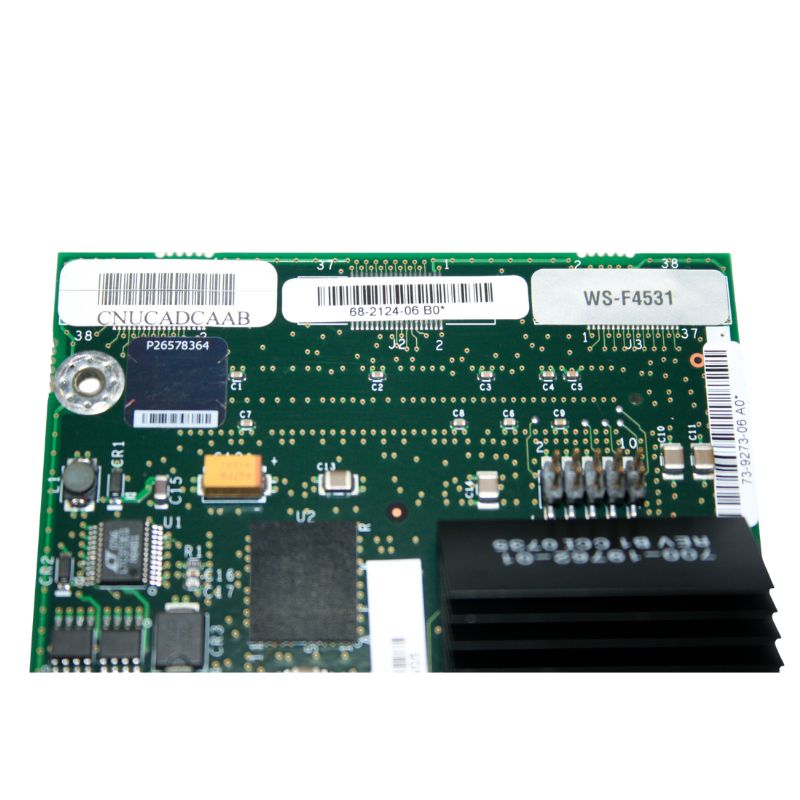
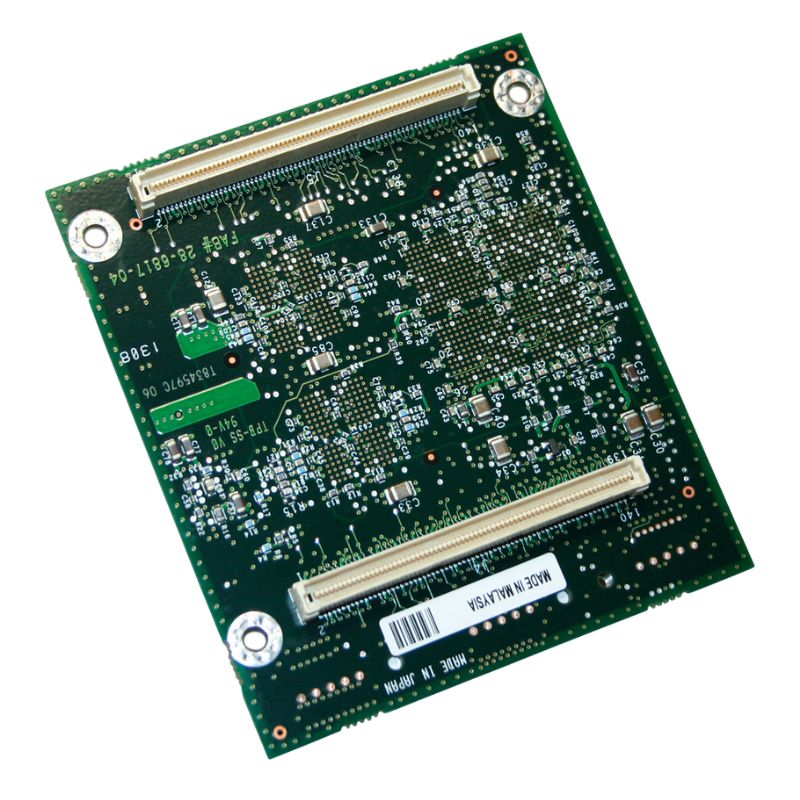
Cisco WS-F4531 Catalyst 4500 NetFlow Services Card. Excellent Refurbished with 1 year replacement warranty
The Cisco WS-F4531 Catalyst 4500 NetFlow Services Card is designed to expand the capabilities of compatible Cisco Catalyst 4500 Series switches by providing advanced service functionality in a compact plug-in module. Built for enterprise networking environments, this services card enhances network scalability while maintaining dependable wired connectivity and seamless integration with supported supervisor engines.
Purpose-Built Expansion
The Cisco WS-F4531 Catalyst 4500 NetFlow Services Card is designed as a specialized service module that extends advanced flow monitoring and traffic analysis capabilities within the Cisco Catalyst 4500 Series modular switching platform. Within enterprise campus architectures, the Catalyst 4500 chassis serves as a core or distribution-layer switch, and the WS-F4531 enhances its intelligence by enabling deep packet visibility through NetFlow data collection and processing. This capability allows network administrators to observe traffic behavior at a granular level, transforming raw packet forwarding activity into structured flow records that can be analyzed for performance optimization, security monitoring, and capacity planning.
The card functions as a dedicated hardware offload engine that processes NetFlow data without heavily impacting the primary switching ASICs. By separating flow analytics from core packet forwarding functions, the system maintains high throughput while still providing detailed insight into traffic patterns across VLANs, subnets, and routed interfaces.
NetFlow technology, as implemented in Cisco infrastructure, is a protocol designed to collect IP traffic statistics and export them for analysis. In the context of the WS-F4531 card, NetFlow operates by identifying traffic flows based on shared attributes such as source and destination IP addresses, transport layer ports, protocol types, and quality-of-service markings. Once identified, these flows are aggregated and exported to a collection engine for reporting and analytics.
The WS-F4531 enhances this process by providing hardware-assisted flow accounting, allowing for more scalable data capture in environments where high-speed traffic aggregation occurs. This is particularly important in campus networks where thousands of endpoints generate simultaneous traffic sessions, including voice, video, and data applications.
Flow aggregation enables administrators to move beyond traditional SNMP-based interface counters, offering a deeper understanding of which applications consume bandwidth, how traffic patterns evolve over time, and where potential congestion points may emerge within the switching fabric.
The Cisco WS-F4531 is engineered with specialized processing logic optimized for flow generation and export. Unlike general-purpose switching modules, this card is designed to handle metadata extraction at line rate without introducing significant latency into packet forwarding pipelines.
The architecture typically includes high-speed memory buffers that temporarily store flow records before export. These buffers are essential in environments where burst traffic conditions occur, ensuring that flow data is not lost during peak utilization periods. The card also interfaces closely with the Catalyst 4500 supervisor engine, which coordinates configuration policies and ensures consistency across the switching domain.
By offloading flow computation tasks, the WS-F4531 reduces CPU utilization on the supervisor engine and distributed forwarding cards. This separation of responsibilities is crucial for maintaining deterministic performance in enterprise backbone deployments.
One of the primary benefits of deploying the WS-F4531 NetFlow Services Card is enhanced visibility into network traffic behavior. Traditional network monitoring tools provide interface-level statistics, but NetFlow enables a more detailed breakdown of communication patterns between endpoints.
This visibility is particularly useful in identifying bandwidth-intensive applications and understanding user behavior within corporate networks. For example, administrators can distinguish between business-critical traffic such as VoIP sessions and non-essential bulk data transfers, enabling more informed quality-of-service decisions.
From a security perspective, NetFlow data is instrumental in detecting anomalies such as unusual traffic spikes, unexpected communication between internal and external hosts, and potential distributed denial-of-service attack patterns. Since flow records capture metadata rather than full packet payloads, they provide a scalable method for monitoring large-scale networks without introducing privacy or storage challenges associated with full packet capture.
The WS-F4531 NetFlow Services Card is typically deployed in Catalyst 4500 switches operating at the distribution or core layer of enterprise campus networks. In these environments, the switch aggregates traffic from multiple access layer switches, making it an ideal point for flow collection.
In campus deployments, the card supports visibility across departmental VLANs, enabling IT teams to understand inter-segment communication patterns. This is particularly useful in environments with segmented networks for finance, engineering, human resources, and guest access, where traffic isolation and monitoring are essential for compliance and operational efficiency.
In data center edge scenarios, the WS-F4531 provides insight into server-to-client and client-to-server interactions, helping administrators optimize load balancing strategies and identify underutilized or overutilized resources.
Configuration of the WS-F4531 is performed through Cisco IOS command-line interfaces on the Catalyst 4500 supervisor engine. Network administrators define which interfaces participate in NetFlow monitoring, as well as specify export destinations for collected flow data.
Flow export typically occurs using UDP-based transmission to external NetFlow collectors or network management systems. These collectors process the incoming data and generate reports that provide insights into traffic utilization, application behavior, and historical trends.
The management model ensures that configuration changes are synchronized across the switching system, maintaining consistency even in redundant supervisor engine setups. This is critical in high-availability environments where failover scenarios must not interrupt monitoring capabilities.
Performance optimization is a key consideration in deploying NetFlow services at scale. The WS-F4531 is designed to minimize overhead by leveraging hardware-based processing, but administrators can further optimize performance through careful configuration.
Flow sampling techniques may be applied in extremely high-traffic environments to reduce the volume of exported records while still maintaining statistically relevant insights. Aggregation strategies also play a role in reducing collector load, as summarized flow data is easier to process than raw granular records.
The balance between visibility and performance is an essential design consideration, particularly in environments where the Catalyst 4500 is handling multi-gigabit traffic loads across diverse application types.
NetFlow data generated by the WS-F4531 card is widely used in security operations for forensic analysis and incident response. When a security event occurs, flow records can be examined to reconstruct communication paths and identify compromised hosts.
Unlike packet capture systems, NetFlow provides a lightweight yet highly informative dataset that includes timestamps, byte counts, and protocol-level metadata. This enables security teams to trace lateral movement within networks, detect beaconing behavior associated with malware, and identify exfiltration attempts based on unusual traffic flows.
Behavioral analysis based on flow data also supports proactive threat detection. By establishing baseline traffic patterns, deviations can be flagged for further investigation, improving the overall security posture of the enterprise network.
Scalability is a critical factor when deploying NetFlow services in large enterprise environments. The WS-F4531 is designed to support high-density traffic conditions where thousands of endpoints communicate simultaneously across multiple VLANs and routed interfaces.
In such environments, the card must efficiently track flow states without exhausting memory or processing resources. This is achieved through optimized flow tables and efficient aging mechanisms that remove inactive flows while preserving active session data.
Multi-subnet environments particularly benefit from this scalability, as traffic between different departments or service tiers can be analyzed independently while still contributing to a unified network visibility framework.
NetFlow data collected via the WS-F4531 card can be correlated with Quality of Service (QoS) policies configured on the Catalyst 4500 switch. This allows administrators to validate whether priority traffic is receiving appropriate bandwidth allocation and latency guarantees.
Application performance monitoring is enhanced through continuous observation of flow metrics, enabling detection of jitter-sensitive applications such as voice and video communication systems. By analyzing flow patterns, network teams can adjust QoS policies dynamically to ensure optimal user experience.
The ability to align flow visibility with QoS enforcement creates a feedback loop that improves network efficiency and responsiveness over time.
The WS-F4531 exports NetFlow records to centralized network management systems that aggregate and analyze data from multiple switches and locations. These platforms provide dashboards, historical reporting, and predictive analytics capabilities.
Long-term data retention allows organizations to perform capacity planning based on historical usage trends. This is particularly valuable for anticipating bandwidth growth requirements and planning infrastructure upgrades in advance.
Integration with analytics platforms also supports machine learning-based anomaly detection, where deviations from expected traffic patterns are automatically flagged for investigation.
In high-availability Catalyst 4500 configurations, redundancy mechanisms ensure that NetFlow services remain operational even in the event of hardware or supervisor engine failure. The WS-F4531 operates within this redundancy framework by synchronizing state information where applicable and ensuring that flow export continues through active system components.
While brief interruptions in flow recording may occur during failover events, the system is designed to resume monitoring with minimal data loss. This reliability is essential for mission-critical enterprise environments where continuous visibility is required for both operational and security purposes.
NetFlow data provides a powerful tool for troubleshooting complex network issues. By analyzing flow records, administrators can identify top talkers—hosts or applications generating the highest traffic volumes—and correlate this information with observed congestion points.
Latency issues can also be investigated by examining flow timing patterns and retransmission behaviors at a high level. Although NetFlow does not provide packet-level timing precision, it offers sufficient granularity to pinpoint problematic network segments or misconfigured devices.
This capability significantly reduces mean time to resolution (MTTR) for network incidents, improving overall service availability and user satisfaction.
The deployment of the Cisco WS-F4531 Catalyst 4500 NetFlow Services Card contributes to long-term digital transformation strategies by enabling data-driven network management. Organizations increasingly rely on network analytics to guide infrastructure investment decisions, optimize cloud connectivity, and improve application delivery.
By providing continuous visibility into traffic behavior, the WS-F4531 supports informed decision-making processes that align network architecture with evolving business requirements. Over time, this leads to more efficient resource utilization, improved security posture, and enhanced end-user experience across the enterprise network environment.


 Contact Us
 Information
 Catalog
 Solid State Drives (SSD)
 Network Switches
 Hard Disk Drives
 HBA & Controllers
 PC & Servers
 PC & Server Memory
 CPU & Processors
 Network Routers
 Power Supplies
 Tape Drives & Libraries
 Network Devices
 Computer & Network Cables