(7% discount is applied at checkout)
Cart is empty
Your go-to destination for cutting-edge server products
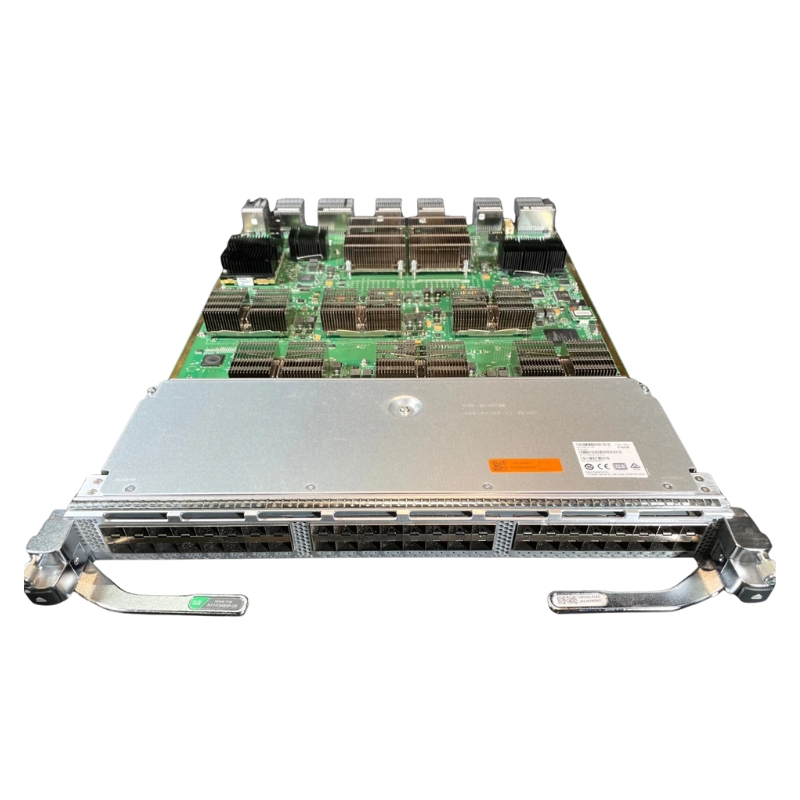


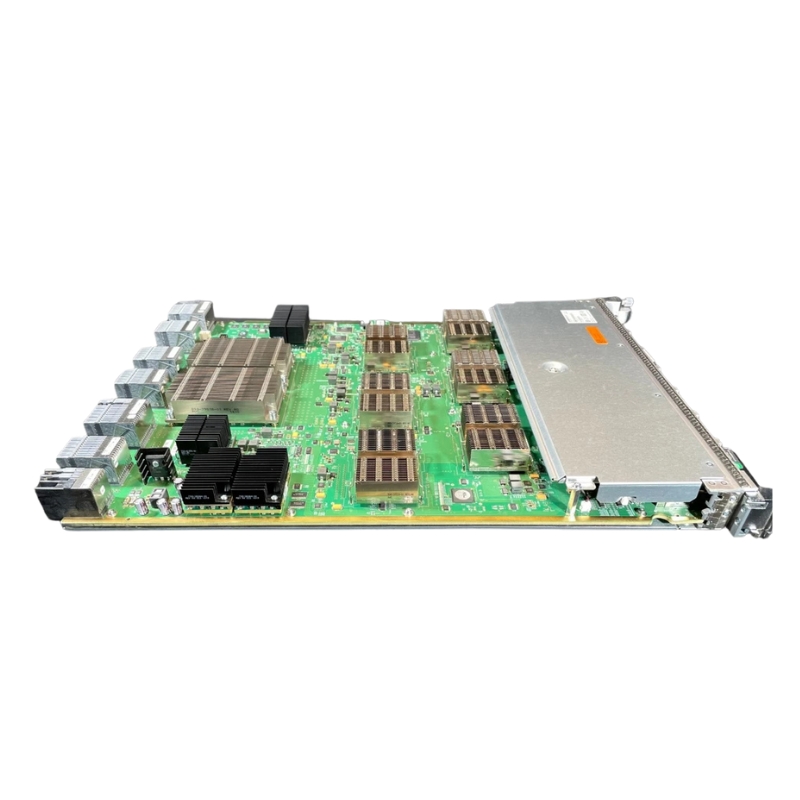
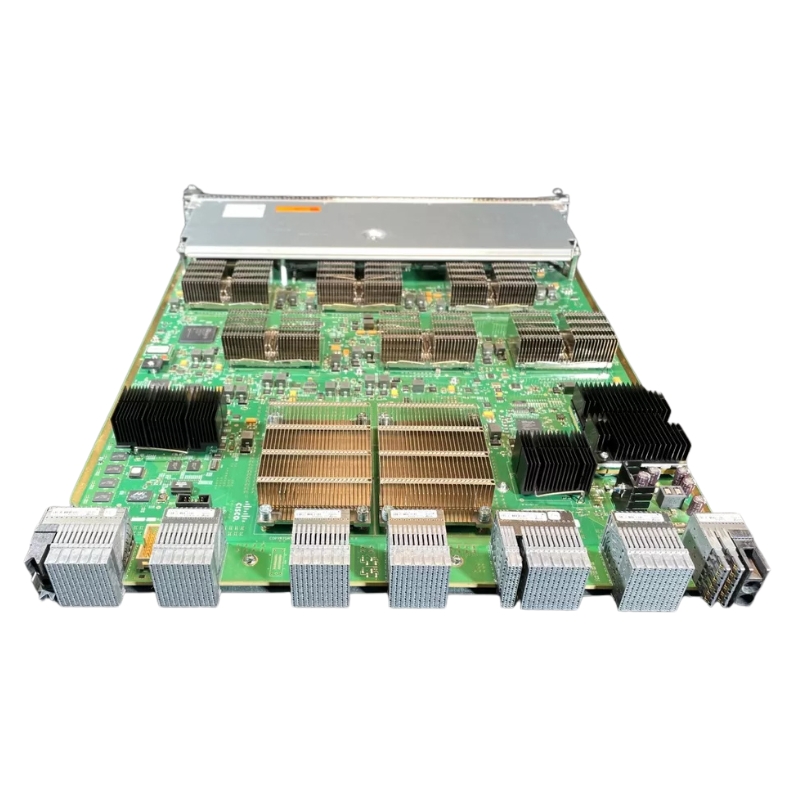
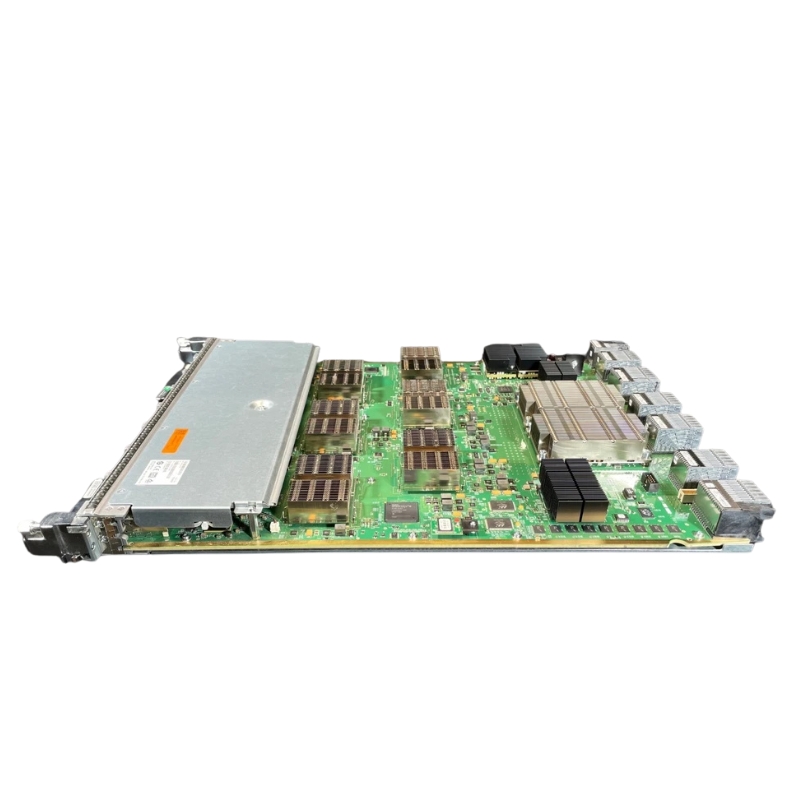
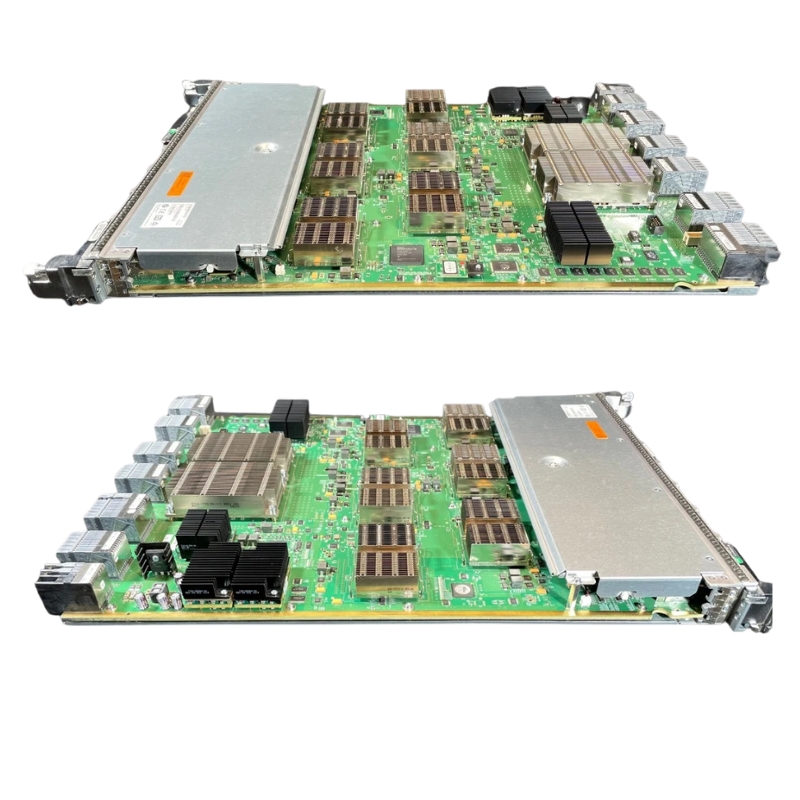
Cisco N77-F312CK-26 Nexus F3 Expansion Module. New Sealed with 1 Year Replacement Warranty
| SKU/MPN | Warranty | Price | Condition | You save |
|---|---|---|---|---|
| N77-F312CK-26 | 1 Year Warranty | $1,950.00 | New Sealed in Box (NIB) | You save: $682.50 (26%) |
| N77-F312CK-26 | 1 Year Warranty | $1,710.00 | Excellent Refurbished | You save: $598.50 (26%) |
The N77-F312CK-26 belongs to a class of modular networking hardware intended to increase the connectivity and forwarding capabilities of supported Cisco Nexus chassis. Unlike fixed-configuration switches, modular platforms allow network administrators to adapt the system according to changing infrastructure requirements. Expansion modules can be selected and deployed based on port density, interface requirements, traffic patterns, application demands, and long-term capacity planning.
The N77-F312CK-26 Cisco Nexus F3 Expansion Module is an enterprise-class networking component developed for organizations that require scalable switching capacity, high-density connectivity, predictable performance, and dependable operation within compatible Cisco Nexus 7000 Series environments. Designed around the capabilities of the Nexus F3 generation, this expansion module supports demanding data center architectures where bandwidth efficiency, low-latency packet handling, infrastructure consolidation, and flexible network growth are essential considerations.
As data centers continue to accommodate virtualization, cloud platforms, distributed applications, storage traffic, analytics workloads, and increasing east-west communication, the switching infrastructure must provide sufficient capacity without creating unnecessary operational complexity. The N77-F312CK-26 Cisco Nexus F3 Expansion Module helps address these requirements by extending the capabilities of a compatible modular Nexus switching platform. Its role within the broader Cisco Nexus ecosystem makes it suitable for enterprises, service providers, hosting facilities, large-scale computing environments, and other organizations that depend on resilient data center connectivity.
This modular approach can be particularly valuable in data centers where requirements evolve over time. An organization may initially deploy a Nexus chassis with sufficient capacity for current workloads and later expand the system as additional servers, storage resources, virtualization hosts, network appliances, or downstream switches are introduced. The N77-F312CK-26 Cisco Nexus F3 Expansion Module supports this scalable strategy by providing an additional hardware resource within an appropriate Nexus architecture.
The F3 generation of Cisco Nexus modules was developed to address advanced data center networking requirements with an emphasis on performance, scalability, and feature integration. The N77-F312CK-26 Cisco Nexus F3 Expansion Module is associated with this performance-focused family and is intended for environments where network traffic can be both intensive and diverse. Modern data centers frequently carry multiple traffic types across shared infrastructure, making efficient packet processing and reliable forwarding increasingly important.
Enterprise applications may generate substantial east-west traffic between servers, virtual machines, databases, storage platforms, and application tiers. At the same time, north-south traffic must move efficiently between the data center and users, branch offices, cloud services, or external networks. An F3-based expansion module can contribute to a switching architecture designed to manage these complex traffic patterns while maintaining consistent network behavior.
The architecture is especially relevant for organizations seeking to consolidate network services onto fewer, more capable platforms. Rather than deploying numerous independent switching devices for every connectivity requirement, a modular Nexus system can centralize significant switching capacity within a structured chassis-based design. This can simplify physical infrastructure planning while supporting a more organized approach to network expansion.
Port density is a major consideration when designing or expanding a data center network. As organizations add servers, hypervisors, storage systems, security appliances, and aggregation devices, the number of required network connections can increase rapidly. The N77-F312CK-26 Cisco Nexus F3 Expansion Module is positioned for environments where high-density connectivity and efficient use of chassis resources are important.
High-density modular networking can reduce the number of separate switching devices required to support a large installation. Consolidating connectivity within a compatible Nexus chassis may help decrease rack space consumption, simplify cabling pathways, and improve infrastructure organization. It can also provide network teams with a more centralized platform for managing switching resources.
For large data centers, density is not simply a matter of connecting more devices. It also affects power planning, rack utilization, cooling requirements, cable management, operational workflows, and future expansion. Selecting the appropriate expansion module therefore forms part of a broader infrastructure strategy. The N77-F312CK-26 can serve as a component in such a strategy when compatibility and deployment requirements align with the target Cisco Nexus platform.
Modern business applications increasingly depend on high-speed communication between computing resources. Virtualized environments, private clouds, distributed databases, artificial intelligence platforms, analytics systems, content delivery infrastructure, and large-scale storage applications can generate sustained traffic loads. The N77-F312CK-26 Cisco Nexus F3 Expansion Module is intended for high-performance switching environments where network capacity must support these demanding workloads.
Bandwidth-intensive applications can expose limitations in older or undersized network designs. Congestion may increase application response times, reduce storage performance, or create unpredictable service behavior. A properly designed modular switching infrastructure provides the capacity needed to accommodate both current traffic and anticipated growth. By expanding a compatible Nexus platform, the N77-F312CK-26 can contribute to a network architecture designed for greater traffic volumes and increasingly complex application ecosystems.
One of the principal advantages of a modular switching platform is the ability to expand capacity incrementally. The N77-F312CK-26 Cisco Nexus F3 Expansion Module can support this approach by allowing organizations to add compatible switching resources according to operational requirements. Instead of replacing an entire network platform when additional capacity becomes necessary, administrators may be able to expand an existing chassis through suitable modules.
This strategy can help organizations maximize the value of their infrastructure investments. Chassis-based networking systems are often selected for environments with long-term growth expectations because they can provide a structured path for expansion. Additional modules can be incorporated as new projects, applications, departments, customers, or computing resources increase network demand.
Scalability is also important for capacity forecasting. Data center planners must consider not only current port requirements but also expected growth over several years. A modular platform provides flexibility to accommodate changing needs while maintaining a consistent architectural foundation. The N77-F312CK-26 can therefore be relevant to network modernization projects, capacity upgrades, replacement strategies, and infrastructure expansion plans involving compatible Cisco Nexus systems.
Data center consolidation aims to reduce unnecessary hardware complexity while improving utilization of available infrastructure. The N77-F312CK-26 Cisco Nexus F3 Expansion Module can contribute to consolidation strategies by increasing the capabilities of a centralized modular switching platform. High-capacity chassis systems can aggregate connectivity that might otherwise require multiple independent devices.
A consolidated switching environment may simplify physical topology, reduce management overhead, and provide clearer operational boundaries. Network teams can organize connectivity around modular chassis platforms while allocating expansion resources according to business requirements. This approach can be especially beneficial in large facilities where numerous access, aggregation, server, and service connections must be managed efficiently.
Consolidation can also improve infrastructure standardization. Organizations that operate multiple data centers may prefer to use consistent switching architectures across locations. Deploying compatible Cisco Nexus components can help establish repeatable designs, operational procedures, spare-parts strategies, and technical training practices.
Virtualization has transformed data center traffic patterns. Traditional applications often relied heavily on communication between users and centralized servers, while modern virtualized environments generate substantial server-to-server traffic. Virtual machines may communicate across hosts, application tiers may exchange large quantities of data, and workloads may move dynamically within the infrastructure.
The N77-F312CK-26 Cisco Nexus F3 Expansion Module is relevant to switching architectures designed for these modern traffic requirements. A scalable Nexus platform can provide the connectivity foundation required for dense virtualization clusters, private cloud deployments, and shared infrastructure environments. The module can become part of a broader network design intended to deliver sufficient capacity between computing, storage, and service resources.
Cloud-oriented data centers also require flexibility. Workloads may be provisioned or removed rapidly, and network capacity must accommodate changing demand without extensive physical redesign. Modular expansion helps network teams align switching resources with evolving compute environments while maintaining a consistent platform.
Network availability is a fundamental requirement in enterprise data centers. A disruption in switching infrastructure can affect applications, storage access, communications, customer services, and internal business processes. The N77-F312CK-26 Cisco Nexus F3 Expansion Module is intended for deployment within enterprise-class modular networking environments where dependable operation is a primary consideration.
Reliability depends on the complete system design rather than a single component. Chassis configuration, redundancy, power architecture, cooling, software compatibility, cabling, maintenance procedures, and network topology all contribute to overall availability. When deployed correctly within a supported Nexus environment, the expansion module can form part of a resilient architecture designed to minimize service disruption.
Organizations should evaluate redundancy requirements during the planning stage. Critical systems may use multiple network paths, redundant switching platforms, resilient uplinks, and carefully designed failover mechanisms. The N77-F312CK-26 can be incorporated into such designs according to the capabilities and compatibility requirements of the complete Cisco Nexus deployment.
Large data centers often operate complex topologies that connect thousands of physical and virtual resources. Efficient traffic forwarding is essential for maintaining application performance and predictable service quality. The N77-F312CK-26 Cisco Nexus F3 Expansion Module belongs to a product family developed for high-capacity networking environments where substantial amounts of traffic must be processed and transported across the switching fabric.
Traffic patterns can vary considerably. Some applications generate short bursts, while others create sustained high-volume flows. Storage operations may transfer large data sets, backup systems may consume significant bandwidth during scheduled windows, and analytics platforms may exchange information continuously between compute nodes. A capable modular switching architecture must support these varied demands without becoming a bottleneck.
Network designers can use appropriate expansion modules to distribute connectivity and capacity according to application requirements. This makes the N77-F312CK-26 a potential component in carefully engineered aggregation, core, or data center switching designs where supported by the target platform and architecture.
The N77-F312CK-26 Cisco Nexus F3 Expansion Module can be considered for multiple deployment scenarios. Its suitability depends on chassis compatibility, software requirements, network topology, interface planning, and organizational objectives. In large enterprise environments, it may be used as part of a centralized switching platform supporting server farms, application clusters, or shared infrastructure.
Service providers and hosting organizations may also benefit from modular switching systems because customer growth can create changing connectivity requirements. Additional capacity can be introduced according to demand, helping the infrastructure scale without requiring a complete redesign for every expansion phase.
Capacity planning is an ongoing process in growing data centers. Network teams must estimate how many ports, how much bandwidth, and what level of redundancy will be required as business needs change. The N77-F312CK-26 Cisco Nexus F3 Expansion Module supports a modular approach that can make capacity expansion more manageable.
Instead of purchasing maximum capacity at the beginning of a project, organizations can design a chassis-based platform with room for future growth. Compatible modules can then be introduced as requirements increase. This phased deployment model may improve capital planning and reduce the risk of deploying unnecessary capacity too early.
Effective capacity planning should consider projected server growth, virtualization density, storage traffic, application development, cloud connectivity, backup requirements, and potential organizational expansion. The N77-F312CK-26 can form part of a long-term network roadmap when its capabilities match the technical requirements of the planned Nexus infrastructure.
Compatibility verification is essential before purchasing or installing any enterprise networking module. The N77-F312CK-26 Cisco Nexus F3 Expansion Module is designed for specific Cisco Nexus environments, and administrators should confirm chassis support, supervisor requirements, fabric capabilities, software versions, power capacity, cooling requirements, and any applicable configuration dependencies.
Part numbers should also be checked carefully. Enterprise networking components may have similar names while differing in interface configuration, generation, licensing requirements, airflow characteristics, or platform compatibility. Verifying the exact N77-F312CK-26 identifier can help prevent ordering errors and deployment delays.
Organizations with established Cisco Nexus infrastructure may prefer expansion components that align with their existing operational model. The N77-F312CK-26 Cisco Nexus F3 Expansion Module can be considered when extending a compatible Nexus environment while preserving a familiar chassis-based architecture.
Standardization can simplify network administration. Engineering teams can work with consistent management practices, monitoring tools, configuration procedures, and troubleshooting workflows. Maintaining a common platform may also reduce the complexity associated with supporting numerous unrelated hardware families.
Integration planning should account for both physical and logical architecture. Administrators should assess how the module will connect to servers, switches, routers, storage resources, or other network devices. They should also evaluate traffic distribution, redundancy, link utilization, and future expansion requirements before implementation.
Data center networks eventually require modernization as traffic demands increase and older equipment reaches operational or lifecycle limitations. The N77-F312CK-26 Cisco Nexus F3 Expansion Module may be relevant to organizations upgrading or expanding supported Nexus infrastructure. It can provide an alternative to replacing an entire modular platform when the existing chassis architecture remains appropriate for current requirements.
Network refresh projects should be based on detailed technical assessment. Administrators may evaluate current utilization, congestion points, hardware age, support requirements, software dependencies, power consumption, rack capacity, and projected growth. Where a compatible Nexus chassis can continue serving the organization effectively, adding or replacing expansion modules may offer a practical path to increased capability.
Upgrade planning should also include migration procedures. Configuration backups, maintenance windows, redundancy verification, cabling documentation, software validation, and post-installation testing can help reduce implementation risk. The N77-F312CK-26 should be treated as part of the complete infrastructure rather than as an isolated component.
High availability is achieved through careful architecture, redundancy, operational discipline, and appropriate hardware selection. The N77-F312CK-26 Cisco Nexus F3 Expansion Module can participate in a broader resilient network design where multiple paths and redundant systems are used to maintain connectivity during maintenance or component failure.
Large enterprises often design networks to eliminate single points of failure. This may involve redundant chassis, multiple uplinks, diverse physical paths, resilient power systems, and carefully tested failover procedures. Modular switching platforms can support this strategy by allowing organizations to distribute connectivity and capacity across appropriate system resources.
The specific high-availability capabilities available in a deployment depend on the complete Nexus platform, system software, topology, and configuration. Network architects should therefore evaluate the module in the context of the overall design rather than relying solely on individual component specifications.
Chassis-based switches can offer operational advantages in large environments. By concentrating multiple networking resources within a common platform, organizations can reduce the number of individual devices that must be physically installed and interconnected. The N77-F312CK-26 Cisco Nexus F3 Expansion Module extends this modular concept by providing additional functionality within the supported chassis architecture.
Centralization may improve rack organization and simplify infrastructure documentation. It can also make expansion more predictable because administrators can plan around available chassis capacity rather than introducing a new standalone switch for every requirement. This structured approach can be valuable in facilities where rack space, cabling, power, and cooling must be managed carefully.
Operational teams may also benefit from consistent maintenance procedures. A standardized Nexus environment can support repeatable workflows for configuration management, monitoring, troubleshooting, replacement, and lifecycle planning.
Application performance is closely connected to network performance. Even powerful servers and storage systems can experience reduced efficiency if the network introduces congestion, packet loss, or unnecessary delay. The N77-F312CK-26 Cisco Nexus F3 Expansion Module is intended for high-performance networking environments where the switching infrastructure must keep pace with modern computing resources.
Applications such as database clusters, enterprise resource planning systems, virtual desktop infrastructure, large-scale analytics, distributed computing, and cloud services can place substantial demands on the network. As workloads become more distributed, communication between application components increases. This creates a need for scalable switching capacity and carefully designed traffic paths.
Deploying an appropriate expansion module can help organizations align network capacity with application requirements. The complete result depends on architecture, configuration, connected devices, traffic profiles, and system compatibility, making careful planning essential.
Adding an enterprise expansion module requires more than simply installing hardware into an available slot. Cabling architecture should be planned to maintain organization, airflow, accessibility, and serviceability. The N77-F312CK-26 Cisco Nexus F3 Expansion Module may support numerous connections within a high-density environment, making structured cable management particularly important.
Administrators should select compatible transceivers, cables, patch panels, and related connectivity components based on the intended interface requirements. Cable lengths, pathway design, labeling, bend radius, rack layout, and future expansion should all be considered. Proper documentation can significantly simplify maintenance and troubleshooting.
High-density connectivity also requires attention to airflow. Poorly organized cables can obstruct ventilation and make component replacement more difficult. A professionally planned installation can help preserve both operational efficiency and physical accessibility.
When sourcing the N77-F312CK-26 Cisco Nexus F3 Expansion Module, buyers should evaluate more than the product name alone. Exact part identification, condition, included accessories, compatibility, warranty terms, and supplier reliability can all affect the success of the purchase. This is particularly important when acquiring enterprise hardware for production environments.
New, refurbished, and pre-owned networking components may be available through different supply channels. Each option can suit different budgets and lifecycle strategies. Organizations should determine whether the hardware has been tested, whether serial and part information can be verified, and what replacement or return provisions are available.
The N77-F312CK-26 Cisco Nexus F3 Expansion Module provides value primarily through its role within a scalable modular networking architecture. Organizations that require substantial connectivity and long-term growth potential can benefit from the ability to expand an existing chassis platform rather than continually introducing separate switching devices.
For enterprise environments, the advantages of modular infrastructure extend beyond raw performance. Standardization, centralized management, structured capacity planning, and efficient rack utilization can all contribute to lower operational complexity. The ability to adapt the network as requirements evolve is especially important in data centers where technology and application demands change rapidly.
When selected after careful compatibility verification, the N77-F312CK-26 can serve as a strategic component for extending the capabilities of supported Cisco Nexus infrastructure. Its suitability for high-performance data center networking, scalable deployment, and demanding enterprise workloads makes it relevant to organizations building or maintaining sophisticated switching environments.
Deploying the N77-F312CK-26 Cisco Nexus F3 Expansion Module should be approached as part of a long-term network strategy. Immediate connectivity requirements are important, but future growth can be equally significant. Organizations should consider expected increases in server density, application traffic, storage demand, virtualization, cloud integration, and business expansion.
A well-planned modular infrastructure can accommodate these changes more efficiently than a design built solely around current requirements. Available chassis capacity, power resources, cooling, fabric capabilities, software support, and physical connectivity should all be reviewed before expansion. This comprehensive approach helps ensure that the module contributes effectively to the overall network architecture.
The N77-F312CK-26 Cisco Nexus F3 Expansion Module is therefore best evaluated as an integral element of a broader Cisco Nexus data center strategy. With appropriate planning, compatibility verification, installation practices, and ongoing management, it can support scalable connectivity, demanding application workloads, infrastructure consolidation, and continued network development across complex enterprise environments.
I can also adapt this into a more keyword-dense ecommerce category format or add specification-focused sections while keeping the HTML free of the prohibited tags.


 Contact Us
 Information
 Catalog
 Solid State Drives (SSD)
 Network Switches
 Hard Disk Drives
 HBA & Controllers
 PC & Servers
 PC & Server Memory
 CPU & Processors
 Network Routers
 Power Supplies
 Tape Drives & Libraries
 Network Devices
 Computer & Network Cables