(7% discount is applied at checkout)
Cart is empty
Your go-to destination for cutting-edge server products
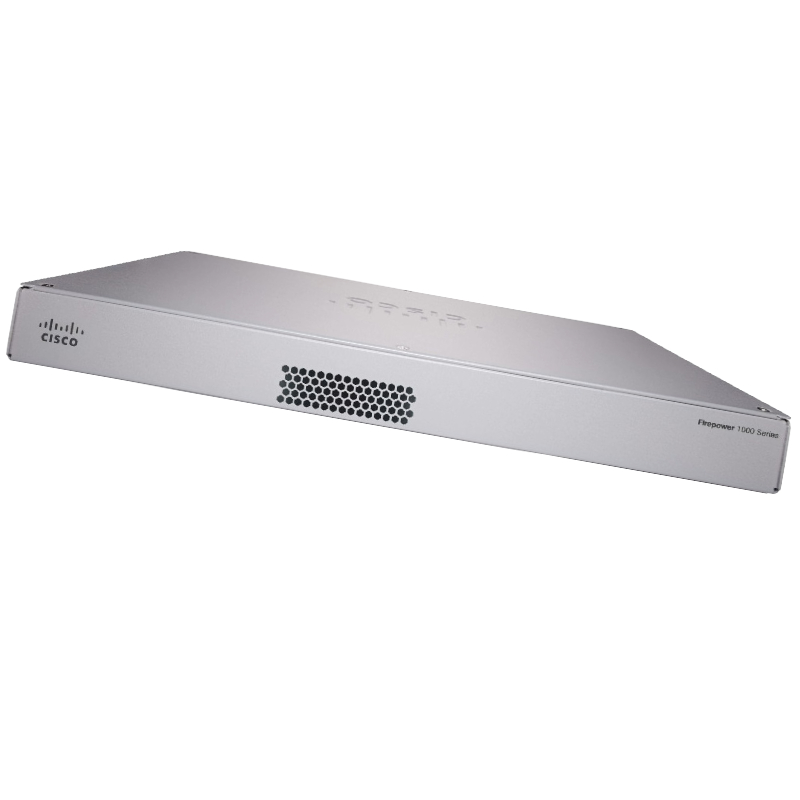


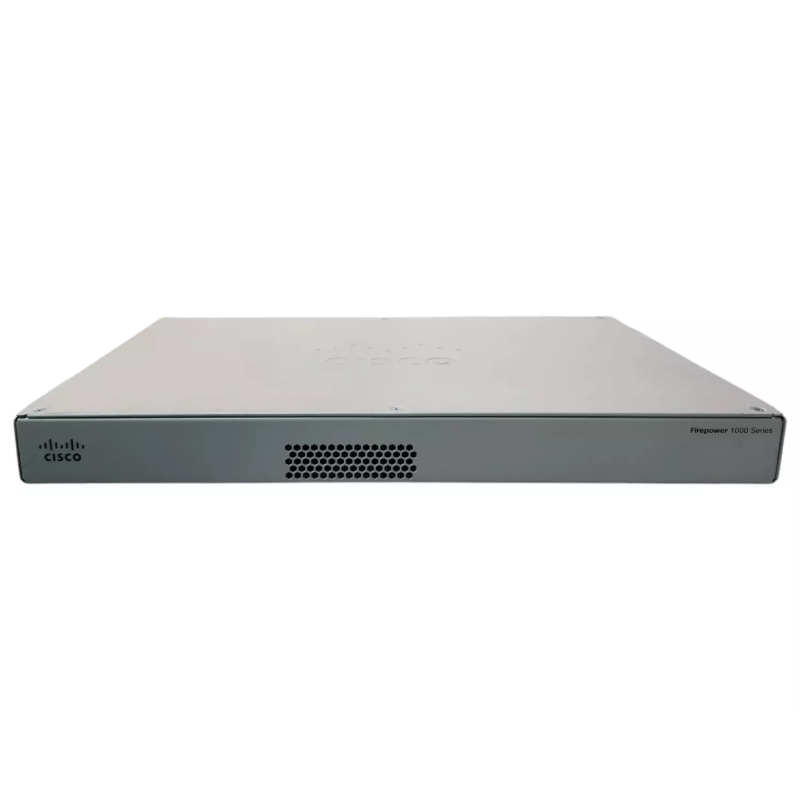
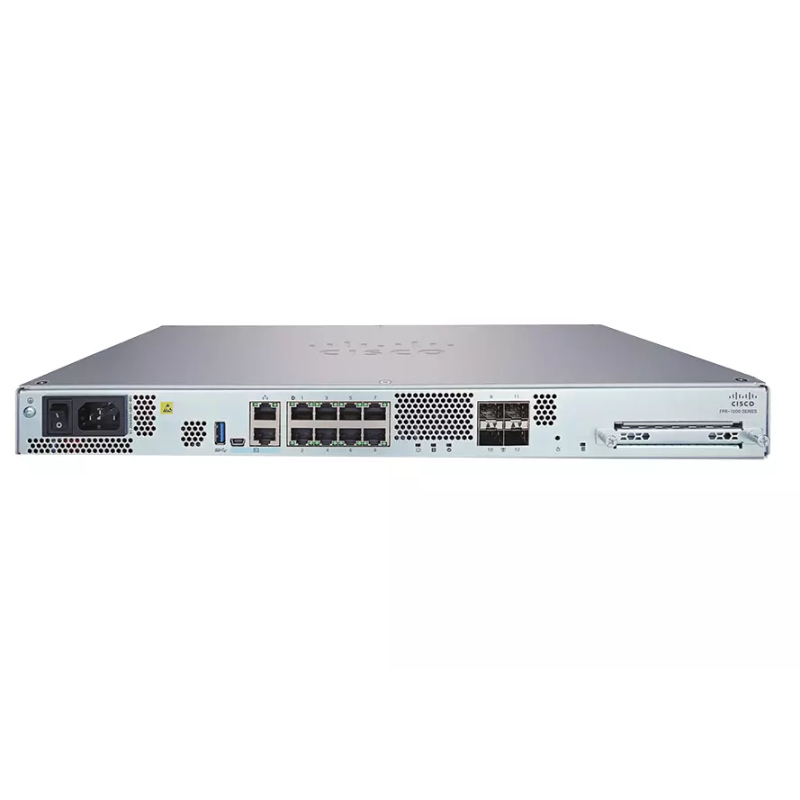
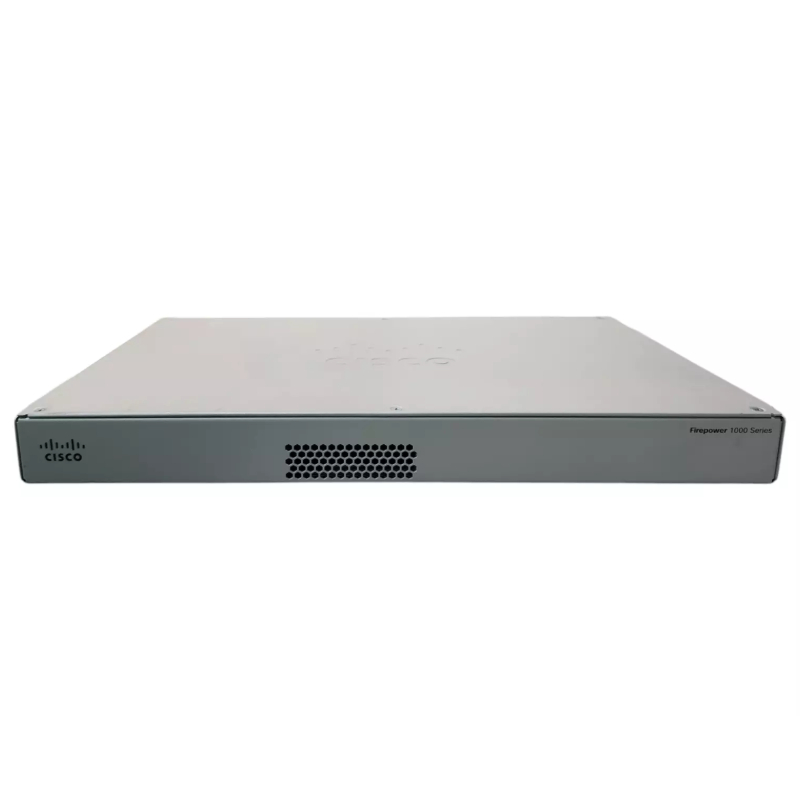
Cisco FPR1120-NGFW-K9 1120 NGFW Firewall Appliance 8 Ports 1000Base-T Gigabit Ethernet. Excellent Refurbished with 1 year replacement warranty
| SKU/MPN | Warranty | Price | Condition | You save |
|---|---|---|---|---|
| FPR1120-NGFW-K9 | 1 Year Warranty | $1,695.00 | Factory-Sealed New in Original Box (FSB) | You save: $593.25 (26%) |
| FPR1120-NGFW-K9 | 1 Year Warranty | $1,290.00 | Excellent Refurbished | You save: $451.50 (26%) |
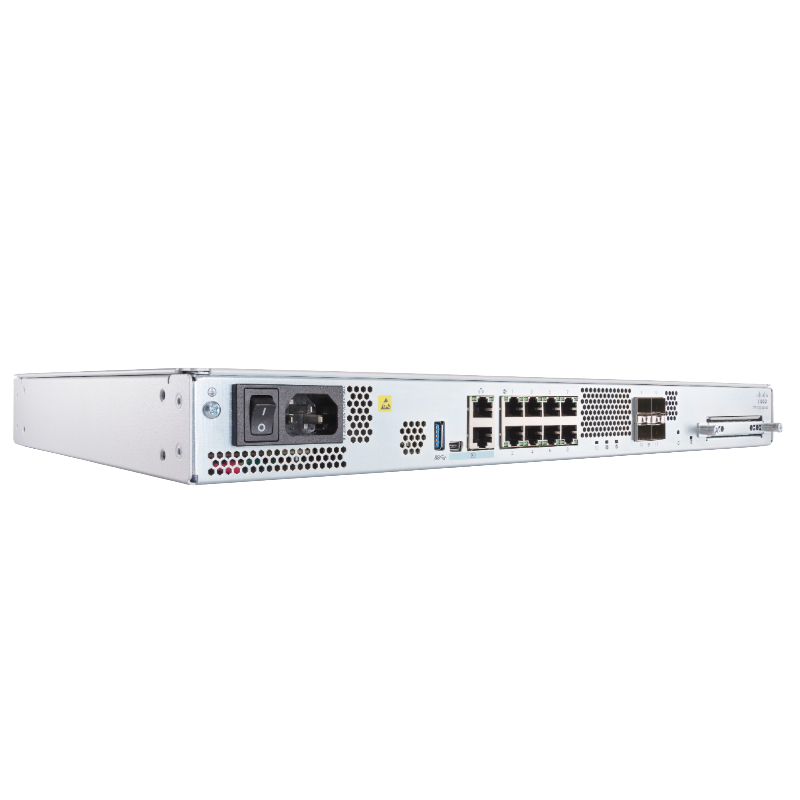
The Cisco FPR1120-NGFW-K9 is a high-performance next-generation firewall appliance designed to deliver strong network protection, reliable threat defense, and business-ready connectivity in a compact 1U rack-mountable form factor. Built for organizations that require advanced firewall security, VPN support, and flexible port density, this Cisco 1120 NGFW platform combines dependable throughput with enterprise-class control. It features 8 x 1000Base-T Gigabit Ethernet ports, multiple SFP uplink interfaces, dedicated management connectivity, and robust security capacity for handling demanding business traffic. With wired deployment, internal power supply, rack-ready installation, and support for high concurrent session volumes, the Cisco FPR1120-NGFW-K9 firewall appliance is an excellent choice for branch offices, distributed enterprise environments, growing IT infrastructures, and security-focused network deployments.
The Cisco FPR1120-NGFW-K9 1120 NGFW Firewall Appliance belongs to the Cisco Firepower 1000 Series, a security platform family built for organizations that need advanced network protection, reliable throughput, flexible deployment, and long-term operational efficiency in a compact rack-mount appliance. This model is positioned as a next-generation firewall for branch offices, midsize business environments, distributed enterprise sites, retail networks, healthcare facilities, financial institutions, education campuses, and managed service deployments that require more than a traditional stateful firewall. The Cisco Firepower 1120 platform combines firewall enforcement, application visibility, intrusion prevention, VPN connectivity, and centralized security management in a single appliance architecture, giving businesses a practical way to strengthen edge security without adding unnecessary complexity. Cisco lists the Firepower 1120 as part of its Firepower 1000 Series, with 8 RJ-45 Gigabit Ethernet interfaces and 4 fixed SFP ports, making it well suited for organizations that want a balance of copper connectivity, fiber uplink flexibility, and enterprise-grade threat defense in a 1U form factor.
For businesses modernizing perimeter security, the Cisco FPR1120-NGFW-K9 category represents a strategic choice because it is not simply a port-dense firewall appliance. It is a security platform intended to inspect, control, and protect traffic moving between users, applications, branch networks, data centers, cloud resources, and external internet connections. The appliance is designed for organizations that need consistent policy enforcement across distributed locations while also supporting encrypted traffic, secure remote access, and application-aware security controls. The result is a firewall category that serves not only as a boundary defense system but also as a traffic control, visibility, segmentation, and secure connectivity platform for growing networks. Cisco positions the Firepower 1000 family for use cases ranging from small offices to remote branches, and the 1120 model fits the segment where performance, security services, and interface flexibility must all scale together.
The Cisco FPR1120-NGFW-K9 sits in the middle of the Firepower 1000 family, providing a stronger performance profile than entry-level desktop-focused options while remaining more compact and branch-friendly than larger enterprise edge appliances. Cisco identifies the Firepower 1120 as a 1U rack-mount system with 8 RJ-45 1000Base-T interfaces and 4 SFP interfaces. In Cisco’s Firepower 1000 Series performance tables, the 1120 is presented as a model capable of delivering 2.3 Gbps throughput for firewall plus application visibility and control with Threat Defense software, and 2.3 Gbps throughput for firewall plus application visibility plus intrusion prevention in the same product family performance matrix. Cisco also lists the 1120 with stateful inspection firewall throughput up to 4.5 Gbps in ASA performance figures and IPsec VPN throughput up to 1 Gbps in the ASA capability table for the platform family. These published specifications illustrate why the Cisco Firepower 1120 category is frequently considered for branch transformation, secure WAN edge deployments, and small-to-midsize enterprise sites that need strong inspection capability rather than a basic packet filter.
Within this product category, the value of the FPR1120-NGFW-K9 is tied to its ability to bridge several infrastructure priorities at once. It provides the interface density needed for multi-zone segmentation, the threat inspection capability needed for modern security policy, and the rack-mount format required for structured branch or regional office deployments. Unlike a minimal firewall that simply routes and blocks traffic based on source and destination rules, the Firepower 1120 category is aligned with organizations that want a security gateway able to interpret applications, monitor threats, support encrypted tunnels, and serve as a foundation for broader Cisco security operations. That makes the category especially relevant for buyers searching for a Cisco firewall appliance that can protect internet edge traffic, branch office communications, cloud access, partner connectivity, and remote access workflows from a single platform.
The hardware profile of the Cisco FPR1120-NGFW-K9 is one of the reasons this category remains attractive for secure branch and midsize network deployments. Cisco documents the Firepower 1120 as a 1U rack-mount appliance with dimensions around 1.72 x 17.2 x 10.58 inches. This makes it suitable for network racks in branch offices, regional facilities, secure communications rooms, and distributed enterprise sites where space efficiency matters but a professional rack-based deployment is still preferred. Cisco also lists a management Ethernet port, console connectivity, USB support, and fixed data interfaces that help simplify both initial setup and ongoing administration. The hardware approach reflects a practical balance between appliance compactness and the port availability required for real-world segmentation and WAN connectivity.
One of the most important physical characteristics of the Cisco Firepower 1120 is its interface mix. Cisco’s published hardware specifications describe the model with eight Gigabit Ethernet RJ-45 network ports and four fixed 1-Gigabit SFP ports. In the hardware installation guide, Cisco notes that the Firepower 1100 platform includes eight Gigabit Ethernet RJ-45 interfaces and four fixed SFP ports, with port numbering and hardware behavior documented for deployment and administration. This mix is important because it gives network teams more freedom when designing edge connectivity. Copper ports can be used for LAN, WAN handoff, demilitarized zones, branch switching uplinks, voice or surveillance segments, guest network isolation, or internal service networks. The SFP interfaces provide options for fiber uplinks, longer-distance interconnects, or compatibility with optical infrastructure already present in business campuses or branch aggregation environments.
The 8-port 1000Base-T design of the Cisco FPR1120-NGFW-K9 is a central part of its appeal. In many branch and midsize business environments, security teams need to isolate traffic into multiple zones rather than simply placing all internal systems behind a single trusted network. A modern firewall appliance with eight Gigabit copper ports can support separate networks for user access, servers, point-of-sale devices, IP cameras, voice systems, guest users, management devices, and dedicated WAN circuits. This matters because segmentation is one of the most effective ways to reduce the blast radius of an attack, enforce compliance boundaries, and apply security rules tailored to each workload or department. Instead of relying on a flat network design, organizations can use the Cisco Firepower 1120 category to implement more disciplined traffic paths between internal zones and external destinations.
In practical deployment terms, the eight copper interfaces make the Cisco FPR1120-NGFW-K9 valuable for retail stores with separate transaction systems and guest Wi-Fi, healthcare sites with clinical and administrative segmentation, schools with isolated student and staff traffic, and branch offices that need separate paths for WAN, internet breakout, voice, and local services. Because the ports are native on the appliance, the platform can serve as a direct policy enforcement point across multiple segments without forcing every design to depend on external switching for basic zone separation. This helps simplify branch security architecture and can reduce the number of devices required to build a properly segmented edge environment.
Another major advantage of the Cisco FPR1120-NGFW-K9 category is the inclusion of four fixed SFP ports in the Firepower 1120 hardware platform. These ports expand the deployment possibilities beyond standard copper handoffs. Fiber uplinks are often needed in campus buildings, metro Ethernet environments, industrial sites, distribution centers, healthcare campuses, and multi-floor office locations where longer cable runs or optical transport are part of the infrastructure standard. With built-in SFP support, the Firepower 1120 can integrate more naturally into mixed-media networks where copper is used locally but fiber is used for uplinks, service provider handoffs, or resilient aggregation links. Cisco’s Firepower 1000 Series documentation specifically lists the 1120 with 8 x RJ-45 and 4 x SFP, reinforcing the appliance’s role as a flexible edge platform rather than a basic branch firewall with limited connectivity choices.
For organizations evaluating this category, SFP support also contributes to investment protection. It allows the appliance to participate in infrastructure designs that may evolve over time from copper-only branch connectivity to fiber-based aggregation or secure handoffs to upstream switches, carrier equipment, or regional interconnects. That flexibility is especially useful for growing businesses that do not want to replace their firewall simply because their uplink model changes in the future.
The term next-generation firewall is central to understanding the Cisco FPR1120-NGFW-K9 category. A next-generation firewall does more than allow or deny traffic based on IP addresses and ports. It adds awareness of applications, users, sessions, threats, and policies at a deeper level. Cisco positions the Firepower 1000 Series as a platform for threat defense, application visibility, and management ease, which means the Firepower 1120 is designed to support a broader security strategy than legacy firewall products. In an environment where encrypted applications, cloud platforms, remote collaboration tools, and constantly changing threats are common, this deeper level of inspection and control becomes critical.
For a category page focused on the Cisco FPR1120-NGFW-K9, it is important to understand that businesses shopping for this appliance are often trying to solve multiple problems at once. They need to block unauthorized traffic, control which applications can be used, inspect for known threats, create secure VPN tunnels, log activity for compliance and troubleshooting, and maintain a manageable operational model across one or many sites. The Firepower 1120 category is built around those combined requirements. Instead of purchasing separate appliances for basic firewalling, VPN concentration, and threat inspection, organizations can consolidate those roles into a single Cisco platform with centralized policy possibilities.
Application visibility is a major reason businesses move from legacy firewall devices to next-generation firewall appliances. Traditional firewalls can enforce rules based on network-level information, but they often struggle to distinguish between business-critical applications and high-risk or bandwidth-consuming services that use common ports. The Cisco Firepower 1120 category is designed to support application-aware policy control, which allows administrators to build rules around the actual application context rather than just transport details. This is valuable for organizations that want to prioritize collaboration platforms, restrict unsanctioned file-sharing tools, manage social media access, or limit recreational traffic during business hours without blocking legitimate services that share similar ports or protocols.
In branch and midsize enterprise environments, application visibility also improves troubleshooting and capacity planning. Security and network teams gain a clearer understanding of what types of traffic are using bandwidth, which applications are creating risk exposure, and where policy changes may be required to maintain both security and user experience. That makes the Cisco FPR1120-NGFW-K9 category suitable for businesses that want a firewall appliance to act as both a protection platform and a visibility platform.
Another defining aspect of the Cisco FPR1120-NGFW-K9 category is the ability to support intrusion prevention and advanced threat inspection within the same security appliance. Cisco’s Firepower product line is built around the concept of threat defense rather than simple packet filtering, and the Firepower 1000 Series data sheet includes IPS throughput metrics as part of the family overview. For the Firepower 1120, Cisco lists 2.6 Gbps IPS throughput in the model summary table and 2.3 Gbps throughput for firewall plus application visibility plus IPS in the Threat Defense performance table, depending on the measurement context and feature mix. These numbers matter because they show that the platform is intended to inspect traffic deeply while still delivering performance suitable for branch and midsize enterprise environments.
From an operational perspective, intrusion prevention helps organizations detect and block exploit attempts, suspicious patterns, and known malicious behavior before those threats reach internal systems. This is especially important in environments where internet traffic, remote user traffic, cloud application access, and partner connectivity all pass through the same edge appliance. The Cisco Firepower 1120 category is therefore relevant not only for perimeter defense but also for enforcing a more active inspection posture against common attack vectors.
Performance is one of the most searched aspects of any firewall category, and the Cisco FPR1120-NGFW-K9 is positioned as a model that balances security inspection with usable throughput for growing organizations. According to Cisco’s Firepower 1000 Series documentation, the Firepower 1120 delivers 2.3 Gbps throughput for firewall plus application visibility and control under Threat Defense software and 2.3 Gbps throughput for firewall plus application visibility plus IPS in the same performance framework. Cisco also lists 4.5 Gbps stateful inspection firewall throughput for ASA-based measurement and up to 1 Gbps IPsec VPN throughput in the ASA performance table. These figures should always be interpreted in context because actual performance depends on enabled services, packet size, traffic mix, encryption, logging behavior, and software version. Even so, they clearly place the Cisco Firepower 1120 category above entry-level firewall appliances and make it attractive for sites that need real inspection capacity rather than a low-cost internet gateway.
The performance story is important because many organizations are trying to avoid a common firewall problem: purchasing an appliance that looks adequate on paper when only basic firewalling is considered, but which becomes a bottleneck once intrusion prevention, VPN, application control, and detailed logging are enabled. Cisco’s published data for the Firepower 1120 category demonstrates that the platform is intended to maintain meaningful throughput even with advanced services in place. This is a significant benefit for branch sites with heavy SaaS usage, video collaboration, voice services, secure cloud access, or multiple WAN circuits feeding a single location.
The Cisco FPR1120-NGFW-K9 category is particularly appealing for organizations that need a firewall appliance to do real work rather than sit passively at the edge. Throughput must be understood alongside inspection depth. A firewall with high raw packet forwarding but weak application and threat analysis may not deliver the security value a business expects. By contrast, the Firepower 1120 category is designed around balancing enforcement and inspection. Cisco’s Threat Defense performance metrics emphasize firewall plus application visibility and firewall plus intrusion prevention scenarios, reflecting the real-world reality that security features are often enabled together, not in isolation.
This makes the Firepower 1120 especially relevant for businesses that have already adopted cloud applications, voice over IP, branch internet breakout, and encrypted partner connections. In those environments, traffic volume alone is not the challenge. The challenge is applying the right inspection and control without slowing the business. The Cisco Firepower 1120 category is designed to help solve that balance.
Cisco’s Firepower 1000 Series documentation also provides connection and session figures that help buyers estimate suitability for active business networks. For the Firepower 1120 in Cisco’s ASA capabilities table, concurrent firewall connections are listed at 200,000 and new connections per second at 75,000. These figures indicate that the platform is not merely a small-office desktop firewall but a serious branch and midsize business security appliance capable of handling sustained session loads from many users, services, and applications.
This matters in environments with dense user populations, frequent web transactions, software updates, cloud application sessions, or multiple systems communicating simultaneously across secure tunnels. Retail chains, healthcare clinics, warehouses, call centers, and regional offices often generate large numbers of short-lived and persistent connections. A firewall category like the Cisco FPR1120-NGFW-K9 is better suited to these patterns than a lightweight device designed only for a handful of users.
Virtual private networking remains one of the most important reasons organizations invest in a business-class firewall appliance, and the Cisco FPR1120-NGFW-K9 category is strongly aligned with that requirement. Cisco lists IPsec VPN throughput for the Firepower 1120 at up to 1 Gbps in its ASA performance and capabilities table, and it lists support for up to 150 VPN peers in the same family matrix. Those published figures reinforce the role of the Firepower 1120 as a secure connectivity platform for branch-to-headquarters tunnels, site-to-site links, business partner connectivity, and protected communications between physical offices and hosted infrastructure.
VPN functionality is not only about encrypting traffic. In a distributed enterprise, VPN design often determines how resilient, scalable, and manageable the overall WAN architecture becomes. The Cisco Firepower 1120 category allows a business to use one appliance for edge firewalling and encrypted WAN connectivity, which reduces hardware sprawl and can simplify branch standardization. For companies opening multiple offices, this can be especially useful because the same appliance family can be deployed repeatedly with common templates, policies, and monitoring workflows.
As more applications move to hosted environments, the Cisco FPR1120-NGFW-K9 category becomes useful not only for office-to-office tunnels but also for secure connectivity to infrastructure in public cloud or colocation environments. Businesses may use the appliance to create encrypted paths to hosted workloads, disaster recovery sites, backup repositories, partner services, or centralized management platforms. A firewall that supports secure cloud access while still delivering on-premises segmentation and inspection gives organizations a smoother path toward hybrid networking. The Firepower 1120 fits that requirement because it combines security services and VPN support in one branch-friendly appliance family.
When evaluating a firewall category, organizations often focus on immediate technical specifications, but long-term value matters just as much. The Cisco FPR1120-NGFW-K9 category offers lasting value because it combines enterprise firewall capabilities, branch-ready form factor, interface flexibility, VPN support, application awareness, and centralized management potential in a single platform family. Businesses can standardize on the Firepower 1120 for multiple sites, create consistent deployment templates, and extend the useful life of their security investment as bandwidth, segmentation, and compliance requirements grow.
The Firepower 1120 category also benefits from its place within Cisco’s broader security portfolio. For many organizations, choosing Cisco at the branch firewall layer simplifies procurement, support alignment, policy consistency, and integration with existing Cisco infrastructure or security workflows. That does not mean every deployment must be large or highly complex. It means the appliance category can scale from a straightforward branch edge role into a more structured distributed security model if the business grows into it. This makes the Cisco FPR1120-NGFW-K9 category a practical fit for buyers who want current protection with room for future operational maturity.


 Contact Us
 Information
 Catalog
 Solid State Drives (SSD)
 Network Switches
 Hard Disk Drives
 HBA & Controllers
 PC & Servers
 PC & Server Memory
 CPU & Processors
 Network Routers
 Power Supplies
 Tape Drives & Libraries
 Network Devices
 Computer & Network Cables